Stiff Back in the Morning
Morning back stiffness isn't how you slept — it's inflammatory markers peaking overnight. What's driving it and what actually helps.
Ingredients in this letter

TL;DR
- Morning back stiffness is driven by overnight inflammatory buildup - not just "sleeping wrong" or getting older.
- Inflammatory mediators like prostaglandins and leukotrienes accumulate during sleep, reducing joint fluid circulation and sensitizing nerve endings.
- Single-ingredient supplements miss the bigger picture - inflammation operates across multiple pathways simultaneously.
- A multi-pathway formula addressing COX-2, 5-LOX, gut permeability, and sleep quality can help support the body's natural inflammatory response from several angles at once.
- Bottom line: Morning stiffness that lasts 20+ minutes most days deserves attention beyond a new mattress - and the biology behind it is more addressable than most people think.
You know the feeling. The alarm goes off and your body doesn't follow. Your back has locked up overnight like it signed a contract you never agreed to. You test one leg, then the other. You negotiate with your own spine just to sit upright. The first 20 minutes of your day aren't spent on coffee or email - they're spent convincing your body to move.
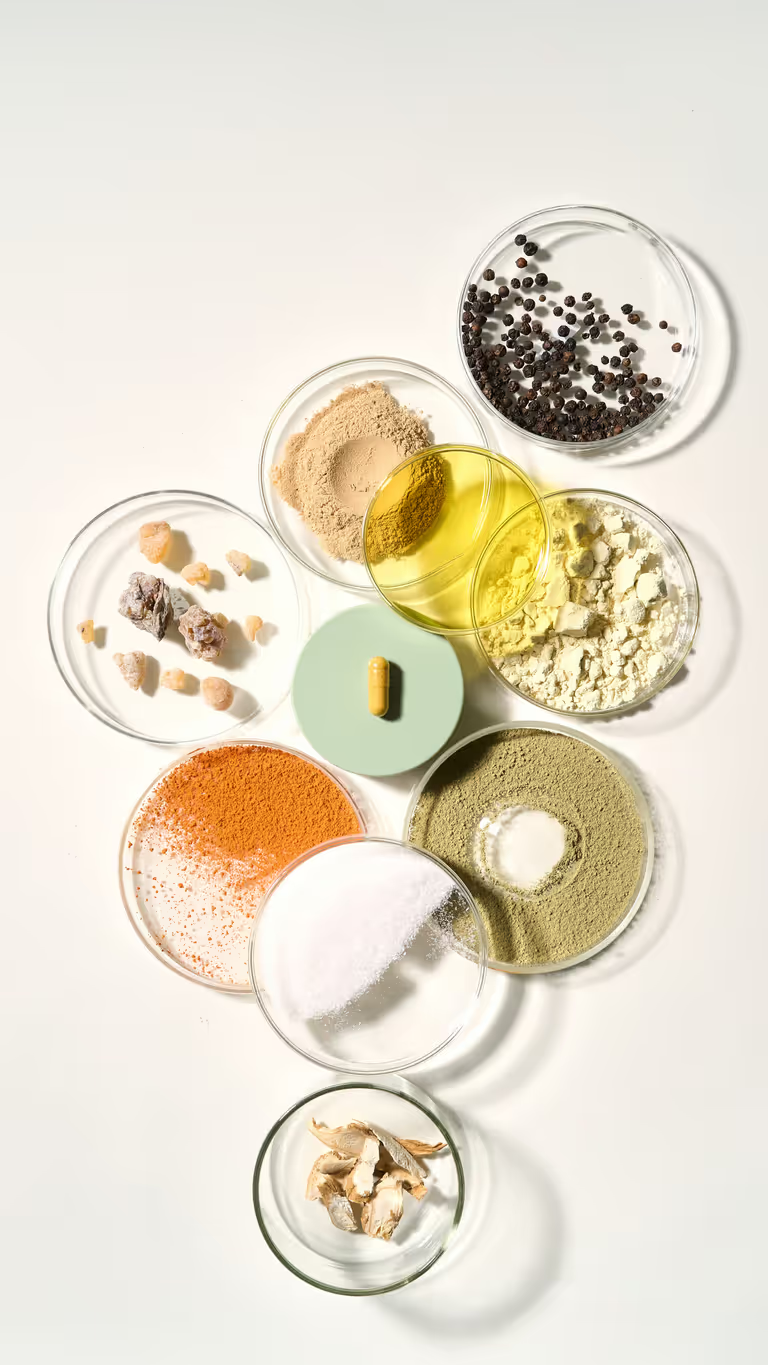
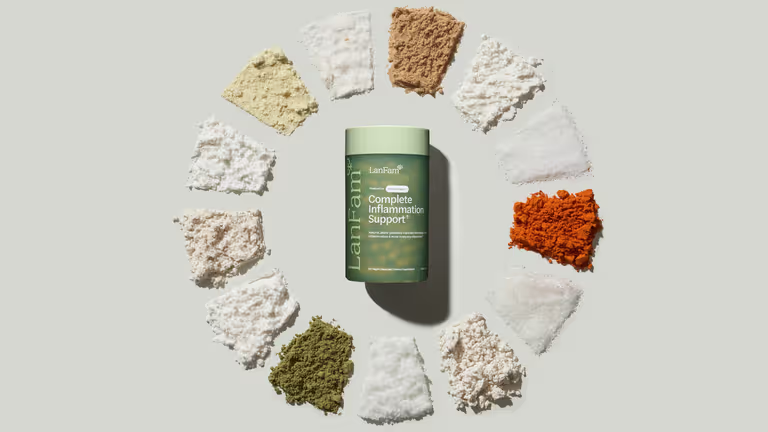
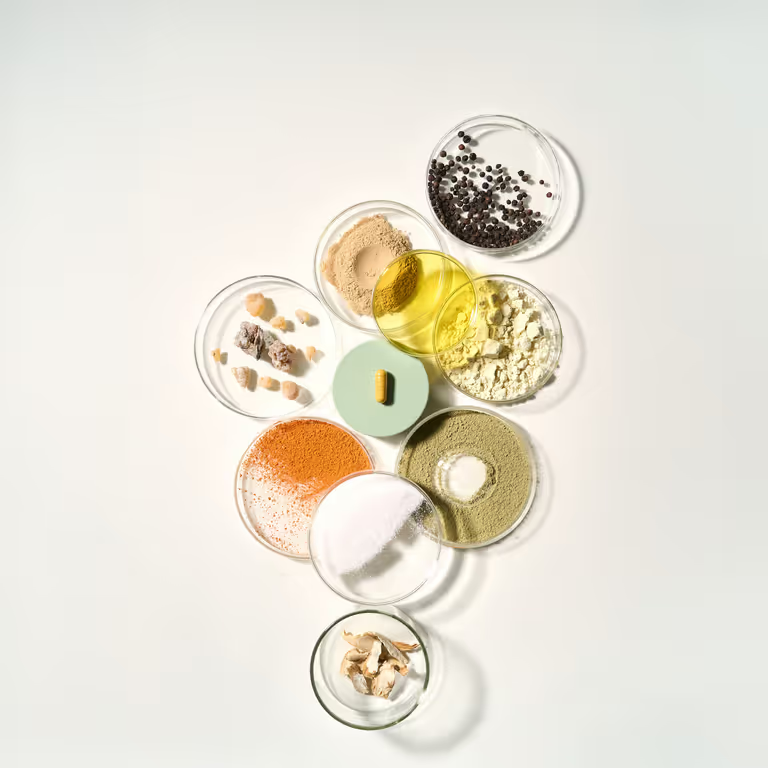
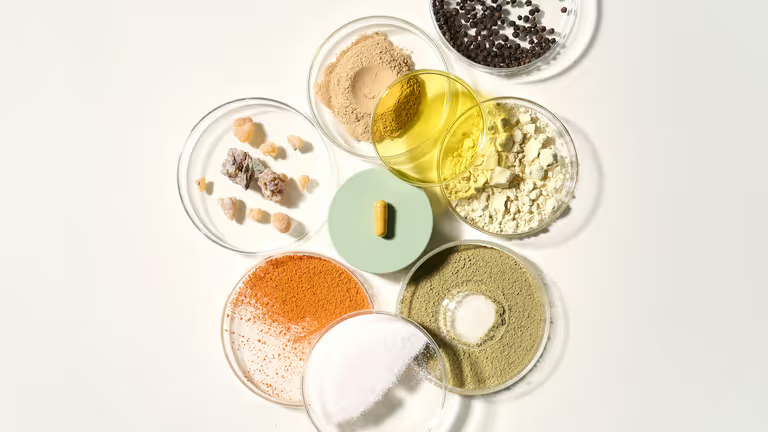
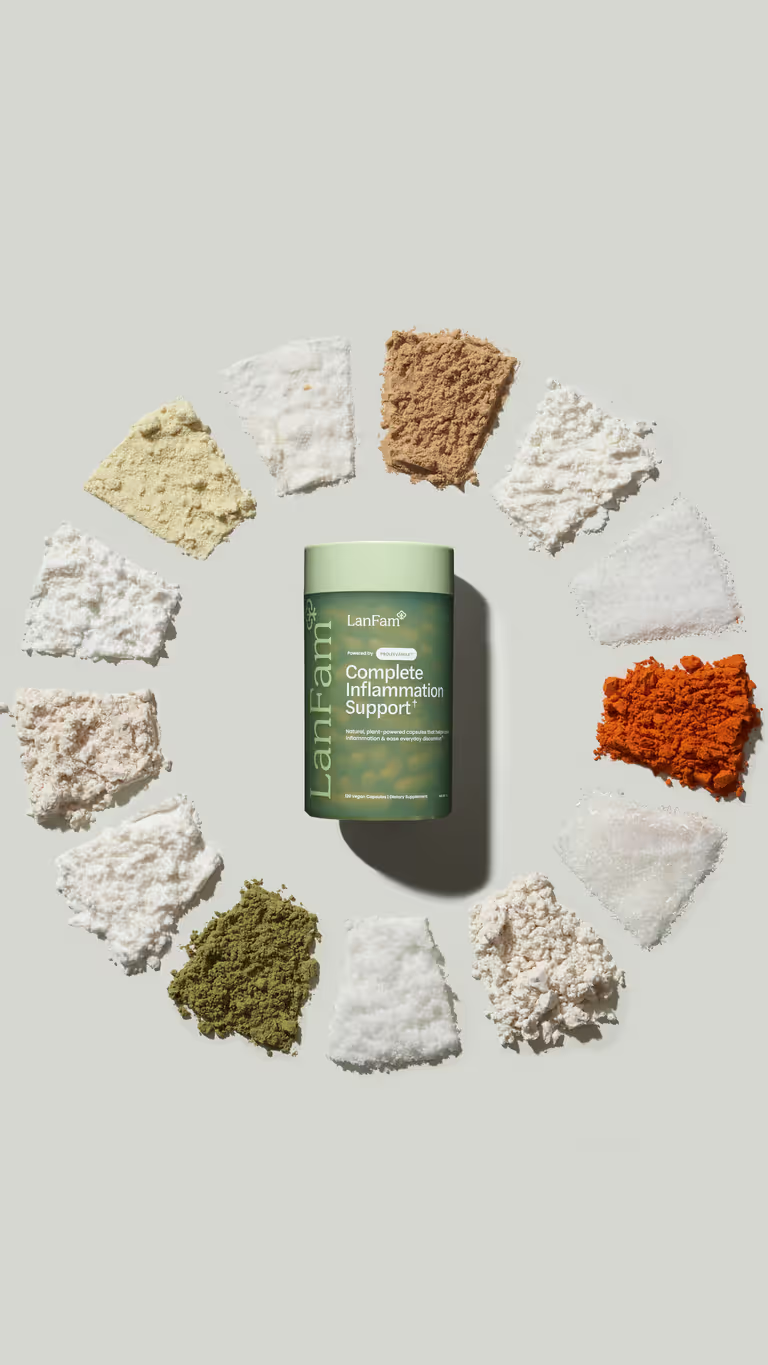
If you're waking up with a stiff back most mornings, the cause is almost certainly not your mattress, your pillow, or the fact that you turned 50. It's inflammation. Specifically, it's the overnight accumulation of inflammatory mediators - compounds like prostaglandins and cytokines - that pool in and around your joints while you sleep. Your body's inflammatory response doesn't clock out at night. It ramps up. And by morning, you feel every hour of it. LanFam Health's Complete Inflammation Support was formulated with 13 standardized ingredients targeting 6 inflammatory pathways precisely because morning stiffness isn't a single-cause problem - it's a multi-pathway one.
Why Your Back Is Stiff Every Morning
Here's what's actually happening while you sleep.
During the day, movement keeps your synovial fluid - the lubricant inside your joints - circulating. Every step, every shift in your chair, every stretch pushes that fluid through the joint capsule. It's not dramatic, but it matters. At night, that movement stops. Synovial fluid thickens and redistributes unevenly. The joints in your spine, which bear compressive load all day, now sit in static positions for six to eight hours.
Meanwhile, your immune system enters a repair cycle. Inflammatory mediators - particularly prostaglandins produced via the COX-2 enzyme pathway and leukotrienes produced via the 5-LOX pathway - increase during overnight tissue maintenance. This is normal biology. But when baseline inflammation is already elevated, as it often is in adults over 45, that overnight repair cycle produces more inflammatory compounds than your body can clear by morning.
The result: stiffness that has nothing to do with how you slept and everything to do with what's circulating through your tissues when you wake up.
There's also a nervous system component. Prolonged stillness increases the sensitivity of nociceptors - the nerve endings that register discomfort. After hours of immobility, even normal joint pressure can register as stiffness or achiness. Your back isn't damaged. It's over-sensitized from a night of inflammatory signaling.
This is why the stiffness typically improves after 15 to 45 minutes of movement. You're literally pumping fluid back through the joints and clearing inflammatory compounds that built up overnight. The morning shuffle isn't weakness. It's your body running a startup sequence on inflamed hardware.
Morning Stiffness Is Inflammation, Not Aging
"I'm just getting older." It's the most common explanation people give for morning stiffness - and it's the one that does the most damage. Not because age is irrelevant, but because it frames the problem as inevitable. Something to accept rather than address.
Here's a more accurate picture: age-related changes in inflammatory regulation are real, but they are not a fixed sentence. After about age 40, most adults experience a gradual increase in baseline inflammatory markers - a phenomenon researchers call "inflammaging." Levels of C-reactive protein, IL-6, and TNF-alpha tend to creep upward, not because something is broken, but because the body's inflammatory regulation becomes less precise over time.
This matters because it means the overnight inflammatory buildup described above starts from a higher baseline. A 30-year-old might wake up with mild stiffness that clears in five minutes. A 55-year-old with elevated baseline inflammation might need 30 minutes before their back feels functional. Same mechanism. Different starting point.
The critical distinction: that starting point isn't locked in place. Inflammaging is influenced by gut health, sleep quality, diet, movement patterns, and - importantly - whether the body has nutritional support for its own inflammatory regulation systems. Research published in Nature Reviews Immunology has documented that systemic low-grade inflammation is modifiable through multiple interventions, not an irreversible consequence of birthday candles.
So when your back is stiff every morning and someone - even a well-meaning doctor - says "well, you're not 25 anymore," that's an incomplete answer. The more useful answer is: your inflammatory regulation could use support, and there are specific, evidence-backed ways to provide it.
Why Single-Ingredient Supplements Fall Short
If you've already tried supplements for morning stiffness, there's a good chance you reached for one of the usual suspects: turmeric capsules, glucosamine, or fish oil. And there's a good chance the results were underwhelming. Here's why.
Turmeric (curcumin) alone has an absorption problem. Curcumin is a potent modulator of the COX-2 inflammatory pathway. The research supporting its role in inflammatory response is substantial. But standard curcumin has notoriously low bioavailability - most of it passes through your digestive system without reaching your bloodstream. Studies have shown that co-administration with piperine (from black pepper) can increase curcumin absorption by up to 2,000%. Without it, you're swallowing expensive powder that your body barely uses.
Glucosamine alone addresses mechanics, not inflammation. Glucosamine supports cartilage structure - it's a building block for the physical tissue in your joints. That's useful for long-term joint maintenance, but it doesn't address the inflammatory signaling that causes morning stiffness. If your problem is overnight inflammatory buildup, glucosamine is answering a question nobody asked.
Fish oil alone targets one pathway. Omega-3 fatty acids support healthy inflammatory response primarily through the resolution of inflammation - they help produce specialized pro-resolving mediators. That's valuable, but inflammation operates across multiple pathways simultaneously. Addressing only one while COX-2, 5-LOX, gut-mediated, and sleep-related inflammation continue unchecked is like fixing one leak in a roof with five holes.
The pattern is clear: single-ingredient approaches address one piece of a multi-pathway problem. Morning stiffness doesn't have a single cause, which means it doesn't respond well to a single intervention.
A Multi-Pathway Approach to Morning Stiffness
Supporting your body's inflammatory response at multiple points simultaneously is a fundamentally different strategy than megadosing one ingredient. Here's what a multi-pathway approach looks like in practice - and why Complete Inflammation Support by LanFam Health was built around this principle.
Curcumin + Piperine (COX-2 Pathway + Bioavailability). Curcumin helps modulate the COX-2 enzyme, one of the primary drivers of prostaglandin production - the same prostaglandins that accumulate in your joints overnight. Combined with 6mg of piperine, curcumin absorption increases dramatically, meaning the compound actually reaches the tissues where it's needed. This pairing addresses perhaps the most well-documented inflammatory pathway involved in joint stiffness.
Boswellia Serrata (5-LOX Pathway). While curcumin works on COX-2, Boswellia's active compounds - boswellic acids - help modulate the 5-LOX enzyme pathway, which produces leukotrienes. Leukotrienes are a separate class of inflammatory mediator that contribute to tissue sensitivity and joint discomfort. Addressing 5-LOX alongside COX-2 covers two of the most significant inflammatory pathways relevant to morning stiffness.
L-Glutamine (Gut Barrier and Systemic Inflammation). This is the pathway most people never consider. Your gut lining is a barrier between your digestive system and your bloodstream. When that barrier becomes permeable - often called "leaky gut" - bacterial endotoxins can enter circulation and trigger systemic inflammatory responses that show up far from your digestive tract, including in your joints and back. L-Glutamine is the primary fuel source for intestinal epithelial cells, helping support gut barrier integrity and, by extension, helping maintain healthy systemic inflammatory levels.
GABA + 5-HTP (Sleep Quality and Overnight Inflammatory Regulation). Poor sleep quality doesn't just make you tired - it directly amplifies inflammatory signaling. Research has consistently linked disrupted sleep to elevated inflammatory markers including IL-6 and CRP. GABA and 5-HTP support relaxation and sleep quality, which matters specifically for morning stiffness because better sleep means less overnight inflammatory escalation. You wake up with less to clear.
These five ingredients represent four distinct mechanisms - enzyme pathway modulation, bioavailability enhancement, gut barrier support, and sleep-mediated inflammatory regulation. That's the difference between hoping one ingredient does everything and building a coordinated system.
What Improvement Actually Looks Like
Honest expectations matter more than marketing promises. If you begin a multi-pathway inflammatory support regimen, here's a realistic timeline based on the biology involved and clinical observations.
Week 2 - Building phase. Curcumin and Boswellia begin reaching effective tissue levels. Most people don't notice dramatic changes yet. What you might notice: slightly improved sleep quality from GABA and 5-HTP support. Don't evaluate the approach at this point - it's too early.
Week 4 - The stiffness window starts to shrink. This is where most people notice the first meaningful shift. The 30-minute morning shuffle becomes 15 minutes. You might catch yourself standing up from a chair without the usual negotiation. The change isn't sudden - it's a gradual narrowing of the window between waking up and feeling functional.
Week 8 - Clinically measurable differences. In clinical evaluation, Complete Inflammation Support was associated with a 22-point reduction in McGill Pain Questionnaire scores at 8 weeks (p=0.042). By this point, multi-pathway support has had time to influence COX-2, 5-LOX, gut barrier integrity, and sleep quality simultaneously. This is where the compounding effect of multiple pathways becomes apparent.
Day 90 - The pause test. After 90 days of consistent use, some people choose to pause for a week to see what happens. This isn't medical advice - it's a personal data point. If the morning stiffness returns noticeably during the pause, that tells you something useful about what the support was doing. LanFam Health offers a 90-day money-back guarantee specifically because meaningful results take time to develop and evaluate.
The key word in all of this is "support." Your body has its own inflammatory regulation systems. A multi-pathway supplement doesn't replace those systems - it provides the raw materials and cofactors they need to function more effectively. Results build gradually because biology builds gradually.
When to See a Doctor
Supporting your body's inflammatory response with targeted nutrition is a reasonable strategy for the kind of chronic, low-grade morning stiffness that most adults over 45 experience. But some symptoms are red flags that warrant professional evaluation - not supplements.
See a doctor if you experience:
- Sudden onset of severe stiffness that wasn't present the day before and doesn't improve with movement
- Numbness or tingling in your legs, feet, or groin area alongside back stiffness
- Fever accompanying stiffness - this can indicate infection or autoimmune flare
- Morning stiffness lasting longer than one hour that persists daily for more than two weeks
- Stiffness following an injury, fall, or accident
- Unexplained weight loss alongside increasing stiffness
- Loss of bladder or bowel control - seek emergency care
Supplements complement professional care. They don't replace it. A responsible approach to morning stiffness means addressing the inflammatory biology while also ruling out conditions that require medical intervention. Your doctor can check inflammatory markers, rule out autoimmune conditions like rheumatoid arthritis or ankylosing spondylitis, and ensure your stiffness is the garden-variety inflammatory kind rather than something requiring specific treatment.
Important note for those on blood-thinning medication: Curcumin and resveratrol - both present in Complete Inflammation Support - can potentiate anticoagulant effects. If you take warfarin, aspirin, or other blood thinners, consult your healthcare provider before starting any supplement containing these ingredients. The piperine in this formula is dosed at 6mg, well below the 20mg+ threshold where significant drug interactions have been documented, but transparency matters.
Getting Mornings That Feel Like Mornings Again
Morning stiffness isn't a character flaw or an unavoidable tax on aging. It's an inflammatory response - one that operates across multiple biological pathways and responds to multi-pathway support. The overnight accumulation of prostaglandins, leukotrienes, and other inflammatory mediators is real biology with real solutions.
LanFam Health's Complete Inflammation Support was built by Fabio Lanzieri, drawing on 40 years of pharmaceutical experience, specifically to address the kind of multi-pathway inflammation that single ingredients miss. Thirteen standardized ingredients. Six inflammatory pathways. One formula designed to support the body's own regulatory systems - including the ones that determine whether your mornings start with movement or with negotiation.
If you've been waking up stiff and writing it off as "just getting older," it might be worth questioning that story. Your body's inflammatory response is more addressable than the mattress commercials would have you believe.
Learn more about Complete Inflammation Support and how it works →LanFam Health offers a 90-day money-back guarantee - because meaningful results take time, and you deserve the chance to evaluate them honestly.

Frequently asked questions
There's a seat at our table
Letters from our family to yours — the science, the recipes, the things that actually helped real families. Leave your email and we'll send the next one.