Moving Your Body When Your Body Says No
When chronic inflammation makes movement feel impossible, the answer isn't exercise — it's movement. Maria on the difference, the guilt, and the start.

There’s a version of this letter that starts with something like “I discovered gentle movement and it changed everything.” I’m not going to write that version, because it isn’t what happened.
What happened was messier and slower and full of days when the answer was genuinely no. I want to write that version, because I think it’s the one that might actually be useful if you’re where I was.
The difference between exercise and movement
When the doctors cleared me to “be more active,” I heard “exercise.” I pictured yoga classes and morning walks with earbuds in. I’d been relatively active before everything happened — not an athlete, but someone who moved through life without thinking about it. So I thought I knew what active felt like. I’d just get back to that.
That was not what happened.
Exercise felt impossible. Not hard — impossible. The fatigue was of a kind I’d never experienced before, a heaviness that sat in my muscles and wouldn’t lift no matter how much I rested. My joints ached in the morning, sometimes well into the afternoon. On a bad day, the idea of getting dressed was already the whole plan.
Movement, though — that was different.
Movement was getting up to refill my water glass and choosing to walk to the kitchen a slightly longer way. It was stretching my ankles before I put my feet on the floor in the morning, still lying in bed, just moving things slowly to tell them I was awake. It was standing at the kitchen counter to fold laundry instead of sitting at the table. It was parking slightly farther away at the pharmacy on days when my knees were cooperating.
None of that looks like exercise. It barely looked like anything. But it was the real starting point, and pretending otherwise would be a disservice to anyone reading this who’s sitting where I sat.
What movement actually looked like
The most significant thing I did in those first months was walk to the mailbox.
That’s not a metaphor. The actual mailbox, at the end of our actual driveway. Some days that was the only time I went outside. I’d put on shoes — that alone was a small negotiation with my body — go to the mailbox, come back inside. Done.
Fabio never once said “is that all?” He just looked up and said “good.” He understood that the mailbox was the whole thing. That doing the small thing every day was what rebuilding looked like.
Over weeks, mailbox became halfway down the block. Halfway down the block became around the block. Around the block became two blocks, then three, then eventually a slow mile that left me tired in a way that felt different from the inflammation fatigue — more like I’d actually used something, rather than been used up.
I also figured out water early. On bad mornings, sitting in a warm bath for twenty minutes before I tried to move did more for my stiffness than anything else. Not a miracle, just warmth and buoyancy — the water took some weight off joints that didn’t want to carry it yet. Later, when we had access to a pool, I started walking laps in shallow water. Slow, quiet, embarrassingly gentle by any fitness standard. My body loved it.
Stretching happened in bed before I got up, every morning without exception. Just gentle things: moving my ankles in circles, pulling my knees toward my chest one at a time, rolling my shoulders. No class, no app. Just a five-minute conversation with my joints before asking them to do anything.
Gardening was a later addition, and an imperfect one. My hands had good days and bad days. On good days, ten or fifteen minutes of weeding or planting was the best movement I found — purposeful, outside, not thinking about my body because I was thinking about the tomatoes. On bad days, the garden waited.
The guilt
I want to talk about the guilt because I think it’s underreported.
There is a specific kind of shame that comes with not being able to do what healthy people do without thinking about it. Especially now, when every social media feed is full of people doing yoga at sunrise and running half-marathons and talking about their morning routines like everyone has those. I’d see someone I knew post about her workout and feel two things at once: happy for her and genuinely sad for myself.
I also felt guilty for not doing more. Intellectually I understood that my body was dealing with chronic inflammation, that the fatigue was real, that pushing through on bad days would likely make things worse. I understood all of it. And I still lay in bed some mornings feeling like I was failing some test.
Fabio was patient with this in a way I didn’t always deserve. He’d remind me — gently, sometimes more than once — that rest is physiologically necessary when your body is in a state of inflammation. That the stress, mood, and pain connection is real: cortisol from pushing through when you’re not ready can actually drive more inflammation, not less. He wasn’t just saying it to make me feel better. He had the research.
But knowing it and believing it are different things, and for a long time I knew it without believing it. That’s okay. I think that’s normal. The guilt didn’t go away all at once. It faded slowly as I started to trust that small and consistent was actually working.
Some days the answer is no
I want to say this plainly: there were days when I did not move, and I needed to not move.
Not because I was giving up. Not because I’d decided to quit. Because my body said no clearly enough that ignoring it would have cost more than it was worth.
The hard part was learning to tell the difference between the no that means rest today and the no that becomes a reason to stop trying. They feel similar from the inside, especially at first. The thing I eventually found was that resting without guilt made it easier to start again the next day. Beating myself up about resting made it harder.
I had a rule I made for myself during the hardest stretch: I wasn’t allowed to call a rest day a failure. It was just information. My body had information that said not today. I’d log it, rest, and try again tomorrow.
The connection to mood
Fabio brought me research on this that I found annoying at the time and now think about constantly.
The relationship between movement, inflammation, and mood runs in both directions. On the one hand, chronic inflammation can affect mood and cognitive function directly — not just as a side effect of being in pain, but through actual signaling pathways. On the other hand, movement — even gentle movement — supports healthy serotonin and endorphin activity, which helps regulate mood.*
So on the days when I couldn’t move, I’d feel worse emotionally, which would make moving the next day feel harder, which would make my mood lower again. The stress, mood, and pain loop is real and it can close on you if you’re not watching for it.
The thing that helped most was having a floor. Some days the floor was the mailbox. Some days the floor was just getting dressed and sitting in a different room from the bed. Having a floor meant I always did something, even when the something was small enough to seem pointless.
How it progressed (not linearly)
I want to be honest that this was not a straight line upward.
There were weeks of improvement followed by bad flares that knocked me back. There was a month — maybe eight months into things — when I had a rough stretch with the medication and lost a lot of what I’d built. I had to start smaller again. It was discouraging in a way I can’t fully describe.
But I also knew by then that I could come back. I’d done it once. That knowledge was worth something.
The setbacks started feeling less permanent over time. Not easier, exactly, but less like an ending. More like a feature of the landscape I’d learned to navigate.
What ProleevaMax did for the movement question
I’ll mention this briefly because it was genuinely relevant.
There were days — especially in the early months — when the morning stiffness was severe enough that movement felt completely out of reach. Not hard. Out of reach. The difference between walking to the mailbox and not walking to the mailbox some days came down to how much inflammation support my body had.
When I started taking ProleevaMax consistently, I noticed that the floor on those difficult mornings was higher.* Not that bad days disappeared. Not that I became a different person. But the worst days became less often the worst, and on those days I could usually still do something small — a few stretches, a slow walk to the kitchen, something.
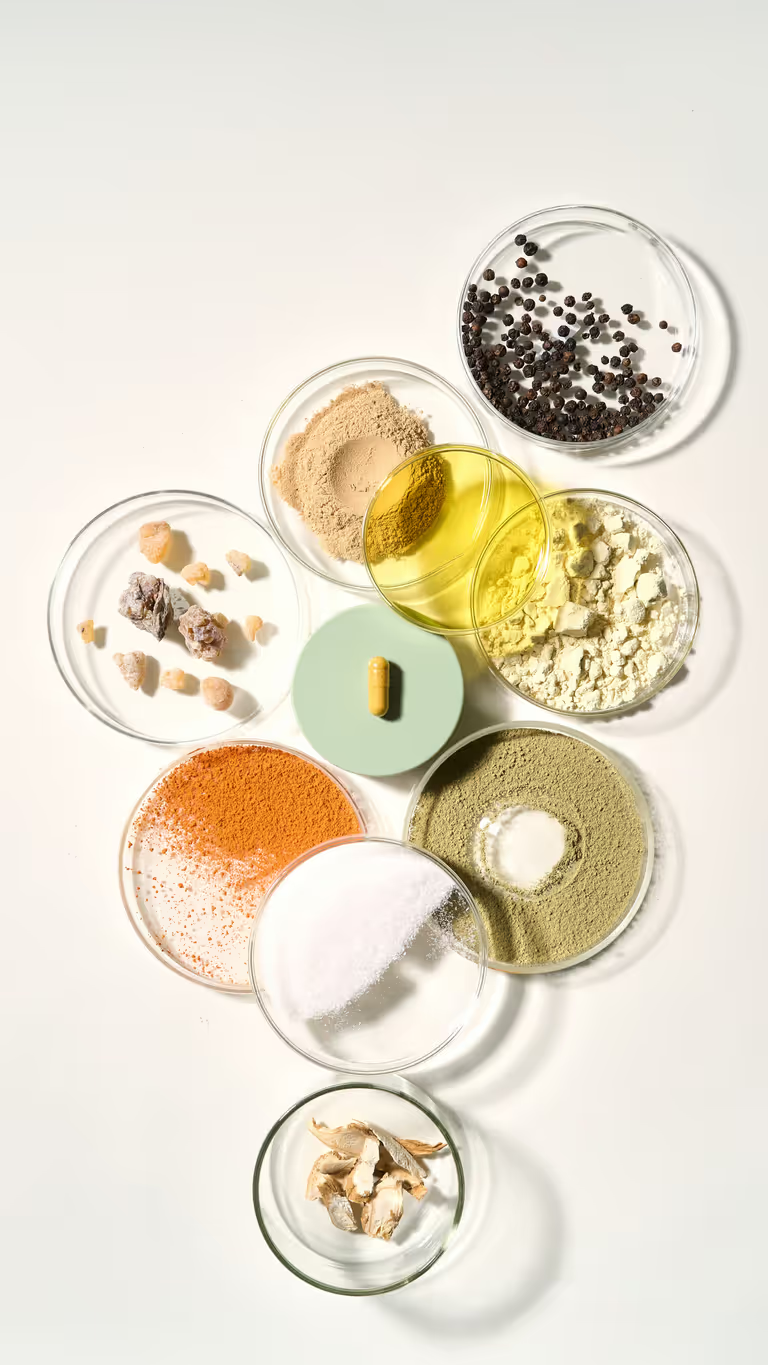
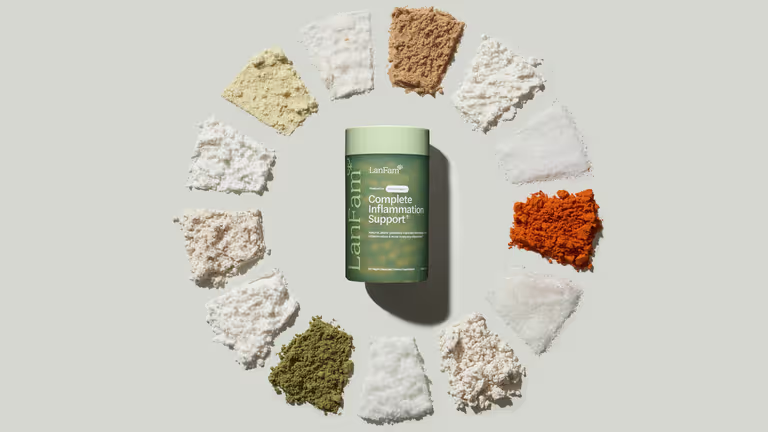
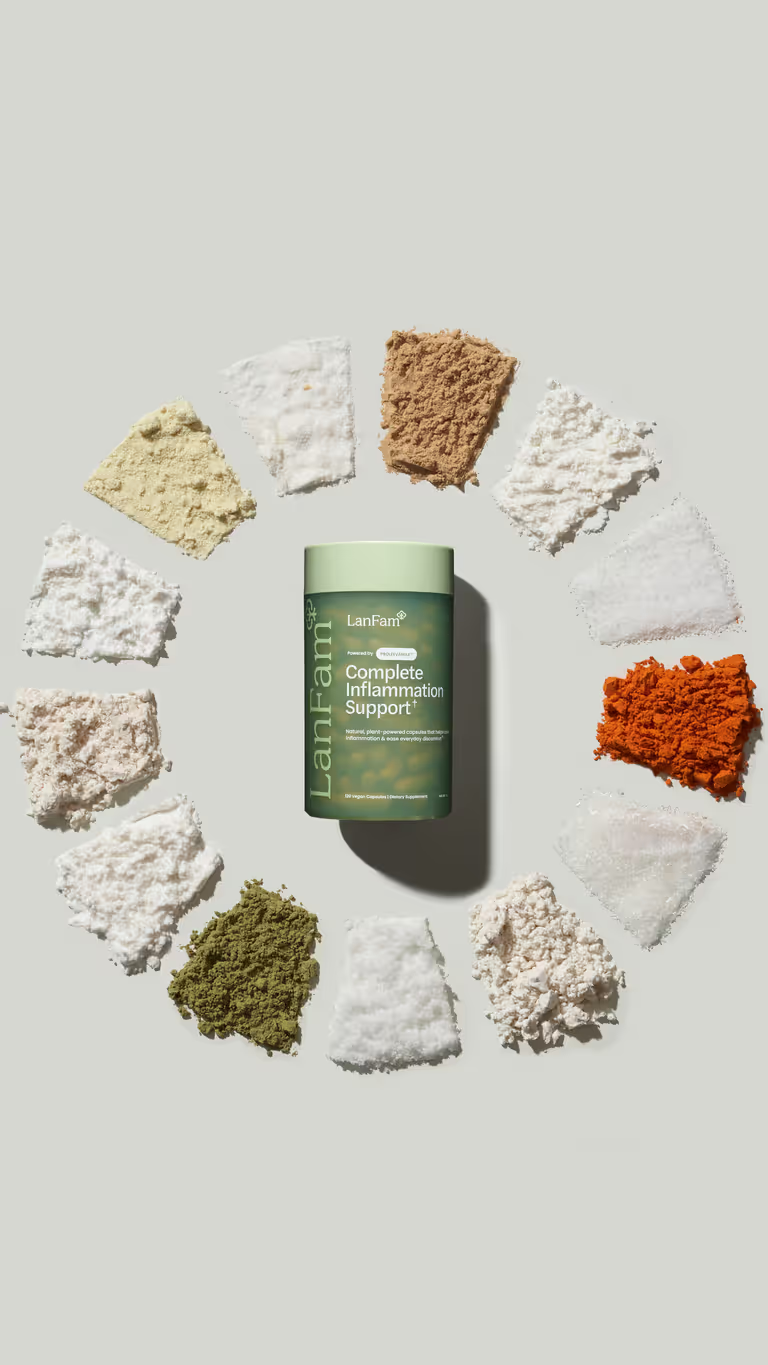
That gap — between moving and not moving — mattered more to me than any other metric. ProleevaMax’s thirteen ingredients are designed to work together to support a healthy inflammatory response, and for me, that support translated directly into being able to choose movement more often.*
What movement looks like now
I walk two or three miles most days. Not fast — I’m not trying to be fast. I do a stretching routine in the morning that’s grown from five minutes to about fifteen. I’m back in the garden, on good days with my hands and knees in the dirt, and on harder days just standing at the edge and deciding what needs doing.
I don’t have a fitness routine. I have a movement practice. The distinction still matters to me. A fitness routine has goals, benchmarks, a sense of progress to be measured. A movement practice is just the commitment to keep showing up in my body and asking it what it can do today.
Some days it can do more than I expect. Some days it surprises me going the other direction. I’ve learned to be curious about it instead of attached to the answer.
If you’re in the early part of this — if you’re negotiating with your knees over whether to get out of bed, if the mailbox seems like a lot, if you’re scrolling through exercise content and feeling like something is wrong with you because it all seems impossible — nothing is wrong with you. You’re working with a body that’s fighting something, and you’re showing up anyway, and that counts.
The mailbox is enough. Start there.
* These statements have not been evaluated by the Food and Drug Administration. This product is not intended to diagnose, treat, cure, or prevent any disease.
There's a seat at our table
Letters from our family to yours — the science, the recipes, the things that actually helped real families. Leave your email and we'll send the next one.