Anti-Inflammatory Eating: A 7-Day Meal Plan That Actually Works
A 7-day anti-inflammatory meal plan built on peer-reviewed research — not food trends. What to eat, what to cut, and how to make it stick.
Ingredients in this letter

By Fabio Lanzeri, CEO & Founder, LanFam Health
40+ years in pharmaceutical formulation and development.
This content is for informational purposes only and does not constitute medical advice. Consult your healthcare provider or a registered dietitian before making significant changes to your diet.
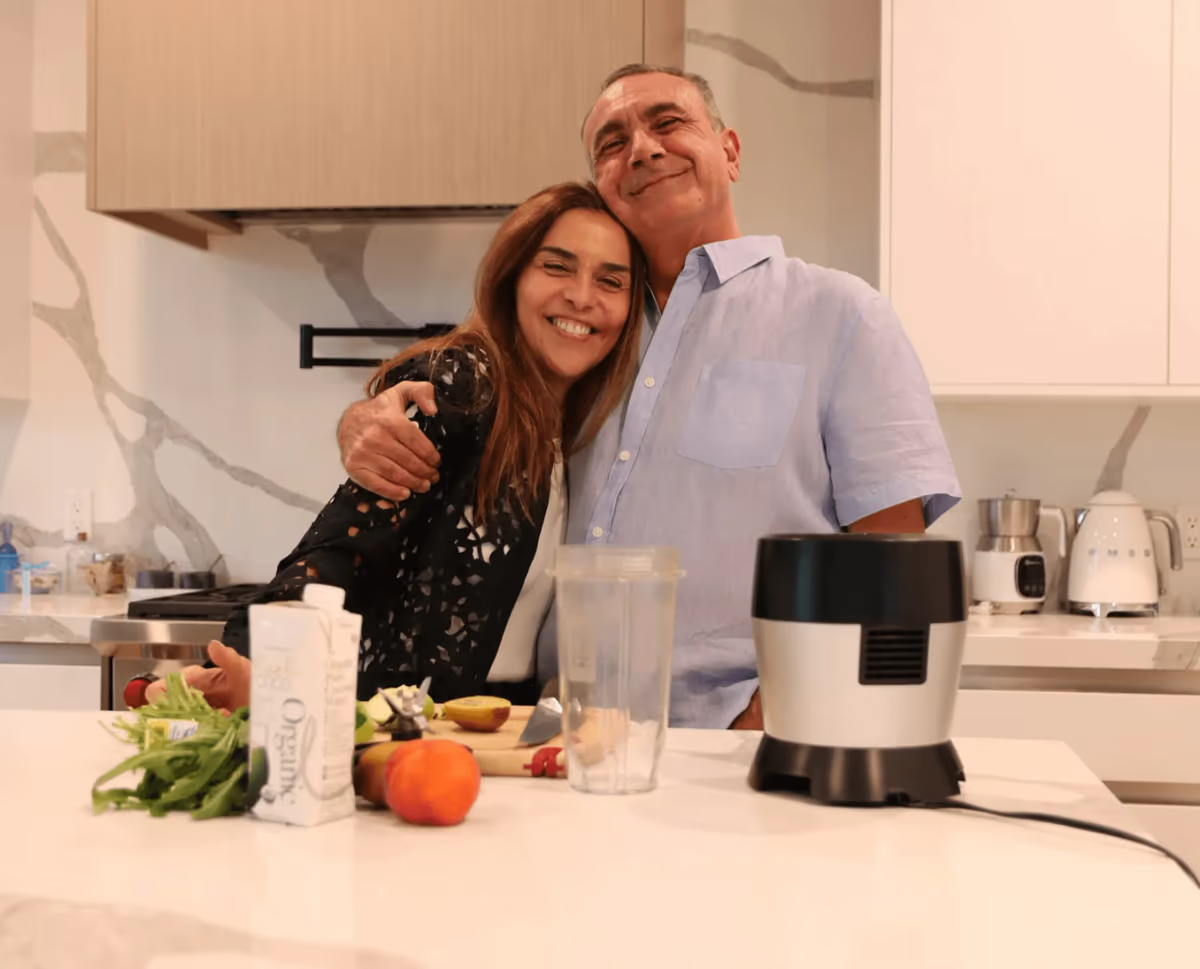
During Maria's recovery, the hardest part wasn't knowing what to eat — she'd always cooked clean. After her treatment, she cut out all refined sugars and processed foods entirely. The real challenge was the pain. Pressing garlic, opening jars, standing long enough to prep a full meal — some days her body just wouldn't let her.
We changed how our family cooks. Not the food — the process. Simpler prep, fewer steps, meals that didn't fight her hands and joints.
Food Is Not Neutral
Your immune system remembers what you eat. A 2018 study in Cell found that diets heavy in processed food and saturated fat reprogrammed immune cells to stay inflamed — even after people improved their diet [1].
On the other side, diets rich in omega-3 fats, fiber, and polyphenols are consistently linked to lower levels of the inflammatory markers that drive chronic pain and fatigue [2].
Every meal is either helping or working against you.
Five Principles
A meal plan without principles is a list you'll abandon by Wednesday. These are the rules behind every meal below.
1. If the plate looks beige, add color. Berries, leafy greens, beets, sweet potatoes — the deep colors come from polyphenols and carotenoids that help your body manage inflammation [3].
2. Omega-3 fats are non-negotiable. Fatty fish, walnuts, flaxseed. Your body uses omega-3s to make molecules that resolve inflammation [4]. Most Western diets are skewed heavily toward omega-6 fats, which do the opposite.
3. Fiber is the foundation. Your gut bacteria turn fiber into short-chain fatty acids that support your gut lining and regulate immune response. A Stanford study showed a high-fiber, fermented-food diet reduced 19 inflammatory markers in just 10 weeks [5].
4. What you remove matters as much as what you add. Processed foods, refined sugar, and seed oils are linked to inflammatory spikes within hours of eating [6]. You don't need to be perfect. Just reduce the frequency.
5. Consistency over intensity. People who eat 30+ different plants per week have significantly more diverse gut bacteria [7]. The goal is steady variety — not a crash diet.
The 7-Day Meal Plan
Nothing exotic. Nothing expensive. Just food that works with your body.
Day 1 — Monday
Breakfast: Overnight oats with walnuts, blueberries, ground flaxseed, honey. Green tea.
Lunch: Mixed greens with grilled salmon, avocado, cherry tomatoes, olive oil–lemon dressing.
Dinner: Baked chicken thighs, roasted sweet potatoes, steamed broccoli, sauerkraut.
Snack: Apple slices with almond butter.
Why it works: Omega-3s from the salmon, polyphenols from the blueberries, and fermented sauerkraut for gut support — three principles in one dinner.
Day 2 — Tuesday
Breakfast: Eggs scrambled with spinach, turmeric, and black pepper on sourdough toast. Green tea.
Lunch: Lentil soup with carrots, celery, onion, bay leaf, lemon. Side of mixed greens.
Dinner: Wild-caught cod, roasted beets, quinoa, sauteed kale in olive oil and garlic.
Snack: Handful of mixed nuts.
Why it works: Turmeric and black pepper boost absorption together, lentils deliver fiber for gut bacteria, and cod provides lean omega-3s.
Day 3 — Wednesday
Breakfast: Plain Greek yogurt with strawberries, chia seeds, cinnamon.
Lunch: Turkey-avocado wrap in sourdough with arugula and mustard. Carrot sticks.
Dinner: Beef stir-fry with bell peppers, snap peas, ginger, garlic, brown rice. Avocado oil for cooking.
Snack: Celery with hummus.
Why it works: Ginger and garlic are natural anti-inflammatory compounds, yogurt adds probiotics, and the color variety covers multiple polyphenol families.
Day 4 — Thursday
Breakfast: Smoothie — spinach, mango, banana, flaxseed, kefir, turmeric.
Lunch: Sardines in olive oil over mixed greens with cherry tomatoes, red onion, capers, lemon.
Dinner: Baked salmon, asparagus, roasted cauliflower, kimchi.
Snack: Mixed berries.
Why it works: Sardines are one of the richest omega-3 sources, kefir adds probiotics to the smoothie, and kimchi brings fermented gut support to dinner.
Day 5 — Friday
Breakfast: Steel-cut oatmeal with walnuts, banana, almond butter. Green tea.
Lunch: Black bean and sweet potato bowl with brown rice, salsa, avocado, cilantro.
Dinner: Grilled chicken, roasted Brussels sprouts, mixed green salad, bone broth.
Snack: Pear with dark chocolate (70%+ cacao).
Why it works: Sweet potatoes and Brussels sprouts deliver fiber and color, bone broth supports gut lining, and dark chocolate adds polyphenols without refined sugar.
Day 6 — Saturday
Breakfast: Poached eggs over sauteed greens (spinach, kale, chard), sourdough toast, tomato.
Lunch: Chickpea salad with cucumber, red pepper, olives, parsley, olive oil–lemon dressing.
Dinner: Slow-cooked stew with root vegetables — carrots, parsnips, celery root — rosemary and thyme. Fermented vegetables on the side.
Snack: Yogurt with honey and walnuts.
Why it works: Leafy greens trio for nutrient density, slow-cooked stew extracts maximum nutrition from root vegetables, and fermented sides keep gut bacteria fed.
Day 7 — Sunday
Breakfast: Buckwheat pancakes with blueberries, maple syrup, turkey sausage.
Lunch: Miso soup with tofu, seaweed, scallions. Edamame. Brown rice.
Dinner: Herb-crusted baked trout, roasted root vegetables, mixed salad with pumpkin seeds.
Snack: Cucumber with guacamole.
Why it works: Miso and seaweed bring fermented and prebiotic support, trout delivers omega-3s, and pumpkin seeds add zinc for immune function.
Making It Stick
Cook once, eat twice. Sunday's stew is Monday's lunch. Thursday's salmon flakes over Friday's salad.
Stock the staples. Olive oil, canned salmon, frozen berries, nuts, leafy greens, eggs. If these are always in your kitchen, a good meal is 15 minutes away.
Spice intentionally. Turmeric with black pepper. Ginger. Cinnamon. Maria puts turmeric and black pepper in her eggs every morning. Small thing — adds up.
Swap, don't force. Hate sardines? Use another fatty fish. The principles matter more than any single ingredient.
What the Evidence Supports
Diets built around whole foods, diverse plants, omega-3 fats, and fermented foods are consistently linked to lower inflammation and better long-term outcomes. Multiple systematic reviews confirm the pattern [3][5].
But nutrition research has real limits — most of it relies on people remembering what they ate. Individual responses vary based on genetics, medications, and your existing gut-brain chemistry. No meal plan works identically for every person. This is a strong signal, not a guarantee.
Where Food Ends and the Gap Begins
Maria ate clean through her entire recovery — she never wavered on that. It helped. But even the best diet has limits. The day-to-day rebuild — managing inflammation, supporting gut repair, getting back to feeling like herself — needed more than food alone could provide. That's where the gap begins. And that gap is what led me back to the lab.
Why We Built ProleevaMax
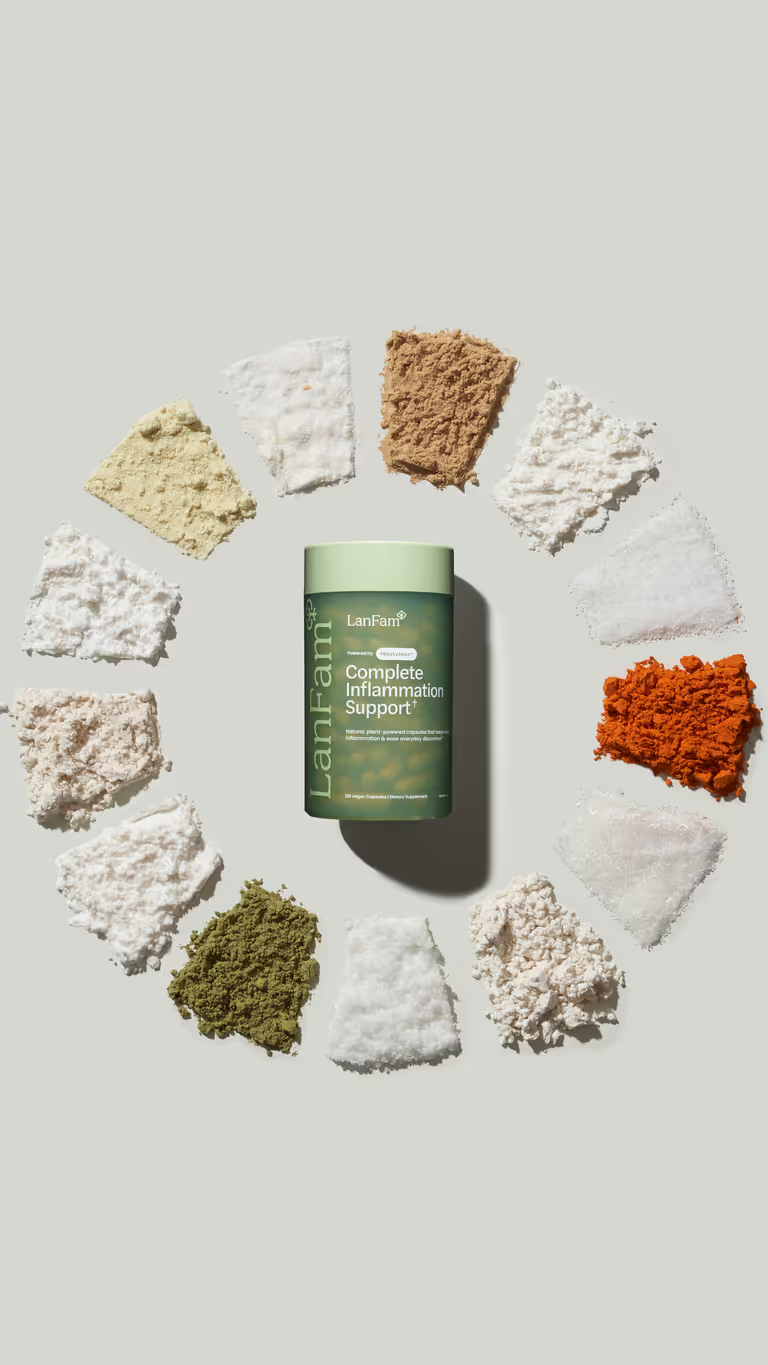
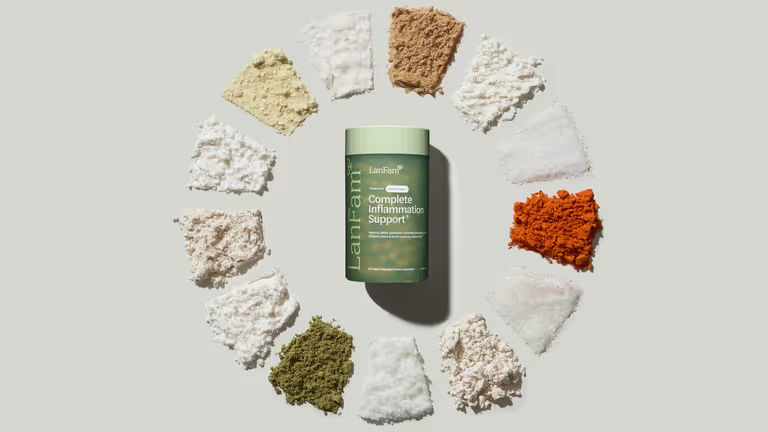
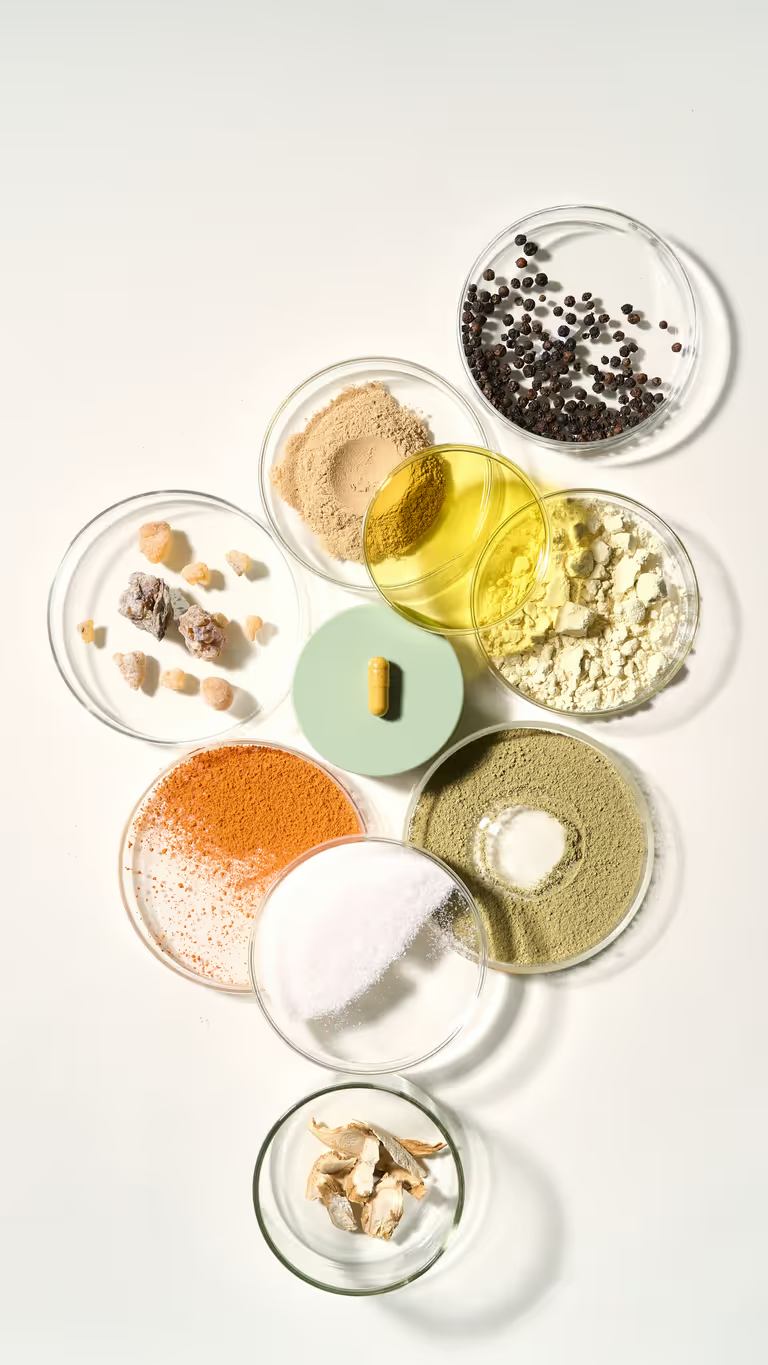
I created ProleevaMax because the best diet in the world still left Maria short. The formula combines 13 natural ingredients that work together — Matcha Green Tea and Panax Ginseng to help support your body's natural antioxidant defenses and immune response, GABA to help support calm and recovery when your body needs to wind down — all enhanced by Piperine to help support absorption so more of what you take gets put to work.*
Eating well is the foundation. Targeted supplementation can help support what food alone may not fully address.*
If we wouldn't give it to our own, we won't make it. That's been our family's standard since day one.
- These statements have not been evaluated by the Food and Drug Administration. This product is not intended to diagnose, treat, cure, or prevent any disease.
References
- Christ A, et al. "Western Diet Triggers NLRP3-Dependent Innate Immune Reprogramming." Cell. 2018;172(1-2):162-175. DOI: 10.1016/j.cell.2017.12.013
- Minihane AM, et al. "Low-Grade Inflammation, Diet Composition and Health." British Journal of Nutrition. 2015;114(7):999-1012. DOI: 10.1017/S0007114515002093
- Galland L. "Diet and Inflammation." Nutrition in Clinical Practice. 2010;25(6):634-640. DOI: 10.1177/0884533610385703
- Calder PC. "Omega-3 Fatty Acids and Inflammatory Processes." Biochemical Society Transactions. 2017;45(5):1105-1115. DOI: 10.1042/BST20160474
- Wastyk HC, et al. "Gut-Microbiota-Targeted Diets Modulate Human Immune Status." Cell. 2021;184(16):4137-4153. DOI: 10.1016/j.cell.2021.06.019
- Giugliano D, et al. "The Effects of Diet on Inflammation." Journal of the American College of Cardiology. 2006;48(4):677-685. DOI: 10.1016/j.jacc.2006.03.052
- McDonald D, et al. "American Gut: an Open Platform for Citizen Science Microbiome Research." mSystems. 2018;3(3):e00031-18. DOI: 10.1128/mSystems.00031-18
Note: All citation DOIs should be independently verified before publication.
Related Reading
If you want to go deeper on the research behind this guide, these are the supporting articles in the LanFam library:
Foods That Cause Inflammation: What the Science Actually Says
Anti-Inflammatory Breakfast: 7 Research-Backed Ideas to Start Your Day With Less Inflammation
The Biology of Not Eating—What Happens When You Give Your Body a Break

There's a seat at our table
Letters from our family to yours — the science, the recipes, the things that actually helped real families. Leave your email and we'll send the next one.