Inflammation and Brain Fog: The Biological Connection Most People Miss
Curcumin and ibuprofen both reduce inflammation through different pathways. One carries GI risk; one takes weeks. Here's what the clinical data shows.
Ingredients in this letter

TL;DR
- Yes, inflammation causes brain fog - specifically through neuroinflammation, where pro-inflammatory cytokines cross the blood-brain barrier and disrupt normal cognitive function
- There are four primary mechanisms: neurotransmitter disruption, cell membrane damage, sleep architecture breakdown, and oxidative stress - all triggered by chronic inflammation
- People most at risk include those with autoimmune conditions, chronic stress, post-treatment recovery, long-term NSAID use, and hormonal transitions like menopause
- Treating the fog without addressing the inflammation is like mopping a floor while the faucet runs - you have to go upstream
- Bottom line: Compounds that cross the blood-brain barrier and target neuroinflammation directly - not just mask symptoms - are what actually restore cognitive clarity
Yes, inflammation can cause brain fog - and the connection is more direct than most people realize. When chronic inflammation persists, pro-inflammatory molecules called cytokines cross the blood-brain barrier, activate your brain's immune cells, and disrupt the neurotransmitter signaling responsible for memory, focus, and mental clarity. At LanFam Health, we built Complete Inflammation Support (Powered by ProleevaMax) around this exact connection - because brain fog from inflammation requires support that actually reaches your brain.
If nothing you've tried has made a lasting difference, the real issue might be inflammation you can feel cognitively but can't see on a standard blood panel.
The Inflammation-Brain Fog Connection
Acute inflammation - from a cut or a cold - is your body doing its job. Chronic inflammation is different: a low-grade, persistent immune response that never fully resolves. And it doesn't stay in one place.
Your brain is protected by the blood-brain barrier (BBB), a selective membrane controlling what enters your central nervous system. For decades, scientists assumed the BBB kept inflammatory signals out. It doesn't. Research in Nature Reviews Neuroscience documents that pro-inflammatory cytokines - IL-1-beta, IL-6, and TNF-alpha - cross the blood-brain barrier through active transport and signaling through barrier cells.
Once cytokines reach the brain, they activate microglia - your brain's resident immune cells. Think of microglia as your brain's maintenance crew. Normally, they clear debris and support synaptic connections. But when chronically activated by inflammatory signals, they become destructive - releasing their own inflammatory compounds, damaging synaptic connections, and interfering with the neurotransmitter systems that control how clearly you think.
This is neuroinflammation - the biological mechanism connecting systemic inflammation to the cognitive symptoms you experience as brain fog: difficulty concentrating, word-finding problems, mental fatigue, and that sense that your brain is running through mud.
How Inflammation Disrupts Cognitive Function
Neuroinflammation doesn't cause brain fog through one pathway. It hits your cognitive system from four directions simultaneously, which is why it feels so pervasive - and why single-target solutions rarely work.
1. Neurotransmitter Disruption
Clear thinking depends on neurotransmitters like acetylcholine (memory and focus), serotonin (mood and cognitive flexibility), and dopamine (motivation and processing speed). Neuroinflammation disrupts all three.
Inflammatory cytokines upregulate an enzyme called IDO that diverts tryptophan - serotonin's raw material - toward a neurotoxic compound called quinolinic acid. Less serotonin, more neurotoxicity, worse cognition. For acetylcholine, inflammation reduces choline uptake and disrupts synaptic signaling - which is why brain fog often shows up as forgetfulness and inability to hold focus.
2. Cell Membrane Damage
Every neuron is wrapped in a cell membrane made of phospholipids - think of it as the insulation on electrical wiring. When the insulation degrades, signals misfire.
Chronic inflammation generates free radicals that directly attack these membranes through lipid peroxidation. As membranes degrade, neurons communicate less efficiently. Signals that should travel quickly arrive slowly or not at all. The subjective experience: a foggy, sluggish mind - not because you're less intelligent, but because the hardware is compromised.
This is where L-Serine becomes relevant. It's a precursor to phosphatidylserine, one of the key phospholipids in neuronal membranes - and critically, it crosses the blood-brain barrier to reach the neurons that need membrane support directly. Research supported by the National Institute of Neurological Disorders and Stroke has explored L-Serine's neuroprotective role in maintaining cell membrane integrity under inflammatory conditions.
3. Sleep Architecture Disruption
Pro-inflammatory cytokines alter sleep architecture by increasing light sleep and reducing deep (slow-wave) sleep and REM sleep. Deep sleep is when your brain clears metabolic waste through the glymphatic system. REM sleep is when memory consolidation occurs. When inflammation compresses these stages, your brain loses its primary recovery windows.
The cycle is self-reinforcing: inflammation disrupts sleep, poor sleep increases inflammation, increased inflammation worsens brain fog. Breaking this cycle requires addressing the inflammation directly, not just taking sleep aids.
4. Oxidative Stress
Chronic inflammation and oxidative stress are biochemical partners - inflammatory processes generate free radicals, and accumulated free radicals trigger more inflammation. The brain is particularly vulnerable because it consumes roughly 20% of your body's oxygen despite being only 2% of your body weight. That high metabolic rate means more opportunity for oxidative damage, and fewer reserves to handle it when antioxidant defenses are depleted.
This is why anti-inflammatory support for brain fog needs to include antioxidant compounds alongside anti-inflammatory ones. Addressing cytokines without addressing the oxidative damage they've caused is solving half the problem.
Who's Most at Risk for Inflammation-Driven Brain Fog
Certain populations are significantly more likely to experience inflammation-driven brain fog.
People with autoimmune conditions. Rheumatoid arthritis, lupus, Hashimoto's, and IBD involve chronic immune activation by definition. Research in Frontiers in Immunology has directly linked autoimmune-driven neuroinflammation to cognitive impairment.
People recovering from illness or medical treatment. Post-viral syndromes (including long COVID), post-surgical recovery, and post-treatment periods often involve prolonged inflammatory responses. The brain fog widely reported after COVID-19 infection has been strongly associated with neuroinflammation and microglial activation.
People under chronic stress. Cortisol is anti-inflammatory short-term, but when stress becomes chronic, cortisol receptors downregulate and the effect reverses. Chronic stress becomes pro-inflammatory - and the brain is a primary target.
Long-term NSAID users. NSAIDs reduce certain inflammatory markers, but long-term use can disrupt gut barrier integrity and may not adequately address neuroinflammation, since many NSAIDs have limited blood-brain barrier penetration.
People in hormonal transitions. Menopause and perimenopause involve shifts in hormones that regulate inflammation. Estrogen is neuroprotective - when it declines, neuroinflammation increases. Our post on menopause brain fog dives deeper into this mechanism.
What You Can Do About It
If inflammation is causing your brain fog, treating the fog without addressing the inflammation is like mopping a floor while the faucet runs. You need to turn off the faucet.
Because neuroinflammation operates through multiple pathways simultaneously, a single-ingredient approach rarely provides meaningful relief. The most effective strategy targets inflammation upstream - before it crosses the blood-brain barrier.
Address the inflammation, not just the symptoms. Curcumin and Boswellia work upstream - Curcumin modulates NF-kB signaling while Boswellia targets the 5-LOX pathway - providing broader inflammatory coverage than either alone.
Support neurotransmitter production directly. Choline provides raw material for acetylcholine (memory and focus). 5-HTP with Vitamin B6 supports serotonin (mood, sleep, cognitive flexibility). GABA calms an overstimulated nervous system so your brain can use those neurotransmitters effectively.
Important safety note: If you take SSRIs, SNRIs, or MAOIs, consult your healthcare provider before supplementing with 5-HTP. Combining serotonin precursors with serotonin-modulating medications may increase serotonin levels beyond safe thresholds.
Protect and rebuild cell membranes. L-Serine supports phosphatidylserine production - repair-level support for the structural damage neuroinflammation causes.
Break the sleep-inflammation cycle. Supporting serotonin (a melatonin precursor) and calming the nervous system with GABA restores the sleep architecture that inflammation disrupts - which reduces inflammation further.
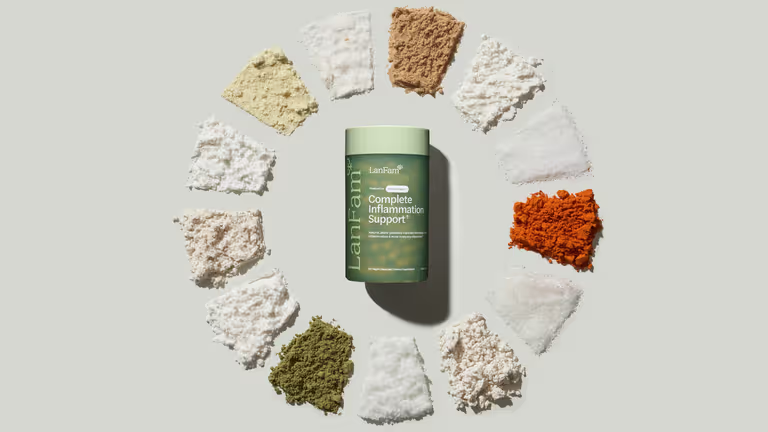
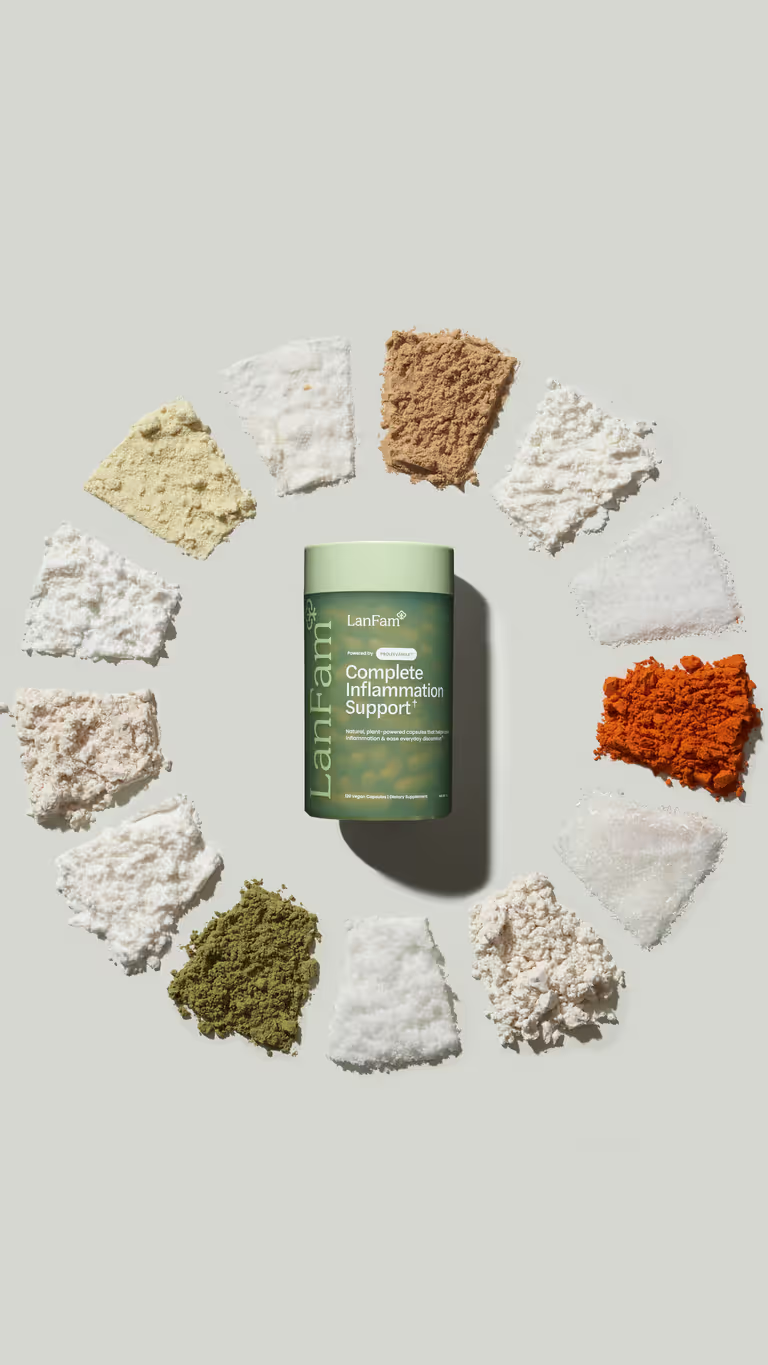
This is why LanFam Health's Complete Inflammation Support includes 13 standardized ingredients targeting 6 inflammatory pathways. In a clinical evaluation, participants experienced a 22-point reduction in McGill Pain Questionnaire scores at 8 weeks (p=0.042) - measurable change from addressing the system rather than a single symptom.
Compounds That Cross the Blood-Brain Barrier
Here's the detail most brain fog content leaves out: it doesn't matter how potent an anti-inflammatory compound is if it can't reach your brain. The blood-brain barrier is selective by design, and many popular supplements have limited BBB penetration.
L-Serine crosses the BBB via amino acid transporters and directly supports phosphatidylserine synthesis - structural repair for neurons under inflammatory assault.
Curcumin crosses the BBB, particularly when combined with piperine (black pepper extract), which increases curcumin absorption by up to 2,000%. Once in the brain, it modulates microglial activation and reduces pro-inflammatory cytokines.
5-HTP crosses the BBB readily using the same transporter as tryptophan. Once across, it converts to serotonin with Vitamin B6 as cofactor - supporting mood, sleep quality, and cognitive flexibility.
GABA has more limited BBB penetration in supplemental form, but research suggests it still exerts calming effects on the CNS - potentially through the gut-brain axis. Its role in reducing nervous system overactivation supports the focused state where clear thinking becomes possible.
For a deeper look at how these compounds work together, see our comprehensive guide on brain fog supplements.
Turning Off the Faucet
Inflammation-driven brain fog is not mysterious - it's biological. Cytokines cross the blood-brain barrier. Microglia overactivate. Neurotransmitters get disrupted. Cell membranes degrade. Sleep architecture collapses. Each mechanism feeds the others, creating a cycle that won't break on its own.
The solution isn't another nootropic that masks fatigue. It's comprehensive anti-inflammatory support that reaches the brain, restores neurotransmitter balance, and breaks the inflammation-sleep cycle.
LanFam Health's Complete Inflammation Support was formulated by Fabio Lanzieri, drawing on 40 years of pharmaceutical experience, to address multi-pathway inflammation - including neuroinflammation. Thirteen standardized ingredients. Six inflammatory pathways. Backed by clinical evaluation data, 1,000+ reviews with a 4.8-star average, and a 90-day money-back guarantee - because the protocol needs 90 days to work, so we guarantee the full 90 days.
See the full ingredient breakdown or start with Complete Inflammation Support today.

Frequently asked questions
There's a seat at our table
Letters from our family to yours — the science, the recipes, the things that actually helped real families. Leave your email and we'll send the next one.