The Inflammation Cascade: What's Actually Happening When You Hurt
Chronic pain isn't tissue damage — it's an inflammation cascade your body keeps re-running. What's actually happening, and where to interrupt the loop.
Ingredients in this letter
By Fabio Lanzeri, CEO & Founder, LanFam Health
40+ years in pharmaceutical formulation and development. Fabio built ProleevaMax at his kitchen table after watching his wife Maria struggle with persistent pain and inflammation during and after cancer treatment.
This content is for informational purposes only and does not constitute medical advice. Consult your healthcare provider before starting any supplement regimen or making changes to your health routine.
After Maria's breast cancer treatment, her doctors put her on an estrogen-blocking medication — one she'd need to take for more than ten years. That medication caused chronic pain. The only option they could offer was daily NSAIDs, which weren't safe or sustainable over that timeframe. Some mornings she couldn't open a jar. Her joints felt like they were packed in wet concrete. The fatigue wasn't just tiredness — it was her body fighting something that had no clear name and no clear end.
What I came to understand, after going back through the literature, is that what Maria was experiencing wasn't pain in the simple sense. It was a cascade. A biological sequence her body had started and couldn't stop on its own. And once I understood that, I understood why the standard approaches weren't enough.
Inflammation Is Not the Enemy — At First
Here's the paradox that took me a while to fully absorb: inflammation is how you heal.
When you twist your ankle, cut your finger, or catch a cold, your immune system triggers a rapid, coordinated response. Blood vessels near the site dilate. White blood cells flood in. The area becomes red, swollen, and painful — not as a malfunction, but as a signal. Those are your immune cells doing their job: destroying pathogens, clearing debris, initiating repair [1].
This acute response is one of the most sophisticated systems in biology. It activates fast, floods the area with what's needed, and — critically — shuts itself off when the threat is gone.
The problem isn't inflammation. The problem is inflammation that doesn't know when to stop.
The Switch That Gets Stuck: NF-κB
If you want to understand chronic inflammation, you need to understand one thing: the NF-κB pathway.
NF-κB (nuclear factor kappa-light-chain-enhancer of activated B cells) sounds like a lab code, but it's simpler than the name suggests. Think of it as the master on-switch for your immune response. When your body detects a threat — a bacteria, a toxin, a damaged cell — NF-κB gets activated. It moves into the nucleus of your cells and tells them to produce the proteins that drive inflammation [2].
In a healthy acute response, that signal fires, does its job, and turns off.
In chronic inflammation, NF-κB stays active. The switch gets stuck in the on position. Your body keeps producing inflammatory signals even when there's no active threat to fight. And because NF-κB controls the genes for so many inflammatory proteins, a stuck switch ripples out into nearly every system in your body.
The Messengers: Cytokines and What They Do
Once NF-κB activates, it doesn't cause inflammation directly — it orders the production of messenger proteins called cytokines that do the actual work. Two of the most studied are TNF-α (tumor necrosis factor alpha) and IL-6 (interleukin-6).
Think of cytokines as the communication layer of your immune system. TNF-α signals neighboring cells that there's a threat, drives fever, and coordinates the inflammatory response at the site of injury. IL-6 is involved in the transition from acute to chronic inflammation — it affects bone metabolism, energy regulation, and the liver's production of C-reactive protein (CRP), a marker doctors measure to track body-wide swelling.
In acute inflammation, these cytokines spike and then fall. In chronic inflammation, they stay elevated — sometimes for months, sometimes years [3]. And at elevated levels, they don't just fight infection. They start causing damage: to arterial walls, to joint tissue, to the gut lining, to the brain.
Maria's bloodwork during treatment showed elevated CRP for most of her recovery. At the time, we were told it was expected. What nobody explained was what that persistent elevation was doing to every other system in her body.
How Chronic Inflammation Becomes Self-Sustaining
This is the part that most people — and too many clinicians — don't fully appreciate: chronic inflammation feeds itself.
Here's the loop. Elevated cytokines like TNF-α stimulate more NF-κB activity. More NF-κB produces more cytokines. Those cytokines cause tissue damage. Damaged tissue triggers the immune system to respond. Which activates more NF-κB.
Once that cycle gets going, the original trigger barely matters anymore. The inflammation has become its own engine [3]. This is why people who develop chronic inflammatory conditions — whether from illness, injury, chronic stress, or poor diet — can struggle for years after the initial cause is gone.
Maria's cancer treatment ended. But her inflammation didn't. Her body had been running that loop for months, and it needed help finding the exit.
Why NSAIDs Miss the Point
Ibuprofen, naproxen, aspirin — these are the most common go-to for pain and inflammation. They work by blocking certain enzymes in your body that produce the chemicals responsible for swelling and pain.
For a short-term problem — a twisted ankle, a headache, a pulled muscle — they do the job well. But they only turn down the pain signal. They don't stop the process that's creating the pain in the first place.
They reduce pain. They reduce fever. For acute, short-term inflammation, they're appropriate and effective.
But they don't touch NF-κB. They don't regulate cytokines. They don't interrupt the self-sustaining loop of chronic inflammation — they mask it [2]. Long-term NSAID use also carries well-documented risks: gastrointestinal damage, kidney strain, and cardiovascular effects with extended use.
NSAIDs have their place — and an important one. For acute inflammation, they're effective and appropriate. Maria used them when she needed them. But when you're dealing with inflammation that's been running for months or years, a COX inhibitor taken three times a day isn't addressing what's driving it. It's managing the symptom, not the source.
The Gut Connection
There's a detail that changed how I thought about Maria's recovery, and it connects directly to what we know about the gut microbiome.
Your intestinal lining is a single layer of cells — one cell thick — separating your body's interior from approximately 100 trillion microbes and the contents of your digestive tract. That barrier is regulated, in part, by the same inflammatory pathways we've been discussing.
When the gut barrier becomes compromised — a condition researchers call increased intestinal permeability — bacterial fragments and other compounds can pass into the bloodstream. The immune system treats these as threats and mounts an inflammatory response. That response activates NF-κB. Which produces more cytokines. Which further stresses the gut lining [4].
The gut and the inflammatory cascade are not separate systems. They are the same system.
We wrote about this more directly in our post on gut bacteria — specifically how disruption to the microbiome during treatment contributed to Maria's whole-body symptoms. The two topics are deeply linked: gut health shapes inflammatory tone, and inflammatory tone shapes gut health.
Signs Your Body May Be in a Chronic Inflammatory State
Chronic inflammation is often called "silent" because it doesn't always announce itself with dramatic pain. More often, it shows up as:
- Persistent fatigue that doesn't resolve with rest
- Joint aches that move around, or that linger after minor activity
- Digestive irregularity — bloating, discomfort, sensitivity to foods that previously caused no trouble
- Brain fog — difficulty with word recall, concentration, or mental clarity
- Skin issues — recurring redness, acne, or eczema in adults
- Elevated CRP or ESR on bloodwork, even when no specific cause is found
- Mood changes — emerging evidence links systemic inflammation to changes in mood and mental well-being [5]
None of these in isolation proves chronic inflammation. But if you're seeing several of them — especially after a period of illness, treatment, prolonged stress, or significant dietary disruption — they're worth taking seriously.
The Gap
Modern medicine is extraordinary at crisis intervention. The oncology team that treated Maria saved her life. There is no other way to say that.
But the day-to-day rebuild — the managing of a body stuck in an inflammatory loop long after the acute crisis has passed — that's where the standard system runs out of answers. You leave the hospital. You're given NSAIDs and told to follow up in six months. Nobody hands you a molecular roadmap.
That gap is where I spent the next several years working.
Why We Built ProleevaMax
I built ProleevaMax for Maria. And then I kept building it for every person stuck in the gap.
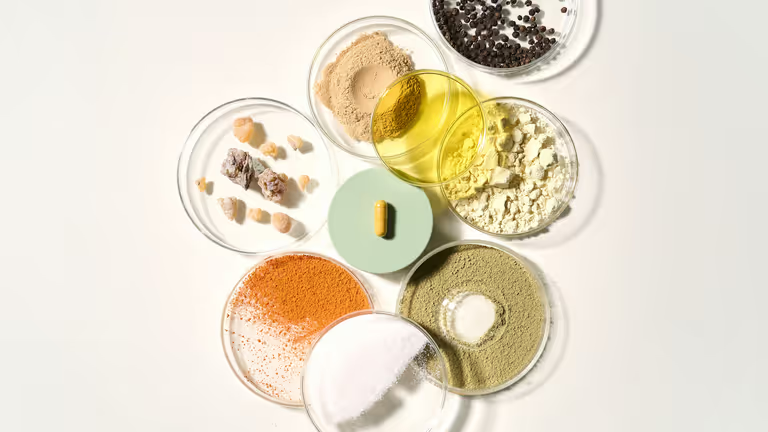
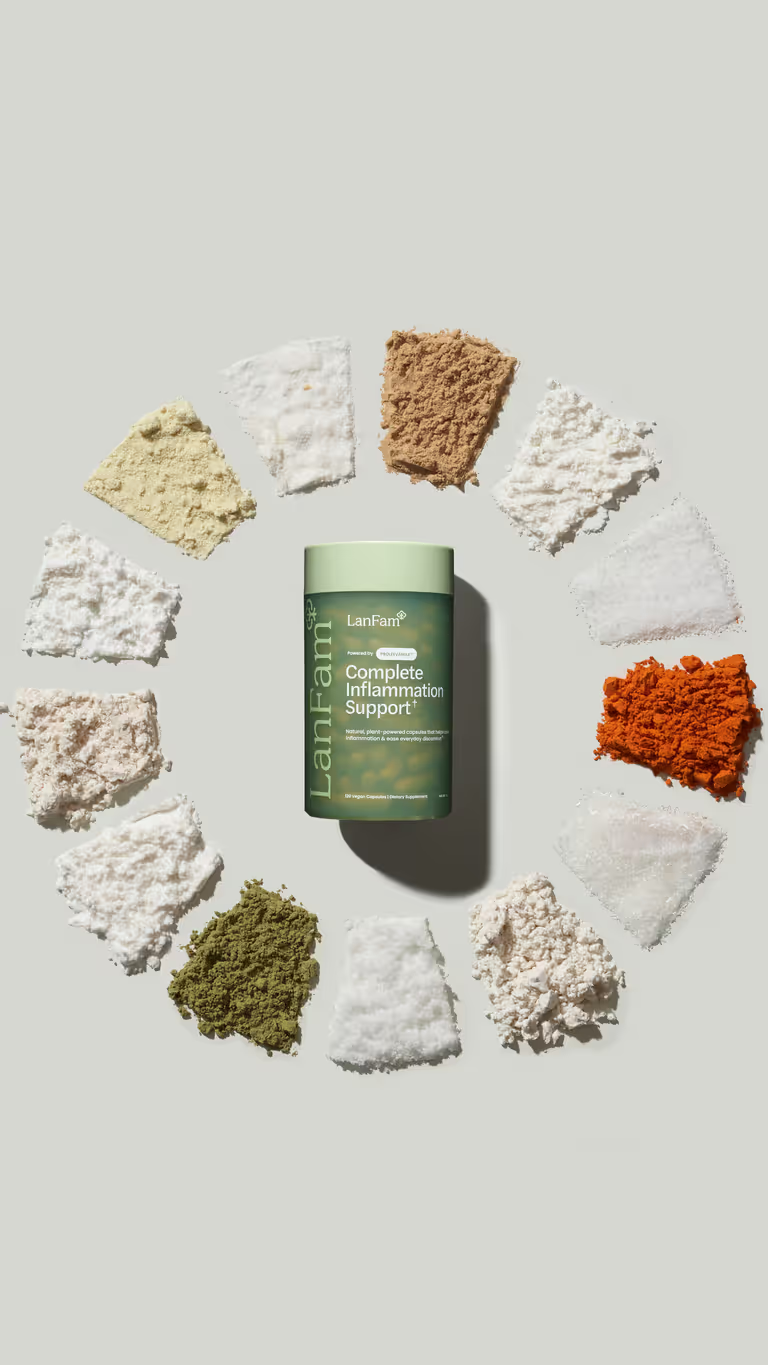
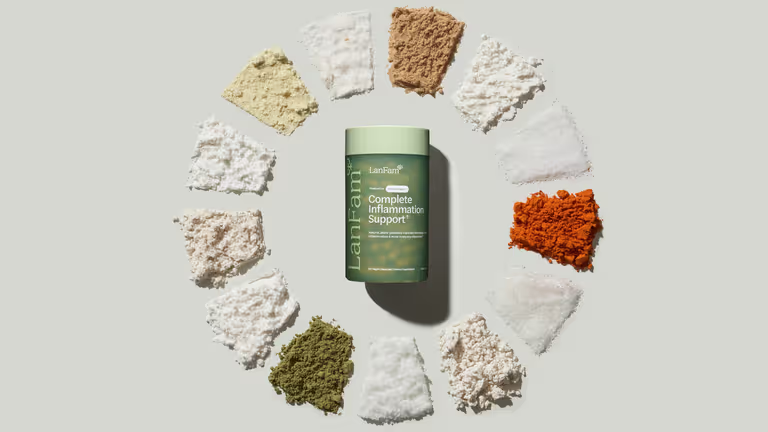
The formula was designed around the biology we've covered here — specifically targeting the NF-κB pathway and the cytokine loop, not just surface symptoms. The key ingredients:
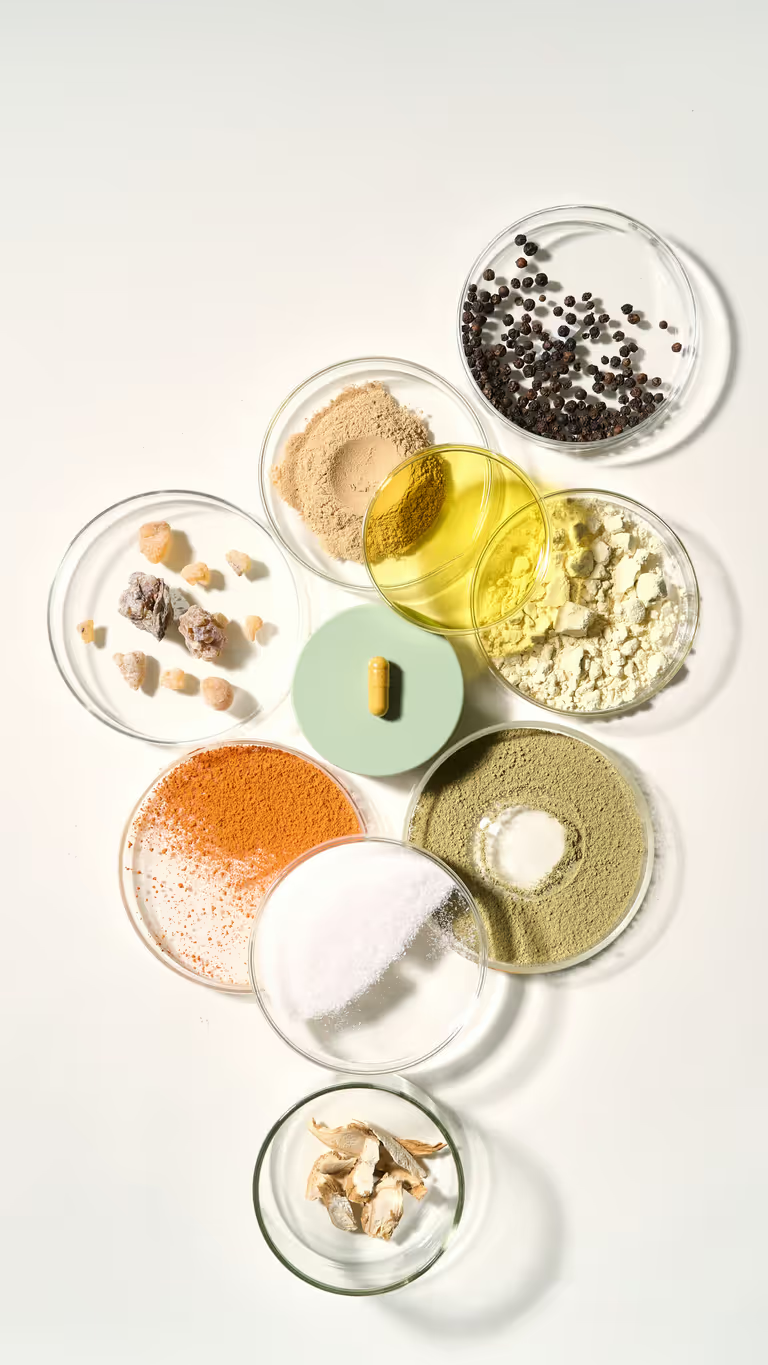
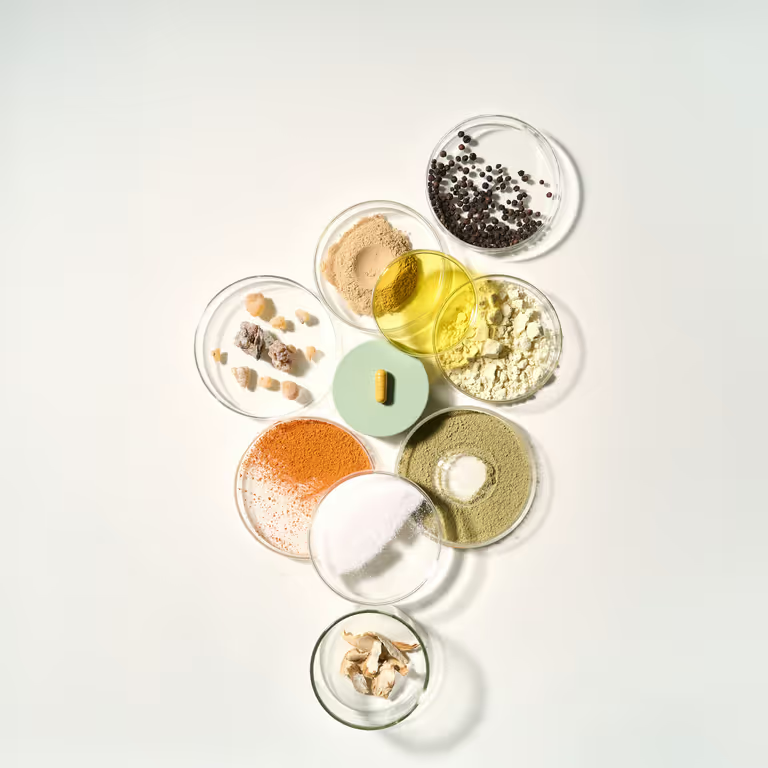
- Curcumin + Boswellia — Curcumin, the active compound in turmeric, is one of the most studied natural NF-κB modulators in the literature [6]. Boswellic acids (from Boswellia serrata) work through a complementary pathway, helping to modulate 5-LOX — an enzyme your body uses to produce inflammatory signaling molecules called leukotrienes [7]. Together, they help support the body's inflammatory response from two angles rather than one.*
- L-Glutamine — The primary fuel for the cells that line your gut, helping support the barrier that sits at the intersection of inflammation and microbiome health [8].*
- Piperine — Derived from black pepper, piperine helps support the absorption of curcumin, which is difficult for the body to absorb on its own. Without it, most of the curcumin you take passes through unused.*
Each ingredient was selected from our library of 89+ peer-reviewed citations. You can review the evidence on our science page.
Full disclosure: we sell this product. Our goal here is to explain the science honestly — including what the evidence supports and where more research is needed. Individual results vary, and supplementation is not a substitute for medical treatment.
If we wouldn't give it to our own, we won't make it. That's been our family's standard from the beginning.*
Written with AI assistance and reviewed by Fabio Lanzeri.
- These statements have not been evaluated by the Food and Drug Administration. This product is not intended to diagnose, treat, cure, or prevent any disease.
References
- Medzhitov R. "Origin and physiological roles of inflammation." Nature. 2008;454(7203):428-435. DOI: 10.1038/nature07201
- Lawrence T. "The nuclear factor NF-kappaB pathway in inflammation." Cold Spring Harbor Perspectives in Biology. 2009;1(6):a001651. DOI: 10.1101/cshperspect.a001651
- Furman D, Campisi J, Verdin E, et al. "Chronic inflammation in the etiology of disease across the life span." Nature Medicine. 2019;25(12):1822-1832. DOI: 10.1038/s41591-019-0675-0
- Camilleri M. "Leaky gut: mechanisms, measurement and clinical implications in humans." Gut. 2019;68(8):1516-1526. DOI: 10.1136/gutjnl-2019-318427
- Miller AH, Raison CL. "The role of inflammation in depression: from evolutionary imperative to modern treatment target." Nature Reviews Immunology. 2016;16(1):22-34. DOI: 10.1038/nri.2015.5
- Aggarwal BB, Harikumar KB. "Potential therapeutic effects of curcumin, the anti-inflammatory agent, against neurodegenerative, cardiovascular, pulmonary, metabolic, autoimmune and neoplastic diseases." International Journal of Biochemistry and Cell Biology. 2009;41(1):40-59. DOI: 10.1016/j.biocel.2008.06.010
- Ammon HP. "Modulation of the immune system by Boswellia serrata extracts and boswellic acids." Phytomedicine. 2010;17(11):862-867. DOI: 10.1016/j.phymed.2010.03.003
- Kim MH, Kim H. "The Roles of Glutamine in the Intestine and Its Implication in Intestinal Diseases." International Journal of Molecular Sciences. 2017;18(5):1051. DOI: 10.3390/ijms18051051
Note: All citation DOIs should be independently verified before publication.


There's a seat at our table
Letters from our family to yours — the science, the recipes, the things that actually helped real families. Leave your email and we'll send the next one.