Supplements for Menopause Bloating: The Inflammation Link Most Articles Miss
Menopause bloating isn't just food. Estrogen decline shifts three gut systems at once. The supplement protocol most articles miss — and what to try first.
Ingredients in this letter

Why Menopause Specifically Causes Bloating
Three biological shifts happen at once. Understanding them is how you choose supplements that actually work, rather than guessing.
1. Gut motility slows down. Estrogen supports smooth-muscle function throughout the digestive tract. When estrogen declines, transit time often lengthens — food and gas move through the system more slowly. Research published in Menopause Review has documented that gastrointestinal motility changes are among the most commonly reported — and least discussed — menopausal symptoms. Slower transit means more fermentation time, which means more gas, which means more bloating.
2. The gut microbiome shifts. Estrogen interacts with a specific group of gut bacteria called the estrobolome — microbes that participate in estrogen recycling. As estrogen declines, the microbiome composition changes, often in ways that favor gas-producing species and reduce beneficial diversity. A 2022 study in Frontiers in Microbiology showed measurable differences in gut microbiome composition between premenopausal and postmenopausal women, with lower bacterial diversity postmenopause being the most consistent finding.
3. Gut barrier inflammation rises. Declining estrogen reduces the anti-inflammatory signaling that kept the intestinal lining functioning optimally. This can contribute to what researchers describe as increased intestinal permeability — sometimes called "leaky gut" in consumer contexts. When the gut barrier becomes more permeable, inflammatory signals and bacterial fragments leak into circulation, triggering systemic inflammation that can further slow motility and disrupt microbiome balance. It's a self-reinforcing loop. Research published in Nutrients connects these mechanisms directly.
Translation: menopause bloating isn't "just gas." It's the visible symptom of three biological systems — motility, microbiome, barrier — shifting in a direction that favors fermentation, dysbiosis, and inflammation.
The supplements that help are the ones that address one or more of those three systems.
What Doesn't Work (and Why It Keeps Getting Recommended)
Before the list itself, here's what to avoid — and why you'll see it recommended on most articles anyway:
- A spoonful of psyllium fiber added overnight. For someone with slow motility and a disrupted microbiome, adding a concentrated dose of fiber often makes bloating worse for 1–2 weeks before it gets better. Fiber is useful long-term, but the way most articles recommend it — "eat more fiber!" — ignores the short-term adjustment period.
- "Detox" teas with senna or other laxatives. These force transit without addressing motility, microbiome, or inflammation. They can provide relief for 2–3 days before the underlying system rebounds worse. They also cause dependence over time.
- Single-strain probiotics labeled generically "for women." The research supporting probiotics for bloating is species-specific. Generic "lactobacillus blend" products don't necessarily contain the strains that have trial data.
- Over-the-counter gas-reducers (simethicone-based). These can relieve one specific form of bloating (gas bubbles in the GI tract) but do nothing for the underlying drivers. Useful occasionally; not a plan.
The supplements on the list below target root mechanisms. That's the difference.
The 7 Best Supplements for Menopause Bloating
1. Multi-Strain Probiotics (Species-Specific)
Evidence grade: B+ | Typical clinical dose: 10–50 billion CFU, multiple strains, taken daily
The probiotic research for bloating is strongest for specific strains, not generic "probiotic" formulas. The strains with the most consistent evidence for bloating and GI discomfort include:
- Lactobacillus rhamnosus GG
- Bifidobacterium lactis (BB-12 or HN019)
- Lactobacillus acidophilus NCFM
- Bifidobacterium longum BB536
- Saccharomyces boulardii (for antibiotic-associated bloating specifically)
A 2019 meta-analysis in the World Journal of Gastroenterology found that multi-strain probiotics outperformed single-strain formulas for bloating and functional GI symptoms. For menopause specifically, probiotic research is growing but still limited — the best current evidence is that diverse-strain formulas help more than single-strain ones.
The "what to demand": strain-level labeling (e.g., "Lactobacillus rhamnosus GG" not just "lactobacillus"), CFU count stated as "at expiration" (not "at manufacture"), and refrigeration if the label requires it.
2. Digestive Enzymes (Especially for Meal-Triggered Bloating)
Evidence grade: B | Typical clinical dose: a full-spectrum enzyme blend taken with meals
If bloating hits consistently within an hour of meals, digestive enzyme insufficiency may be part of the story. The body's enzyme production — particularly pancreatic enzymes like lipase (fat), protease (protein), and amylase (carbohydrate) — can decline with age, and the slowed gut motility of menopause compounds the problem.
A broad-spectrum digestive enzyme supplement taken at the start of meals can reduce post-meal bloating by supporting complete digestion before food reaches the colon (where fermentation, and therefore gas, happens).
The "what to look for": enzymes from a vegetarian/fungal source (they work across a wider pH range than animal-derived), plus lactase if you're dairy-sensitive.
3. Magnesium (Glycinate or Citrate)
Evidence grade: B+ | Typical clinical dose: 200–400mg elemental magnesium, evening
Magnesium deserves a spot for two reasons. First, it supports smooth-muscle relaxation in the intestinal wall, which helps address the slowed-motility driver. Second, magnesium citrate has a mild osmotic effect that can support regular transit without the rebound of stimulant laxatives.
Magnesium glycinate is the gentlest form — well-absorbed and non-laxative. Magnesium citrate has more of a motility effect and is useful for constipation-dominant bloating. Magnesium oxide is poorly absorbed; skip it.
Bonus: Magnesium is also relevant to menopausal sleep and joint symptoms, so it's often doing multiple jobs in a menopause protocol.
4. Ginger Root (Zingiber officinale)
Evidence grade: B | Typical clinical dose: 500–1,000mg standardized extract, or 1–2g fresh ginger
Ginger works on two fronts: it's a prokinetic (supports gut motility — moves things along) and it's a mild anti-inflammatory. A 2011 study in the European Journal of Gastroenterology and Hepatology showed ginger accelerated gastric emptying in healthy volunteers. For menopausal women with slowed transit, this matters.
Ginger is one of the better-tolerated digestive aids. It can be taken as fresh ginger tea, a capsule supplement, or chewable ginger lozenges before meals known to trigger bloating.
Note: Ginger is not in ProleevaMax's formulation — it's a useful complementary supplement for those specifically targeting motility. ProleevaMax's Matcha, Turmeric, and Boswellia work on the inflammation piece.
5. Peppermint Oil (Enteric-Coated)
Evidence grade: A (for IBS-pattern bloating) | Typical clinical dose: 180–225mg enteric-coated capsules, 2–3 times daily
Enteric-coated peppermint oil has some of the strongest clinical trial data for functional bloating and irritable bowel syndrome-pattern symptoms. A 2019 meta-analysis in BMC Complementary Medicine concluded that enteric-coated peppermint oil significantly reduced bloating and abdominal pain compared to placebo.
Critical detail: enteric coating matters. Non-coated peppermint oil breaks down in the stomach, where it can cause reflux rather than help. Enteric coating ensures the oil reaches the intestines where it acts on smooth muscle.
Don't take if you have GERD or significant acid reflux — even enteric-coated peppermint can aggravate these conditions in some people.
6. L-Glutamine (Gut Barrier Support)
Evidence grade: B | Typical clinical dose: 5–10g daily
L-Glutamine is the primary fuel source for intestinal epithelial cells — the cells that line your gut and form the barrier between what's in your digestive tract and your bloodstream. In menopause, when gut-barrier inflammation is part of the picture, providing L-Glutamine gives those cells the substrate they need to maintain and repair the barrier.
A 2017 randomized trial in the International Journal of Medical Sciences showed L-Glutamine supplementation improved gut barrier function markers in patients with intestinal hyperpermeability. While menopause-specific research is limited, the mechanism is biologically consistent.
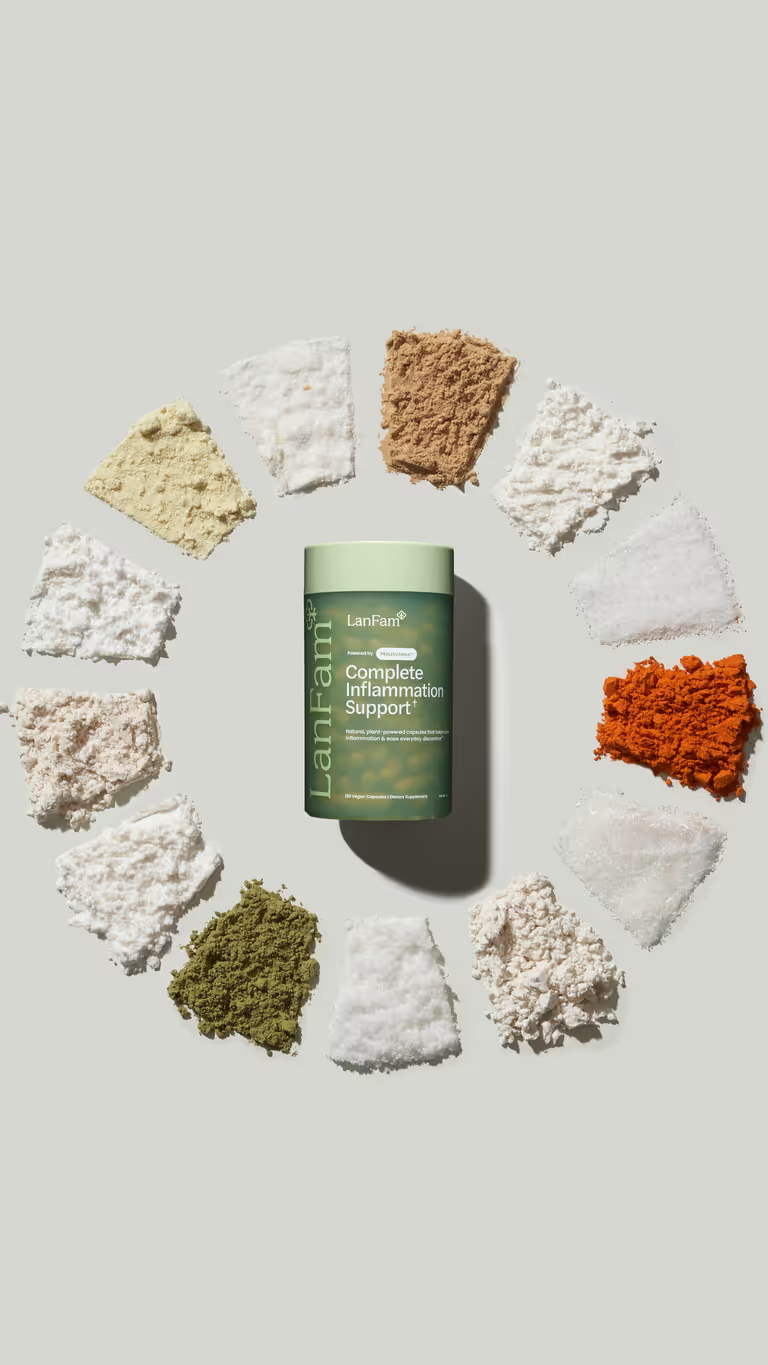
L-Glutamine is one of the 13 standardized ingredients in Complete Inflammation Support (Powered by ProleevaMax®) for precisely this reason — addressing the gut-barrier piece of the inflammation cascade is a meaningful part of why multi-ingredient formulas often outperform single-ingredient probiotic approaches for menopausal bloating.
7. Multi-Ingredient Anti-Inflammatory Formulas (The Inflammation Piece)
Evidence grade: Variable (depends on formula) | Typical approach: formulas combining standardized botanicals with amino acids and cofactors
Here's the piece most menopause bloating articles miss entirely: bloating in menopause is partially an inflammation problem. When systemic inflammation rises with estrogen decline, it affects gut barrier function, motility, and microbiome composition all at once. Addressing the inflammation directly — not just the downstream symptoms — is often what unlocks real change.
A multi-ingredient anti-inflammatory formula that includes compounds like Boswellia serrata (5-LOX inhibition), curcumin with piperine (NF-κB suppression), and amino acids that support gut barrier integrity addresses the inflammatory driver rather than just the symptoms.
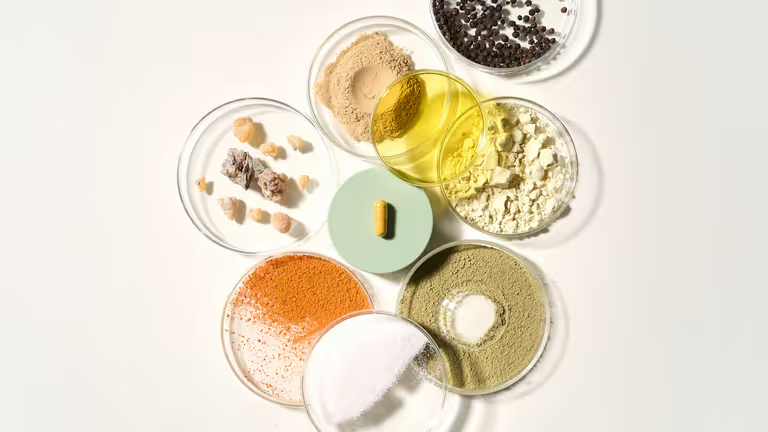
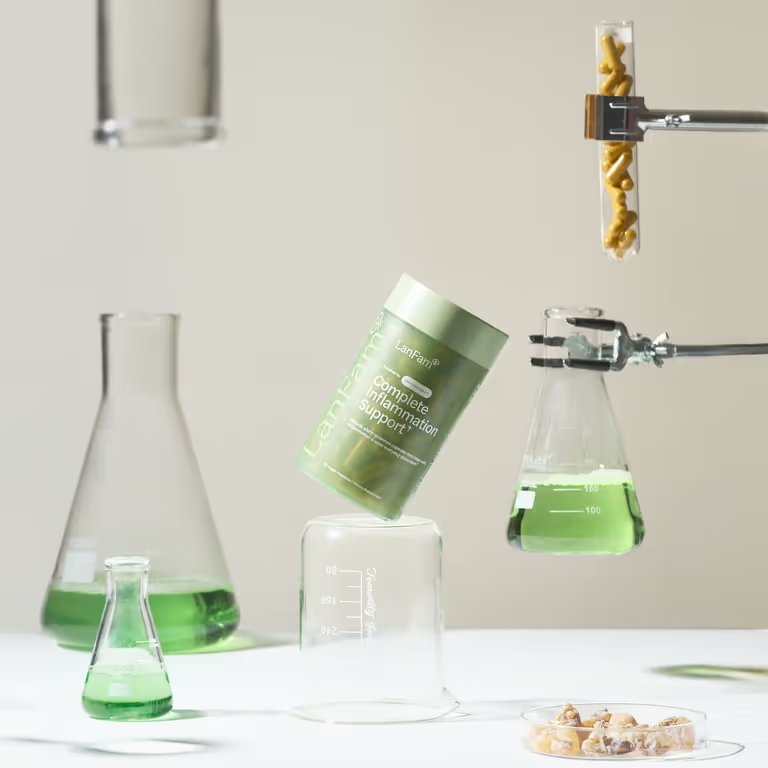
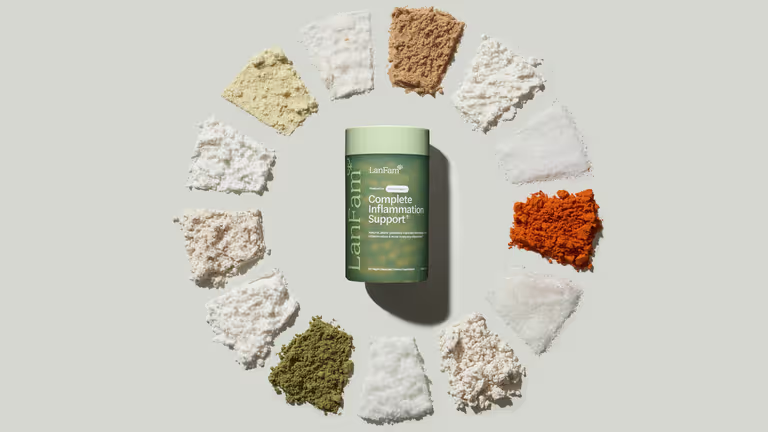
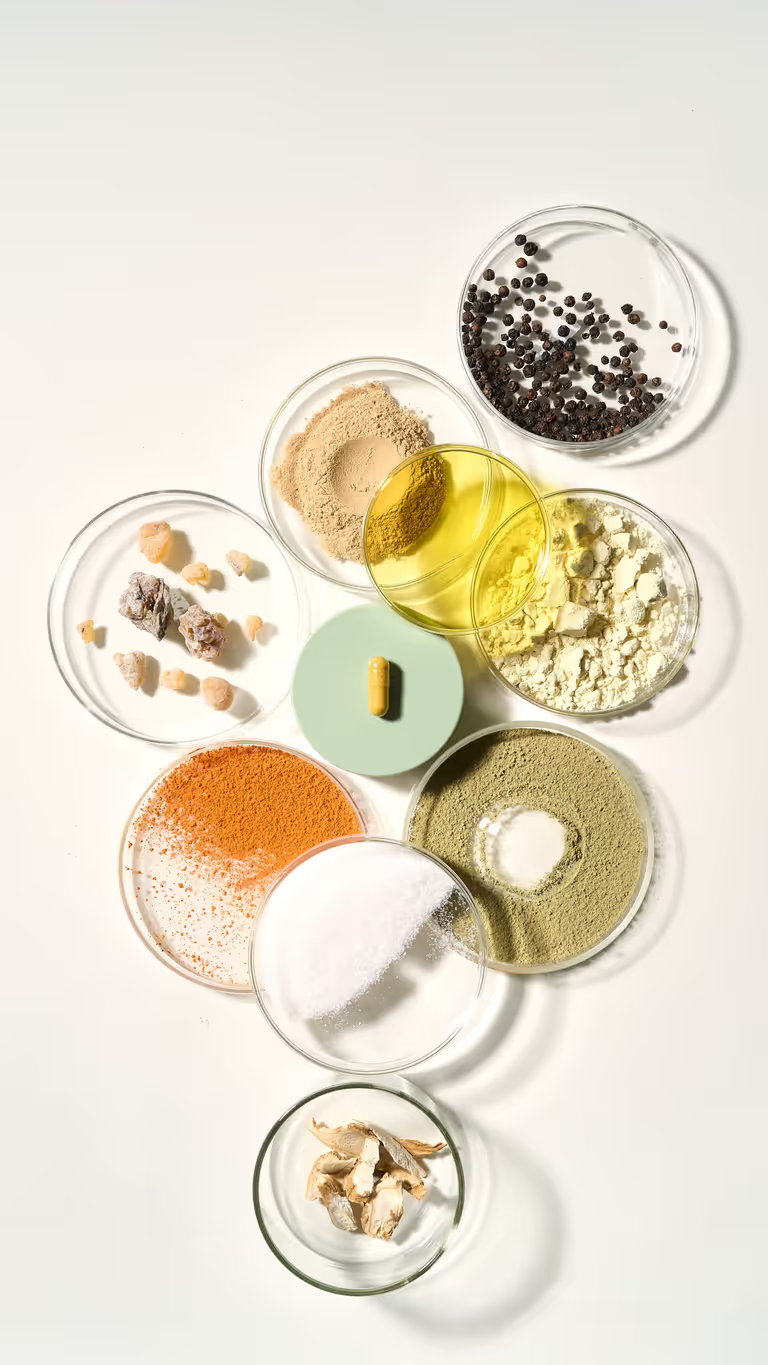
This is the rationale behind Complete Inflammation Support (Powered by ProleevaMax®): 13 standardized ingredients including Boswellia (standardized to 65% boswellic acid), Turmeric Root Extract paired with Black Pepper for absorption, L-Glutamine for gut barrier support, and GABA for the nervous-system component of bloating that many women experience as stress-triggered digestive flare-ups.
Not every multi-ingredient formula addresses bloating specifically, but formulas designed around inflammation — rather than around "digestion" as a narrow category — often help where single-ingredient approaches haven't.
The Order to Try Supplements (a Practical Sequence)
Most women don't need all seven supplements simultaneously. Here's a sequence that works in practice:
Weeks 1–4: Foundation layer.
- Multi-strain probiotic (daily)
- Magnesium glycinate at bedtime (200–400mg)
- Digestive enzymes if bloating is consistently meal-triggered
Weeks 4–8: If foundation isn't enough, add one layer.
- Multi-ingredient anti-inflammatory formula (like ProleevaMax)
- OR enteric-coated peppermint oil if bloating is IBS-pattern (cramping, distension, gas)
Weeks 8–12: Optional fine-tuning.
- L-Glutamine if gut-barrier symptoms persist
- Ginger if motility is specifically the issue
This is a 90-day sequence because that's how long meaningful change takes in the gut microbiome and gut barrier. Switching protocols every two weeks tends to produce no results from any of them.
When Bloating Is NOT Normal
Supplements address functional bloating — the kind that comes and goes with meals, stress, hormones, and lifestyle. They do not address structural or disease-based bloating. See a doctor if you experience any of the following:
- Bloating accompanied by unintentional weight loss
- Bloating with blood in the stool or black, tarry stools
- Persistent bloating lasting weeks with no meal-pattern correlation
- Bloating with severe, sudden-onset pain
- Bloating with difficulty swallowing
- Changes in stool caliber (pencil-thin stools)
- Strong family history of ovarian, colon, or pancreatic cancer combined with new persistent bloating
These can be signs of conditions that require medical evaluation — not supplementation.
Starting a 90-Day Menopause Bloating Protocol
Pick the foundation layer (probiotic + magnesium + situational enzymes). Give it 4 weeks. If bloating persists, add either a multi-ingredient anti-inflammatory formula or enteric-coated peppermint based on your symptom pattern. Pair with gradual dietary adjustments — see our anti-inflammatory breakfast guide for breakfast-specific ideas that support both gut health and inflammation.
For the inflammation piece specifically, Complete Inflammation Support (Powered by ProleevaMax®) was built around the 13 standardized ingredients that support the inflammatory and gut-barrier drivers of menopausal symptoms — including Boswellia serrata (standardized to 65% boswellic acid), Turmeric Root Extract with Black Pepper, and L-Glutamine. It's covered by a 90-day money-back guarantee because the 90-day protocol is the commitment that matches the biology.
You can see the full ingredient breakdown or start the 90-day protocol today.
† These statements have not been evaluated by the Food and Drug Administration. This product is not intended to diagnose, treat, cure, or prevent any disease. Consult your healthcare provider before starting any supplement protocol, particularly if bloating is persistent, painful, or accompanied by other symptoms that warrant evaluation.

Frequently asked questions
There's a seat at our table
Letters from our family to yours — the science, the recipes, the things that actually helped real families. Leave your email and we'll send the next one.