Natural Alternative to Ibuprofen
Curcumin matched ibuprofen on pain in a head-to-head trial — with fewer GI events. The research-backed natural alternatives to ibuprofen, and their limits.
Ingredients in this letter

TL;DR
- Ibuprofen blocks COX enzymes to reduce pain and inflammation, but long-term use carries FDA-documented risks including GI bleeding, kidney strain, and cardiovascular events.
- Botanical compounds like curcumin and boswellia serrata support healthy inflammatory response through different mechanisms than NSAIDs - and curcumin's COX-2 pathway support does not carry the same GI side-effect profile.
- Single-ingredient supplements (like turmeric capsules alone) face absorption and pathway limitations - curcumin without piperine has roughly 1-2% bioavailability.
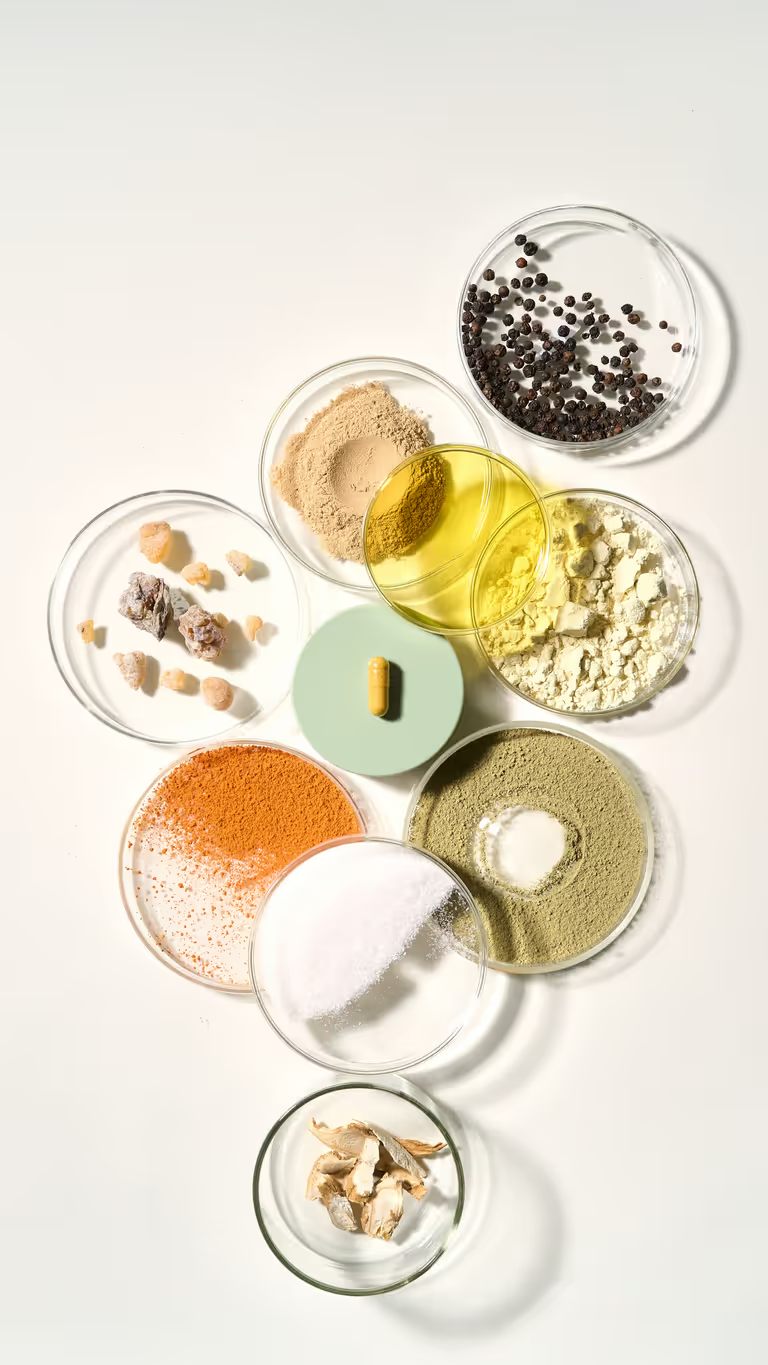
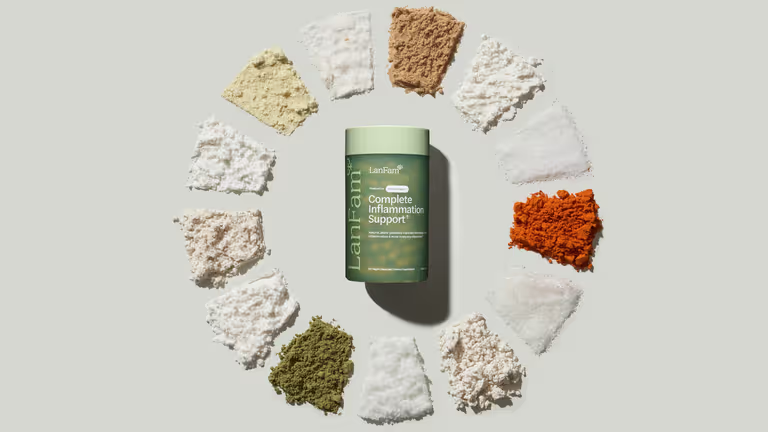
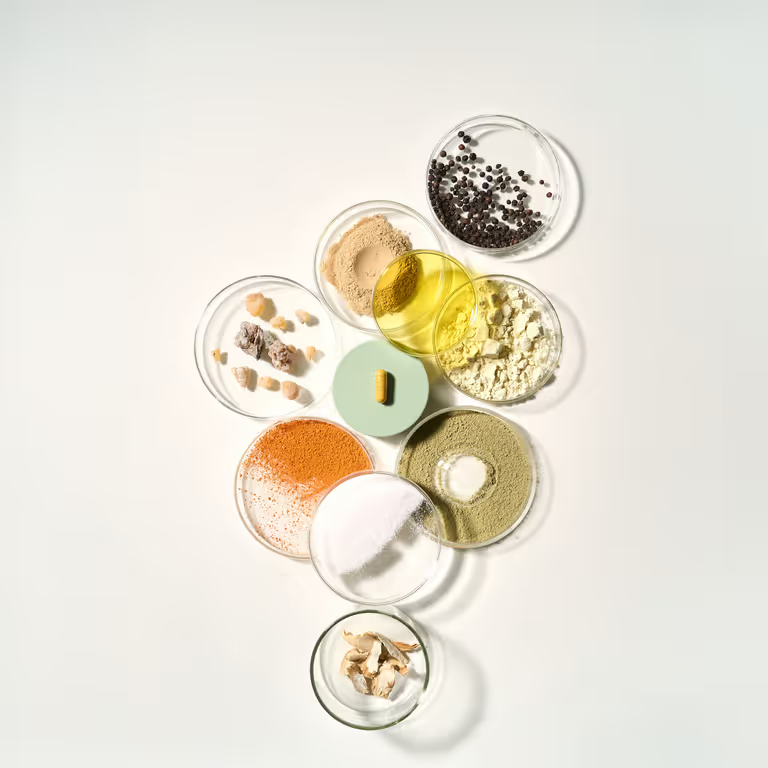
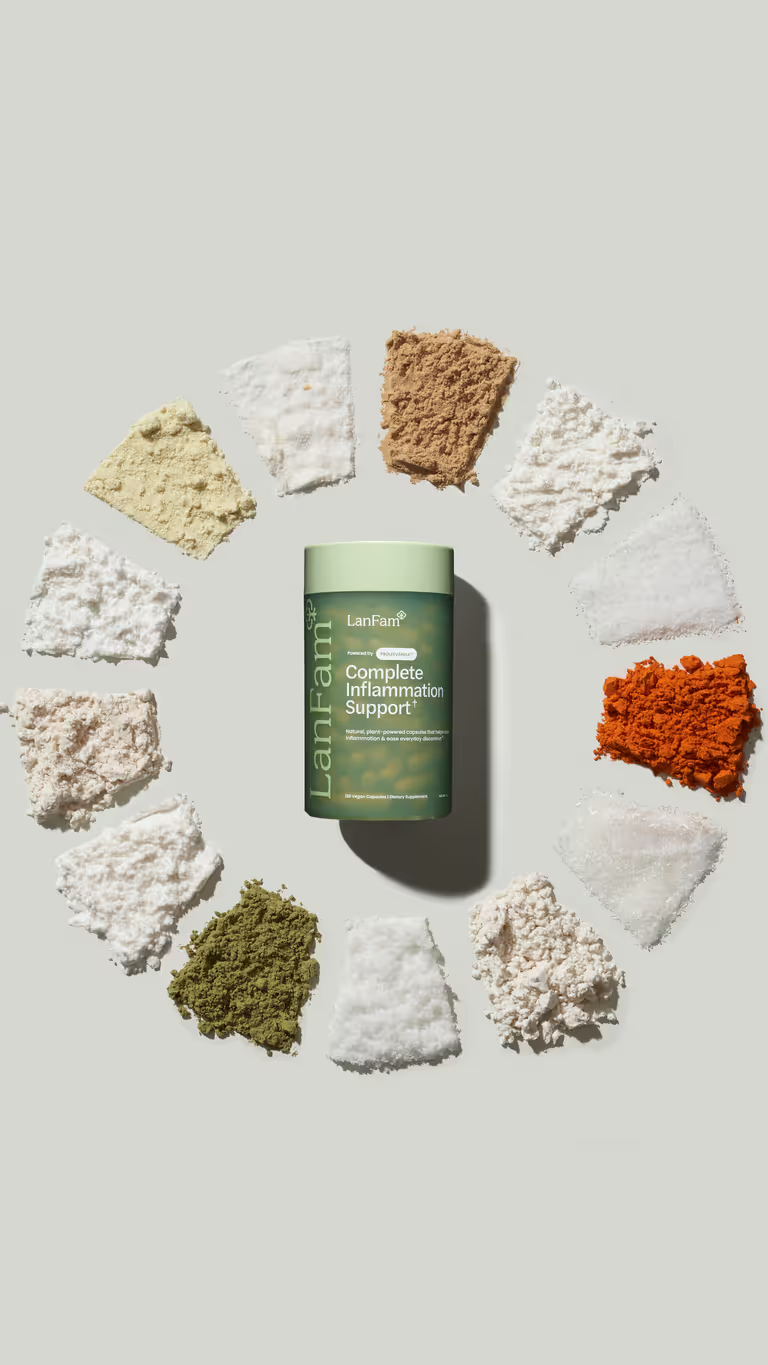
- Multi-pathway formulas that combine curcumin, boswellia, L-glutamine, and piperine address inflammation more comprehensively, which is why LanFam Health's Complete Inflammation Support includes 13 standardized ingredients targeting 6 inflammatory pathways.
- Never stop prescribed NSAIDs without talking to your doctor first. Botanical support works best as part of a plan you build together with your healthcare provider.
Natural Alternatives to Ibuprofen: What the Research Actually Says
If you have been searching for a natural alternative to ibuprofen, you are not alone. Millions rely on NSAIDs daily, and a growing number are asking whether anti-inflammatory supplements for joint pain like curcumin and boswellia serrata can support their body's inflammatory response without the side effects of long-term NSAID use.
The short answer: several natural compounds have published research supporting their role in healthy inflammatory pathways. Curcumin (from turmeric) supports the COX-2 pathway - the same pathway NSAIDs target - through a different mechanism. Boswellia serrata supports the 5-LOX pathway, which NSAIDs do not address at all. And when combined with absorption enhancers like piperine, the research becomes more compelling.
At LanFam Health, we built Complete Inflammation Support (Powered by ProleevaMax) around this multi-pathway approach - 13 standardized ingredients targeting 6 inflammatory pathways. But let us be clear: this is not a recommendation to stop taking ibuprofen or any prescribed medication. Always consult your healthcare provider before making changes to your regimen.
Why People Are Looking for NSAID Alternatives
You are probably here because something about your current approach does not feel sustainable. Maybe your doctor mentioned kidney function. Maybe you have noticed stomach issues that were not there five years ago. Maybe you read the label and started wondering what happens when you take something "short-term" for years.
You are not wrong to ask these questions.
The FDA has issued strengthened warnings about non-aspirin NSAIDs, noting that the risk of heart attack and stroke increases with longer use and higher doses - and can begin within the first weeks of regular use.
Beyond cardiovascular concerns, long-term NSAID use is associated with:
- Gastrointestinal damage. NSAIDs inhibit COX-1, which maintains the stomach's protective lining. Over time, this can lead to ulcers, GI bleeding, and chronic digestive discomfort - resulting in over 100,000 hospitalizations annually in the U.S.
- Kidney strain. NSAIDs reduce blood flow to the kidneys by inhibiting prostaglandins. For people with existing kidney issues or those taking multiple medications, this is a meaningful concern.
- Compounding risk. Duration and dosage both increase risk, and many long-term users have gradually escalated both.
For short-term, acute pain, ibuprofen remains effective and well-studied. The concern is the gap between how NSAIDs were designed to be used (short-term) and how millions of people actually use them (daily, for years). If that describes you, your instinct to look for alternatives is sound.
How NSAIDs Work (And Where They Fall Short)
Ibuprofen and similar NSAIDs work by blocking cyclooxygenase (COX) enzymes - specifically COX-1 and COX-2. COX-2 produces prostaglandins at sites of inflammation, so blocking it reduces pain and swelling. That is the therapeutic effect.
The problem: NSAIDs block COX-1 as well, which plays a protective role in the stomach lining, kidney function, and platelet activity. This is not a side effect - it is inherent to the mechanism.
The single-pathway approach also has limitations:
- Inflammation involves multiple pathways. COX-2 is one of at least six. The 5-lipoxygenase (5-LOX) pathway produces leukotrienes - inflammatory mediators NSAIDs do not address at all.
- Side effects compound with time. The body does not adapt to COX-1 inhibition - protective mechanisms stay suppressed for as long as you take the medication.
- Rebound effects. Some research suggests long-term COX inhibition may upregulate other inflammatory pathways, reducing effectiveness while risks accumulate.
NSAIDs do what they were designed to do. The question is whether that design matches your long-term needs.
Natural Compounds That Support Inflammatory Pathways
Several botanical compounds have published research supporting their role in healthy inflammatory response. Here are the ones with the strongest evidence - and the ones included in LanFam Health's Complete Inflammation Support formula.
Curcumin (COX-2 Pathway Support)
Curcumin, the active compound in turmeric, has been the subject of over 3,000 published studies. A systematic review published in the Journal of Medicinal Food found that curcumin supports healthy COX-2 activity - the same pathway NSAIDs target - but through a different mechanism that does not involve COX-1 suppression. Because it does not suppress COX-1, it does not carry the same GI side-effect profile. In a multicenter trial, curcumin even matched ibuprofen on knee-osteoarthritis pain with fewer GI events - see the full curcumin vs ibuprofen head-to-head trials.
The catch: curcumin by itself has roughly 1-2% bioavailability. Your body cannot use most of what you ingest. Which brings us to piperine.
Piperine (The Bioavailability Multiplier)
Piperine, derived from black pepper, has been shown to increase curcumin absorption by up to 2,000%. This is one reason standalone turmeric capsules often disappoint - the curcumin is there, but your body cannot use it. LanFam Health's formula includes piperine at 6mg for this absorption support. (Note: piperine-medication interactions are documented primarily at doses of 20mg and above - 6mg is well below that threshold, though you should still inform your healthcare provider about any supplements you take.)
Boswellia Serrata (5-LOX Pathway Support)
Boswellia serrata supports the 5-lipoxygenase (5-LOX) pathway - an entirely separate inflammatory cascade that NSAIDs do not address at all. Research published in Phytomedicine has shown that boswellic acids support healthy leukotriene levels, making boswellia a complement to COX-2-focused compounds rather than a redundancy. For a closer look at how the two compare, see boswellia vs turmeric.
L-Glutamine (Gut Barrier Support)
L-glutamine is the primary fuel source for enterocytes - the cells lining your intestinal wall. This is especially relevant if you have been taking NSAIDs long-term, because COX-1 suppression can compromise the gut's mucosal barrier over time. L-glutamine supports gut barrier integrity and repair, which matters both for digestive comfort and for systemic inflammatory signaling.
Resveratrol (Antioxidant and Cellular Protection)
Resveratrol, found naturally in grape skins, supports cellular protection through antioxidant mechanisms. Oxidative stress and inflammation are closely linked - each amplifies the other. Resveratrol supports the body's natural antioxidant defenses, helping to interrupt this cycle at the cellular level.
Important safety note: Both curcumin and resveratrol can potentiate blood-thinning effects. If you are taking anticoagulant or antiplatelet medications (warfarin, aspirin therapy, etc.), discuss these supplements with your healthcare provider before starting them.
Single Ingredient vs. Multi-Pathway Support
The most common mistake when looking for a natural alternative to ibuprofen is reaching for a turmeric capsule and expecting it to work like a pill. There are two problems with this.
First, the absorption problem. Standard curcumin has roughly 1-2% bioavailability. Without an absorption enhancer like piperine, you are paying for a supplement your body cannot effectively use.
Second, the one-pathway limitation. Ibuprofen targets one pathway (COX) and has significant limitations because of it. Replacing it with a single compound that targets one different pathway does not solve the fundamental problem. Chronic inflammatory response involves multiple overlapping pathways: COX-2, 5-LOX, NF-kB, oxidative stress, and others.
This is why LanFam Health's Complete Inflammation Support includes 13 standardized ingredients targeting 6 inflammatory pathways. In clinical evaluation, participants using the full ProleevaMax formula showed a 22-point reduction in McGill Pain Questionnaire scores at 8 weeks (p=0.042) - a statistically significant outcome that reflects what multi-pathway support can accomplish.
The trade-off: this is not instant. Multi-pathway botanical support works with your body's biology rather than overriding it, which means it requires consistency and patience.
Having the Conversation with Your Doctor
If you want to explore reducing your NSAID use, your healthcare provider needs to be part of that conversation. Never stop taking prescribed medications without medical guidance.
Here is how to approach it productively:
- Be specific. Bring the supplement label. Doctors respond better to specific compounds (curcumin, boswellia serrata, piperine) than to vague terms like "natural anti-inflammatories."
- Flag potential interactions. Curcumin and resveratrol can potentiate blood-thinning effects. If you are on SSRIs or MAOIs, note that some multi-ingredient supplements contain 5-HTP, which can affect serotonin levels.
- Frame it as an addition, not a replacement. Try: "I would like to add botanical support and, over time, work with you to see if we can adjust my NSAID use."
- Ask for a monitoring plan. What markers or symptoms should you track? This gives your doctor a framework for evaluating progress.
Many people who use LanFam Health's Complete Inflammation Support do so as part of a broader plan built with their healthcare provider. That is the approach we recommend.
What to Expect If You Add Botanical Support
Ibuprofen is fast because it forcefully blocks enzyme activity. Botanical compounds support how your body resolves inflammation through its own regulatory mechanisms - which takes longer but works with your biology rather than against it.
Here is a realistic timeline:
Weeks 1-2: Foundation. You are building tissue levels of curcumin, boswellia, and other compounds. Most people do not notice changes yet. Consistency matters most during this phase.
Weeks 2-4: Early signals. Many people notice subtle shifts - morning stiffness easing a bit faster, recovery feeling slightly more manageable. Not dramatic, but real.
Weeks 4-8: Measurable support. This is where the clinical data lives. The 22-point reduction in McGill Pain Questionnaire scores occurred at the 8-week mark, with multiple pathways being supported simultaneously.
Weeks 8-90: Full protocol. LanFam Health recommends a 90-day commitment because that is how long multi-pathway botanical support takes to fully integrate with your body's inflammatory regulation. This is why we offer a 90-day money-back guarantee - we ask you to commit to 90 days, so we guarantee all 90.
This is not a pain pill. It is a daily practice. The people who get the most value are the ones who give it time.
Supporting Your Body's Inflammatory Response - The Informed Approach
Looking for a natural alternative to ibuprofen is a reasonable response to a real concern. The FDA-documented risks of long-term NSAID use are not trivial, and the desire to support your body's inflammatory pathways without those trade-offs is well-founded.
LanFam Health's Complete Inflammation Support was formulated by Fabio Lanzieri, drawing on 40 years of pharmaceutical experience, to address the limitations of single-pathway and single-ingredient approaches. Thirteen standardized ingredients. Six inflammatory pathways. Backed by clinical evaluation and a 90-day money-back guarantee.
If you have been relying on ibuprofen and want to explore a different path, start by talking to your healthcare provider. Then, if botanical support makes sense for your situation, give it the time it needs to work. Your body's inflammatory response did not develop overnight - supporting it well takes patience, consistency, and the right compounds working together.

References
- 2.Kuptniratsaikul V, Dajpratham P, Taechaarpornkul W, et al. Efficacy and safety of Curcuma domestica extracts compared with ibuprofen in patients with knee osteoarthritis: a multicenter study. Clinical Interventions in Aging. 2014. https://doi.org/10.2147/CIA.S58535
- 3.Daily JW, Yang M, Park S. Efficacy of Turmeric Extracts and Curcumin for Alleviating the Symptoms of Joint Arthritis: A Systematic Review and Meta-Analysis of Randomized Clinical Trials. Journal of Medicinal Food. 2016. https://doi.org/10.1089/jmf.2016.3705
- 4.Shoba G, Joy D, Joseph T, et al. Influence of piperine on the pharmacokinetics of curcumin in animals and human volunteers. Planta Medica. 1998. https://doi.org/10.1055/s-2006-957450
- 5.Bhala N, Emberson J, Merhi A, et al. Vascular and upper gastrointestinal effects of non-steroidal anti-inflammatory drugs: meta-analyses of individual participant data. The Lancet. 2013. https://doi.org/10.1016/S0140-6736(13)60900-9
- 6.Gupta SC, Patchva S, Aggarwal BB. Therapeutic Roles of Curcumin: Lessons Learned from Clinical Trials. AAPS Journal. 2013. https://doi.org/10.1208/s12248-012-9432-8
- 7.Belcaro G, Cesarone MR, Dugall M, et al. Efficacy and safety of Meriva, a curcumin-phosphatidylcholine complex, during extended administration in osteoarthritis patients. Alternative Medicine Review. 2010.
- 8.Rondanelli M, Fossari F, Vecchio V, et al. Clinical trials on pain lowering effect of ginger: A narrative review. Phytotherapy Research. 2020. https://doi.org/10.1002/ptr.6730
Frequently asked questions

There's a seat at our table
Letters from our family to yours — the science, the recipes, the things that actually helped real families. Leave your email and we'll send the next one.