Boswellia Serrata Benefits
Boswellia serrata targets the 5-LOX pathway turmeric can't reach. What the clinical research shows about dosing, standardization, and results.
Ingredients in this letter

TL;DR
- Boswellia serrata is one of the most clinically studied natural 5-LOX inhibitors - it targets a major inflammatory pathway that curcumin and most NSAIDs don't touch.
- Boswellic acids (particularly AKBA) reduce leukotriene production, supporting joint comfort, healthy inflammatory response, and gut integrity.
- Randomized controlled trials show measurable improvements in joint comfort within 4-8 weeks of consistent supplementation.
- Boswellia and turmeric work on different pathways - 5-LOX and COX-2, respectively - making them complementary, not redundant.
- Bottom line: If your current supplement only targets one inflammatory pathway, you're leaving the 5-LOX pathway entirely unaddressed - and that pathway matters.
Boswellia serrata benefits center on one mechanism that separates it from nearly every other natural anti-inflammatory compound on the market: it inhibits the 5-lipoxygenase (5-LOX) enzyme. While most supplements and even most NSAIDs focus on the COX-2 pathway, boswellia targets the production of leukotrienes - a class of inflammatory mediators responsible for joint discomfort, tissue sensitivity, and prolonged inflammatory responses. Clinical trials have demonstrated that standardized boswellia extract supports joint comfort, healthy inflammatory balance, and gut integrity. If you're researching ingredients that actually do something different from what's already in your medicine cabinet, boswellia deserves serious attention.
LanFam Health includes boswellia serrata as the second key ingredient in Complete Inflammation Support specifically because of this 5-LOX mechanism - it fills a pathway gap that curcumin alone cannot address.
What Is Boswellia Serrata?
Boswellia serrata is a tree native to India, North Africa, and the Middle East. The resin harvested from its bark - commonly called Indian frankincense - has been used in Ayurvedic medicine for over 3,000 years to support joint comfort and healthy inflammatory response. Ancient practitioners didn't have mass spectrometers, but they observed what modern research has since confirmed: boswellia resin contains compounds that meaningfully influence how the body manages inflammation.
The active compounds responsible for boswellia's effects are called boswellic acids. There are several types, but the one that matters most is acetyl-11-keto-beta-boswellic acid, or AKBA. This is the compound with the strongest documented ability to inhibit the 5-LOX enzyme. When you see a boswellia supplement label that mentions "standardized to 65% boswellic acids" or lists AKBA content, that's the science behind the number.
What moved boswellia from traditional use to clinical interest was a series of studies beginning in the 1990s that identified its specific mechanism of action. Unlike broad-spectrum anti-inflammatory herbs that work through poorly understood pathways, boswellia's activity is targeted and measurable. Researchers could demonstrate exactly which enzyme it modulates and exactly which inflammatory mediators decrease as a result. That specificity is what makes boswellia genuinely useful in a multi-pathway inflammation support formula rather than just another botanical in a proprietary blend.
How Boswellia Works: The 5-LOX Pathway
To understand why boswellia matters, you need to understand that inflammation isn't one pathway - it's several running simultaneously.
Most people are familiar with the COX-2 pathway, even if they don't know it by name. It's the pathway that produces prostaglandins - the inflammatory mediators that ibuprofen and other NSAIDs block. Curcumin also modulates COX-2. When someone takes a turmeric supplement and experiences some benefit, they're primarily addressing this one pathway.
But there's a parallel pathway that COX-2 interventions don't touch: the 5-lipoxygenase (5-LOX) pathway. This enzyme converts arachidonic acid into leukotrienes - a different class of inflammatory mediator that contributes to tissue swelling, joint sensitivity, and prolonged inflammatory cascades. Leukotrienes are particularly relevant to joint discomfort because they amplify the inflammatory signal in ways that prostaglandins alone don't account for.
Here's where boswellia becomes significant. Boswellic acids - particularly AKBA - directly inhibit the 5-LOX enzyme, reducing leukotriene production at the source. This isn't a vague "antioxidant" mechanism. It's a specific enzyme inhibition that has been documented in controlled research and confirmed across multiple study designs.
The practical implication: if you're only addressing COX-2 (whether through NSAIDs, curcumin, or other supplements), you're leaving the 5-LOX pathway entirely unmanaged. Leukotrienes continue to be produced, and the inflammatory response continues through a channel that your current approach doesn't reach. This is why people sometimes report that turmeric "helps but doesn't fully resolve" their joint discomfort - they're modulating one pathway while another runs unchecked.
Evidence-Backed Benefits of Boswellia
The clinical research on boswellia serrata is more substantial than most people expect. This isn't a trendy ingredient riding anecdotal evidence - there are randomized, placebo-controlled trials behind the claims.
Joint Comfort and Mobility
The most robust evidence for boswellia involves joint comfort. A randomized, double-blind, placebo-controlled trial published in Phytomedicine found that participants taking standardized boswellia extract reported significant improvements in joint comfort and physical function compared to placebo over an 8-week period. Importantly, improvements were measurable using validated clinical scales - not just self-reported "I feel better" assessments.
A separate 90-day trial showed that boswellia extract improved joint comfort scores and physical function metrics, with benefits appearing as early as week 4 and continuing to build through the study period. The consistency of these findings across multiple trials is what distinguishes boswellia from ingredients that have one promising study and nothing to back it up.
Inflammatory Response Support
Beyond joints specifically, boswellia's 5-LOX inhibition has broader implications for systemic inflammatory balance. By reducing leukotriene production, boswellia helps modulate the body's inflammatory response in tissues throughout the body - not just the joints. This systemic effect is part of why boswellia has been studied in contexts beyond joint health.
Gut Health Support
Boswellia has shown preliminary benefit for supporting healthy gut tissue integrity. The gut lining is particularly susceptible to leukotriene-mediated inflammatory responses, and 5-LOX inhibition may help support the mucosal barrier. While this research is less extensive than the joint comfort data, it adds another dimension to boswellia's relevance - especially given the well-documented connection between gut barrier integrity and systemic inflammation.
Respiratory Support
Traditional Ayurvedic use of boswellia for respiratory comfort has found some support in modern research. Leukotrienes play a role in airway tissue sensitivity, and preliminary studies suggest boswellia may support healthy respiratory function. This is an area where research is still developing, but the mechanism is consistent with what we know about 5-LOX inhibition.
Boswellia vs. Turmeric: Different Pathways, Better Together
This is the comparison most people researching boswellia want to see - and the answer isn't what supplement marketing usually delivers. Boswellia and turmeric aren't competitors. They're complementary.
Turmeric (curcumin) primarily modulates the COX-2 pathway, reducing prostaglandin production. It's one of the most studied natural compounds for inflammatory response support, and the evidence behind it is strong. But COX-2 is one pathway.
Boswellia primarily modulates the 5-LOX pathway, reducing leukotriene production. Different enzyme. Different inflammatory mediators. Different downstream effects.
Taking both means you're addressing two major inflammatory pathways simultaneously - something that neither ingredient achieves alone. This isn't marketing synergy. It's biochemical complementarity. Your body produces both prostaglandins (via COX-2) and leukotrienes (via 5-LOX) as part of its inflammatory response. Modulating only one while ignoring the other is an incomplete strategy.
There's also a bioavailability consideration. Curcumin is notoriously poorly absorbed without enhancement - studies have shown that co-administration with piperine (from black pepper) can increase curcumin absorption by up to 2,000%. Boswellia doesn't have the same bioavailability challenge, though standardization and extract quality still matter significantly for effectiveness.
This dual-pathway logic is exactly why LanFam Health's Complete Inflammation Support includes both curcumin (with piperine for absorption) and boswellia serrata. It's not about stacking ingredients for label appeal - it's about covering distinct biological pathways that a single ingredient cannot address.
What to Look For in a Boswellia Supplement
Not all boswellia supplements are equivalent. The difference between an effective boswellia product and a useless one comes down to a few specific factors.
Standardization matters. Look for extracts standardized to a specific percentage of boswellic acids - typically 65% or higher. This tells you the product contains a concentrated, consistent amount of the active compounds rather than raw herb powder with variable potency. AKBA content is particularly important since it's the most potent 5-LOX inhibitor among the boswellic acids.
Extract vs. raw herb. Raw boswellia resin powder contains boswellic acids, but at much lower and less predictable concentrations than a standardized extract. You'd need significantly more raw material to match the active compound levels in a quality extract. Standardized extract is the form used in clinical trials, and it's the form that produces consistent results.
Dosage range. Most clinical trials showing benefit used boswellia extract doses in the range of 100-250mg of standardized extract per day. Doses below this range may not provide meaningful 5-LOX inhibition. Products listing boswellia as a minor ingredient in a proprietary blend - where you can't verify the actual dose - should be viewed skeptically.
Avoid products with undisclosed blends. If a label says "proprietary blend" and lists boswellia alongside eight other ingredients without individual dosages, you have no way of knowing whether the boswellia dose is therapeutic or trivial. Transparency in dosing is a quality signal.
How Boswellia Fits in a Multi-Pathway Formula
Understanding boswellia as a standalone ingredient is useful. Understanding it within the context of a multi-pathway approach is where the real application lives.
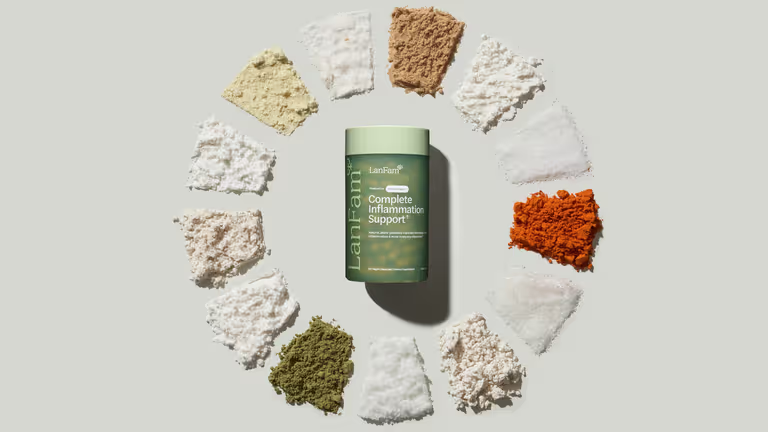
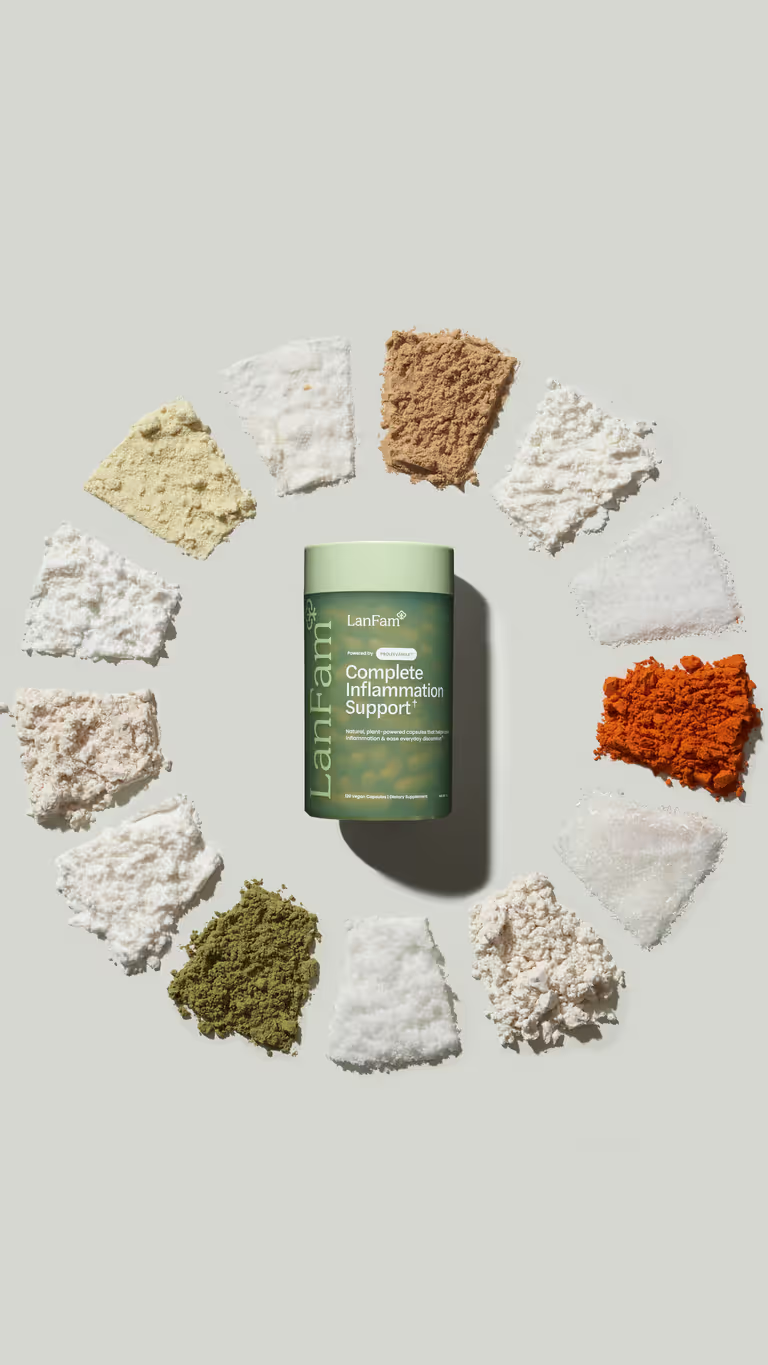
LanFam Health's Complete Inflammation Support contains 13 standardized ingredients targeting 6 inflammatory pathways. Boswellia's role in that formula is specific and non-redundant:
- Curcumin + Piperine address the COX-2 pathway (prostaglandin modulation + bioavailability enhancement)
- Boswellia Serrata addresses the 5-LOX pathway (leukotriene modulation)
- L-Glutamine supports gut barrier integrity (systemic inflammatory regulation)
- GABA + 5-HTP support sleep quality (overnight inflammatory modulation)
- Additional ingredients support antioxidant defense, nervous system resilience, and cellular repair
Each ingredient has a defined role. Boswellia isn't included because "more ingredients equals better" - it's included because without 5-LOX coverage, the formula would leave an entire inflammatory pathway unaddressed. Curcumin alone can't do what boswellia does. And boswellia alone can't do what curcumin does. Together, they cover the two most significant enzyme-mediated inflammatory pathways.
The piperine in Complete Inflammation Support is dosed at 6mg - sufficient to enhance curcumin absorption while remaining well below the 20mg+ threshold where significant drug interactions have been documented in research. Transparency on this matters, especially for people who research ingredients carefully before purchasing.
Realistic Timeline for Boswellia Benefits
If you start taking boswellia - whether standalone or as part of a multi-pathway formula - here's what the research suggests you can realistically expect.
Weeks 1-2: Building phase. Boswellic acids begin accumulating in tissues. Most people don't notice meaningful changes yet. This is normal and not an indication that it isn't working. The biochemistry of 5-LOX inhibition takes time to translate into noticeable differences in comfort.
Weeks 3-4: Initial changes. Clinical trials typically show the first statistically measurable improvements in joint comfort scores around the 4-week mark. You might notice that your joints feel slightly more comfortable during or after activity, or that morning stiffness resolves a bit faster than usual. The changes are often subtle at first.
Weeks 6-8: Meaningful improvement. This is the window where most clinical trials report significant differences between boswellia and placebo groups. Joint comfort, physical function, and inflammatory marker measurements show clear improvement. If you're using boswellia as part of a multi-pathway formula like Complete Inflammation Support, the compounding effect of multiple pathways being addressed simultaneously tends to become more apparent in this timeframe.
Day 90: Evaluation point. LanFam Health offers a 90-day money-back guarantee because meaningful results from natural compounds build gradually. By 90 days, you have a genuine basis for evaluating whether the approach is working for your body. Rushing to judgment at two weeks doesn't give the biochemistry enough time to demonstrate its full effect.
The key principle: boswellia works with your body's own systems, not by overriding them. That means results build rather than appear overnight.
Building a Complete Approach to Inflammation
Boswellia serrata is one of the most well-researched natural 5-LOX inhibitors available - and 5-LOX inhibition is a pathway that most supplement formulas overlook entirely. The clinical evidence for joint comfort, healthy inflammatory response, and multi-pathway utility is substantive, not speculative. If you've been taking turmeric alone and wondering why the results plateau, the 5-LOX pathway may be the missing piece.
LanFam Health's Complete Inflammation Support was formulated by Fabio Lanzieri, drawing on 40 years of pharmaceutical experience, to address exactly this kind of gap. Thirteen standardized ingredients. Six inflammatory pathways. Boswellia and curcumin working on parallel pathways - not competing, but complementary. It's a formula built on the principle that inflammation is a multi-pathway problem that deserves a multi-pathway response.
If you're the kind of person who reads ingredient research before buying - and the fact that you've read this far suggests you are - this is the kind of formula designed for people who want to understand what they're taking and why.
Learn more about Complete Inflammation Support and the full ingredient list →LanFam Health offers a 90-day money-back guarantee - because meaningful results from natural compounds build gradually, and you deserve the time to evaluate them honestly.

Frequently asked questions
There's a seat at our table
Letters from our family to yours — the science, the recipes, the things that actually helped real families. Leave your email and we'll send the next one.