The best anti-inflammatory supplement — what to look for, after 40 years in pharma
Omega-3, curcumin with piperine, boswellia, vitamin D have the strongest human evidence. A pharma scientist ranks the best anti-inflammatory supplements.
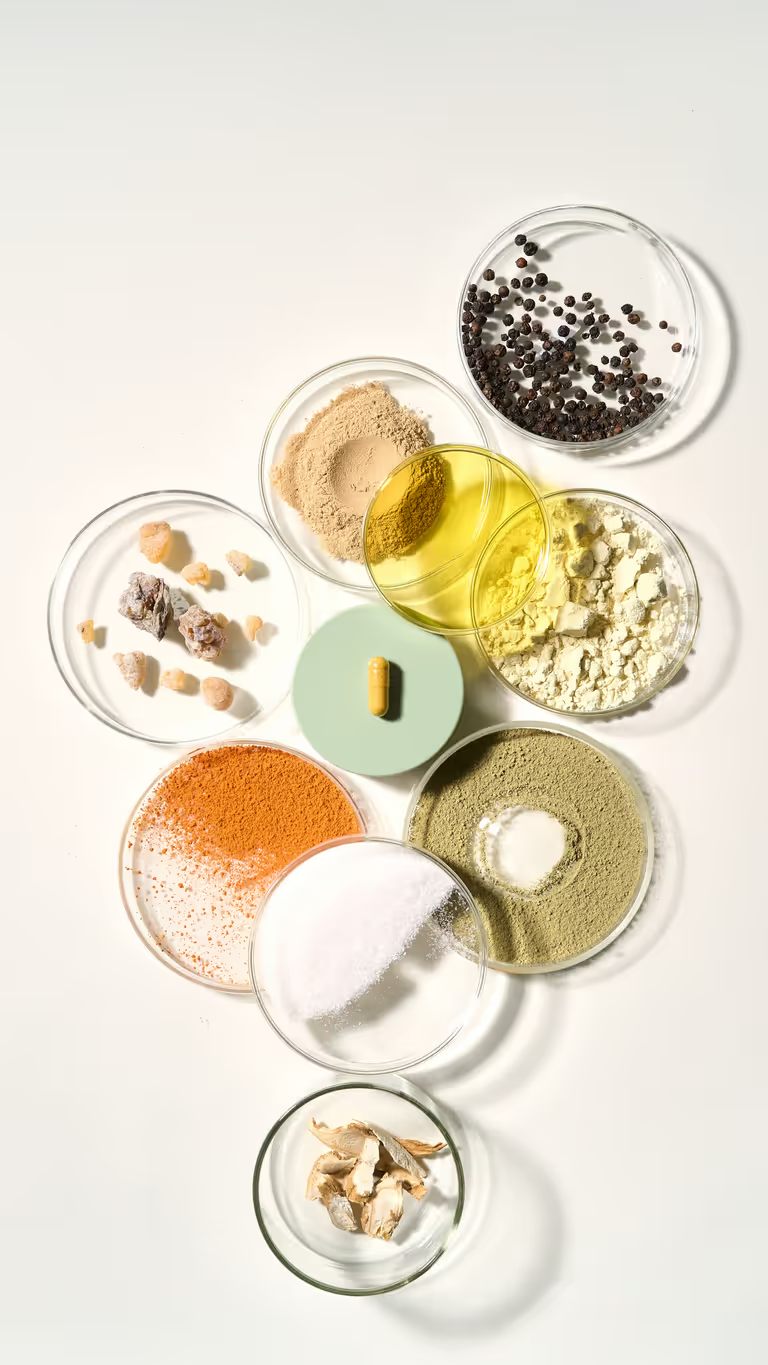
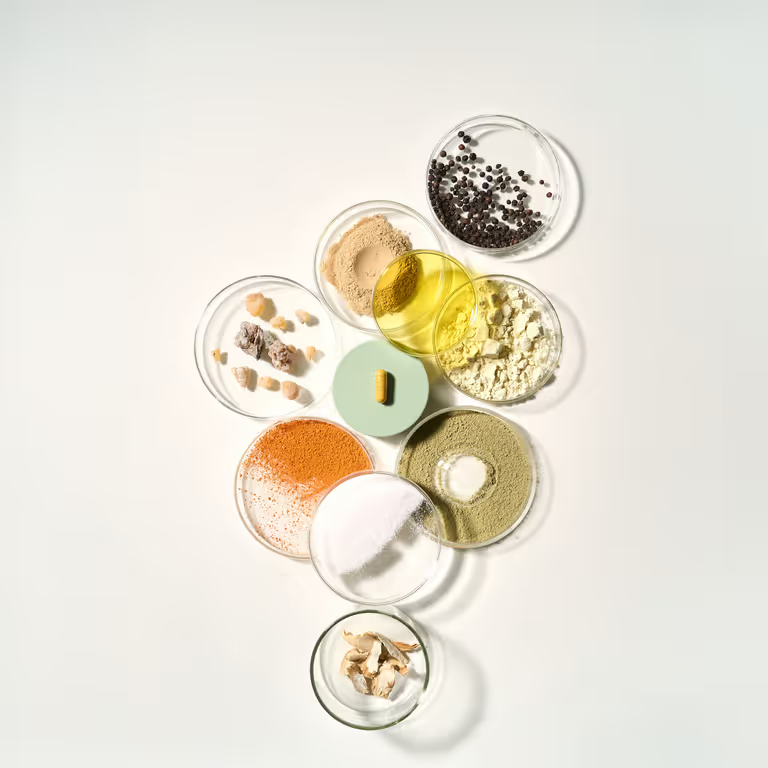
Ingredients in this letter

Someone asked me last week which anti-inflammatory supplement he'd actually buy. He'd just come back from his cardiologist with elevated hs-CRP, the doctor wasn't ready to medicate him yet but had said the words "lifestyle factors," and he'd been scrolling through best-of lists for two days. He wanted the short answer.
I gave him the short answer. Then I told him why the short answer is usually wrong — and why the right answer takes about 90 seconds longer than most articles give it.
I'll tell you both.
The short version: if you want the three with the strongest human evidence, they are omega-3 (EPA + DHA), curcumin paired with piperine, and vitamin D when you are actually deficient — with boswellia serrata close behind for joint-driven inflammation. But the best anti-inflammatory supplements for you depend on which pathway is driving your inflammation: a systemic CRP problem, a joint problem, a gut problem, and neuroinflammation and brain fog are not the same target, and they do not respond to the same single ingredient.
The eight ingredients with the most published evidence
1. Curcumin (with piperine for absorption)
Pathway: COX-2 and NF-κB signaling. Standardized curcumin extract targets the same inflammatory enzymes that NSAIDs do — but more gently, and with a different safety profile over the long haul. In a 2014 multicenter trial, 1,500 mg/day of curcumin extract performed comparably to 1,200 mg/day of ibuprofen for knee osteoarthritis at four weeks, with fewer gastrointestinal side effects². I break that head-to-head down in detail in curcumin vs ibuprofen. A 2017 review in Foods summarized roughly 100 studies showing curcumin's effects across joint comfort, gut function, and cardiovascular markers³.
The catch — and this is the one nobody flags loudly enough — is that plain curcumin is barely absorbed. A landmark 1998 study showed that piperine (the active compound in black pepper) increases curcumin bioavailability by about 2,000%¹. Without piperine or another verified absorption technology, most of what you swallow ends up in the trash.
What to look for: 95% standardized curcuminoids, 500-1,000 mg/day, paired with piperine (often listed as BioPerine).
2. Omega-3 fatty acids (EPA + DHA from fish oil)
Pathway: prostaglandin and cytokine production. EPA and DHA lower the production of pro-inflammatory eicosanoids and shift the body's signaling balance toward resolution⁴. A 2017 review by Calder, one of the most-cited authors in the field, concluded that doses around 2-4 g/day of combined EPA + DHA produce measurable changes in inflammatory markers — including hs-CRP, which is exactly the marker that brought my friend in.
What to look for: combined EPA + DHA of 1,000-2,000 mg per day for general support, higher for elevated CRP. Triglyceride or re-esterified triglyceride forms absorb better than ethyl ester forms. Third-party tested for heavy metals.
3. Boswellia serrata (standardized for boswellic acids)
Pathway: 5-LOX (leukotriene synthesis). This is the pathway that curcumin doesn't touch — and it's the one most relevant to joint inflammation. A 2008 placebo-controlled trial of 5-Loxin (a standardized boswellia extract) showed significant improvements in knee pain and physical function at 90 days⁵.
What to look for: extract standardized for 65% or higher boswellic acids, ideally with the active 3-O-acetyl-11-keto-β-boswellic acid (AKBA) called out specifically. 100-250 mg/day of the standardized extract.
4. Vitamin D₃ (when you're actually deficient)
Pathway: immune regulation. Vitamin D deficiency is associated with elevated inflammatory markers, but the supplementation evidence is conditional: it helps when you're deficient, less so when your serum 25(OH)D is already in range⁶. This is the supplement on the list that asks for a lab test before you decide on a dose.
What to look for: get a 25(OH)D test first. If you're below 30 ng/mL, 2,000-5,000 IU/day until you retest. If you're already above 40 ng/mL, the marginal benefit gets thin.
5. Resveratrol (trans-resveratrol specifically)
Pathway: oxidative stress and NF-κB modulation. Oxidative stress feeds inflammation and inflammation feeds oxidative stress, and resveratrol interrupts that cycle through sirtuin signaling⁷. The catch with resveratrol is that "resveratrol" on a label often includes the inactive cis form alongside the active trans form. The bioactive content is what matters.
What to look for: trans-resveratrol content disclosed on the label, 100-500 mg/day depending on indication.
6. Quercetin
Pathway: mast cell stabilization, NF-κB modulation. Quercetin shows up in a recent 2024 review of over-the-counter anti-inflammatory supplements as one of the better-supported flavonoids, particularly for the gut-immune interface⁸. It pairs naturally with bromelain (an enzyme from pineapple) that supports its absorption.
What to look for: 250-500 mg/day, often paired with bromelain.
7. EGCG (green tea catechins)
Pathway: polyphenol antioxidant + NF-κB modulation. The bioactive compound in green tea is epigallocatechin-3-gallate (EGCG) — and "green tea extract" labels that don't standardize for EGCG content are guessing.
What to look for: standardized for EGCG content (not just "total polyphenols"), 200-400 mg EGCG/day. Avoid high-dose EGCG on an empty stomach (rare but documented liver-stress reports at very high doses).
8. Ginger (in real clinical doses)
Pathway: COX-2 and 5-LOX. Ginger is one of the few supplements that hits both major prostaglandin and leukotriene pathways. The studies that show meaningful effects use 1-2 g/day of standardized extract — much higher than what you'd get from culinary ginger or a 100 mg capsule.
What to look for: standardized extract, 1,000-2,000 mg/day of the actual rhizome equivalent.
A quick comparison
- Curcumin (95% standardized). Pathway: COX-2 and NF-κB. Dose: 500-1,000 mg/day. Absorption: needs piperine, a phytosome, or a lipid carrier.
- Omega-3 (EPA + DHA). Pathway: prostaglandins and cytokines. Dose: 1,000-2,000 mg/day combined. Form: triglyceride or re-esterified triglyceride preferred over ethyl ester.
- Boswellia serrata. Pathway: 5-LOX. Dose: 100-250 mg/day of standardized extract. Standardization: ≥65% boswellic acids, ideally AKBA-disclosed.
- Vitamin D₃. Pathway: immune regulation. Dose: 2,000-5,000 IU/day if 25(OH)D is below 30 ng/mL. Take with dietary fat.
- Resveratrol. Pathway: oxidative stress and NF-κB. Dose: 100-500 mg/day. Label should disclose trans-resveratrol content.
- Quercetin. Pathway: mast cell stabilization and NF-κB. Dose: 250-500 mg/day. Often paired with bromelain.
- EGCG. Pathway: polyphenol antioxidant and NF-κB. Dose: 200-400 mg/day. Label should standardize EGCG content, not just total polyphenols.
- Ginger. Pathway: COX-2 and 5-LOX. Dose: 1,000-2,000 mg/day of standardized extract — not culinary doses.
IngredientPrimary pathwayClinical doseStandardization / form to look forStrength of human evidence
Curcumin
COX-2, NF-κB
500–1,000 mg/day
95% curcuminoids + piperine, phytosome, or lipid carrier
Strong (head-to-head OA RCT vs ibuprofen)
Omega-3 (EPA+DHA)
Prostaglandins, cytokines
1,000–2,000 mg/day combined
Triglyceride or re-esterified triglyceride form
Strong (CRP + joint-pain meta-analyses)
Boswellia serrata
5-LOX
100–250 mg/day extract
≥65% boswellic acids, AKBA disclosed
Strong for joint (placebo-controlled OA RCT)
Vitamin D₃
Immune regulation
2,000–5,000 IU/day if 25(OH)D < 30 ng/mL
D₃, taken with dietary fat
Moderate (benefit mainly when deficient)
Resveratrol
Oxidative stress, NF-κB
100–500 mg/day
trans-resveratrol content disclosed
Moderate (clinical-studies review)
Quercetin
Mast-cell stabilization, NF-κB
250–500 mg/day
Often paired with bromelain
Moderate (mechanistic + small trials)
EGCG
Polyphenol antioxidant, NF-κB
200–400 mg/day
EGCG content standardized, not just total polyphenols
Moderate
Ginger
COX-2, 5-LOX
1,000–2,000 mg/day extract
Standardized extract, not culinary doses
Moderate–strong for joint (OA meta-analysis)
Why most "best supplement" lists are misleading
Look back at the list for a minute. Notice that each ingredient addresses different inflammatory pathways. Curcumin and ginger hit COX-2. Boswellia and ginger hit 5-LOX. Omega-3 affects the prostaglandins those enzymes produce. Resveratrol and EGCG and quercetin all touch NF-κB through different mechanisms. Vitamin D operates entirely upstream, on immune regulation.
Now ask: which one of these is "the best"?
None of them are — separately. Because chronic inflammation almost never involves only one pathway. The reader with elevated hs-CRP, the friend with morning joint stiffness, the person whose gut feels off after every meal — those are usually multi-pathway problems. Picking one ingredient and hoping for the best is like fixing one leak in a roof with six holes.
This is the part the listicles skip. They rank ingredients individually, score them on antioxidant capacity or trial count, and forget to ask whether a real human's actual inflammation maps to a single pathway. It almost never does.
So if you're going to take more than one — and most people who care about inflammation should — the next question is how to evaluate combination formulas without falling for marketing language.
Six criteria for evaluating any combination formula
After 40 years in pharma, these are the six things I look at when I read a supplement label. They work whether the bottle is mine or someone else's.
1. Pathway coverage. How many of the six major inflammatory pathways does the formula actually address? (The upstream inflammatory cascade is the same in every body — what differs is which step is firing hardest in yours.) COX-2, 5-LOX, NF-κB, oxidative stress, gut-barrier, neuroinflammation. A formula that hits one or two of those is a single-ingredient bet wearing a multi-ingredient costume.
2. Extract standardization. If the label says "turmeric root powder" without a curcuminoid percentage, the active content is anyone's guess and varies batch to batch. Standardized extracts (95% curcuminoids, 65% boswellic acids, EGCG content disclosed) give you a measurable dose every time.
3. Bioavailability. The hardest thing to fake. Curcumin needs piperine, a phytosome, or a lipid carrier. Resveratrol needs the trans form. EGCG needs the right dosing window. If the formula has high-dose curcumin and no absorption technology, the milligrams on the label are mostly aspirational.
4. Label transparency. Proprietary blends hide individual ingredient doses behind a combined number. That means you cannot verify whether the curcumin dose matches the studies, whether the boswellia dose is clinical or token, or whether the bottle is mostly filler with trace amounts of expensive compounds listed for marketing. The U.S. National Institutes of Health Office of Dietary Supplements maintains a label-literacy resource that puts it plainly⁹: a consumer should be able to identify the amount of every ingredient.
5. Clinical evaluation of the finished formula. Most supplements have published research on their individual ingredients but zero studies on the combination as sold. That's not nothing — but it's not the same as a human evaluation of the actual product. When a formula has been evaluated as a complete system (not just assembled from individually studied parts), that's worth more.
6. Safety disclosure. Curcumin and resveratrol can potentiate anticoagulants. 5-HTP affects serotonin and shouldn't be combined with SSRIs without a doctor's input. High-dose green tea extract on an empty stomach has rare but documented liver-stress reports. A formula that surfaces these — instead of burying them — is one that respects you.
Hold any combination formula up against those six. Most products fail two or three of them. The ones that satisfy all six are the ones worth a 90-day trial.
What about CRP specifically?
The supplements with the most published hs-CRP data are omega-3 (EPA + DHA at 2-4 g/day), curcumin paired with piperine (1,500 mg/day in the strongest trials), and vitamin D when you're deficient. If your CRP came back elevated — like the friend I started this letter with — those are the three I'd look at first, in that order. Track CRP every 90 days, not every week. Inflammation doesn't change overnight.
What about joint pain specifically?
For joint comfort, the strongest evidence sits with curcumin, boswellia serrata, and omega-3. Curcumin and boswellia hit COX-2 and 5-LOX — the two enzymes that drive most joint inflammation. Omega-3 supports the broader prostaglandin balance. Vitamin D matters if you're deficient. If you're already trying NSAIDs and looking for an alternative, my piece on a natural alternative to ibuprofen walks through the specific NSAID swap question. For the curcumin-vs-boswellia question on its own, see boswellia vs turmeric. If joint pain is your specific driver, the supplements with the most published joint-specific evidence are boswellia serrata (its AKBA fraction inhibits 5-LOX), curcumin and omega-3 — and ginger, which a meta-analysis of randomized placebo-controlled trials found modestly reduces osteoarthritis pain at standardized doses¹⁰. Omega-3 carries its own meta-analytic support for reducing inflammatory joint pain, not just its mechanism on prostaglandins¹¹. These are the best anti-inflammatory supplements to take when the inflammation is concentrated in the joints rather than systemic.
What's the strongest natural anti-inflammatory?
"Strongest" depends on the pathway. Curcumin has the largest published research base among single botanicals, particularly with piperine for absorption. Boswellia serrata is the strongest single option for the 5-LOX pathway that curcumin doesn't touch. Omega-3 is the strongest single option for systemic CRP. A well-built combination addressing multiple pathways at once is structurally stronger than any one of them alone — which is why this question almost always answers itself once you map the inflammation to the pathways it actually involves.
What I'd actually take
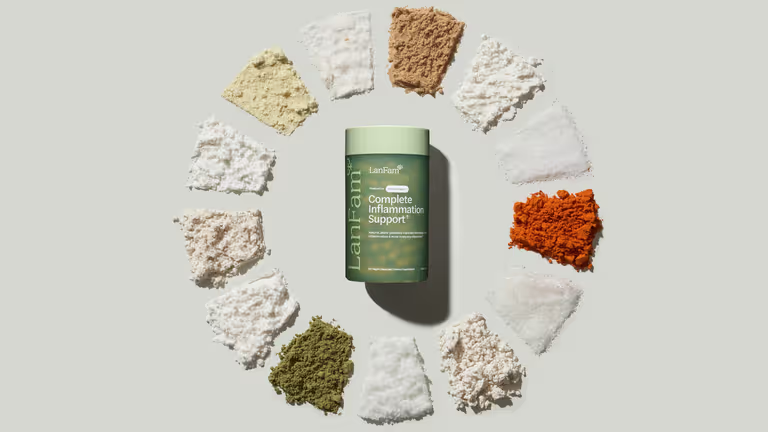
If you're already taking omega-3 and vitamin D — which most people researching this topic already are — the next move is multi-pathway botanical support. The formula my wife takes, and the one we built for her, is ProleevaMax. Thirteen standardized ingredients, six pathways, piperine for absorption, every dose on the label, and a clinical evaluation showing a statistically significant 22-point reduction in McGill Pain Questionnaire scores at eight weeks (p = 0.042)†.
I'm telling you that because the framework on this page is the framework we built ProleevaMax around — not the other way around. If you take the six criteria above and apply them to any combination formula on the market, including ours, you'll be in a position to judge it honestly. That's the goal.
If you want to read the deeper articles behind individual ingredients, the gut piece is at gut inflammation supplements, the resveratrol piece is at resveratrol supplement benefits, and the broader lifestyle picture is at how to reduce inflammation naturally.
A closing thought
The friend I started this letter with bought a combination formula with omega-3, curcumin, boswellia, and a few supporting ingredients. He'll get a CRP re-test in 90 days. We'll see what the lab says.
What I told him I'll tell you too: the best anti-inflammatory supplement is the one you can read the label of, trace every dose to a published study, and explain to your doctor without flinching. Most products on the shelf don't survive that test. The ones that do are worth the time it takes to choose them.
Your body's inflammatory response is complex. Your supplement should reflect that complexity — with transparency to match.
— Fabio
These statements have not been evaluated by the Food and Drug Administration. This product is not intended to diagnose, treat, cure, or prevent any disease. Always consult your healthcare provider before starting any new supplement, especially if you take anticoagulant or antiplatelet medications, SSRIs or MAOIs, or have existing health conditions.

References
- 2.Shoba G, Joy D, Joseph T, et al. Influence of piperine on the pharmacokinetics of curcumin in animals and human volunteers. Planta Med. 1998. https://doi.org/10.1055/s-2006-957450
- 3.Kuptniratsaikul V, Dajpratham P, Taechaarpornkul W, et al. Efficacy and safety of Curcuma domestica extracts compared with ibuprofen in patients with knee osteoarthritis: a multicenter study. Clin Interv Aging. 2014. https://doi.org/10.2147/CIA.S58535
- 4.Hewlings SJ, Kalman DS. Curcumin: A review of its effects on human health. Foods. 2017. https://doi.org/10.3390/foods6100092
- 5.Calder PC. Omega-3 fatty acids and inflammatory processes: from molecules to man. Biochem Soc Trans. 2017. https://doi.org/10.1042/BST20160474
- 6.Sengupta K, Alluri KV, Satish AR, et al. A double blind, randomized, placebo controlled study of the efficacy and safety of 5-Loxin for treatment of osteoarthritis of the knee. Arthritis Res Ther. 2008. https://doi.org/10.1186/ar2461
- 7.Calton EK, Keane KN, Newsholme P, Soares MJ. The impact of Vitamin D levels on inflammatory status: a systematic review of immune cell studies. PLoS One. 2015. https://doi.org/10.1371/journal.pone.0141770
- 8.Singh AP, Singh R, Verma SS, et al. Health benefits of resveratrol: Evidence from clinical studies. Med Res Rev. 2019. https://doi.org/10.1002/med.21565
- 9.Fares S, Spiegelman E, Awad A, et al. Over-the-counter anti-inflammatory supplements for skeletal muscle recovery. Cureus. 2024. https://pmc.ncbi.nlm.nih.gov/articles/PMC11745436/
- 10.U.S. National Institutes of Health, Office of Dietary Supplements. Dietary Supplement Label Database. https://ods.od.nih.gov/factsheets/DSLD-Consumer/
- 11.Bartels EM, Folmer VN, Bliddal H, et al. Efficacy and safety of ginger in osteoarthritis patients: a meta-analysis of randomized placebo-controlled trials. Osteoarthritis Cartilage. 2015. https://doi.org/10.1016/j.joca.2014.09.024
- 12.Goldberg RJ, Katz J. A meta-analysis of the analgesic effects of omega-3 polyunsaturated fatty acid supplementation for inflammatory joint pain. Pain. 2007. https://doi.org/10.1016/j.pain.2007.01.020
Frequently asked questions
There's a seat at our table
Letters from our family to yours — the science, the recipes, the things that actually helped real families. Leave your email and we'll send the next one.