Resveratrol Supplement Benefits: What the Sirtuin Research Actually Shows
Resveratrol activates the longevity pathway most supplements miss. What the SIRT1 research actually shows — and what dose actually moves the needle.
Ingredients in this letter
What Resveratrol Is
Resveratrol is a polyphenolic compound (specifically, a stilbenoid) produced by plants as a defense mechanism against pathogens and environmental stress. Major dietary sources:
- Japanese knotweed (Polygonum cuspidatum) root — the most concentrated natural source, and what most supplements use
- Grape skins, particularly red varieties — source of resveratrol in red wine
- Peanuts and peanut skins — modest amounts
- Some berries (blueberries, cranberries) — small amounts
- Cocoa — trace amounts
Trans vs. Cis Resveratrol
Resveratrol exists in two isomeric forms:
- Trans-resveratrol — the biologically active form used in virtually all human research
- Cis-resveratrol — less stable, less studied, less biologically active
Quality supplements specify "trans-resveratrol." Products that just say "resveratrol" without specifying may contain a mix including less-active cis form.
ProleevaMax specifies Trans-Resveratrol from Japanese Knotweed Root Extract — the research-matched form and source.
The Sirtuin Story (and What It Actually Means)
Resveratrol became a media sensation in the mid-2000s when researchers reported it activated SIRT1 — a protein in the sirtuin family involved in cellular energy regulation, mitochondrial function, and stress response. Media coverage sometimes framed this as "the fountain of youth pill" — an overreach that research hasn't supported.
The honest take on SIRT1 and resveratrol:
What's True
- Resveratrol does activate SIRT1 in laboratory settings
- SIRT1 activation is mechanistically linked to cellular stress response, inflammation reduction, and mitochondrial biogenesis
- Calorie restriction activates SIRT1 through a different pathway, and caloric restriction is well-established for longevity in model organisms
- SIRT1 activators are being actively investigated as a pharmacological category
What's Oversold
- Resveratrol as "the calorie restriction mimetic pill" — the dose equivalence doesn't hold up at practical human doses
- "Resveratrol extends lifespan" — model organism research has been mixed; human longevity effects are not demonstrated
- "Resveratrol reverses aging" — marketing phrase, not a scientific claim
Where the Research Actually Stands
Resveratrol has mechanistic effects. Those effects at practical supplement doses produce modest measurable improvements in inflammatory markers, metabolic function, and cardiovascular parameters. This is still valuable; it's just not "lifespan extension."
Other Primary Mechanisms
Beyond SIRT1, resveratrol has multiple documented effects:
NRF2 Activation (Antioxidant System)
Resveratrol activates the NRF2 transcription factor, which upregulates endogenous antioxidant systems (glutathione peroxidase, superoxide dismutase, catalase). This means resveratrol doesn't just neutralize ROS directly — it improves the body's own antioxidant defense system. Overlaps mechanistically with curcumin and EGCG.
NF-κB Inhibition
Resveratrol inhibits NF-κB activation — the master inflammatory transcription factor. This places it in the category of upstream anti-inflammatory compounds alongside curcumin.
Mitochondrial Biogenesis
Resveratrol supports the production of new mitochondria via PGC-1α activation. More functional mitochondria = better cellular energy metabolism.
Direct Antioxidant
Resveratrol quenches free radicals directly, though its direct antioxidant activity is moderate compared to stronger direct antioxidants like vitamin C.
Estrogen Receptor Interaction
Resveratrol has modest phytoestrogen activity — it interacts with estrogen receptors. Research on whether this matters is context-dependent; for breast cancer survivors, this is a relevant consideration to discuss with oncology. See our Lane 2 scaffold for the framework.
What the Research Actually Shows
Cardiovascular Health
A 2015 meta-analysis in the International Journal of Cardiology documented resveratrol's effects on blood pressure, lipid profiles, and endothelial function across multiple trials. Effects are modest but measurable — reductions of ~5-10 mmHg in systolic blood pressure in some studies.
Metabolic Function
Research has investigated resveratrol for insulin sensitivity and glycemic markers. Results are mixed; some studies show measurable improvements (particularly in prediabetic or type 2 diabetic populations), others show null effects. A 2015 meta-analysis synthesized this body of work.
Inflammation
Multiple studies have documented reductions in inflammatory markers (CRP, IL-6, TNF-α) with resveratrol supplementation. Effects tend to be more pronounced in populations with elevated baseline inflammation than in healthy individuals.
Cognitive Function
Emerging research on resveratrol for cognitive function and cerebrovascular health. A 2014 study in Nutrients showed improved cerebrovascular responsiveness in postmenopausal women with 75mg twice-daily resveratrol. Effects on cognition specifically are emerging and smaller than effects on vascular markers.
Joint Inflammation
Some research on resveratrol for osteoarthritis and joint inflammation, with modest findings. Used typically as one component of a broader protocol rather than standalone.
The Bioavailability Challenge
Resveratrol has limited oral bioavailability. Most is rapidly metabolized in the gut wall and liver into sulfate and glucuronide conjugates — water-soluble forms that are quickly excreted. Only a small fraction of an oral dose reaches systemic circulation as free resveratrol.
This is why:
- Research doses for specific outcomes often require 500mg–1g+ daily
- Enhanced forms (micronized, phytosome, nanoparticle) have been developed to improve absorption
- Piperine (yes, the same black pepper compound that enhances curcumin) also modestly enhances resveratrol absorption
The practical implication: plain low-dose resveratrol supplements may deliver sub-therapeutic effects. Choosing trans-resveratrol at meaningful doses (minimum 150mg, often 250–500mg) with bioavailability consideration is how the mechanism actually reaches tissues.
Typical Clinical Doses
Research doses vary by outcome:
- General cardiovascular / anti-inflammatory support: 150–500mg daily of trans-resveratrol
- Metabolic function research: 500mg–1g daily
- Cognitive / cerebrovascular research: 75mg twice daily (the dose in the postmenopausal study)
- Higher-dose clinical research: up to 1–5g daily in some protocols (not typical for supplement use)
Most commercial supplements provide 250–500mg per serving.
Resveratrol vs Red Wine
The "French paradox" story implies you can get resveratrol benefits from red wine. The math doesn't support this:
- Red wine contains ~0.3–1mg of resveratrol per 5 oz glass
- Research doses are 150–500mg
- Reaching research dose from wine alone would require 150–500 glasses — far beyond any health recommendation
Red wine has its own polyphenol mix (including resveratrol and others) with some health research, but positioning wine consumption as a resveratrol delivery strategy isn't honest. Supplementation is how you get research-relevant doses.
Resveratrol in the ProleevaMax Formula
Trans-Resveratrol from Japanese Knotweed Root Extract is one of 11 ingredients in ProleevaMax's 2,401mg proprietary blend. Individual dose is not specified on the label; as one component of the blend, the resveratrol content is below the high end of research protocols (500mg+).
What it contributes to the formula: polyphenol dual-action (antioxidant + anti-inflammatory), complementing Turmeric, Matcha EGCG, and Boswellia. Within the formula, resveratrol pairs with:
- Piperine (Black Pepper Extract) — modest bioavailability enhancement
- Other polyphenols — compounded antioxidant effect
- Amino acid and cofactor cluster — supporting broader cellular and metabolic function
For users targeting high-dose resveratrol specifically for cardiovascular or metabolic research protocols, standalone trans-resveratrol at 500mg+ daily would be the conventional enhancement.
Safety and Interactions
Resveratrol is well-tolerated at typical supplement doses. Considerations:
Medication Interactions
- Anticoagulants (warfarin, aspirin) — resveratrol has mild antiplatelet effects; discuss with prescriber
- Blood pressure medications — potential additive effects on blood pressure reduction
- Diabetes medications — potential additive effects on blood sugar; monitor if combined
- Estrogen-modulating medications (including HRT, tamoxifen) — phytoestrogen considerations warrant discussion
Hormone-Receptor-Positive Breast Cancer
Given resveratrol's modest phytoestrogen activity, breast cancer survivors should discuss with oncology teams before supplementation. Not a blanket contraindication, but context-dependent. See our Lane 2 framework.
High-Dose Concerns
Very high doses (several grams daily) have occasionally been associated with GI upset, elevated liver enzymes, or other effects. Research protocols at these doses are under medical supervision. Supplement-dose resveratrol (under 1g daily) has not shown these concerns.
Pregnancy and Lactation
Limited safety data; conservative advice is to avoid during pregnancy and lactation.
Resveratrol in a Broader Protocol
Resveratrol is one of the better-supported dual-action polyphenols — not the miracle compound marketing sometimes claims, but a useful component of an anti-inflammatory / antioxidant protocol. It works best combined with complementary polyphenols (curcumin, EGCG) and as part of a broader protocol addressing inflammation, cardiovascular health, and metabolic function.
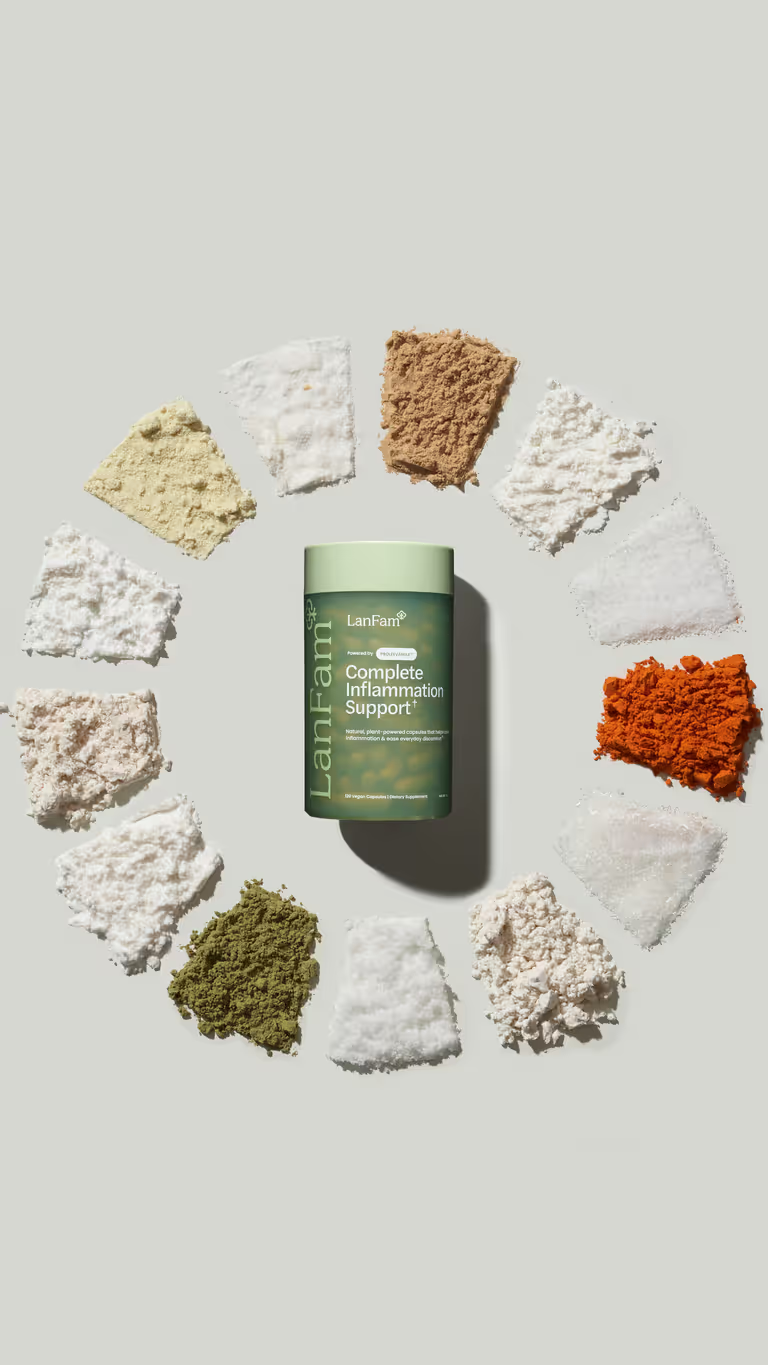
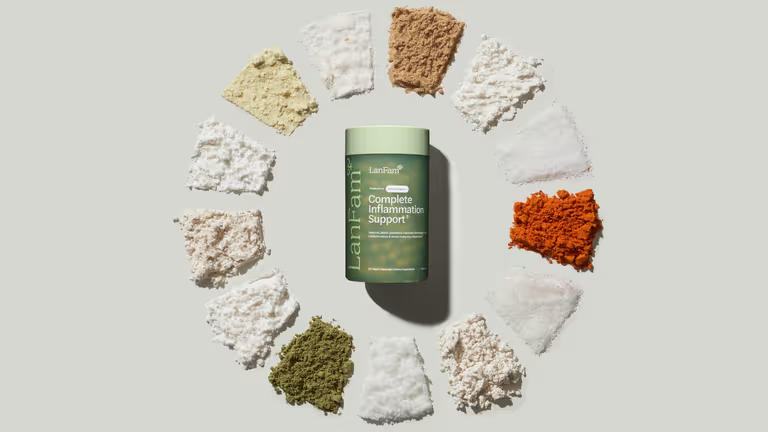
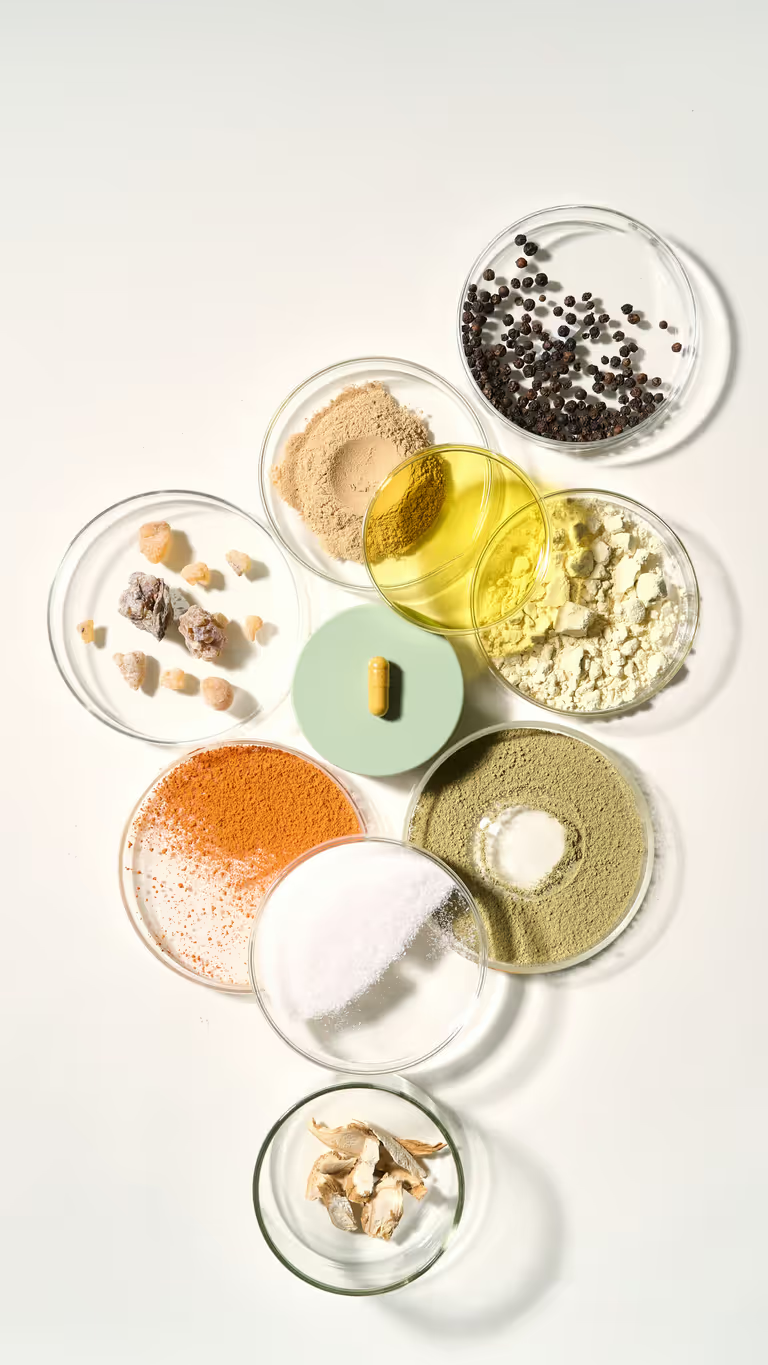
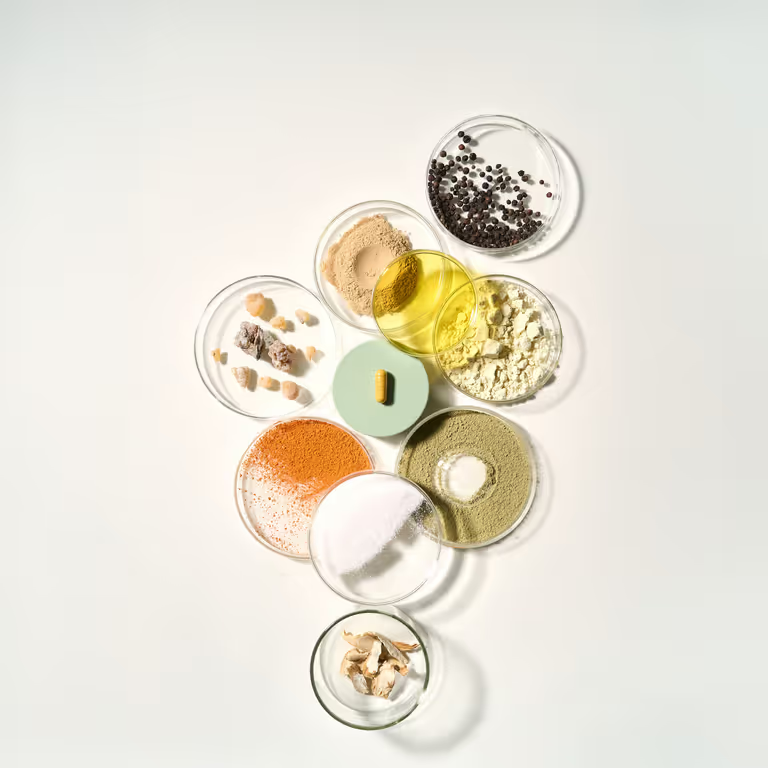
Complete Inflammation Support (Powered by ProleevaMax®) includes Trans-Resveratrol from Japanese Knotweed Root Extract alongside Turmeric (curcumin) with piperine, Matcha (EGCG), Boswellia, and 9 other standardized ingredients. See the full ingredient breakdown or start the 90-day protocol today.
† These statements have not been evaluated by the Food and Drug Administration. This product is not intended to diagnose, treat, cure, or prevent any disease. Resveratrol has mild antiplatelet and phytoestrogen effects; consult a healthcare provider before supplementing if you take anticoagulants, have estrogen-sensitive conditions, or take estrogen-modulating medications.

Frequently asked questions

There's a seat at our table
Letters from our family to yours — the science, the recipes, the things that actually helped real families. Leave your email and we'll send the next one.