You Don't Have a Sleep Problem. You Have an Inflammation Problem.
Sleep rarely breaks in isolation — inflammation breaks it first. Inflammatory messengers — IL-6 and TNF-α — disrupt the deep, slow-wave sleep that actually repairs you. And then poor sleep makes inflammation worse. It's a loop, not a line. Most "sleep" interventions — melatonin, magnesium, sleep hygiene rules — help symptoms but don't touch the loop. Address the inflammation, and sleep tends to follow.

It's Not the Sleep. It's What's Driving the Sleep.
The question most people ask their doctor — why am I not sleeping? — is the wrong shape. Better question: what is my body telling me at night that I'm not hearing during the day?
For a lot of us — and the older we get, the more this lands — the answer is inflammation. Not the sharp, useful kind that follows a sprained ankle and goes away. The quiet, persistent kind that hums underneath everything: the achy hip on the stairs, the foggy hour after lunch, the joint that knows the weather. That hum doesn't sleep. It keeps running while you try to.
So we want to make the case for swapping the order. Sleep is downstream. Inflammation is upstream. If you only ever work on the downstream side, you'll get small wins and lose them again — and you'll start to wonder what's wrong with you. The honest answer is probably nothing's wrong with you. The framing was wrong.
What's Actually Happening
The body has a small, ancient cast of chemical messengers that travel between the immune system and the brain. Two of the loudest are IL-6 (interleukin-6) and TNF-α (tumor necrosis factor alpha). When something is inflamed — joints, gut lining, blood vessels, anything — these messengers go up. They're the body's way of saying deal with this.
Here's the part that surprised us when we first read it. Those same messengers also rewire your sleep.
Specifically, they push you out of slow-wave sleep — the deep, dreamless kind in the first half of the night. Slow-wave is when growth hormone releases. When the lymphatic system flushes the brain. When the immune system itself does its repair shift. It is, in a real sense, the part of sleep that is the recovery. Lose enough of it, and no number of hours in bed will leave you feeling rested.
The relationship runs both ways. A 2019 review in Physiological Reviews, "The Sleep-Immune Crosstalk in Health and Disease,"† documents the bidirectional link in dense detail: immune activation alters sleep, and sleep loss in turn raises markers like CRP, IL-6, and TNF-α. It's a loop. Press anywhere on it and the rest of the loop responds.
So the model goes:
- Some source of inflammation is humming — diet, gut, joints, stress, weight, hormones, all of the above.
- IL-6 and TNF-α push you out of slow-wave sleep.
- The repair shift gets cut short.
- Less repair → more inflammation the next day.
- Repeat.
That fifth step — the repeat — is the part that quietly compounds for years. If you want the longer mechanism story, the inflammatory cascade walk-through covers what's happening upstream of all this.
Signs You Might Be in the Loop
Three patterns we hear often, and each one is a flag rather than a diagnosis. If you nod at all three, the loop is worth taking seriously.
1. You wake unrested even after a long night. You went to bed at ten. You "slept" until six-thirty. You feel like you got four hours. The math should work — but it doesn't. That gap between time in bed and feeling rested is often a slow-wave deficit. The hours were there. The repair wasn't.
2. You wake between 3 and 4 a.m., and your joints are stiff. Inflammatory markers, including cortisol's interaction with cytokines, follow a rough daily curve that peaks in the early morning hours. For people running a quiet inflammatory load, that peak is enough to surface stiffness, restlessness, sometimes a low-grade headache — and to nudge you out of sleep just as you should be deepening into the second cycle. The sleep-pain cycle piece walks through why hurting at night is its own loop, layered on top of this one.
3. You're tired in a way caffeine doesn't touch. A normal caffeine deficit gets fixed by coffee. Slow-wave deficit doesn't — because what's missing isn't alertness, it's repair. People in this loop describe the 2 p.m. crash that nothing fixes, the brain fog that lifts only on weekends, the workout they used to bounce back from in a day and now takes three. None of these are individually proof of anything. Together, they're worth listening to. The signs of chronic inflammation round-up has the broader pattern.
What Actually Helps
If the loop is the problem, then the work is to take pressure off the loop — at both ends, but especially upstream. Here is what we have watched move the needle, in our own family and in the people we hear from.
Eat the last meal earlier — and lighter. Not a diet. A timing change. Heavy, late food keeps the gut working through the early sleep window, and the gut is a major source of the inflammatory tone the rest of the body inherits. Aim for finishing dinner three hours before bed, and weighting it toward fish, vegetables, olive oil, and herbs rather than refined carbs and seed oils. The week-by-week change is real.
Make the hour before bed a cooldown, not a wind-down. A wind-down is what we tell ourselves we're doing while we keep scrolling. A cooldown is structural: lights low, screens off sixty minutes before bed, room cool, body warm. The point isn't melatonin production in some abstract sense — it's lowering the cortisol-and-cytokine signal that keeps the system primed.
Get ten minutes of morning sunlight in the eyes within thirty minutes of waking. This one sounds too simple to matter. It anchors the daily cortisol curve, which anchors the inflammatory rhythm, which anchors the sleep that follows. It is free, it takes ten minutes, and it works whether or not you "believe" in it.
Move daily — gently, often. Not hard, not rare. The phrase we keep coming back to is consistency over intensity. A twenty-minute walk every day does more for inflammatory tone than a punishing workout twice a week. The architecture of rest piece covers what restorative sleep is actually doing on the recovery side, and why undertraining-and-resting beats overtraining-and-cramming.
Take a serious look at your inflammatory inputs. Diet, alcohol, gut health, body composition, stress load — these are the upstream taps. None of them are quick fixes. All of them respond to attention. The complete guide to reducing inflammation naturally is our longest piece on this and the right starting point if you want to do the homework.
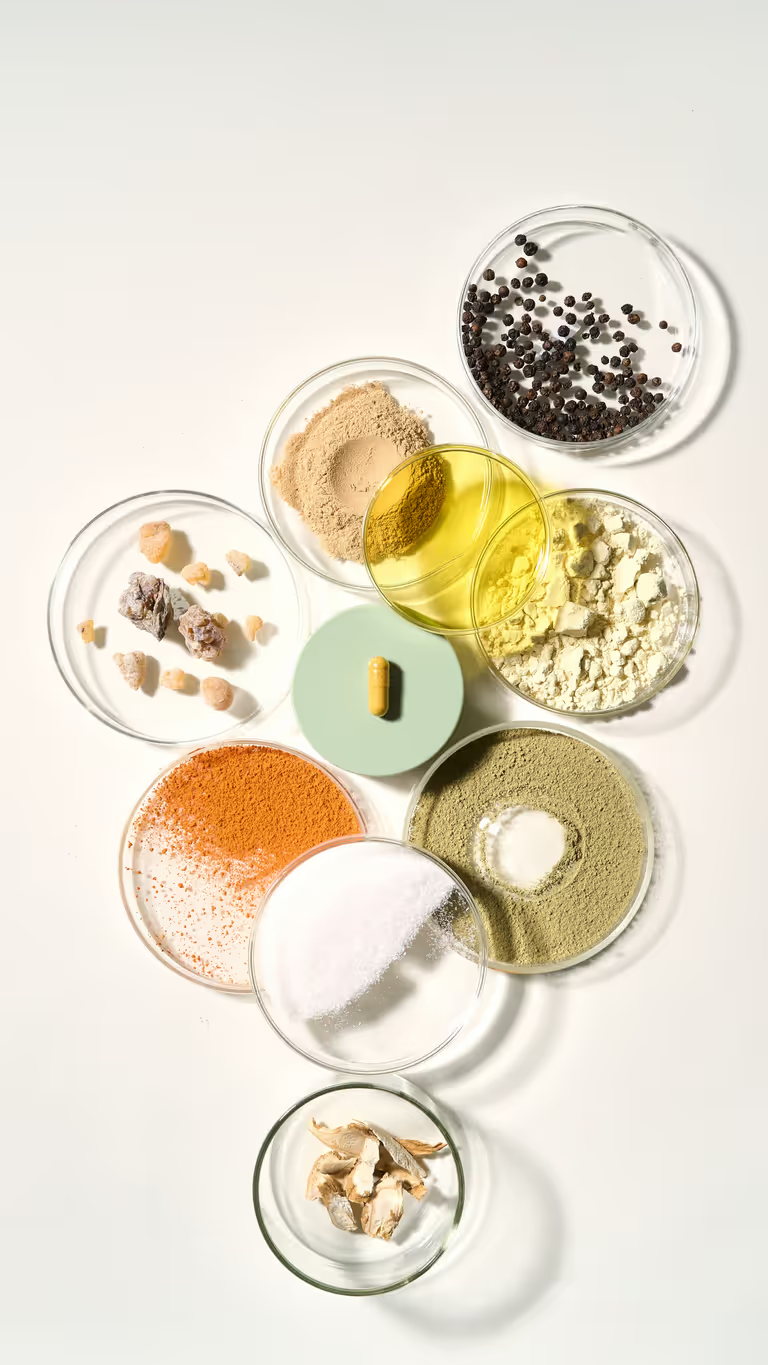
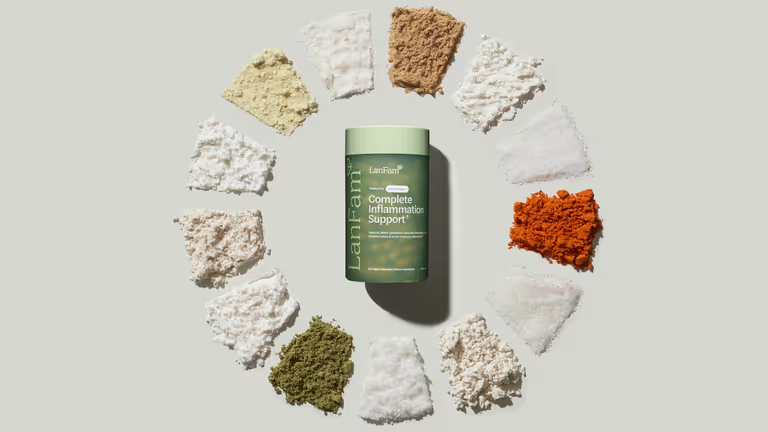
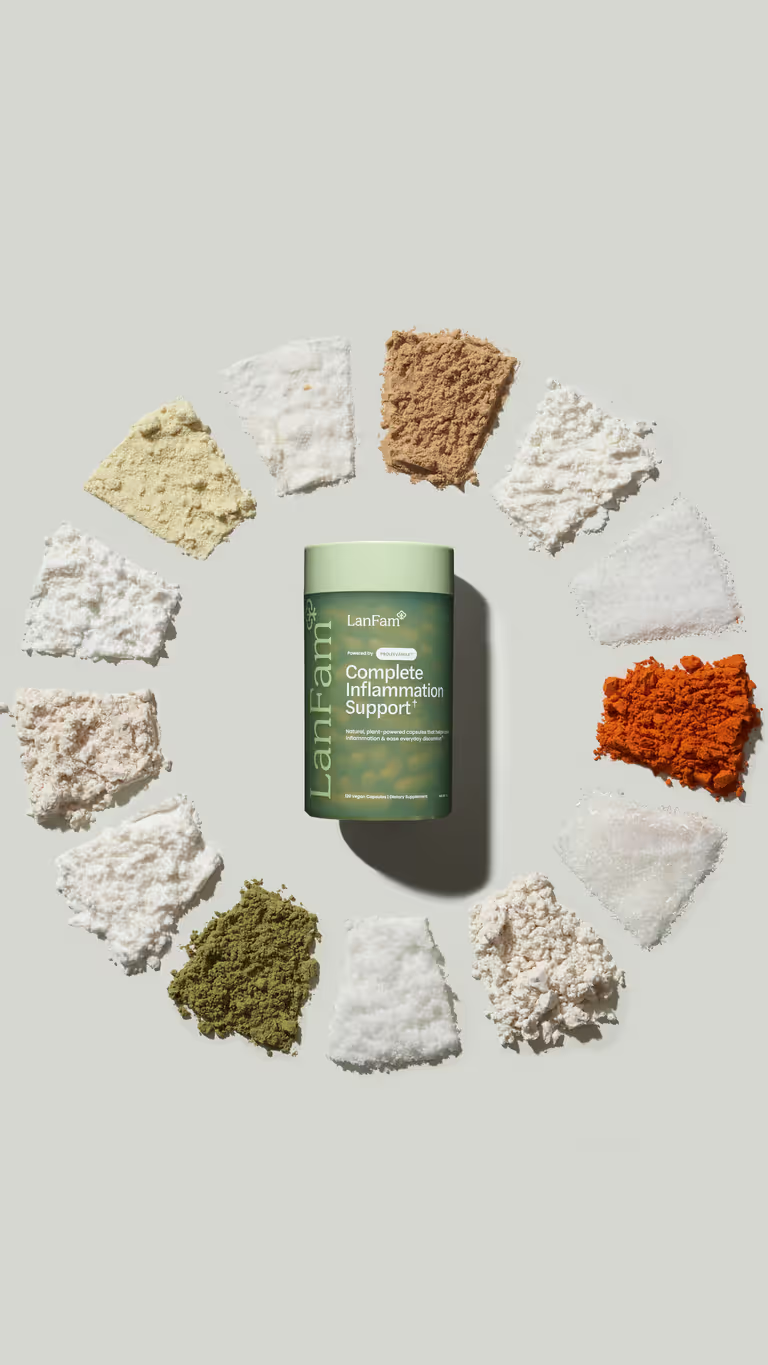
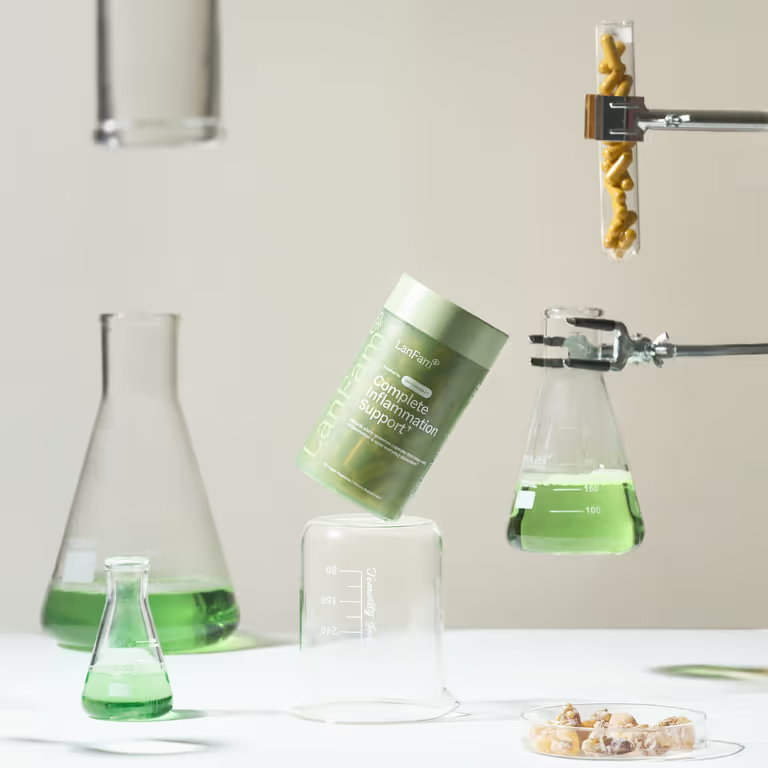
Where supplementation fits — honestly. We make a daily anti-inflammatory formula, ProleevaMax, and we have to be careful here. A capsule will not out-run a poor diet, a sedentary week, or an unaddressed gut issue. What a thoughtfully formulated supplement can do is steadily, broadly support a healthy inflammatory response while you do the harder upstream work. That's the framing. Strong enough to matter, safe enough for every day — and a real piece of the picture, not a substitute for it. The evidence we built it on is spelled out in detail; we'd rather show our homework than make a louder claim.
Frequently Asked Questions
Should I stop taking melatonin? Not necessarily — but understand what it is and isn't doing. Melatonin is a circadian signal. It can help you fall asleep on a disrupted schedule. It does not fix slow-wave deficit, it does not lower IL-6, and it does not address why your body is loud at 3 a.m. Use it situationally, not as the answer.
How long until I sleep better if I do this work? Honest answer — weeks, not days. The bidirectional loop took years to set; it doesn't unwind on a weekend. The pattern we see is: small wins in week one, real shifts by week three or four, a different baseline by month three. Consistency over intensity.
Is this just stress? Often, yes — and that's not a dismissal. Sustained stress is a major inflammatory driver. Cortisol dysregulation, sympathetic overdrive, and gut-barrier disruption all push the same cytokines we've been talking about. Saying "it's stress" is sometimes another way of saying "you're inflamed and you didn't know it had a name."
Can't I just take an anti-inflammatory drug at bedtime? Talk to your doctor. NSAIDs and prescription anti-inflammatories work on different pathways than diet, lifestyle, and broad-spectrum botanicals — they're potent, they have real side effect profiles (gut, kidney, cardiovascular), and they're not designed for daily long-term use the way a food-based approach is. This isn't an either/or question. It's a what-belongs-where question, and a clinician should help you answer it.
Closing
We are not anti-sleep-hygiene. The dark room helps. The 68-degree thermostat helps. The screens-down rule helps. But if you have done all of that and you are still staring at the ceiling at 3 a.m., the conversation needs to move upstream.
Stop letting inflammation decide your day — including the part of the day that's supposed to belong to rest. The work isn't sexy. It is mostly food, light, movement, and patience. But it is the work that compounds, and the sleep — when it comes back — comes back as a side effect of a quieter system, not as the prize at the end of a willpower contest.
This isn't medical advice. Talk to your doctor before changing supplements or medications, especially if you're on prescription sleep aids, anti-inflammatories, or anything that interacts with the gut, the liver, or the heart.
— Maria
† Besedovsky L, Lange T, Haack M. The Sleep-Immune Crosstalk in Health and Disease. Physiological Reviews, 2019;99(3):1325–1380. PubMed: 30920354
These statements have not been evaluated by the Food and Drug Administration. This product is not intended to diagnose, treat, cure, or prevent any disease.

There's a seat at our table
Letters from our family to yours — the science, the recipes, the things that actually helped real families. Leave your email and we'll send the next one.