Signs of Chronic Inflammation: Is Your Body Sending You a Signal?
Tired, achy, foggy, or inflamed? Learn the most common signs of chronic inflammation and what multi-pathway support can do.
Ingredients in this letter

TL;DR
- Chronic inflammation often shows up as fatigue, joint discomfort, brain fog, digestive trouble, and skin changes - not just visible redness or swelling.
- Unlike acute inflammation (which heals a wound), chronic inflammation can persist silently for months or years, driving discomfort across multiple body systems.
- Researchers now understand that chronic inflammation involves at least six overlapping biochemical pathways - which is why single-ingredient approaches often fall short.
- A clinical study using the multi-pathway formula behind LanFam Health's Complete Inflammation Support showed a statistically significant 22-point reduction on the McGill Pain Questionnaire at 8 weeks (p=0.042).
- Bottom line: If your symptoms feel vague, persistent, and hard to pin down, chronic inflammation may be the thread connecting them - and addressing it comprehensively is worth taking seriously.
What Are the Signs of Chronic Inflammation?
If you've been living with low-grade fatigue, joints that never quite feel comfortable, or a mental fog that won't lift - you may have wondered whether something deeper is going on. One of the most likely culprits, and one of the most overlooked, is chronic inflammation.
Chronic inflammation is not the sharp, visible kind you notice when you sprain an ankle. It's quieter. It operates below the surface, often for months or years, sending signals through a wide range of symptoms that seem unrelated at first glance. Understanding what those signals look like - and why they appear - is the first step toward doing something about them.
Acute vs. Chronic Inflammation: Why the Distinction Matters
Inflammation itself is not the enemy. When you cut your finger or catch a cold, your immune system launches an inflammatory response to isolate the threat, protect the tissue, and begin repair. That's acute inflammation - purposeful, time-limited, and essential.
Chronic inflammation is different. It happens when that same protective response doesn't fully resolve. The immune system stays activated - sometimes at a low level, sometimes in waves - even when there's no immediate threat to neutralize. Over time, this ongoing activation can affect how your joints feel, how clearly you think, how well you sleep, and how much energy you have to get through the day.
What triggers this prolonged state? Research points to several overlapping contributors:
- Diet high in refined carbohydrates and seed oils
- Chronic psychological stress
- Poor sleep quality or insufficient sleep duration
- Sedentary behavior
- Excess visceral fat (particularly around the midsection)
- Environmental exposures over time
- Gut microbiome imbalances
Most people have several of these factors in play simultaneously - which is part of why chronic inflammation can become self-reinforcing once it takes hold.
The Most Common Signs of Chronic Inflammation
One of the challenges with identifying chronic inflammation is that its signs overlap with dozens of other conditions. There's no single symptom that definitively points to it. Instead, the picture emerges from a cluster of persistent, often frustrating experiences.
1. Persistent Joint Discomfort and Stiffness
This is what most people associate with inflammation, and for good reason. Joints that feel stiff in the morning, achy after sitting, or uncomfortable during activities you used to handle easily are among the most consistent signs of a chronically activated inflammatory response. This isn't just "getting older" - it's a physiological process that can be addressed.
2. Fatigue That Sleep Doesn't Fix
Chronic inflammation is biologically expensive. Your immune system running in a low-grade activated state draws resources continuously. The result is a kind of fatigue that feels different from ordinary tiredness - a heaviness that persists even after a full night's sleep, and a sense that your energy reserves are never quite topped off.
Research published in Neuropsychiatric Disease and Treatment has connected elevated inflammatory markers with disrupted mitochondrial function, which directly impacts cellular energy production. When your cells can't produce energy efficiently, exhaustion follows.
3. Brain Fog and Difficulty Concentrating
The brain is not isolated from the body's inflammatory activity. Inflammatory signaling molecules called cytokines can cross the blood-brain barrier and interfere with neurotransmitter function, particularly serotonin and dopamine. The subjective experience of this is what many people describe as brain fog: difficulty concentrating, trouble finding words, slower processing, a sense of mental cloudiness.
If your thinking feels less sharp than it used to, and you can't attribute it to obvious causes like poor sleep alone, chronic inflammation is worth examining.
4. Digestive Discomfort and Irregularity
The gut is one of the most inflammation-sensitive environments in the body, largely because it contains more immune cells than any other organ. Signs that your gut may be caught in an inflammatory cycle include bloating, irregular digestion, abdominal discomfort after meals, and a general sense that your digestive system is unreliable.
The gut-inflammation connection runs both directions: gut imbalances can drive systemic inflammation, and systemic inflammation can disrupt gut function.
5. Skin Changes
The skin is often described as a window into internal inflammatory status. Persistent redness, skin that flushes easily, recurring breakouts in adulthood, or a general dullness that doesn't respond to topical care can all reflect an underlying inflammatory state. The skin's own immune infrastructure responds to the same cytokine signals circulating elsewhere in the body.
6. Disrupted Sleep
Chronic inflammation can disrupt the architecture of sleep - particularly the deep, restorative stages. Elevated inflammatory markers have been associated with increased sleep fragmentation and reduced slow-wave sleep. This creates a frustrating cycle: poor sleep promotes inflammation, and inflammation degrades sleep quality further.
7. Mood Changes and Emotional Resilience
The connection between inflammation and mood is one of the more striking areas of current research. Inflammatory cytokines have been shown to influence serotonin metabolism and the hypothalamic-pituitary-adrenal (HPA) axis - the system governing your stress response. People experiencing chronic inflammation often describe increased irritability, a lower threshold for stress, or a flattened emotional range that doesn't match their life circumstances.
8. Frequent Illness or Slow Recovery
If you seem to catch every bug that goes around, or your body takes longer than expected to bounce back from illness or physical exertion, your immune system may be overcommitted. A system perpetually managing background inflammation has less reserve to deploy against new challenges.
Why Single-Ingredient Approaches Often Fall Short
If you've ever tried an anti-inflammatory supplement and found the results underwhelming, the reason may be biochemical rather than personal. Chronic inflammation doesn't operate through a single pathway - it involves a network of overlapping mechanisms.
The two most widely studied are the COX-2 pathway (which is what over-the-counter NSAIDs target) and the 5-LOX pathway. But there are at least four others involved in a fully activated inflammatory response, including pathways related to oxidative stress, nitric oxide signaling, cytokine production, and the neurological components of inflammatory discomfort.
Addressing only one pathway while the others remain active is a bit like turning off one burner on a stove that has six lit. The heat continues.
This is the core rationale behind multi-pathway formulation - and it's the design philosophy behind the formula that powers LanFam Health's Complete Inflammation Support.
What a Multi-Pathway Approach Looks Like
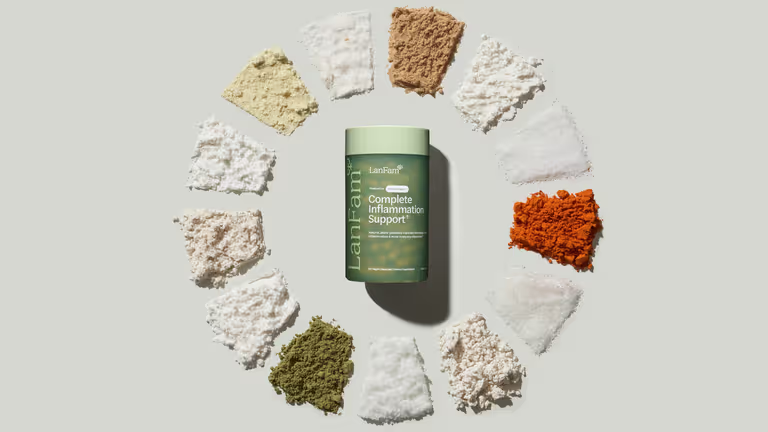
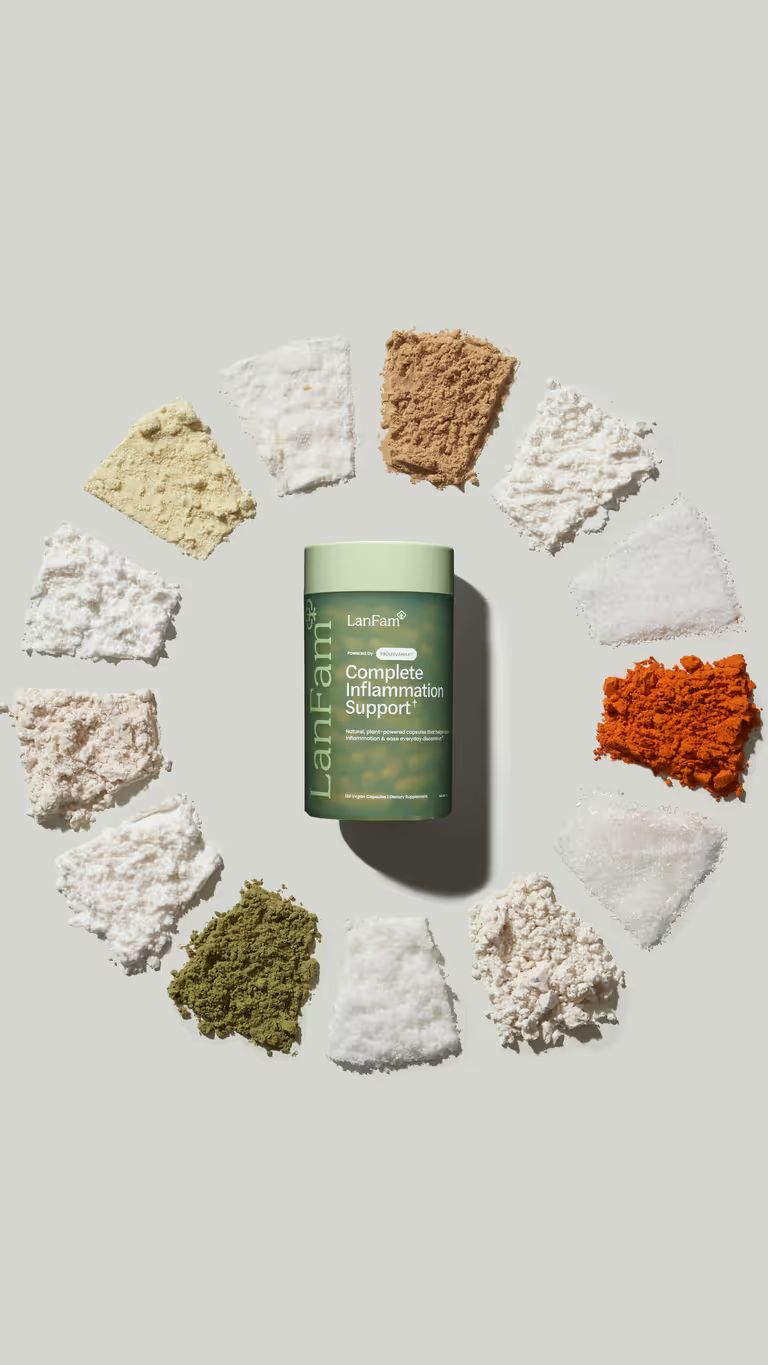
LanFam Health's Complete Inflammation Support is built on ProleevaMax, a formulation of 13 standardized botanicals and amino acids selected to address six distinct inflammatory pathways simultaneously.
The key ingredients and their primary targets:
- Boswellia serrata - Targets the 5-LOX pathway, which COX-2 inhibitors do not reach
- Curcumin + Piperine - The piperine (black pepper extract) dramatically increases curcumin bioavailability; together they address COX-2 and NF-κB signaling
- Resveratrol - Supports antioxidant pathways and modulates cytokine activity
- L-Serine - An amino acid that supports neurological comfort and cognitive function
- Choline - Plays a role in the cholinergic anti-inflammatory pathway
- 5-HTP + Vitamin B6 - Support serotonin synthesis, relevant to both mood and the neurological aspects of inflammatory discomfort
- GABA - Supports the calming side of the nervous system, which interacts with inflammatory tone
In a clinical study measuring outcomes with the McGill Pain Questionnaire - a validated, 22-point scale widely used in research - participants using this multi-pathway formula showed a statistically significant reduction at 8 weeks (p=0.042). That level of specificity matters. Vague claims about "supporting comfort" are easy to make. A p-value tied to a validated measurement tool is harder to fake.
The 90-Day Protocol: Why Duration Matters
One of the most important things to understand about supporting the body through a chronic inflammatory state is that meaningful change takes time. The biochemical environment that has built up over months or years doesn't shift in a week or two.
LanFam Health's recommendation is a committed 90-day protocol - long enough to allow the multi-pathway formula to work through multiple inflammatory cycles, long enough to notice differences in energy, comfort, mobility, and cognitive clarity. The 90-day money-back guarantee reflects that commitment: the goal is results you can actually feel, not a quick-fix promise.
This approach came directly from the experience of LanFam Health's founders. Fabio Lanzieri brings 40 years of pharmaceutical industry experience to the formulation. Maria Lanzieri, a breast cancer survivor, approached this work with the kind of personal investment in long-term wellbeing that shapes different decisions than a purely commercial lens would.
When to Take These Signs Seriously
Not every achy morning or foggy afternoon means chronic inflammation is at work. But if you recognize yourself in several of the signs described here - particularly if they've persisted for more than a few months and aren't fully explained by an identifiable cause - it's worth investigating further.
Consider talking to your healthcare provider about inflammatory markers. Standard blood panels don't always include them, but tests like high-sensitivity C-reactive protein (hs-CRP), erythrocyte sedimentation rate (ESR), and homocysteine levels can provide useful data. Use those conversations to build a complete picture alongside any lifestyle and supplementation changes you're making.
Recognizing the Signal Is the First Step
If several of the signs in this article feel familiar - if the fatigue, the joint discomfort, the fog, the slow recovery have become a background feature of daily life - that pattern is worth taking seriously.
The body is not being arbitrary. It's communicating through the only channels available to it.
Multi-pathway support, a real dietary shift toward whole foods and reduced refined carbohydrates, consistent movement, and prioritizing sleep quality all operate in the same direction. They're not competing approaches - they're complementary ones.
LanFam Health's Complete Inflammation Support was designed to work alongside those foundational choices, not instead of them. If you're ready to give a structured, evidence-based approach a full commitment, the 90-day protocol starts here.

Frequently asked questions

There's a seat at our table
Letters from our family to yours — the science, the recipes, the things that actually helped real families. Leave your email and we'll send the next one.