Best Supplements for Menopause Brain Fog
Discover the best supplements for menopause brain fog — from L-Serine to Choline to Curcumin. Learn why multi-pathway support outperforms single ingredients.
Ingredients in this letter

TL;DR
- Menopause brain fog is driven by neuroinflammation and neurotransmitter disruption - not just declining estrogen
- The most effective supplements target multiple pathways at once: L-Serine (crosses the blood-brain barrier), Choline (acetylcholine production), 5-HTP + Vitamin B6 (serotonin conversion), and Curcumin + Boswellia (upstream inflammation)
- Single-ingredient supplements like caffeine pills or standalone B vitamins miss the bigger picture - brain fog has multiple causes that need simultaneous support
- Expect gradual improvement over 8-12 weeks, not overnight clarity - your brain needs time to rebuild
- Bottom line: Look for a multi-pathway formula that addresses both neuroinflammation and neurotransmitter balance rather than chasing individual ingredients
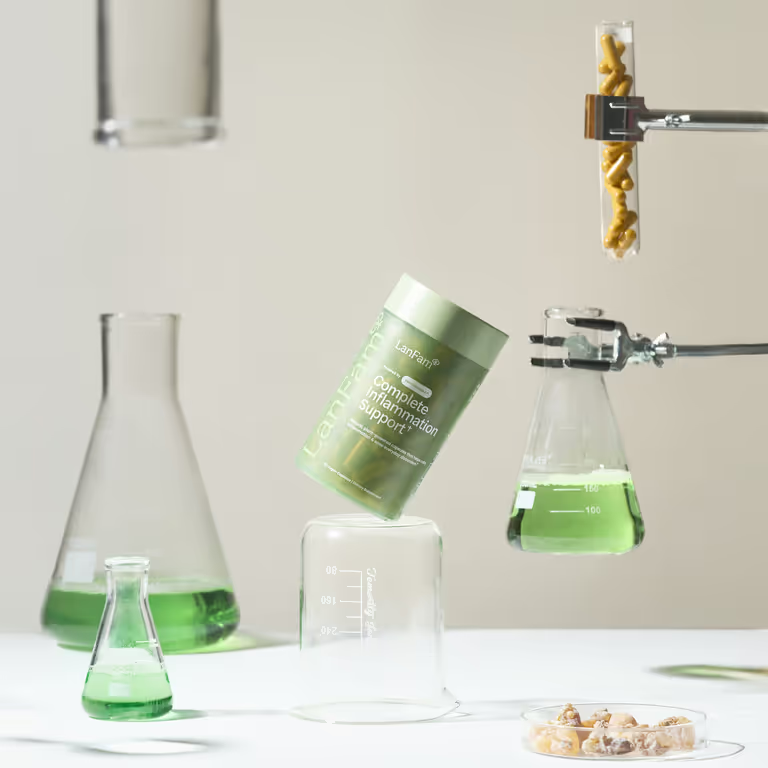
The best supplements for menopause brain fog target what most products ignore: the neuroinflammation that disrupts your brain's signaling pathways during hormonal shifts. Compounds like L-Serine, Choline, 5-HTP with Vitamin B6, GABA, and Curcumin each support a different piece of the cognitive puzzle - from crossing the blood-brain barrier to calming overactive inflammatory responses. At LanFam Health, we formulated Complete Inflammation Support (Powered by ProleevaMax) around this multi-pathway approach, because brain fog during menopause is rarely caused by just one thing.
If you've been Googling "why can't I think straight anymore" between hot flashes, you're not imagining it. And you're definitely not alone.
What Causes Brain Fog During Menopause
Here's what most wellness sites won't tell you: menopause brain fog isn't just about estrogen dropping. It's about what happens downstream when estrogen drops.
Estrogen is neuroprotective. It helps regulate inflammation in the brain, supports glucose metabolism in neural tissue, and influences the production of key neurotransmitters like acetylcholine and serotonin. When estrogen levels fluctuate and decline during perimenopause and menopause, your brain loses a major regulatory signal - and several systems start misfiring at once.
The result is neuroinflammation: an increase in pro-inflammatory cytokines within the central nervous system. Research published in the Journal of Neuroendocrinology has documented that the menopausal transition triggers measurable increases in neuroinflammatory markers, which directly correlate with cognitive symptoms like difficulty concentrating, word-finding problems, and mental fatigue.
At the same time, the neurotransmitter shifts are real. Acetylcholine - the neurotransmitter most directly tied to memory and focus - depends on adequate choline supply and a well-functioning cholinergic system. Serotonin, which affects mood, sleep quality, and cognitive flexibility, requires specific precursors and cofactors to produce.
So when someone tells you menopause brain fog is "just hormones," that's a half-truth. It's hormones triggering inflammation triggering neurotransmitter disruption. And that distinction matters, because it changes which supplements actually help.
Why Most Brain Fog Supplements Miss the Point
Walk into any supplement aisle and you'll find brain fog solutions that fall into a few predictable categories: caffeine-based nootropics, standalone B-vitamin complexes, and single-ingredient "memory boosters" like ginkgo biloba.
The problem isn't that these ingredients are useless. Some have legitimate research behind them. The problem is that they each address one narrow mechanism while menopause brain fog operates across multiple systems simultaneously.
Caffeine and stimulant nootropics mask fatigue without addressing why your brain is fatigued. They increase alertness temporarily but do nothing about the neuroinflammation or neurotransmitter imbalances driving the fog. And for many women in menopause, caffeine worsens sleep quality - which makes brain fog worse the next day.
B vitamins alone support energy metabolism and some neurotransmitter production, but they don't cross the blood-brain barrier effectively on their own, and they don't address inflammation at all.
Single botanicals like ginkgo or lion's mane may support blood flow or nerve growth factor, but they're working on one pathway while three others remain unsupported.
This is why so many women try supplement after supplement and feel like nothing works. Each one is addressing maybe 20% of the problem. The fog lifts a little, then settles back in.
What actually moves the needle is targeting multiple pathways in parallel.
The Supplements That Actually Support Cognitive Clarity
Based on the research connecting menopause, neuroinflammation, and cognitive function, these are the compounds with the strongest evidence for supporting mental clarity during the menopausal transition.
L-Serine - Crosses the Blood-Brain Barrier
L-Serine is an amino acid that plays a critical role in brain health because it actually crosses the blood-brain barrier - something many supplements cannot do. Once there, it supports the production of phosphatidylserine, a phospholipid essential for healthy nerve cell membranes and cell-to-cell signaling. Research from the National Institute of Neurological Disorders and Stroke has explored L-Serine's role in neuroprotection. For menopause brain fog specifically, having a compound that can directly support nerve cell integrity inside the brain is significant, because that's where the damage from neuroinflammation occurs.
Choline - Acetylcholine Production
Choline is the direct precursor to acetylcholine, the neurotransmitter most associated with memory formation, learning, and focused attention. During menopause, when estrogen's support of the cholinergic system declines, adequate choline becomes even more critical. The National Institutes of Health recognizes choline as an essential nutrient, yet most women don't consume enough through diet alone. Supplemental choline helps maintain the raw material your brain needs to produce the neurotransmitter responsible for clear, sharp thinking.
5-HTP + Vitamin B6 - The Serotonin Pathway
5-HTP (5-Hydroxytryptophan) is the immediate precursor to serotonin, and Vitamin B6 is the cofactor required for the enzymatic conversion of 5-HTP into serotonin. This is a cofactor relationship - 5-HTP without adequate B6 is like having the raw material without the tool to process it. Serotonin influences mood stability, sleep quality, and cognitive flexibility. When serotonin is low (common during menopause), brain fog, irritability, and disrupted sleep often travel together. Supporting this pathway helps address the mood-sleep-cognition triad that makes menopause brain fog so frustrating.
Important safety note: If you take SSRIs, SNRIs, or MAOIs, consult your healthcare provider before supplementing with 5-HTP. Combining serotonin precursors with serotonin-modulating medications may increase serotonin levels beyond safe thresholds.
GABA - Nervous System Calm
GABA (gamma-aminobutyric acid) is the brain's primary inhibitory neurotransmitter - it helps quiet overactive neural circuits and supports a calm, focused mental state. During menopause, when the nervous system can feel perpetually overstimulated (anxiety, racing thoughts, difficulty settling into focus), GABA supplementation helps promote the parasympathetic state where clear thinking happens. You can't think through fog when your nervous system is in overdrive.
Curcumin + Boswellia - Upstream Inflammation Support
Here's where the inflammation angle becomes concrete. Curcumin (from turmeric) and Boswellia (frankincense extract) are two of the most well-studied natural compounds for modulating inflammatory pathways. They work upstream - helping to maintain healthy levels of pro-inflammatory cytokines before those cytokines reach the brain and contribute to neuroinflammation. A meta-analysis published in the Journal of Medicinal Food confirmed curcumin's role in supporting healthy inflammatory response. Boswellia complements this by targeting a different inflammatory pathway (5-LOX), giving broader coverage.
Important safety note: Curcumin and resveratrol may potentiate blood-thinning medications. If you take warfarin, aspirin, or other anticoagulants, consult your healthcare provider before starting any supplement containing these ingredients.
Why Multi-Pathway Support Outperforms Single Ingredients
The reason multi-pathway formulas outperform single ingredients isn't marketing - it's biochemistry.
Brain fog during menopause involves at least four interconnected disruptions: neuroinflammation, acetylcholine decline, serotonin pathway changes, and nervous system dysregulation. Addressing one while ignoring the others is like patching one hole in a boat with four leaks.
There's also the synergy factor. Piperine (black pepper extract) dramatically increases curcumin bioavailability - studies show up to 2,000% improvement in absorption. Without it, most curcumin passes through your digestive system without reaching meaningful levels in your bloodstream. The 6mg of piperine used in well-formulated supplements falls well below the 20mg+ threshold where drug interactions become a concern, while still providing the bioavailability benefit.
Similarly, 5-HTP and Vitamin B6 are more effective together than either is alone, because B6 is literally required for the enzyme (aromatic L-amino acid decarboxylase) that converts 5-HTP into serotonin. This isn't a theoretical synergy - it's a documented biochemical dependency.
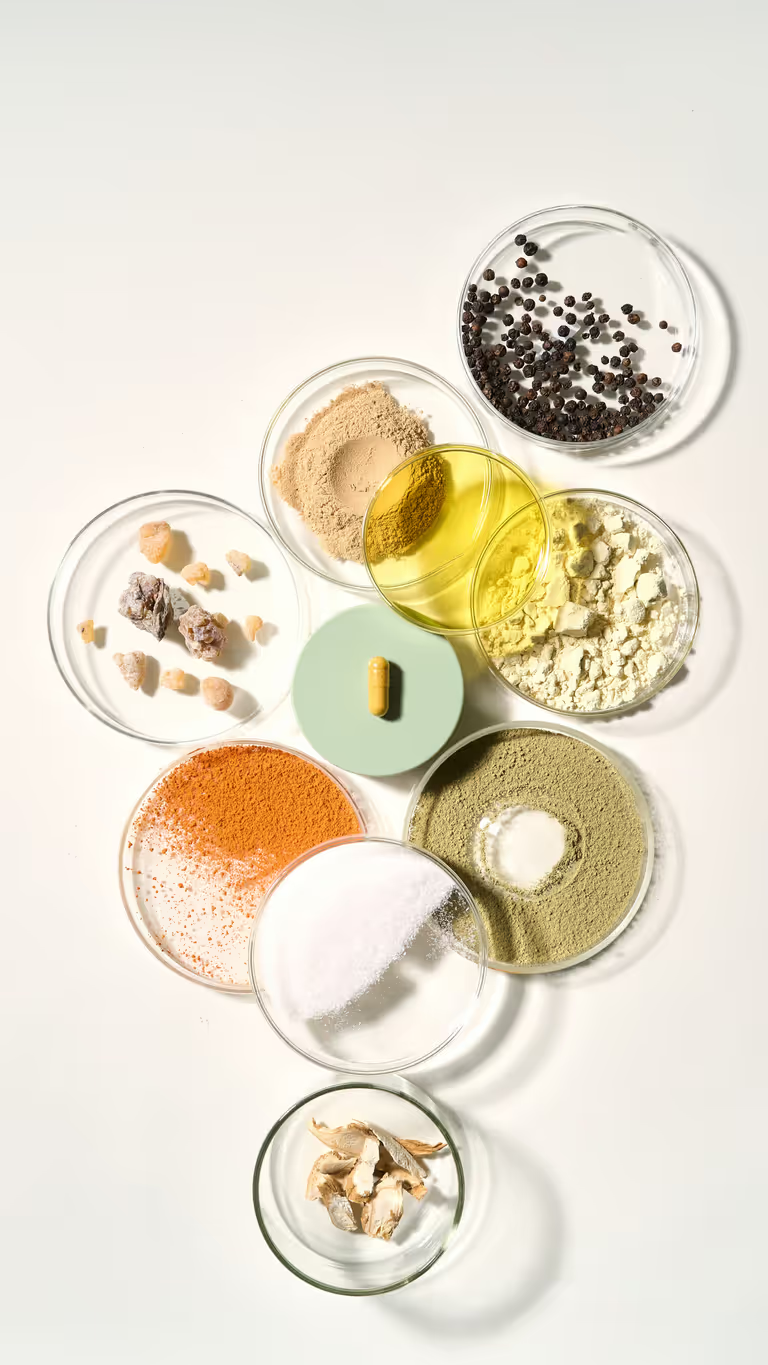
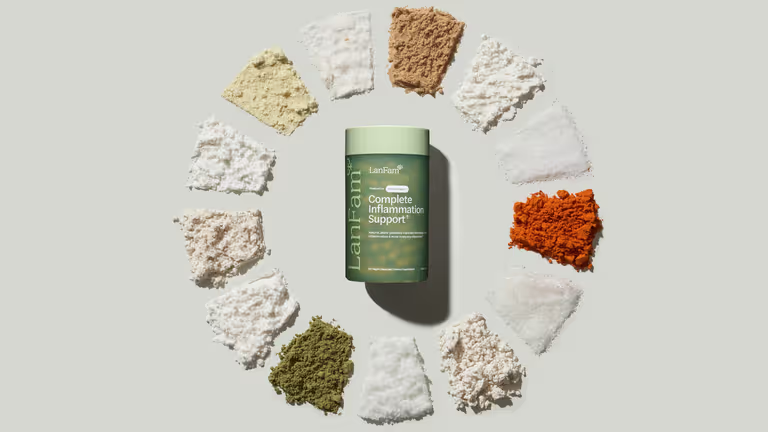
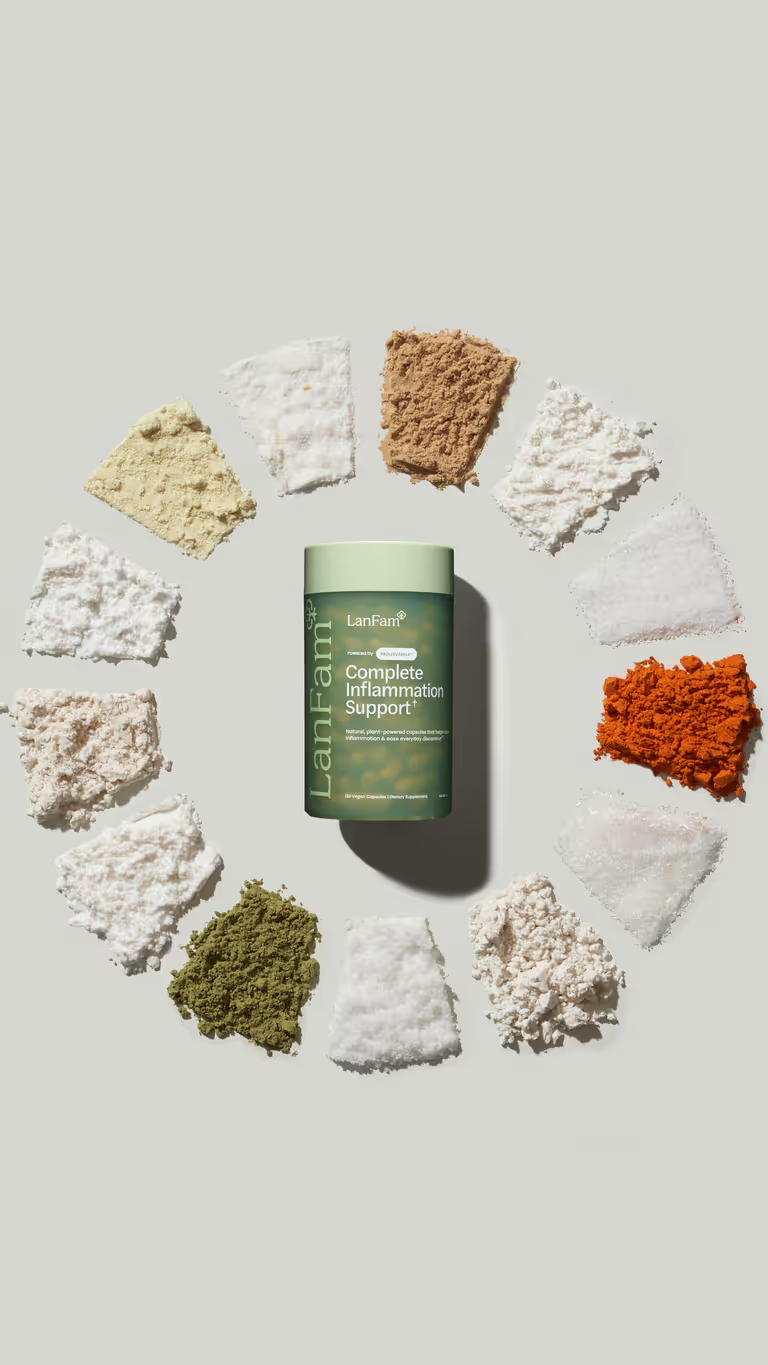
This is why LanFam Health's Complete Inflammation Support includes 13 standardized ingredients targeting 6 inflammatory pathways. In a clinical evaluation, participants experienced a 22-point reduction in McGill Pain Questionnaire scores at 8 weeks (p=0.042) - meaningful, measurable change that reflects what happens when you address the system rather than a single symptom.
What to Expect: A Realistic Timeline
If you start a multi-pathway supplement protocol today, here's an honest timeline. This isn't the "feel amazing in 3 days" story. This is how biology actually works.
Weeks 1-2 - Building foundations. Your body is absorbing and beginning to utilize the ingredients. Most women don't notice dramatic changes yet. The anti-inflammatory compounds are beginning to modulate cytokine levels, and neurotransmitter precursors are building up. Be patient with this phase.
Weeks 3-4 - First subtle shifts. Many women report improved sleep quality first - falling asleep more easily, waking less during the night. You may notice slightly less mental fatigue in the afternoon, or that word-finding feels a little easier. These early signals suggest the serotonin and GABA pathways are responding.
Weeks 5-8 - Measurable changes. This is typically when the cognitive benefits become more noticeable and consistent. Concentration improves. The "What did I come in here for?" moments become less frequent. The fog doesn't necessarily vanish completely, but it lifts enough that you feel like yourself again. This timeline aligns with the 8-week mark in clinical evaluations where statistically significant improvements are documented.
Day 90 - Protocol complete. By 90 days, the multi-pathway support has had time to fully establish. Inflammatory markers have had sustained modulation. Neurotransmitter pathways are functioning with consistent precursor support. This is also the point where you can honestly evaluate whether the supplement is working for you.
This is exactly why LanFam Health offers a 90-day money-back guarantee - because we ask you to commit to the full protocol, so we guarantee the full protocol. If you don't experience meaningful improvement in 90 days, you get your money back. That's the deal.
Supporting Your Brain Through the Transition
Menopause brain fog is real, it's biochemically driven, and you don't have to just push through it. The combination of neuroinflammation, neurotransmitter disruption, and nervous system dysregulation creates a multi-layered cognitive challenge - and the most effective approach addresses all of those layers together.
LanFam Health's Complete Inflammation Support was formulated by Fabio Lanzieri, drawing on 40 years of pharmaceutical experience, to target 6 inflammatory pathways with 13 standardized ingredients - including every compound discussed in this article. It's backed by clinical evaluation data showing measurable results at 8 weeks, 1,000+ reviews with a 4.8-star average, and a 90-day money-back guarantee because the protocol deserves the full 90 days to work.
If you're ready to support your cognitive clarity through menopause rather than waiting for the fog to lift on its own, you can see the full ingredient breakdown or start with Complete Inflammation Support today.

Frequently asked questions

There's a seat at our table
Letters from our family to yours — the science, the recipes, the things that actually helped real families. Leave your email and we'll send the next one.