Gut Inflammation Supplements: How Your Gut Barrier Drives Whole-Body Inflammation
The best gut inflammation supplements target your gut barrier — not just symptoms. Learn how L-Glutamine, Curcumin, and Boswellia support intestinal integrity.
Ingredients in this letter

TL;DR
- Your gut lining replaces itself every 3-5 days - and when it can't keep up with damage, gaps form that allow inflammatory compounds into your bloodstream
- This intestinal permeability ("leaky gut") is increasingly linked to systemic inflammation - joint stiffness, fatigue, brain fog, and skin issues that seem unconnected to digestion
- L-Glutamine is the primary fuel source for intestinal epithelial cells, making it one of the most targeted gut barrier supplements available - yet most anti-inflammatory formulas leave it out
- Long-term NSAID use is one of the most common causes of compromised gut barrier function, creating a cycle where the solution becomes part of the problem
- Bottom line: Effective gut inflammation support requires compounds that rebuild the barrier (L-Glutamine) and calm the downstream inflammatory cascade (Curcumin, Boswellia) - not one or the other
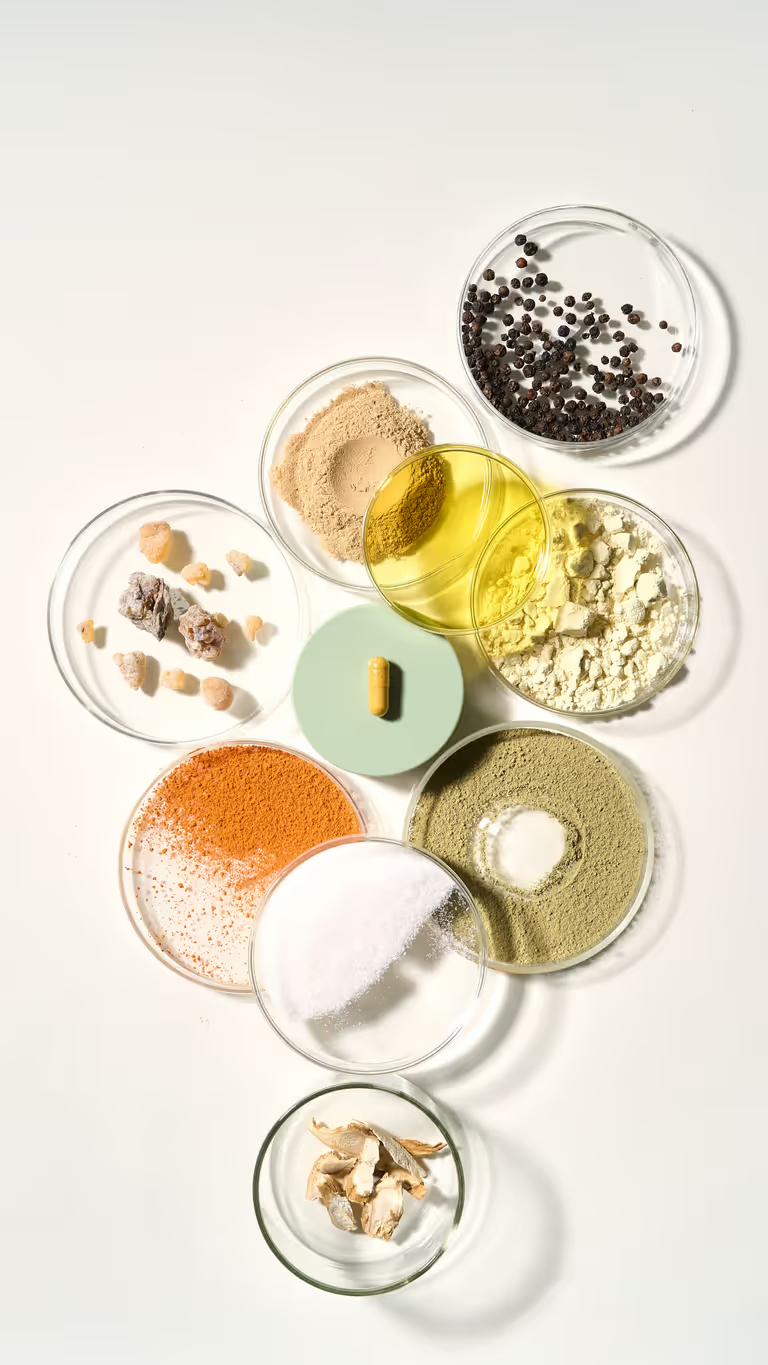
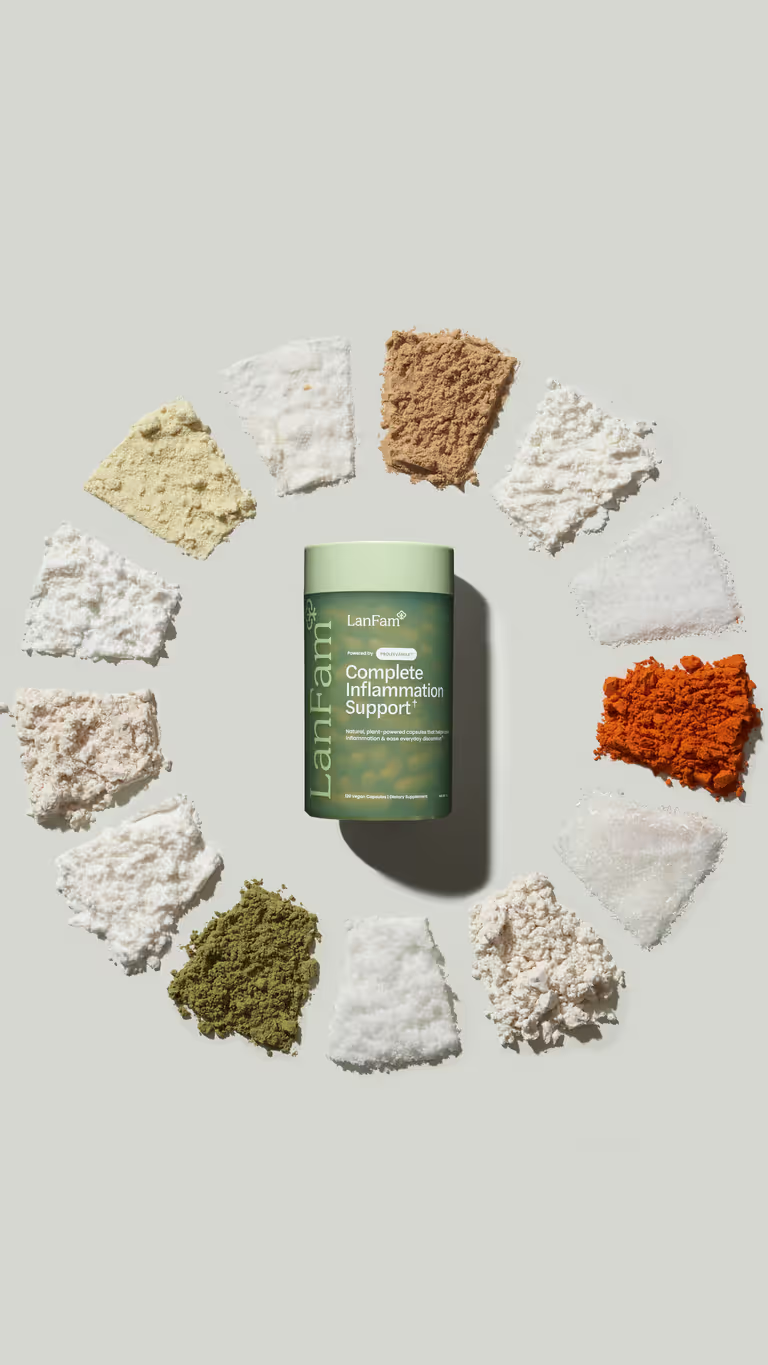
The most effective gut inflammation supplements do something most products ignore: they support the structural integrity of your intestinal lining, not just mask digestive discomfort. Compounds like L-Glutamine fuel the cells that form your gut barrier, while Curcumin, Boswellia, and Piperine modulate the inflammatory pathways that fire when that barrier is compromised. At LanFam Health, we included L-Glutamine in Complete Inflammation Support (Powered by ProleevaMax) specifically because the gut-inflammation connection is too important to overlook - and most anti-inflammatory supplements do exactly that.
If you've been dealing with GI issues alongside seemingly unrelated inflammation - stiff joints, persistent fatigue, brain fog - the connection might not be coincidental. It might be architectural.
The Gut-Inflammation Connection Most People Miss
Here's what makes gut inflammation different from a stomachache: the consequences don't stay in your gut.
Your intestinal lining is a single-cell-thick barrier - roughly the surface area of a tennis court - that performs one of the most critical jobs in your body. It must absorb nutrients from digested food while simultaneously blocking bacteria, toxins, and undigested food particles from entering your bloodstream. When this barrier functions properly, it's remarkably selective. When it doesn't, things get systemic.
The cells that form this barrier - intestinal epithelial cells - are among the fastest-dividing cells in your body. Your gut lining replaces itself every 3-5 days. That's an extraordinary metabolic demand, and it means your gut barrier is only as strong as the raw materials available to rebuild it.
When those cells can't regenerate fast enough to keep pace with damage, the tight junctions between them loosen. This increased intestinal permeability - what researchers study under the term "leaky gut" - allows lipopolysaccharides (LPS) and other pro-inflammatory compounds to cross into circulation. Once there, they trigger immune responses far from the digestive tract.
A 2020 review in Frontiers in Immunology documented the relationship between intestinal permeability and systemic inflammatory signaling, noting that barrier dysfunction is associated with inflammatory conditions affecting joints, skin, the brain, and metabolic function. This isn't fringe science - it's an increasingly well-mapped pathway.
So when someone experiences gut issues and joint stiffness and fatigue and brain fog, treating each symptom separately misses the structural problem underneath: a gut barrier that isn't holding.
How a Compromised Gut Barrier Amplifies Inflammation
Think of your gut barrier like a dam. When it's intact, water flows where it should. When cracks develop, the flooding doesn't stay local.
When lipopolysaccharides and other microbial fragments escape through a permeable gut lining, your immune system recognizes them as threats. The response is predictable: pro-inflammatory cytokines - TNF-alpha, IL-6, IL-1 beta - surge. This is your immune system doing its job. The problem is that when the barrier stays compromised, the immune activation never fully resolves.
This creates a self-reinforcing cycle:
1. Barrier damage allows inflammatory compounds into circulation 2. Immune activation produces cytokines that cause systemic symptoms (joint discomfort, fatigue, cognitive fog) 3. Those same cytokines further damage the gut lining, preventing repair 4. The cycle repeats, and symptoms gradually expand beyond the digestive tract
This is why so many people with chronic inflammatory discomfort also report digestive issues - bloating, irregular digestion, food sensitivities that seem to multiply over time. The gut isn't a separate problem. It's often the origin problem.
Understanding this cycle also explains why single-target supplements - a standalone turmeric capsule, a probiotic alone - often produce disappointing results. They may address one piece of the cycle while leaving the structural damage unresolved.
Why NSAID Users Especially Need Gut Barrier Support
This section matters if you've been relying on ibuprofen or other NSAIDs for months or years.
NSAIDs work by inhibiting cyclooxygenase (COX) enzymes, which reduces prostaglandin production and calms inflammation. That's the mechanism that provides relief. But prostaglandins also play a protective role in your gut lining - they help maintain the mucus layer that shields intestinal epithelial cells from digestive acids and enzymes.
Research published in Biochemical Pharmacology has documented that chronic NSAID use can compromise intestinal barrier integrity, increase permeability, and alter gut microbiome composition. A study in the journal Gut found that NSAID-induced intestinal permeability is measurable within days of consistent use.
The result is a frustrating paradox: the medication you're taking to manage inflammation may be creating the conditions for more inflammation - through your gut barrier. You feel better in the short term while the structural foundation quietly erodes.
This isn't a reason to abruptly stop any medication - always consult your healthcare provider before changing your regimen. But it is a reason to consider supporting your gut barrier integrity proactively, especially during transitions away from long-term NSAID use.
The Compounds That Support Gut Barrier Integrity
Not all anti-inflammatory ingredients address the gut. Here are the compounds with research supporting gut barrier function and downstream inflammatory modulation - and why they work better together.
L-Glutamine - Primary Fuel for Gut Lining Cells
L-Glutamine is the most abundant amino acid in your body, and it serves a specific, critical role in gut health: it is the preferred energy source for intestinal epithelial cells. While most cells in your body run on glucose, the cells lining your gut preferentially metabolize glutamine to fuel their rapid turnover cycle.
When glutamine availability drops - due to stress, illness, intense exercise, or poor dietary intake - those epithelial cells can't regenerate fast enough, and barrier integrity suffers. Supplemental L-Glutamine provides the raw material these cells need to maintain their 3-5 day replacement cycle.
This is why L-Glutamine's inclusion in Complete Inflammation Support is a genuine differentiator. Most anti-inflammatory supplements focus exclusively on downstream pathways - calming inflammation after it starts. L-Glutamine addresses the structural vulnerability that allows systemic inflammation to begin in the first place.
Curcumin - Modulating Inflammatory Pathways
Curcumin, the active compound in turmeric, is one of the most extensively studied natural anti-inflammatory substances. It modulates NF-kB, a transcription factor that regulates the expression of pro-inflammatory cytokines. By helping maintain healthy NF-kB activity, curcumin supports balanced inflammatory signaling downstream from gut barrier disruption.
Curcumin also has direct relevance to gut health. Research suggests it supports healthy gut microbiome composition and may help maintain the mucus layer that protects intestinal epithelial cells.
Boswellia - A Complementary Anti-Inflammatory Pathway
Where curcumin works primarily through the NF-kB pathway, Boswellia serrata targets the 5-lipoxygenase (5-LOX) pathway - a different branch of the inflammatory cascade. This complementary mechanism means curcumin and Boswellia together provide broader inflammatory pathway coverage than either alone.
For gut inflammation specifically, Boswellia has been studied for its role in supporting intestinal comfort and healthy inflammatory response within the GI tract itself - not just systemically.
Piperine - The Bioavailability Multiplier
Curcumin has a well-documented bioavailability problem: most of it passes through your digestive system without reaching meaningful levels in your bloodstream. Piperine (black pepper extract) addresses this directly. Studies show piperine can increase curcumin absorption by up to 2,000%.
The 6mg of piperine used in well-formulated supplements falls well below the 20mg+ threshold where drug interactions become a concern, while still providing the bioavailability benefit that makes curcumin supplementation worthwhile.
GABA - Gut-Brain Axis Calm
GABA (gamma-aminobutyric acid) may seem like an unexpected ingredient in a gut-focused conversation, but the gut-brain axis makes it relevant. Your gut contains more neurons than your spinal cord - the enteric nervous system - and stress-driven nervous system activation directly impacts gut motility, secretion, and barrier function.
GABA supports parasympathetic nervous system activity - the "rest and digest" state where gut repair and healthy digestion actually occur. When your nervous system is chronically activated (stress, anxiety, poor sleep), your gut barrier suffers. GABA helps create the neurological conditions under which gut repair can happen.
Important safety note: Curcumin and Boswellia may potentiate blood-thinning medications. If you take warfarin, aspirin, or other anticoagulants, consult your healthcare provider before starting any supplement containing these ingredients.
Why Multi-Pathway Gut Support Outperforms Single Ingredients
The gut-inflammation cycle has multiple failure points - and effective support needs to address more than one.
A standalone probiotic may support microbiome diversity but doesn't fuel epithelial cell regeneration. A turmeric capsule may modulate one inflammatory pathway but doesn't address the 5-LOX pathway or the structural barrier itself. An L-Glutamine powder supports the gut lining but doesn't calm the downstream inflammation already circulating.
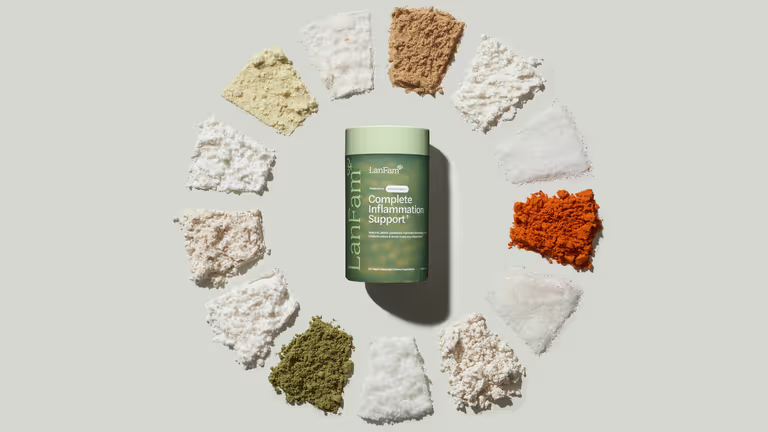
This is the logic behind LanFam Health's Complete Inflammation Support: 13 standardized ingredients targeting 6 inflammatory pathways. L-Glutamine rebuilds the barrier. Curcumin and Boswellia modulate two distinct downstream inflammatory cascades. Piperine ensures bioavailability. GABA supports the gut-brain axis conditions under which repair occurs.
In a clinical evaluation, participants experienced a 22-point reduction in McGill Pain Questionnaire scores at 8 weeks (p=0.042). That's measurable, meaningful change - the kind that reflects what happens when you address the system rather than chase individual symptoms.
It's also why this formula was developed by Fabio Lanzieri, drawing on 40 years of pharmaceutical experience. The ingredient selection isn't random - each compound addresses a specific mechanism in the inflammatory cascade, and together they cover ground that no single ingredient can.
What to Expect: A Realistic Timeline
If you start supporting your gut barrier and inflammatory pathways today, here's an honest timeline - because biology doesn't operate on marketing timelines.
Weeks 1-2 - Foundations building. L-Glutamine begins fueling intestinal epithelial cell turnover. Anti-inflammatory compounds start accumulating to effective levels. Most people don't notice dramatic changes yet. Your gut lining is quietly rebuilding - remember, it replaces itself every 3-5 days, so several full cycles are underway.
Weeks 3-4 - Early signals. Many people report improvements in digestive comfort first - less bloating, more regular digestion, fewer food sensitivities triggering reactions. This suggests the gut barrier is tightening. You may also notice subtle improvements in energy as systemic inflammatory signaling begins to quiet down.
Weeks 5-8 - Broader changes. This is typically when the systemic benefits become noticeable. Joint stiffness decreases. Morning mobility improves. The brain fog that seemed unrelated to your gut starts lifting. These changes reflect reduced inflammatory compounds crossing into circulation - the barrier is doing its job more effectively.
Day 90 - Protocol complete. By 90 days, your gut lining has fully replaced itself approximately 18-30 times with consistent nutritional support. Inflammatory pathways have had sustained modulation. This is the point where you can honestly evaluate the full impact.
This is exactly why LanFam Health offers a 90-day money-back guarantee - because the protocol takes 90 days to fully establish, and we stand behind that timeline. If you don't experience meaningful improvement, you get your money back.
Supporting Your Gut - And Everything Connected to It
Gut inflammation isn't just a digestive problem. When your intestinal barrier can't hold, the consequences ripple outward - into your joints, your energy levels, your clarity of thought. The most effective approach addresses both the structural integrity of the barrier itself and the inflammatory pathways that fire when it's compromised.
LanFam Health's Complete Inflammation Support was formulated to address this dual need: L-Glutamine for gut barrier support, Curcumin and Boswellia for downstream inflammatory pathway modulation, Piperine for bioavailability, and GABA for gut-brain axis calm. It's backed by clinical evaluation data showing measurable results at 8 weeks, 1,000+ reviews with a 4.8-star average, and a 90-day money-back guarantee because the protocol deserves the full 90 days to work.
If you're ready to address the source of systemic inflammation rather than chasing individual symptoms, you can see the full ingredient breakdown or start with Complete Inflammation Support today.
Related Reading
If you want to go deeper on the research behind this guide, these are the supporting articles in the LanFam library:
Leaky Gut and Inflammation: How Intestinal Permeability Drives Whole-Body Inflammation
The Science Behind Your Gut - Why 38 Trillion Bacteria Control More Than You Think
The Conversation Between Your Two Brains—How Gut and Mind Shape Each Other
Supplements for Menopause Bloating: The Inflammation Link Most Articles Miss

Frequently asked questions
There's a seat at our table
Letters from our family to yours — the science, the recipes, the things that actually helped real families. Leave your email and we'll send the next one.