Sauna and Inflammation: What the Research Shows
Does the sauna help with inflammation? Here is what the research documents on heat stress, CRP, and how to use the sauna safely.
Ingredients in this letter
If you spend ten minutes in a hot sauna, your heart rate climbs, your skin flushes, and you sweat. That is your body managing a controlled dose of heat stress. A growing body of research documents what happens next, inside your cells, and why it matters for the low-grade inflammation so many women carry into midlife.
This article walks through the science of sauna and inflammation in plain language. We cover the mechanism, the human studies, the honest limits, and how to use heat safely.
Research documents that regular sauna use is associated with a healthy inflammatory response, including lower levels of C-reactive protein (CRP), a common marker of systemic inflammation. The sauna inflammation link appears to work through hormesis: brief, controlled heat stress activates heat shock proteins and adaptive repair pathways that build cellular resilience over time. Heat is a supportive habit, not a treatment for any disease.
What "Inflammation" Means Here
Inflammation is your immune system doing its job. Acute inflammation, the redness around a cut or the ache after a hard workout, is short-term and healthy. The problem is chronic, low-grade inflammation: a quiet, system-wide signal that stays switched on for months or years.
Researchers often track this with high-sensitivity C-reactive protein (hs-CRP), a protein the liver produces in response to inflammatory signaling. Elevated CRP is one of the classic markers of systemic inflammation [1], and persistent low-grade inflammation has been linked to many age-related conditions. Scientists even coined a term for it: "inflammaging."
This is why supporting a healthy inflammatory response matters, and why a simple heat habit has drawn serious scientific attention.
The Mechanism: Heat Stress and Hormesis
The idea behind sauna and inflammation rests on a concept called hormesis. Hormesis describes how a small, manageable dose of a stressor can make a system stronger. Exercise works this way. So does fasting. Heat appears to belong on the same list.
When you sit in a sauna, your core temperature rises. Your cells detect the heat and switch on a protective program called the heat shock response. This response produces a family of molecules called heat shock proteins (HSPs).
Heat shock proteins act like a cellular repair and quality-control crew. According to a scientific review of the heat shock response [2], HSPs help fold new proteins correctly, refold or clear damaged ones, and regulate cell signaling and stress pathways. By keeping proteins in working order and calming cellular stress signaling, the heat shock response is thought to support a balanced inflammatory state.
The key word is adaptation. A single sauna session is a stressor. The benefit comes from your body learning to handle that stress, the same way muscles adapt to repeated training. This is why the research on heat and inflammation centers on habit, not on any single visit.
A quick note on heat dose
| Element | What it means for you |
|---|---|
| Temperature | Higher heat is a larger stressor; it does not automatically mean more benefit. |
| Duration | Most studied sessions run roughly 10 to 20 minutes. |
| Frequency | The clearest associations show up with several sessions per week, sustained over time. |
| Recovery | Hydration and a cool-down period are part of the practice, not optional extras. |
What the Human Research Documents
This is where the sauna inflammation story gets interesting, because the data come from real people followed for years.
Sauna frequency and CRP
The standout evidence comes from the Kuopio Ischemic Heart Disease (KIHD) study, a long-running Finnish cohort. In a 2018 analysis published in Annals of Medicine [3], researchers tracked 2,269 men and measured inflammatory markers at baseline and again 11 years later.
The finding: men who used the sauna 4 to 7 times per week had lower hs-CRP than men who used it once a week. At baseline the difference was about 0.84 mg/L lower, and over the 11-year follow-up the association strengthened to roughly 1.66 mg/L lower. The authors concluded that a reduction in inflammation may be one pathway linking frequent sauna use to better long-term health.
Inflammation, sauna, and longevity
A separate cohort analysis in the European Journal of Epidemiology (2022) [4] examined sauna habits alongside inflammation and all-cause mortality in middle-aged and older Finnish men. The pattern reinforced the earlier work: frequent sauna use and lower inflammation tracked together with better outcomes over follow-up.
This sits inside a wider set of Finnish findings. The well-known 2015 JAMA Internal Medicine study [5] reported that men using the sauna 4 to 7 times per week had meaningfully lower cardiovascular and all-cause mortality than once-weekly users. Inflammation is one plausible thread connecting heat habits to these outcomes, though it is not the only one.
Heat plus movement
Heat and exercise appear to complement each other. A multi-arm randomized controlled trial [6] found that adding regular post-exercise sauna to an exercise program produced greater gains in cardiorespiratory fitness and lower systolic blood pressure than exercise alone. For women managing inflammation, that pairing is worth noting: the sauna is a complement to movement, not a substitute for it.
What It Won't Do
Honesty matters more than hype, so here are the limits.
- The sauna is not a treatment. It does not diagnose, treat, cure, or prevent any disease, including arthritis or any inflammatory condition.
- Most of the strongest data are observational. Cohort studies show association, not proof of cause. People who sauna often may also exercise, sleep, and eat differently.
- The clearest evidence is in Finnish men. Women, and other populations, are underrepresented in the landmark cohorts. The biology of heat stress is general, but the specific numbers may not transfer exactly.
- Some controlled trials are mixed. An 8-week randomized trial in adults with coronary artery disease [7] found that Finnish sauna bathing did not improve endothelial function, arterial stiffness, or blood pressure over that window, despite clear signs of heat acclimation. Short trials may simply be too brief to capture what years of habit produce.
- One session won't move your CRP. The benefit, if it holds for you, comes from a sustained routine, not a single hot afternoon.
Think of the sauna as one lever among several. It supports a healthy inflammatory response; it does not override an inflammatory lifestyle.
How to Use the Sauna Safely
Heat is a stressor, and not everyone should add stressors casually. These are general safety practices, not medical advice.
- Talk to your doctor first if you have heart disease, uncontrolled or low blood pressure, are pregnant, or take medication that affects heart rate or fluid balance.
- Hydrate before and after. You lose fluid through sweat, along with electrolytes like sodium and magnesium. Drink water, and replace electrolytes if sessions are long or frequent.
- Start short and moderate. Five to ten minutes at a comfortable temperature is a reasonable beginning. Build tolerance gradually.
- Skip alcohol. Drinking before or during sauna use raises the risk of dehydration, low blood pressure, and dangerous heart rhythm changes.
- Cool down gently. Allow a recovery period. If you have heart disease, avoid plunging into ice-cold water immediately after, which can stress the heart.
- Listen to your body. Lightheadedness, nausea, or a racing heart are signals to stop and cool off.
Where Supplements Fit Alongside Heat
The sauna addresses inflammation from the outside in, through heat stress and adaptation. Diet, sleep, and movement do the heavy lifting from the inside. Targeted nutrition can play a supporting role.
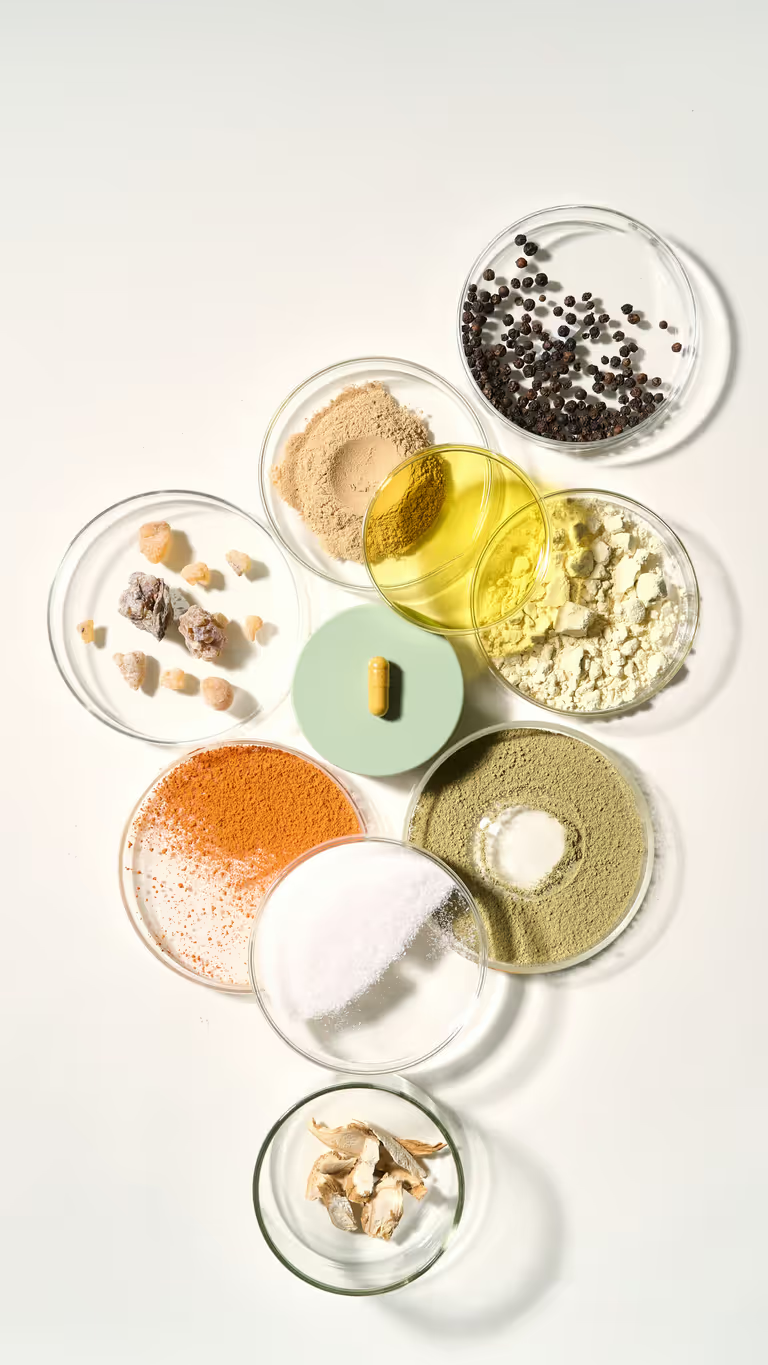
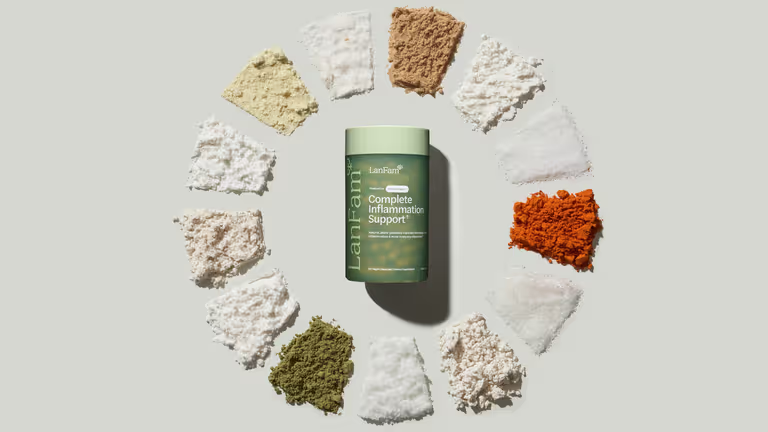
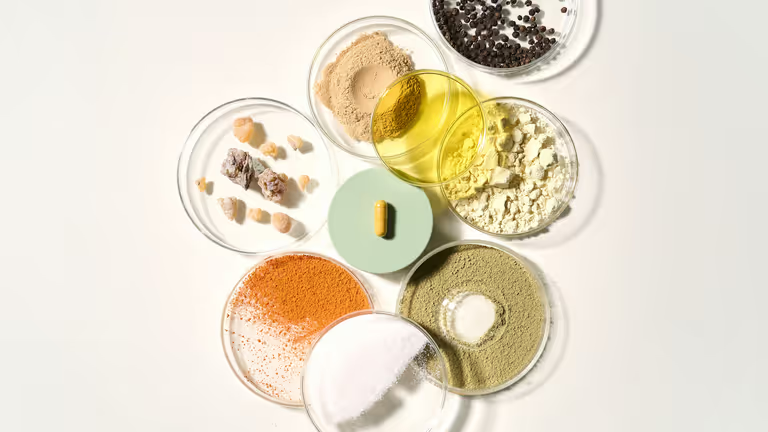
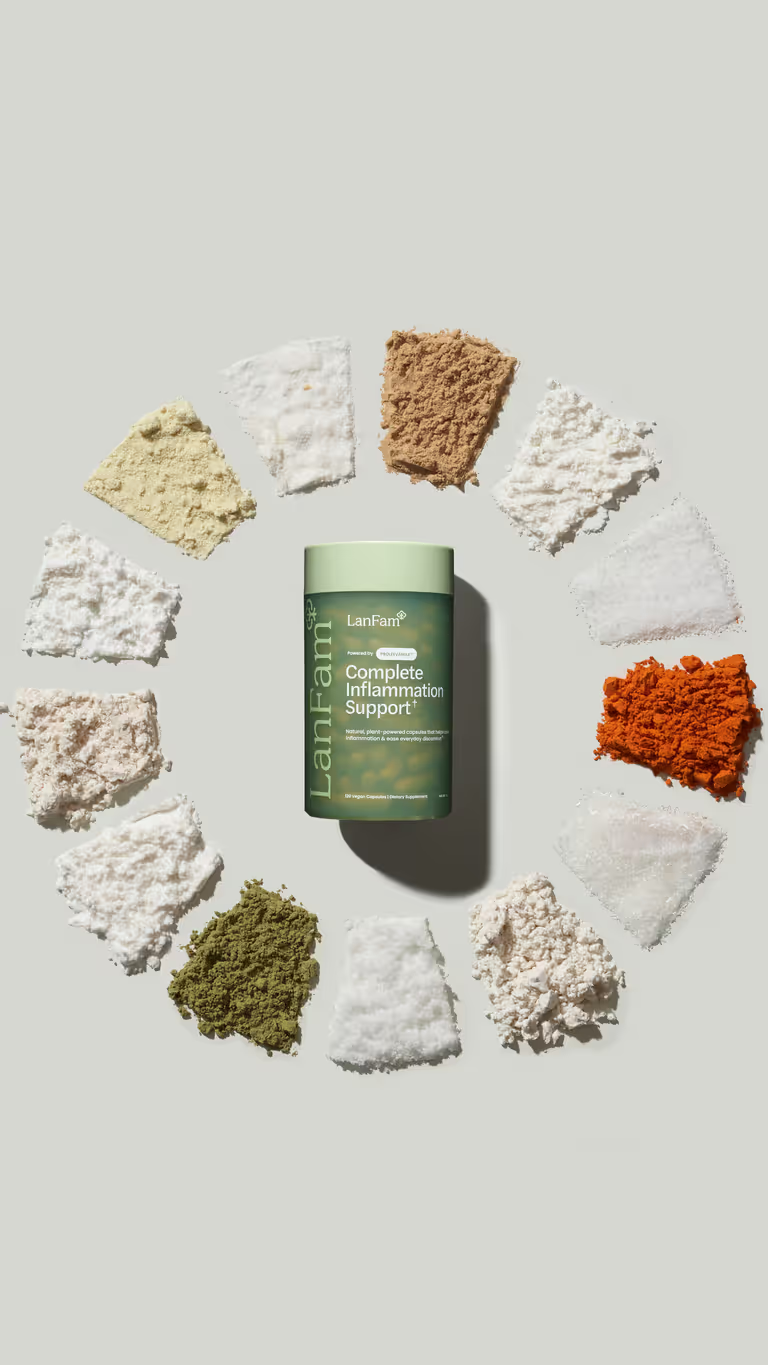
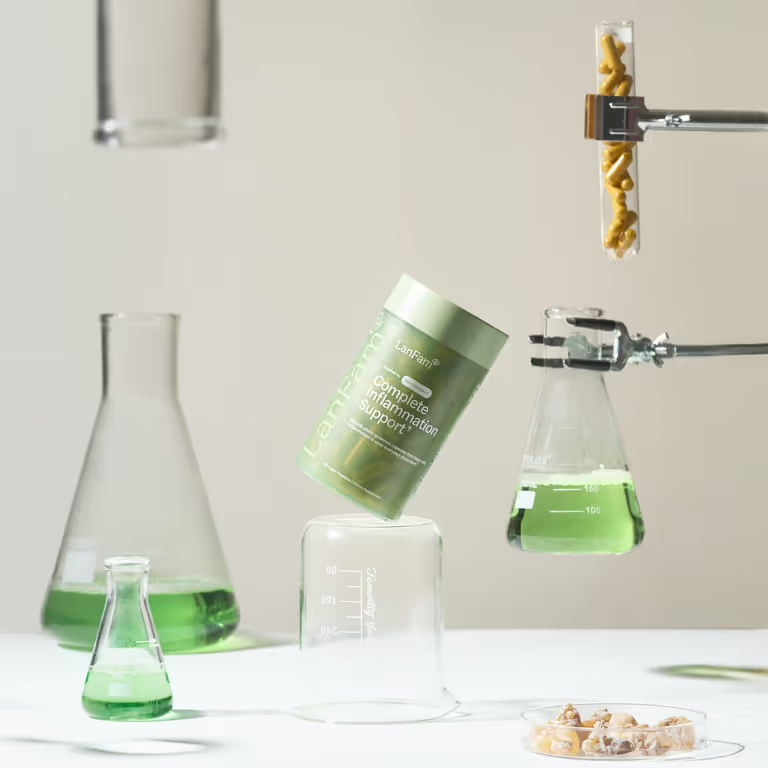
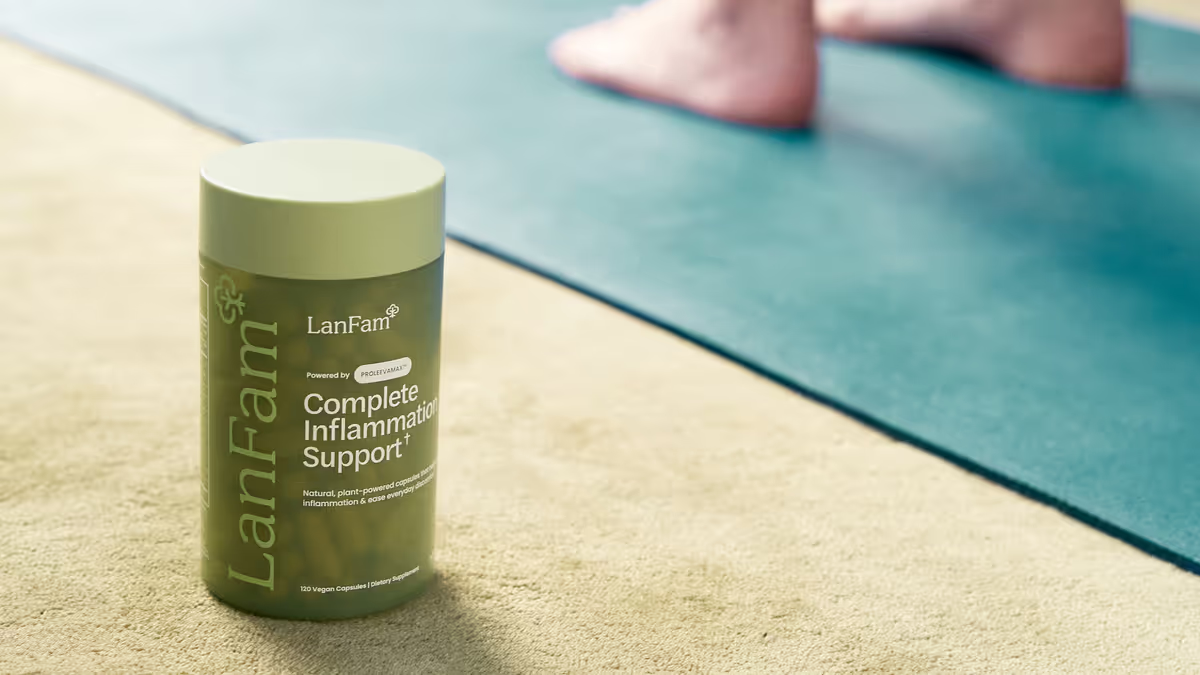
Complete Inflammation Support (Powered by ProleevaMax®) was designed around the idea that inflammation has many inputs, so support should address more than one pathway. The formula combines standardized botanicals such as Boswellia (Indian Frankincense), standardized to 65% boswellic acids, and whole-root Turmeric extract, with a unique amino acid pairing of L-Glutamine and L-Serine, plus ingredients including Matcha, Asian Ginseng, and Resveratrol.
A note on transparency: ProleevaMax does not contain omega-3s, vitamin D, magnesium, or CoQ10, ingredients you will often see discussed in the inflammation conversation. That is by design. The formula focuses on a multi-pathway botanical and amino acid approach instead of trying to be a multivitamin. If you want the full ingredient logic, our ingredients page and the science behind ProleevaMax lay it out.
The honest framing: heat, food, sleep, movement, and targeted support all push in the same direction. None of them is a magic switch.
What About Cold Therapy?
If heat builds resilience by gently stressing your cells, cold works from the opposite direction. Cold exposure, an ice bath or a cold plunge, triggers vasoconstriction: your blood vessels narrow, and that response can blunt the acute inflammatory signaling that follows hard physical effort. A cross-over study in recreational athletes [8] measured shifts in inflammatory markers after short cold-water immersion, and the recovery literature broadly links cold to a calmer short-term inflammatory response.
That blunting cuts both ways, which is the part worth understanding. Acute inflammation after exercise is part of how your body adapts and gets stronger. A systematic review and meta-analysis [9] found that routine post-workout cold-water immersion attenuated muscle growth from resistance training, likely by quieting the very signaling that drives adaptation. So cold and heat are not interchangeable. Heat leans into hormesis and long-term resilience; cold tamps down the immediate response and aids near-term recovery.
The practical read for women managing low-grade inflammation: cold can be a useful recovery tool, while heat has the stronger long-term observational record. Some people alternate the two. If you do try cold, the same cautions apply, start brief and moderate, skip it if you have heart disease or blood pressure concerns, and clear it with your doctor first. Cold therapy is a habit, not a treatment for any condition.
These statements have not been evaluated by the Food and Drug Administration. This product is not intended to diagnose, treat, cure, or prevent any disease.
Support Inflammation From the Inside, Too
A sauna habit is one supportive lever for a healthy inflammatory response. Targeted nutrition is another. Complete Inflammation Support (Powered by ProleevaMax®) pairs standardized botanicals with a unique amino acid blend to support your body across multiple pathways.
See exactly what is inside on our ingredients page, read how it works, and review the research behind the formula.
We built ProleevaMax for the long game. Our 90-Day Protocol mirrors how the body adapts: many people notice an initial response around Week 2, clearer changes in comfort and mobility by Week 4, and more meaningful improvement in daily function by Week 8, with Day 90 as the full checkpoint. Because we stand behind that timeline, ProleevaMax comes with a 90-day money-back guarantee, enough time to complete the full protocol and decide for yourself.
Keep reading: how to lower CRP naturally, oxidative stress and inflammation, and what causes inflammation in the body.

References
- 2.Review documenting elevated CRP as one of the classic markers of systemic inflammation. https://pmc.ncbi.nlm.nih.gov/articles/PMC3098911/
- 3.Scientific review of the heat shock response and heat shock proteins (HSPs). https://pmc.ncbi.nlm.nih.gov/articles/PMC11050489/
- 4.Kuopio Ischemic Heart Disease (KIHD) study: sauna bathing frequency and hs-CRP in 2,269 men over an 11-year follow-up. Annals of Medicine. 2018. https://pubmed.ncbi.nlm.nih.gov/29897261/
- 5.Cohort analysis of sauna habits, inflammation, and all-cause mortality in middle-aged and older Finnish men. European Journal of Epidemiology. 2022. https://pmc.ncbi.nlm.nih.gov/articles/PMC9792415/
- 6.Sauna bathing frequency and cardiovascular and all-cause mortality in Finnish men. JAMA Internal Medicine. 2015. https://jamanetwork.com/journals/jamainternalmedicine/fullarticle/2130724
- 7.Multi-arm randomized controlled trial of post-exercise sauna added to an exercise program: effects on cardiorespiratory fitness and systolic blood pressure. 2022. https://journals.physiology.org/doi/abs/10.1152/ajpregu.00076.2022
- 8.Eight-week randomized trial of Finnish sauna bathing in adults with coronary artery disease: effects on endothelial function, arterial stiffness, and blood pressure. 2023. https://journals.physiology.org/doi/full/10.1152/japplphysiol.00322.2023
- 9.Cross-over study in recreational athletes measuring shifts in inflammatory markers after short cold-water immersion. https://pmc.ncbi.nlm.nih.gov/articles/PMC8468461/
- 10.Systematic review and meta-analysis of routine post-workout cold-water immersion and its effect on muscle growth from resistance training. https://pmc.ncbi.nlm.nih.gov/articles/PMC11235606/
Frequently asked questions
There's a seat at our table
Letters from our family to yours — the science, the recipes, the things that actually helped real families. Leave your email and we'll send the next one.