Bromelain and Inflammation: What the Research Shows
What does the research say about bromelain and inflammation? A clear, evidence-based look at the pineapple enzyme, its mechanism, dosing, and limits.
The research on bromelain inflammation is encouraging in the lab and limited but promising in people. Bromelain is a group of protein-digesting enzymes from the pineapple plant, and laboratory studies show it can quiet inflammatory signaling and slow the movement of immune cells to inflamed tissue. Human trials, mostly small, point to possible benefits for joint comfort, post-surgical recovery, and sinus symptoms. Bromelain is one tool that may support a healthy inflammatory response, not a cure for any disease.
What Bromelain Actually Is
Bromelain is not a single compound. It is a group of enzymes that break down proteins, found in the stem and fruit of the pineapple plant (Ananas comosus). According to the National Center for Complementary and Integrative Health (NCCIH), pineapple was traditionally used for medicinal purposes in South and Central America, and bromelain is the active extract that drew modern research interest [1].
Most supplements use stem bromelain, harvested from the part of the plant you do not eat. That is why eating fresh pineapple is not the same as taking a bromelain supplement. The fruit contains some enzyme, but the concentrated, standardized material used in studies comes from the stem.
Chemically, bromelain belongs to a family called cysteine proteases, enzymes that cut protein chains. That protein-cutting ability is the thread running through everything researchers have studied, from digestion to inflammation to immune signaling. The question scientists have spent decades testing is whether those enzyme actions translate into measurable benefits in living people. The honest answer is: in some areas, partly.
The Mechanism, in Plain Language
To understand why bromelain drew attention, it helps to know how cells switch inflammation on, and how bromelain appears to interrupt several steps at once.
It acts on the master switch
Inside your cells sits a signaling system called NF-kB. Think of it as a master switch. When your body senses a threat, NF-kB turns on and tells the cell to produce inflammatory messengers, including cytokines like TNF-alpha and IL-6. That response is useful in short bursts. The trouble starts when the switch stays on too long, which is what chronic, low-grade inflammation looks like.
Laboratory work shows bromelain interferes with that switch. A study published in Current Issues in Molecular Biology found that pineapple bromelain reduced the inflammatory response in stimulated immune cells by downregulating the NF-kB and MAPK signaling pathways, which in turn lowered pro-inflammatory mediators and the enzymes iNOS and COX-2 [2].
It slows immune cells from reaching the site
Bromelain does something else interesting: it appears to clip receptors off the surface of immune cells, slowing their march toward inflamed tissue. A study in Clinical Immunology reported that bromelain removed cell-surface molecules needed for neutrophil trafficking and produced a 50 to 85 percent reduction in neutrophil migration into the inflamed peritoneal cavity in three animal models [3]. Fewer immune cells arriving means a quieter local response.
Context shapes what it does
One nuance matters. A comprehensive pharmacological review in the journal Life describes how bromelain's effect on cytokines depends on the immune setting: it can prompt some signaling in resting cells, yet it tends to reduce the excess production of TNF-alpha, IL-1beta, and IL-6 when cells are already over-activated during inflammation [4]. In plain terms, bromelain behaves less like a blunt suppressor and more like a modulator that leans against an over-firing response.
So the mechanism is real and documented at the cellular level across more than one route. The next question is whether it does the same in your body, where dose, absorption, and the specific condition all complicate the picture.
What the Research Shows on Bromelain and Inflammation
This is the heart of the question, so let's be specific about the human evidence, area by area.
Joints and osteoarthritis
Knee osteoarthritis is the most-studied joint application, and the results are genuinely mixed.
On the encouraging side, a single-blind, active-controlled pilot trial published in Clinical Rheumatology randomized 40 knee osteoarthritis patients to bromelain (500 mg/day) or the anti-inflammatory drug diclofenac (100 mg/day) [5]. After 16 weeks, the bromelain group showed improved total WOMAC scores (a standard joint-function questionnaire), along with better discomfort, stiffness, and function subscales compared with baseline, broadly comparable to the drug group.
On the cautious side, a randomized, double-blind, placebo-controlled trial in QJM: An International Journal of Medicine tested bromelain 800 mg/day for 12 weeks in moderate-to-severe knee osteoarthritis [6]. Among the patients who completed it, the trial found no statistically significant difference from placebo in discomfort, stiffness, function, or well-being.
The takeaway is honest: some trials report meaningful improvement in joint comfort and mobility, others find no separation from placebo, and the better results tend to appear in milder cases and longer durations.
Sinus symptoms
Bromelain has a longer track record in Europe for sinus support. The NCCIH notes that a small number of studies have looked at oral bromelain for reducing symptoms of sinusitis, with bromelain often used as an add-on to standard care [1]. The agency is careful to say the benefits for most uses are not well defined, which is the right level of caution.
Recovery and post-surgical comfort
The NCCIH also lists post-operative comfort after wisdom-tooth extraction and exercise-related muscle soreness among the purposes bromelain is promoted for, again with limited but suggestive evidence [1]. The proposed thread is the same: by modulating inflammatory mediators and slowing immune-cell arrival, bromelain may support a calmer recovery response.
A quick look at the evidence by area
| Area studied | What human research suggests | Strength of evidence |
|--------------|------------------------------|----------------------|
| Knee osteoarthritis (joint comfort, mobility) | Some trials show improvement comparable to an anti-inflammatory drug; others show no difference from placebo | Mixed |
| Sinus symptoms | Small studies suggest faster symptom resolution as an add-on to standard care | Limited |
| Post-surgical and exercise-related comfort | Promoted use with suggestive but not well-defined evidence | Limited |
| Inflammatory markers (TNF-alpha, IL-6, CRP) | Mechanistic and early clinical signals of modulation; not consistently confirmed in large trials | Early |
These are population-level observations from research, not promises for any one person. Individual results vary.
Dosing: Why the Label Number Can Mislead
Here is a detail that trips people up. With bromelain, the milligram count on the bottle tells you less than the activity of the enzyme.
Bromelain potency is measured in activity units, most often GDU (Gelatin Dissolving Units) or FIP units. A 500 mg capsule with low activity can be weaker than a smaller capsule with higher activity. Two products at the same milligram weight can behave differently if their GDU ratings differ. When you compare bromelain supplements, the GDU (or FIP) figure matters as much as the milligrams.
Across the trials above, oral doses ranged from a few hundred milligrams to around 800 to 900 mg per day, often split into two or three doses and taken between meals so the enzyme works systemically rather than on food in the stomach. There is no single correct number for everyone, and the studied doses are research observations, not a recommendation for you. Your doctor or pharmacist is the right person to set a dose.
The Absorption Story (A Pleasant Surprise)
Most proteins you swallow get chopped up in digestion long before they reach your bloodstream. Bromelain is unusual. Research summarized in the pharmacological review in the journal Life indicates that a meaningful fraction of oral bromelain is absorbed across the intestinal barrier while keeping its proteolytic activity, which is what allows it to reach tissues and act systemically [4].
That is a real point in bromelain's favor, and it stands in contrast to several plant compounds, like the flavonoid quercetin, that absorb poorly and clear fast. Better absorption does not guarantee a clinical effect, but it removes one common obstacle. If you want the contrast, see our companion guide on quercetin and inflammation.
What Bromelain Won't Do
Honesty builds trust, so here are the limits.
- Bromelain is not a disease treatment. It does not treat, cure, or prevent osteoarthritis, sinusitis, or any other condition. Research looks at symptoms, markers, and mechanisms, not disease cures.
- The human evidence is narrower than the lab buzz. Striking test-tube and animal effects do not automatically carry over to people, and the best-designed joint trial found no separation from placebo.
- It is not the same as eating pineapple. Supplement bromelain comes mostly from the stem and is far more concentrated than the enzyme in the fruit you eat.
- It can interact with medications. Per the NIH LiverTox database, bromelain is generally well tolerated, with uncommon and mild side effects such as abdominal discomfort or nausea when they occur [7]. Separately, bromelain is widely noted to add to the effect of blood thinners, so a conversation with your doctor matters if you take one.
- It does not replace the basics. Sleep, movement, a fiber-rich diet, and a healthy weight remain the foundation. Supplements support those habits; they do not substitute for them.
Bromelain vs. a Multi-Pathway Approach
Here is the transparent part, and it matters: Complete Inflammation Support (Powered by ProleevaMax®) does not contain bromelain. If a standalone bromelain supplement is your goal, ProleevaMax is not that product, and we would tell you plainly instead of pretending otherwise.
We left bromelain out by design, and the reasoning connects to everything above. Bromelain is a single enzyme group with encouraging mechanisms and a human evidence base that is promising in places and flat in others. It is a reasonable option to discuss with your doctor. But a healthy inflammatory response runs through more than one pathway, so ProleevaMax was built to support several at once.
How ProleevaMax approaches the same goal differently
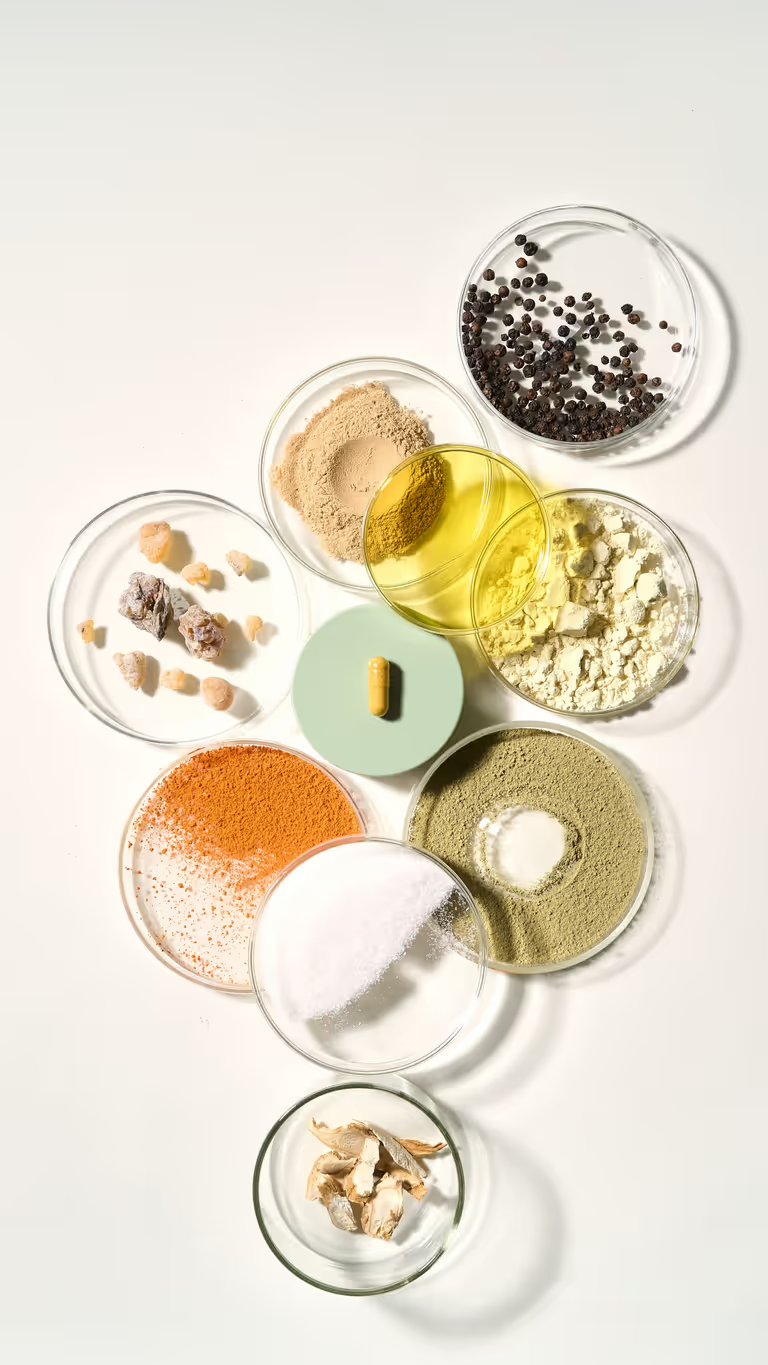
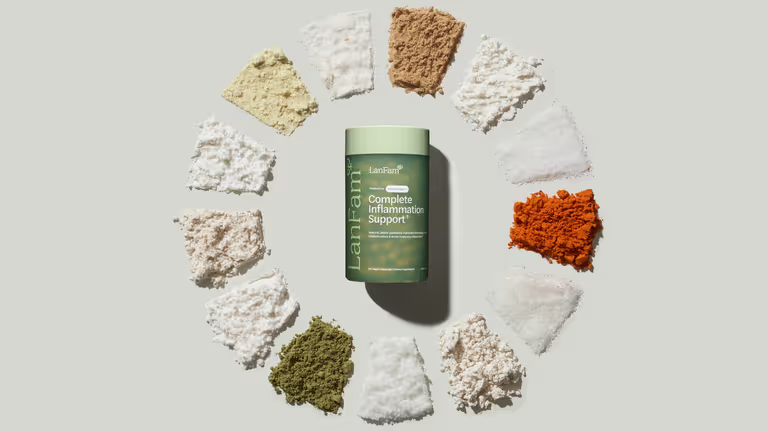
ProleevaMax is a proprietary blend of 13 standardized ingredients chosen to work together across multiple pathways:
- Boswellia (Indian Frankincense), standardized to 65% boswellic acids. Boswellic acids influence the 5-lipoxygenase pathway, a different inflammatory route from the enzyme actions bromelain relies on. A systematic review and meta-analysis of Boswellia trials reported positive effects on joint comfort, stiffness, and physical function [8].
- Matcha (a source of EGCG and L-theanine). Green tea polyphenols, EGCG chief among them, have been studied for their effect on inflammatory signaling. A review in the International Journal of Molecular Sciences describes how EGCG interacts with pathways that control inflammation and oxidative stress, including NF-kB, the same master switch bromelain acts on [9].
- Turmeric (whole-root extract). Used as a whole-root botanical for its traditional role in supporting a healthy inflammatory response. Note: this is whole-root turmeric, not a high-dose standardized curcumin isolate.
- Resveratrol, Asian Ginseng, L-Arginine, and Black Pepper (piperine) round out the botanical side, with piperine included to support absorption of other compounds.
- L-Glutamine and L-Serine, a unique pairing of amino acids selected for nervous-system resilience. Chronic discomfort and stress are linked, and this pairing targets that connection, not inflammation alone.
- GABA, 5-HTP, Vitamin B6, and Choline support the calm-and-resilience side of the formula.
The logic is simple. Bromelain covers one enzyme-driven angle. ProleevaMax aims to cover more of the map, pairing botanicals for inflammatory balance with amino acids for nervous-system resilience. Neither approach is a cure. They are different strategies for supporting a healthy inflammatory response.
If you want bromelain specifically, talk to your doctor or pharmacist about a standalone product. If you want a multi-pathway daily blend, that is what ProleevaMax was built for.
How to Think About Adding Bromelain (or Any Supplement)
A few grounded principles, whichever direction you choose:
- Check the activity unit, not just the milligrams. Look for the GDU or FIP rating so you can compare products honestly.
- Talk to your doctor before supplementing, especially if you take a blood thinner or have a pineapple or latex allergy. Bromelain can interact with some medications.
- Match the approach to the research. The studied doses are observations from trials, not personal prescriptions. Ask your doctor what is appropriate for you.
- Give it time. Inflammation responds gradually. Mark your calendar in weeks and months, not days. The joint trial that found benefit ran 16 weeks.
- Keep the foundation strong. No capsule outperforms consistent sleep, movement, and an anti-inflammatory diet. For food-first ideas, see our guide to anti-inflammatory foods.
Support a Healthy Inflammatory Response, Your Way
Bromelain is a well-studied pineapple enzyme with real mechanisms behind it, strongest in the lab and most promising for joint comfort and sinus symptoms in smaller human trials. It is not in our formula, and we want you to know that up front. Discuss it with your doctor if it interests you.
If you want a multi-pathway daily blend instead, see how ProleevaMax is built. Explore the full ingredient list, read the science behind the formula, and learn how it works day to day.
We back ProleevaMax with the 90-Day Protocol and a 90-day money-back guarantee. The protocol gives the formula time to do its work: an initial response around Week 2, noticeable changes in comfort and mobility by Week 4, meaningful improvement in daily function by Week 8, and the full 90-day completion at Day 90. If it is not right for you in that window, you are covered.
Keep reading:
These statements have not been evaluated by the Food and Drug Administration. This product is not intended to diagnose, treat, cure, or prevent any disease.

References
- 2.National Center for Complementary and Integrative Health. Bromelain. Reviewed November. 2024. https://www.nccih.nih.gov/health/bromelain
- 3.Insuan O, Janchai P, Thongchuai B, et al. Anti-inflammatory effect of pineapple rhizome bromelain through downregulation of the NF-κB- and MAPKs-signaling pathways in lipopolysaccharide (LPS)-stimulated RAW264.7 cells. Current Issues in Molecular Biology. 2021. https://doi.org/10.3390/cimb43010008
- 4.Fitzhugh DJ, Shan S, Dewhirst MW, Hale LP. Bromelain treatment decreases neutrophil migration to sites of inflammation. Clinical Immunology. 2008. https://doi.org/10.1016/j.clim.2008.02.015
- 5.Chakraborty AJ, Mitra S, Tallei TE, et al. Bromelain a potential bioactive compound: a comprehensive overview from a pharmacological perspective. Life. 2021. https://doi.org/10.3390/life11040317
- 6.Kasemsuk T, Saengpetch N, Sibmooh N, Unchern S. Improved WOMAC score following 16-week treatment with bromelain for knee osteoarthritis. Clinical Rheumatology. 2016. https://doi.org/10.1007/s10067-016-3363-1
- 7.Brien S, Lewith G, Walker AF, Middleton R, Prescott P, Bundy R. Bromelain as an adjunctive treatment for moderate-to-severe osteoarthritis of the knee: a randomized placebo-controlled pilot study. QJM. 2006. https://doi.org/10.1093/qjmed/hcl118
- 8.National Institutes of Health. LiverTox: Clinical and Research Information on Drug-Induced Liver Injury — Bromelain. Updated February 10,. 2024. https://www.ncbi.nlm.nih.gov/books/NBK600584/
- 9.Yu G, Xiang W, Zhang T, Zeng L, Yang K, Li J. Effectiveness of Boswellia and Boswellia extract for osteoarthritis patients: a systematic review and meta-analysis. BMC Complementary Medicine and Therapies. 2020. https://doi.org/10.1186/s12906-020-02985-6
- 10.Mokra D, Joskova M, Mokry J. Therapeutic effects of green tea polyphenol (-)-epigallocatechin-3-gallate (EGCG) in relation to molecular pathways controlling inflammation, oxidative stress, and apoptosis. International Journal of Molecular Sciences. 2023. https://doi.org/10.3390/ijms24010340
Frequently asked questions
There's a seat at our table
Letters from our family to yours — the science, the recipes, the things that actually helped real families. Leave your email and we'll send the next one.