Curcumin
The yellow pigment in turmeric — and the most-studied anti-inflammatory compound LanFam works with. Mechanism, dosage, safety, and where it sits in ProleevaMax.
A note from Fabio Lanzieri.
Forty years in pharmaceutical formulation taught me that the difference between a useful active compound and a useless one almost never lives in the molecule. It lives in the delivery. Curcumin is the cleanest example of this rule I know. The mechanism is real, the trial data is real, and most "turmeric supplements" still fail to do anything useful because they ignore what the chemistry requires. This page is the version I'd hand a friend who asked me what curcumin actually is and why we put it where we did in ProleevaMax.
What it is
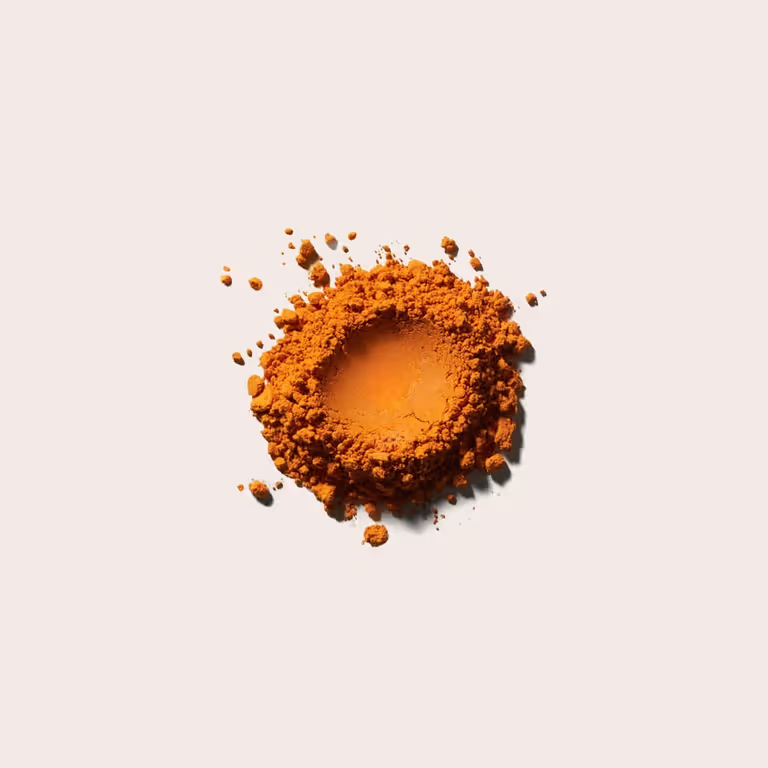
Curcumin is the principal polyphenolic compound in turmeric (Curcuma longa), a rhizome native to South Asia and a staple of Indian cooking for thousands of years. The yellow pigment you see in turmeric powder is curcumin and its two close chemical cousins, demethoxycurcumin and bisdemethoxycurcumin — collectively called "curcuminoids." Raw turmeric is roughly 3% curcuminoids by weight. A standardized curcumin extract concentrates that fraction to 95% — the form used in nearly every well-controlled clinical trial and the form LanFam uses in ProleevaMax1.
How it works
Curcumin isn't a non-steroidal anti-inflammatory drug and doesn't work like one. The simplest way to picture what it does: imagine NF-κB as a master switchboard sitting upstream of the inflammatory response. When NF-κB is activated, it walks into the nucleus and turns on the genes that produce COX-2, TNF-α, IL-6, and a long list of other inflammatory mediators. Ibuprofen blocks the COX enzymes once they've been made. Curcumin reduces how much COX-2 gets made in the first place — by quieting NF-κB activation2.
This is a different kind of intervention. Aspirin and ibuprofen are fast, downstream blocks. Curcumin is a slower, upstream modulation. That's why the time course differs so much between them. You don't quiet a switchboard in thirty minutes. You let signals settle over weeks.
The pathway story is well-mapped at this point. A comprehensive clinical review pulled together the molecular targets of curcumin across more than a hundred studies — NF-κB, COX-2, TNF-α, IL-6, several growth factors, and roughly a dozen other signaling molecules involved in chronic inflammation1. The breadth is part of why the supplement-industry version of this story keeps overselling — when something touches twelve pathways it gets pitched as treating twelve diseases. That's not how biology works. What it actually means is that curcumin supports a healthy inflammatory response across multiple converging signals,* which is what makes it useful when many pathways are quietly stuck "on" at once.
The evidence
The strongest head-to-head trial: Kuptniratsaikul and colleagues ran a randomized multicenter study in 2014 — knee osteoarthritis patients, 1,500 mg/day standardized Curcuma domestica extract versus 1,200 mg/day ibuprofen, four weeks. Curcumin was non-inferior on pain and physical-function scores, with significantly fewer gastrointestinal adverse events3.† A 2016 systematic review and meta-analysis of randomized trials in joint arthritis confirmed the broader pattern: curcumin formulations consistently reduce pain and improve function compared to placebo across a range of inflammatory joint conditions, with effect sizes that approach but rarely exceed standard NSAIDs4. Extended-administration data on a phosphatidylcholine-complexed form (Meriva) showed sustained benefit over eight months of daily use in osteoarthritis patients5.
Therapeutic Roles of Curcumin: Lessons Learned from Clinical Trials
Gupta SC, Patchva S, Aggarwal BB — AAPS J · 2013
Curcumin inhibits VEGF-mediated angiogenesis in human intestinal microvascular endothelial cells through COX-2 and MAPK inhibition
Binion DG, Otterson MF, Rafiee P — Gut · 2008
Efficacy and safety of
Kuptniratsaikul V, Dajpratham P, Taechaarpornkul W, et al — Curcuma domestica · 2014
Efficacy of Turmeric Extracts and Curcumin for Alleviating the Symptoms of Joint Arthritis: A Systematic Review and Meta-Analysis of Randomized Clinical Trials
Daily JW, Yang M, Park S — J Med Food · 2016
Efficacy and safety of Meriva, a curcumin-phosphatidylcholine complex, during extended administration in osteoarthritis patients
Belcaro G, Cesarone MR, Dugall M, et al — Altern Med Rev · 2010
Influence of piperine on the pharmacokinetics of curcumin in animals and human volunteers
Shoba G, Joy D, Joseph T, Majeed M, Rajendran R, Srinivasan PS — Planta Med · 1998
Dosage
Clinical trials typically use 500-2,000 mg/day of standardized 95% curcuminoid extract, taken with or shortly after a meal containing fat. Benefit accumulates over 4-8 weeks of consistent daily dosing — this is not an acute-pain intervention. Consult your physician before starting a daily curcumin regimen, particularly if you are on prescription medication.
Safety & interactions
Curcumin is well-tolerated for most adults at trial-range doses, but three medication categories warrant a conversation with your physician before starting daily use:
- Anticoagulants and antiplatelet drugs — curcumin has a mild antiplatelet effect; combination with warfarin, apixaban, rivaroxaban, dabigatran, or daily aspirin can additively raise bleeding risk.
- Diabetes medications — curcumin can lower blood glucose modestly; monitoring matters in the first few weeks if you are on insulin or sulfonylureas.
- Iron-storage conditions — case reports describe curcumin chelating iron in ways that complicate hemochromatosis management.
Pregnancy and lactation: food-level turmeric is widely consumed safely during pregnancy; high-dose supplemental curcumin has not been adequately studied in pregnant or nursing women and should be avoided unless cleared by your physician.
Rare cases of elevated liver enzymes have been reported with high-dose proprietary formulations. If you start curcumin and develop fatigue, jaundice, or abdominal discomfort, stop and talk to your doctor.
In ProleevaMax
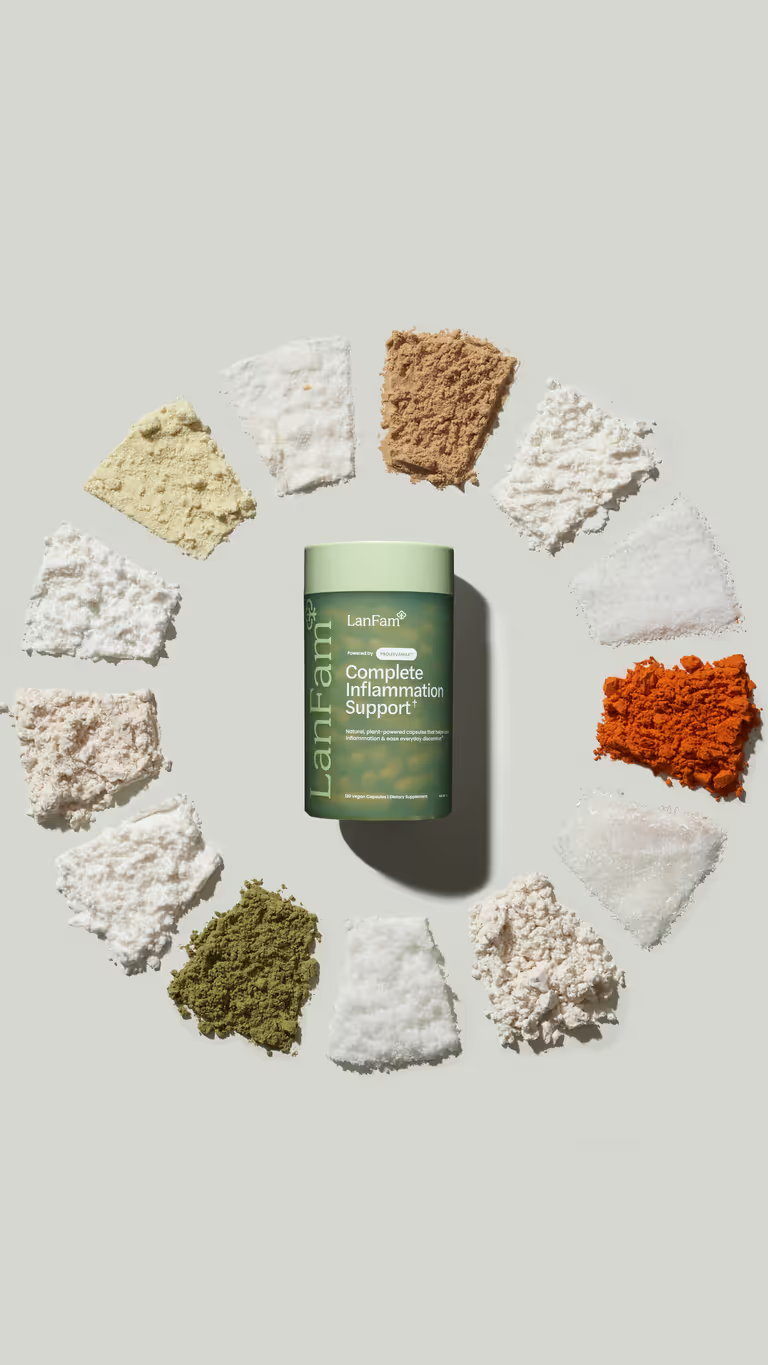
Curcumin is the headline ingredient in ProleevaMax for Pathway 1 — Inflammatory Signaling. We use the 95% curcuminoid standardization at trial-validated dose, paired with piperine (black pepper extract) because curcumin's oral bioavailability is famously poor on its own. Co-administering piperine with curcumin has been shown to increase curcumin's bioavailability by up to 2,000%6 — the formulation logic that makes the rest of the trial data actually reachable at supplement doses.*
Frequently asked questions
The point about curcumin isn't that it's a miracle ingredient. It's that the chemistry rewards careful formulation and punishes careless formulation. Get the standardization right, get the absorption right, give it the weeks it needs, and the data supports a real role in chronic inflammatory pain.*
— Fabio
* These statements have not been evaluated by the Food and Drug Administration. This product is not intended to diagnose, treat, cure, or prevent any disease.
† Specific clinical-study outcome — see referenced trial for full methodology and population.
— Fabio Lanzieri, Co-founder & CEO

Co-founder & CEO
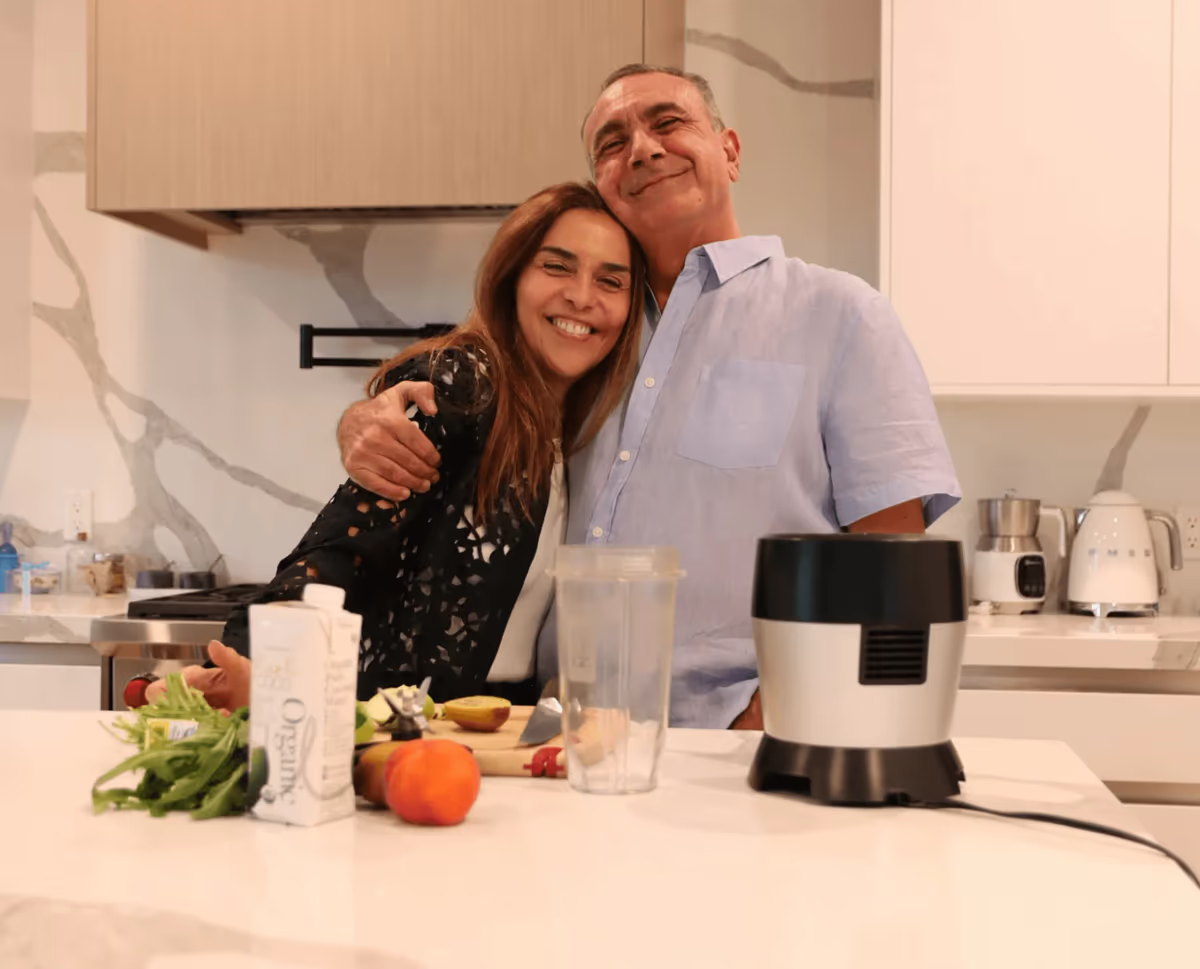
Fabio Lanzieri spent 40 years inside the pharmaceutical industry before founding LanFam Health with his wife Maria and daughter Cristina. When Maria's breast-cancer recovery left her dependent on estrogen-blocking medication and chronic pain that doctors could only address with daily NSAIDs, Fabio went looking for an alternative. Pharma didn't have one. Non-pharma didn't address root cause.
So he built one — at their kitchen table. The result became ProleevaMax, a synergistic formulation targeting six inflammatory pathways with 13 standardized ingredients. Every formulation decision still passes Fabio's family standard: if we wouldn't give it to our own, we won't make it.
Fabio's writing covers the mechanism science behind chronic inflammation — NF-κB, COX-2, NLRP3, the gut-brain axis, and how individual compounds modulate them. He writes the way he explains things at the dinner table: warmth first, then the science.
What Fabio writes about
- Chronic inflammation as a root cause across joint pain, neuroinflammation, metabolic dysfunction, and aging
- The 6-pathway framework — how inflammation goes from acute and protective to chronic and corrosive
- Individual compounds (curcumin, boswellia, resveratrol, panax ginseng, L-glutamine) and how they modulate inflammatory pathways
- NSAID alternatives — what 40 years of pharmaceutical research has and hasn't proven about long-term use
There's a seat at our table
Letters from our family to yours — the science, the recipes, the things that actually helped real families. Leave your email and we'll send the next one.