Is Inflammation Good or Bad? Acute vs Chronic, Explained
Is inflammation good or bad? It is both. Acute inflammation protects and heals. Chronic inflammation harms. Here is how to tell the difference.
Ingredients in this letter

Is inflammation good or bad? It is both, and the difference comes down to time. Acute inflammation is good. It is your immune system rushing in to heal a cut, fight an infection, and repair damage, then switching off in days. Chronic inflammation is the harmful kind. It is a low, constant immune response that never shuts down and quietly wears on the body over months and years. The goal is not to eliminate inflammation. It is to let the helpful kind do its job and calm the harmful kind.
So, Is Inflammation Good or Bad?
The honest answer frustrates people who want a simple yes or no: inflammation is good and bad, depending on which kind you mean.
Inflammation is the immune system's response to a threat. Picture a sprained ankle or a paper cut. Within minutes, blood vessels widen, immune cells flood the area, and the tissue gets to work clearing damage and rebuilding. That process is not a malfunction. It is survival. Without it, a small cut could turn deadly and a minor infection could spread unchecked.
The problem is a second kind of inflammation that looks nothing like the first. It does not arrive fast or leave quickly. It settles in, runs at a low hum for years, and serves no repair purpose at all. UCLA Health frames the distinction plainly: short-term inflammation is largely protective, while inflammation that persists over time can damage healthy cells and tissues [1].
So the real question is not whether inflammation is good or bad. It is which kind you are dealing with, and whether it is doing its job or overstaying its welcome.
Acute Inflammation: The Good Kind
Acute inflammation is the body's emergency response. It is fast, focused, and temporary.
When tissue is injured or infected, the immune system triggers a cascade that the ancient physicians described nearly 2,000 years ago. The classic signs are redness, heat, localized fluid buildup, comfort loss, and reduced function [2]. Each one has a purpose:
| Sign | What is happening | Why it helps |
|---|---|---|
| Heat | Increased blood flow to the area | Carries immune cells and warmth to the site |
| Redness | More red blood cells passing through dilated vessels | Sign of fresh blood delivering repair resources |
| Fluid buildup | Vessels become more permeable, fluid enters tissue | Brings plasma proteins and immune cells to the threat |
| Comfort loss | Chemical signals stimulate nerve endings | Forces you to rest and protect the area |
| Reduced function | Combination of the above | Prevents further damage while healing happens |
This is the immune system working exactly as designed. It attracts white blood cells and plasma proteins to the site of injury, clears the threat, and begins repair [2]. Then, when the job is done, it stops.
That last part matters most. Healthy acute inflammation has an off switch.
The Off Switch: Resolution
For decades, scientists assumed inflammation simply faded away when the threat was gone. We now know that is wrong. Resolution is an active, carefully orchestrated process, driven by signaling molecules that function as "stop signals" to end the inflammatory response and actively promote tissue repair [3].
In other words, switching inflammation off is just as deliberate as turning it on. When that off switch works, acute inflammation does its job and disappears. This is the good kind, start to finish.
Chronic Inflammation: The Harmful Kind
Chronic inflammation is what happens when the off switch fails.
When resolution does not work, the immune system keeps firing. Repeated bursts of immune activity continue long after any real threat is gone, and this failure to resolve leads to a prolonged inflammatory state linked to many widespread human diseases [3]. The same biochemical processes that heal you in the short term begin to damage healthy tissue when they run without an end point.
This version is slow and often silent. There is no obvious wound to point to. Instead of redness and heat you might notice fatigue, stiffness in the morning, low energy, or a general sense that your body is not bouncing back the way it used to. Because the signs are vague, chronic low-grade inflammation can run for years before anyone connects the dots.
The downstream picture is well documented. Persistent immune activation is associated with a range of conditions, including cardiovascular disease, type 2 diabetes, neurodegenerative conditions, and others [4]. The shift is measurable, too. C-reactive protein, a blood marker the liver produces in response to inflammation, is one of the most studied signals of this low, constant state and is described as the quintessential marker of systemic inflammation in coronary artery disease, with a growing role in personalized cardiovascular risk assessment [5].
Acute vs Chronic at a Glance
| | Acute inflammation (good) | Chronic inflammation (harmful) |
|---|---|---|
| Speed | Fast, minutes to hours | Slow, builds over time |
| Duration | Days | Months to years |
| Purpose | Heal injury, clear infection | None; no longer serves repair |
| Signs | Redness, heat, fluid buildup, comfort loss | Often silent; fatigue, stiffness, low energy |
| Off switch | Works; resolves on its own | Fails; response never shuts down |
| What to do | Let it run its course | Address the root cause |
Why Chronic Inflammation Rises in Midlife
For women between 40 and 65, this is not an abstract topic. Aging itself shifts the inflammatory baseline upward.
Researchers call this slow rise "inflammaging," a low-grade chronic inflammation that develops with age in the absence of any obvious infection [6]. It is driven by the accumulation of aging cells, cellular debris, and a gradual dysregulation of the immune system, and it has a self-reinforcing quality. The inflammation aggravates the dysfunction, and the dysfunction feeds more inflammation [6].
Layer perimenopause and menopause on top of inflammaging, and the timing is unfortunate. Sleep gets harder, stress feels heavier, and the body's ability to keep inflammation in check declines at the same stage of life. That is why so many women notice a shift in their forties and fifties that they cannot pin on any single cause. For a fuller breakdown of what drives it, see what causes inflammation in the body.
How to Support a Healthy Inflammatory Response
You cannot, and should not, try to shut off inflammation entirely. You need the acute kind. The aim is to support your body's ability to resolve inflammation and to keep the chronic, low-grade version from settling in.
Most of the levers are lifestyle. A diet rich in vegetables, fiber, fish, and olive oil, consistent sleep, regular movement, and managing chronic stress all shift the baseline in the right direction. One factor worth naming directly: chronic stress can impair the body's ability to switch inflammation off, so stress management is not a soft skill here. It is biology. You can read more in oxidative stress and inflammation.
Where Botanicals and a Multi-Pathway Approach Fit
Inflammation is not controlled by one switch. It runs through several pathways at once, which is why single-ingredient approaches often fall short. Certain botanicals have research documenting their effect on specific inflammatory pathways.
- Boswellia (Indian Frankincense) is one of the most studied. Its active boswellic acids act on 5-lipoxygenase (5-LOX), an enzyme involved in producing inflammatory signaling molecules called leukotrienes [7].
- Turmeric works through a different route. Its compounds influence NF-kB, a master regulatory switch for the inflammatory response whose abnormal activation is closely tied to chronic inflammatory states [8].
- Green tea compounds, including EGCG and L-theanine, add another layer. EGCG has research documenting anti-inflammatory and antioxidant activity, while L-theanine modulates the nervous system and is associated with a calmer stress response [9].
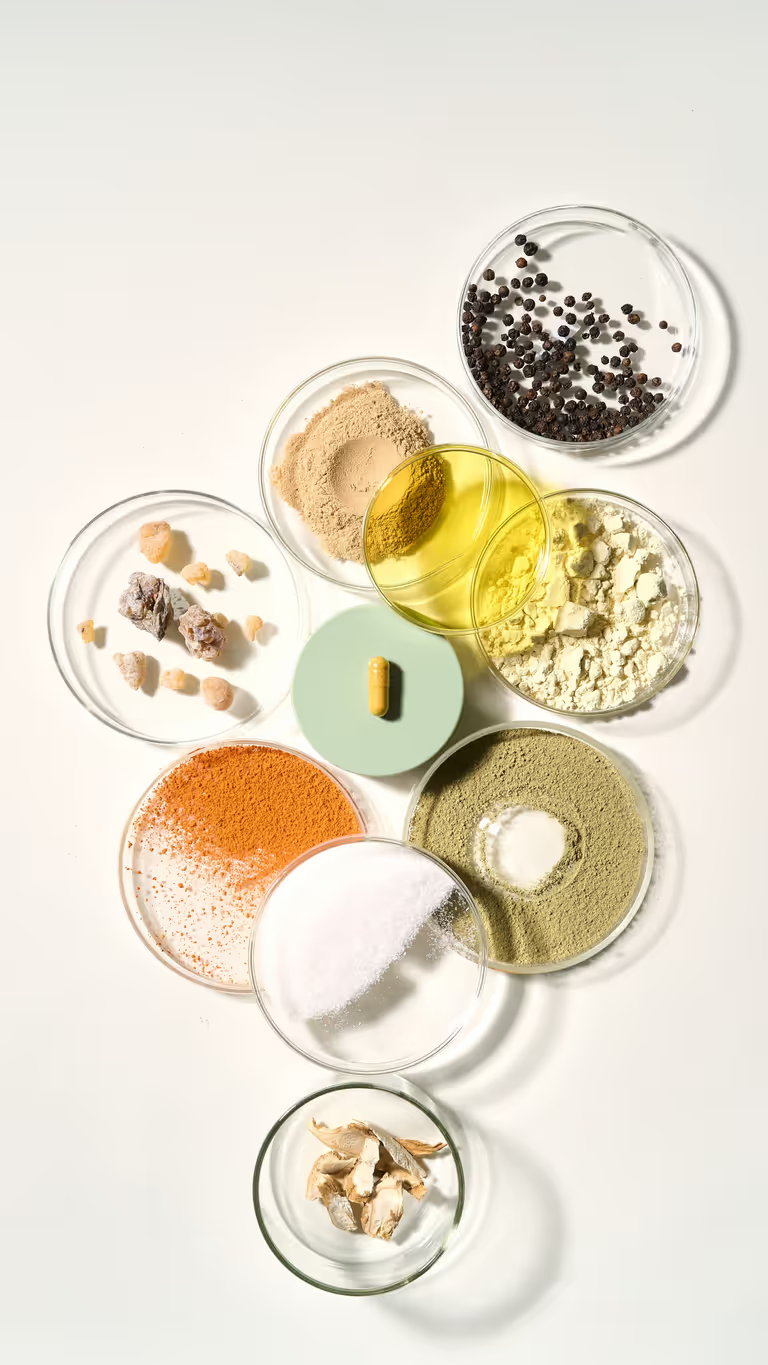
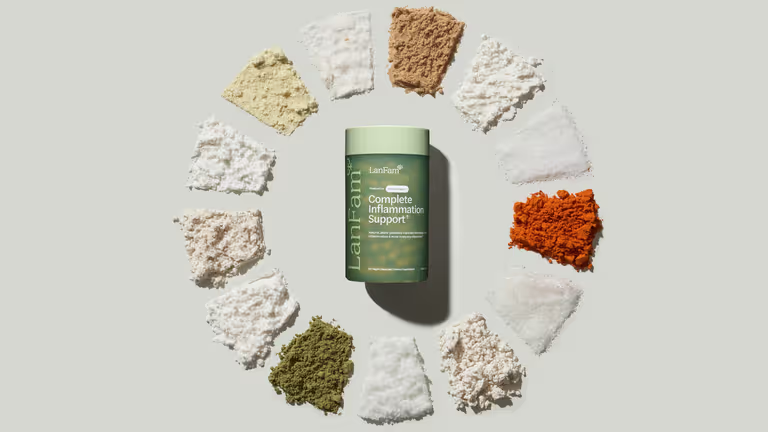
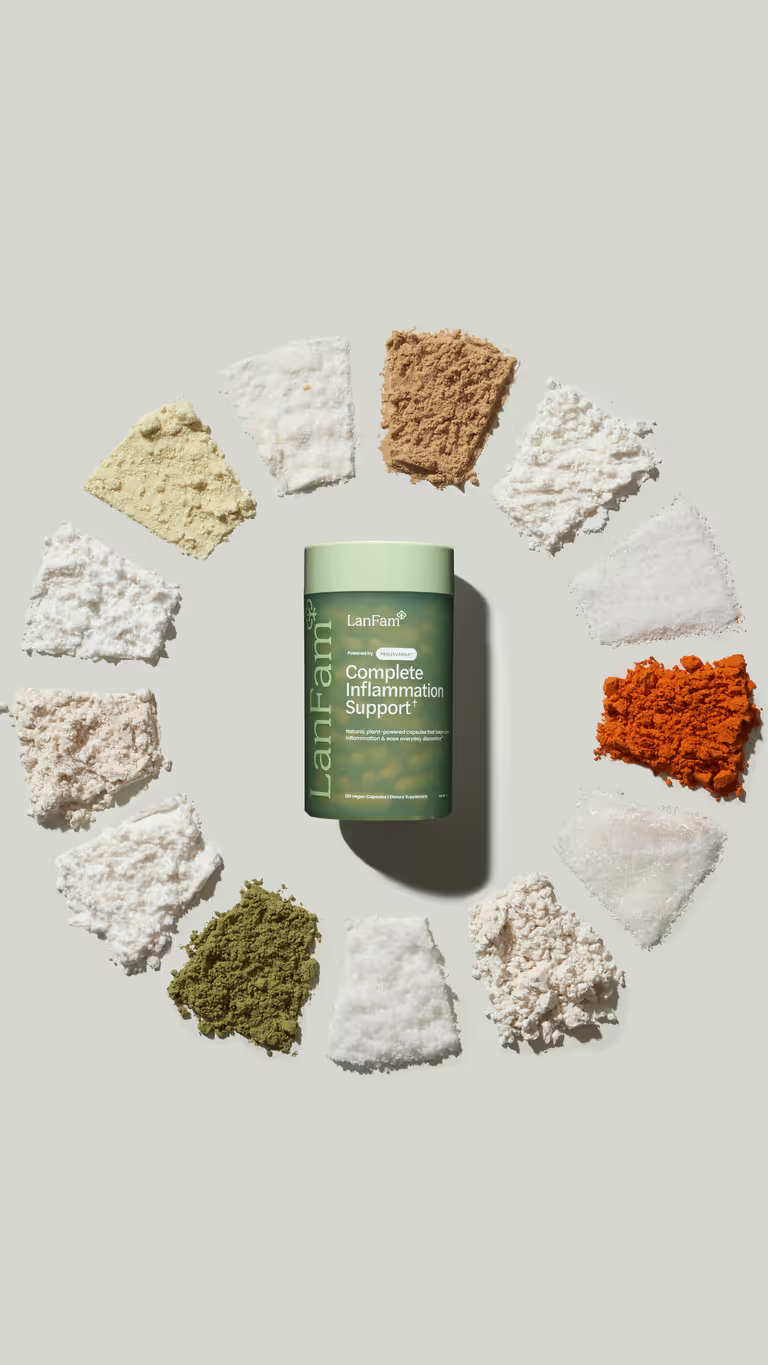
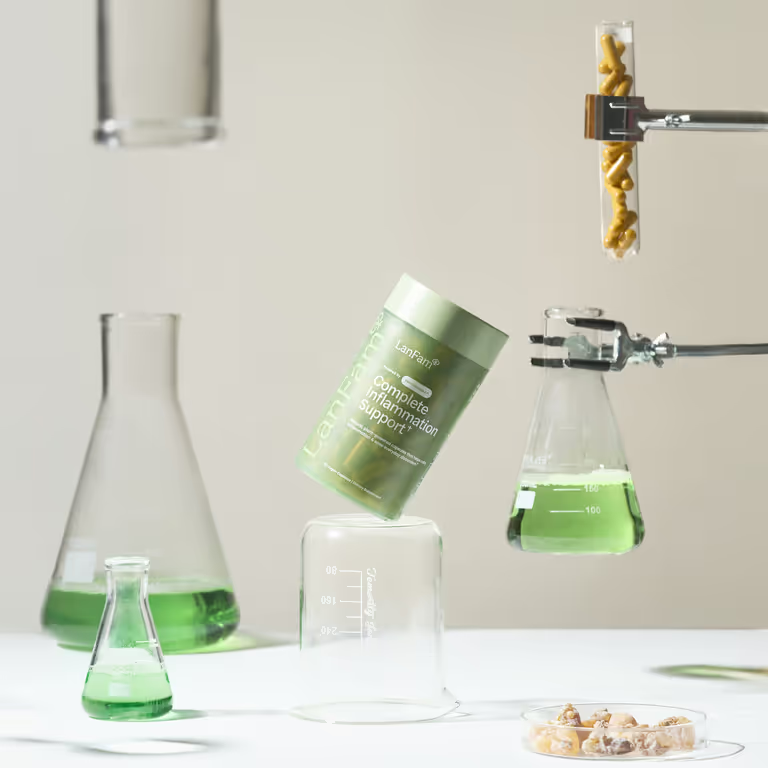
This multi-pathway logic is the design principle behind Complete Inflammation Support (Powered by ProleevaMax®). Instead of leaning on a single compound, ProleevaMax combines standardized botanicals like Boswellia (standardized to 65% boswellic acids) with whole-root turmeric, matcha, and a nervous-system-supporting amino acid pairing of L-Glutamine and L-Serine. The idea is to support a healthy inflammatory response across several pathways at once, the way the body's own system works. ProleevaMax is built to support, not to suppress.
What This Won't Do
Honesty matters more than hype, so here are the limits.
- A supplement will not turn off acute inflammation, and you would not want it to. When you twist an ankle or fight an infection, that response is protecting you. The goal is supporting healthy resolution, not blocking the helpful kind.
- No supplement treats, cures, or prevents any disease. Chronic inflammation is associated with serious conditions, but supporting a healthy inflammatory response is not the same as treating a diagnosis. If you are managing a specific medical condition, work with your doctor.
- ProleevaMax does not contain omega-3s, vitamin D, magnesium, quercetin, CoQ10, or probiotics. Each of those has its own research in the inflammation conversation, and we are transparent that they are not in this formula. ProleevaMax takes a different, multi-pathway botanical-and-amino-acid approach. Some people pair it with omega-3s or vitamin D under guidance from their provider.
- There is no overnight switch. Supporting your inflammatory baseline is a slow, cumulative process. This is why ProleevaMax is built around a 90-Day Protocol instead of a quick fix.
These statements have not been evaluated by the Food and Drug Administration. This product is not intended to diagnose, treat, cure, or prevent any disease.
Support a Healthy Inflammatory Response With ProleevaMax
Understanding the difference between good and bad inflammation is the first step. Acting on it is the next.
Complete Inflammation Support (Powered by ProleevaMax®) is built on the multi-pathway logic this article describes: standardized botanicals and a unique amino acid pairing that support a healthy inflammatory response and nervous system resilience together, instead of chasing a single switch.
- See the full formula on the ProleevaMax product page
- Review every botanical and amino acid on the ingredients page
- Read the research behind the approach on the science page
- Understand the multi-pathway design on how it works
Give it a fair trial with the 90-Day Protocol: an initial response around Week 2, noticeable changes in comfort and mobility by Week 4, significant improvement in daily function by Week 8, and the full protocol complete at Day 90. The protocol is backed by a 90-day money-back guarantee, so you can complete the full arc and judge the results for yourself.
Keep learning: acute vs chronic inflammation, what causes inflammation in the body, and oxidative stress and inflammation.

References
- 2.Glazier EM, Ko E. Acute vs. chronic inflammation. UCLA Health. 2026. https://www.uclahealth.org/news/article/acute-vs-chronic-inflammation
- 3.Hannoodee S, Nasuruddin DN. Acute Inflammatory Response. StatPearls, NCBI Bookshelf. 2024. https://www.ncbi.nlm.nih.gov/books/NBK556083/
- 4.Serhan CN. Discovery of specialized pro-resolving mediators marks the dawn of resolution physiology and pharmacology. Molecular Aspects of Medicine. 2017. https://doi.org/10.1016/j.mam.2017.03.001
- 5.Banait T, Wanjari A, Danade V, Banait S, Jain J. Role of high-sensitivity C-reactive protein (Hs-CRP) in non-communicable diseases: a review. Cureus. 2022. https://doi.org/10.7759/cureus.30225
- 6.Amezcua-Castillo E, González-Pacheco H, Sáenz-San Martín A, et al. C-reactive protein: the quintessential marker of systemic inflammation in coronary artery disease—advancing toward precision medicine. Biomedicines. 2023. https://doi.org/10.3390/biomedicines11092444
- 7.Baechle JJ, Chen N, Makhijani P, Winer S, Furman D, Winer DA. Chronic inflammation and the hallmarks of aging. Molecular Metabolism. 2023. https://doi.org/10.1016/j.molmet.2023.101755
- 8.Peng C, Yang Y, Wang Y, Gong B, Sun X, Yang X. From bench to bedside, boswellic acids in anti-inflammatory therapy: mechanistic insights, bioavailability challenges, and optimization approaches. Frontiers in Pharmacology. 2025. https://doi.org/10.3389/fphar.2025.1692443
- 9.Liu M, Wang J, Song Z, Pei Y. Regulation mechanism of curcumin mediated inflammatory pathway and its clinical application: a review. Frontiers in Pharmacology. 2025. https://doi.org/10.3389/fphar.2025.1642248
- 10.Li MY, Liu HY, Wu DT, et al. L-theanine: a unique functional amino acid in tea (Camellia sinensis L.) with multiple health benefits and food applications. Frontiers in Nutrition. 2022. https://doi.org/10.3389/fnut.2022.853846
Frequently asked questions
There's a seat at our table
Letters from our family to yours — the science, the recipes, the things that actually helped real families. Leave your email and we'll send the next one.