Oxidative Stress and Inflammation: How They Feed Each Other
Oxidative stress and inflammation feed each other in a self-driving loop. Here is the plain-language science on free radicals, antioxidants, and how to break in.
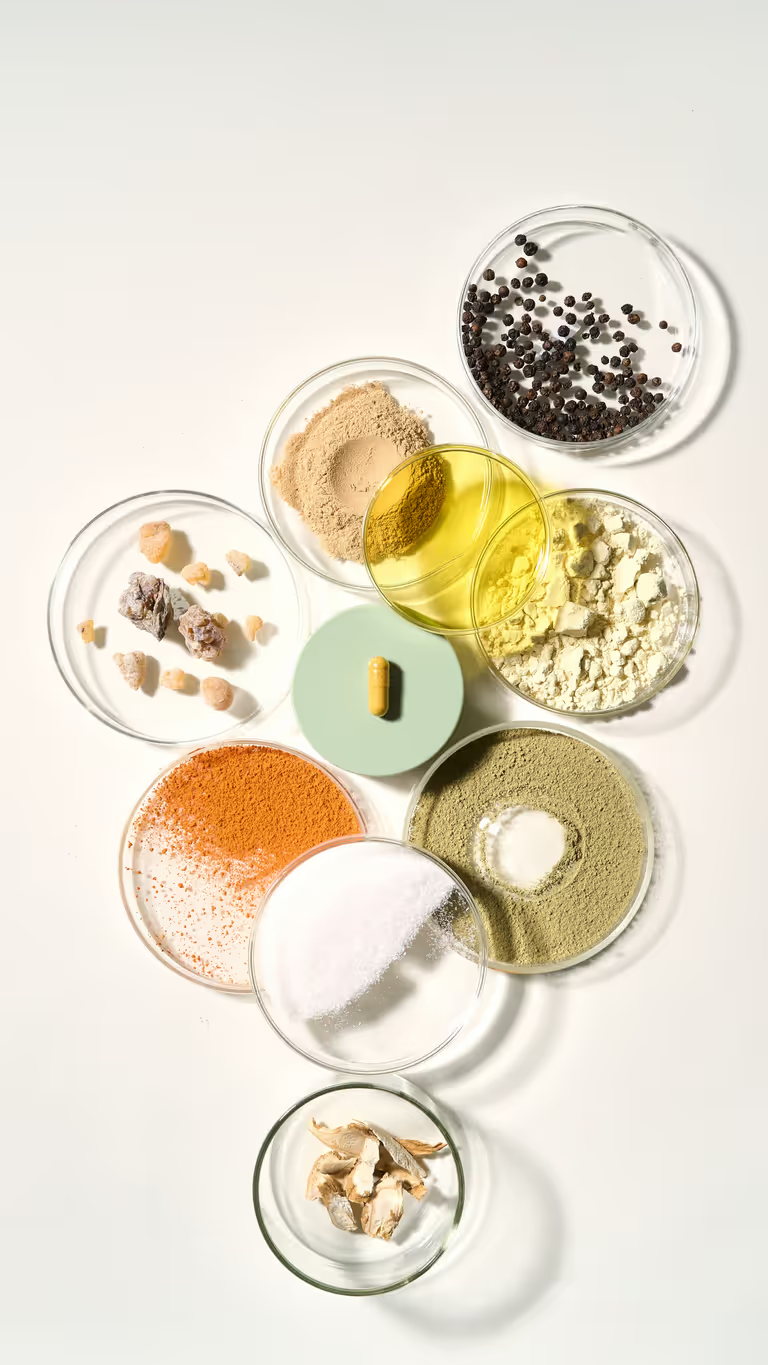
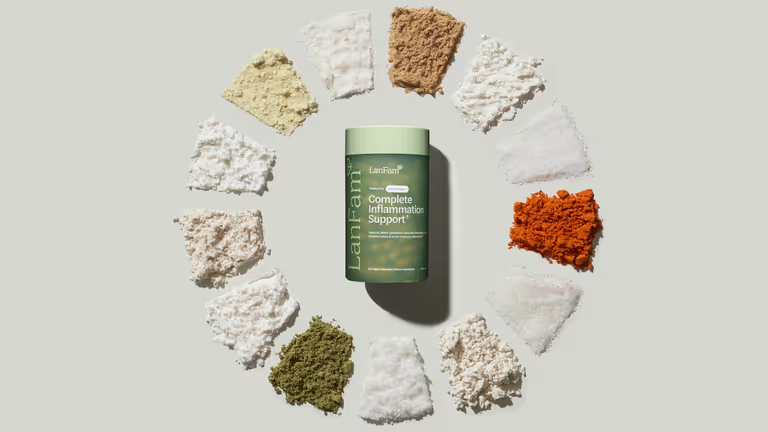
Ingredients in this letter
Oxidative stress and inflammation feed each other in a self-reinforcing loop. Oxidative stress is the imbalance between free radicals and the antioxidants your body uses to neutralize them. When free radicals build up, they switch on inflammatory signaling. That inflammation then produces more free radicals, which deepen the oxidative stress, and the cycle keeps turning. Understanding this loop is the first step to interrupting it through diet, lifestyle, and antioxidant support.
What Oxidative Stress Actually Is
Start with the word "oxidation." It is the same chemical process that rusts metal and browns a cut apple. Inside your body, a controlled version of oxidation happens every second as your cells burn fuel for energy.
The byproducts of that process are free radicals: molecules missing an electron. To become stable, a free radical grabs an electron from a neighboring molecule, which turns that neighbor into a new free radical. The chain reaction continues.
The most common free radicals are called reactive oxygen species (ROS). According to a review in [1], ROS come from both internal sources, such as the mitochondria that power your cells, and external ones, such as pollution, tobacco smoke, alcohol, and ultraviolet light. The same review notes that mitochondrial energy production is the main internal source of free radicals.
Your body is not defenseless. It runs a built-in antioxidant system, including enzymes with names like superoxide dismutase, catalase, and glutathione peroxidase. A review in [2] describes how these enzymes convert dangerous free radicals into harmless water and oxygen.
Oxidative stress is what happens when this balance tips. Free radical production outpaces your antioxidant defenses, and the surplus radicals start damaging proteins, fats, and DNA. A small amount of ROS is normal and even useful for cell signaling. The problem is excess.
What Inflammation Actually Is
Inflammation is your immune system's response to a threat. When you cut your finger or fight an infection, immune cells rush to the site, release signaling chemicals, and clear the damage. That is acute inflammation, and it is supposed to switch off once the job is done. (We cover the distinction in depth in our guide to acute vs. chronic inflammation.)
Chronic inflammation is different. The switch stays partly on. Low-grade inflammatory signaling continues in the background for months or years, even without an obvious injury. This is the kind of inflammation many women over 40 quietly manage, and it shows up as stiffness, fatigue, and reduced comfort and mobility. Our companion post on what causes inflammation in the body walks through the common drivers.
Here is the connection that ties this whole article together. Oxidative stress is one of the engines that keeps chronic inflammation running. And inflammation, in turn, is one of the biggest producers of oxidative stress. They are not separate problems. They are two halves of the same loop.
The Vicious Cycle: How They Feed Each Other
This is the heart of the topic, so let's slow down and make the mechanism plain.
A review in [3] describes how oxidative stress and inflammation form a vicious cycle through positive feedback. Oxidative stress kicks off inflammatory signaling, and the resulting inflammation drives even more free radical production. Each side amplifies the other.
The classic review [4] puts it directly: high concentrations of reactive species activate signaling pathways and create vicious cycles that keep proinflammatory chemicals flowing.
The molecular switch at the center
If you want one mechanism to remember, it is a protein called NF-kB. Think of NF-kB as a master light switch for inflammatory genes. When it is activated, it travels into the cell's nucleus and turns on the production of inflammatory signaling chemicals, including TNF-alpha and interleukins.
Free radicals help flip that switch. The review [5] traces how hydrogen peroxide, a common reactive oxygen species, can activate NF-kB. Once NF-kB is on, the inflammatory chemicals it produces recruit immune cells, and those immune cells release a burst of fresh free radicals to do their job.
Follow the loop:
- Free radicals build up (oxidative stress).
- They help activate NF-kB, the inflammatory master switch.
- NF-kB turns on inflammatory genes, releasing signaling chemicals.
- Immune cells respond and release more free radicals.
- Back to step one, with the loop now running on its own momentum.
A review of [6] describes how this kind of self-perpetuating crosstalk drives ongoing inflammatory and immune responses. The takeaway is hopeful, though. A loop has more than one place to interrupt it.
Antioxidants: The Counterweight
If free radicals push the cycle forward, antioxidants are the brake. An antioxidant is any molecule that can safely donate an electron to a free radical, neutralizing it without becoming destructive itself. That stops the chain reaction.
Your body uses two sources of antioxidants:
| Source | Examples | Role |
|--------|----------|------|
| Made by your body | Superoxide dismutase, catalase, glutathione | First line of defense; convert free radicals to harmless molecules |
| From your diet | Vitamin C, vitamin E, polyphenols, carotenoids | Reinforcements that support and spare the body's own system |
The NIH reference [7] explains that dietary antioxidants help neutralize reactive molecules before they can cause damage. A review on [8] documents how plant compounds, including flavonoids and catechins, exert antioxidant action against ROS.
This is why a plate full of colorful plants matters. A study on [9] found that diets rich in produce are associated with lower markers of both inflammation and oxidative damage. Food is the foundation. No capsule replaces it. Our roundup of the best vitamins for inflammation covers the dietary nutrients with the strongest research behind them.
How Antioxidant Botanicals May Support the Balance
Beyond everyday vitamins, several plant compounds have been studied for their antioxidant and inflammatory-balance effects. These are the compounds at the center of ProleevaMax's design, so it is worth understanding the mechanisms in plain terms.
Boswellia (Indian Frankincense)
The boswellic acids in Boswellia serrata are among the most studied botanical compounds for inflammatory balance. A mechanistic review, [10], documents that boswellic acids inhibit an enzyme called 5-lipoxygenase, a key step in one inflammatory pathway. A more recent review on [11] notes that their actions span several signaling pathways, including NF-kB, and that the extract helps counteract free radicals. The Boswellia in ProleevaMax is standardized to 65% boswellic acids, the fraction the research focuses on.
Matcha and its EGCG
Matcha is concentrated green tea, rich in a polyphenol called EGCG. The review [12] describes how EGCG scavenges reactive oxygen species and helps activate Nrf2, a pathway that switches on your body's own antioxidant enzymes. In other words, EGCG works on both sides of the equation: it neutralizes free radicals directly and helps your cells build their own defenses. A review on the [13] confirms its catechin antioxidant activity. Matcha also supplies L-theanine, an amino acid studied for a calm, steady focus.
Resveratrol
Resveratrol is the polyphenol found in grape skins. A review on its [14] describes how resveratrol activates SIRT1, which in turn suppresses NF-kB signaling, the same master switch we discussed above. A broad review of [15] documents its work across antioxidant pathways including Nrf2.
Turmeric
Turmeric is a well-known antioxidant spice. A study on the [16], the studied compound in turmeric, describes how it scavenges intracellular reactive oxygen species, including hydrogen peroxide, hydroxyl, and peroxyl radicals. The turmeric in ProleevaMax is a whole-root extract, not a standardized curcumin isolate, so it delivers the root's broader profile of compounds.
ProleevaMax pairs these botanicals with a distinctive amino acid duo, L-glutamine and L-serine, along with GABA, 5-HTP, Asian Ginseng, L-arginine, Vitamin B6, choline, and black pepper to support absorption. The design idea is simple: oxidative stress and inflammation are a multi-pathway loop, so the formula touches more than one pathway instead of betting on a single ingredient.
What This Approach Will Not Do
Honesty builds trust, so here are the limits.
- No supplement breaks the cycle on its own. Diet, sleep, movement, and stress management do the heavy lifting. A formula supports that foundation; it does not replace it.
- ProleevaMax does not contain omega-3s, vitamin D, magnesium, quercetin, CoQ10, or probiotics. Each of those has its own antioxidant or inflammatory-balance research, and they can be valuable. ProleevaMax is built around standardized botanicals and amino acids instead, by design, to support more than one pathway in a single formula. If your goal is omega-3 intake, eat fish or take a fish oil; the two approaches complement each other.
- More antioxidants is not always better. Your body uses a small amount of free radicals for normal signaling. Mega-dosing isolated antioxidants has not consistently outperformed a varied, whole-food diet in research. Balance is the goal, not elimination.
- Results take time. Cellular balance shifts gradually. This is why ProleevaMax is built around a 90-Day Protocol instead of an overnight promise.
This product is intended to support a healthy inflammatory response. It is not intended to diagnose, treat, cure, or prevent any disease, and it cannot do so.
NF-kB: The Master Inflammation Switch
We mentioned NF-kB above, but it deserves its own moment, because if you understand one protein in this whole story, make it this one.
NF-kB is a family of proteins that act as a transcription factor. In plain terms, it is a master switch that decides whether inflammatory genes turn on. While the switch is off, NF-kB sits quietly in the cell, held back by a partner protein. When a signal arrives, that partner lets go, and NF-kB moves into the cell's nucleus and starts the production of inflammatory signaling chemicals such as cytokines. A review in [17] describes NF-kB as a central regulator of inflammation that turns on a long list of pro-inflammatory genes.
Here is where oxidative stress comes in. Reactive oxygen species are one of the signals that can flip this switch. A review in [18] describes how free radicals interfere with the controls on the NF-kB pathway, which can keep the switch active longer than it should be. That is the molecular reason oxidative stress and inflammation feed each other: free radicals help hold the master switch on, and the inflammation that follows produces more free radicals.
The hopeful part is the same as before. A switch can be turned down. Several of the antioxidant botanicals studied for inflammatory balance act, in part, on NF-kB signaling.
These statements have not been evaluated by the Food and Drug Administration. This product is not intended to diagnose, treat, cure, or prevent any disease.
Support Your Body's Balance With ProleevaMax
Oxidative stress and inflammation feed each other, but a loop can be interrupted in more than one place. The foundation is a varied, antioxidant-rich diet, steady movement, and good sleep. Complete Inflammation Support (Powered by ProleevaMax®) is built to support that foundation, with standardized antioxidant botanicals and amino acids designed to support a healthy inflammatory response across more than one pathway.
- See the full formula on our ingredients page.
- Read the research behind the design on our science page.
- Learn the mechanism step by step at how it works.
ProleevaMax is built around a 90-Day Protocol, with checkpoints at Week 2, Week 4, Week 8, and Day 90, because cellular balance shifts over time, not overnight. Every order is backed by our 90-day money-back guarantee, so you can follow the full protocol and decide based on your own experience.
Keep reading: what causes inflammation in the body, acute vs. chronic inflammation, and the best vitamins for inflammation.

References
- 2.Free Radicals: Properties, Sources, Targets, and Their Implication in Various Diseases. https://pmc.ncbi.nlm.nih.gov/articles/PMC4310837/
- 3.Reactive Oxygen Species: Role in Pathophysiology, and Mechanism of Endogenous and Dietary Antioxidants during Oxidative Stress. https://pmc.ncbi.nlm.nih.gov/articles/PMC11821989/
- 4.Exploring the Interplay of Antioxidants, Inflammation, and Oxidative Stress. https://pmc.ncbi.nlm.nih.gov/articles/PMC12469104/
- 5.The role of oxidative stress during inflammatory processes. https://pubmed.ncbi.nlm.nih.gov/24127541/
- 6.NF-kappaB activation by reactive oxygen species: fifteen years later. https://pubmed.ncbi.nlm.nih.gov/16723122/
- 7.Dysregulated redox signaling. https://pubmed.ncbi.nlm.nih.gov/41300435/
- 8.Vitamin C, Vitamin E, Selenium, and Carotenoids: Overview and Antioxidant Definition. https://www.ncbi.nlm.nih.gov/books/NBK225471/
- 9.Dietary polyphenols and oxidative stress. https://www.ncbi.nlm.nih.gov/pmc/articles/PMC8882865/
- 10.Fruit and vegetable consumption and markers of inflammation and oxidative stress. https://pmc.ncbi.nlm.nih.gov/articles/PMC2676354/
- 11.Boswellia serrata, A Potential Anti-inflammatory Agent: An Overview. https://pmc.ncbi.nlm.nih.gov/articles/PMC3309643/
- 12.Boswellic acids in anti-inflammatory therapy. https://pmc.ncbi.nlm.nih.gov/articles/PMC12669112/
- 13.Modulation of Nrf2-mediated antioxidant enzyme induction by EGCG. https://pubmed.ncbi.nlm.nih.gov/18082923/
- 14.Antioxidant properties of matcha green tea. https://pmc.ncbi.nlm.nih.gov/articles/PMC7231151/
- 15.Vasoprotective and SIRT1-related effects. https://ncbi.nlm.nih.gov/pmc/articles/PMC2551743
- 16.Resveratrol's biological activity. https://www.ncbi.nlm.nih.gov/pmc/articles/PMC12845197/
- 17.Free radical-scavenging activity of curcumin. https://www.ncbi.nlm.nih.gov/pmc/articles/PMC3189944/
- 18.NF-kB signaling in inflammation. https://www.nature.com/articles/sigtrans201723
- 19.Crosstalk of reactive oxygen species and NF-kB signaling. https://www.nature.com/articles/cr2010178
Frequently asked questions
There's a seat at our table
Letters from our family to yours — the science, the recipes, the things that actually helped real families. Leave your email and we'll send the next one.