What Is AKBA, and Why Boswellia Standardization Matters
AKBA is the boswellic acid that matters most in Boswellia serrata. What it does, why standardization percentages exist, and how to read a label properly.
Ingredients in this letter
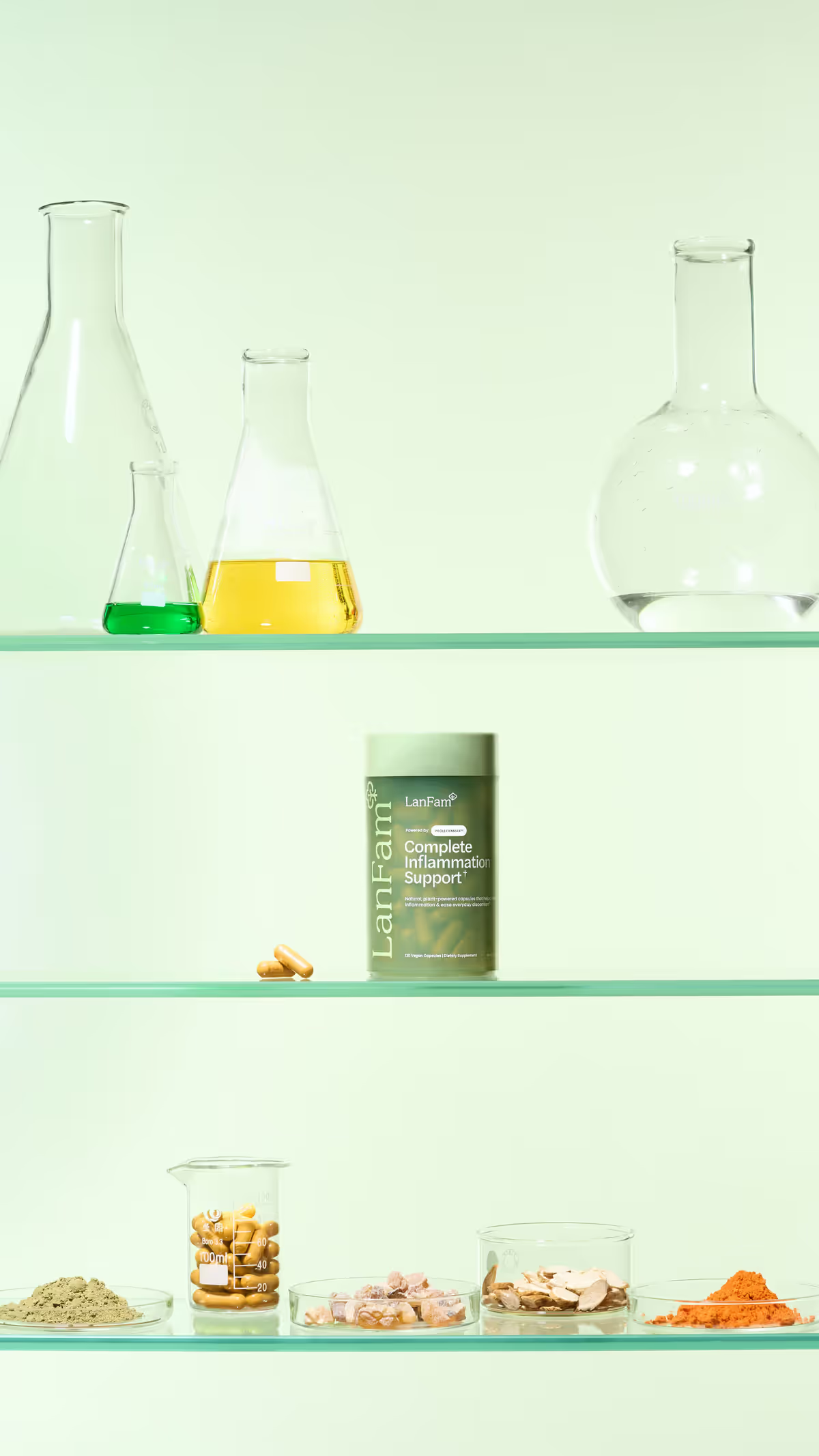
AKBA, acetyl-11-keto-β-boswellic acid, is the boswellic acid most associated with Boswellia serrata's activity on inflammatory signaling. It is why serious boswellia supplements state a standardization percentage on the label: without one, the active content of the extract is unknown.
Why raw botanical weight is a poor guide
Frankincense resin is a natural product. Its composition varies by species, growing conditions, harvest and processing, so the proportion of boswellic acids in raw resin is not fixed.
That means "500mg of boswellia" can describe two capsules with meaningfully different active content. The number tells you how much plant material went in, not how much of the compound doing the work came out.
Standardization solves this. An extract standardized to 65% boswellic acids has been processed so the active fraction is a guaranteed proportion of the total. Now the milligrams mean something.
The hierarchy: boswellic acids, then AKBA
"Boswellic acids" is a family of related compounds, not a single one. AKBA is the member most consistently discussed in the research literature on inflammatory signaling. So you will encounter two different standardization claims:
| Claim on label | What it measures | How to read it |
|---|---|---|
| Standardized to X% boswellic acids | The whole family | Common benchmark is 65% |
| Standardized to X% AKBA | One specific compound | A much lower number here can mean more AKBA than a high total-acid figure |
| No percentage stated | Nothing | Weight of plant material only |
These are not interchangeable, and the percentages are not comparable. A high total-boswellic-acid figure with a low AKBA fraction is a different product from the reverse. When you see a high percentage advertised, check which of the two is being measured.
What the AKBA evidence actually shows
AKBA's activity is best characterised in enzymology, not in people. Safayhi, Sailer and Ammon (1996, Phytomedicine) found that AKBA acts directly on purified 5-lipoxygenase from human blood leukocytes — an enzyme in the inflammatory signalling cascade — binding at a site specific to pentacyclic triterpenes that is separate from where the enzyme's normal substrate binds. A companion paper from the same group (Sailer et al., 1996, British Journal of Pharmacology) identified which structural features of the molecule that binding depends on.
What that establishes: a mechanism, in purified enzyme and cell systems. What it does not establish: that a given oral dose reproduces that effect in a person, or that it produces any clinical outcome.
The human evidence specific to AKBA comes largely from one branded extract. A 90-day randomised, double-blind, placebo-controlled trial of 5-Loxin® — a Boswellia serrata extract enriched to 30% AKBA — enrolled 75 adults with knee osteoarthritis, of whom 70 completed, and reported improvements in pain and physical function at 100mg and 250mg daily against placebo (Sengupta et al., 2008).
Read that trial with its funding in view. It was funded by Laila Impex, the company that manufactures 5-Loxin, and several of the authors were employees of or consultants to that company. That does not make the result wrong. It does mean it is a manufacturer's trial of the manufacturer's own ingredient, which is common in this category and rarely mentioned when the figure is quoted on a product page. It also tested that extract at that AKBA concentration in that condition — it is not evidence about boswellia in general, and not evidence about any finished multi-ingredient product.
Two worked examples, with the arithmetic
The percentages only mean something once you do the multiplication. Two labels, both plausible, both 400mg:
Label A: "Boswellia serrata extract 400mg, standardized to 65% boswellic acids" 400 × 0.65 = 260mg of boswellic acids, of which AKBA is one member of the family. The AKBA fraction is not stated.
Label B: "Boswellia serrata extract 400mg, standardized to 10% AKBA" 400 × 0.10 = 40mg of AKBA, specifically.
Neither is straightforwardly better and they are not comparable side by side. Label A gives you more total boswellic acids and tells you nothing about the AKBA fraction. Label B gives you a smaller, precisely-specified amount of the single most-discussed compound. A label offering both numbers is the most informative of all, and is also the rarest. The wider question of what standardization buys you is covered in standardized extract vs whole herb.
Label C: "Proprietary Joint Blend 1,200mg (Boswellia, Turmeric, Ginger)" No arithmetic is possible. That is the point of the format.
How to read a boswellia label in four steps
- Is there a standardization percentage at all? If not, stop here.
- Boswellic acids or AKBA specifically? Both are legitimate. Know which you are comparing.
- Is the dose disclosed, or inside a blend? A proprietary blend gives the total weight of several ingredients and the amount of none of them.
- What else is in the formula? Boswellia acts on inflammatory signaling. It does nothing for absorption, oxidative load, or nervous-system regulation.
That last point is the one most often missed. A well-standardized boswellia extract acts on inflammatory signalling and not on the other things a formula might address — which is the reasoning behind the six areas we formulate against, set out on the ingredient pages. Whether covering more of them produces a better result than a well-dosed single ingredient is not something we have tested.
Applying that to ourselves. The ProleevaMax label declares a Proprietary Blend of 2,401 mg across eleven actives, with only Vitamin B6 and Choline listed individually. The standardization percentages are stated, so you know how concentrated each extract is, but not how much of it you are getting — that needs the individual milligrams, and those are not published. So the test above applies to us too, and we would rather say so here than have you find it on the bottle. Papivida, our second formula, discloses all twelve nutrients individually.
And on this article's own subject. We standardize to 65% total boswellic acids. That makes our label Label A in the worked example above: it tells you the boswellic acid fraction and it does not state the AKBA fraction, because total-boswellic-acid standardization does not measure it. If AKBA specifically is what you are shopping for, an AKBA-standardized extract tells you something ours does not.
What's in Complete Inflammation Support
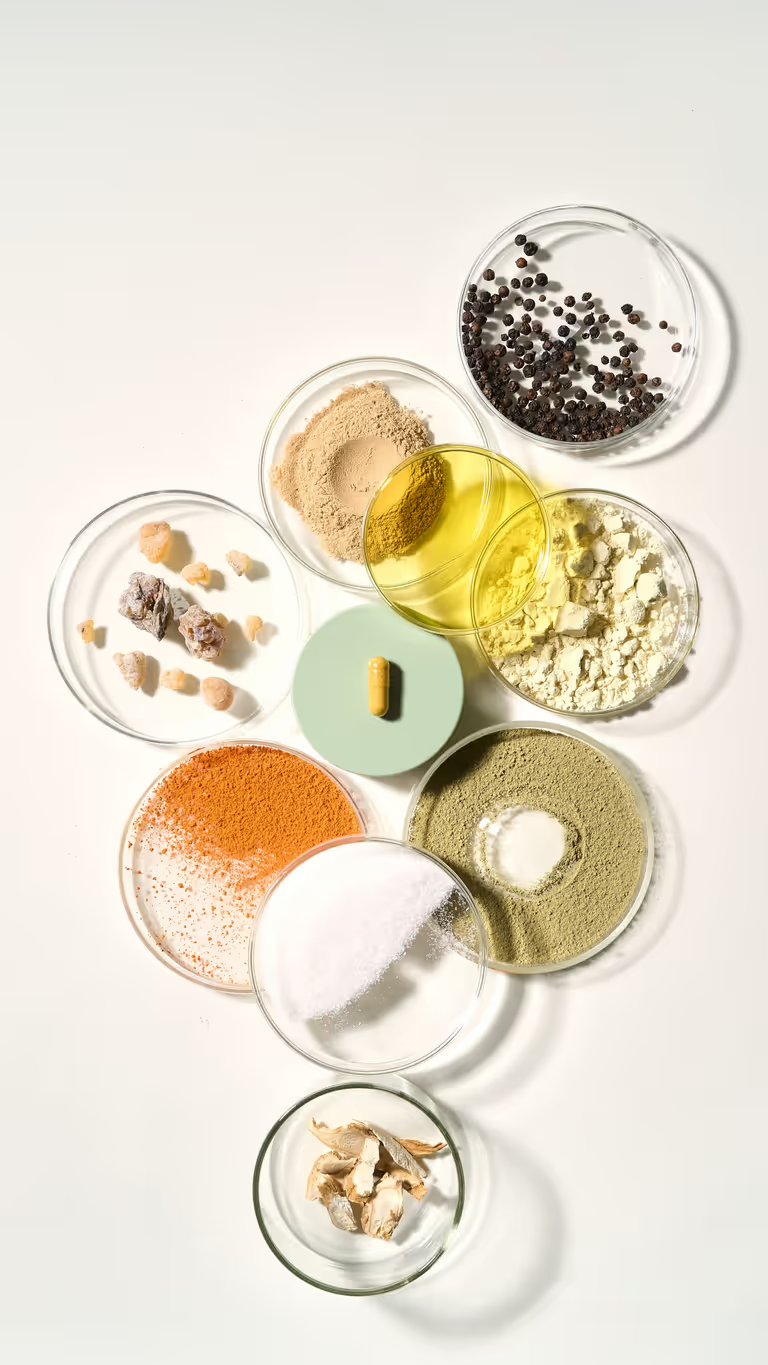
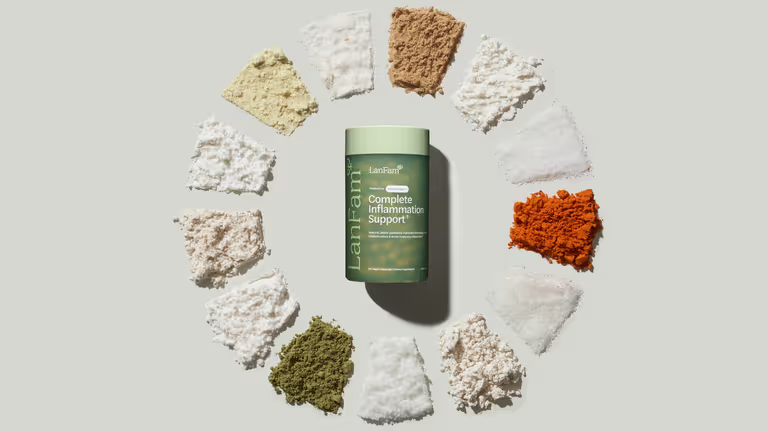
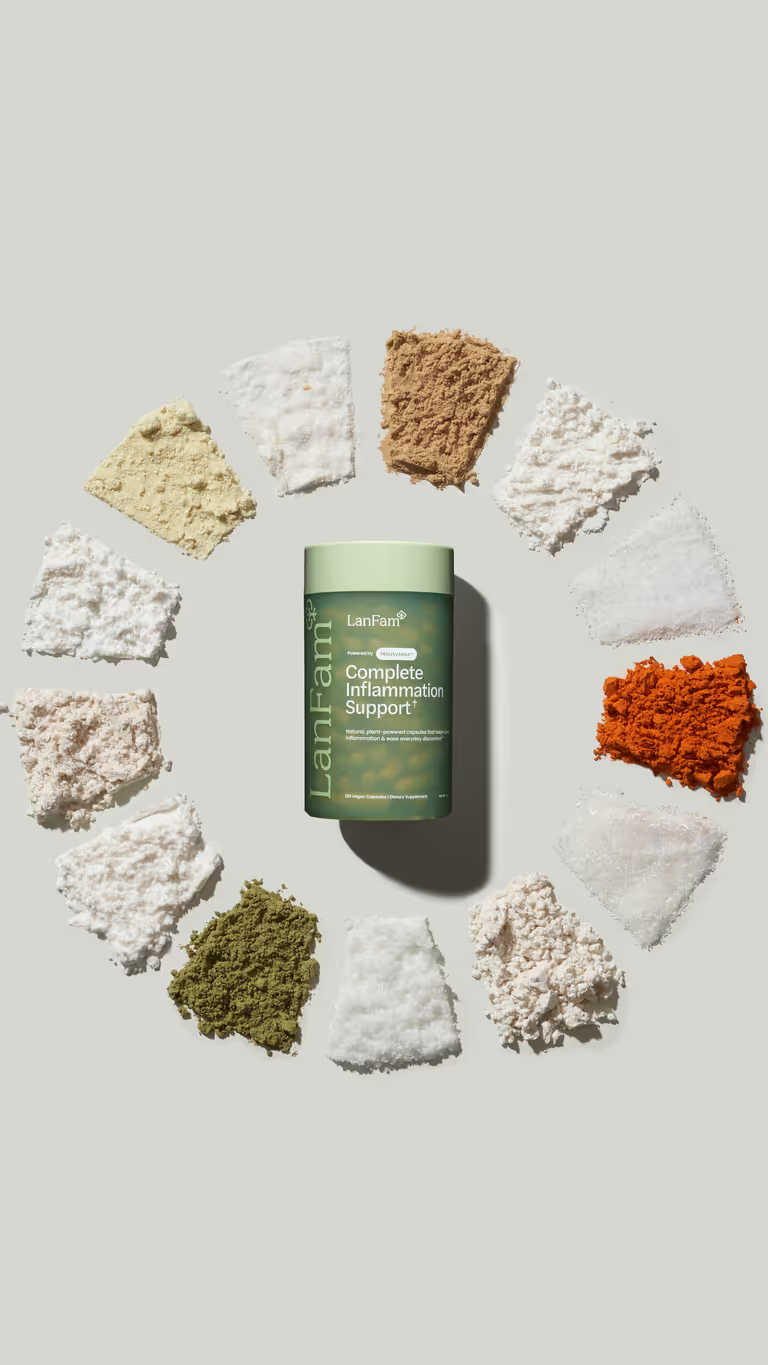
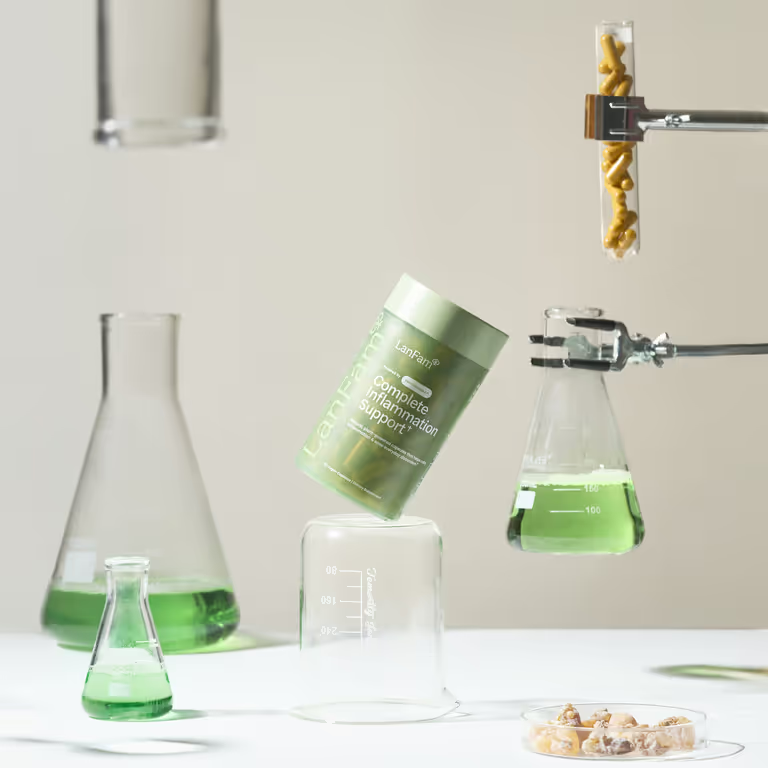
Complete Inflammation Support (Powered by ProleevaMax®) uses Indian Frankincense standardized to 65% boswellic acids.
It sits alongside twelve other actives, turmeric and black pepper extract for signaling and absorption, resveratrol and matcha for oxidative load, and a set of amino acids aimed at the nervous-system side. The boswellia does one job well; the formula's argument is what surrounds it.
Frequently asked questions
There's a seat at our table
Letters from our family to yours — the science, the recipes, the things that actually helped real families. Leave your email and we'll send the next one.