Ashwagandha vs Ginseng: Which Adaptogen for Stress and Inflammation?
Ashwagandha vs ginseng for stress and inflammation: how each adaptogen works, who each one suits, and where ginseng fits a multi-pathway formula.
Ingredients in this letter
When you compare ashwagandha vs ginseng, the honest answer is that they are not interchangeable. Ashwagandha is studied mostly for calming the stress response and lowering cortisol, while Panax ginseng is studied for energy, focus, and a measured anti-inflammatory effect. If your main struggle is wired-but-tired stress, ashwagandha leans one way. If you want steady energy plus inflammation support, ginseng leans the other. The right pick depends on what your body is actually doing, not on which herb is trending.
What "adaptogen" actually means
The word gets used loosely, so let's be precise. An adaptogen is a plant compound that helps your body steady its response to stress instead of pushing it in one fixed direction. The leading theory is that adaptogens work through the hypothalamic-pituitary-adrenal (HPA) axis — the command line that runs your stress hormones, including cortisol — and help bring it back toward balance.
That balance matters for more than mood. The HPA axis sits at the crossroads of stress, immunity, and inflammation. So when we talk about adaptogens for stress, we are also, indirectly, talking about adaptogens and your inflammatory response.
Ashwagandha and ginseng are two of the most-studied adaptogens. They share that "steadying" role. They do not share the same job.
Ashwagandha: the calming adaptogen
Ashwagandha is a root used for centuries in Ayurvedic practice. Modern research has focused on one thing above all: stress.
What the research documents
A systematic review and meta-analysis of randomized controlled trials found that ashwagandha had a significant effect on perceived stress, anxiety scores, and serum cortisol compared with placebo [1]. A separate randomized, double-blind, placebo-controlled study reported greater reductions in morning cortisol with ashwagandha than with placebo [2].
The proposed mechanism is moderation of the HPA axis. A comprehensive review of ashwagandha as an adaptogen describes its compounds modulating the HPA axis, influencing GABA signaling, and affecting inflammatory pathways such as NF-κB [3]. In plain terms: it may help turn down the volume on a stress response that is stuck on high.
Who ashwagandha tends to suit
- People whose main complaint is feeling "wired but tired."
- People with elevated perceived stress and disrupted sleep.
- People looking for a single-purpose calming adaptogen.
Asian Ginseng: the energizing, inflammation-aware adaptogen
Panax ginseng — Asian or Korean ginseng — is the other heavyweight. Its active compounds are called ginsenosides, and they point its effects in a different direction: energy, clarity, and inflammation.
What the research documents
On the inflammation side, a review of ginsenosides as anti-inflammatory agents describes them modulating NF-κB signaling, a master switch for inflammatory gene expression [4]. A separate review on the pro-resolving effects of ginsenosides documents specific ginsenosides nudging immune cells toward an inflammation-resolving (M2) state and lowering pro-inflammatory cytokines such as TNF-alpha, IL-1-beta, and IL-6 [5].
On the energy side, an open-label study of a standardized Panax ginseng root extract reported a reduction in self-perceived general fatigue over 90 days, with improvements in both mental and physical fatigue ratings [6]. A randomized, double-blind, placebo-controlled trial also documented cognition-supporting effects in adults with mild cognitive impairment [7].
Who Asian Ginseng tends to suit
- People who want steady energy and focus without a caffeine spike.
- People interested in an adaptogen that also supports a healthy inflammatory response.
- People building a multi-ingredient routine rather than relying on one herb.
Ashwagandha vs ginseng: a head-to-head
| | Ashwagandha | Asian Ginseng (Panax ginseng) |
|---|---|---|
| Primary research focus | Stress, cortisol, sleep | Energy, focus, inflammation |
| Typical felt effect | Calming, grounding | Energizing, clarifying |
| Main active compounds | Withanolides | Ginsenosides |
| Inflammation evidence | Indirect (via NF-κB, stress) | Direct ginsenoside activity |
| Best for | Wired-but-tired stress | Low-energy days, inflammation support |
| In ProleevaMax? | No | Yes |
Read the table as a starting point, not a verdict. Neither herb is "better." They answer different questions.
Why stress matters for inflammation
If your goal is inflammation support, you might wonder why the stress conversation belongs here at all. The link is real and documented.
In the short term, cortisol can dial inflammation up or down depending on context. Under chronic stress, the picture shifts. A review on the immunology of stress explains that prolonged high cortisol can lead to glucocorticoid receptor resistance, blunting cortisol's normal calming effect on the immune system and tilting the body toward a pro-inflammatory state [8]. Another review on inflammatory cytokines in prolonged stress describes chronic stress sustaining low-grade systemic inflammation [9].
The practical takeaway: a stress response stuck on high can keep your inflammatory response stuck on high, too. That is why an inflammation strategy that ignores the nervous system is only doing half the job.
Where ProleevaMax lands — and the honest part
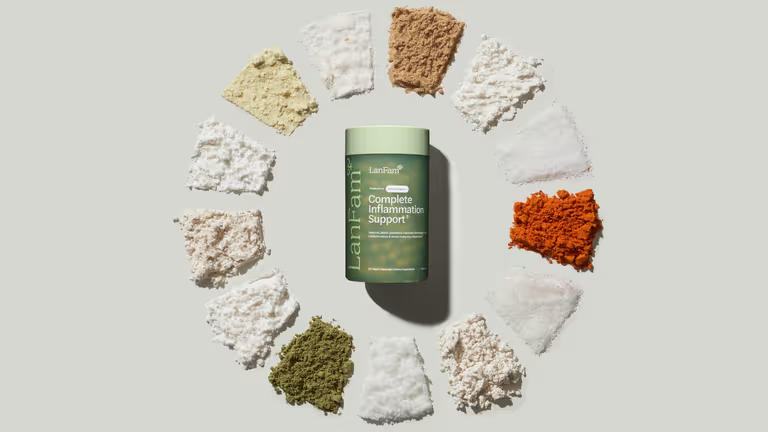
Let's be direct, because you deserve it. Complete Inflammation Support (Powered by ProleevaMax®) contains Asian Ginseng. It does not contain ashwagandha.
That is a deliberate design choice, not an oversight. ProleevaMax is built as a multi-pathway formula rather than a single-herb pill. Ginseng's ginsenosides fit a blend aimed at both inflammatory balance and nervous-system resilience. Ashwagandha is a strong standalone calming adaptogen, but it was not the building block this formula was designed around.
The multi-pathway design, in plain language
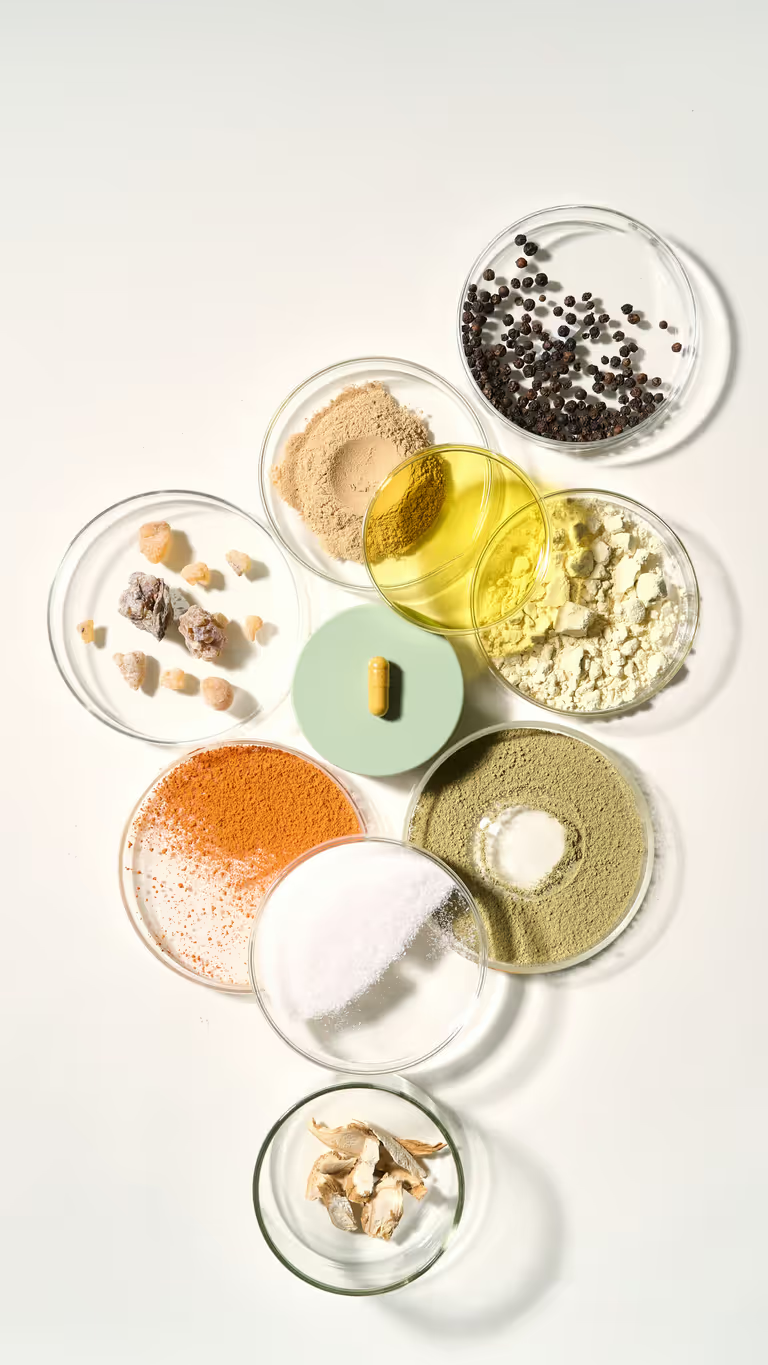
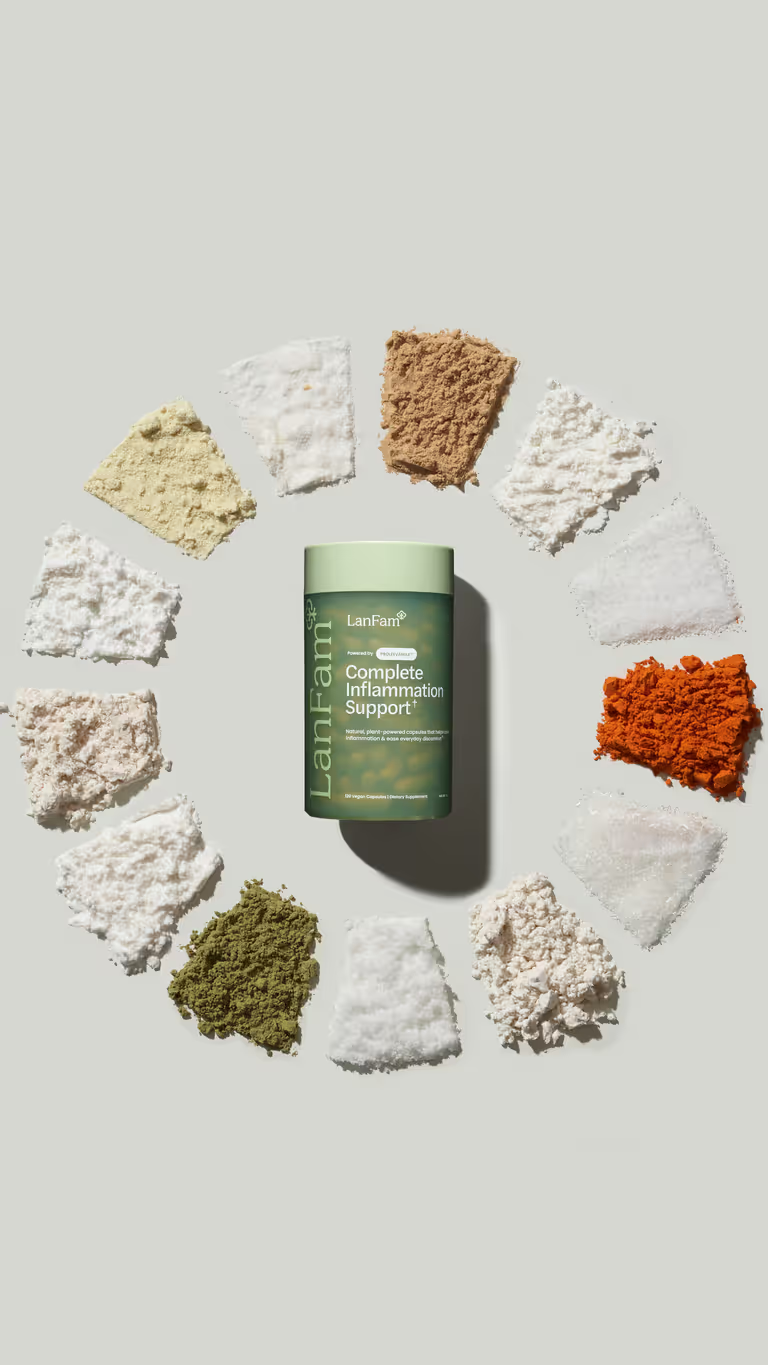
ProleevaMax brings together thirteen standardized ingredients working on two fronts at once:
- Inflammatory-balance pathway. Boswellia (Indian Frankincense) is standardized to 65% boswellic acids — the fraction that includes AKBA, a documented inhibitor of 5-lipoxygenase, an enzyme in the inflammatory cascade [10]. It is joined by whole-root Turmeric extract, Resveratrol, and Black Pepper (piperine) to round out botanical support.
- Nervous-system-resilience pathway. This is the part most inflammation products skip. ProleevaMax pairs L-Glutamine and L-Serine — amino acids chosen for nervous-system resilience — with Matcha (a natural source of EGCG and L-theanine), GABA, 5-HTP, Asian Ginseng, L-Arginine, Vitamin B6, and Choline. On the calming side, an anti-stress trial of an L-theanine drink documented a reduced subjective stress response and lower salivary cortisol after a stressor [11].
A quick honesty note on Turmeric: ProleevaMax uses a whole-root turmeric extract, not an isolated, standardized curcumin dose. It contributes to the blend's botanical foundation, but you should not read it as a high-dose curcumin product.
So if you are comparing ashwagandha vs ginseng and asking "which one is in my inflammation formula," the answer for ProleevaMax is ginseng — sitting inside a thirteen-ingredient design, not standing alone.
What it won't do
Honesty builds trust, so here are the limits.
- Neither herb is a drug. Ashwagandha and ginseng support a healthy inflammatory response and a steadier stress response. They do not treat, cure, or prevent any disease.
- ProleevaMax does not contain ashwagandha. If a clinician recommended ashwagandha specifically, ProleevaMax is not a substitute for it.
- It also does not contain CoQ10, omega-3, vitamin D, magnesium, quercetin, probiotics, or ginger. Those are worth understanding as categories, but ProleevaMax's strategy is multi-pathway design rather than a long ingredient checklist. (Ginger appears in many recipes as a spice — it is not a ProleevaMax ingredient.)
- Adaptogens are not instant. Felt changes build over weeks. That is exactly why ProleevaMax is structured around a 90-Day Protocol rather than a one-week trial.
- Some people should not take ashwagandha at all. Per NCCIH guidance, ashwagandha should be avoided in pregnancy and breastfeeding, used with caution in thyroid or autoimmune conditions, and discussed with a clinician if you take medications, because rare cases of liver injury have been reported [12]. Always talk to your healthcare provider before starting any new supplement.
Find your fit with ProleevaMax
If your inflammation strategy has been ignoring the stress-and-nervous-system side of the equation, that is the gap Complete Inflammation Support (Powered by ProleevaMax®) was designed to close — with Asian Ginseng inside a thirteen-ingredient, multi-pathway blend.
- See the full formula and rationale on the ProleevaMax product page.
- Review every standardized ingredient, including Boswellia at 65% boswellic acids, on the ingredients page.
- Read the research behind the multi-pathway design on the science page.
- Understand the daily routine on the how it works page.
Keep comparing your options:
- The Best Vitamins for Inflammation
- CoQ10 and Inflammation: What the Research Says
- AG1 Alternatives Worth Considering
Every bottle is backed by our 90-day money-back guarantee — the same length as the 90-Day Protocol, so you have the full window to take the pause test and decide for yourself.
These statements have not been evaluated by the Food and Drug Administration. This product is not intended to diagnose, treat, cure, or prevent any disease.

References
- 2.Arumugam V, Vijayakumar V, Balakrishnan A, Bhandari RB, Boopalan D, Ponnurangam R, Thirupathy VS, Kuppusamy M. Effects of Ashwagandha (Withania Somnifera) on stress and anxiety: A systematic review and meta-analysis. Explore (NY). 2024. https://doi.org/10.1016/j.explore.2024.103062
- 3.Lopresti AL, Smith SJ, Malvi H, Kodgule R. An investigation into the stress-relieving and pharmacological actions of an ashwagandha (Withania somnifera) extract: A randomized, double-blind, placebo-controlled study. Medicine (Baltimore). 2019. https://doi.org/10.1097/MD.0000000000017186
- 4.Jamnekar PP, Dehankar TJ, Bedre RV, Dharan BG, Agravat B, Agravat H. Ashwagandha as an Adaptogenic Herb: A Comprehensive Review of Immunological and Neurological Effects. Cureus. 2025. https://doi.org/10.7759/cureus.96183
- 5.Jang WY, Hwang JY, Cho JY. Ginsenosides from Panax ginseng as Key Modulators of NF-κB Signaling Are Powerful Anti-Inflammatory and Anticancer Agents. International Journal of Molecular Sciences. 2023. https://doi.org/10.3390/ijms24076119
- 6.Im DS. Pro-Resolving Effect of Ginsenosides as an Anti-Inflammatory Mechanism of Panax ginseng. Biomolecules. 2020. https://doi.org/10.3390/biom10030444
- 7.Tardy AL, Bois De Fer B, Cañigueral S, Kennedy D, Scholey A, Hitier S, Aran A, Pouteau E. Reduced Self-Perception of Fatigue after Intake of Panax ginseng Root Extract (G115®) Formulated with Vitamins and Minerals-An Open-Label Study. International Journal of Environmental Research and Public Health. 2021. https://doi.org/10.3390/ijerph18126257
- 8.Park KC, Jin H, Zheng R, Kim S, Lee SE, Kim BH, Yim SV. Cognition enhancing effect of panax ginseng in Korean volunteers with mild cognitive impairment: a randomized, double-blind, placebo-controlled clinical trial. Translational and Clinical Pharmacology. 2019. https://doi.org/10.12793/tcp.2019.27.3.92
- 9.Alotiby A. Immunology of Stress: A Review Article. Journal of Clinical Medicine. 2024. https://doi.org/10.3390/jcm13216394
- 10.Tian R, Hou G, Li D, Yuan TF. A Possible Change Process of Inflammatory Cytokines in the Prolonged Chronic Stress and Its Ultimate Implications for Health. The Scientific World Journal. 2014. https://doi.org/10.1155/2014/780616
- 11.Yu G, Xiang W, Zhang T, Zeng L, Yang K, Li J. Effectiveness of Boswellia and Boswellia extract for osteoarthritis patients: a systematic review and meta-analysis. BMC Complementary Medicine and Therapies. 2020. https://doi.org/10.1186/s12906-020-02985-6
- 12.White DJ, de Klerk S, Woods W, Gondalia S, Noonan C, Scholey AB. Anti-Stress, Behavioural and Magnetoencephalography Effects of an l-Theanine-Based Nutrient Drink: A Randomised, Double-Blind, Placebo-Controlled, Crossover Trial. Nutrients. 2016. https://doi.org/10.3390/nu8010053
- 13.National Center for Complementary and Integrative Health. Ashwagandha: Usefulness and Safety. https://www.nccih.nih.gov/health/ashwagandha
Frequently asked questions
There's a seat at our table
Letters from our family to yours — the science, the recipes, the things that actually helped real families. Leave your email and we'll send the next one.