The off-switch for inflammation — how your body resolves what it starts
Inflammation has two phases, not one. The resolution of acute inflammation is an active, programmed second wave governed by specialized pro-resolving mediators — resolvins, protectins, and maresins — derived from omega-3 fatty acids. Fabio Lanzieri explains the biology and what it means for what you eat.
Ingredients in this letter

A close friend of mine — someone I've known since before either of us had gray hair — came by a few months ago and asked me a question I hear often, but never quite get tired of. He'd been reading about inflammation. He'd seen the word on supplement bottles, in magazine features, on his doctor's discharge notes after a knee scope. He'd absorbed the usual picture: inflammation is bad, you suppress it, you feel better. Then he found something that puzzled him. A study reference — he couldn't remember where — about the body having something like an "off-switch." Was that real? Was it a marketing phrase?
I told him it was real, and that it was considerably more interesting than any off-switch. I told him that if anything, the off-switch framing gets it backwards — because resolution isn't a switch flipping to zero. It's a second wave. An active program. A coordinated biological response that the body has to mount just as deliberately as the first one.
He asked me to write it down. So here it is.
Inflammation has two phases, not one
Most of what you read about inflammation covers the first phase well. Something triggers the response — an injury, a pathogen, a chemical signal from damaged tissue. The body sends in the troops: blood vessels dilate, immune cells rush in, cytokines flood the area. That first-responder cascade is one of the most studied systems in biology, and I've written about how it unfolds step by step in an earlier letter.
But that letter stops where things get interesting. Because the acute response is designed to do its job and then clear the field. And the clearing of the field is not passive. It's not the inflammation just running out of steam. It's a second, coordinated biological program that has to be actively triggered, actively executed, and actively completed.
The distinction matters enormously. For decades, the dominant assumption was that inflammation resolves because the initial trigger fades and the response winds down on its own — a gradual return to baseline. Charles Serhan's lab at Harvard changed that picture. The research his group produced, particularly a landmark paper in Nature in 2014, showed that the resolution of acute inflammation is governed by a dedicated class of lipid mediators that are actively synthesized as the response progresses¹. These molecules don't just block the inflammatory signal — they send a different, counter-signal. They instruct the immune system to stop sending reinforcements, clear the debris, and stand down in an organized way.
The distinction in plain language: inflammation stopping is not the same as inflammation resolving. One is the absence of a signal; the other is the presence of a different, specific signal. And when that second signal doesn't get produced — or doesn't get produced in sufficient amounts — the system doesn't fully clear. It lingers.
What resolvins, protectins, and maresins are
The pro-resolving mediators Serhan's group characterized have names that reflect both their origin and their function. Resolvins — from "resolution." Protectins — from "protect." Maresins — from "macrophage mediators in resolving inflammation." Together with a related class called lipoxins, these molecules form what Serhan and Levy described in a 2018 review as the "pro-resolving superfamily"²: a set of bioactive lipids that actively govern the resolution program at every stage.
Here's what they do, specifically:
Resolvins act as stop signals for neutrophil recruitment. In the acute phase, neutrophils flood the inflamed site in large numbers — that's appropriate. But if they keep arriving after the immediate threat is handled, they start doing collateral damage. Resolvins cut off that recruitment. They also stimulate the clearance of dead neutrophils by macrophages — a process called efferocytosis — which is one of the key cleanup steps that has to happen before the tissue can begin to heal².
Protectins (also called neuroprotectins in neural tissue) work largely on the back end of the response. They suppress ongoing production of pro-inflammatory cytokines and support the structural repair of cell membranes. Headland and Norling, reviewing the principles of inflammation resolution in Seminars in Immunology in 2015, note that failure of the resolution program — not just excessive activation — is increasingly understood as a defining feature of chronic inflammatory conditions³.
Maresins — short for macrophage mediators in resolving inflammation — shift macrophages from an inflammatory phenotype to a tissue-repair phenotype. In the acute phase, macrophages help prosecute the immune response. But tissue repair requires them to switch roles: from demolition to reconstruction. Maresins facilitate that switch.
The three families are biochemically related. They're all derived from omega-3 fatty acids, primarily EPA (eicosapentaenoic acid) and DHA (docosahexaenoic acid), through enzymatic pathways involving 5-lipoxygenase, 12-lipoxygenase, and 15-lipoxygenase. The same raw material — EPA and DHA — can be metabolized toward either pro-inflammatory eicosanoids or pro-resolving mediators, depending on which enzyme pathways are active and what cofactors are available⁴.
Where these come from — the substrate problem
That last point is worth dwelling on because it's where nutrition enters the picture in a meaningful way.
The body can't synthesize EPA and DHA efficiently from scratch. It can convert ALA (the omega-3 found in flaxseed and walnuts) to EPA and then to DHA, but the conversion rate in adults is low — studies consistently show it's under 10% for EPA and under 1% for DHA, often far lower. The practical consequence is that the body's ability to produce resolvins, protectins, and maresins depends heavily on dietary EPA and DHA intake, or direct supplementation.
Calder's 2020 review of eicosanoid biology in Essays in Biochemistry lays out this substrate dependency in detail⁵. The same long-chain omega-3s that generate pro-inflammatory leukotrienes when metabolized via certain pathways generate the pro-resolving superfamily when the pathway runs differently — and the balance between those outcomes is meaningfully affected by the amount of EPA and DHA available. It isn't a clean either/or (the body is never that simple), but the substrate supply does shift the odds.
There's also a competition effect. The same enzymatic machinery that processes omega-3 fatty acids also processes omega-6 fatty acids — and the two compete. Arachidonic acid, the dominant omega-6 in the modern Western diet, feeds into pathways that generate pro-inflammatory prostaglandins and leukotrienes. When omega-6 availability is high and omega-3 availability is low, the pro-inflammatory branch has a substrate advantage. When the ratio shifts — more EPA/DHA in the pool — the resolution branch has more to work with⁵.
This isn't an argument for omega-3 supplements as a blanket recommendation. It's an explanation of the mechanism: the body's resolution program requires specific raw material, and for most people eating a contemporary Western diet, that raw material is in short supply. What you eat for breakfast turns out to have more biological relevance to this program than most people realize — not as a general "anti-inflammatory diet" talking point, but specifically because dietary fatty acid composition shapes what the resolution machinery has to work with.
What "failed resolution" looks like
Here's the part of the picture that most consumer content completely misses.
Chronic inflammation — the kind associated with joint pain, cardiovascular disease, metabolic dysfunction, and a long list of other conditions — is not just too much acute inflammation. In many cases, it's a failure of the resolution program to clear the original response. The immune activation began normally; the cleanup program didn't complete.
Headland and Norling put it plainly in their 2015 review: "chronic inflammatory diseases may result not from an excessive initiation of inflammation, but from a defect in its resolution"³. That reframe has significant implications. If the problem is insufficient resolution rather than excessive activation, then therapeutics aimed purely at suppressing inflammatory signals are addressing the wrong end of the process. They're trying to turn the volume down on the first wave without ensuring the second wave can do its job.
Serhan's 2014 paper in Nature made a similar point when it described pro-resolving lipid mediators as "leads for resolution physiology" — a phrase worth reading carefully¹. Not "leads for inflammation suppression." Leads for resolution. The emphasis is on completing the process, not interrupting it.
The clinical picture of failed resolution is something most people in chronic pain will recognize from a description of the signals their body is sending. The ache that never fully goes away. The stiffness that comes back every morning. The sense that the repair never quite catches up. Furman and colleagues, in a 2019 review in Nature Medicine, documented how chronic low-grade inflammation — the inflammaging pattern described by Franceschi as far back as 2000 — is associated with a broader failure of regulatory immune mechanisms, including the resolution systems⁶˒⁷. Age compounds this. SPM biosynthesis appears to decline with aging, which may partly explain why older adults take longer to recover from inflammatory episodes and are more prone to residual low-grade inflammation.
The full picture of the cascade — from initial trigger through resolution — is important context here, because failed resolution doesn't always announce itself the way acute inflammation does. It's quieter. More persistent. Often mistaken for normal aging.
What this means for what you eat
I want to be direct about what the research supports and what it doesn't, because this is an area where it's easy to overstate the case.
What the evidence supports: dietary fatty acid composition meaningfully shapes the substrate pool available for pro-resolving mediator synthesis. A diet chronically low in EPA and DHA and high in arachidonic acid creates a biochemical environment where the resolution branch of the eicosanoid pathways is substrate-limited. Shifting that ratio — more fatty fish, fewer processed oils, or direct EPA/DHA supplementation — increases the feedstock for resolvins, protectins, and maresins⁵.
What the evidence doesn't yet support cleanly: a direct, linear relationship between dietary omega-3 intake and measurable clinical resolution outcomes in any specific chronic inflammatory condition. The biochemistry is solid. The clinical translation is still being mapped. This is a field where the mechanism papers (Serhan, Headland) are well ahead of the RCT evidence, which is typical for newly characterized pathways. The gap between mechanism clarity and clinical proof is honest — and worth stating.
What this means practically: eating in ways that support the resolution substrate pool is a rational thing to do — not as a cure for anything, but as giving the body's resolution machinery better raw material to work with. That means EPA- and DHA-rich foods (fatty fish being the most bioavailable source), reducing the arachidonic acid load where possible, and supporting the antioxidant environment that keeps the enzymatic pathways running efficiently.
Where supplementation fits — honestly
I want to address this the same way I always do with people in my life who ask: directly, and without overselling.
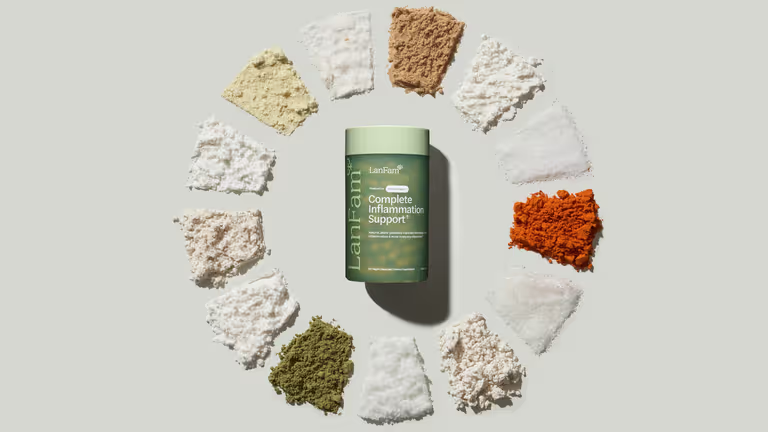
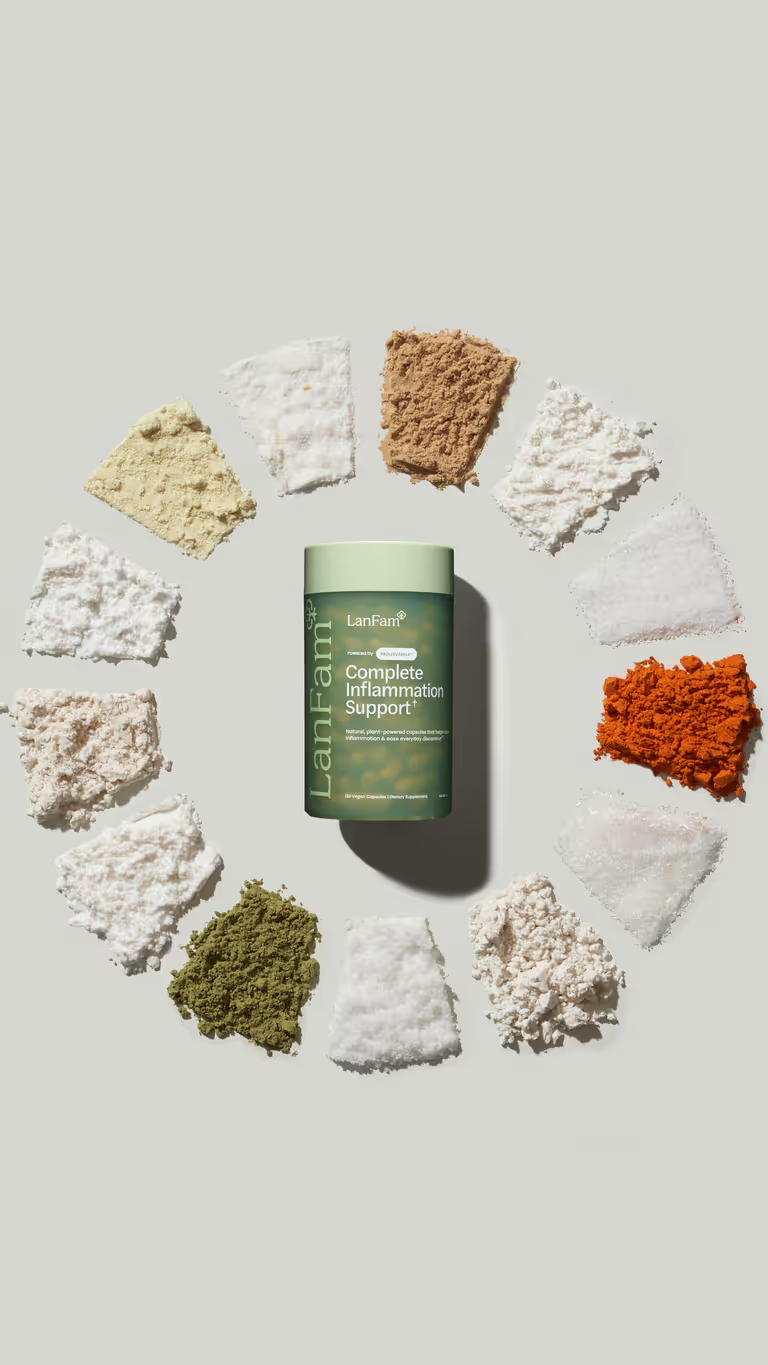
ProleevaMax is not an SPM supplement. It doesn't contain resolvins or protectins — those aren't stable or bioavailable in supplement form, and anyone claiming otherwise would be selling something the science doesn't back. What it does contain — boswellia, curcumin with piperine, the full ingredient panel — is designed to support the body's own inflammatory response across multiple pathways: COX-2, 5-LOX, NF-κB, oxidative stress, gut barrier function.* The formula was built around the idea that chronic inflammation involves multiple overlapping pathways, and that meaningful support means addressing more than one at a time.
The resolution biology I've described in this letter is upstream of all of that. It describes what the body is supposed to do when the response is working correctly — and the conditions (substrate availability, aging, dietary patterns) that influence whether it does. Supplementation in this framework is supportive: it works with the body's regulatory systems, not around them. That distinction matters to me. It matters because it's how we built the formula.
There's also one thing worth connecting here: sleep. The resolution program appears to be most active during periods of rest — there's emerging evidence that slow-wave sleep is when much of the efferocytosis and tissue-repair machinery runs at full capacity. I wrote about this in another letter on how sleep structures the overnight repair process. If you're not sleeping well, you may be compromising the resolution window, not just the recovery time. The two things work together.
Coming back to my friend
He sat with this for a while after I explained it. The thing that stuck with him, he said, wasn't the molecules — it was the reframe. He'd been thinking about inflammation as something to fight. Now he was thinking about it as something to complete.
I think that's the right way to sit with it.
The research isn't telling us that inflammation is good or that we should leave it alone. It's telling us that the body has a sophisticated, active program for handling it — and that many of the things we do, and many of the conditions of modern life, interfere with that program at the resolution end rather than the activation end. That's a different problem statement. And a different problem statement leads to different choices about what to eat, how to sleep, and what to look for in a supplement formula.
The off-switch framing was never wrong exactly — it's just incomplete. There's an off-switch, yes. But it's a switch that the body has to actively throw, with specific molecular machinery, built from specific nutritional raw materials. Understanding that doesn't make the problem bigger. It makes the lever clearer.
— Fabio
* These statements have not been evaluated by the Food and Drug Administration. This product is not intended to diagnose, treat, cure, or prevent any disease.

References
- 2.Serhan CN. Pro-resolving lipid mediators are leads for resolution physiology. Nature. 2014. https://doi.org/10.1038/nature13479
- 3.Serhan CN, Levy BD. Resolvins in inflammation: emergence of the pro-resolving superfamily of mediators. J Clin Invest. 2018. https://doi.org/10.1172/JCI97943
- 4.Headland SE, Norling LV. The resolution of inflammation: principles and challenges. Semin Immunol. 2015. https://doi.org/10.1016/j.smim.2015.03.014
- 5.Calder PC. Omega-3 fatty acids and inflammatory processes: from molecules to man. Biochem Soc Trans. 2017. https://doi.org/10.1042/BST20160474
- 6.Calder PC. Eicosanoids. Essays Biochem. 2020. https://doi.org/10.1042/EBC20190083
- 7.Furman D, Campisi J, Verdin E, et al. Chronic inflammation in the etiology of disease across the life span. Nat Med. 2019. https://doi.org/10.1038/s41591-019-0675-0
- 8.Franceschi C, Bonafè M, Valensin S, et al. Inflamm-aging: an evolutionary perspective on immunosenescence. Ann N Y Acad Sci. 2000. https://doi.org/10.1111/j.1749-6632.2000.tb06651.x

There's a seat at our table
Letters from our family to yours — the science, the recipes, the things that actually helped real families. Leave your email and we'll send the next one.