Boswellia vs Curcumin: Which Is Better for Inflammation?
Boswellia vs curcumin for inflammation: how each works, what the research shows, and why these two botanicals work better together than alone.
Ingredients in this letter
In the boswellia vs curcumin question, neither one is simply "better" for inflammation. They work on different parts of the inflammatory process. Boswellia (Indian Frankincense) calms the 5-LOX pathway through its boswellic acids. Curcumin, the most-studied compound in turmeric, acts mainly on the NF-kB pathway. Because they target separate routes, the strongest approach is not either/or. It is both together, where each one covers a gap the other leaves open. This is why thoughtful formulas pair standardized Boswellia with turmeric rather than choosing one.
How Boswellia Works: The 5-LOX Pathway
Boswellia comes from the resin of the Boswellia serrata tree, known as Indian Frankincense. Its active compounds are a family of pentacyclic triterpene acids called boswellic acids. The most studied of these is acetyl-11-keto-beta-boswellic acid, or AKBA.
Here is the mechanism. Boswellic acids inhibit 5-lipoxygenase (5-LOX), an enzyme that converts arachidonic acid into pro-inflammatory leukotrienes such as leukotriene B4. These leukotrienes drive chemotaxis, vascular permeability, and the broader inflammatory cascade. By calming 5-LOX, boswellic acids reduce the production of these signaling molecules at the source [1].
Boswellic acids also touch the NF-kB pathway, but their signature mechanism is 5-LOX inhibition. Few other common botanicals work on 5-LOX in the same way, which is what makes Boswellia distinctive.
What the research shows on Boswellia
Clinical work on standardized Boswellia extracts has looked at joint comfort and function in people with mild to moderate knee osteoarthritis. A double-blind, randomized, placebo-controlled trial reported improvements in knee joint function and stiffness with a standardized extract [2]. The body of evidence is promising and continues to grow, though larger long-term trials are still needed.
How Curcumin Works: The NF-kB Pathway
Curcumin is the most-studied yellow pigment in turmeric (Curcuma longa). Its primary anti-inflammatory action runs through NF-kB, a transcription factor that acts like a master switch. When NF-kB activates, it turns on genes that produce inflammatory cytokines such as TNF-alpha and IL-1beta. Curcumin helps keep that switch in check, and it also influences the MAPK and JAK/STAT signaling cascades [3].
What the research shows on curcumin
A systematic review and meta-analysis of randomized controlled trials in arthritis found that curcumin and Curcuma longa extract lowered C-reactive protein (CRP) and TNF-alpha compared with placebo, and improved patient-reported outcomes such as the WOMAC index [4]. The signal is real, though results across studies are not uniform.
The bioavailability catch
There is one honest limitation with curcumin: on its own, it absorbs poorly. It has low water solubility and a short half-life, so much of an unformulated dose never reaches the bloodstream [3].
This is where piperine, the active compound in black pepper, enters the conversation. The often-cited figure that piperine raises curcumin absorption by up to 2,000% comes from a single 1998 human pharmacokinetic study by Shoba and colleagues [5]. That number is widely repeated, but independent replication in humans is limited, so it is fair to treat piperine as a sensible absorption helper rather than a guaranteed multiplier. A formula that includes piperine is making a reasonable bet, not a proven promise.
A note on turmeric forms. Many products use a curcumin isolate standardized to 95% curcuminoids. Complete Inflammation Support uses a whole-root turmeric extract instead. Whole-root extract retains the broader spectrum of turmeric compounds, including turmerones and other curcuminoids, rather than isolating a single molecule. It is a different design philosophy, not a worse one.
Boswellia vs Curcumin: Side-by-Side
| Feature | Boswellia (Indian Frankincense) | Curcumin / Turmeric |
|---|---|---|
| Source | Resin of Boswellia serrata | Root of Curcuma longa |
| Active compounds | Boswellic acids (AKBA) | Curcuminoids |
| Primary pathway | 5-LOX (lipoxygenase) | NF-kB |
| Secondary action | Some NF-kB influence | MAPK, JAK/STAT |
| Standardization | Often to boswellic acid content | Often to 95% curcuminoids, or whole-root |
| Bioavailability | Moderate, fat-soluble | Low on its own; needs help |
| Best-studied use | Joint comfort and function | Inflammatory markers (CRP, TNF-alpha), joint comfort |
| Distinct strength | One of few botanicals acting on 5-LOX | Large research base on NF-kB |
The takeaway from the table is the most important part of this entire article: the two columns rarely overlap. Boswellia owns a pathway curcumin barely touches. That structural difference is the whole argument for using them together.
Why They Work Better Together
When two ingredients act on different pathways, combining them can cover more of the inflammatory process than either one alone.
The evidence supports this. A comparative, randomized, double-blind, placebo-controlled study in osteoarthritis tested curcumin alone against a curcumin plus boswellic acid combination. The combination produced a greater effect on comfort and function than curcumin by itself [6]. A 2022 review reached a similar conclusion, describing complementary and potentially synergistic effects when the two are paired [7].
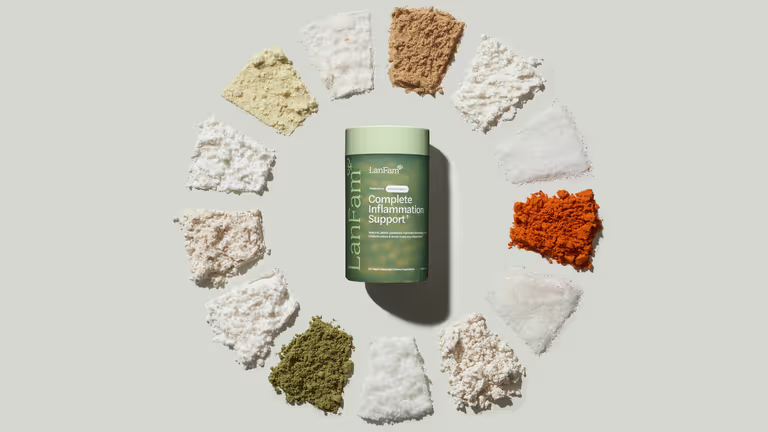
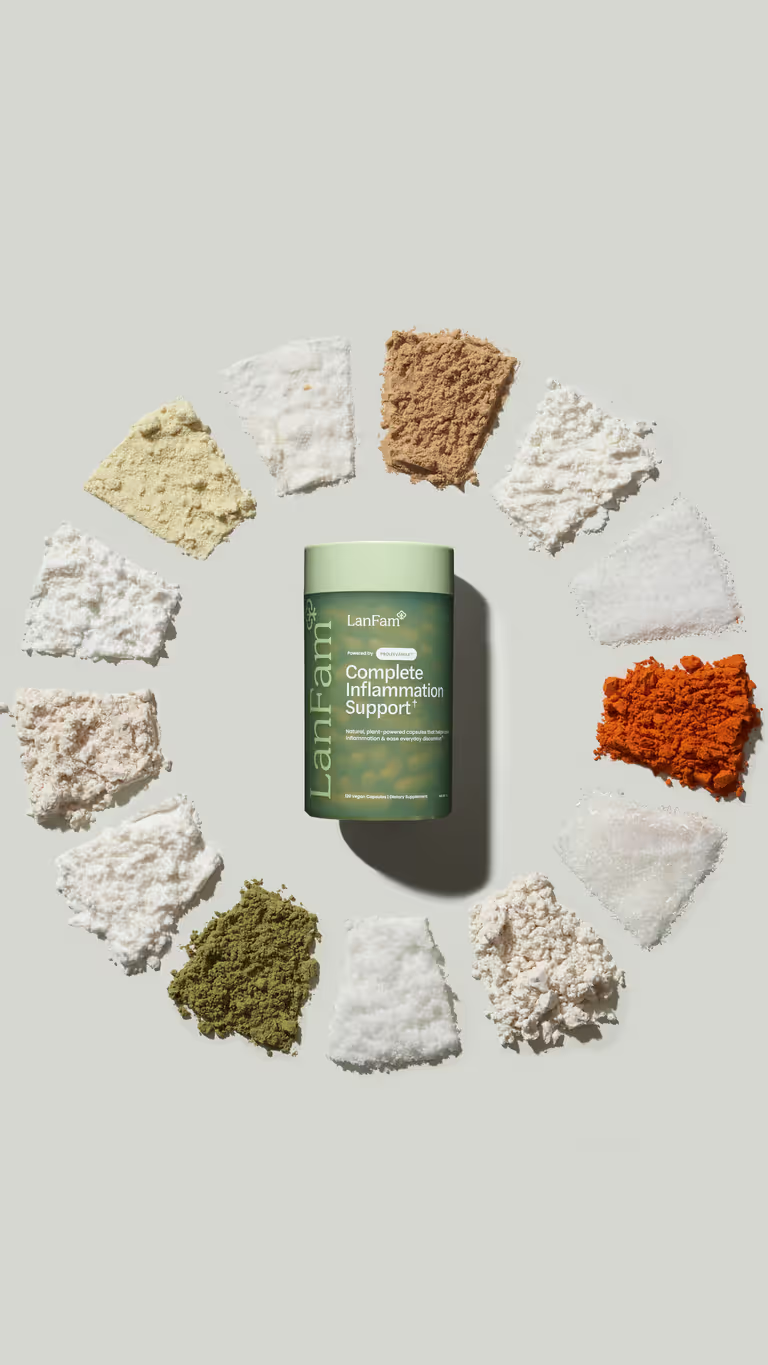
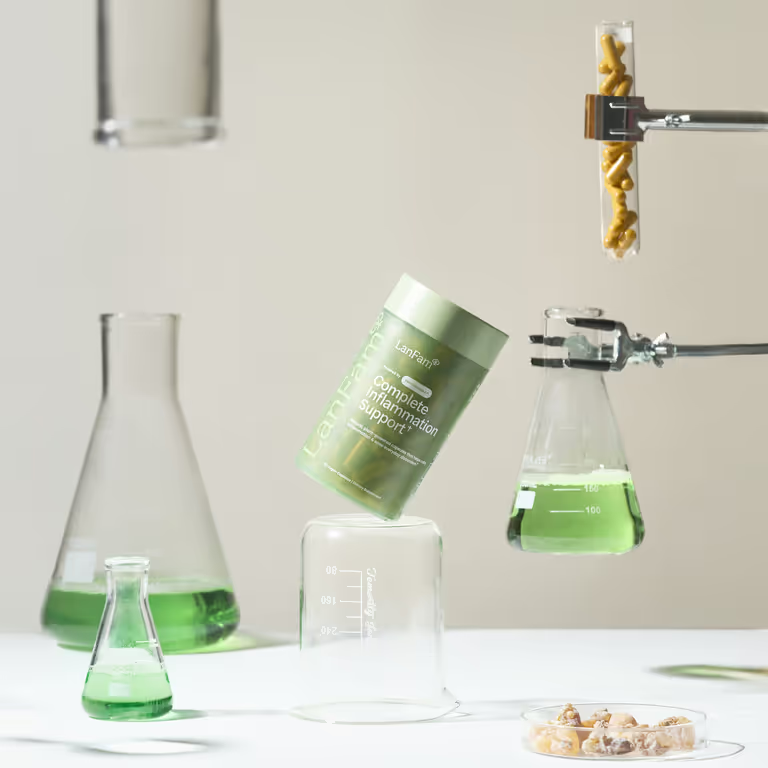
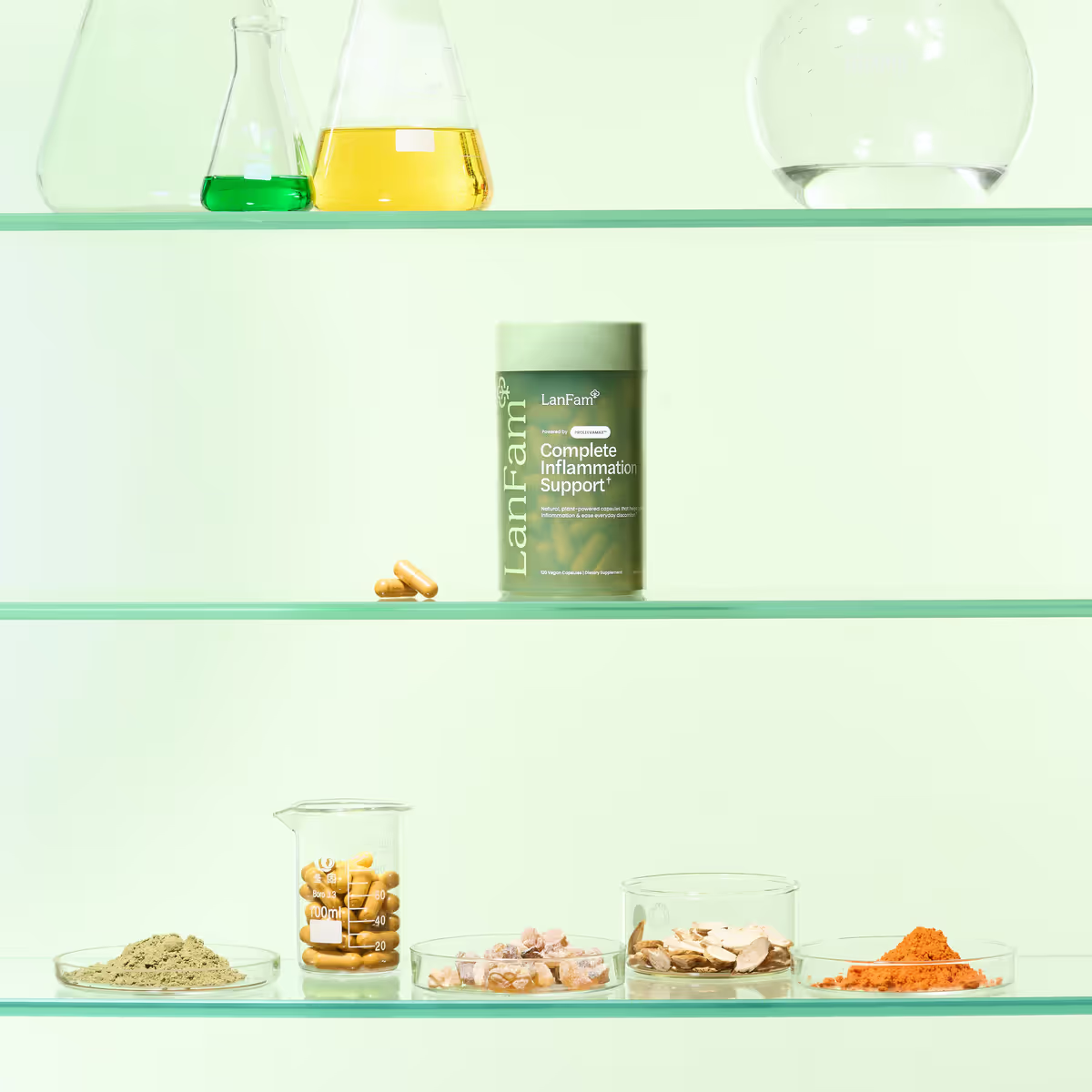
This is the logic behind Complete Inflammation Support. Rather than asking you to pick a side in the boswellia vs curcumin debate, the formula pairs standardized Boswellia at 65% boswellic acids with whole-root turmeric extract, plus piperine to support absorption. It also adds the unique amino acid pairing of L-Glutamine and L-Serine, along with Matcha, GABA, 5-HTP, Asian Ginseng, Resveratrol, L-Arginine, vitamin B6, and Choline, designed to support a healthy inflammatory response through more than one route.
What Boswellia and Curcumin Will Not Do
Honesty matters more than hype, so here are the limits.
- Neither is a drug. Boswellia and curcumin support a healthy inflammatory response. They do not treat, cure, or prevent any disease, including arthritis.
- They are not instant. Botanicals work gradually as they build up in the body. Expect a timeline of weeks, not hours.
- Results vary. Individual response depends on diet, activity, body chemistry, and consistency.
- Quality and dose decide outcomes. A pinch of turmeric in food is not the same as a standardized extract. Sourcing and standardization change what you actually get.
- They support, they do not replace. Movement, sleep, and an anti-inflammatory diet still do the heavy lifting. Supplements work alongside those habits.
If you want to compare turmeric specifically against other options, see our guide on a turmeric supplement alternative.
The Smarter Choice: Stop Choosing Sides
The boswellia vs curcumin debate has a quiet answer. You do not have to pick one. The two work on different pathways, and the research points toward combining them.
Complete Inflammation Support (Powered by ProleevaMax®) is built on that idea. It pairs standardized Boswellia at 65% boswellic acids with whole-root turmeric extract and a synergistic blend of botanicals and amino acids, all designed to support a healthy inflammatory response through multiple routes. On subscription, it works out to about $40 a month.
- See the full formula on the ProleevaMax page and the complete ingredients list.
- Read the research behind each ingredient on our science page.
- Learn the dual-pathway approach on how it works.
Give it the 90-Day Protocol. Initial response often begins around Week 2, with clearer changes in comfort and mobility by Week 4, significant improvement in daily function by Week 8, and full protocol completion at Day 90. If it is not right for you, the 90-day money-back guarantee has you covered, matched to the same 90-day window so you have the full time to judge results.
Keep exploring: anti-inflammatory spices, turmeric supplement alternative, and natural anti-inflammatories.
These statements have not been evaluated by the Food and Drug Administration. This product is not intended to diagnose, treat, cure, or prevent any disease.

References
- 2.Siddiqui MZ. Boswellia serrata, a potential antiinflammatory agent: an overview. Indian Journal of Pharmaceutical Sciences. 2011. https://doi.org/10.4103/0250-474X.93507
- 3.Majeed M, Majeed S, Narayanan NK, Nagabhushanam K. A pilot, randomized, double-blind, placebo-controlled trial to assess the safety and efficacy of a novel Boswellia serrata extract in the management of osteoarthritis of the knee. Phytotherapy Research. 2019. https://doi.org/10.1002/ptr.6338
- 4.Liu M, Wang J, Song Z, Pei Y. Regulation mechanism of curcumin mediated inflammatory pathway and its clinical application: a review. Frontiers in Pharmacology. 2025. https://doi.org/10.3389/fphar.2025.1642248
- 5.Zeng L, Yang T, Yang K, et al. Efficacy and safety of curcumin and Curcuma longa extract in the treatment of arthritis: a systematic review and meta-analysis of randomized controlled trials. Frontiers in Immunology. 2022. https://doi.org/10.3389/fimmu.2022.891822
- 6.Shoba G, Joy D, Joseph T, Majeed M, Rajendran R, Srinivas PS. Influence of piperine on the pharmacokinetics of curcumin in animals and human volunteers. Planta Medica. 1998. https://doi.org/10.1055/s-2006-957450
- 7.Haroyan A, Mukuchyan V, Mkrtchyan N, et al. Efficacy and safety of curcumin and its combination with boswellic acid in osteoarthritis: a comparative, randomized, double-blind, placebo-controlled study. BMC Complementary and Alternative Medicine. 2018. https://doi.org/10.1186/s12906-017-2062-z
- 8.Sethi V, Garg M, Herve M, Mobasheri A. Potential complementary and/or synergistic effects of curcumin and boswellic acids for management of osteoarthritis. Therapeutic Advances in Musculoskeletal Disease. 2022. https://doi.org/10.1177/1759720X221124545
Frequently asked questions
There's a seat at our table
Letters from our family to yours — the science, the recipes, the things that actually helped real families. Leave your email and we'll send the next one.