Supplements and statins: which interact and why
Supplements and statins: how piperine, red yeast rice, green tea, resveratrol and ginseng may affect statins, which statins it matters for, and what to ask.
Ingredients in this letter
Some supplements can change statin levels, mostly through CYP3A4, the enzyme that breaks down simvastatin, lovastatin and atorvastatin. Rosuvastatin and pravastatin do not depend on it. The clearest concerns are red yeast rice, which contains a compound identical to lovastatin, and green tea, which altered simvastatin and rosuvastatin levels in small studies.
What statins do, and why interactions matter
Statin: a cholesterol-lowering drug that works by blocking HMG-CoA reductase, an enzyme the liver uses to make cholesterol.
Statins are among the most widely used drugs for preventing heart and blood vessel disease, and their benefits are well documented. Their best-known side effect is muscle toxicity, ranging from aches to, rarely, a severe breakdown of muscle tissue called rhabdomyolysis. In some cases that toxicity is linked to a rise in the statin's blood level, often because another substance slowed its breakdown [1].
That is the core of the supplements and statins question: whether a supplement changes how much statin reaches your blood. More can raise the chance of muscle side effects. Less can mean the statin lowers cholesterol less than your doctor expects.
Not all statins are broken down the same way
CYP3A4: an enzyme in the liver and gut wall that breaks down a large share of prescription drugs. Anything that slows it can raise the blood level of drugs that depend on it.
A 2015 review of statin drug interactions set out the pathways plainly: potent CYP3A4 inhibitors significantly raise levels of simvastatin, lovastatin and atorvastatin; fluvastatin is metabolized by CYP2C9; and pravastatin, rosuvastatin and pitavastatin are not susceptible to inhibition by any CYP enzyme [1].
- Simvastatin (Zocor) — Main breakdown pathway: CYP3A4; Exposed to CYP3A4 inhibitors?: Yes
- Lovastatin (Mevacor) — Main breakdown pathway: CYP3A4; Exposed to CYP3A4 inhibitors?: Yes
- Atorvastatin (Lipitor) — Main breakdown pathway: CYP3A4; Exposed to CYP3A4 inhibitors?: Yes
- Fluvastatin (Lescol) — Main breakdown pathway: CYP2C9; Exposed to CYP3A4 inhibitors?: No, but CYP2C9 inhibitors matter
- Rosuvastatin (Crestor) — Main breakdown pathway: Not a CYP-dependent statin; Exposed to CYP3A4 inhibitors?: No, though drug transporters matter
- Pravastatin (Pravachol) — Main breakdown pathway: Not a CYP-dependent statin; Exposed to CYP3A4 inhibitors?: No
- Pitavastatin (Livalo) — Main breakdown pathway: Not a CYP-dependent statin; Exposed to CYP3A4 inhibitors?: No
Source: Hirota & Ieiri 2015 [1].
"Not CYP-dependent" does not mean interaction-free. Rosuvastatin relies on drug transporters, and green tea's effect on it runs through those transporters, as you will see below [8].
Grapefruit: the interaction you already know
Grapefruit is the standard example. According to the FDA, grapefruit juice blocks intestinal CYP3A4, "so instead of being metabolized, more of the drug enters the blood and stays in the body longer." The FDA names simvastatin and atorvastatin among the affected drugs [2].
Several supplement ingredients act on the same enzyme, at least in the lab. The question is whether that shows up in people.
Supplement by supplement: what is documented
Red yeast rice: duplication, not interaction
Red yeast rice: rice fermented with a yeast that produces monacolins, compounds that block cholesterol production.
This one is different in kind. According to NCCIH, the monacolin K in red yeast rice "is structurally identical to the medicine lovastatin." Products with meaningful amounts can have the same side effects as statins, including muscle, kidney and liver damage, and "the same types of drug interactions as statin drugs." The monacolin K content of tested products ranged more than 60-fold, and labels usually don't say how much is inside. Some products also contain citrinin, a contaminant that can damage the kidneys [3].
Taking red yeast rice with a prescribed statin means taking a second, unmeasured dose of statin-type drug. That is the combination to raise with your prescriber first.
Piperine (black pepper extract)
Piperine: the black pepper compound many turmeric supplements add to raise curcumin absorption.
In human liver and intestinal cell models, piperine inhibited both CYP3A4 and P-glycoprotein, a pump that pushes drugs back out of the gut. The researchers concluded that dietary piperine "could affect plasma concentrations" of drugs that depend on these pathways, especially oral ones [4]. Simvastatin, lovastatin and atorvastatin are CYP3A4 drugs, so the mechanism is relevant to them.
The human data is more reassuring than the lab data. In a placebo-controlled study of eight healthy volunteers, a preparation with 4 g of curcuminoids and 24 mg of piperine over two days produced no meaningful change in midazolam, a standard marker of CYP3A activity [5]. It did not test long-term use, and it did not test a statin. Our guide to how piperine works covers the absorption side.
Turmeric and curcumin
Can you take curcumin with statins? It has not been directly tested. We found no published human study giving curcumin or turmeric together with a specific statin and measuring the statin's level.
The closest human evidence is the study above: curcumin with piperine did not meaningfully change CYP3A activity over a short course [5]. That points away from a large CYP3A4 effect, but it is indirect. Turmeric and statins remain a combination to mention, not one anyone can call cleared.
Green tea and matcha
Green tea has the most statin-specific human evidence of any supplement here, and it runs in different directions depending on the statin. A 2018 review summarized it [8]:
- Simvastatin: a published case report described a 61-year-old man, with previous muscle intolerance to three statins, whose simvastatin tolerability was linked to green tea intake. Two later studies in healthy volunteers found increases in simvastatin exposure, one of them a 22% rise in the active form, with large differences between individuals. The proposed mechanism is inhibition of CYP3A4 and P-glycoprotein in the gut.
- Rosuvastatin: a single 300 mg dose of EGCG, green tea's main catechin, taken with rosuvastatin reduced rosuvastatin exposure by 19%. After 10 days of EGCG pretreatment, the effect disappeared. The proposed mechanism is blocked uptake through intestinal transporters.
EGCG (epigallocatechin gallate): the most abundant catechin in green tea and the one most studied for drug interactions.
Matcha is powdered whole green tea leaf, so these findings apply to products containing it. The reviewers noted the effects were "mild to moderate" but variable from person to person. For more on matcha itself, see why matcha.
Resveratrol
In a study of 42 healthy volunteers, 1 g of resveratrol daily for four weeks inhibited the activity markers for CYP3A4, CYP2D6 and CYP2C9 and increased CYP1A2 [6]. The authors warned that doses in this range "could potentially lead to increased adverse drug reactions or altered drug efficacy." No study has tested resveratrol with a statin. Because the effect covers CYP3A4 and CYP2C9, it is theoretically relevant to atorvastatin, simvastatin, lovastatin and fluvastatin.
Asian ginseng (Panax ginseng)
Ginseng points the other way. In 12 healthy participants, 500 mg of Panax ginseng twice daily for 28 days lowered midazolam exposure to about two-thirds of baseline, suggesting ginseng speeds up CYP3A activity [7]. If that applies to statins, the risk would be a lower statin level, not a higher one. The authors advised monitoring when ginseng is combined with CYP3A drugs that have a narrow therapeutic range. No ginseng–statin study exists that we could find.
CoQ10 and statins: the other side of the question
Coenzyme Q10 (CoQ10): a compound the body makes and uses in energy production inside cells. It is made partly through the same pathway statins block.
A meta-analysis of placebo-controlled trials found statins lower plasma CoQ10, by an average of 0.44 μmol/L, and the effect held for atorvastatin, simvastatin, rosuvastatin and pravastatin alike [9]. The authors said the clinical relevance is unclear.
Does supplementing CoQ10 help with statin muscle symptoms? NCCIH's summary: "Although results of individual studies have varied, the overall scientific evidence does not support the idea that CoQ10 can reduce muscle pain caused by the cholesterol-lowering drugs known as statins." NCCIH also notes CoQ10 may interact with warfarin [10]. We cover the wider research in CoQ10 and inflammation.
At a glance: statin supplement interactions
- Red yeast rice — Documented concern: Contains monacolin K, identical to lovastatin; same side effects and interactions [3]; Evidence level: Composition analysis + NCCIH review; Which statins: All (duplicate action); What to ask your pharmacist: "Should I avoid red yeast rice entirely with my statin?"
- Green tea / matcha / EGCG — Documented concern: Raised simvastatin exposure; single-dose EGCG lowered rosuvastatin exposure 19% [8]; Evidence level: Case report + small human PK studies; Which statins: Simvastatin, rosuvastatin; What to ask your pharmacist: "Does the green tea in this product affect my statin, and should I space them apart?"
- Piperine — Documented concern: Inhibits CYP3A4 and P-glycoprotein in lab models [4]; no CYP3A effect in a short human study [5]; Evidence level: In vitro + one human probe study; Which statins: Simvastatin, lovastatin, atorvastatin; What to ask your pharmacist: "My statin uses CYP3A4. Does black pepper extract matter at this amount?"
- Turmeric / curcumin — Documented concern: No statin study found; no meaningful CYP3A effect with piperine short-term [5]; Evidence level: Indirect only; Which statins: Theoretical for CYP3A4 statins; What to ask your pharmacist: "Is there anything about curcumin and my statin I should know?"
- Resveratrol — Documented concern: Inhibited CYP3A4, CYP2C9, CYP2D6 at 1 g/day [6]; Evidence level: Human enzyme-marker study; no statin data; Which statins: Theoretical: simvastatin, lovastatin, atorvastatin, fluvastatin; What to ask your pharmacist: "Could the resveratrol raise my statin level?"
- Asian ginseng — Documented concern: Induced CYP3A activity, lowering a test drug's exposure [7]; Evidence level: Human enzyme-marker study; no statin data; Which statins: Theoretical: CYP3A4 statins (lower levels); What to ask your pharmacist: "Could ginseng make my statin less effective? Should we recheck my cholesterol?"
- CoQ10 — Documented concern: Statins lower CoQ10 levels [9]; evidence does not support benefit for muscle symptoms [10]; Evidence level: Meta-analysis + NCCIH review; Which statins: All; What to ask your pharmacist: "Is CoQ10 worth trying for me, and does it affect my other medicines?"
Ask your doctor or pharmacist before starting any supplement, including ours
If you take a statin, ask your doctor or pharmacist before you start any supplement, and that includes ours. Bring the Supplement Facts panel and name your statin: the answer differs between simvastatin and rosuvastatin. Report new or unexplained muscle aches or weakness, the side effect most tied to raised statin levels [1]. This article does not say any combination is safe for you.
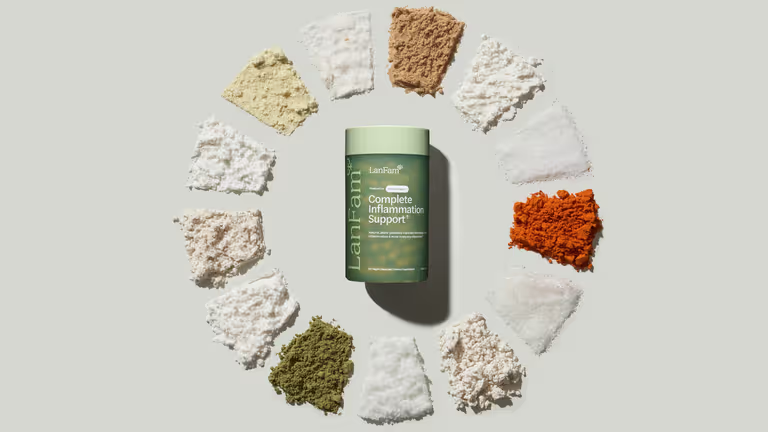
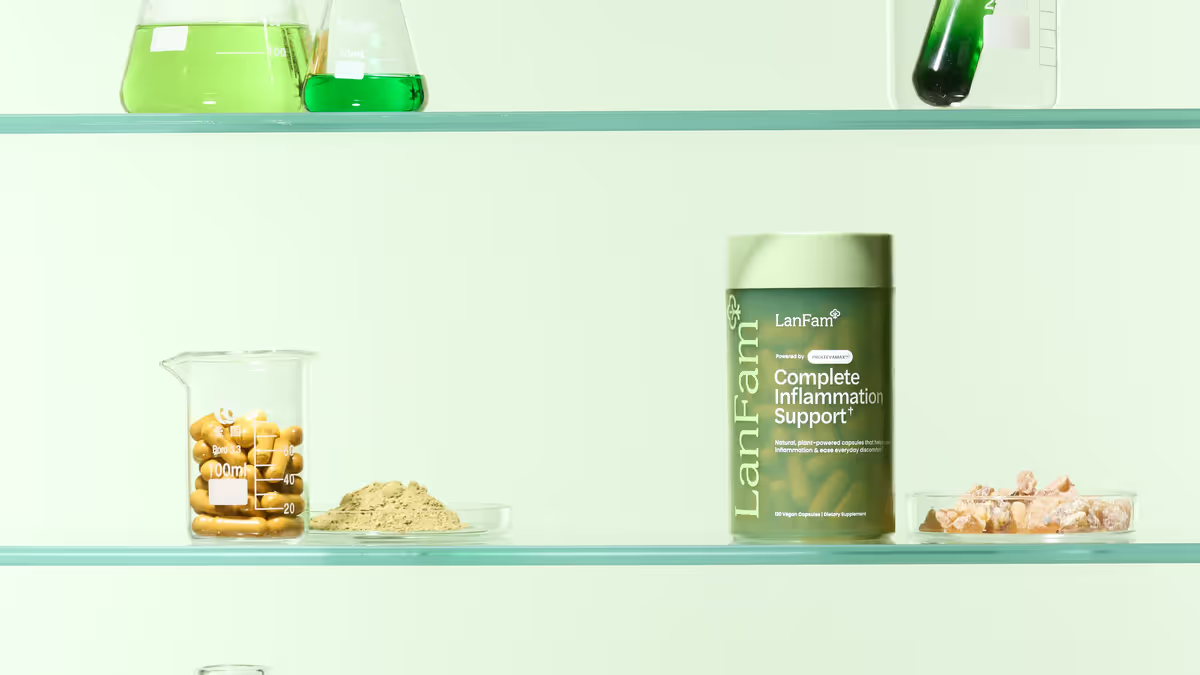
Complete Inflammation Support (Powered by ProleevaMax®) is a dietary supplement formulated to support a healthy inflammatory response. It is not a substitute for anything your doctor has prescribed, and it does not contain red yeast rice. Its thirteen actives do include several ingredients discussed above: turmeric root extract, black pepper extract, matcha green tea, trans-resveratrol and Asian ginseng. The most important interaction on the formula is not a statin one: ProleevaMax contains 5-HTP, which affects serotonin, and it should not be combined with SSRIs, SNRIs or other serotonergic medicines without your prescriber's review. If you also take a blood thinner, read is turmeric a blood thinner before your appointment.
If your doctor or pharmacist gives you the go-ahead, you can see the full ProleevaMax label: thirteen actives, a 2,401 mg blend total, and Boswellia standardized to 65% boswellic acids, all printed on the bottle so your pharmacist can check it. If you start, you have 90 days to decide, backed by a 90-day money-back guarantee.
These statements have not been evaluated by the Food and Drug Administration. This product is not intended to diagnose, treat, cure, or prevent any disease.
This article is for education and is not a substitute for advice from your doctor or pharmacist.

References
- 2.Hirota T, Ieiri I. Drug-drug interactions that interfere with statin metabolism. Expert Opin Drug Metab Toxicol. 2015. https://pubmed.ncbi.nlm.nih.gov/26058399/
- 3.US Food and Drug Administration. Grapefruit juice and some drugs don't mix. Consumer update, updated July. 2021. https://www.fda.gov/consumers/consumer-updates/grapefruit-juice-and-some-drugs-dont-mix
- 4.National Center for Complementary and Integrative Health. Red yeast rice. Updated November. 2022. https://www.nccih.nih.gov/health/red-yeast-rice
- 5.Bhardwaj RK, Glaeser H, Becquemont L, Klotz U, Gupta SK, Fromm MF. Piperine, a major constituent of black pepper, inhibits human P-glycoprotein and CYP3A4. J Pharmacol Exp Ther. 2002. https://pubmed.ncbi.nlm.nih.gov/12130727/
- 6.Volak LP, Hanley MJ, Masse G, et al. Effect of a herbal extract containing curcumin and piperine on midazolam, flurbiprofen and paracetamol (acetaminophen) pharmacokinetics in healthy volunteers. Br J Clin Pharmacol. 2013. https://pubmed.ncbi.nlm.nih.gov/22725836/
- 7.Chow HH, Garland LL, Hsu CH, et al. Resveratrol modulates drug- and carcinogen-metabolizing enzymes in a healthy volunteer study. Cancer Prev Res (Phila). 2010. https://pubmed.ncbi.nlm.nih.gov/20716633/
- 8.Malati CY, Robertson SM, Hunt JD, et al. Influence of Panax ginseng on cytochrome P450 (CYP)3A and P-glycoprotein (P-gp) activity in healthy participants. J Clin Pharmacol. 2012. https://pubmed.ncbi.nlm.nih.gov/21646440/
- 9.Werba JP, Misaka S, Giroli MG, et al. Update of green tea interactions with cardiovascular drugs and putative mechanisms. J Food Drug Anal. 2018. https://pmc.ncbi.nlm.nih.gov/articles/PMC9326886/
- 10.Banach M, Serban C, Ursoniu S, et al. Statin therapy and plasma coenzyme Q10 concentrations: a systematic review and meta-analysis of placebo-controlled trials. Pharmacol Res. 2015. https://pubmed.ncbi.nlm.nih.gov/26192349/
- 11.National Center for Complementary and Integrative Health. Coenzyme Q10. Updated January. 2019. https://www.nccih.nih.gov/health/coenzyme-q10
Frequently asked questions
There's a seat at our table
Letters from our family to yours — the science, the recipes, the things that actually helped real families. Leave your email and we'll send the next one.