Turmeric and blood pressure medication: what to know
Turmeric and blood pressure medication: what studies show for lisinopril, amlodipine and beta blockers, why piperine matters, and what to ask your pharmacist.
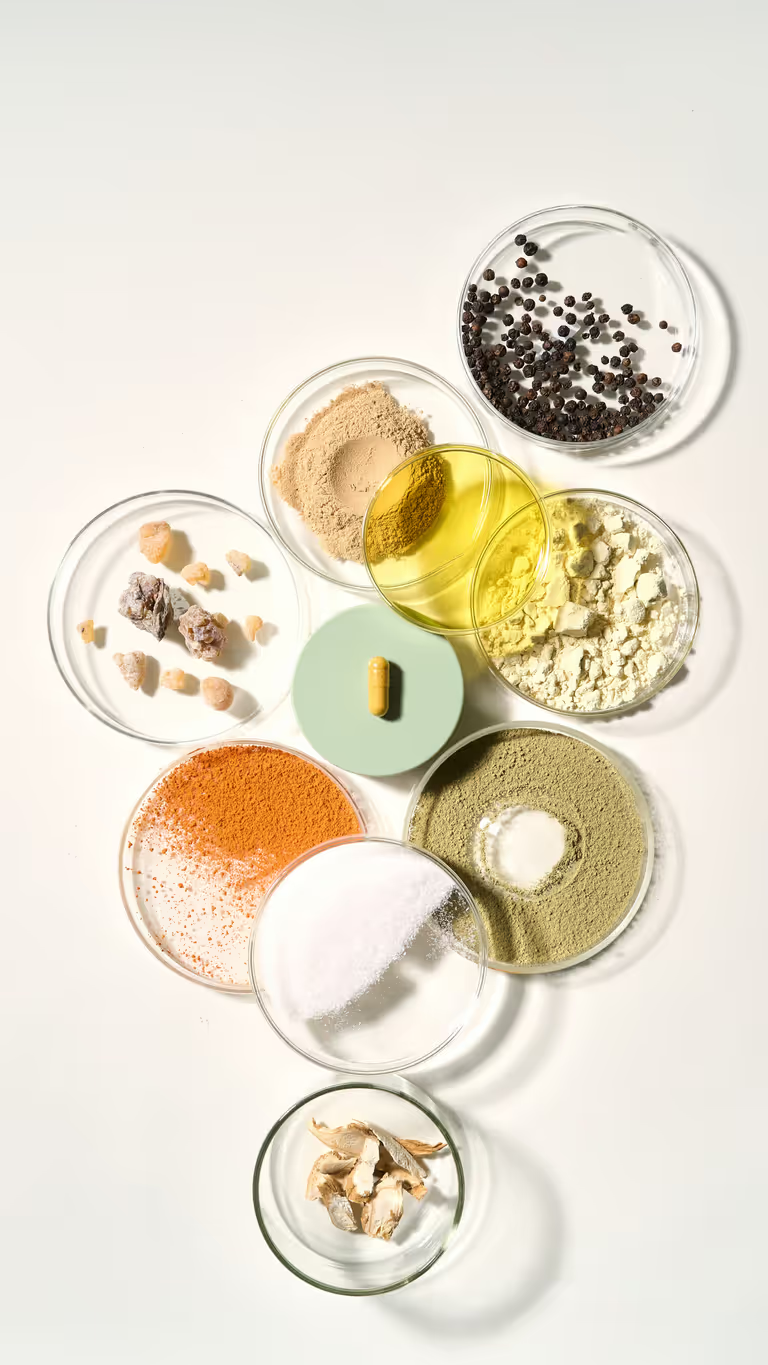
Ingredients in this letter
We found no published human study showing a harmful interaction between turmeric and common blood pressure drugs such as lisinopril or amlodipine. The documented signals are narrower: curcumin changed beta-blocker levels in small human studies, and black pepper extract (piperine) can alter how some drugs are absorbed and broken down. Ask your pharmacist before combining.
Two kinds of interaction, and why the difference matters
Pharmacodynamic interaction: two substances act on the same system, so their effects add up or cancel out. Two things that each lower blood pressure could lower it further together.
Pharmacokinetic interaction: one substance changes how the body absorbs, breaks down or clears the other, so the drug's level in the blood rises or falls. A higher level can mean more side effects. A lower level can mean the drug works less well.
CYP3A4: an enzyme in the liver and gut wall that breaks down a large share of prescription drugs. Anything that slows CYP3A4 can raise the blood level of drugs that depend on it. Grapefruit juice is the familiar example.
For turmeric supplements, the pharmacokinetic kind is where the human evidence sits.
What the research says about curcumin and blood pressure
Curcumin: the main active compound in turmeric root, and the one most studies measure.
A 2019 systematic review and meta-analysis pooled 11 randomized trials with 734 participants. Across all of them, curcumin or turmeric produced no significant change in systolic blood pressure (−0.69 mmHg) or diastolic blood pressure (+0.28 mmHg). In the subgroup of trials lasting 12 weeks or longer, systolic pressure fell by 1.24 mmHg, with no change in diastolic [1]. The authors called for more studies before drawing firm conclusions.
For scale, 1.24 mmHg is small next to what blood pressure drugs do, so the "dangerous added drop" worry has little human evidence behind it.
Animal work points in a different direction. In rats with drug-induced hypertension, curcumin given alongside losartan lowered systolic pressure more than losartan alone, and raised losartan's blood levels by about 1.25-fold [2]. The authors noted that the importance of this in humans is unknown. It is a signal, not a finding in people.
Turmeric and blood pressure medication by drug class
ACE inhibitors (lisinopril, enalapril, ramipril)
We found no published study testing curcumin or turmeric with lisinopril or any other ACE inhibitor. One detail from the lisinopril label is useful here: lisinopril "does not undergo metabolism and is excreted unchanged entirely in the urine" [10]. That means the liver-enzyme pathway that piperine affects is not how lisinopril leaves the body.
The same label lists non-steroidal anti-inflammatory drugs (NSAIDs), including COX-2 inhibitors, among its drug interactions [10]. If you use ibuprofen alongside an ACE inhibitor, that pairing is the documented one. We cover how turmeric compares in can you take turmeric and ibuprofen together.
ARBs (losartan, valsartan, olmesartan)
The only curcumin-plus-ARB data we found is the rat study above: more blood pressure lowering and higher losartan levels when the two were combined [2]. No human study has tested it. If you take losartan, name it specifically when you ask, since it is the drug that study used.
Calcium-channel blockers (amlodipine, nifedipine, diltiazem)
This is where "turmeric amlodipine" questions come from, and the concern has a clear mechanism. The amlodipine (Norvasc) label states that about 90% of amlodipine is converted to inactive metabolites in the liver, and that moderate and strong CYP3A inhibitors increase amlodipine exposure and "may require dose reduction" [5]. The label advises watching for low blood pressure and fluid retention.
What has been shown for curcumin and amlodipine? In rats, curcumin pretreatment roughly doubled amlodipine exposure (AUC 507 vs 239 μg·h/L), and the authors proposed CYP3A4 inhibition as the reason [6]. They stated that the effect still needs to be characterized in humans. No human curcumin–amlodipine study has been published that we could find.
Beta blockers (metoprolol, propranolol, nadolol, talinolol)
Beta blockers have the most human evidence, and it is mixed.
- Curcumin and talinolol. In 18 healthy men, 1,000 mg of curcumin daily for 14 days raised talinolol exposure by 67% (AUC 0–48 h), and the size of the effect depended on each person's genetics for a drug transporter called P-glycoprotein [7]. An earlier, smaller study at a lower curcumin dose had reported the opposite direction, a fall in talinolol levels. Talinolol is not widely prescribed in the US, but it is a standard test drug for this transporter.
- Green tea and nadolol. In 10 healthy volunteers, drinking 700 mL of green tea a day for 14 days cut nadolol's blood levels by about 85%, and nadolol's effect on systolic blood pressure was significantly reduced [8].
The green tea finding matters for any formula containing matcha, which is powdered green tea leaf. The study used large volumes of brewed tea, so it does not predict what a capsule would do. It does show that other botanicals in the same product can matter more than the turmeric.
Diuretics (hydrochlorothiazide, chlorthalidone, furosemide)
We found no published study testing curcumin or turmeric with a diuretic. That is an absence of evidence, not evidence of safety.
Piperine: the more concrete concern
Piperine: the compound in black pepper that most turmeric supplements add because it raises the amount of curcumin that reaches the blood.
The mechanism that makes piperine useful is the same one that raises drug-interaction questions. In human liver cells and intestinal cell models, piperine inhibited both CYP3A4 and P-glycoprotein, the drug pump that pushes many medicines back out of the gut. The researchers concluded that piperine "could affect plasma concentrations" of drugs that depend on these pathways, especially drugs taken by mouth [3]. We explain how piperine works in more depth in piperine benefits and how it works.
The human picture is less dramatic than the lab data suggests. In a placebo-controlled crossover study, eight healthy volunteers took a curcumin preparation containing 4 g of curcuminoids and 24 mg of piperine over two days. It produced no meaningful change in midazolam, a standard test drug for CYP3A activity [4]. The authors concluded that short-term use was unlikely to cause a clinically significant CYP3A interaction.
That study did not test long-term daily use or people on blood pressure medication. So piperine stays on the list to mention to your pharmacist, particularly if you take amlodipine, nifedipine, felodipine or diltiazem.
L-arginine and blood pressure
L-arginine: an amino acid the body uses to make nitric oxide, a molecule that helps blood vessel walls relax.
This is the ingredient in Complete Inflammation Support (Powered by ProleevaMax®) that is most directly linked to blood pressure. A meta-analysis of 11 randomized, double-blind, placebo-controlled trials with 387 participants found that oral L-arginine at 4 to 24 grams a day lowered systolic blood pressure by 5.39 mmHg and diastolic by 2.66 mmHg compared with placebo [9]. That is a larger effect than curcumin's.
We found no study testing L-arginine together with a specific blood pressure drug. The concern is pharmacodynamic and theoretical: two things that each nudge blood pressure down could add up. ProleevaMax lists L-arginine inside a 2,401 mg proprietary blend, and individual amounts in the blend are not published, so you cannot map trial doses onto the capsule. Show your pharmacist the full label. You can read more on our L-arginine ingredient page.
At a glance: turmeric and blood pressure medication by class
- ACE inhibitors — Examples: lisinopril, enalapril, ramipril; What's documented: No curcumin study found. Lisinopril is not metabolized by the liver [10]. NSAIDs are a listed interaction [10]; Strength of evidence: None for curcumin; What to ask your pharmacist: "Is anything in this supplement a concern with my ACE inhibitor, and should I avoid ibuprofen?"
- ARBs — Examples: losartan, valsartan; What's documented: Curcumin raised losartan levels and added blood pressure lowering in hypertensive rats [2]; Strength of evidence: Animal only; What to ask your pharmacist: "Does this matter for losartan specifically?"
- Calcium-channel blockers — Examples: amlodipine, nifedipine, diltiazem; What's documented: Amlodipine depends on CYP3A [5]. Curcumin doubled amlodipine exposure in rats [6]. Piperine inhibits CYP3A4 in the lab [3]; a short human study found no CYP3A effect [4]; Strength of evidence: Label + animal + lab; one reassuring human probe study; What to ask your pharmacist: "Could the black pepper extract raise my amlodipine level? What signs should I watch for?"
- Beta blockers — Examples: metoprolol, propranolol, nadolol; What's documented: Curcumin raised talinolol levels 67% [7]. Green tea cut nadolol levels ~85% [8]; Strength of evidence: Small human studies; What to ask your pharmacist: "Does the curcumin or green tea in this product affect my specific beta blocker?"
- Diuretics — Examples: hydrochlorothiazide, furosemide; What's documented: No curcumin study found; Strength of evidence: None; What to ask your pharmacist: "Anything here I should know about with my diuretic?"
- Any class — Examples: —; What's documented: L-arginine lowered blood pressure ~5/3 mmHg in trials [9]; Strength of evidence: Meta-analysis of the ingredient alone; What to ask your pharmacist: "Could the L-arginine add to my blood pressure lowering? Should I check my readings at home?"
Ask your doctor or pharmacist before starting any supplement, including ours
If you take blood pressure medication, ask your doctor or pharmacist before you start any supplement, and that includes ProleevaMax. Bring the Supplement Facts panel and your medication list, and ask whether you should log your blood pressure at home for the first few weeks. If you feel lightheaded or faint when you stand, call your prescriber. This article is not a verdict that any combination is safe for you.
ProleevaMax is a dietary supplement formulated to support a healthy inflammatory response, and it is not a substitute for anything your doctor has prescribed. Its thirteen actives include turmeric root extract, black pepper extract, L-arginine and matcha green tea, all discussed above. The most important interaction on the formula is not a blood pressure one: it contains 5-HTP, which affects serotonin, and it should not be combined with SSRIs, SNRIs or other serotonergic medicines without your prescriber's review. If you also take a blood thinner, read is turmeric a blood thinner before your appointment.
If your doctor or pharmacist gives you the go-ahead, you can see the full ProleevaMax label: thirteen actives, a 2,401 mg blend total, and Boswellia standardized to 65% boswellic acids, all printed on the bottle. Bring it to your appointment. If you start, you have 90 days to decide, backed by a 90-day money-back guarantee.
These statements have not been evaluated by the Food and Drug Administration. This product is not intended to diagnose, treat, cure, or prevent any disease.
This article is for education and is not a substitute for advice from your doctor or pharmacist.

References
- 2.Hadi A, Pourmasoumi M, Ghaedi E, Sahebkar A. The effect of curcumin/turmeric on blood pressure modulation: a systematic review and meta-analysis. Pharmacol Res. 2019. https://pubmed.ncbi.nlm.nih.gov/31647981/
- 3.Ahad A, Raish M, Abdelrahman IA, et al. Changes in pharmacokinetics and pharmacodynamics of losartan in experimental diseased rats treated with. Curcuma longa. 2022. https://pmc.ncbi.nlm.nih.gov/articles/PMC9862944/
- 4.Bhardwaj RK, Glaeser H, Becquemont L, Klotz U, Gupta SK, Fromm MF. Piperine, a major constituent of black pepper, inhibits human P-glycoprotein and CYP3A4. J Pharmacol Exp Ther. 2002. https://pubmed.ncbi.nlm.nih.gov/12130727/
- 5.Volak LP, Hanley MJ, Masse G, et al. Effect of a herbal extract containing curcumin and piperine on midazolam, flurbiprofen and paracetamol (acetaminophen) pharmacokinetics in healthy volunteers. Br J Clin Pharmacol. 2013. https://pubmed.ncbi.nlm.nih.gov/22725836/
- 6.NORVASC (amlodipine besylate) tablets. Prescribing information, sections 7.1 and 12.3. Pfizer Laboratories. DailyMed, US National Library of Medicine. https://dailymed.nlm.nih.gov/dailymed/drugInfo.cfm?setid=abd6a2ca-40c2-485c-bc53-db1c652505ed
- 7.Jiang N, Zhang M, Meng X, Sun B. Effects of curcumin on the pharmacokinetics of amlodipine in rats and its potential mechanism. Pharm Biol. 2020. https://pubmed.ncbi.nlm.nih.gov/32432949/
- 8.He X, Mo L, Li ZY, Tan ZR, Chen Y, Ouyang DS. Effects of curcumin on the pharmacokinetics of talinolol in human with ABCB1 polymorphism. Xenobiotica. 2012. https://pubmed.ncbi.nlm.nih.gov/22725663/
- 9.Misaka S, Yatabe J, Müller F, et al. Green tea ingestion greatly reduces plasma concentrations of nadolol in healthy subjects. Clin Pharmacol Ther. 2014. https://pubmed.ncbi.nlm.nih.gov/24419562/
- 10.Dong JY, Qin LQ, Zhang Z, et al. Effect of oral L-arginine supplementation on blood pressure: a meta-analysis of randomized, double-blind, placebo-controlled trials. Am Heart J. 2011. https://pubmed.ncbi.nlm.nih.gov/22137067/
- 11.ZESTRIL (lisinopril) tablets. Prescribing information, Drug Interactions and Pharmacokinetics sections. DailyMed, US National Library of Medicine. https://dailymed.nlm.nih.gov/dailymed/drugInfo.cfm?setid=838c2d78-d2d8-4981-9ec9-e50ef9e1a5d8
Frequently asked questions
There's a seat at our table
Letters from our family to yours — the science, the recipes, the things that actually helped real families. Leave your email and we'll send the next one.