Matcha Green Tea
Matcha's active compound EGCG is one of the most-studied antioxidants in the human diet. Mechanism, dosage, safety, and its role in ProleevaMax's Antioxidant Defense pathway.
A note from Maria Lanzieri.
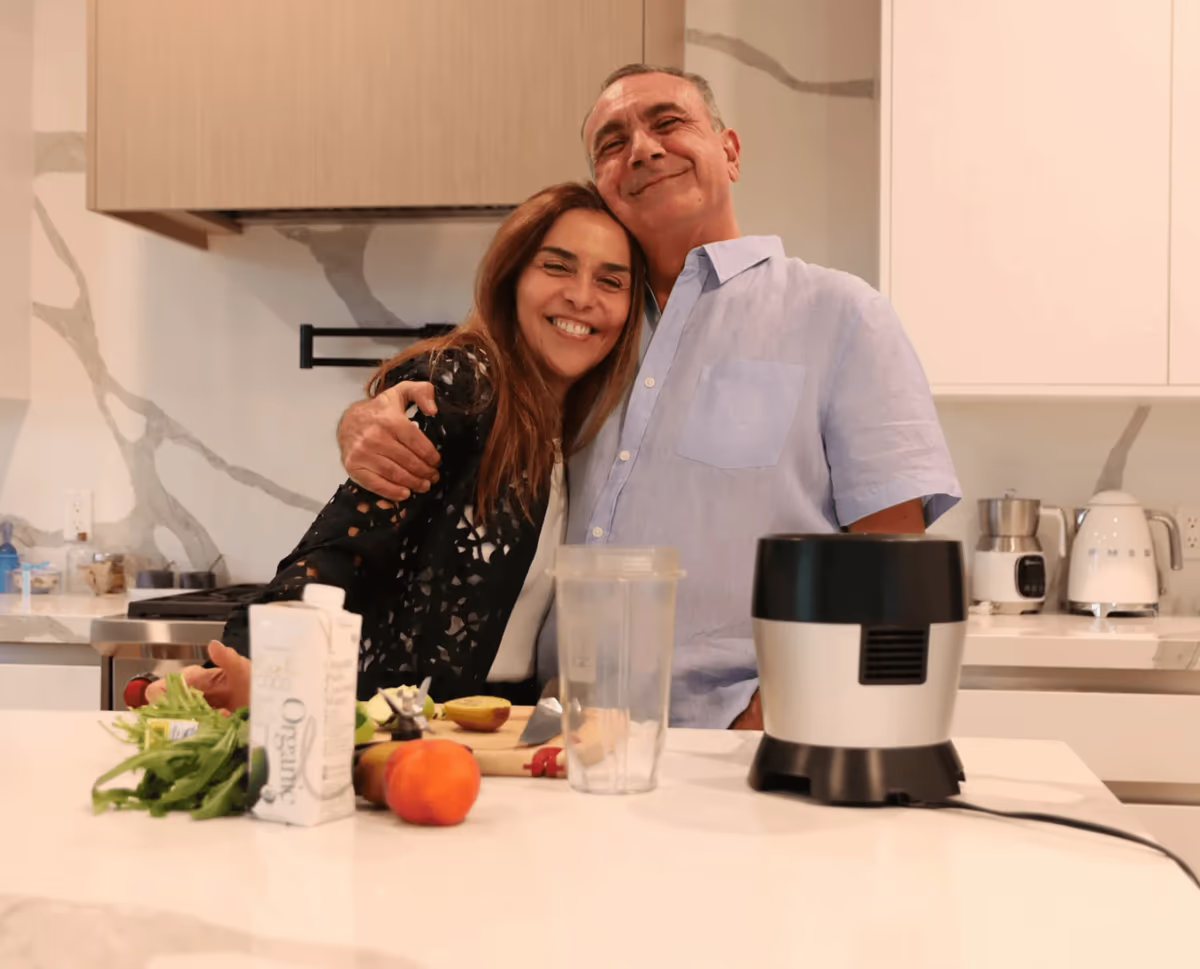
I've been making matcha most mornings for about three years now. Fabio got me started — he'd been reading the EGCG literature for the formula, and one morning he slid a cup across the counter and said, "Just try it." I expected something medicinal. It wasn't. It was earthy and smooth and something about it felt like a slower start to the day, which was exactly what I needed at that point in my life. I still make it every morning. It's in ProleevaMax partly because of what the science says and partly because we actually live with it. Those two things tend to land in the same place in this family.
What it is
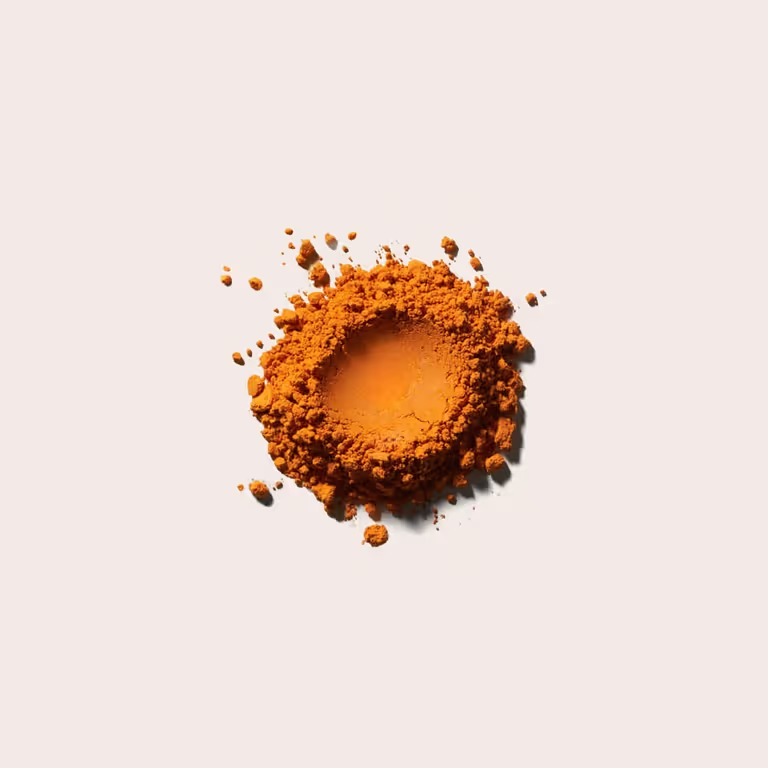
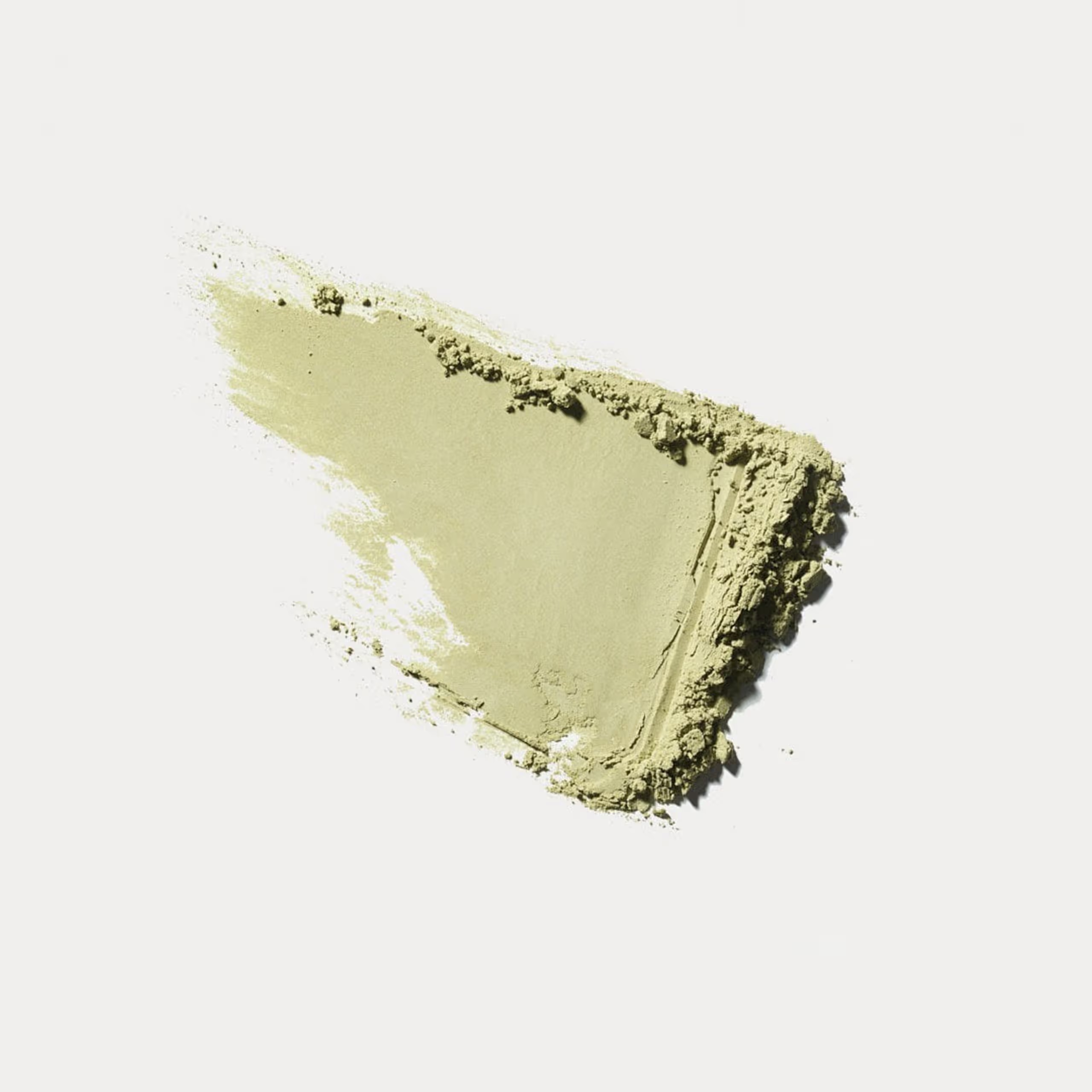
Matcha is powdered green tea made from shade-grown Camellia sinensis leaves — the same plant as regular green tea, but processed differently. Shading the plants for several weeks before harvest drives up chlorophyll and L-theanine while concentrating the catechin content. The leaves are then stone-ground into a fine powder, which means when you prepare matcha you consume the entire leaf — not just a water-extract of it. That whole-leaf preparation is why matcha delivers meaningfully higher concentrations of catechins, and in particular EGCG (epigallocatechin gallate), than steeped green tea1. EGCG is the most extensively studied catechin in the human diet, and the primary compound behind matcha's role in Pathway 2.
How it works
EGCG works through two complementary routes to support antioxidant defense. The first is direct: EGCG is a potent free-radical scavenger, capable of neutralizing reactive oxygen species before they can damage cell membranes, DNA, or proteins. This direct scavenging is well-characterized at the molecular level1.
The second route is indirect and arguably more important for sustained daily use: EGCG activates the Nrf2 pathway, a master transcription factor that upregulates the body's own antioxidant enzyme systems — including superoxide dismutase (SOD), catalase, and glutathione peroxidase2. These are the enzymes the body produces to manage oxidative load continuously, not just in the moments you happen to take a supplement. Supporting their expression means supporting the infrastructure of antioxidant defense, not just layering in an exogenous scavenger.
The connection to inflammation is this: oxidative stress and inflammatory signaling amplify each other. Elevated reactive oxygen species activate NF-κB, the same transcription factor that Pathway 1 targets via curcumin and boswellia. NF-κB activation, in turn, drives production of TNF-α, IL-6, and COX-2. EGCG has been shown to downregulate NF-κB-driven inflammatory mediators under oxidative-stress conditions2. Pathway 2 sits downstream of Pathway 1 and upstream of it simultaneously — addressing oxidative load reduces the fuel that keeps inflammatory signaling stuck "on."
Matcha also delivers L-theanine, an amino acid that doesn't appear in ProleevaMax separately but co-occurs naturally with EGCG in the whole-leaf preparation. L-theanine promotes calm alertness without sedation — it's the reason matcha produces a different quality of energy than coffee at similar caffeine doses3. That's a daily-life benefit that doesn't require clinical framing to be real.
The evidence
Kochman and colleagues conducted a comprehensive review of the matcha-specific literature in 2020 — the most cited modern summary of the preclinical and clinical evidence base — and found consistent support for EGCG's role in antioxidant defense, modulation of inflammatory markers, and stress response1. A 2022 review by Sokary and colleagues specifically examined matcha's therapeutic potential, noting the convergence of the antioxidant and anti-inflammatory evidence streams and flagging the Nrf2 pathway as the mechanism most likely to drive durable benefit2. Unno and colleagues (2018) examined matcha's stress-reducing function in a randomized controlled trial, finding that participants who consumed matcha showed measurable reductions in anxiety-related behavior markers — an effect attributed to the L-theanine content in combination with EGCG3.
Health Benefits and Chemical Composition of Matcha Green Tea: A Review
Kochman J, Jakubczyk K, Antoniewicz J, Mruk H, Janda K — Molecules · 2020
The therapeutic potential of matcha tea: A critical review on human and animal studies
Sokary S, Al-Asmakh M, Zakaria Z, Bawadi H — Curr Res Food Sci · 2022
Anti-stress effect of theanine on students during pharmacy practice: positive correlation among salivary α-amylase activity, trait anxiety and subjective stress
Unno K, Tanida N, Ishii N, et al — Nutrients · 2018
EFSA Panel on Food Additives and Nutrient Sources (ANS). Scientific opinion on the safety of green tea catechins
EFSA J · 2018
Hepatotoxicity associated with supplements containing Chinese green tea (
Bonkovsky HL — Camellia sinensis · 2006
Dosage
The clinical literature on EGCG uses a wide range — roughly 200-800 mg of EGCG daily in supplement studies, with whole-matcha preparations typically delivering a lower per-serving concentration than isolated EGCG extracts. ProleevaMax uses matcha green tea powder at a supplement-formulation dose. This is not intended as a replacement for dietary matcha consumption. Consult your physician before starting any new supplement regimen.
Safety & interactions
Whole-matcha preparations have a very clean safety record in the literature at culinary and supplement-formulation doses4. The concern that surfaces in safety reviews is worth addressing directly: a 2006 case-report analysis by Bonkovsky documented rare cases of hepatotoxicity (liver injury) associated with green tea extract supplements†. This is a real signal — but the context matters. The implicated cases almost uniformly involved high-dose isolated EGCG supplements, often at doses of 800 mg EGCG or higher per day, not whole-matcha preparations at culinary or standard supplement doses. EFSA's 2018 safety assessment of green tea catechins reached the same conclusion: while the hepatotoxicity signal exists at high-dose isolated EGCG, green tea preparations consumed at typical dietary and moderate supplement doses are considered safe4.
Matcha contains caffeine — roughly 30-70 mg per typical serving, though this varies with preparation method. At supplement-formulation doses the caffeine content is lower than a full cup of matcha tea. People with caffeine sensitivity, those taking stimulant medications, or those managing cardiac rhythm conditions should discuss matcha-containing supplements with their physician. Timing matters for caffeine-sensitive individuals: morning dosing is generally preferable.
Pregnancy and lactation: matcha at culinary doses is widely consumed and generally considered safe; high-dose EGCG supplementation has not been adequately studied in pregnant or nursing women and should be cleared by a physician before starting.
In ProleevaMax
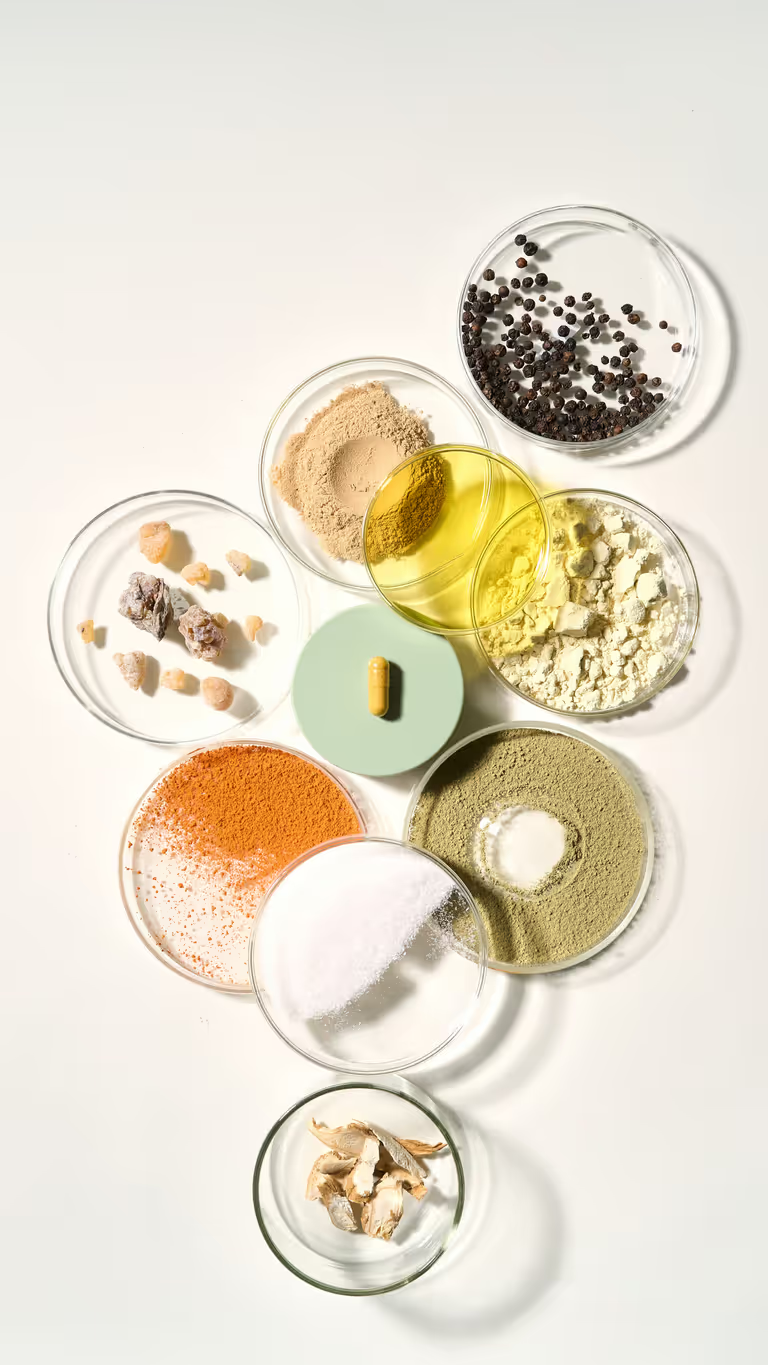
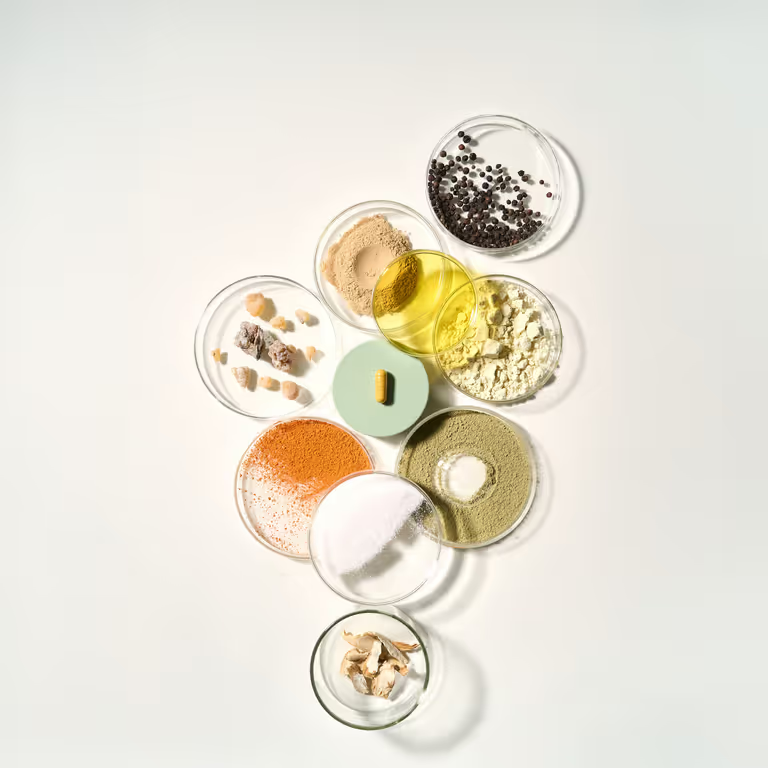
Matcha green tea is the second ingredient in Pathway 2 — Antioxidant Defense, alongside resveratrol. The pathway's role in the ProleevaMax formula is to address the oxidative stress that amplifies and sustains inflammatory signaling — the fuel feeding the fire that Pathway 1 targets directly. Whole-leaf matcha powder at supplement-formulation doses brings the EGCG-driven Nrf2 and NF-κB mechanisms to bear without the safety trade-offs associated with high-dose isolated EGCG extracts. The formula uses the whole preparation, which is how the ingredient has been consumed safely for centuries — and how L-theanine reaches the formulation as a natural co-passenger.*
Frequently asked questions
I'm not romantic about supplements. I've watched Fabio do this work for forty years, and I know most ingredients don't earn their place. Matcha is different for me because I live with it daily — in my cup every morning, in the formula we built together. The science and the daily ritual point in the same direction. That's not something you manufacture.*
— Maria
* These statements have not been evaluated by the Food and Drug Administration. This product is not intended to diagnose, treat, cure, or prevent any disease.
† Specific safety signal from case-series analysis — see Bonkovsky 2006 for full case descriptions and dose context. The hepatotoxicity signal has been associated with high-dose isolated EGCG supplements, not whole-matcha preparations at standard doses.
— Maria Lanzieri, Co-founder & CFO

Co-founder & CFO
Maria Lanzieri is the reason LanFam Health exists. After surviving breast cancer, she was put on estrogen-blocking medication that left her with chronic pain. The only daily option her doctors offered was NSAIDs — unsafe for ten-plus years of continuous use. Her husband Fabio, with 40 years in pharmaceuticals, searched every option and found nothing that addressed root cause. So he started building one at their kitchen table.
That formulation became ProleevaMax. Maria was the first person to take it. She still is.
Maria writes about life on the other side of a hard recovery — what works, what doesn't, the recipes she's actually making, the routines that fit around a real day. Her health history is the foundation of the brand, but her content is lifestyle, not illness. She writes the way she'd write to a friend: warm, practical, specific.
What Maria writes about
- Anti-inflammatory recipes and food routines
- Daily living through chronic pain and recovery
- Practical lifestyle adjustments — sleep, movement, breath, food, supplementation rhythm
- The Active Ager perspective — staying mobile and engaged after 50
- The personal angle on the LanFam origin story
There's a seat at our table
Letters from our family to yours — the science, the recipes, the things that actually helped real families. Leave your email and we'll send the next one.