A note from Maria Lanzieri.
There's a particular kind of tired that doesn't come from not sleeping enough. It comes from months — sometimes years — of your body fighting something. The fatigue that sits behind chronic pain is different from a hard week at work. It doesn't lift after a good night. It accumulates. When Fabio was building the formula we put together at our kitchen table, he said to me: "The pain pathways matter. But if you're exhausted, none of it reaches you the way it should." That's why ginseng is here. Not as a quick fix. As the ingredient that supports your body's capacity to keep going.
What it is
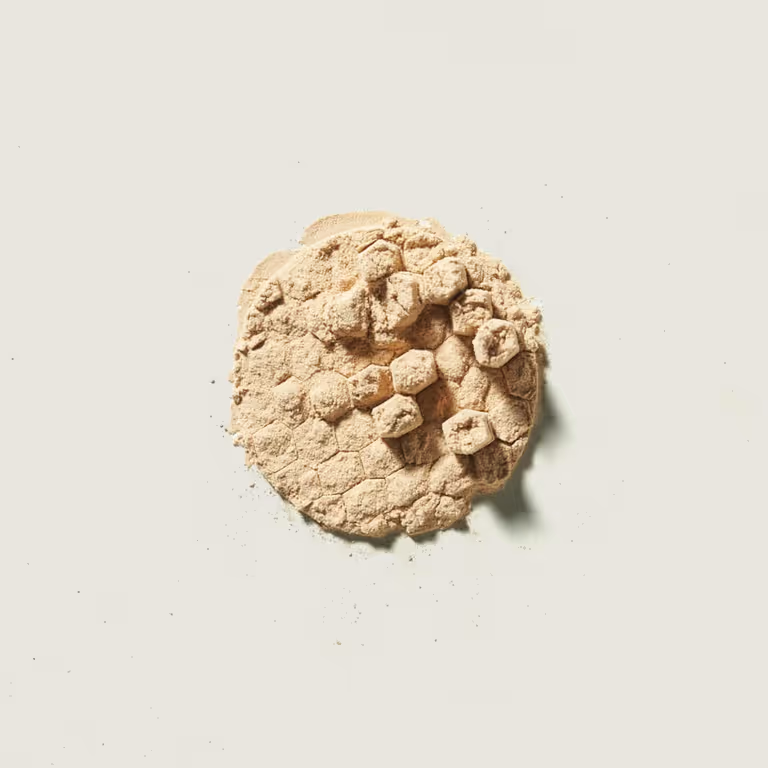
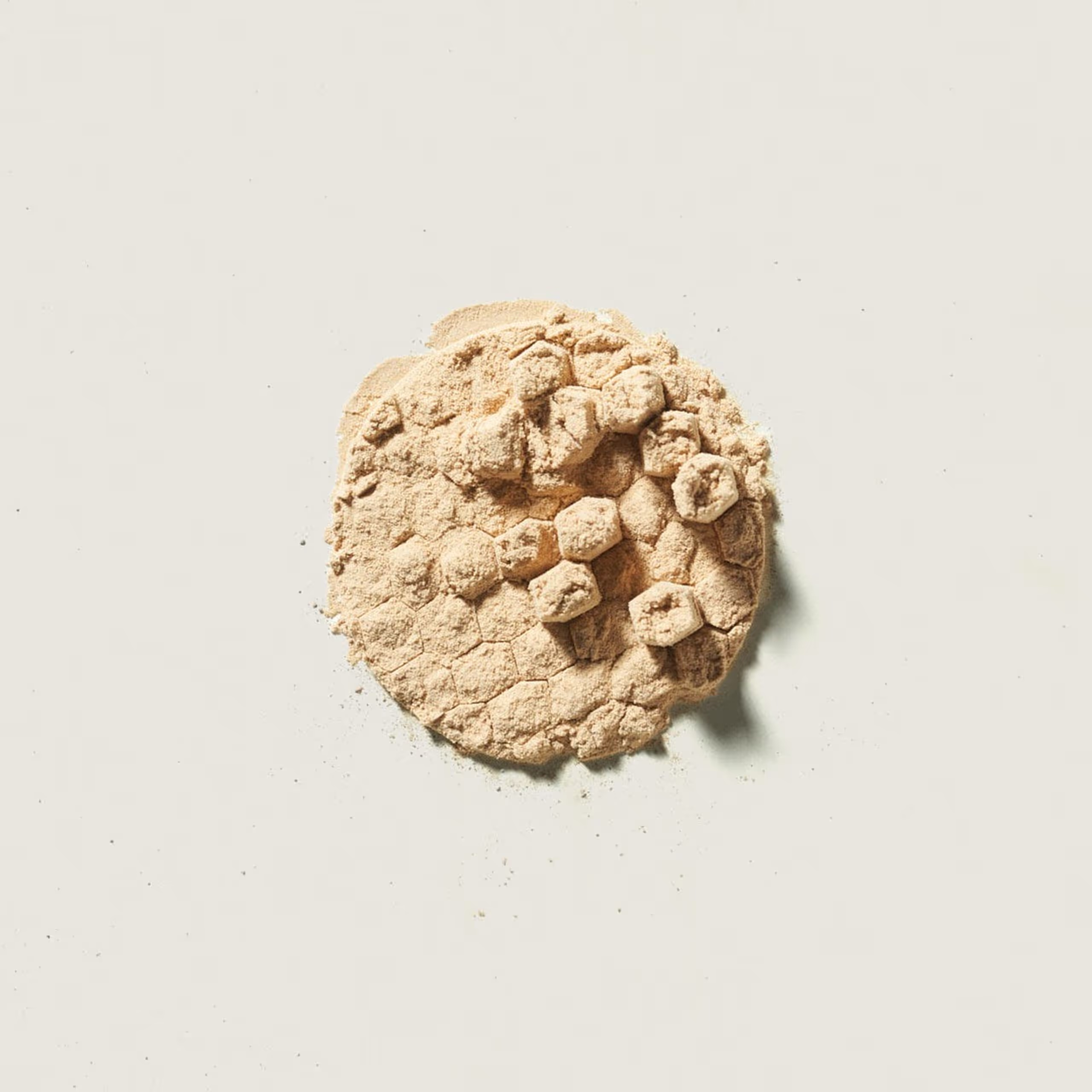
Panax ginseng — also called Korean ginseng or Asian ginseng — is the root of a slow-growing plant in the Araliaceae family, native to the mountain forests of Korea, China, and Siberia. It has been used in Traditional Chinese Medicine for more than 2,000 years, making it one of the most studied botanicals in human history. The root's active compounds are ginsenosides — a family of triterpene saponins. More than 30 ginsenosides have been characterized; the most-researched are Rb1, Rg1, Rg3, and Rh11. Different ginsenosides have different — and sometimes opposing — effects on the body, which is part of why the plant is described as an "adaptogen." ProleevaMax uses Panax ginseng root powder, the traditional whole-root preparation, rather than a standardized ginsenoside extract.
How it works
The word "adaptogen" gets used loosely in supplement marketing. The scientific definition is more specific: a botanical that supports the body's non-specific resistance to physiological stress — meaning it helps the body maintain function under a range of demanding conditions rather than pushing one outcome in one direction. For ginseng, the adaptogenic mechanism centers on the HPA (hypothalamic-pituitary-adrenal) axis, the system that regulates cortisol and the body's stress-response machinery. Ginsenosides modulate HPA-axis signaling in ways that support appropriate cortisol regulation — not suppression, not artificial elevation, but steadier response to physiological demand1.
At the cellular level, ginsenosides also interact with mitochondrial pathways involved in energy metabolism. Several studies have found effects on ATP production efficiency and mitochondrial membrane function — the biological substrate of the anti-fatigue effects that ginseng research has measured most consistently2. For someone whose body has been running a chronic inflammatory load for months or years, that cellular energy pathway support is relevant: chronic inflammation is metabolically expensive, and fatigue is one of its most consistent symptoms.
For the inflammatory side of the picture, I want to be honest with you: the evidence here is developing rather than settled. Some trials have shown ginseng associated with reductions in TNF-α and IL-6 — pro-inflammatory cytokines — but this is better characterized as a secondary finding in energy and cognition research than as a primary anti-inflammatory mechanism3. The energy and fatigue literature for ginseng is strong. The chronic-inflammation-specific literature is still building. Fabio chose ginseng for Pathway 6 because it addresses something no other ingredient in the formula reaches — the adaptive energy deficit that goes hand in hand with living in a pain state, even as the body is doing the slower work of managing inflammation.
The evidence
A 2021 comprehensive pharmacology review in the Journal of Ginseng Research by Ratan and colleagues documented ginsenosides' broad biological activity across multiple systems, including their effects on energy metabolism, HPA-axis regulation, and cytokine modulation1. A separate paper in the same journal by Kim and colleagues specifically examined ginsenosides' role in modulating inflammatory responses, finding that select ginsenosides (particularly Rg3 and Rb1) were associated with reductions in pro-inflammatory signaling markers in cell and animal models3. The NIH National Center for Complementary and Integrative Health's review of Panax ginseng evaluates the totality of the evidence for energy, cognition, immune function, and safety in human populations4. A 2012 safety-focused randomized controlled trial by Lee and colleagues confirmed ginseng's tolerability profile in a structured 8-week intervention5.
Research on Panax Ginseng as a single ingredient, not on this formula.
Adaptogenic effects of Panax ginseng on modulation of immune functions
Ratan ZA, Youn SH, Kwak YS, et al — J Ginseng Res · 2021
Ginsenoside Rg1 inhibits the inflammatory response in LPS-stimulated RAW264.7 macrophages by modulating the NF-κB pathway and suppressing mitochondrial dysfunction
Zheng M, Gu X, Gu Y, et al — J Agric Food Chem · 2018
Role of ginsenosides, the main active components of Panax ginseng, in inflammatory responses and diseases
Kim JH, Yi YS, Kim MY, Cho JY — J Ginseng Res · 2017
Department of Health and Human Services. [Premise 8 NIH substitute]
National Center for Complementary and Integrative Health (NCCIH). Asian Ginseng: What You Need To Know. U.S
Safety and tolerability of Panax ginseng root extract: a randomized, placebo-controlled, clinical trial in healthy Korean volunteers
Lee NH, Yoo SR, Kim HG, Cho JH, Son CG — J Altern Complement Med · 2012
Safety & interactions
Panax ginseng has a well-established safety profile at standard supplement doses, consistent across a long use history and formal clinical evaluation5. Four categories of medications warrant a conversation with your physician before starting daily ginseng:
- Blood-thinners and antiplatelet drugs — ginseng has modest antiplatelet activity; combining with warfarin, apixaban, rivaroxaban, or daily aspirin can additively raise bleeding risk.
- Diabetes medications — ginseng has a modest glucose-lowering effect in some studies. If you're on insulin or sulfonylureas, monitor blood glucose in the first few weeks.
- Stimulant medications — ginseng has mild stimulating properties at higher doses.
- MAOIs — rare drug interactions have been noted in the literature.
At higher doses, some people notice mild insomnia, headache, or jitteriness — manageable by taking ginseng in the morning. Ginseng is not recommended during pregnancy or lactation unless specifically cleared by your physician.
Dosage
Clinical trials typically use 200–400 mg/day of standardized Panax ginseng extract (often standardized to 4–7% ginsenosides). Root powder preparations like the form in ProleevaMax deliver a lower ginsenoside concentration per milligram — the traditional preparation that ginseng's 2,000-year use history reflects. Effects are generally observed over 4–8 weeks of consistent daily use. Consult your physician before starting any new supplement regimen.
In ProleevaMax
Panax ginseng is the sole ingredient in Pathway 6 — Adaptive Energy. It is the only ingredient in the formula whose primary role isn't in the inflammatory signaling, oxidative, nervous system, or gut pathways — it addresses what chronic inflammatory load does to your energy reserves over time. The formula uses root powder in the traditional whole-root form. Pathway 6 completes the formula's picture: not just managing what inflammation does to the body, but supporting the body's capacity to keep showing up every day.*
Frequently asked questions
These are three distinct plants. Panax ginseng (Korean or Asian ginseng) is native to East Asia and the most extensively studied. American ginseng (Panax quinquefolius) is a close botanical relative with a different ginsenoside profile, considered more cooling in traditional medicine. Siberian ginseng (Eleutherococcus senticosus) is not a true ginseng — it's an entirely different plant containing eleutherosides, not ginsenosides. ProleevaMax uses Panax ginseng root powder.
An adaptogen is a botanical that supports the body's non-specific resistance to physiological stress — helping the body handle a range of demanding conditions without pushing one outcome in isolation. For ginseng, the mechanism centers on the HPA axis, the system governing cortisol and the stress-response. "Bidirectional support" means it supports appropriate regulation depending on what the body is currently facing — not simply suppressing or stimulating cortisol.
At standard supplement doses, most people do not experience the jitteriness pattern associated with caffeine. Ginseng has mild stimulating properties at higher doses. This is generally dose-dependent and manageable: take it in the morning, stay within the label dose. People who are sensitive to stimulants generally tolerate ginseng better than coffee.
Four categories matter: blood-thinners (warfarin, apixaban, rivaroxaban, daily aspirin) — modest antiplatelet activity, additive bleeding risk; diabetes medications — modest glucose-lowering effect; stimulant medications — mild stimulating properties at higher doses; MAOIs — rare drug interactions noted. Tell your prescribing physician you're starting ginseng before you do.
The energy and fatigue research on ginseng typically examines consistent daily use over 4–8 weeks. In ProleevaMax's 90-day protocol, Pathway 6 is designed to support the cumulative energy dividend — the part that becomes noticeable not as a surge, but as a steadier afternoon. Give the protocol the time it needs.
The days I started to notice weren't dramatic. It was more that an afternoon didn't collapse the way it used to. I still had something left. That's what Pathway 6 is about. Not a surge — just the steadier version of yourself that shows up when your body isn't spending everything just getting through the morning.*
— Maria
* These statements have not been evaluated by the Food and Drug Administration. This product is not intended to diagnose, treat, cure, or prevent any disease.

Co-founder & CFO
Maria Lanzieri is the reason LanFam Health exists. After surviving breast cancer, she was put on estrogen-blocking medication that left her with chronic pain. The only daily option her doctors offered was NSAIDs — unsafe for ten-plus years of continuous use. Her husband Fabio, with 40 years in pharmaceuticals, searched every option and found nothing that addressed root cause. So he started building one at their kitchen table.
That formulation became ProleevaMax. Maria was the first person to take it. She still is.
Maria writes about life on the other side of a hard recovery — what works, what doesn't, the recipes she's actually making, the routines that fit around a real day. Her health history is the foundation of the brand, but her content is lifestyle, not illness. She writes the way she'd write to a friend: warm, practical, specific.
What Maria writes about
- Anti-inflammatory recipes and food routines
- Daily living through chronic pain and recovery
- Practical lifestyle adjustments — sleep, movement, breath, food, supplementation rhythm
- The Active Ager perspective — staying mobile and engaged after 50
- The personal angle on the LanFam origin story