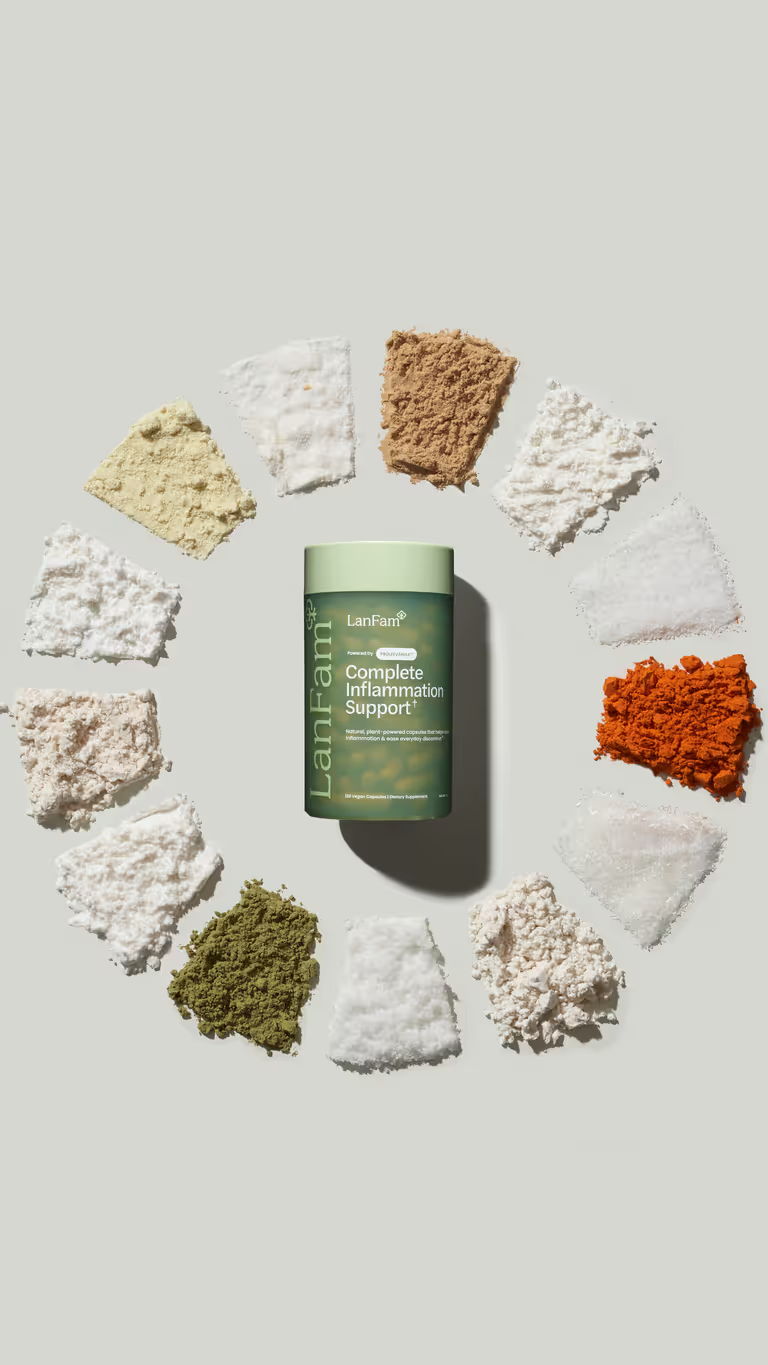
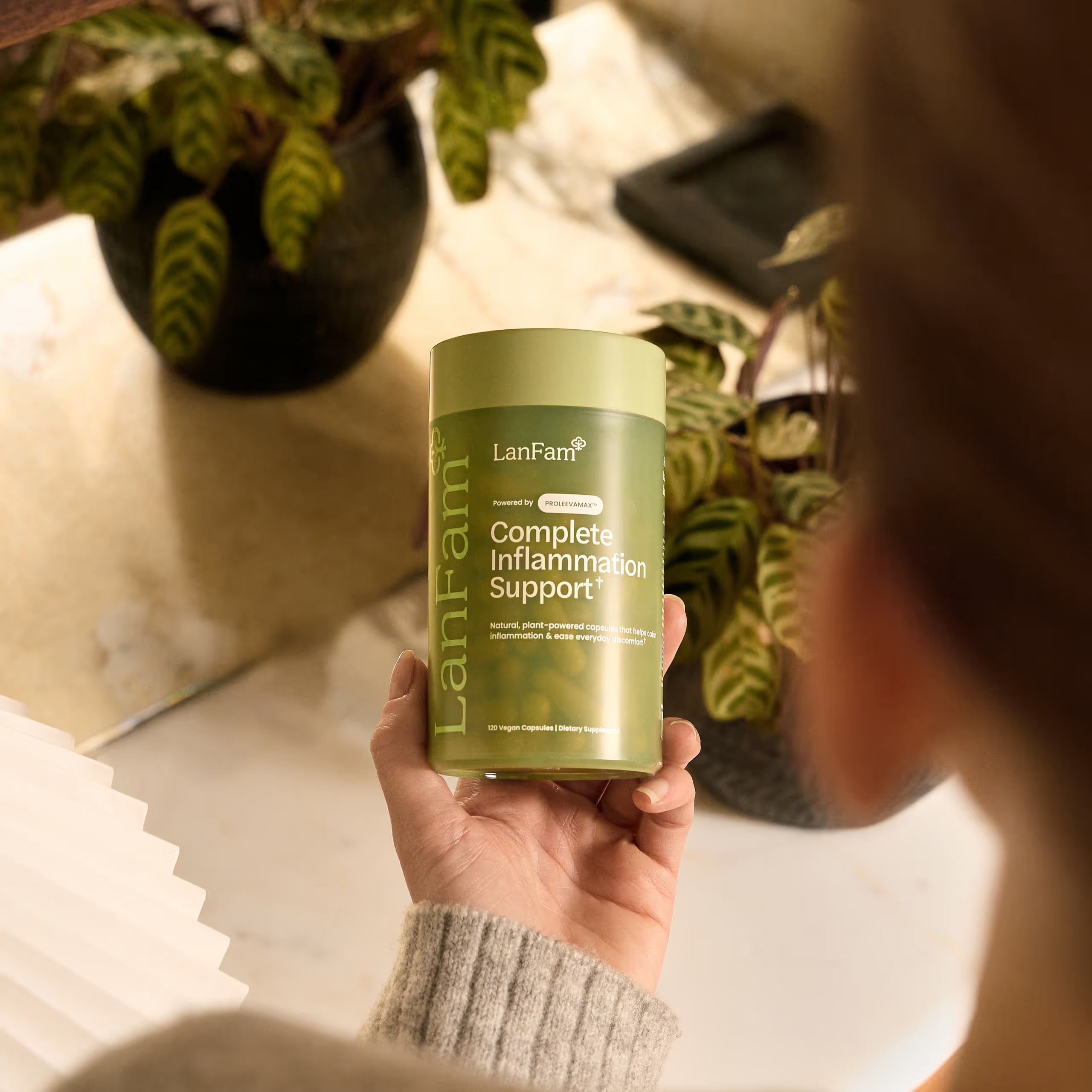
Who Formulated ProleevaMax?
ProleevaMax was formulated by Fabio Lanzieri for his wife Maria after breast cancer treatment left her with joint pain. The origin story, and its limits.
The short version
- Fabio Lanzieri formulated it; he and Maria co-founded LanFam Health.
- It was built for one specific person with a specific problem, before it was a product.
- The problem was joint pain from aromatase-inhibitor treatment, where long-term NSAID use was not a good option.
- A founder story explains why a product exists. It is not evidence that it works — and we keep those two things apart deliberately.
ProleevaMax was formulated by Fabio Lanzieri, co-founder and CEO of LanFam Health, who spent 40 years working in the pharmaceutical industry before starting the company. He developed it for his wife Maria Lanzieri, a breast cancer survivor whose estrogen-blocking medication left her with persistent joint pain that her doctors could address only with daily NSAIDs. LanFam Health — the name is short for Lanzieri family — was founded by the two of them to make the formula available beyond their own kitchen.
The short answer, and the longer one
Fabio Lanzieri formulated ProleevaMax. He is co-founder and CEO of LanFam Health, and he worked in pharmaceuticals for 40 years before the company existed.
The longer answer is more useful, because the circumstances explain the formula better than a job title does.
Maria's problem came first
Maria Lanzieri was treated for breast cancer. Part of standard follow-up treatment for hormone-receptor-positive breast cancer is endocrine therapy — medication that suppresses estrogen to reduce the chance of recurrence. It is effective, and it is taken for years.
It also has a well-documented side effect: joint pain and stiffness. Not everyone experiences it, but among those who do it can be significant enough to interfere with daily activity, and it is one of the more common reasons people struggle to stay on the medication for the full course.
That was Maria's situation. She was doing exactly what she should have been doing, and it hurt.
The option her doctors could offer was NSAIDs — ibuprofen and its relatives — taken daily. For short-term use that is unremarkable. As an open-ended plan for someone facing a decade of endocrine therapy, it is a different proposition, and the long-term risks of continuous NSAID use are well recognised.
So the question in the Lanzieri house was not commercial. It was: what else is there?
What Fabio actually did
He had spent four decades in pharmaceuticals. That background is worth being precise about, because it is easy to overstate.
What it gave him: familiarity with how ingredients are specified and standardized, how to read the research literature critically, and what a supplier needs to be asked. When he decided the answer had to involve standardized extracts with stated active percentages rather than generic botanical powders, that instinct came from the industry he had worked in.
What it did not give him: a laboratory, a clinical development programme, or the authority to declare a formula effective. Forty years of professional experience is a reason to take someone's reasoning seriously. It is not a substitute for evidence, and we are not going to present it as one.
He built the first versions at his kitchen table in Florida. Not a metaphor — the early formulation work was domestic, iterative, and aimed at one person.
Why the formula looks the way it does
Two features of ProleevaMax trace directly back to that origin.
It is multi-ingredient rather than a single high dose. The problem Maria had was not only a sore joint. It came with fatigue and the general flattening that people describe alongside persistent discomfort. A formula aimed at one mechanism did not match the shape of the problem. That reasoning became LanFam's six-part framework — set out in how the formula is designed, including where the model is the company's own rather than textbook.
It uses standardized extracts with stated percentages. Boswellia at 65% boswellic acids rather than "boswellia, 400mg." That is a pharmaceutical habit — if you cannot state how much active compound is present, you cannot compare what you made to what was studied. We go into the difference in standardized extract vs whole herb.
There is a real limit here we would rather state ourselves: the label declares a 2,401 mg proprietary blend, so while the standardization percentages are published, the individual milligrams inside the blend are not. Knowing a delivered dose needs both numbers. That is a gap in the transparency, on our own product.
From one person to a company
LanFam Health is short for Lanzieri family. Fabio and Maria are co-founders — his role formulation and operations, hers product development and the founder narrative that the brand is built around.
The stated standard is: "If we wouldn't give it to our own, we won't make it." Whether that is a meaningful commitment or a nice sentence is something you can only judge by what the company does when the two conflict — which is roughly why our account of the research leads with what they failed to show rather than what they found.
What a founder story does and does not establish
This part matters, and most brands skip it.
What it establishes: that the product was made for a real person with a real problem, by someone with relevant professional background, before there was any commercial reason to make it. That is genuine context. It tells you something about intent, and about why the formula is shaped the way it is.
What it does not establish: that the formula works. Not for Maria, not for anyone. A compelling origin is not clinical evidence, and the fact that a founder believes in a product is not information about whether it does anything.
Maria's experience is one person's experience, uncontrolled and unblinded, and she is the most invested observer possible. That is the weakest form of evidence there is. It is also, honestly, why the company exists — and both of those things can be true at once.
The evidence question is answered separately, and not favourably: two small uncontrolled studies, neither meeting its primary endpoint on a conventional test. We set that out in full in inside the ProleevaMax studies.
If you would rather judge the product on what is in it than on who made it, that is the more reliable instinct — the full ingredient list is the place to start.

Frequently asked questions
Fabio Lanzieri, co-founder and CEO of LanFam Health, who worked in the pharmaceutical industry for 40 years before founding the company. He developed it for his wife Maria.
Co-founder and CEO of LanFam Health, and the formulator of ProleevaMax. His background is 40 years in pharmaceuticals; he began the formulation work at his kitchen table in Florida.
Fabio and Maria Lanzieri. The name is short for Lanzieri family.
Because Maria Lanzieri developed persistent joint pain during endocrine therapy following breast cancer treatment, and the main option available was daily NSAIDs — not a comfortable long-term plan for a medication course measured in years.
No. It explains why the product exists and why it is formulated as it is. Evidence of effect is a separate question. Our account of the research sets out why what exists does not establish that the formula works.