Is Turmeric a Blood Thinner? What to Know Before You Combine It With Medication
Is turmeric a blood thinner? It has mild antiplatelet activity that can add to warfarin, aspirin, and other anticoagulants. Here's the doctor-first guidance.
If you take a blood thinner — or you're heading into surgery — and you're wondering whether your daily turmeric is safe, let me answer the most important thing first, before any of the science.
Talk to the doctor who prescribed your medication before you combine it with turmeric or curcumin. Curcumin, the active compound in turmeric, has a mild blood-thinning (antiplatelet) effect of its own. On its own, in food, for most people, that's a non-issue. But added on top of a prescription anticoagulant or antiplatelet drug — warfarin, aspirin, or the newer ones like apixaban, rivaroxaban, and dabigatran — those effects can add up, and the result can be more bleeding risk than your doctor planned for [1][2]. This is not a "supplements are scary" warning. It's a specific, real, and entirely manageable interaction — if you loop in your doctor. That's the whole point of this letter.
Now, with the safety part said plainly, let me explain what's actually going on, because the honest picture is more reassuring and more useful than a yes-or-no answer.
What "Blood Thinner" Actually Means (Two Different Jobs)
People say "blood thinner" as if it's one thing. It's really two.
Your blood clots through two cooperating systems. Platelets are tiny cells that clump together to plug a leak — that's the first responder. Then a cascade of clotting factors weaves a fibrin mesh to make the plug permanent. Medications target one or the other:
- Antiplatelet drugs (aspirin, clopidogrel) make platelets less sticky.
- Anticoagulants (warfarin, and the newer apixaban, rivaroxaban, dabigatran) interrupt the clotting-factor cascade.
Where does curcumin fit? On the platelet side. Laboratory and mechanistic studies show curcumin can modestly reduce platelet aggregation [2]. So when people ask "is turmeric a blood thinner," the precise answer is: it has mild antiplatelet activity. Not a prescription-strength effect — but a real one in the same direction as some of these drugs, which is exactly why stacking them needs oversight.
Why the Combination Is the Real Concern
Here's the part that matters, and it's a simple idea. The danger isn't curcumin by itself. For the vast majority of people not on blood-thinning medication, daily turmeric is well tolerated [3]. The danger is additive effect — two mild-to-strong nudges in the same direction.
If your doctor has carefully dosed warfarin to keep your blood at a specific clotting level (measured as your INR), and you quietly add a concentrated curcumin supplement on top, you may push past the window your doctor calibrated [1][2]. Same logic with daily aspirin or the newer anticoagulants. The medication is doing a precise job. Curcumin can lean on the scale without anyone watching the scale.
That's why the answer is never "just stop the turmeric" or "it's probably fine." The answer is: tell the person managing your medication. They can decide whether to monitor, adjust, or have you skip the concentrated form. That's a five-minute conversation that closes the entire risk.
Specific Situations Where You Must Check First
Let me be plainspoken about exactly who needs that conversation before adding concentrated turmeric or a curcumin supplement:
- You take warfarin (Coumadin). This is the classic interaction. Curcumin's antiplatelet effect plus warfarin's anticoagulation can additively raise bleeding risk; your INR may need watching [1].
- You take a newer oral anticoagulant — apixaban (Eliquis), rivaroxaban (Xarelto), dabigatran (Pradaxa). Same additive principle [2].
- You take daily aspirin or another antiplatelet drug (clopidogrel/Plavix).
- You have surgery or a dental procedure coming up. Tell your surgeon you take turmeric/curcumin. Many will ask you to stop supplements with blood-thinning activity a week or two beforehand.
- You have a bleeding disorder or a history of easy bruising, frequent nosebleeds, or GI bleeds.
For people in none of these categories, food-level turmeric is not something to fear. The caution is targeted, not universal — that distinction is the whole message.
A Note on Black Pepper (Piperine) — A Separate Interaction Layer
One more thing worth knowing, because good curcumin supplements pair curcumin with piperine (black pepper extract) to make it absorbable — curcumin alone barely reaches the bloodstream [3]. Piperine has its own interaction surface: it can slow the liver's CYP3A4 enzyme, which metabolizes many prescription drugs [4]. So a curcumin-piperine product gives you two reasons, not one, to check with your doctor if you're on regular medication. It's the same answer either way — loop in the prescriber — but I'd rather you know the full picture than half of it.
How We Think About This in Our Own Formula
I'll tell you how we handle it, because transparency is the only honest way through a safety topic.
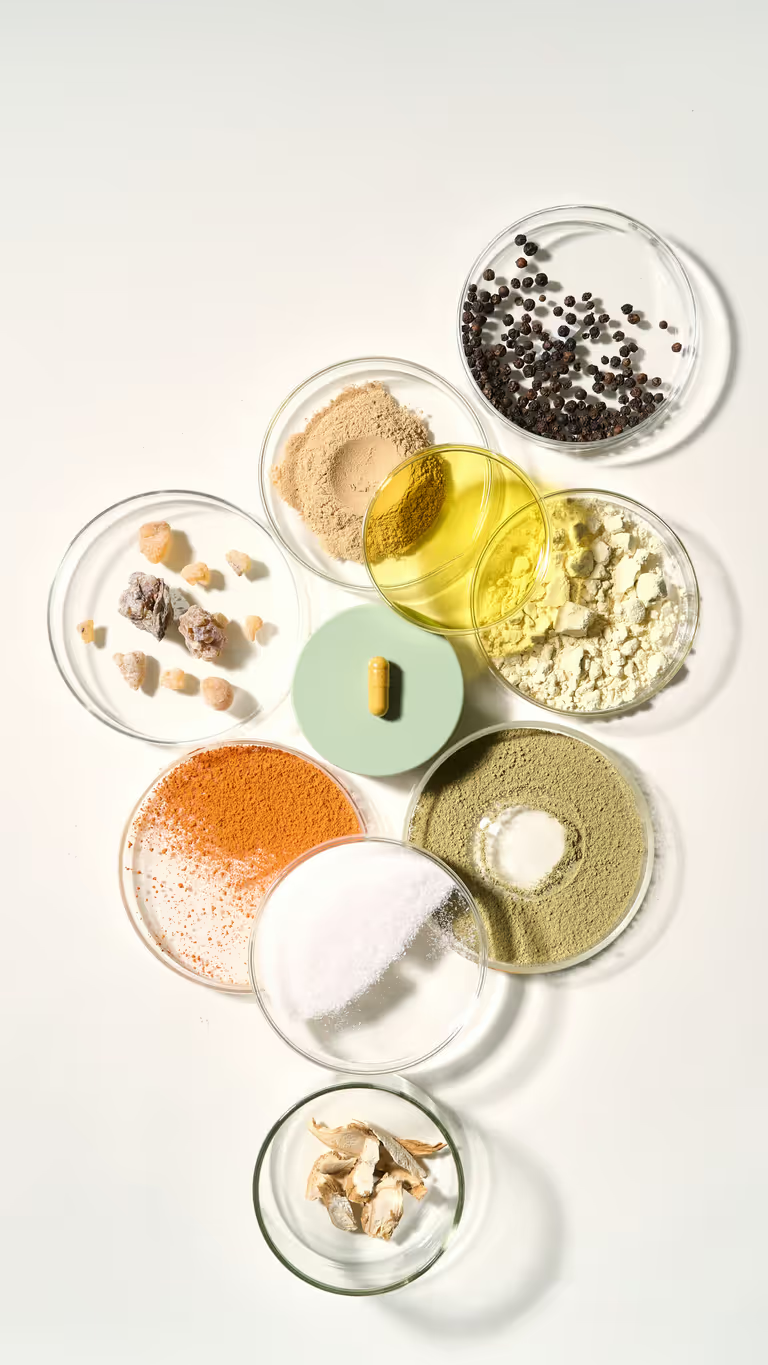
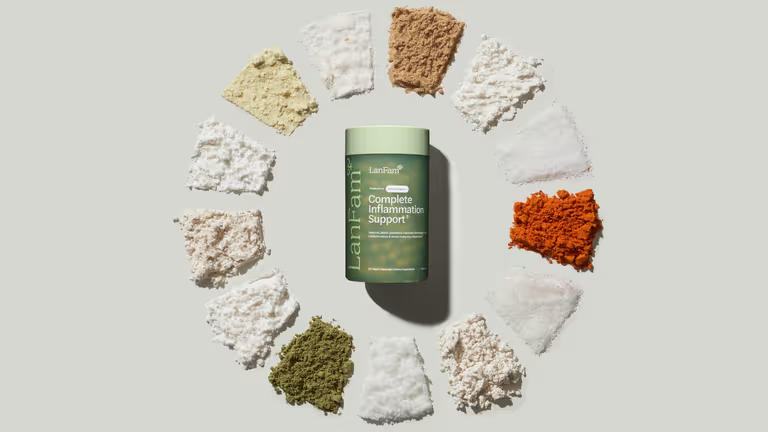
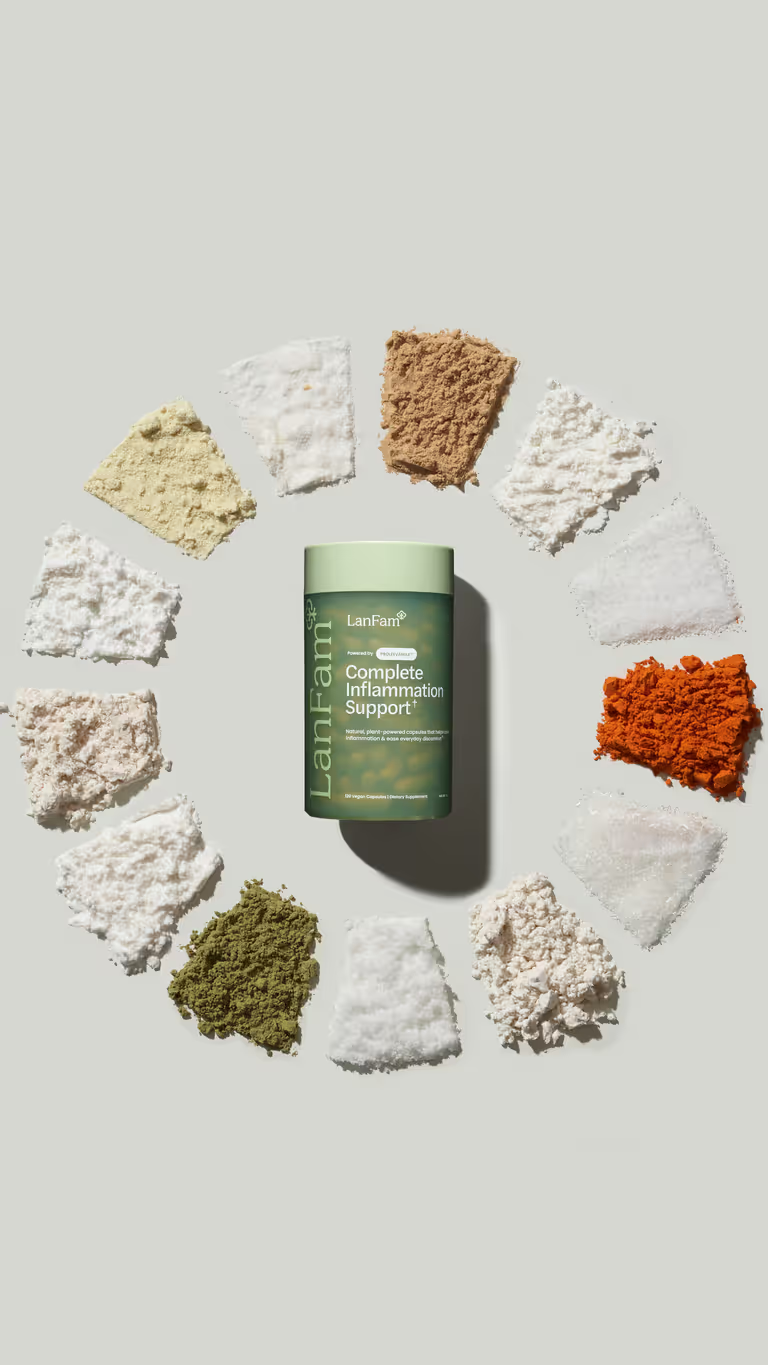
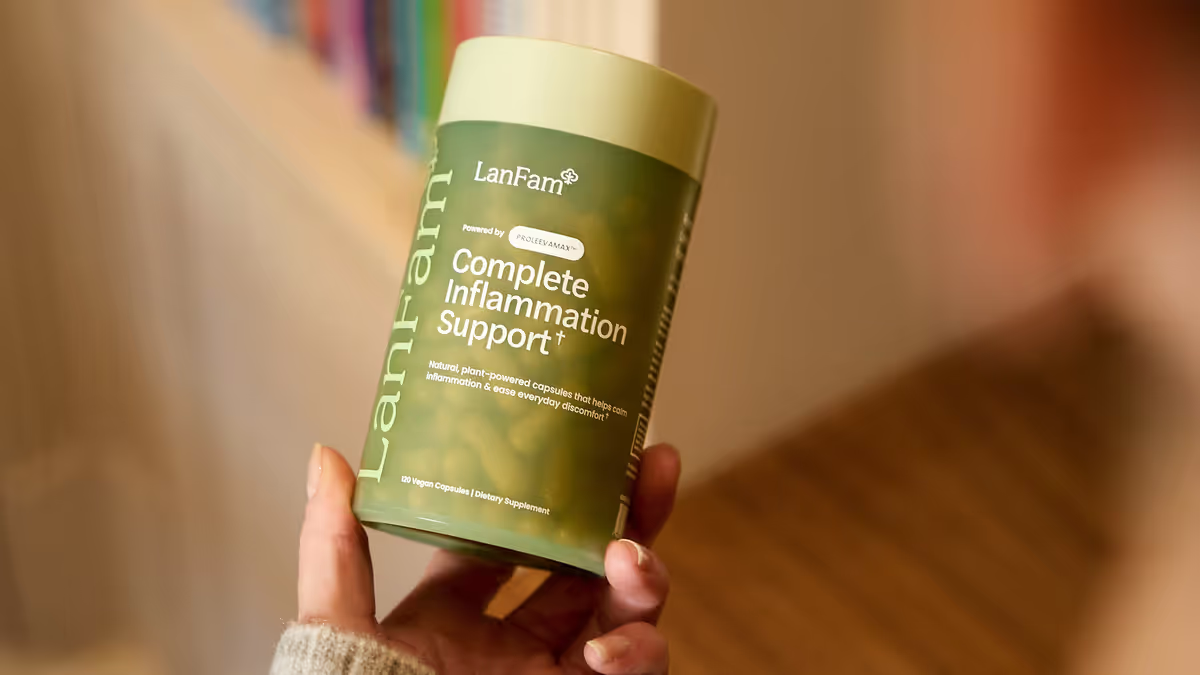
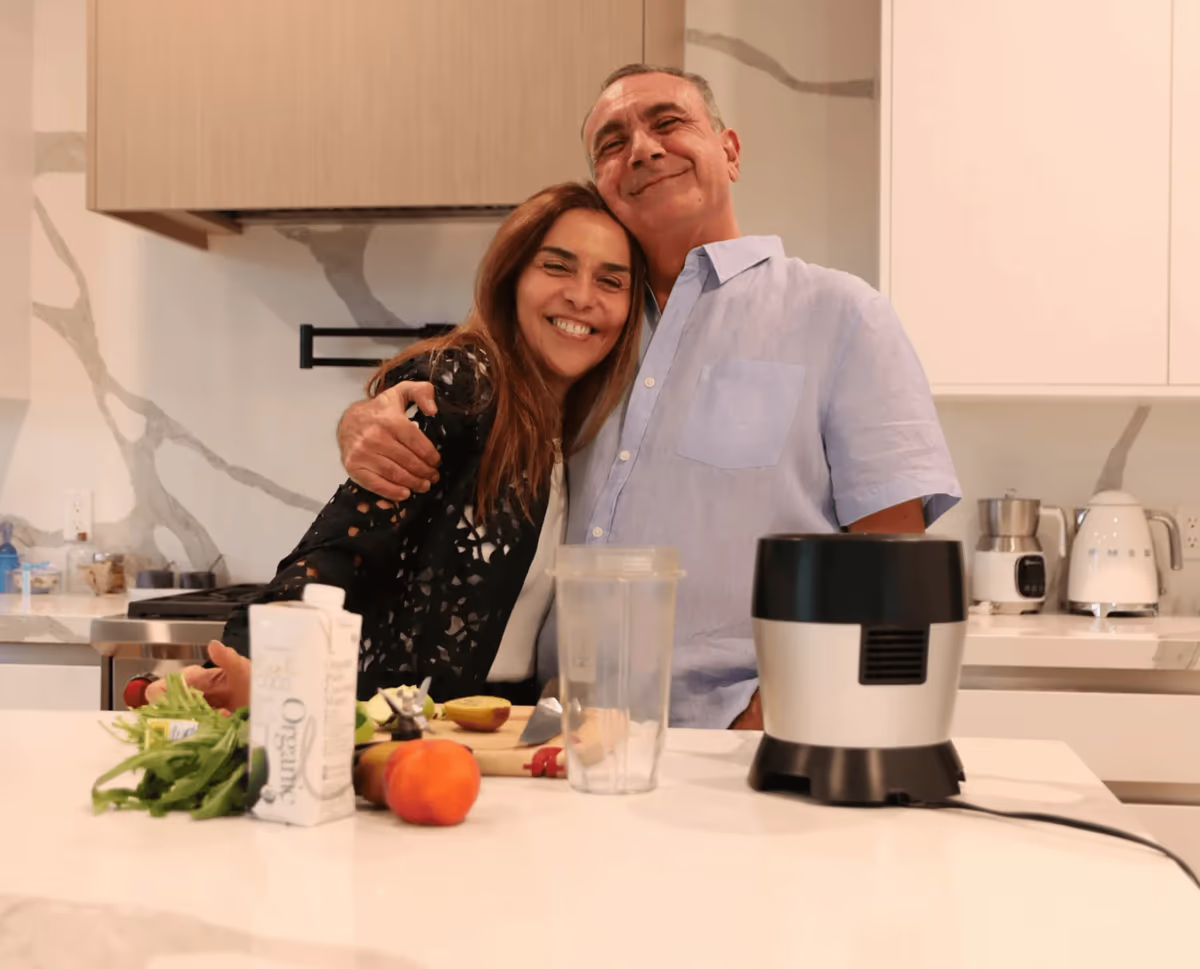
ProleevaMax — the formula I built at our kitchen table for my wife Maria — uses standardized curcumin paired with piperine, dosed where the research is, to support a healthy inflammatory response.* That same careful formulation that makes the curcumin actually work is also the reason we say, clearly and on every relevant page: if you take anticoagulants, antiplatelet drugs, or you have surgery coming, talk to your doctor before starting. We built it for Maria, who was on medication and couldn't take careless risks — so "ask your doctor first" isn't fine print to us. It's how the formula was designed to be used. If we wouldn't give it to our own without that step, we won't tell you to skip it.
Is It Different From Taking Turmeric With Ibuprofen?
Yes — and people conflate them constantly. Ibuprofen and other NSAIDs are a different class with their own considerations (stomach lining, kidneys, and yes, some bleeding overlap, but the mechanism and the cautions aren't identical to the anticoagulant story above). How curcumin and ibuprofen actually compare as anti-inflammatories — and what it means to use one alongside or instead of the other — is its own question, and I worked through it in curcumin vs. ibuprofen. If your question is really about pairing turmeric with a painkiller rather than a blood thinner, start there.
And if your underlying goal is to move away from daily NSAIDs toward something gentler for long-term use, that's a bigger conversation I walked through in natural alternatives to ibuprofen and in the honest, graded rundown at anti-inflammatory supplements for joint pain.
The Bottom Line
Is turmeric a blood thinner? In plain terms: it has a mild antiplatelet effect — real, but gentle. For most people not on medication, that's a curiosity, not a concern. For anyone on a prescription blood thinner or facing surgery, it's the one thing you check before you start, because the effects can add together [1][2].
The mistake is treating "natural" as "automatically safe to combine." Natural compounds have real pharmacology — that's exactly why they can help, and exactly why they deserve the same respect you'd give any active ingredient. Have the conversation with your doctor. It costs you five minutes and it buys you the whole peace of mind.
That's what I'd tell my own family. It's what I'm telling you.
These statements have not been evaluated by the Food and Drug Administration. This product is not intended to diagnose, treat, cure, or prevent any disease.
This article is general education, not medical advice. If you take any blood thinner or antiplatelet medication, or you have surgery scheduled, talk to your prescribing doctor before starting or continuing concentrated turmeric or curcumin supplements.

References
- 2.Heck AM, DeWitt BA, Lukes AL. Potential interactions between alternative therapies and warfarin. American Journal of Health-System Pharmacy. 2000. https://doi.org/10.1093/ajhp/57.13.1221
- 3.Keihanian F, Saeidinia A, Bagheri RK, Johnston TP, Sahebkar A. Curcumin, hemostasis, thrombosis, and coagulation. Journal of Cellular Physiology. 2018. https://doi.org/10.1002/jcp.26249
- 4.Gupta SC, Patchva S, Aggarwal BB. Therapeutic roles of curcumin: lessons learned from clinical trials. The AAPS Journal. 2013. https://doi.org/10.1208/s12248-012-9432-8
- 5.Bhardwaj RK, Glaeser H, Becquemont L, Klotz U, Gupta SK, Fromm MF. Piperine, a major constituent of black pepper, inhibits human P-glycoprotein and CYP3A4. Journal of Pharmacology and Experimental Therapeutics. 2002. https://doi.org/10.1124/jpet.102.034728
- 6.Shoba G, Joy D, Joseph T, et al. Influence of piperine on the pharmacokinetics of curcumin in animals and human volunteers. Planta Medica. 1998. https://doi.org/10.1055/s-2006-957450
Frequently asked questions
There's a seat at our table
Letters from our family to yours — the science, the recipes, the things that actually helped real families. Leave your email and we'll send the next one.