Why Do My Joints Hurt? The Inflammation Behind That Everyday Ache
Why do your joints hurt when nothing's wrong on the X-ray? The inflammatory signal behind everyday joint aches and stiffness — and what genuinely helps.
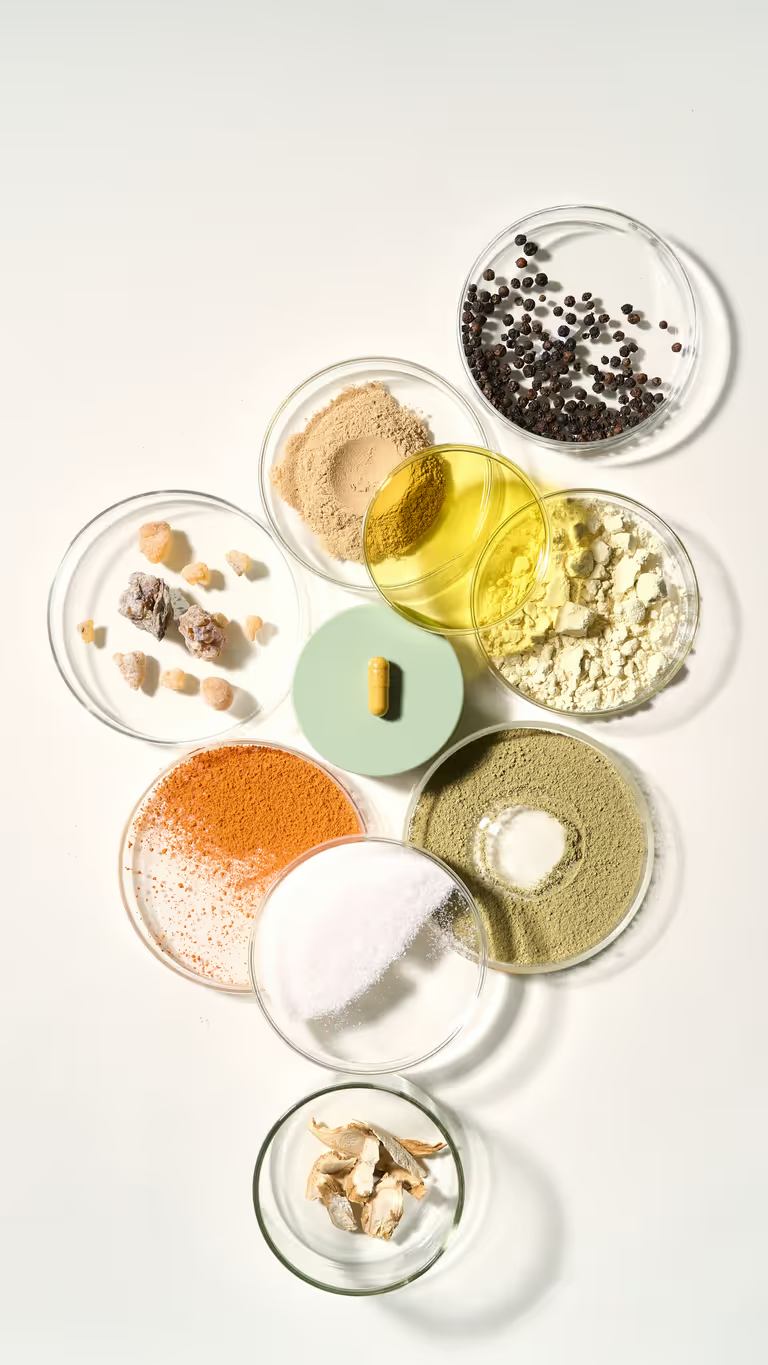
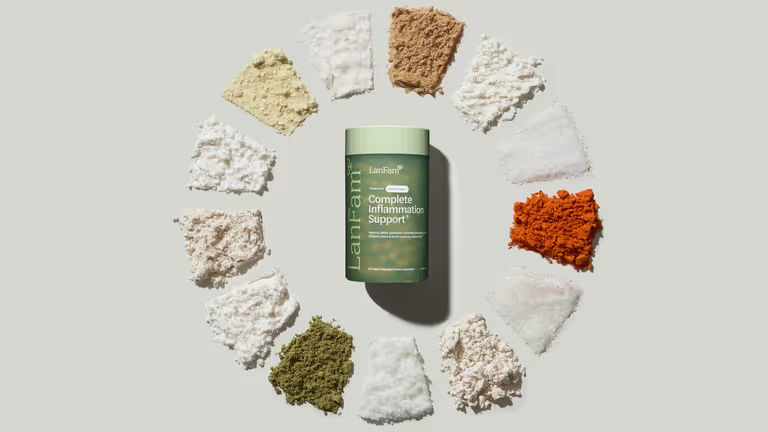
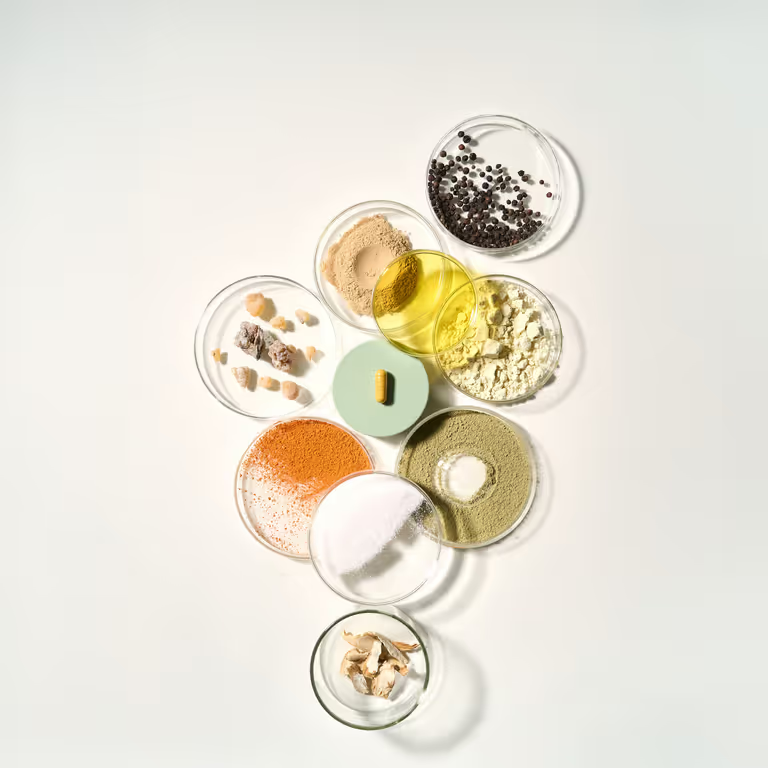
Ingredients in this letter
You reach for a coffee mug and your knuckles complain. You stand up from a chair and your knees take a second to remember how. You climb the stairs and there's a stiffness in your hips that wasn't there a few years ago. Nothing dramatic — no swelling, no injury you can name — just joints that hurt, quietly, most days. And you've probably been told some version of "you're getting older, what do you expect."
I've spent forty years around pharmaceuticals, and I'll tell you what I tell everyone who asks me this at a dinner table: that answer is half-true and entirely unhelpful. Let me give you the better version.
Why a Joint Hurts in the First Place
Here's what most people picture when they think about an aching joint: two bones grinding together, cartilage worn down, bone on bone. That picture isn't wrong, but it's incomplete in a way that matters a great deal for what you can do about it.
A joint isn't a dead hinge. It's a living, active environment — cartilage, a fluid-filled capsule, a membrane called the synovium that lines it and produces the lubricating fluid, and a rich supply of nerves. And it's the synovium that holds the key to your question. When something irritates a joint — wear, an old injury, the general inflammatory state of the rest of your body — the synovium responds by producing inflammatory messengers. Those messengers do two things: they kick off processes that break cartilage down faster, and they crank up the sensitivity of the nerves in the joint so that ordinary movement starts to register as ache.
In other words: the grinding doesn't hurt purely because it's mechanical. It hurts because the grinding triggers inflammation, and the inflammation is a large part of what you're actually feeling. A review of the role of inflammation in osteoarthritis laid this out clearly — synovial inflammation is now understood to be a driver of the disease and its symptoms, not just a bystander to mechanical wear [1][2].
The central player, again, is that master inflammatory switch called NF-κB. When it stays flipped on inside the joint, it keeps the inflammatory messengers — IL-6, TNF-α, and the cartilage-degrading enzymes they activate — in steady production [6]. That's the loop: inflammation drives degradation, degradation drives more inflammation, and your knee aches on the stairs.
This is why "it's just age" frustrates me as an explanation. Age is a risk factor, not a mechanism. The mechanism is inflammatory. And mechanisms can be supported.
Why the X-ray Came Back Fine but You Still Hurt
This is the single most common thing I hear, so let me address it directly. You went in, they imaged the joint, and the report says something reassuring — mild changes, nothing significant. And yet you hurt. Are you imagining it?
You're not. An X-ray shows structure — the bone, the joint space, visible wear. It does not show inflammatory activity. Two people can have nearly identical-looking joints on film and completely different levels of discomfort, because the difference lives in the inflammatory state of the tissue, which film doesn't capture. The amount of structural change on an image is famously poor at predicting how much a joint actually hurts. So a clean or "mild" image rules out some things — it doesn't rule out the inflammation story. If anything, it points toward it.
(If your aching isn't in one joint but spread across your whole body, that's a slightly different conversation — I wrote about the all-over version here: why does my whole body ache.)
When an Aching Joint Needs a Doctor, Not a Supplement
Before the supportive stuff, the honest guardrails. Most everyday joint aches are the slow, inflammatory kind. But some patterns need a real diagnosis, and I'd want you to take them seriously:
- A joint that is hot, red, and visibly swollen — especially if it came on fast.
- An aching joint with fever or feeling generally unwell.
- A joint that locks, catches, or gives way.
- Sudden, severe ache, or one that follows a fall or injury.
- Joints that are stiff for more than an hour every morning, or symmetric soreness in the same joints on both sides — these can point toward inflammatory arthritis like rheumatoid arthritis, which needs proper medical management.
If any of those fit, see a doctor before anything else. A supplement is not the tool for a joint that's acutely inflamed, infected, or structurally injured.
What Actually Helps the Everyday, Inflammatory Kind
For the common, low-grade, inflammatory joint ache — once the red flags are ruled out — here's where I'd put my energy.
Movement, counterintuitively, comes first. A joint that hurts wants to be rested, but joints are nourished by movement — the cartilage has no blood supply of its own and depends on the joint being used to circulate nutrients in and waste out. Gentle, regular, low-impact movement (walking, swimming, cycling, mobility work) genuinely helps. Total stillness stiffens a joint further. There's a whole playbook for the morning-stiffness version of this, which I'd point you to: the joint stiffness playbook.
Then the supportive supplement layer — and here I'll be precise, because this is exactly where my industry oversells. Two botanicals have the best human evidence for supporting a healthy inflammatory response in joints, and they work on different pathways, which is why they pair well:
Boswellia serrata is the resin of the frankincense tree. What pulled it into modern research is one specific mechanism: it acts on the 5-LOX enzyme, the one that makes leukotrienes — among the most potent inflammatory signals your body produces. This matters because the common painkillers (ibuprofen, naproxen) work on a different enzyme pathway (COX) and leave 5-LOX untouched. Boswellia is one of very few natural compounds with real human evidence on that second pathway. A meta-analysis pooling the randomized trials found boswellia meaningfully reduced osteoarthritis joint discomfort and improved function [3].
Curcumin — the active compound in turmeric — works on that NF-κB master switch instead, helping keep it from staying stuck on. A meta-analysis of randomized trials found curcumin and turmeric extracts produced meaningful improvement in joint and arthritis symptoms [4]. But there's a catch worth more than a footnote: curcumin from plain turmeric is barely absorbed. Paired with piperine (black pepper extract), its bioavailability rose by roughly 2,000% in the classic human study [5]. Curcumin without piperine is mostly a missed opportunity.
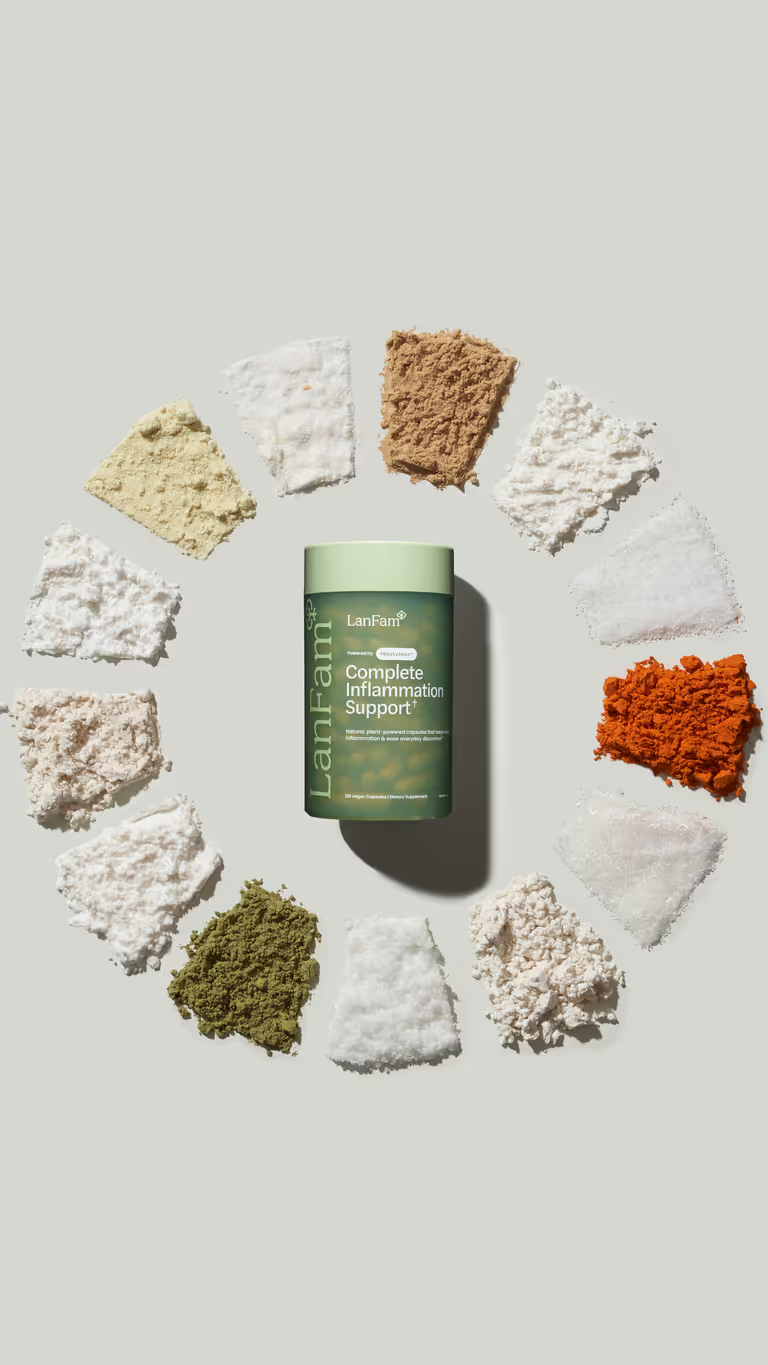
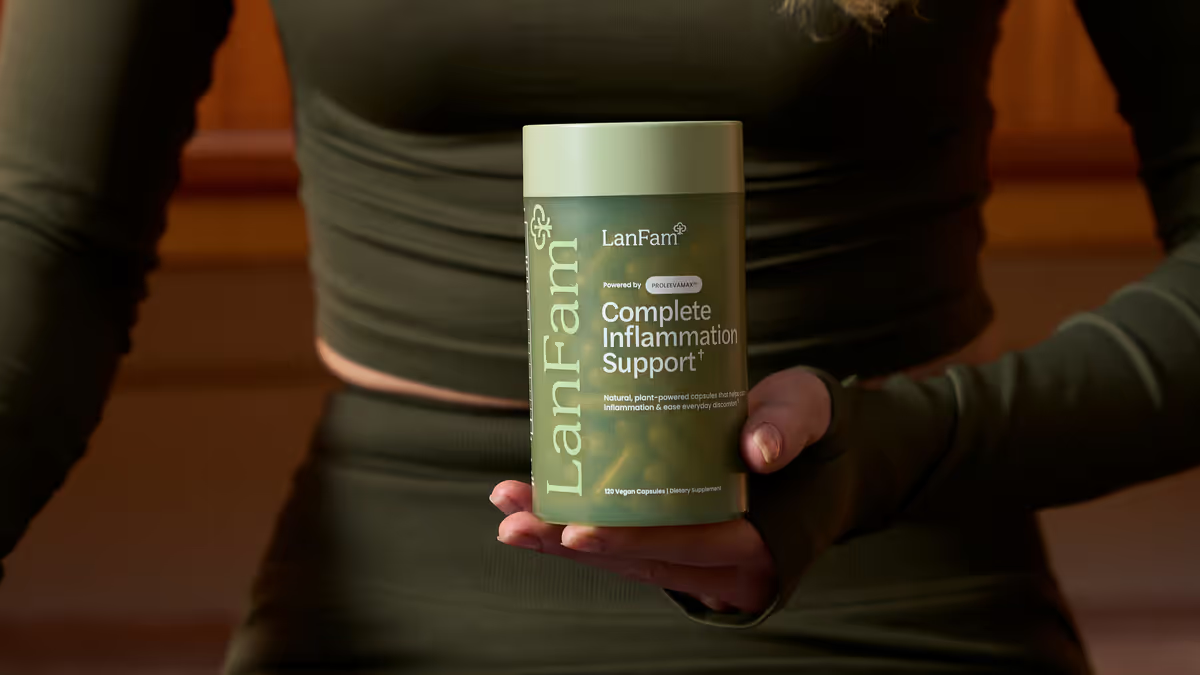
Because boswellia and curcumin act on two different inflammatory pathways, covering both tends to serve a joint better than leaning on one. That's the thinking behind ProleevaMax — boswellia and standardized curcumin-with-piperine together, among 13 standardized actives, dosed where the research is, to support a healthy inflammatory response across more than one pathway.* I built it at our kitchen table for my wife Maria when daily NSAIDs weren't a safe long-term option for her. The family standard hasn't changed: if we wouldn't give it to our own, we won't make it.
If you want the fully graded, honest rundown of every supplement that gets recommended for joints — including the ones that don't earn their reputation — I wrote it here: anti-inflammatory supplements for joint pain, what the evidence actually says. And if you're trying to choose a single product, this one is the honest buyer's guide: the best anti-inflammatory supplement.
What These Supplements Can't Do
Honesty about the ceiling matters as much as honesty about the floor. No supplement on this page rebuilds lost cartilage or reverses structural joint damage. What the best-evidenced ones do is support a healthy inflammatory response* — turning down the inflammatory fire that degrades the joint and amplifies the ache. That's turning down the heat, not rebuilding the house. It's real, it's worth doing, and it's slower and gentler than a painkiller — give it 6 to 8 weeks of consistent use before you judge it [3][4].
So, Why Do Your Joints Hurt?
Most likely because the joint — a living tissue, not a dead hinge — is running a low-grade inflammatory response that's both degrading it slowly and turning up the volume on every step. That's why the X-ray looked fine and you still hurt: film shows structure, not inflammation. It isn't "just age," and it isn't nothing. It's a process you can support — by moving the joint, eating to lower your inflammatory baseline, and, honestly and modestly, supporting the inflammatory response with the botanicals that actually have the evidence. Rule out the red flags, give it the real window, and let your joints quiet down.
These statements have not been evaluated by the Food and Drug Administration. This product is not intended to diagnose, treat, cure, or prevent any disease.
This article is for general education and isn't medical advice. A hot, swollen, or suddenly painful joint — or joint pain with fever — needs a doctor, not a supplement.

References
- 2.Robinson WH, Lepus CM, Wang Q, et al. Low-grade inflammation as a key mediator of the pathogenesis of osteoarthritis. Nature Reviews Rheumatology. 2016. https://doi.org/10.1038/nrrheum.2016.136
- 3.Berenbaum F. Osteoarthritis as an inflammatory disease (osteoarthritis is not osteoarthrosis!). Osteoarthritis and Cartilage. 2013. https://doi.org/10.1016/j.joca.2012.11.012
- 4.Yu G, Xiang W, Zhang T, et al. Effectiveness of Boswellia and Boswellia extract for osteoarthritis patients: a systematic review and meta-analysis. BMC Complementary Medicine and Therapies. 2020. https://doi.org/10.1186/s12906-020-02985-6
- 5.Daily JW, Yang M, Park S. Efficacy of turmeric extracts and curcumin for alleviating the symptoms of joint arthritis: a systematic review and meta-analysis of randomized clinical trials. Journal of Medicinal Food. 2016. https://doi.org/10.1089/jmf.2016.3705
- 6.Shoba G, Joy D, Joseph T, et al. Influence of piperine on the pharmacokinetics of curcumin in animals and human volunteers. Planta Medica. 1998. https://doi.org/10.1055/s-2006-957450
- 7.Gupta SC, Patchva S, Aggarwal BB. Therapeutic roles of curcumin: lessons learned from clinical trials. The AAPS Journal. 2013. https://doi.org/10.1208/s12248-012-9432-8
Frequently asked questions
There's a seat at our table
Letters from our family to yours — the science, the recipes, the things that actually helped real families. Leave your email and we'll send the next one.