The Inflammation-Anxiety Loop: What the Cytokine Research Actually Shows
How chronic inflammatory cytokines like IL-6 and TNF-alpha interact with the brain to heighten anxiety, what the cohort research shows, and where GABA, 5-HTP, and resveratrol genuinely fit.
Ingredients in this letter

I want to tell you about a pattern I didn't notice for years, and then couldn't un-notice.
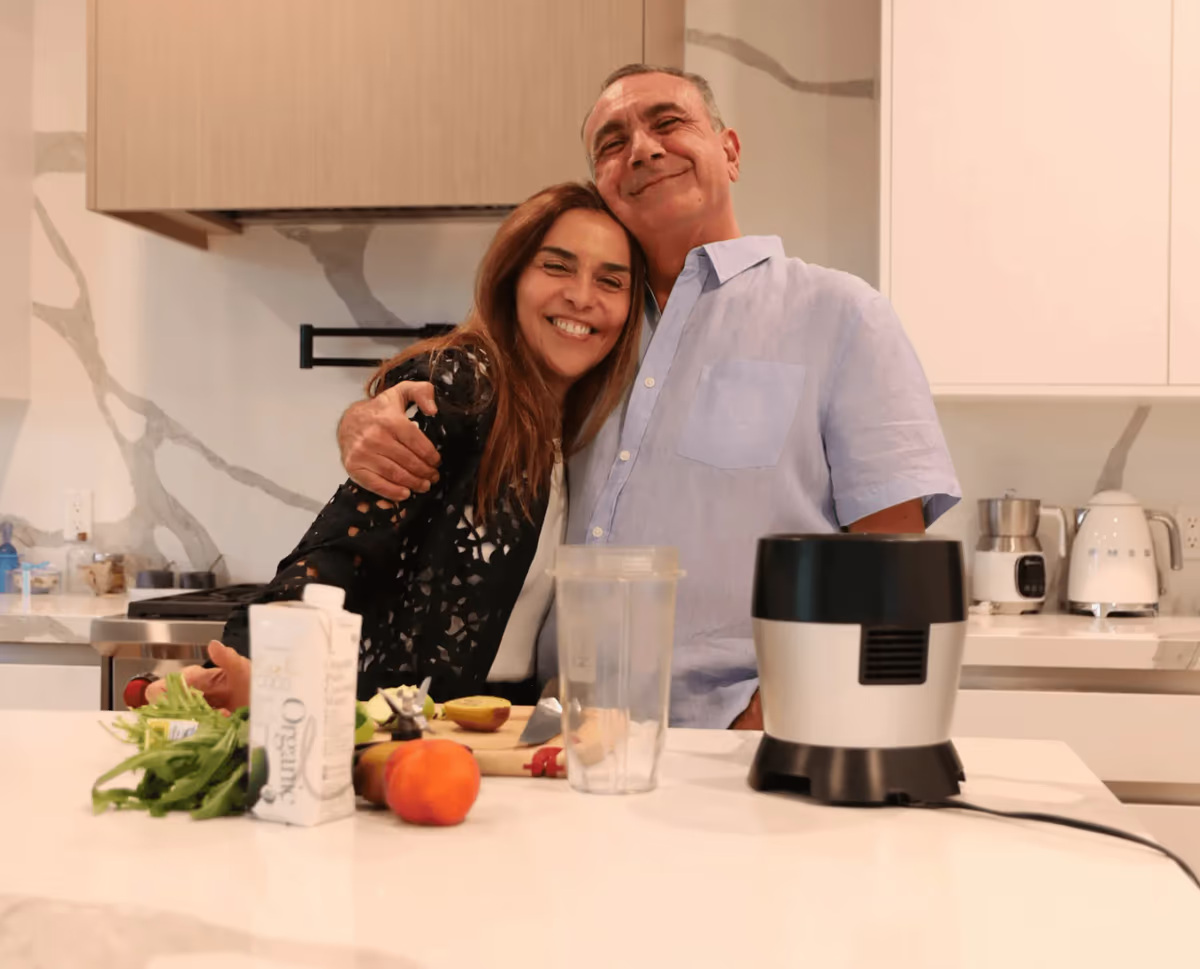
When my body was flaring — the deep ache in my hips and hands, the days my joints felt like they belonged to someone older than me — my mind would flare too. Not in a poetic way. In a clipped-breath, racing-thought, why-can't-I-settle way. For the longest time I filed those as two separate problems. The pain was the pain. The anxiety was just me being someone who worries. It took Fabio, sitting at our table with a stack of papers, to say the thing that reorganized how I understood my own body: they might not be two problems. They might be one.
This is a letter about that one problem. If you've found yourself anxious in a way that tracks with how your body feels — worse on the achy days, quieter on the good ones — I think the research will land for you the way it landed for me.
What inflammation has to do with how you feel
Let me back up to the part Fabio explained that finally clicked.
Inflammation isn't a vague bad thing. It's a coordinated signal. When the body decides something needs defending or repairing, immune cells release cytokines — small proteins that act like text messages between cells. Two of the most-studied are interleukin-6 (IL-6) and tumor necrosis factor-alpha (TNF-alpha). In a healthy response, they spike, do their job, and quiet down.[2],[3] The trouble is chronic, low-grade inflammation — the slow burn that doesn't fully resolve. That kind of sustained signaling has been tied, across a lot of research, to a long list of conditions that have nothing obviously to do with each other on the surface.[4]
Here's the part that matters for anxiety: those cytokines don't stay below the neck. They signal to the brain. And the brain reads a sustained inflammatory signal as "the environment is not safe yet" — which is, functionally, the chemistry of vigilance.
The cohort data: anxiety and inflammatory markers tracked together
The study that made me sit up was a large adult cohort — over 2,000 people — that compared inflammatory markers in people with current anxiety disorders, people whose anxiety had remitted, and healthy controls. People with anxiety disorders showed elevated inflammation compared to controls, and the markers tracked with the clinical picture rather than being random noise.[1] That's not a small mechanistic mouse study. That's a population, measured.
I want to be honest about what this does and doesn't prove, because I promised myself I'd never oversell anything in these letters. Correlation in a cohort doesn't tell you which came first. Anxiety can raise inflammation through stress hormones; inflammation can heighten anxiety through the brain. Most likely it runs both ways — which is exactly why "loop" is the right word and "cause" is the wrong one. What the data does establish is that this is not in your imagination. The body of someone with chronic anxiety often looks measurably more inflamed.
The gut-brain piece
There's a second on-ramp worth naming, because so many of us with chronic pain also have a temperamental gut. When the gut barrier gets leaky, fragments of bacteria (a molecule called LPS) can slip into circulation and trigger an inflammatory response far from the gut itself. That systemic signal is one more way a quiet, ongoing inflammatory state gets established — the kind that then talks to the brain. I'm not going to overstate the human evidence here; the translocation pathway is better established in mechanism than in tidy clinical trials. But if your anxiety and your digestion seem to share a calendar, you're not imagining a connection that the biology flatly denies. I wrote more about the broader brain side of this in our piece on neuroinflammation and brain fog, if you want the cognitive companion to this emotional one.
Where specific actives actually fit — and where they don't
This is the section where supplement writing usually goes off the rails, so I'm going to be careful. I'm not going to tell you a capsule treats an anxiety disorder. It doesn't, and anyone who says so is selling. What I can do is walk you through three compounds where there's real, published mechanism connecting them to the inflammatory side of this loop — because that's the side a supplement can honestly support.
GABA and the inflammatory tone
GABA is best known as the brain's main calming neurotransmitter. What's less known is that GABA signaling also shows up in immune regulation. In published work, GABA has been shown to reduce inflammatory signaling, and neuroinflammation research has mapped how GABAergic tone interacts with the brain's immune cells.[5],[6] So GABA sits at an interesting intersection — it's part of the system that settles the brain and part of the system that modulates inflammation. That dual role is why it earns a place in a formula built around the inflammation-mood overlap, not as a sedative, but as support for the inflammatory tone underneath.
5-HTP and the serotonin-inflammation axis
5-HTP is the direct precursor your body uses to make serotonin — the same serotonin that's central to mood regulation. The inflammation angle is the one I find genuinely interesting: in a controlled experimental model, supplementation with 5-HTP reduced allergic inflammation substantially, pointing to a real role for the serotonin pathway in dampening certain inflammatory responses.[7] Serotonin biology and immune signaling are more entangled than the old "serotonin = happiness chemical" story ever let on. Again — this is mechanism and support, not a treatment claim. But it's why 5-HTP belongs in this conversation rather than being shoehorned in.
Resveratrol and the brain's immune cells
Resveratrol — yes, the compound people know from red wine — has a meaningful body of work on the brain specifically. The relevant finding for anxiety's inflammatory side is that resveratrol acts on microglia, the brain's resident immune cells. When microglia get stuck in an activated, inflammatory state, they keep the neuroinflammatory signal running. Resveratrol has been shown to suppress that microglial activation in published research.[8] Calmer microglia means a quieter inflammatory signal in the very place that's setting the brain's threat level.
A plainspoken word on our formula
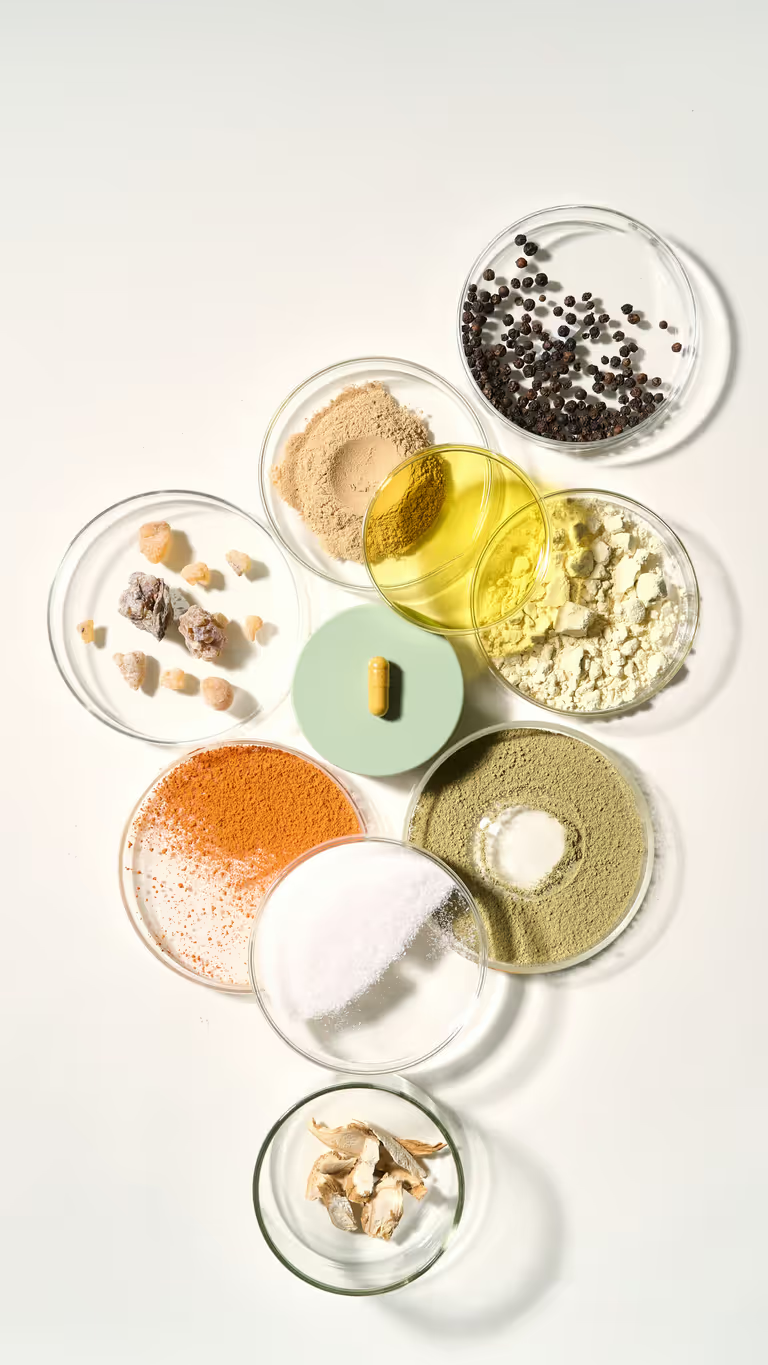
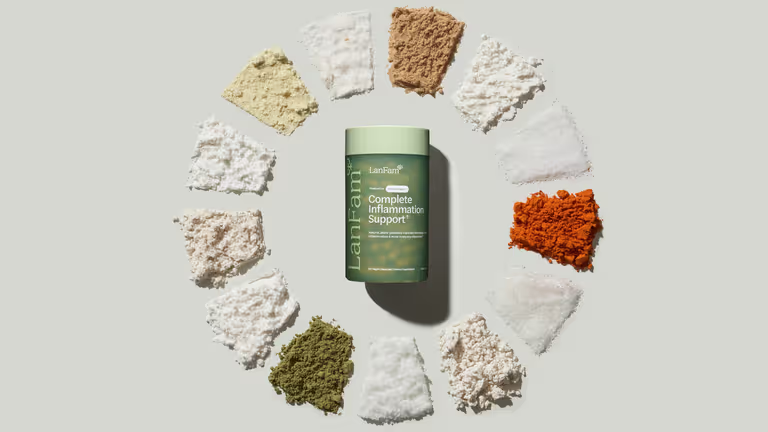
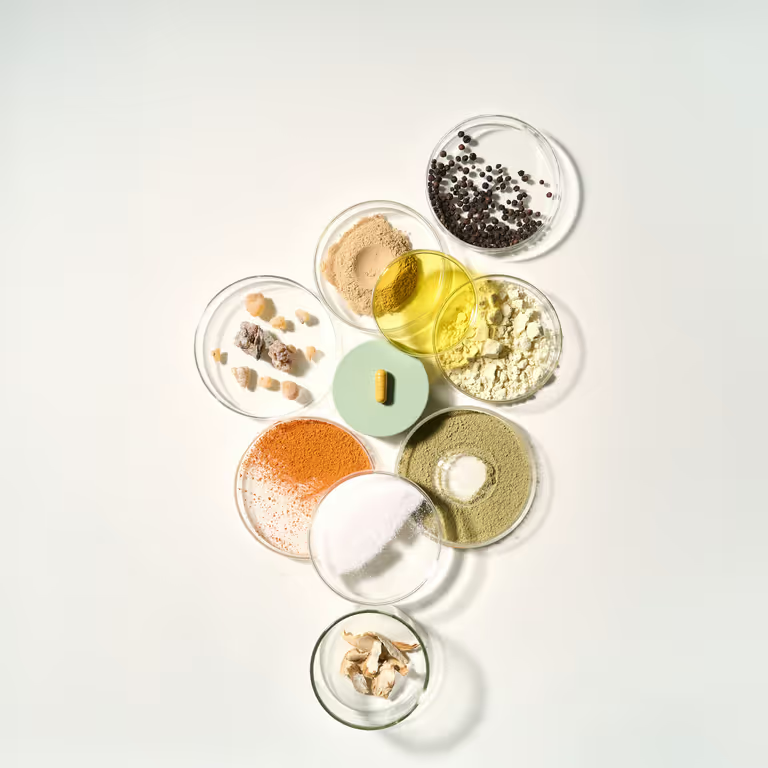
I'll say this once and softly, because that's how we do things. GABA, 5-HTP, and resveratrol are three of the thirteen standardized actives in Complete Inflammation Support (Powered by ProleevaMax) — the formula Fabio built at our table, originally for me. He didn't choose them for anxiety. He chose them because each one maps to a mechanism in chronic inflammation, and the nervous-system overlap is part of why the formula reaches the pathways it does. If you take it, take it to support a healthy inflammatory response over daily, consistent use — not as a fix for a hard day.* If we wouldn't give it to our own, we wouldn't make it.
What works, and what honestly doesn't
I'd rather you trust me than be impressed by me, so here's the unvarnished version.
What the evidence supports:
- The inflammation-anxiety link is real and measurable at the population level.[1]
- Lowering chronic inflammatory load is a reasonable, evidence-grounded thing to care about if your anxiety travels with physical inflammation.
- Specific compounds have published mechanisms connecting them to the inflammatory side of this loop.[5],[7],[8]
What it does not support — and where I'll stop you:
- No supplement treats, cures, or replaces care for an anxiety disorder. If your anxiety is interfering with your life, the most evidence-backed step is talking to a clinician, full stop.
- "Anti-inflammatory" does not mean "anti-anxiety." A calmer inflammatory response is one input among many — sleep, movement, therapy, sometimes medication all matter.
- A capsule won't out-argue chronic stress. Stress raises inflammation directly. You can't supplement your way around an unsustainable life, and I'd be lying to you if I pretended otherwise.
The honest frame is this: support the body, get real help for the mind, and let the two stop working against each other.
Questions people actually ask me
Can inflammation really cause anxiety? The more accurate word is "contribute." Inflammatory cytokines like IL-6 and TNF-alpha signal to the brain in ways that raise vigilance, and people with anxiety disorders show measurably higher inflammation in large cohorts.[1] It's a loop, not a one-way street — but yes, the inflammatory side is real and is not just a downstream effect of worrying.
How would I know if my anxiety is inflammation-related? There's no home test, and I'd be wary of anyone selling one. The pattern I'd watch for: does your anxiety worsen alongside physical inflammation — joint pain flares, gut trouble, the heavy fatigue of a body under load? If they share a calendar, the loop is worth taking seriously with your doctor, who can check markers like CRP.
Does reducing inflammation help anxiety? For some people, supporting a healthier inflammatory response is part of feeling steadier — but it's support, not treatment. The research shows association and mechanism; it does not show that a supplement resolves an anxiety disorder. Treat the mind directly too.
Is GABA as a supplement the same as the GABA in my brain? They're the same molecule, but how much oral GABA reaches the brain is genuinely debated in the literature. Its place in an inflammation-focused formula leans more on its role in immune and inflammatory signaling[5] than on a promise that a capsule floods your brain with calm. I'd rather tell you that than pretend it's settled.
Should I stop my anxiety medication and try supplements instead? No — and please never do that without your prescriber. Nothing in this letter is a reason to change prescribed treatment. Think of inflammation support as something that can sit alongside good care, not replace it.
A last note from our table
The reason I keep coming back to this isn't a marketing one. It's that for years I treated my anxious days as a character flaw and my painful days as a body problem, and seeing that they were holding hands the whole time was a relief. Not because it fixed everything — it didn't — but because I could finally stop blaming myself for two things that turned out to be one. If you're in that loop, I hope the research gives you the same small relief it gave me. And if it helps to read further, our letters on how GABA quiets pain signals, what actually moves the needle on mood, and the early signs your body is sending an inflammatory signal are good next stops.
With care, Maria
These statements have not been evaluated by the Food and Drug Administration. This product is not intended to diagnose, treat, cure, or prevent any disease.

References
- 2.Vogelzangs N, Beekman ATF, de Jonge P, Penninx BWJH. Anxiety disorders and inflammation in a large adult cohort. Transl Psychiatry. 2013. https://doi.org/10.1038/tp.2013.27
- 3.Tanaka T, Narazaki M, Kishimoto T. IL-6 in inflammation, immunity, and disease. Cold Spring Harb Perspect Biol. 2014. https://doi.org/10.1101/cshperspect.a016295
- 4.Bradley JR. TNF-mediated inflammatory disease. J Pathol. 2008. https://doi.org/10.1002/path.2287
- 5.Furman D, Campisi J, Verdin E, et al. Chronic inflammation in the etiology of disease across the life span. Nat Med. 2019. https://doi.org/10.1038/s41591-019-0675-0
- 6.Tian J, Kaufman DL. The GABA and GABA-receptor system in inflammation, anti-tumor immune responses, and COVID-19. Biomedicines. 2023. https://doi.org/10.3390/biomedicines11020254
- 7.Hernandez-Rabaza V, Cabrera-Pastor A, Taoro-Gonzalez L, et al. Neuroinflammation increases GABAergic tone and impairs cognitive and motor function in hyperammonemia. J Neuroinflammation. 2016. https://doi.org/10.1186/s12974-016-0549-z
- 8.Abdala-Valencia H, Berdnikovs S, Soveg F, Cook-Mills JM. Inhibition of allergic inflammation by supplementation with 5-hydroxytryptophan. Am J Physiol Lung Cell Mol Physiol. 2012. https://doi.org/10.1152/ajplung.00406.2011
- 9.Zhang F, Liu J, Shi JS. Anti-inflammatory activities of resveratrol in the brain: role of resveratrol in microglial activation. Eur J Pharmacol. 2010. https://doi.org/10.1016/j.ejphar.2010.03.043
There's a seat at our table
Letters from our family to yours — the science, the recipes, the things that actually helped real families. Leave your email and we'll send the next one.