Why Chronic Inflammation Makes You Exhausted — And What the Cytokine Research Shows
Chronic low-grade inflammation drives fatigue through the cytokine-induced sickness-behavior pathway. What the research shows about why you are always tired, and where Panax ginseng and matcha genuinely fit.
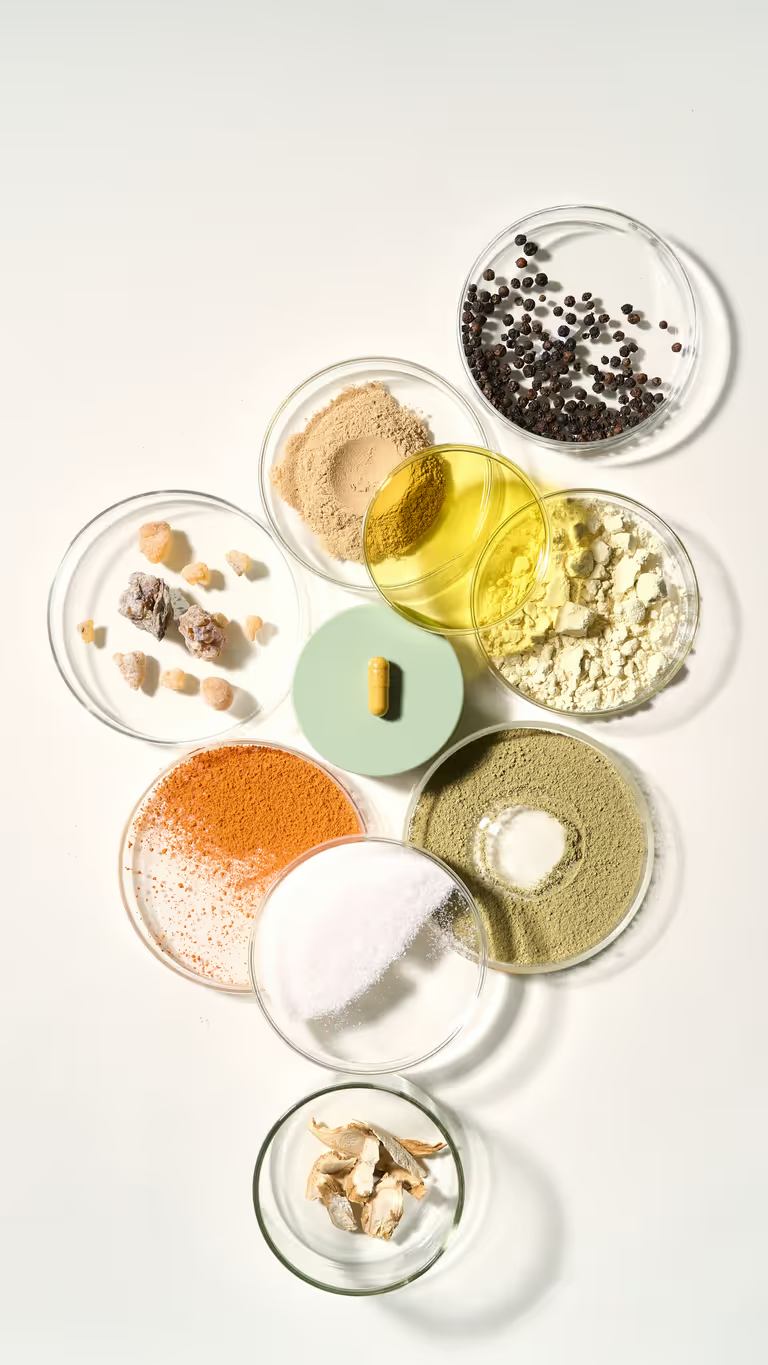
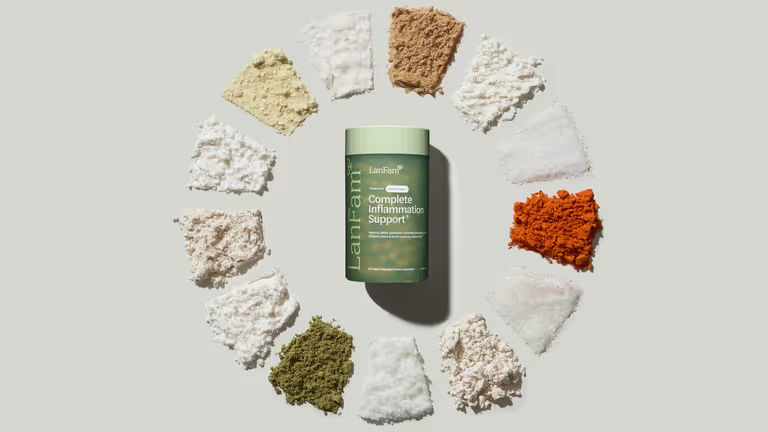
Ingredients in this letter

For a long time I thought my tiredness was a character problem.
I'd get a full night's sleep and wake up already depleted. I'd plan a normal day and feel, by two in the afternoon, like I'd run it twice. I told myself I needed more discipline, more coffee, more early nights. What I didn't have was a name for it — and naming it changed everything. The tiredness wasn't a willpower failure. It was a signal. My body was running an inflammatory program, and one of the things that program does, on purpose, is pull your energy down.
If you've typed "why am I always tired" into a search bar more times than you'd admit, this letter is for you. I want to show you the research that reframed my own exhaustion — and be honest about what it does and doesn't mean.
The exhaustion is a program, not a failure
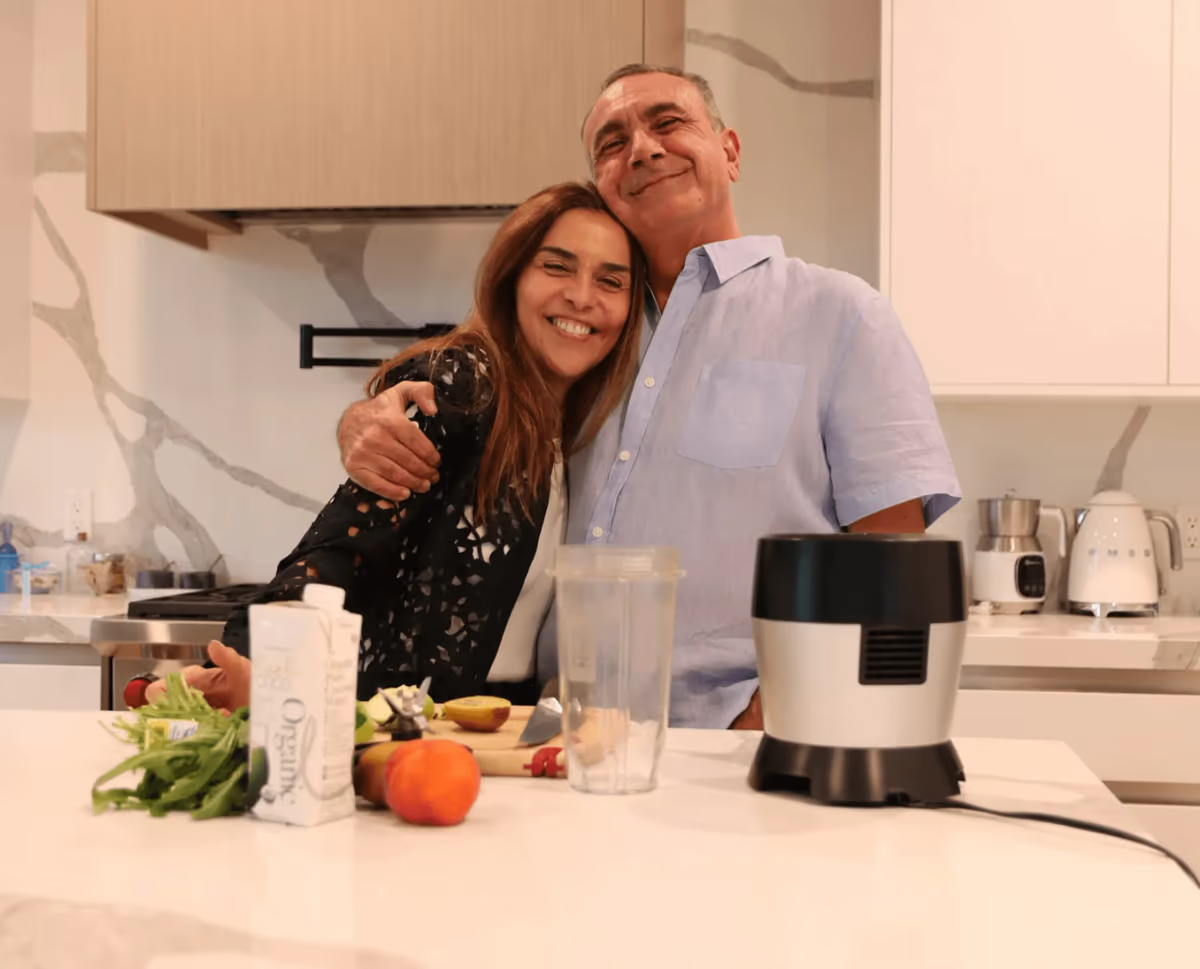
Here's the idea that did the most for me, and Fabio gets the credit for explaining it at dinner with the patience of someone who's said it a hundred times.
When you catch a virus, you don't feel terrible because the virus is directly draining you. You feel terrible because your immune system releases cytokines, and those cytokines signal your brain to change your behavior — make you tired, foggy, unmotivated, and uninterested in food, so your body can divert energy to fighting. Scientists named this sickness behavior, and the landmark work mapping how inflammation in the body reaches the brain to produce it has been cited thousands of times.[1] The fatigue, in other words, is a feature. It's the immune system using your energy budget on its own priorities.
Now hold that thought and add chronic, low-grade inflammation — the slow burn that doesn't resolve. The cytokine signal that's supposed to be temporary becomes a low, steady hum.[2],[3] The brain keeps reading it as "still fighting something," and keeps running a muted version of the same conserve-energy program. That's why the tiredness of chronic inflammation feels so specifically like the tiredness of being sick. Biologically, it kind of is.
Why "more sleep" often doesn't fix it
This is the part that used to frustrate me most, so I'll name it plainly: inflammatory fatigue doesn't respond to sleep the way ordinary tiredness does. You can sleep eight hours and wake unrefreshed, because the issue isn't a sleep deficit — it's an active signal telling your brain to stay in low-power mode. That's also why this is a different conversation than sleep quality and inflammation, which is its own real problem. This letter is about daytime energy being pulled down as an inflammatory signal, even when your sleep is fine. If you've ever defended yourself with "but I did sleep" and still felt wrecked, the cytokine story is probably part of your answer.
Fatigue is also one of the quieter signs of chronic inflammation
We tend to picture inflammation as swelling and redness — something visible. But a persistent, unexplained tiredness is one of the body's quieter ways of flagging an ongoing inflammatory load, alongside things like lingering aches and slow recovery. Sustained low-grade inflammation has been linked across the research to a wide range of conditions that share that same smoldering background.[4] If you want the fuller list of what to watch for, our letter on the signs of chronic inflammation walks through them. And because this kind of inflammation tends to accumulate with age, it overlaps heavily with what researchers call inflammaging — the slow, low-grade inflammatory rise that quietly shapes how we feel in our later decades.
Where specific actives actually fit — and where they don't
I'll be as careful here as I always am, because energy is exactly the kind of thing the supplement world overpromises on. Nothing I'm about to describe is a treatment for a fatigue condition. What I can do is point you to two compounds with published work connecting them to both fatigue and inflammation — the overlap that makes them honest fits for a formula built around inflammatory load rather than a stimulant cabinet.
Panax ginseng: the one that targets both ends
Panax ginseng is the active I find most interesting for this exact problem, because it shows up in the research on both sides of the equation. On the fatigue side, a randomized, double-blind, placebo-controlled trial of Korean red ginseng in middle-aged people with moderate chronic fatigue found meaningful improvement in fatigue scores for the older subgroup — real human evidence, not a mouse extrapolation.[5] On the inflammation side, the active compounds in ginseng (ginsenosides) have been shown to suppress production of pro-inflammatory cytokines including TNF-alpha and IL-6, largely by acting on the NF-kB signaling pathway.[6] That's the rare combination — something with published support for fatigue and a mechanism in the inflammatory signaling that may be driving the fatigue in the first place. It's not a stimulant. It doesn't spike you and drop you. It's better thought of as adaptive energy support.
Matcha: a gentler, secondary mechanism
Matcha green tea earns a smaller but real place in this story. Its catechins — especially EGCG — have published work on fatigue resistance in controlled models, where EGCG improved fatigue-related measures and reduced markers of oxidative damage.[7] And matcha's broader profile as a source of polyphenols with antioxidant and anti-inflammatory activity is well reviewed.[8] The reason I call it secondary is honesty: most of the direct fatigue work is preclinical, and matcha's gift in daily life is partly the calmer kind of alertness it gives compared to coffee — the L-theanine alongside the caffeine. I won't dress that up as a cure for inflammatory fatigue. It's a supportive piece, not the centerpiece.
A plainspoken word on our formula
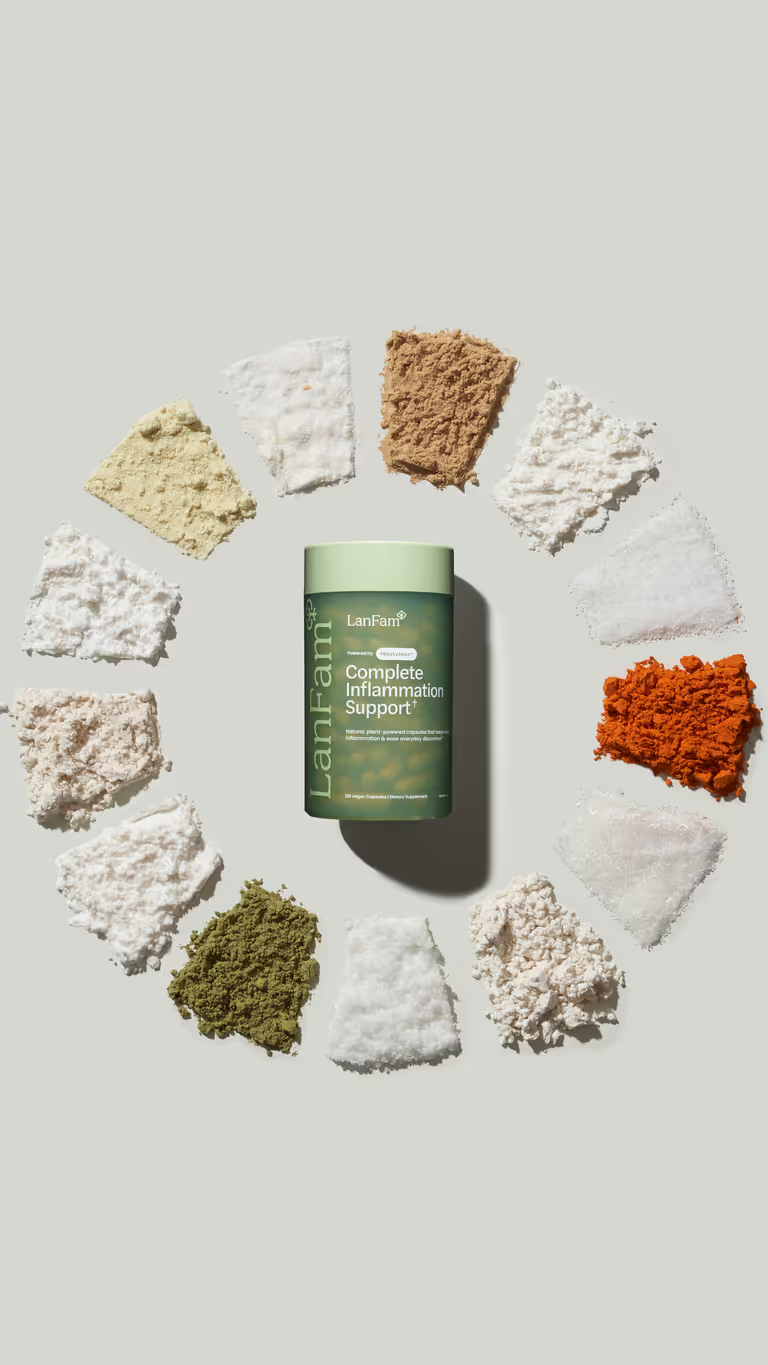
Both Panax ginseng and matcha are among the thirteen standardized actives in Complete Inflammation Support (Powered by ProleevaMax) — the formula Fabio built at our table for me. In our framework, ginseng sits in the pathway we think of as adaptive energy, precisely because chronic inflammatory load and fatigue are so tied together; matcha sits with the antioxidant actives. Taken daily and consistently, the formula is meant to support a healthy inflammatory response — not to caffeinate you through a hard week.* If we wouldn't give it to our own, we wouldn't make it.
What works, and what honestly doesn't
The version I'd want a friend to hear:
What the evidence supports:
- Inflammatory cytokines can drive fatigue through the well-documented sickness-behavior pathway.[1]
- Chronic low-grade inflammation keeps that signal running, which is a plausible reason for unrefreshing, unexplained tiredness.[2],[3],[4]
- Certain compounds have published support on both the fatigue and inflammation sides — Panax ginseng most clearly.[5],[6]
What it does not support — and where I'll stop you:
- Fatigue has many causes. Anemia, thyroid problems, sleep apnea, depression, medication side effects, and more all present as tiredness. Inflammation is one lens, not the only one — and several of those causes are serious and treatable. Please don't let an inflammation story keep you from a checkup.
- No supplement "cures fatigue." Anything promising boundless energy is overpromising. The honest framing is inflammation support, and the honest expectation is gradual, modest, individual.
- More energy isn't always more capsules. Sleep, movement, blood sugar, and stress all move fatigue more than any supplement will. Foundations first.
If your tiredness is new, severe, or escalating, that's a doctor visit, not a supplement decision.
Questions people actually ask me
Why am I so tired all the time even when I sleep enough? One common reason is that the tiredness isn't a sleep-debt problem at all — it's an active inflammatory signal telling your brain to conserve energy, the same mechanism that makes you exhausted during an illness.[1] That kind of fatigue often doesn't lift with extra sleep. It's worth raising with your doctor, especially if it travels with aches or other signs of inflammation.
Can inflammation cause fatigue? Yes — this is one of the better-established links in the field. Inflammatory cytokines reach the brain and trigger sickness behavior, of which low energy is a core feature.[1] In chronic low-grade inflammation, that signal lingers, which is a plausible driver of ongoing tiredness.[4]
What's the best supplement for inflammation and fatigue? There's no single "best," and I'd distrust anyone who names one. The compound with the most interesting support on both sides is Panax ginseng, which has human trial data on fatigue[5] and a documented mechanism in calming inflammatory cytokines.[6] But supplements are support, not treatment, and they sit underneath sleep, movement, and a real medical workup.
How is this different from being tired from poor sleep? Poor-sleep tiredness generally improves with better sleep. Inflammatory fatigue is driven by an immune signal, so it can persist despite good sleep. The two can also overlap, which is why we treat sleep and inflammation as its own topic.
Could my fatigue be something more serious? It absolutely could, and that's not me hedging — it's me caring. Persistent fatigue can signal anemia, thyroid disease, sleep apnea, depression, and other treatable conditions. The inflammation lens is useful, but it's a reason to investigate with a clinician, never a reason to skip one.
A last note from our table
I spent years apologizing for being tired — to my family, to myself. Learning that the exhaustion was a signal, not a failing, didn't hand me unlimited energy. But it let me stop the self-blame and start asking better questions, which is its own kind of relief. If you're running on empty and you can't figure out why, I hope this gives you a more useful place to look — and the push to bring it to someone who can help you sort it. Inflammation may be part of your story. It's rarely the whole of it, and you deserve the whole picture.
With care, Maria
These statements have not been evaluated by the Food and Drug Administration. This product is not intended to diagnose, treat, cure, or prevent any disease.

References
- 2.Dantzer R, O'Connor JC, Freund GG, Johnson RW, Kelley KW. From inflammation to sickness and depression: when the immune system subjugates the brain. Nat Rev Neurosci. 2008. https://doi.org/10.1038/nrn2297
- 3.Tanaka T, Narazaki M, Kishimoto T. IL-6 in inflammation, immunity, and disease. Cold Spring Harb Perspect Biol. 2014. https://doi.org/10.1101/cshperspect.a016295
- 4.Bradley JR. TNF-mediated inflammatory disease. J Pathol. 2008. https://doi.org/10.1002/path.2287
- 5.Furman D, Campisi J, Verdin E, et al. Chronic inflammation in the etiology of disease across the life span. Nat Med. 2019. https://doi.org/10.1038/s41591-019-0675-0
- 6.Sung WS, Kang HR, Jung CY, et al. Efficacy of Korean red ginseng (Panax ginseng) for middle-aged and moderate level of chronic fatigue patients: a randomized, double-blind, placebo-controlled trial. Complement Ther Med. 2020. https://doi.org/10.1016/j.ctim.2019.102246
- 7.Kim JH, Yi YS, Kim MY, Cho JY. Role of ginsenosides, the main active components of Panax ginseng, in inflammatory responses and diseases. J Ginseng Res. 2017. https://doi.org/10.1016/j.jgr.2016.08.004
- 8.Teng Y, Wu D. Anti-fatigue effect of green tea polyphenols (-)-epigallocatechin-3-gallate (EGCG). Pharmacogn Mag. 2017. https://doi.org/10.4103/0973-1296.204546
- 9.Kochman J, Jakubczyk K, Antoniewicz J, Mruk H, Janda K. Health benefits and chemical composition of matcha green tea: a review. Molecules. 2020. https://doi.org/10.3390/molecules26010085
There's a seat at our table
Letters from our family to yours — the science, the recipes, the things that actually helped real families. Leave your email and we'll send the next one.