Why Is My Body So Stiff? The Inflammation Behind Feeling Stiff All the Time
Why is your body so stiff, especially in the morning? The inflammation behind that all-over stiffness, why moving helps, and what genuinely eases it.
Ingredients in this letter
You swing your legs out of bed in the morning and there's a pause — a few seconds where your body has to remember how to be a body. You stand up after sitting through a movie and you're moving like the Tin Man until things loosen up. You feel stiff, generally and persistently, in a way that wasn't true a few years ago. Not injured. Not sharply hurting. Just... rusty. Reluctant. Like the joints and muscles need a minute to warm into motion before they'll cooperate.
I hear this constantly, and people almost always assume it's just the toll of years. I've spent forty years in pharmaceuticals, and I want to give you the more accurate — and more useful — answer, because once you understand stiffness, you understand exactly why the thing that helps it most is the thing that feels hardest to do.
Stiffness Is Its Own Thing — Not Just "A Mild Ache"
First, a distinction that matters more than it sounds. People lump stiffness in with aching, but they're different experiences with different drivers, and telling them apart helps you do something about each.
Aching is the soreness, the tenderness, the signal that something hurts. Stiffness is the resistance to movement — the sense that a joint or muscle doesn't want to go where you're asking it to, the reluctance and tightness before things loosen up. You can be stiff without much soreness, and you can hurt without being especially stiff. The reason this matters: stiffness is closely tied to how long you've been still and what's happening inside the joint while you're still — which is exactly why it has a daily rhythm an ache often doesn't.
The Tell: Why You're Stiffest in the Morning (and After Sitting)
Here's the pattern almost everyone with this complaint recognizes: you're stiffest first thing in the morning, or after you've been sitting a long while, and it eases as you start to move. Twenty or thirty minutes into the day, you're looser. That pattern isn't random — it's a fingerprint, and it points straight at inflammation.
Let me explain it the way I'd explain it at the dinner table. A joint is a living environment, lined by a membrane (the synovium) that produces lubricating fluid. When there's low-grade inflammation in or around the joint, that environment carries extra inflammatory fluid and signaling molecules. When you hold still — overnight, or through a long stretch of sitting — that fluid and those signals settle and pool, and the tissues around the joint tighten up. The result is that thick, rusty, reluctant feeling when you first try to move. When you start moving, you circulate that fluid out, warm the tissue, and stimulate fresh lubrication — and the stiffness eases. That's why motion is the reliable cure for it.
This "worse after rest, better with movement" signature is well recognized in the inflammation literature — it's a hallmark of the inflammatory component of joint conditions, distinct from the purely mechanical stiffness of structural wear [1][2]. The same master inflammatory switch I keep coming back to, NF-κB, sits underneath this: when it stays partly flipped on in the joint environment, it keeps the inflammatory signaling — and the stiffness it produces — topped up [3]. (For the deep version of how that one switch sets off a whole cascade, I wrote the inflammatory cascade... but you don't need the deep version to use the practical takeaway: stillness feeds stiffness, motion relieves it.)
If your stiffness is concentrated in your back when you first wake, that one has its own specific playbook — I wrote it here: the stiff back in the morning. And if it's more about the joints catching and creaking than all-over rustiness, the broader routine lives here: the joint stiffness playbook.
Why "It's Just Age" Doesn't Hold Up
I understand why people land on age — stiffness does tend to creep in over the years. But "it's just age" is a description, not an explanation, and it quietly tells you there's nothing to be done. That's not true.
Age is a risk factor. The mechanism is inflammatory — the low-grade inflammation that tends to rise with the years (researchers even have a name for it, inflammaging) and the synovial signaling that produces the rusty-hinge feeling. The reason this distinction is worth caring about: a risk factor you can't change (your age) leads to resignation, but a mechanism you can support (the inflammatory state, through movement, diet, and honestly-evidenced supplements) leads to action. The stiffness that comes with age is real — and it's also, in large part, an inflammatory state you can do something about.
The Counterintuitive Cure: Move the Thing That Doesn't Want to Move
Here's the part that frustrates people, because it asks the opposite of what instinct says. A stiff body wants to be still. Stillness feels protective. But stillness is exactly what feeds stiffness — and movement, the very thing that feels hardest first thing in the morning, is the single most effective thing for it.
You don't need a punishing routine. You need consistent, gentle motion:
- A morning loosening-up. A few minutes of easy movement — gentle stretches, rolling the joints through their range, a short walk — before you ask your body to do anything demanding. This is the highest-value habit for morning stiffness.
- Break up long sitting. Stand and move every 30 to 60 minutes. The stiffness that sets in after a long sit is the same mechanism as the overnight kind, just on a shorter clock.
- Regular low-impact movement. Walking, swimming, cycling, mobility work — anything that keeps fluid circulating through your joints. Consistency beats intensity by a mile here.
- Warmth. A hot shower in the morning genuinely helps loosen a stiff body — heat does some of what movement does.
And underneath all of it: lower your inflammatory baseline so there's less inflammatory fluid to settle in the first place. Sleep, stress, and especially diet are the levers — an anti-inflammatory way of eating does more for chronic stiffness than most people expect.
Where Supplements Honestly Fit
Once you're moving and tending the foundations, there's a supportive supplement layer — and I'll be precise about it, because stiffness is exactly the kind of complaint my industry loves to make big promises about.
The two botanicals with the best human evidence for supporting a healthy inflammatory response in joints both apply here, and they work on different inflammatory pathways:
Boswellia serrata — the resin of the frankincense tree — acts on the 5-LOX enzyme, a pathway the common painkillers (ibuprofen, naproxen) leave untouched. A meta-analysis pooling the randomized trials found boswellia meaningfully reduced joint discomfort and improved function — and improved function is largely a stiffness-and-mobility outcome, not just a soreness one [4].
Curcumin — the active compound in turmeric — works on the NF-κB master switch instead, and a meta-analysis of randomized trials found curcumin and turmeric extracts produced meaningful improvement in joint and arthritis symptoms [5]. The non-negotiable detail: curcumin from plain turmeric barely absorbs. Paired with piperine (black pepper extract), its bioavailability rose roughly 2,000% in the classic human study [6]. Curcumin without piperine is mostly wasted.
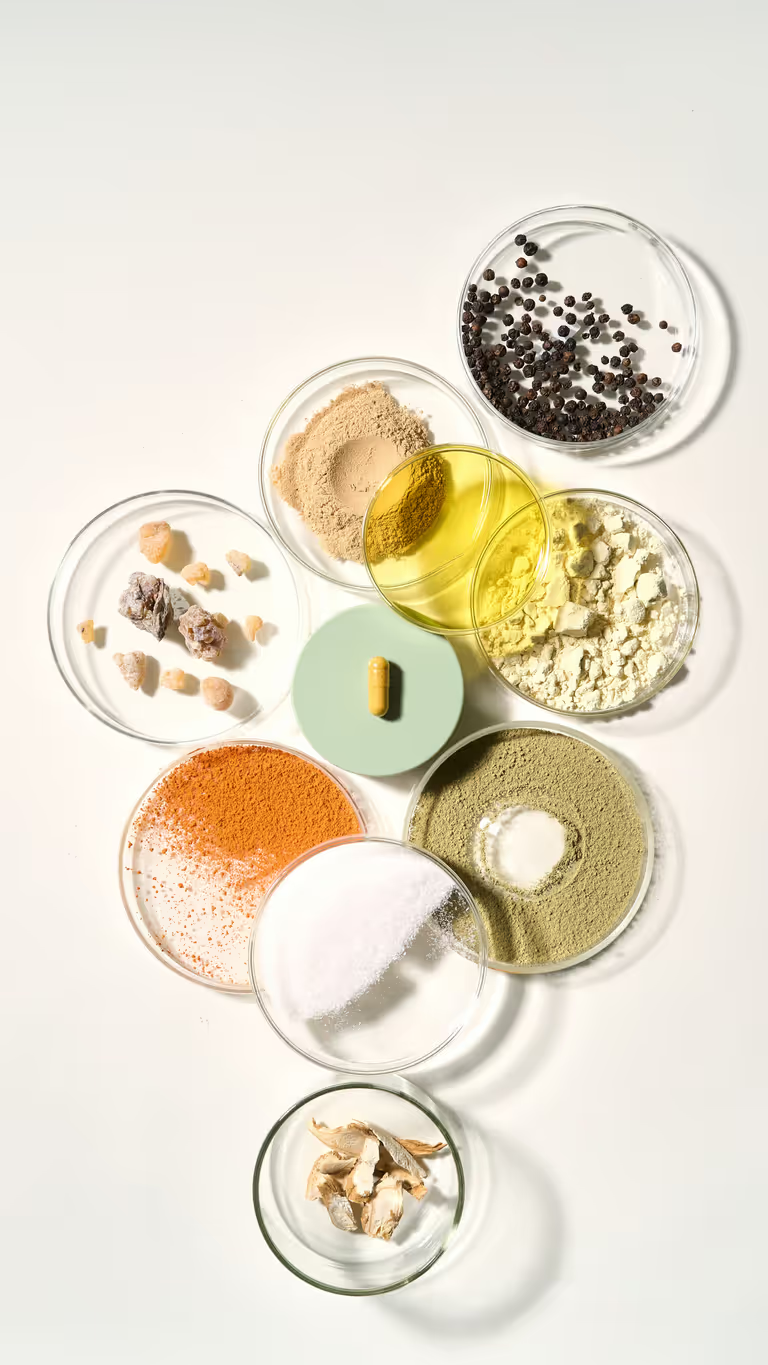
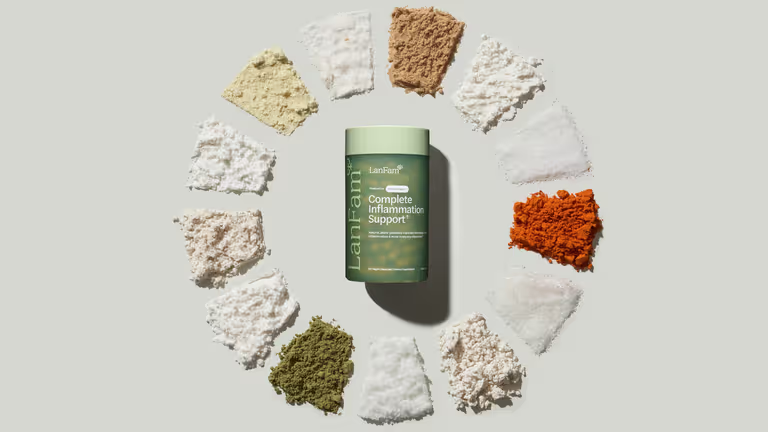
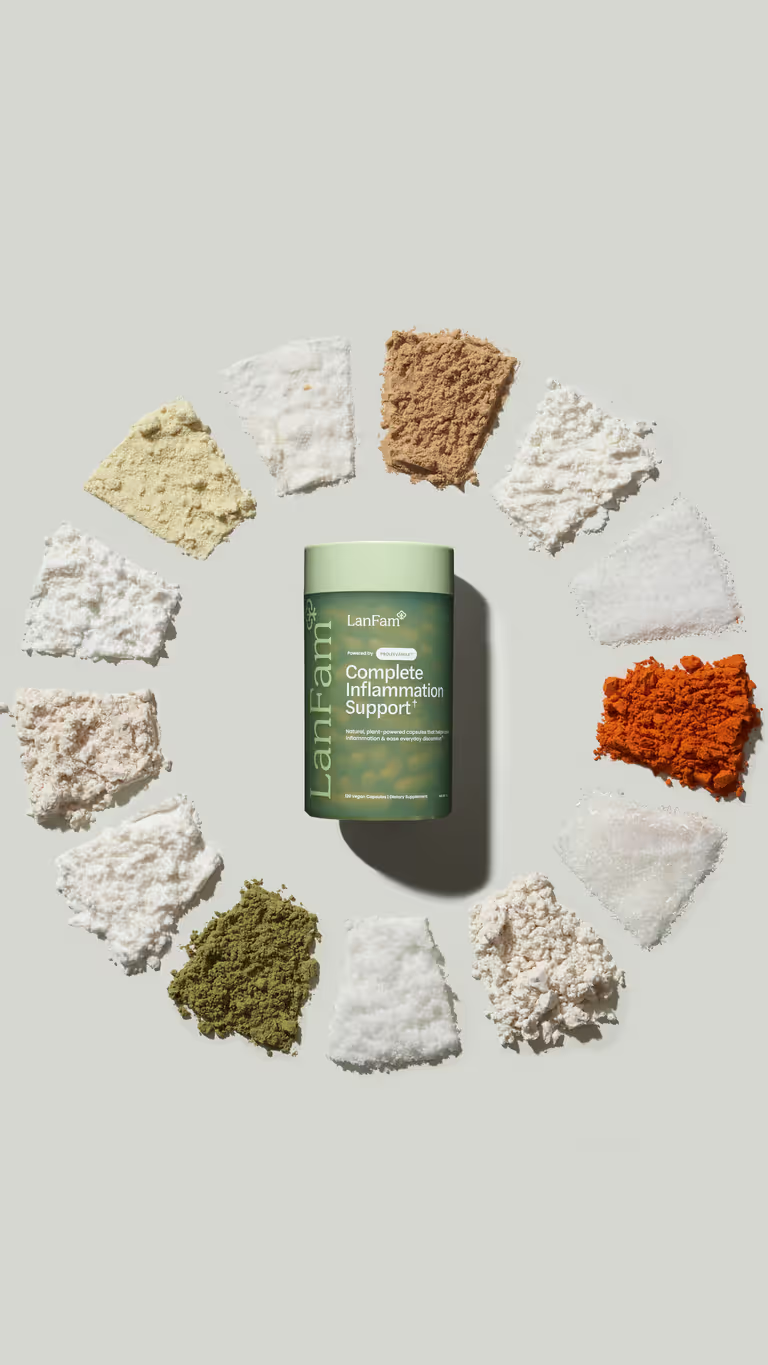
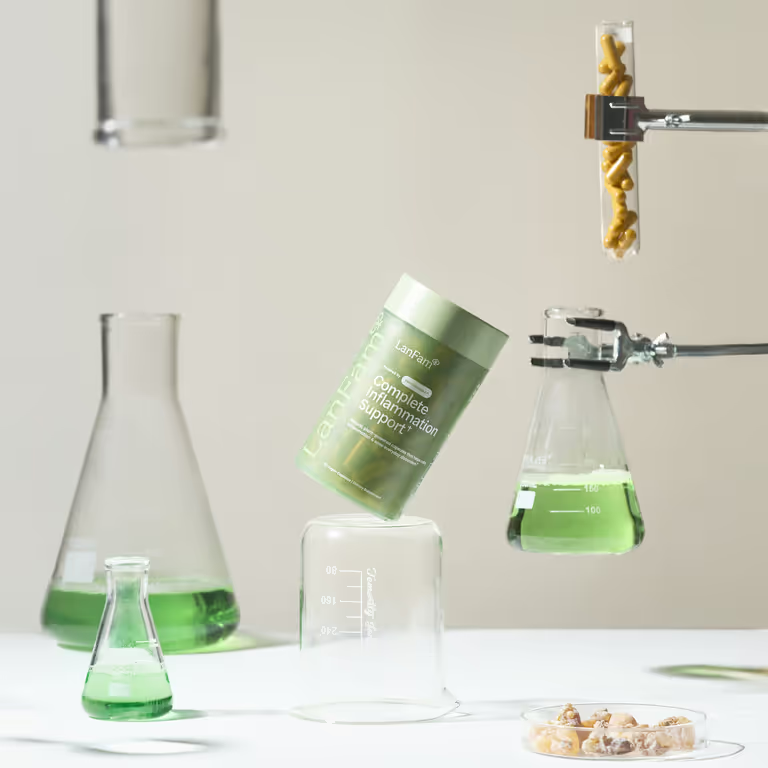
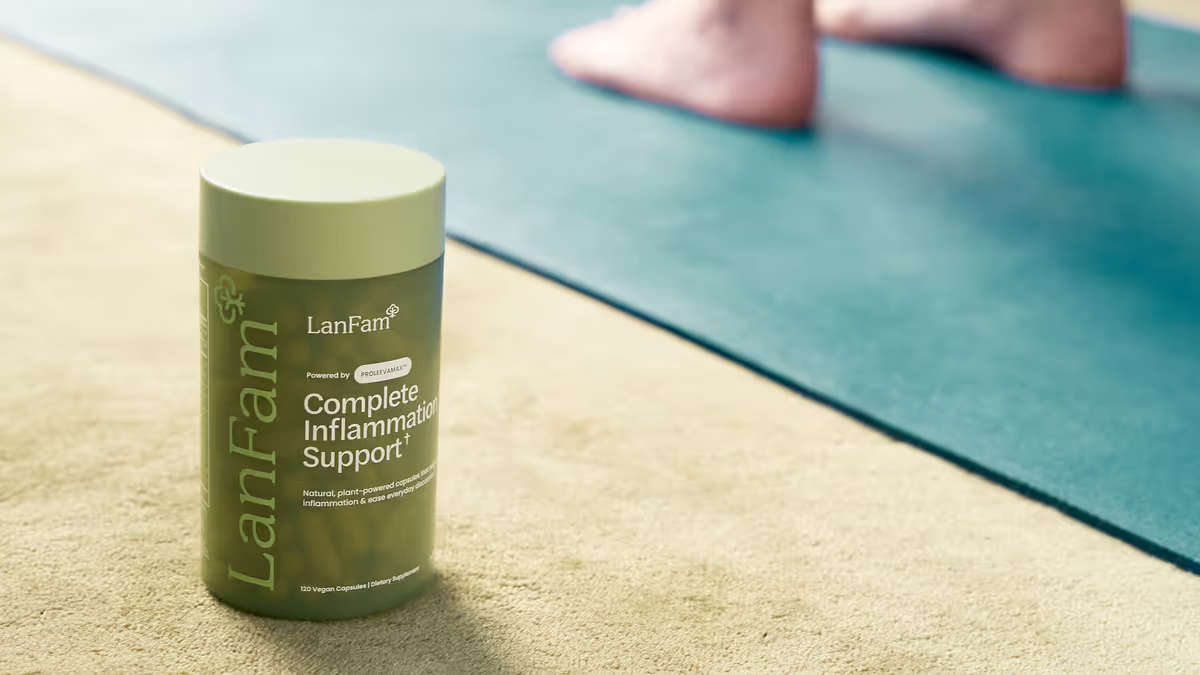
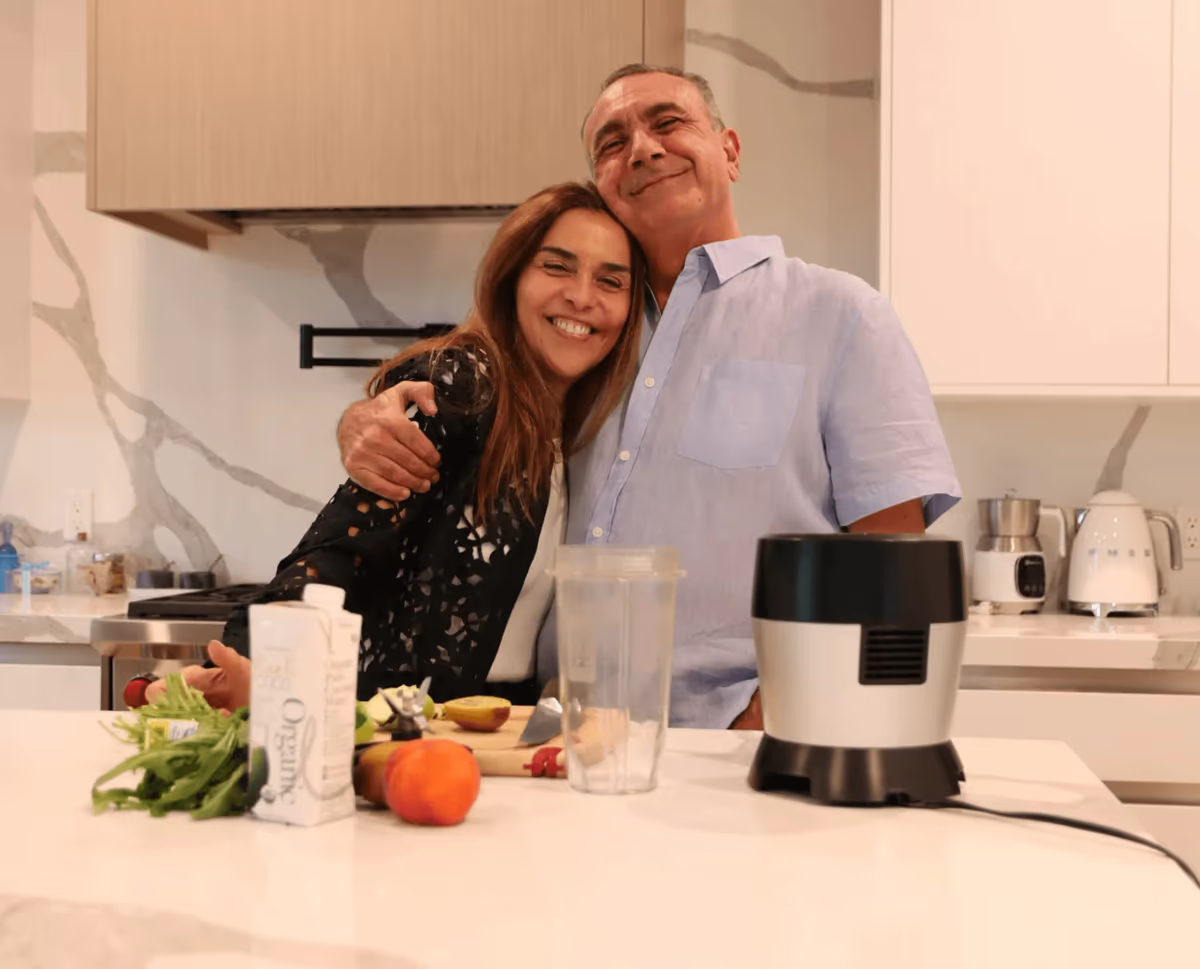
Because boswellia and curcumin act on two different inflammatory pathways, covering both tends to serve a stiff body better than one alone. That's the reasoning behind ProleevaMax — boswellia and standardized curcumin-with-piperine together, among 13 standardized actives, dosed where the research is, to support a healthy inflammatory response across more than one pathway.* I built it at our kitchen table for my wife Maria, and the rule still holds: if we wouldn't give it to our own, we won't make it. For the fully graded, honest comparison of everything that gets recommended for stiff, aching joints, the buyer's guide lives here: anti-inflammatory supplements for joint pain, what the evidence actually says.
Honest expectation: these support the inflammatory environment your joints live in. They don't rebuild anything, they're slower and gentler than a drug, and they take 6 to 8 weeks of consistent use to judge [4][5]. They support the work that movement does — they don't replace it.
When Stiffness Needs a Doctor
Most everyday stiffness is the ordinary, inflammatory, eases-with-movement kind. But a few patterns deserve a real evaluation. See a doctor if:
- Morning stiffness regularly lasts longer than an hour before it eases — prolonged morning stiffness is a recognized flag for inflammatory arthritis like rheumatoid arthritis.
- Stiffness comes with visible swelling, warmth, redness, or fever.
- It's symmetric — the same joints stiff on both sides — or accompanied by deep fatigue or feeling generally unwell.
- There's a sudden, severe change in your stiffness or mobility.
Those patterns can point to conditions that need proper medical management, and a supplement is not the tool for them. The everyday "rusty in the morning, loose by mid-morning" kind, with no swelling or fever, is the kind this letter is about.
So, Why Is Your Body So Stiff?
Most likely because low-grade inflammation in and around your joints settles while you're still — overnight, or through a long sit — and tightens everything up, until movement circulates it out and warms you loose. That's why you're worst in the morning and better once you're going, and it's why the cure that feels hardest (moving the body that doesn't want to move) is the one that works. It isn't simply age, and it isn't permanent. Move early and often, lower your inflammatory baseline, support the inflammatory response honestly — and your body spends a lot less of its day feeling like a rusty hinge.
These statements have not been evaluated by the Food and Drug Administration. This product is not intended to diagnose, treat, cure, or prevent any disease.
This article is for general education and isn't medical advice. Morning stiffness lasting more than an hour, or stiffness with swelling or fever, can signal inflammatory arthritis and should be seen by a doctor.

References
- 2.Berenbaum F. Osteoarthritis as an inflammatory disease (osteoarthritis is not osteoarthrosis!). Osteoarthritis and Cartilage. 2013. https://doi.org/10.1016/j.joca.2012.11.012
- 3.Robinson WH, Lepus CM, Wang Q, et al. Low-grade inflammation as a key mediator of the pathogenesis of osteoarthritis. Nature Reviews Rheumatology. 2016. https://doi.org/10.1038/nrrheum.2016.136
- 4.Gupta SC, Patchva S, Aggarwal BB. Therapeutic roles of curcumin: lessons learned from clinical trials. The AAPS Journal. 2013. https://doi.org/10.1208/s12248-012-9432-8
- 5.Yu G, Xiang W, Zhang T, et al. Effectiveness of Boswellia and Boswellia extract for osteoarthritis patients: a systematic review and meta-analysis. BMC Complementary Medicine and Therapies. 2020. https://doi.org/10.1186/s12906-020-02985-6
- 6.Daily JW, Yang M, Park S. Efficacy of turmeric extracts and curcumin for alleviating the symptoms of joint arthritis: a systematic review and meta-analysis of randomized clinical trials. Journal of Medicinal Food. 2016. https://doi.org/10.1089/jmf.2016.3705
- 7.Shoba G, Joy D, Joseph T, et al. Influence of piperine on the pharmacokinetics of curcumin in animals and human volunteers. Planta Medica. 1998. https://doi.org/10.1055/s-2006-957450
Frequently asked questions
There's a seat at our table
Letters from our family to yours — the science, the recipes, the things that actually helped real families. Leave your email and we'll send the next one.