Why Does My Whole Body Ache? When It's Inflammation — and When to See a Doctor
Why does your whole body ache for no clear reason? When all-over body aches are an inflammation signal, when they're something else, and what actually helps.
Ingredients in this letter

You wake up and your whole body just aches. Not one bad knee, not a shoulder you slept on wrong — everything. A dull, all-over soreness, like you ran a marathon you don't remember running. You stand up slowly. You wonder, for the hundredth time, whether this is just what getting older feels like now, or whether something is actually wrong.
I get a version of this question almost every week. And I want to answer it the way I'd answer a friend who pulled me aside at a dinner — honestly, and starting with the part that matters most.
Read this part first — when an aching body means see a doctor
Before I say one word about inflammation, I want to be straight with you, because this is the part the internet usually buries.
All-over body aches can be a signal of something that needs a doctor, not a supplement. Widespread aching is a known symptom of infections (the flu and many viral illnesses make your whole body hurt), thyroid problems (an underactive thyroid is a classic, often-missed cause), anemia, vitamin D deficiency, and a range of autoimmune and rheumatic conditions like rheumatoid arthritis, lupus, polymyalgia rheumatica, or fibromyalgia. Certain medications — statins are the common one — can cause it too.
So here is my plainspoken rule. See a doctor if your body aches and any of these are true:
- It came on suddenly or feels severe.
- It's been going on for more than a couple of weeks.
- You also have a fever, unexplained weight loss, a rash, swelling, or deep fatigue.
- It's paired with weakness, numbness, or trouble with everyday movement.
- You recently started a new medication.
None of that is meant to frighten you. Most of the time, all-over aching turns out to be something manageable. But "manageable" still means identified — and a simple round of bloodwork can rule out the things you don't want to miss. Get that done first. The rest of this letter is about the very common situation where your doctor has checked you out, found nothing alarming, and you're still left aching and wondering why.
What "Inflammation" Actually Means When Your Whole Body Hurts
Here's the thing nobody explains: inflammation isn't one thing that's either "on" or "off." It's your body's repair-and-defense response, and in its proper form it's the most useful thing you've got. You cut your finger, the area gets red and warm and a little sore — that's acute inflammation doing exactly its job, rushing in, cleaning up, and then leaving when the work is done.
The trouble starts when it doesn't leave.
When inflammatory signaling stays switched on at a low level — month after month — you get what researchers call chronic, low-grade inflammation. It doesn't look like a hot, swollen joint. It looks like a body that aches all over for no reason you can point to. And the science behind it is now well-mapped: a landmark review in Nature Medicine laid out how chronic, systemic inflammation quietly underlies a remarkable share of the conditions that show up across a lifespan [1].
Let me give you the one mechanism worth knowing, because it explains the "everywhere at once" feeling. Inside your cells sits a master control switch for inflammation called NF-κB. Think of it like the fire alarm panel for a whole building — when it's flipped on, it tells dozens of downstream systems to start the inflammatory response. It's supposed to turn on, do its job, and turn off [2]. When it gets stuck partway on, your body keeps producing low levels of inflammatory messengers — molecules with names like IL-6 and TNF-α — circulating through your bloodstream, reaching every tissue [3][4]. That's the "whole body" part. It's not local. It's systemic. The signal is everywhere, so the ache is everywhere.
There's even a name for the version of this that creeps in with age: researchers call it inflammaging — a slow, low-grade rise in inflammatory signaling that tracks with getting older and helps explain why so many people feel achier in their fifties and sixties than they did at forty [5]. That's not the same as saying "it's just age and you have to live with it." It's saying there's an identifiable process — which means there are identifiable things you can do about it.
If you want to know how to tell this kind of inflammation apart from ordinary tiredness, I walked through the warning signs in more detail here: signs of chronic inflammation. And if you want the full mechanism — how one alarm sets off the whole cascade — I wrote that up in the inflammatory cascade.
Why It Feels Like "Everywhere," Not One Spot
People expect an ache to have an address. A knee. A wrist. A lower back. So when the soreness has no address — when it's diffuse, migrating, all-over — it's genuinely disorienting, and it's part of why so many people get told "your tests are fine" and walk out still hurting.
The reason is in the biology I just described. A localized ache usually means a localized problem — a worn joint, a strained muscle. But when the driver is circulating inflammatory signaling, there's no single source to point to, because the source is your bloodstream delivering the same low-grade signal to muscle, joint, and connective tissue everywhere at once. Your nervous system, bathed in that signal over time, can also become more sensitive — turning the volume up on aches that would otherwise stay quiet.
This is exactly why a normal X-ray or a clean joint exam doesn't rule out the inflammation story. You're not looking for damage in one place. You're looking at a body-wide state.
What Genuinely Helps a Body That Aches All Over
Once the medical causes are ruled out, here's where I'd actually put my energy — in order, because order matters.
Start with the foundations. They're unglamorous and they outperform every supplement on this page:
- Sleep. Poor sleep raises inflammatory signaling, and inflammation disrupts sleep — a loop worth breaking from both ends. This is foundational, not optional.
- Movement. It sounds backwards to move a body that aches, but gentle, regular movement — walking, swimming, easy mobility work — lowers chronic inflammatory markers over time. Stillness tends to make the ache worse, not better.
- An anti-inflammatory way of eating. What you eat is one of the largest inflammatory levers you have. A steady pattern of whole foods, with fewer refined carbs and ultra-processed foods, genuinely changes the baseline. A simple place to begin is an anti-inflammatory breakfast.
Then, the supportive supplement layer. This is where I have to be careful and honest, because the marketing in my industry is loud and I won't add to the noise. A few standardized botanicals have real human evidence for supporting a healthy inflammatory response — not for "curing" an aching body, but for supporting the system underneath it.
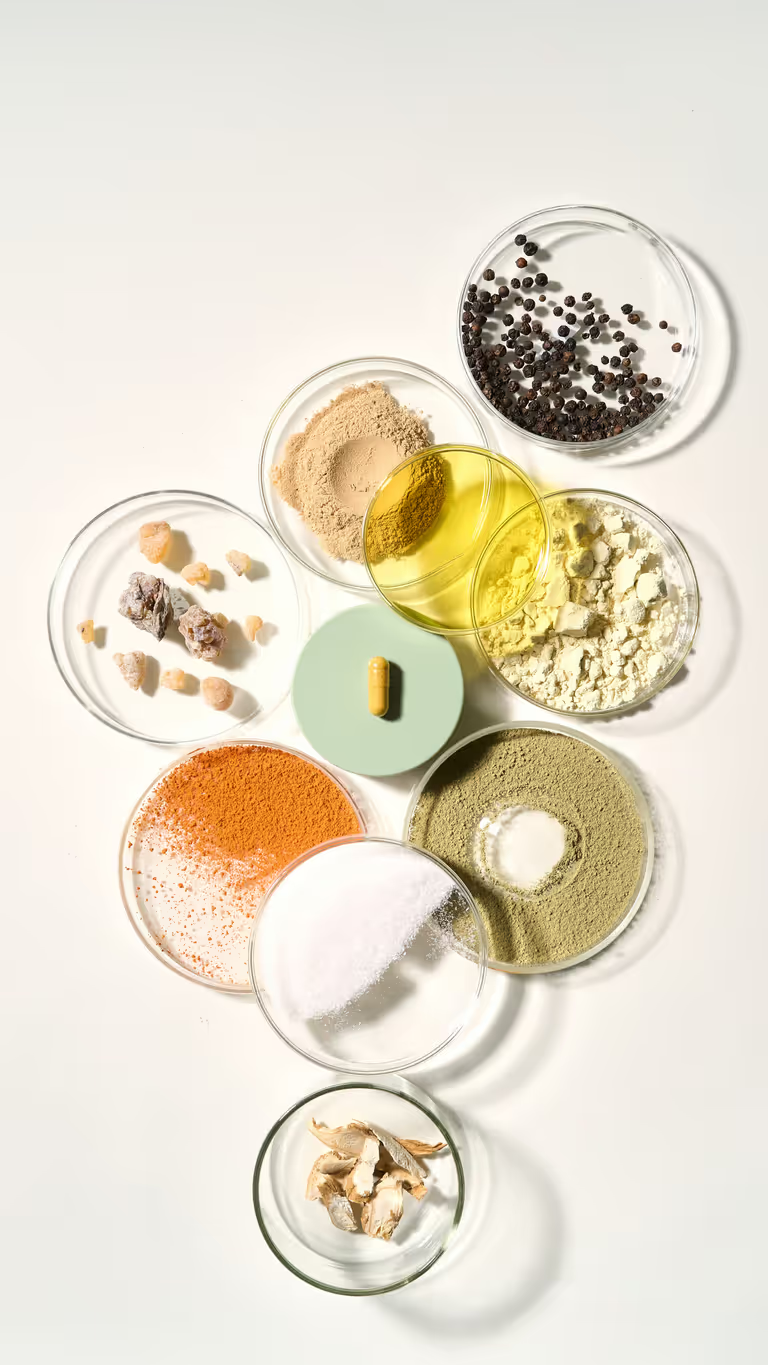
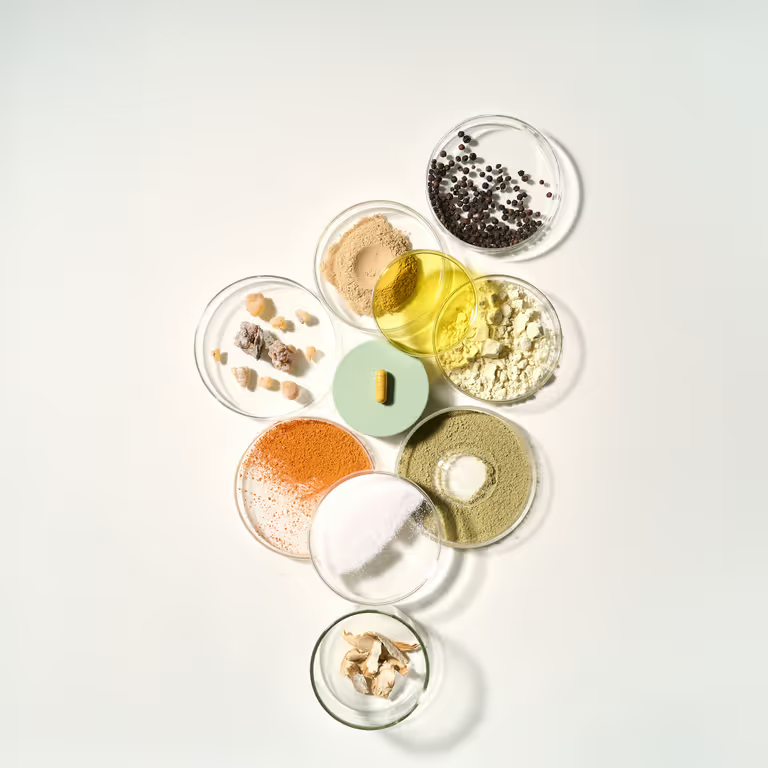
The two with the best-supported, most relevant data are curcumin and boswellia. Curcumin — the active compound in turmeric — works on that NF-κB master switch I described, helping keep it from staying stuck on. A meta-analysis of randomized trials found curcumin and turmeric extracts produced meaningful improvement in joint and arthritis symptoms [6], and a broad clinical review catalogs its effects on inflammatory markers across dozens of studies [7]. Boswellia serrata — the resin of the frankincense tree — works on a different inflammatory pathway (the 5-LOX enzyme), and a meta-analysis pooling the randomized trials found it meaningfully reduced joint discomfort and improved function [8]. Because they hit different points of the same system, they're often more useful together than either alone.
One detail decides whether curcumin does anything at all: absorption. Curcumin from plain turmeric barely makes it into your bloodstream. Paired with piperine — an extract of black pepper — its bioavailability rises dramatically; the classic pharmacokinetic study found piperine raised curcumin absorption by roughly 2,000% in human subjects [9]. A curcumin product without piperine, or another proven absorption method, is mostly leaving the benefit in the bottle.
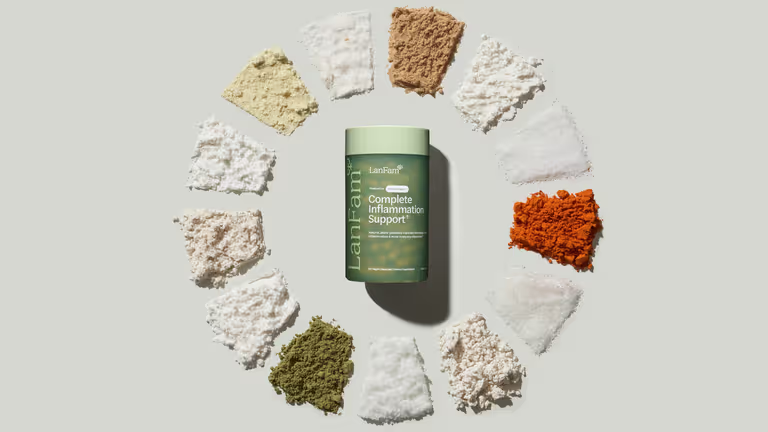
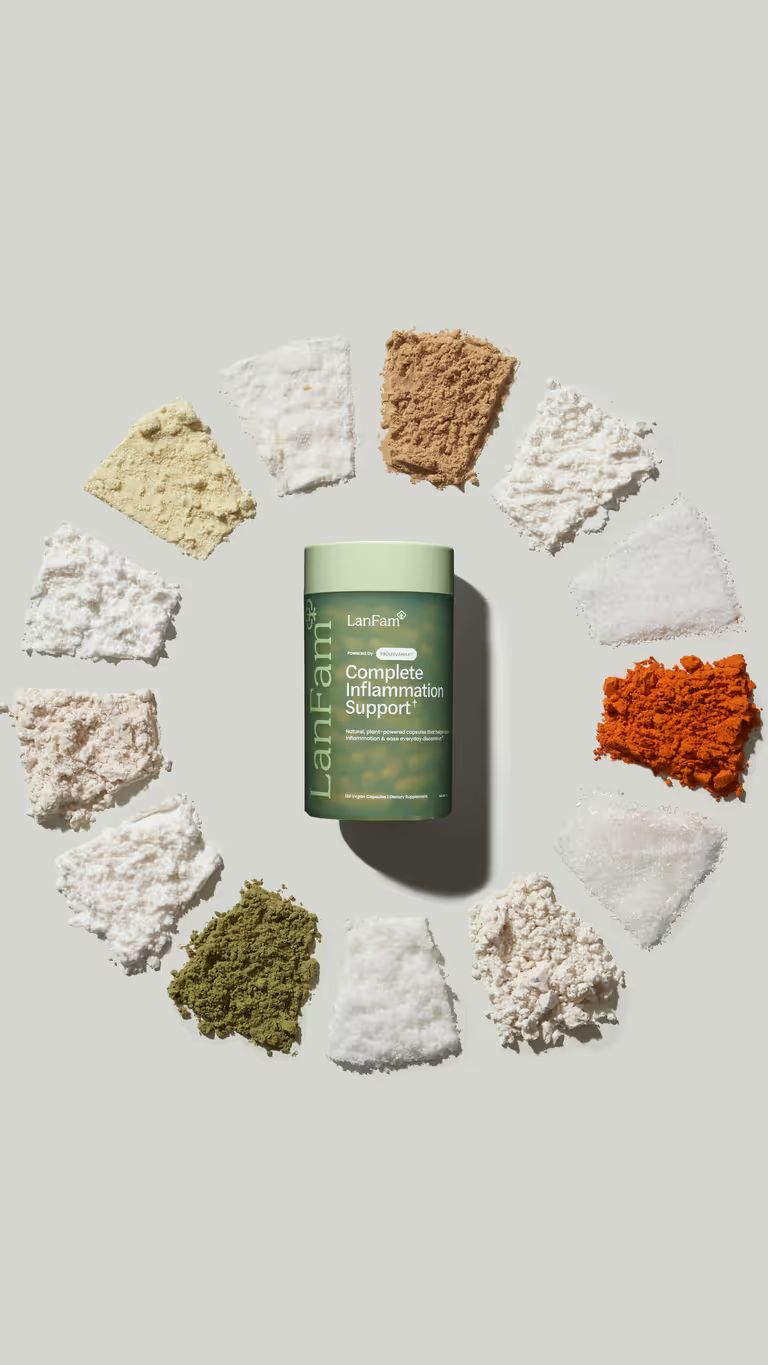
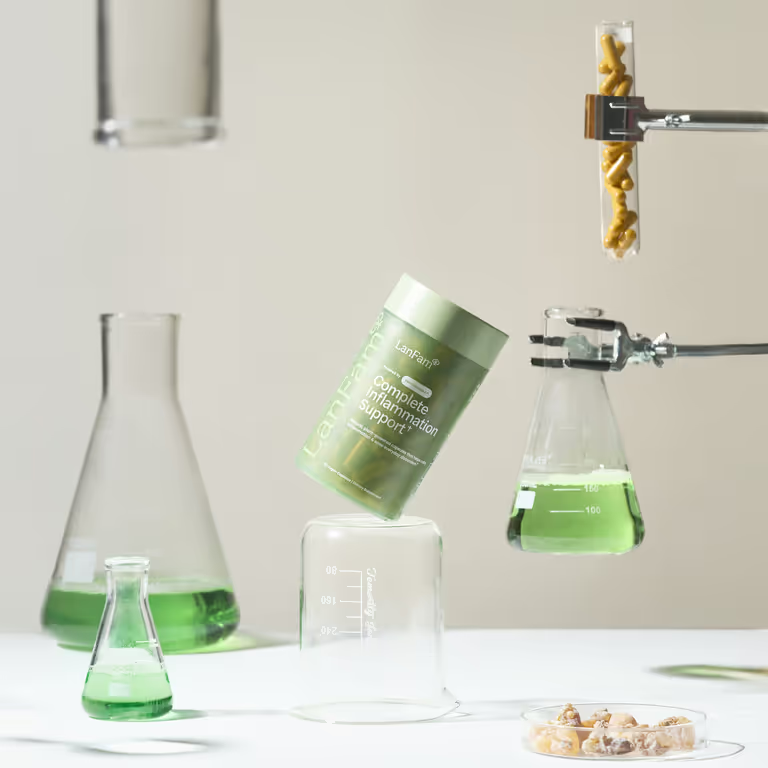
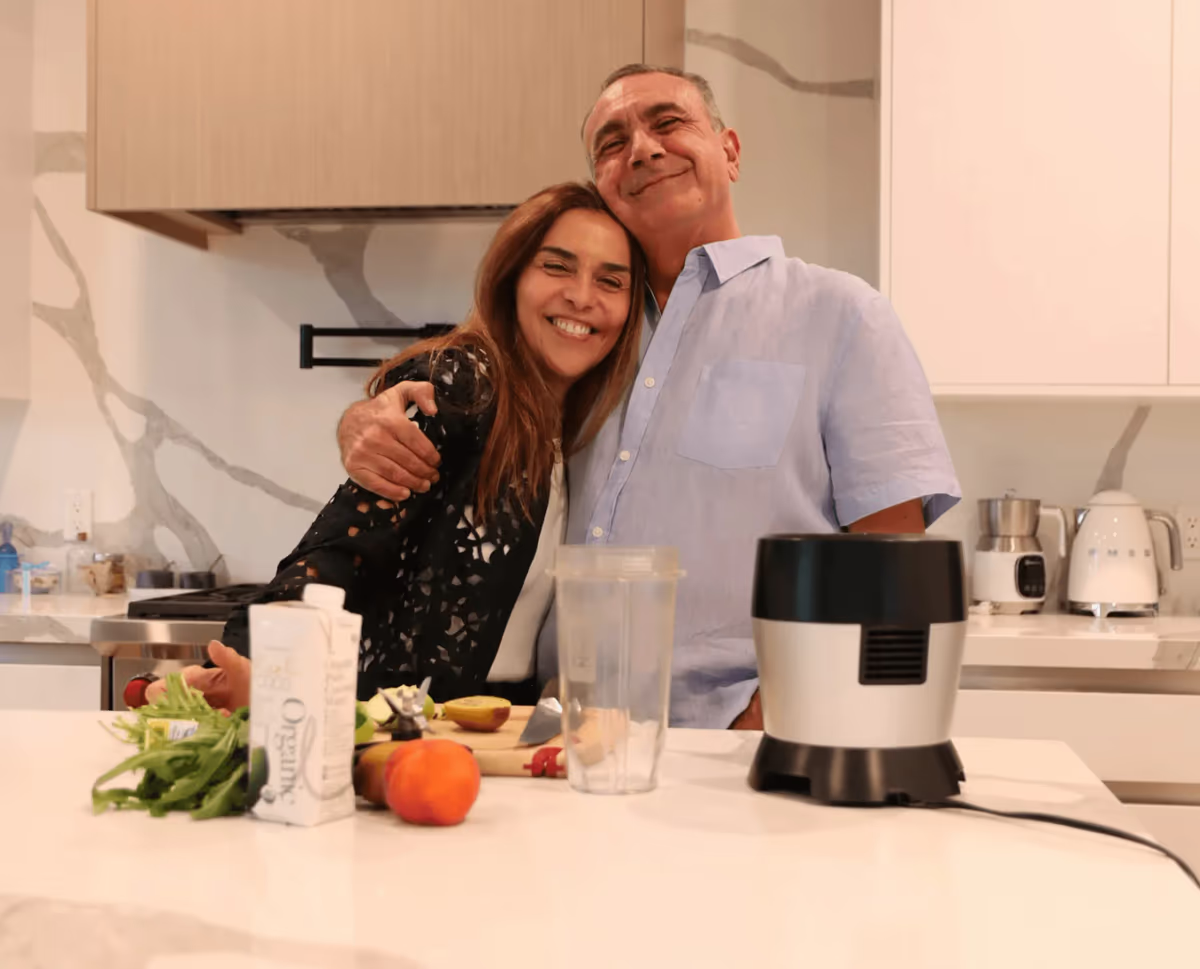
This is the whole reason we built ProleevaMax the way we did — standardized curcumin paired with piperine, alongside boswellia and other standardized actives, dosed where the research is, to support a healthy inflammatory response across more than one pathway at once.* I made it at our kitchen table for my wife Maria, when the only thing doctors offered her was more of a drug she couldn't take long-term. If we wouldn't give it to our own, we wouldn't make it. If you want the honest, graded rundown of what's actually supported for joint and body aches, I wrote it here: anti-inflammatory supplements for joint pain — what the evidence actually says.
A Realistic Timeline
If you go the supportive route, set honest expectations. Inflammation took months or years to settle into a simmer, and the systems you're supporting take weeks to answer. Most randomized trials on curcumin and boswellia show measurable improvement somewhere around the 6-to-8-week mark of consistent use [6][8] — not days. Anything promising overnight relief is either masking the ache through a different mechanism or overselling. Give it the real window, and judge it honestly.
So, Why Does Your Whole Body Ache?
Most likely, one of two stories. Either there's a specific medical cause — and that's why the first thing I asked you to do was see a doctor and get bloodwork, because some of those causes are very treatable once they're named. Or your workup comes back clean and you're left with that diffuse, all-over soreness that doesn't fit a single diagnosis — which is very often the fingerprint of low-grade chronic inflammation, a real body-state you can actually support.
It isn't "just age," and it isn't in your head. It's a system. Tend to the foundations, support the inflammatory response honestly, and give it weeks. That's how a body that aches all over slowly becomes a body that feels like yours again.
These statements have not been evaluated by the Food and Drug Administration. This product is not intended to diagnose, treat, cure, or prevent any disease.
This article is for general education and isn't medical advice. All-over body aches can have medical causes that need a diagnosis — please see your doctor, especially if the aching is sudden, severe, persistent, or comes with other symptoms.

References
- 2.Furman D, Campisi J, Verdin E, et al. Chronic inflammation in the etiology of disease across the life span. Nature Medicine. 2019. https://doi.org/10.1038/s41591-019-0675-0
- 3.Liu T, Zhang L, Joo D, Sun SC. NF-κB signaling in inflammation. Signal Transduction and Targeted Therapy. 2017. https://doi.org/10.1038/sigtrans.2017.23
- 4.Tanaka T, Narazaki M, Kishimoto T. IL-6 in inflammation, immunity, and disease. Cold Spring Harbor Perspectives in Biology. 2014. https://doi.org/10.1101/cshperspect.a016295
- 5.Bradley JR. TNF-mediated inflammatory disease. The Journal of Pathology. 2008. https://doi.org/10.1002/path.2287
- 6.Franceschi C, Bonafè M, Valensin S, et al. Inflamm-aging: an evolutionary perspective on immunosenescence. Annals of the New York Academy of Sciences. 2000. https://doi.org/10.1111/j.1749-6632.2000.tb06651.x
- 7.Daily JW, Yang M, Park S. Efficacy of turmeric extracts and curcumin for alleviating the symptoms of joint arthritis: a systematic review and meta-analysis of randomized clinical trials. Journal of Medicinal Food. 2016. https://doi.org/10.1089/jmf.2016.3705
- 8.Gupta SC, Patchva S, Aggarwal BB. Therapeutic roles of curcumin: lessons learned from clinical trials. The AAPS Journal. 2013. https://doi.org/10.1208/s12248-012-9432-8
- 9.Yu G, Xiang W, Zhang T, et al. Effectiveness of Boswellia and Boswellia extract for osteoarthritis patients: a systematic review and meta-analysis. BMC Complementary Medicine and Therapies. 2020. https://doi.org/10.1186/s12906-020-02985-6
- 10.Shoba G, Joy D, Joseph T, et al. Influence of piperine on the pharmacokinetics of curcumin in animals and human volunteers. Planta Medica. 1998. https://doi.org/10.1055/s-2006-957450
Frequently asked questions
There's a seat at our table
Letters from our family to yours — the science, the recipes, the things that actually helped real families. Leave your email and we'll send the next one.