Perimenopause Hip Pain: The Connective Tissue and Inflammation Mechanism Behind It
Why new hip pain in perimenopause is often driven by estrogen loss and soft-tissue inflammation, not worn cartilage. The trochanteric-pain mechanism, the boswellia and curcumin evidence, and honest limits — with real citations.
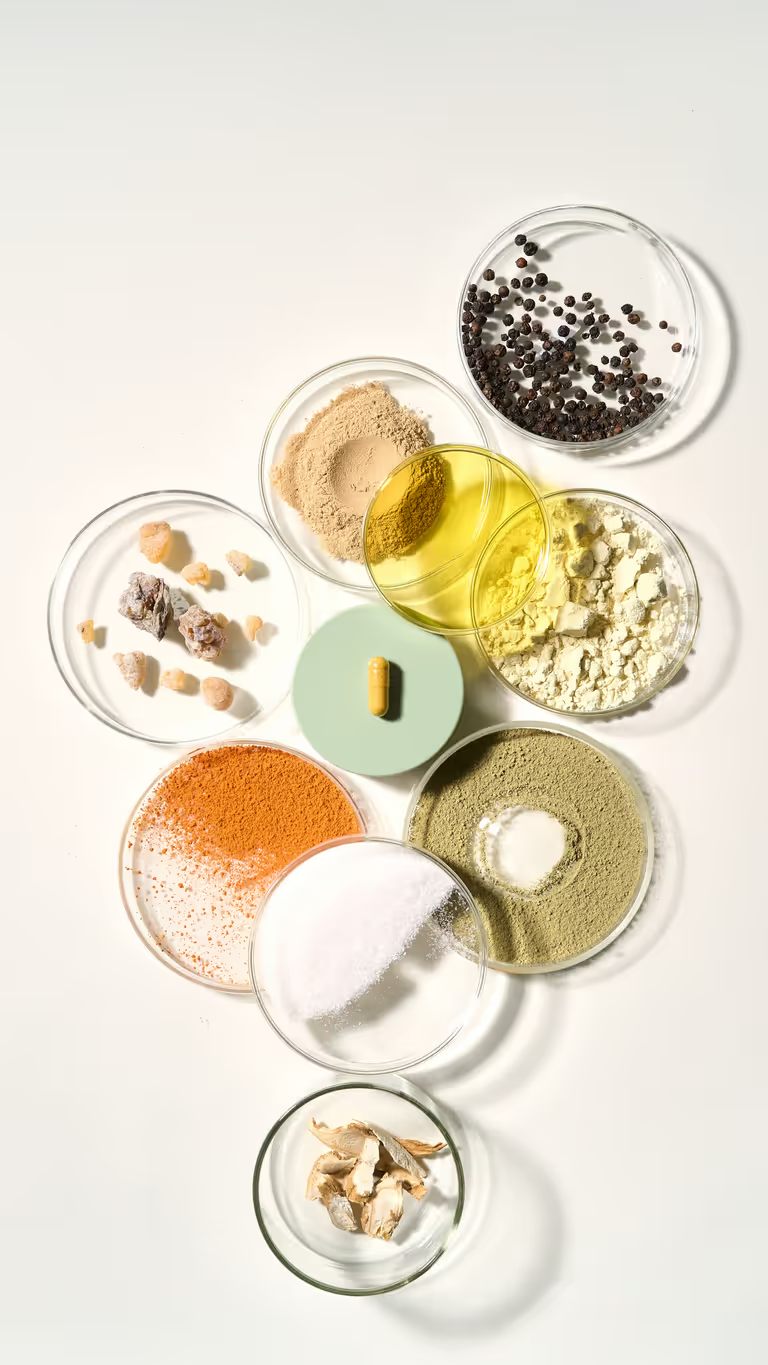
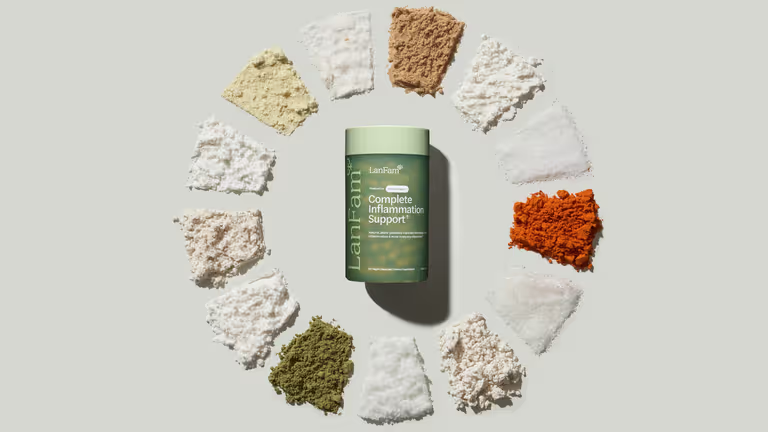
Ingredients in this letter

Someone wrote to us last month with a question I've now heard a dozen ways. She was forty-eight. Her hip had started aching — one side, mostly, and worst at night when she rolled onto it. No fall, no injury, nothing she could point to. Her doctor had said "probably wear and tear," which she didn't believe, because the other hip felt fine and she wasn't exactly running marathons on the bad one.
She asked me, very plainly: is this just getting old, or is something else going on?
I spent forty years in pharmaceuticals, and the honest answer is that "wear and tear" is doing a lot of quiet work in that sentence. New-onset hip pain in your mid-forties to early fifties is often not the same thing as the slow cartilage erosion of hip arthritis. It has a different driver. So let me sit down and explain it the way I'd explain it to her — or to Maria, which is really where all of this started.
Why perimenopausal hip pain is its own thing
Here is the distinction I wish more women heard early.
Hip osteoarthritis is a cartilage problem. The smooth surface inside the joint thins over years, the joint space narrows, and pain comes from bone-on-bone mechanics deep in the groin. It tends to be gradual, load-related (worse the more you walk), and it usually doesn't care much about your hormones on a month-to-month basis.
Perimenopausal hip pain is more often a soft-tissue and inflammatory problem layered on top of a hormonal shift. The pain sits on the outside of the hip rather than deep in the groin. It flares at night. It frequently picks one side. And it arrives in a fairly narrow window — the same few years your cycle is becoming unpredictable. That timing is the tell.
The reason the timing matters is estrogen. For thirty years it was doing two jobs in the background that nobody thanks it for.
Job one: estrogen keeps connective tissue stable
Estrogen acts on the cells that build and maintain ligaments, tendons, and the joint capsule. When estrogen is high and cyclical, those tissues hold their tone and stiffness. The relationship runs the other way too — across the research on sex hormones and joint tissue, estrogen status is tied to the health and behavior of the structures in and around the joint, which is part of why women's joint complaints cluster so tightly around the menopause transition rather than scattering randomly across adulthood.¹
When estrogen declines in perimenopause — unevenly, lurching up and down — that stabilizing influence weakens. Connective tissue around the hip becomes a little more lax, a little less able to hold the joint in a clean line. The tendons that run over the outer hip (the ones that get pinched in trochanteric pain) are exactly the structures that feel that loss first.
Job two: estrogen is a brake on inflammation
This is the part that ties everything together. Estrogen is broadly anti-inflammatory — but, importantly, not simply so. The full picture from the research is that estrogen has a complex, dose-dependent role: at the higher concentrations of reproductive life it tends to dampen inflammatory signaling, and as it falls, that dampening weakens and the inflammatory tone can rise.² Across the literature on sex hormones and immunity, estrogen is described as an active modulator of the inflammatory response, not a bystander.⁷
So in the hip specifically, you get a double hit. The connective tissue gets looser and more irritable, and the inflammatory response to that irritation runs hotter and resolves more slowly. A tendon that gets a little inflamed and would have quietly calmed down at thirty-five now lights up and stays lit. That is trochanteric bursitis and tendinopathy — the single most common cause of one-sided, lie-on-it-at-night outer-hip pain in this age group.
The pattern, in plain terms
If you want a quick gut-check on whether what you're feeling fits the perimenopausal-inflammatory picture rather than deep hip arthritis, here is the rough shape of it. None of this replaces an exam — it's orientation, not diagnosis.
- Location: outer hip, over the bony point, rather than deep in the groin.
- Sidedness: often one side, at least to start.
- Timing: worst at night, especially lying on that side; sore when you first stand after sitting.
- Trigger: no clear injury; it just appeared.
- Company it keeps: it arrived alongside other perimenopausal changes — irregular cycles, sleep disruption, new aches elsewhere.
Deep groin pain that's worse the more you walk, on the other hand, points more toward the joint itself and is worth imaging. When in doubt, get it looked at. One-sided hip pain has a long list of possible causes, and a few of them matter.
What actually helps — and what doesn't
I want to be honest in both directions here, because the supplement aisle is full of overpromises and the doctor's office is sometimes a little too quick with "live with it."
The foundations come first
Nothing you swallow beats the mechanical basics for trochanteric hip pain. Targeted strengthening of the hip-stabilizing muscles (a physical therapist who works with this will know exactly which ones), not sleeping directly on the painful side, and managing load sensibly do more than any capsule. If estrogen loss is central to your symptoms, a conversation with your doctor about hormone therapy is a legitimate one to have — this article is meant to sit alongside that conversation, not replace it.
Where supplements have real evidence
Because the engine here is inflammatory signaling in soft tissue, the supports worth knowing about are the ones with human data on inflammatory joint and tissue pain.
Boswellia serrata. The boswellic acids in this resin act on the 5-LOX (5-lipoxygenase) pathway — a specific arm of inflammatory signaling that produces leukotrienes, the messengers behind a lot of soft-tissue inflammation. This is a different lever than the one ibuprofen pulls, which is part of why it's interesting. In a randomized, double-blind, placebo-controlled trial in knee osteoarthritis, boswellia extract reduced pain and improved function versus placebo.³ A later systematic review and meta-analysis of boswellia for osteoarthritis reached a broadly favorable conclusion on pain and function across pooled trials.⁴ Most of the strong data is in the knee rather than the hip specifically — I'll be straight about that — but the pathway it acts on is the same soft-tissue inflammatory machinery driving trochanteric pain.
Curcumin (with piperine). Curcumin, the active in turmeric, acts on inflammatory signaling more broadly. A systematic review and meta-analysis of randomized trials found curcuminoids reduced pain and improved function in knee osteoarthritis compared with control.⁵ The catch with curcumin is that on its own your gut barely absorbs it. Piperine, the active in black pepper, changes that — in a classic human study, co-administering piperine raised curcumin bioavailability dramatically, which is why any serious curcumin formula pairs the two.⁶ Curcumin without an absorption partner is mostly an expensive way to make yellow.
Where the evidence runs out
A few honest limits. The supplement trials are mostly in osteoarthritis of the knee, not perimenopausal hip pain as such — the mechanism transfers, but I won't pretend there's a dedicated trial for your exact situation, because there isn't. Supplements support a healthy inflammatory response; they do not regrow connective tissue, reverse menopause, or substitute for the mechanical and hormonal foundations above. And anything taken by mouth takes weeks, not days — if a label promises overnight, that's the label talking, not the biology.
How this maps to what we built
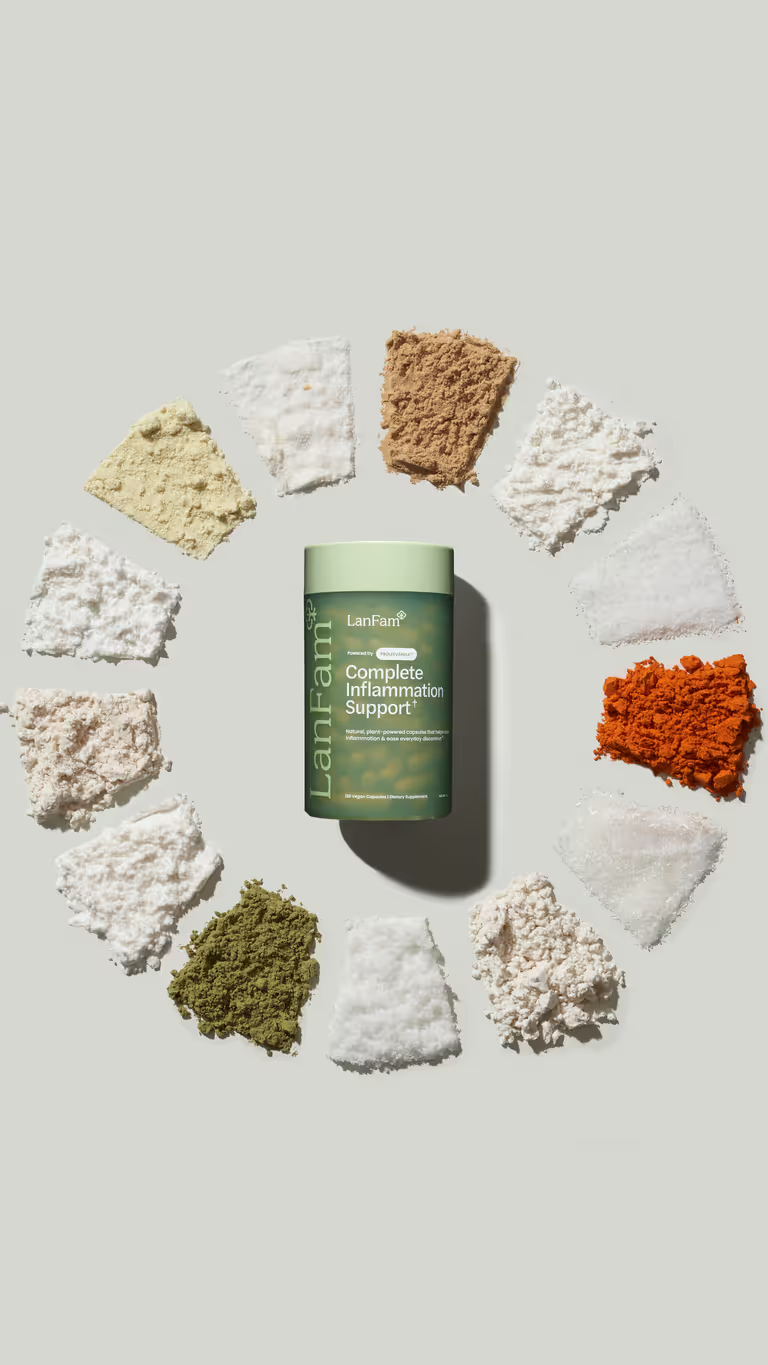
I'll be plain about why I'm telling you all this, because Maria would want me to be. The reason I understand this hip mechanism well enough to write it down is that I built Complete Inflammation Support (Powered by ProleevaMax) around exactly these pathways. Its first pathway pairs boswellia (5-LOX) with curcumin (inflammatory signaling) and piperine (absorption) — the same three actives with the human evidence above — because soft-tissue inflammation almost never runs down a single channel. That's the whole idea: support more than one lever at once, at doses you can read on the label.*
It isn't a hip-pain cure, and I'd never call it one. It's a daily support for a healthy inflammatory response, built first for my wife, then for everyone else navigating the same window.
Frequently Asked Questions
Is perimenopause hip pain the same as hip arthritis? Usually not. Hip osteoarthritis is a cartilage problem felt deep in the groin and worsened by walking. Perimenopausal hip pain is more often a soft-tissue, inflammatory problem — trochanteric pain over the outer hip, frequently one-sided and worst at night — driven by estrogen decline loosening connective tissue and raising inflammatory tone.¹ ² The two can coexist, so new hip pain still deserves an exam.
Why is my perimenopause hip pain worse at night and on one side? That pattern is classic for trochanteric (outer-hip) pain. Lying on the affected side compresses the inflamed tendons and bursa over the bony point of the hip, which is why it flares at night. It often starts on one side because the soft-tissue irritation begins locally before the other side catches up.
Can supplements help perimenopause hip pain? Some have human evidence for supporting a healthy inflammatory response, which is the engine behind this kind of pain. Boswellia serrata acts on the 5-LOX inflammatory pathway and curcumin (with piperine for absorption) acts on inflammatory signaling, both with randomized-trial support in osteoarthritis.³ ⁵ ⁶ They support the foundations — strengthening, load management, and any hormone conversation with your doctor — rather than replacing them.
Do I still need to see a doctor? Yes. New one-sided hip pain has several possible causes, and a few of them matter. Deep groin pain that worsens with walking especially warrants evaluation and possibly imaging. Understanding the inflammatory mechanism is meant to make that conversation better, not to skip it.
How long do these supports take to work? Weeks, not days. Anything acting on inflammatory signaling builds gradually as it reaches steady levels in your tissues. If a product promises overnight relief, be skeptical of the product.
A few related letters if you want to keep reading: if your aching is more all-over than hip-specific, the best supplements for menopause joint pain — and what the research actually supports takes on the whole-body joint picture, and supplements for menopause joint pain covers the broader options. To understand why so many menopausal symptoms share one root, menopause inflammation symptoms is the place to start, and if you want the deep version of how boswellia works, boswellia serrata benefits goes pathway by pathway.
If we wouldn't give it to our own, we wouldn't make it.
— Fabio
These statements have not been evaluated by the Food and Drug Administration. This product is not intended to diagnose, treat, cure, or prevent any disease.

References
- 2.Tschon M, Contartese D, Pagani S, et al. Gender and Sex Are Key Determinants in Osteoarthritis Not Only Confounding Variables. A Systematic Review of Clinical Data. J Clin Med. 2021. https://doi.org/10.3390/jcm10143178
- 3.Straub RH. The complex role of estrogens in inflammation. Endocr Rev. 2007. https://doi.org/10.1210/er.2007-0001
- 4.Kimmatkar N, Thawani V, Hingorani L, Khiyani R. Efficacy and tolerability of Boswellia serrata extract in treatment of osteoarthritis of knee — a randomized double blind placebo controlled trial. Phytomedicine. 2003. https://doi.org/10.1078/094471103321648593
- 5.Yu G, Xiang W, Zhang T, et al. Effectiveness of Boswellia and Boswellia extract for osteoarthritis patients: a systematic review and meta-analysis. BMC Complement Med Ther. 2020. https://doi.org/10.1186/s12906-020-02985-6
- 6.Feng J, Li Z, Tian L, et al. Efficacy and safety of curcuminoids alone in alleviating pain and dysfunction for knee osteoarthritis: a systematic review and meta-analysis of randomized controlled trials. BMC Complement Med Ther. 2022. https://doi.org/10.1186/s12906-022-03740-9
- 7.Shoba G, Joy D, Joseph T, et al. Influence of piperine on the pharmacokinetics of curcumin in animals and human volunteers. Planta Med. 1998. https://doi.org/10.1055/s-2006-957450
- 8.Taneja V. Sex Hormones Determine Immune Response. Front Immunol. 2018. https://doi.org/10.3389/fimmu.2018.01931
There's a seat at our table
Letters from our family to yours — the science, the recipes, the things that actually helped real families. Leave your email and we'll send the next one.