Why Do I Have Brain Fog? The Inflammation Connection Behind a Foggy Brain
Why is your brain so foggy — forgetful, slow, hard to focus? The inflammation connection behind brain fog, when to see a doctor, and what genuinely helps.
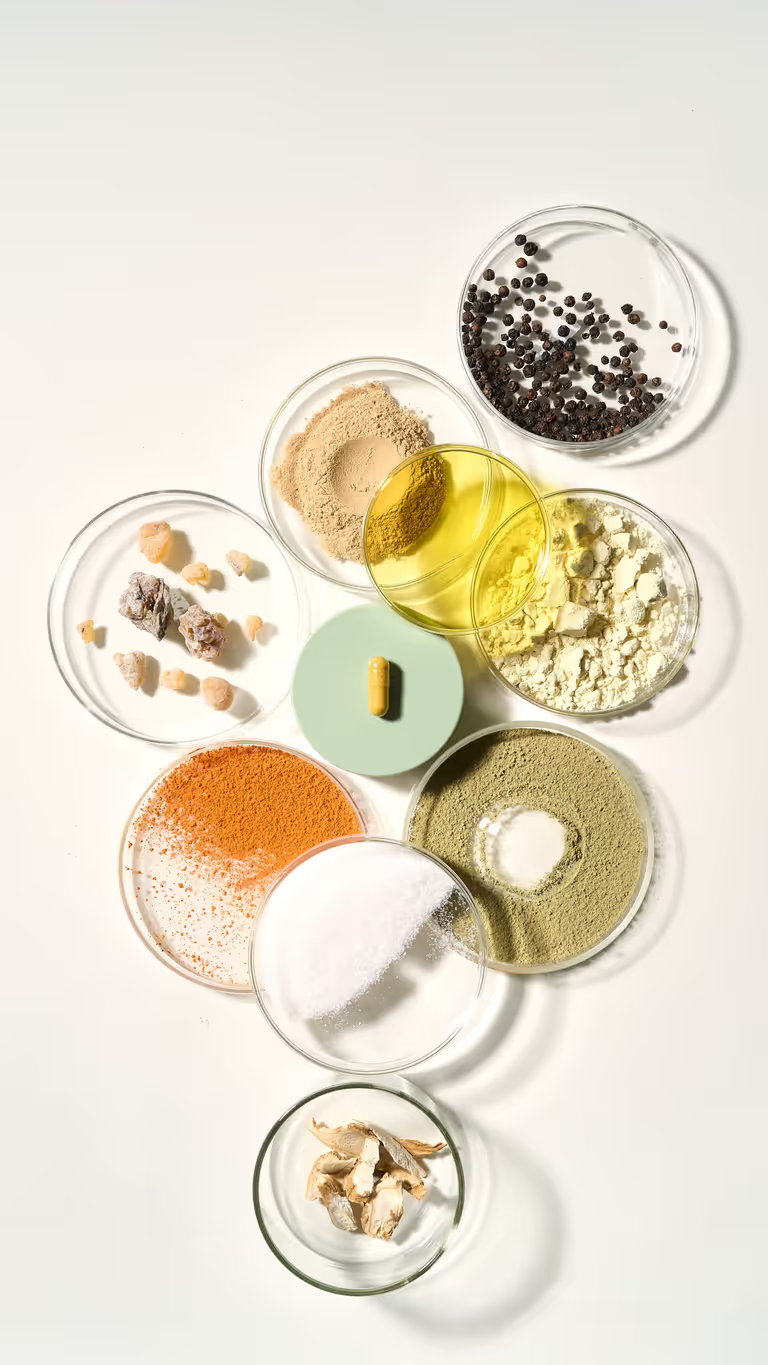
Ingredients in this letter
You walk into a room and forget why. You reach for a word you've known your whole life and it just isn't there. You read the same paragraph three times and none of it sticks. It's not an ache, it's not exactly tiredness — it's a kind of mental static, a sense that you're thinking through a layer of gauze. People call it brain fog, and when it lingers, it's genuinely unsettling. You start to wonder if something's wrong with you.
I've spent forty years around the science of how the body's systems talk to each other, and brain fog is one of my favorite things to explain, because the honest answer is usually far less frightening than what people fear — and it points toward things you can actually do. Let me sit down and walk you through it.
Brain Fog Is Real — Even Though It's Not on Any Chart
Let me say the reassuring thing first, because I know it's what you need to hear. Brain fog being hard to measure does not mean it's imaginary. It's a genuine experience that millions of people describe in almost identical words — and the fact that a standard brain scan looks normal doesn't contradict that. A scan shows structure. Brain fog is about function — how efficiently your brain cells are signaling, how well-fueled and well-rested they are, how much background noise they're working through. You can have a perfectly normal-looking brain that's running slow for very real, very physical reasons.
"Brain fog" is a description, not a diagnosis. It's an umbrella term for a cluster of feelings — forgetfulness, slowed processing, difficulty concentrating, mental fatigue, that word-on-the-tip-of-your-tongue frustration. The useful question isn't "is it real" (it is). The useful question is "what's driving it" — because the drivers are usually identifiable and addressable.
The Connection Most Brain-Fog Advice Skips: Inflammation
Here's the piece that doesn't get said often enough, and it's the reason I'm the one writing this rather than handing you the usual "drink more water and meditate" list.
For a long time, the brain was thought of as walled off from the body's immune system — separate, protected, untouchable by what happens elsewhere. We now know that was wrong. The brain and the immune system are in constant conversation, and inflammatory signals from the body can directly affect how your brain works.
When your body is running a low-grade inflammatory response — for any of a dozen reasons — it produces messenger molecules called cytokines (you may have heard of IL-6 or TNF-α). These don't just stay in your joints or your bloodstream. They signal across to the brain, and there they influence the very things brain fog is made of: alertness, memory, processing speed, motivation. There's an entire field of research on how the immune system modulates learning, memory, and mental clarity [1], and a growing literature specifically on how inflammation within the brain — neuroinflammation — dulls cognition [2]. This is the same machinery that makes you feel mentally foggy and flattened when you have the flu. The difference is that with chronic, low-grade inflammation, you get a faint, persistent version of that fog without the obvious illness to explain it.
That's the link. Your foggy brain may not be a brain problem at its root — it may be your brain faithfully responding to an inflammatory signal coming from the rest of your body. If you want the deeper version of exactly this mechanism, I wrote it up here: inflammation and brain fog — the biological connection most people miss. And for the specific science of inflammation inside the brain, this one goes further: what is neuroinflammation, and why your brain fog might not be just stress.
The Everyday Drivers (and Why They All Lead Back to Inflammation)
Inflammation rarely shows up alone. The common, fixable causes of brain fog tend to feed it — which is why addressing them helps on two fronts at once:
- Poor sleep. This is the big one. Sleep is when your brain clears metabolic waste and consolidates memory. Short-change it and thinking gets foggy fast — and poor sleep also raises inflammatory signaling, tightening the loop.
- Chronic stress. A stressed stress-system keeps inflammation simmering and pulls cognitive resources toward threat-monitoring and away from clear thinking.
- Blood-sugar swings. Your brain runs on a steady glucose supply; spikes and crashes from refined-carb meals translate directly into mental haze.
- Dehydration. Even mild dehydration measurably slows thinking and concentration.
- Diet. A pro-inflammatory eating pattern feeds the very inflammation that dulls the brain; an anti-inflammatory one steadies it.
- Medications and hormones. Some prescriptions list cognitive fog as a side effect, and hormonal shifts (including the menopause transition) can drive it too.
Notice the pattern: nearly every one of these either is an inflammatory driver or makes inflammation worse. That's why the inflammation lens is so useful — it's the thread connecting the whole list.
When to See a Doctor First
Before any supplement, the honest guardrails. Most brain fog is the ordinary, lifestyle-and-inflammation kind. But some patterns need a real medical evaluation, and I'd want you to take them seriously. See a doctor if:
- The fog came on suddenly or is rapidly getting worse.
- It comes with other neurological symptoms — weakness, numbness, vision changes, trouble speaking, severe headache, or confusion. (Sudden symptoms like those can be an emergency — don't wait.)
- It's interfering with your work or safety, or those close to you have noticed real memory change.
And even for the slow, nagging kind, a basic workup is worth it, because several treatable causes hide behind brain fog: thyroid problems, vitamin B12 or vitamin D deficiency, anemia, sleep apnea, and depression. A round of bloodwork sorts most of that out. No supplement substitutes for ruling those in or out.
What Genuinely Helps a Foggy Brain
Once the medical causes are ruled out, here's where I'd put my energy — foundations first, because they do most of the work:
- Protect your sleep like it's the cognitive tool it is. This is the single highest-leverage move.
- Steady your blood sugar — fewer refined carbs, more whole foods, protein and fiber with meals.
- Hydrate, and move. A short walk genuinely clears the fog for many people; exercise lowers chronic inflammation over time.
- Eat to lower your inflammatory baseline — an anti-inflammatory way of eating supports both the brain directly and the inflammation underneath the fog.
Then the supportive supplement layer — and here I'll be precise, because the "brain pill" category is where my industry tells its tallest tales. There is no limitless pill, and if you want the honest, graded sorting of what actually has evidence from what's just marketing, I wrote that up separately in brain fog supplements — what actually works and what doesn't. What a few well-chosen compounds can honestly do is support a healthy inflammatory response and supply the brain's own raw materials. The ones in our formula with the most relevant evidence:
Curcumin and boswellia both support a healthy inflammatory response through different pathways — curcumin on the NF-κB master switch, boswellia on the 5-LOX enzyme [3][4]. Their relevance to fog is the inflammation link above: support the inflammatory signal coming from the body, and you may take some load off the brain that's responding to it. (Curcumin only works if it's paired with piperine for absorption — without it, most of the dose never reaches your bloodstream.)
Resveratrol is a polyphenol studied specifically for its effects on inflammation in the brain. A randomized controlled trial in older adults found that resveratrol modulated neuro-inflammatory markers in the central nervous system [5] — direct human evidence that it acts on exactly the machinery this whole letter is about.
Choline is the raw material your body uses to make acetylcholine, the neurotransmitter most directly tied to memory and attention. It's a supporting nutrient for the brain's own signaling hardware rather than an anti-inflammatory, included because clear thinking needs the substrate, not just a calm inflammatory environment [6].
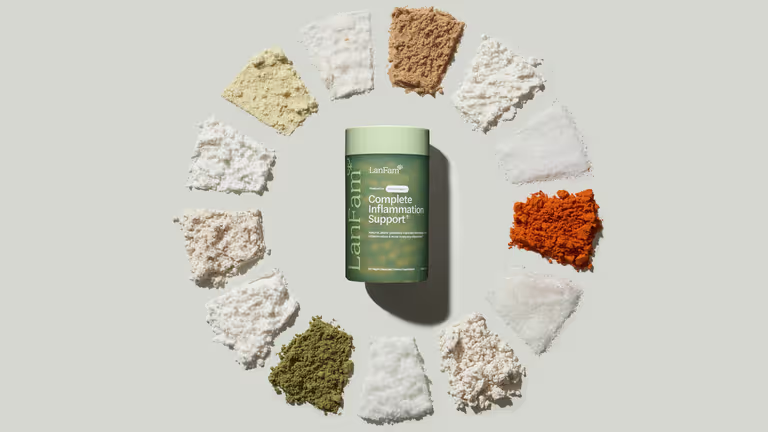
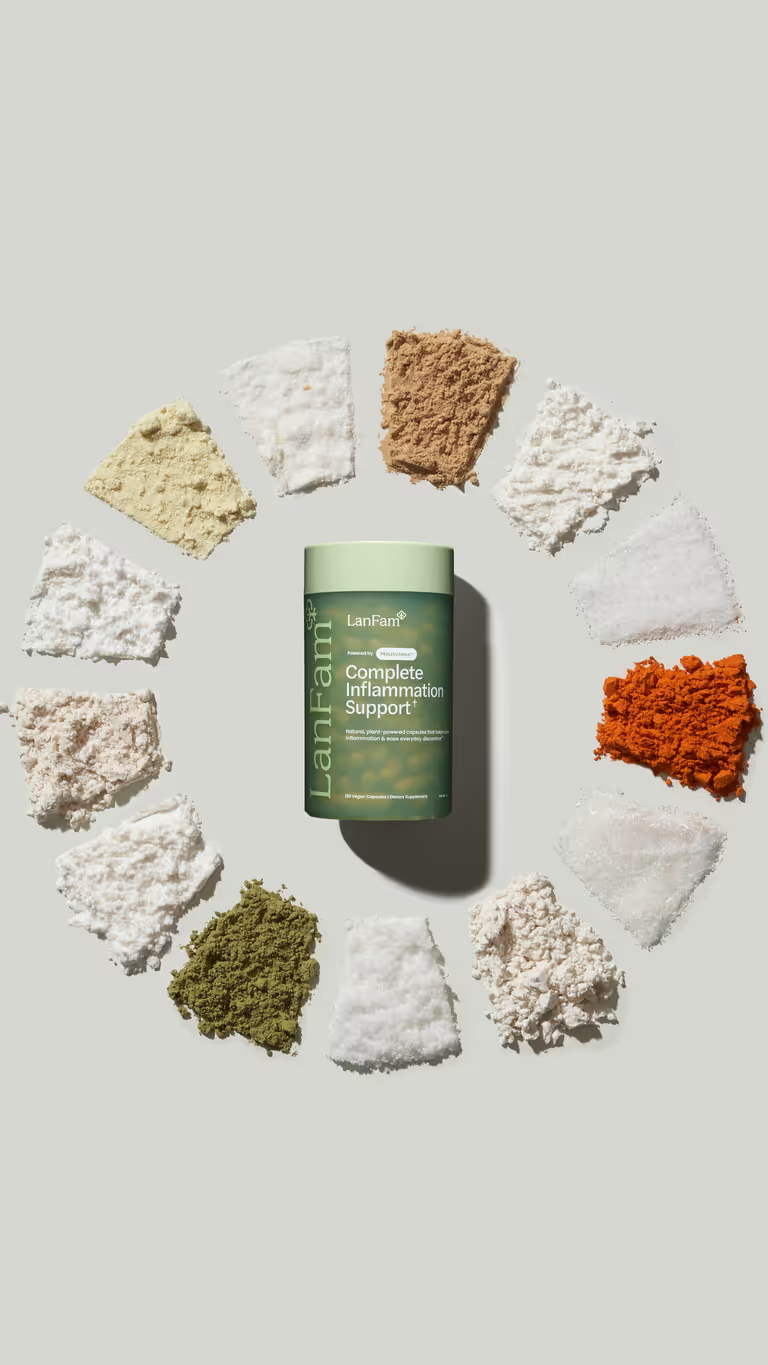
This is the logic behind ProleevaMax — curcumin (with piperine), boswellia, resveratrol, and choline among 13 standardized actives, supporting a healthy inflammatory response and the nervous system across more than one pathway. I built it at our kitchen table for my wife Maria, and the family standard still governs every ingredient: if we wouldn't give it to our own, we won't make it. Honest expectation, though: this supports the *environment your brain works in — it is not a stimulant and not a cognitive enhancer, and it works over weeks, not in an afternoon.
So, Why Is Your Brain Foggy?
Most likely because one or more ordinary, fixable things — sleep debt, stress, blood-sugar swings, dehydration — are taxing your brain, and a quiet inflammatory signal coming from the rest of your body is riding along with them, dulling how clearly your brain cells fire. It's not in your head, even though a scan looks normal — it's a real, physical, functional state. Rule out the treatable medical causes with your doctor. Then tend the foundations, lower your inflammatory baseline, and — modestly, honestly — support the inflammatory response and your brain's own machinery. The fog usually lifts the way it rolled in: gradually, as the system underneath it settles.
These statements have not been evaluated by the Food and Drug Administration. This product is not intended to diagnose, treat, cure, or prevent any disease.
This article is for general education and isn't medical advice. Sudden, severe, or worsening cognitive changes — or fog with weakness, numbness, vision or speech trouble — need prompt medical attention.

References
- 2.Yirmiya R, Goshen I. Immune modulation of learning, memory, neural plasticity and neurogenesis. Brain, Behavior, and Immunity. 2011. https://doi.org/10.1016/j.bbi.2010.10.015
- 3.Skaper SD, Facci L, Zusso M, Giusti P. An inflammation-centric view of neurological disease: beyond the neuron. Frontiers in Cellular Neuroscience. 2018. https://doi.org/10.3389/fncel.2018.00072
- 4.Gupta SC, Patchva S, Aggarwal BB. Therapeutic roles of curcumin: lessons learned from clinical trials. The AAPS Journal. 2013. https://doi.org/10.1208/s12248-012-9432-8
- 5.Yu G, Xiang W, Zhang T, et al. Effectiveness of Boswellia and Boswellia extract for osteoarthritis patients: a systematic review and meta-analysis. BMC Complementary Medicine and Therapies. 2020. https://doi.org/10.1186/s12906-020-02985-6
- 6.Moussa C, Hebron M, Huang X, et al. Resveratrol regulates neuro-inflammation and induces adaptive immunity in Alzheimer's disease. Journal of Neuroinflammation. 2017. https://doi.org/10.1186/s12974-016-0779-0
- 7.Lewis JE, Melillo AB, Tiozzo E, et al. A double-blind, randomized clinical trial of dietary supplementation on cognitive and immune functioning in healthy older adults. BMC Complementary and Alternative Medicine. 2014. https://doi.org/10.1186/1472-6882-14-43
Frequently asked questions

There's a seat at our table
Letters from our family to yours — the science, the recipes, the things that actually helped real families. Leave your email and we'll send the next one.