How to Lower CRP Naturally: Evidence-Based Steps That Work
Learn how to lower CRP naturally with diet, exercise, sleep, and habit changes that research links to a healthier inflammatory response.
Ingredients in this letter
To lower CRP naturally, focus on the habits research links most consistently to a healthier inflammatory response: eat a Mediterranean-style diet rich in fiber and olive oil, move your body regularly, lose excess weight if you carry it, sleep seven to nine hours, and stop smoking. CRP (C-reactive protein) is a blood marker your liver produces when inflammation rises, and studies document that these lifestyle levers can move it in the right direction over weeks to months. No single food or pill is a magic switch. The changes that work are the ones you keep.
What Is CRP, and Why Does It Matter?
C-reactive protein is a substance your liver makes in response to inflammation. When tissue is irritated, injured, or under chronic stress, your body releases signals that tell the liver to produce more CRP. A blood test measures how much is circulating.
There are two versions of the test. A standard CRP test detects larger jumps, the kind seen with infections or flare-ups. The high-sensitivity CRP (hs-CRP) test reads much smaller amounts and is used to estimate cardiovascular risk, according to MedlinePlus [1], the patient-education service of the U.S. National Library of Medicine.
For heart-risk purposes, Johns Hopkins Medicine [2] describes these general hs-CRP bands:
| hs-CRP level | Cardiovascular risk category |
|---|---|
| Below 1.0 mg/L | Lower risk |
| 1.0 to 3.0 mg/L | Average risk |
| Above 3.0 mg/L | Higher risk |
One important caveat: CRP rises sharply with any acute infection or injury, so a single reading taken when you have a cold tells you little about your baseline. Johns Hopkins Medicine [2] notes the test is best done twice, a couple of weeks apart, to find your true baseline. Reference ranges also differ slightly between labs.
Think of CRP as a smoke detector. It tells you something is generating inflammation. The goal of "lowering CRP naturally" is to reduce the underlying smoke, not to silence the alarm.
How to Lower CRP Naturally: 6 Evidence-Based Steps
1. Eat a Mediterranean-style diet
The diet pattern with the strongest, most repeated link to lower CRP is the Mediterranean diet: vegetables, fruit, legumes, whole grains, fish, nuts, and olive oil, with little processed food.
A 2025 systematic review and meta-analysis of 33 randomized controlled trials in over 3,400 adults found that a Mediterranean diet produced significant reductions in hs-CRP and other inflammatory markers, including IL-6, compared with control diets (Nutrition Reviews, 2025) [3]. An umbrella review of meta-analyses [4] went further, ranking the Mediterranean pattern as the most effective dietary approach for reducing circulating CRP across the studies examined.
Olive oil appears to carry part of the benefit. A meta-analysis of olive-oil-supplemented Mediterranean interventions [5] documented meaningful drops in CRP/hs-CRP.
What to do: Build plates around plants and fish. Cook with extra-virgin olive oil instead of butter. Treat red and processed meat as occasional, not daily.
2. Get more fiber and whole grains
Fiber feeds the gut bacteria that help regulate inflammation, and higher-fiber diets are repeatedly associated with lower CRP.
The evidence on whole grains is encouraging but not unanimous. A meta-analysis of nine randomized trials (838 participants) [6] found whole-grain intake inversely associated with CRP, IL-6, and TNF-alpha. A separate meta-analysis of randomized trials [7] found whole grains lowered hs-CRP and IL-6 versus refined grains, though some other reviews did not reach significance. For dietary fiber overall, research has linked higher intake to lower CRP [8] alongside reduced cardiovascular risk.
The honest read: results vary by study, but the direction is consistent and the downside is nil. Fiber is good for you regardless.
What to do: Swap refined grains for oats, barley, brown rice, and 100% whole-wheat. Aim for beans, lentils, vegetables, and fruit at most meals.
3. Pair movement with weight loss
Exercise is good for your heart and mood, but the CRP story is more specific than "just move more."
Two well-designed trials found that aerobic exercise without meaningful weight loss did not lower CRP. The INFLAME study [9] and a separate 12-month randomized controlled trial [10] both improved fitness yet left CRP essentially unchanged when participants did not lose much weight. By contrast, research combining exercise with weight reduction [11] found that the two together lowered CRP, and a recent systematic review in hypertensive patients [12] reported consistent CRP reductions with aerobic exercise, with added benefit when paired with dietary control.
The takeaway: if you carry excess body fat, the fat tissue itself produces inflammatory signals. Reducing it is what tends to move CRP. Exercise accelerates that and supports the whole effort.
What to do: Combine regular activity you enjoy with the dietary changes above. The goal is gradual fat loss plus consistent movement, not exercise as a standalone fix.
4. Protect your sleep
Sleep is an underrated inflammation lever. A systematic review and meta-analysis of 72 studies [13] (more than 50,000 people) found that sleep disturbance was associated with higher CRP and IL-6. A 2026 updated meta-analysis of experimental sleep studies [14] added nuance: a single bad night did not raise inflammation, but several consecutive nights of partial sleep deprivation significantly increased CRP and IL-6.
In other words, the occasional late night is not the problem. Chronic short sleep is.
What to do: Aim for seven to nine hours. Keep a consistent schedule, dim screens before bed, and treat sleep as part of your anti-inflammatory plan, not an afterthought.
5. Stop smoking
Smoking keeps the body in a low-grade inflammatory state, and CRP reflects it. The good news is that quitting helps. A cohort study of screening participants [15] and a broader review of smokers and former smokers [16] both show CRP declines after cessation.
Set expectations, though. The same research documents that CRP falls gradually, and former smokers can have higher levels than never-smokers for years, because tissue recovery takes time. The sooner you quit, the sooner the clock starts.
What to do: If you smoke, a quit plan is one of the highest-impact moves for inflammation. Talk to your clinician about support.
6. Manage stress and excess weight as ongoing work
Chronic psychological stress and carrying excess weight both feed the inflammatory signaling that CRP measures. These overlap with the levers above. Stress disrupts sleep and eating; excess fat tissue produces inflammatory messengers. Address them together rather than chasing each in isolation.
A Note on Supplements and CRP
Many people ask which supplement lowers CRP. The honest answer is that the evidence is ingredient-specific and dose-dependent, not universal.
Omega-3 (fish oil) is the most-studied example. A dose-response meta-analysis of 40 randomized clinical trials [17] found that EPA and DHA reduced CRP in people with cardiometabolic disorders, with benefit up to roughly 1,200 mg per day, but the same analysis found no significant CRP reduction in overweight and obese participants without those conditions. Effect depends on who is taking it, the dose, and the population.
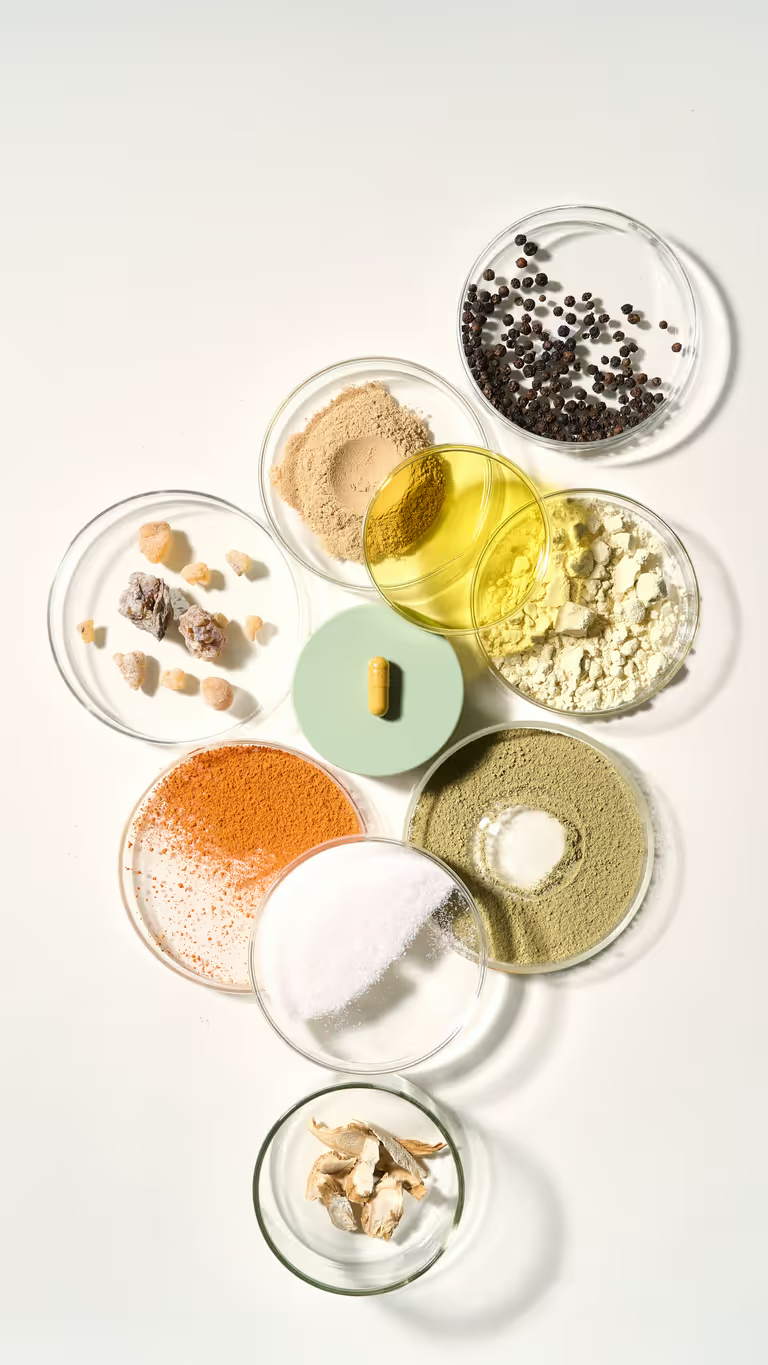
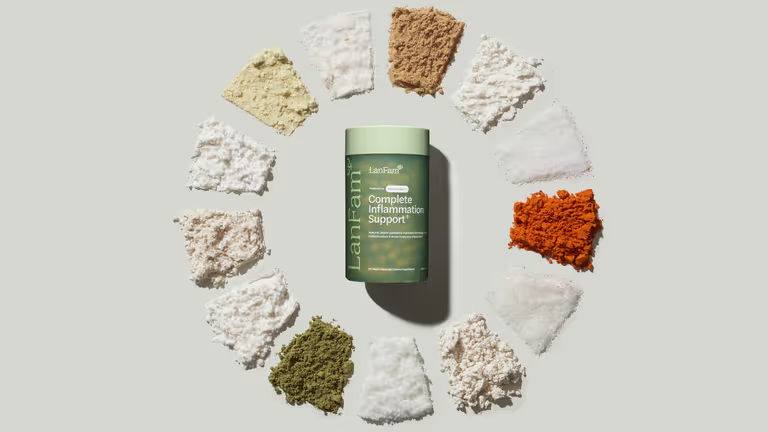
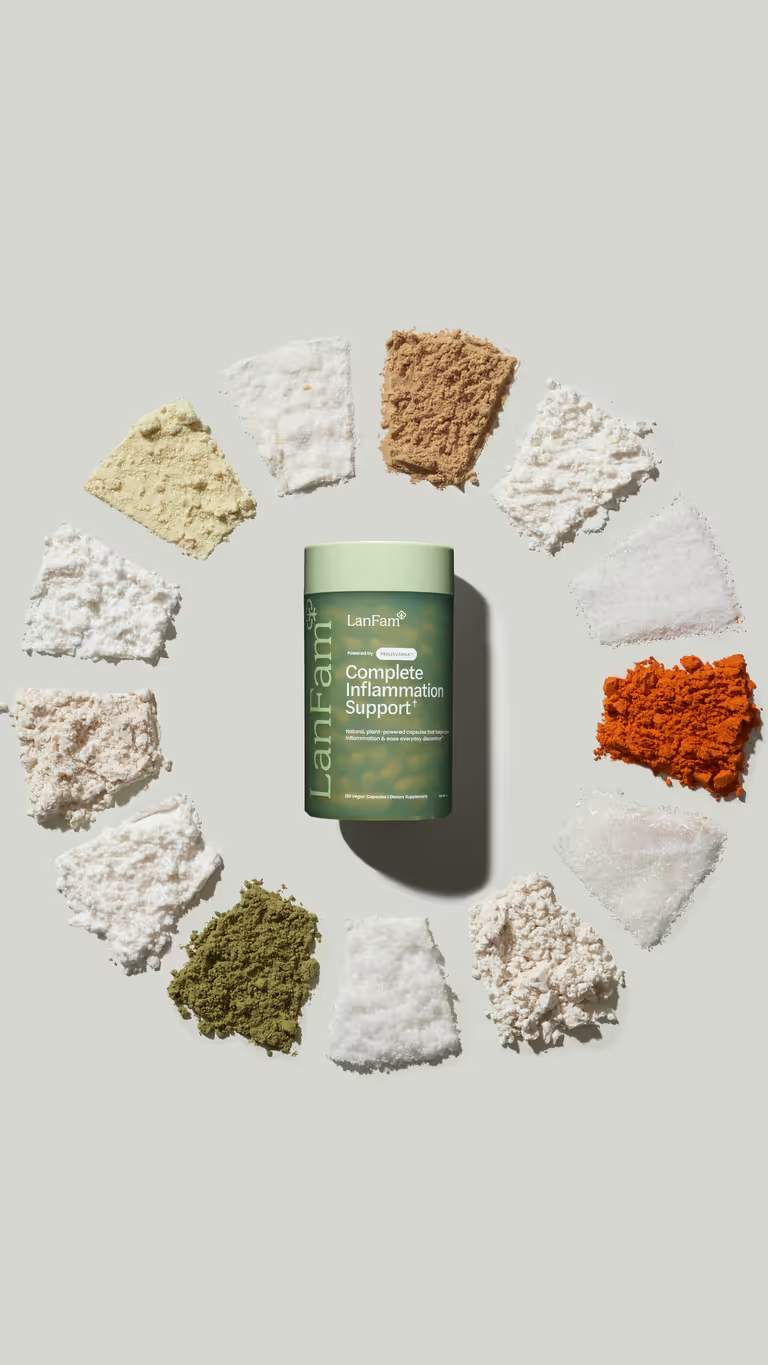
It is worth being clear about what Complete Inflammation Support (Powered by ProleevaMax®) is and is not. ProleevaMax does not contain omega-3, CoQ10, vitamin D, magnesium, quercetin, probiotics, or ashwagandha. If those are your interest, seek them separately. ProleevaMax takes a different approach: a 13-ingredient blend designed to support a healthy inflammatory response through multiple pathways at once.
Its botanical anchor is Boswellia (Indian Frankincense), standardized to 65% boswellic acids. Boswellic acids have been studied for inflammatory support; a randomized, double-blind, placebo-controlled trial of a standardized Boswellia serrata extract [18] documented improvements in joint comfort and physical function, and a meta-analysis of seven clinical trials (545 patients) [19] reported positive effects on joint function. ProleevaMax pairs that botanical side with L-Glutamine and L-Serine, amino acids included for nervous-system resilience, plus Matcha (EGCG and L-theanine), GABA, 5-HTP, Asian Ginseng, Resveratrol, L-Arginine, Black Pepper (piperine for absorption), Vitamin B6, and Choline. The turmeric in the blend is a whole-root extract, included for its botanical contribution rather than as a standardized-curcumin dose.
To be precise about claims: ProleevaMax is formulated to support a healthy inflammatory response and everyday comfort and mobility. It is not a CRP-lowering treatment, and it is not intended to diagnose, treat, cure, or prevent any disease. The lifestyle steps above are where the documented CRP evidence sits. A multi-pathway supplement can be one supportive part of a broader routine.
What These Steps Won't Do
Honesty matters here.
- They won't lower CRP overnight. CRP responds over weeks to months, and it fluctuates day to day. One reading is a snapshot, not a verdict.
- They won't fix a single high reading caused by infection. If you are sick or recently injured, CRP rises temporarily. Wait, recover, and recheck.
- They won't replace medical care. A persistently elevated CRP is a reason to talk with your clinician, not a number to manage alone with food and a supplement. CRP can signal conditions that need proper diagnosis.
- No supplement is a CRP "cure." Where ingredients show benefit, it is modest, population-specific, and part of a larger pattern. Anyone promising a dramatic drop from a pill is overselling.
The realistic promise of natural strategies: a steadier, healthier inflammatory baseline built from habits you can sustain.
These statements have not been evaluated by the Food and Drug Administration. This product is not intended to diagnose, treat, cure, or prevent any disease.
Support Your Inflammatory Response, the Sustainable Way
The strongest CRP evidence rewards consistency: a Mediterranean-style plate, more fiber, movement paired with healthy weight, real sleep, and no smoking. If you want a supplement that complements that work, Complete Inflammation Support (Powered by ProleevaMax®) is designed to support a healthy inflammatory response through a multi-pathway, 13-ingredient blend anchored by Boswellia standardized to 65% boswellic acids.
We built it for the long game. That is why every order is backed by our 90-day money-back guarantee, matched to the 90-Day Protocol so you have time to judge it on your own terms:
- Week 2: initial response begins
- Week 4: noticeable changes in everyday comfort and mobility
- Week 8: significant improvement in daily function
- Day 90: full protocol completion, the "pause test"
Explore the details:
Keep reading:

References
- 2.National Library of Medicine. C-Reactive Protein (CRP) Test. MedlinePlus, U.S. National Library of Medicine. 2025. https://medlineplus.gov/lab-tests/c-reactive-protein-crp-test/
- 3.Johns Hopkins Medicine. Assessing Cardiovascular Risk with C-Reactive Protein. Johns Hopkins Medicine. 2023. https://www.hopkinsmedicine.org/health/treatment-tests-and-therapies/assessing-cardiovascular-risk-with-c-reactive-protein
- 4.Keshani M, Rafiee S, Heidari H, et al. Mediterranean diet reduces inflammation in adults: a systematic review and meta-analysis of randomized controlled trials. Nutrition Reviews. 2025. https://doi.org/10.1093/nutrit/nuaf213
- 5.Tran DQ, Nguyen KD, Chi VTQ, Nguyen HTH. Evaluating the effects of dietary patterns on circulating C-reactive protein levels in the general adult population: an umbrella review of meta-analyses of interventional and observational studies. British Journal of Nutrition. 2024. https://doi.org/10.1017/S0007114524001648
- 6.Tehrani SD, Ahmadi AR, Sadeghi N, Keshani M. The effects of the Mediterranean diet supplemented with olive oils on pro-inflammatory biomarkers and soluble adhesion molecules: a systematic review and meta-analysis of randomized controlled trials. Nutrition & Metabolism. 2025. https://doi.org/10.1186/s12986-025-00947-8
- 7.Xu Y, Wan Q, Feng J, Du L, Li K, Zhou Y. Whole grain diet reduces systemic inflammation: a meta-analysis of 9 randomized trials. Medicine (Baltimore). 2018. https://doi.org/10.1097/MD.0000000000012995
- 8.Milesi G, Rangan A, Grafenauer S. Whole grain consumption and inflammatory markers: a systematic literature review of randomized control trials. Nutrients. 2022. https://doi.org/10.3390/nu14020374
- 9.North CJ, Venter CS, Jerling JC. The effects of dietary fibre on C-reactive protein, an inflammation marker predicting cardiovascular disease. European Journal of Clinical Nutrition. 2009. https://doi.org/10.1038/ejcn.2009.8
- 10.Church TS, Earnest CP, Thompson AM, et al. Exercise without weight loss does not reduce C-reactive protein: the INFLAME study. Medicine & Science in Sports & Exercise. 2010. https://doi.org/10.1249/MSS.0b013e3181c03a43
- 11.Campbell KL, Campbell PT, Ulrich CM, et al. No reduction in C-reactive protein following a 12-month randomized controlled trial of exercise in men and women. Cancer Epidemiology, Biomarkers & Prevention. 2008. https://doi.org/10.1158/1055-9965.EPI-08-0088
- 12.Okita K, Nishijima H, Murakami T, Nagai T, et al. Can exercise training with weight loss lower serum C-reactive protein levels?. Arteriosclerosis, Thrombosis, and Vascular Biology. 2004. https://doi.org/10.1161/01.ATV.0000140199.14930.32
- 13.Kanthajan T, Pandey M, AlQassab O, et al. The impact of exercise on C-reactive protein levels in hypertensive patients: a systematic review. Cureus. 2024. https://doi.org/10.7759/cureus.68821
- 14.Irwin MR, Olmstead R, Carroll JE. Sleep disturbance, sleep duration, and inflammation: a systematic review and meta-analysis of cohort studies and experimental sleep deprivation. Biological Psychiatry. 2015. https://doi.org/10.1016/j.biopsych.2015.05.014
- 15.Ballesio A, Fiori V, Lombardo C. Effects of experimental sleep deprivation on peripheral inflammation: an updated meta-analysis of human studies. Journal of Sleep Research. 2026. https://doi.org/10.1111/jsr.70099
- 16.Gallus S, Lugo A, Suatoni P, et al. Effect of tobacco smoking cessation on C-reactive protein levels in a cohort of low-dose computed tomography screening participants. Scientific Reports. 2018. https://doi.org/10.1038/s41598-018-29867-9
- 17.Tonstad S, Cowan JL. C-reactive protein as a predictor of disease in smokers and former smokers: a review. International Journal of Clinical Practice. 2009. https://doi.org/10.1111/j.1742-1241.2009.02179.x
- 18.Amin Amlashi M, Payahoo A, Jafari Maskouni S, et al. Dose-dependent effects of omega-3 polyunsaturated fatty acids on C-reactive protein concentrations in cardiometabolic disorders: a dose-response meta-analysis of randomized clinical trials. Inflammopharmacology. 2025. https://doi.org/10.1007/s10787-025-01744-8
- 19.Majeed M, Majeed S, Narayanan NK, Nagabhushanam K. A pilot, randomized, double-blind, placebo-controlled trial to assess the safety and efficacy of a novel Boswellia serrata extract in the management of osteoarthritis of the knee. Phytotherapy Research. 2019. https://doi.org/10.1002/ptr.6338
- 20.Yu G, Xiang W, Zhang T, Zeng L, Yang K, Li J. Effectiveness of Boswellia and Boswellia extract for osteoarthritis patients: a systematic review and meta-analysis. BMC Complementary Medicine and Therapies. 2020. https://doi.org/10.1186/s12906-020-02985-6
Frequently asked questions
There's a seat at our table
Letters from our family to yours — the science, the recipes, the things that actually helped real families. Leave your email and we'll send the next one.