Why Am I So Tired All the Time? The Inflammation-Fatigue Link Most People Miss
Why are you so tired all the time even after sleeping? Get your bloodwork first — then understand the inflammation-fatigue link, and what honestly helps.
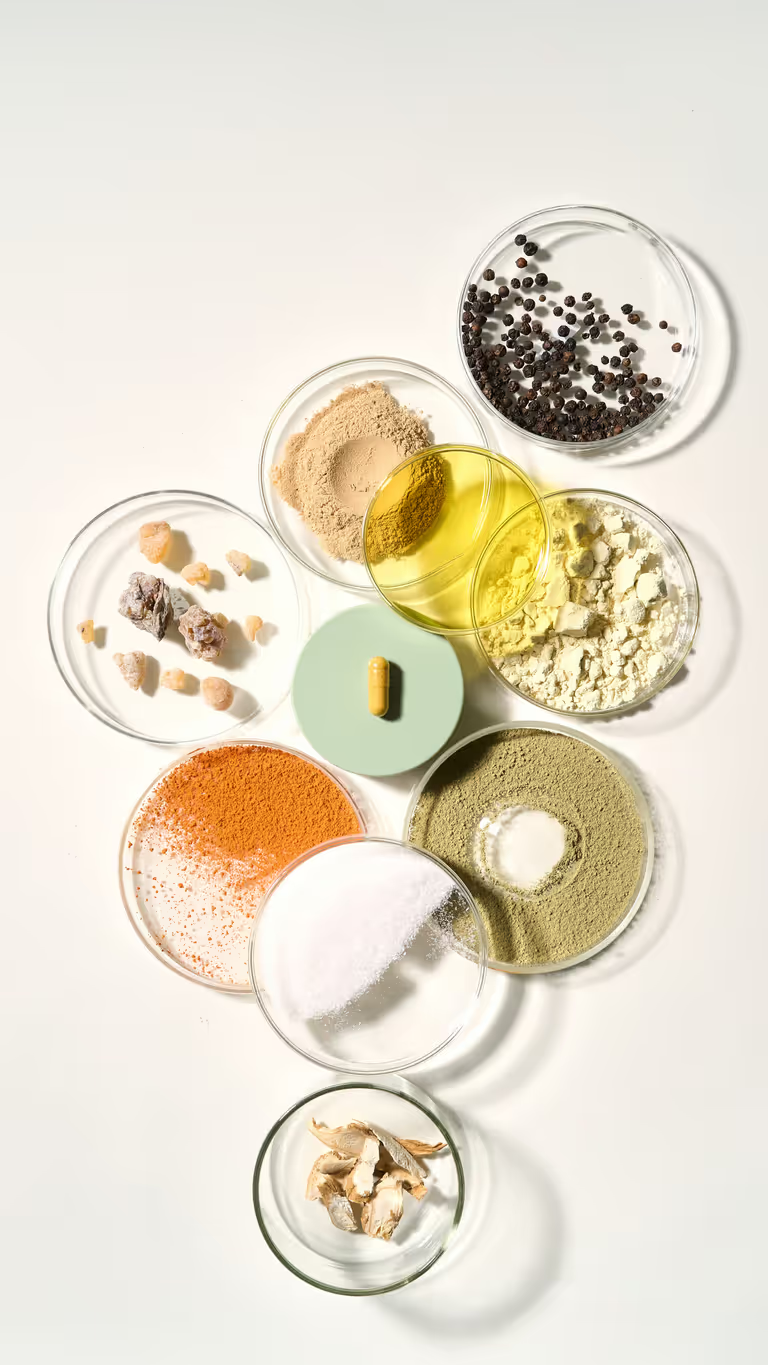
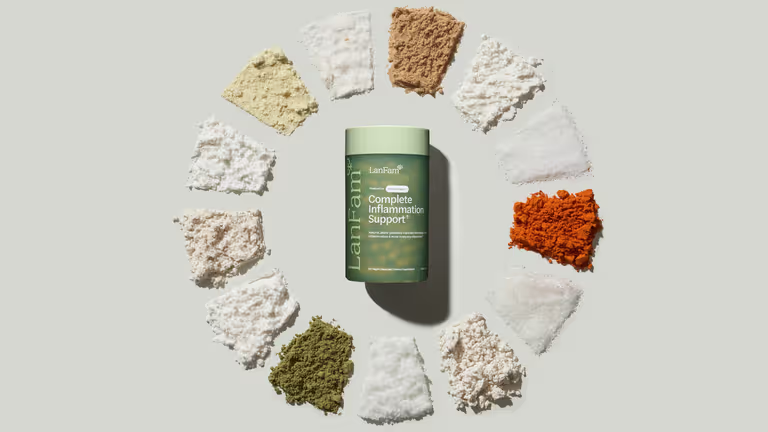
Ingredients in this letter

You slept eight hours and you woke up tired anyway. You're tired by mid-morning, tired in the afternoon in a way coffee doesn't touch, tired in a bone-deep, foggy way that doesn't match anything you actually did that day. And the worst part is how normal everyone tells you it is. "Of course you're tired, you're busy." "Welcome to your forties." "Have you tried more sleep?" As if you hadn't thought of that.
I've been tired in that particular way. After my cancer treatment, when my body was running on a low signal that wouldn't switch off, I went looking for the reason, and I want to write you the letter I wish someone had written me — starting, as Fabio would insist, with the part that matters most.
Please get your bloodwork before you read the rest
I have to say this first, plainly, because I love you too much to let you skip it: persistent, unexplained fatigue deserves a doctor and a blood test, not a supplement.
Being tired all the time is one of the most common ways real, treatable medical problems announce themselves. The usual suspects are very fixable once they're found: an underactive thyroid, anemia (low iron), low vitamin D or B12, sleep apnea (which leaves you exhausted no matter how long you're in bed), depression, blood-sugar problems, and medication side effects, among others. None of those gets better with the supplements I'm about to describe. All of them get better — often dramatically — once they're identified.
So before anything else: see your doctor, ask for bloodwork, and mention sleep apnea if you snore or wake unrefreshed. See someone sooner if your fatigue is severe, came on suddenly, or comes with weight loss, breathlessness, a racing heart, or low mood. This letter is not a diagnosis and it isn't a substitute for that visit. It's about one specific piece — the inflammation piece — that often gets missed after the standard workup comes back "normal" and you're still dragging. If that's you, read on.
The Part Most "Tired All the Time" Articles Skip: Inflammation
Here's the thing nobody told me until Fabio explained it at the dinner table: your body uses inflammation to make you tired on purpose.
Think about the last time you had the flu. Beyond the aches, you felt that heavy, foggy, can't-lift-my-head exhaustion — the urge to do nothing but lie still. That isn't an accident or a weakness. It's a coordinated program your body runs when inflammatory messengers (cytokines) rise: it pulls your energy inward so your body can heal. Scientists have a name for the whole package — fatigue, brain fog, low mood, the pulling-inward — they call it sickness behavior, and it's driven by inflammatory cytokines acting on the brain [1].
That's a brilliant system when you're acutely sick. The problem is when inflammation isn't acute and dramatic but low-grade and chronic — simmering quietly month after month for reasons that don't announce themselves the way the flu does. Then your body is getting a faint, constant version of that same "conserve energy, rest, pull inward" signal — and you feel it as fatigue that doesn't match your life and doesn't lift with sleep. A major review in Nature Medicine mapped how this kind of chronic, systemic inflammation underlies a wide range of conditions across a lifespan [2], and the cytokine-to-fatigue pathway is well enough established that it's studied directly in people with inflammatory illnesses, where fatigue is often the most disabling symptom.
So if your thyroid is fine, your iron is fine, your sleep study is clean, and you're still tired — this inflammatory thread is worth understanding. It's the part the standard workup doesn't have a box to check. (For how that same low-grade inflammation shows up beyond fatigue, Fabio wrote the field guide to chronic inflammation fatigue.)
The Loop: How Stress and Inflammation Drain You Together
There's a second layer, and it's the one that explains "wired and tired" — exhausted but unable to truly rest.
Stress raises cortisol, the hormone that's supposed to rise in the morning and fall at night. In its healthy rhythm, cortisol actually helps put the brakes on inflammation. But under chronic stress — months of poor sleep, a hard caregiving stretch, grief, illness — that rhythm flattens, and something counterintuitive happens: the immune system gradually stops listening to cortisol's anti-inflammatory signal. A landmark study showed that people under prolonged stress had immune cells less responsive to cortisol, leaving them with more inflammation, not less [3]. And inflammation, in turn, acts back on the brain to keep the stress system switched on [4].
So it's a loop. Stress flattens the cortisol rhythm. The flattened rhythm lets inflammation simmer. The simmering inflammation keeps the stress system on — and both ends drain your energy. That's why "just sleep more" doesn't fix it: you're not dealing with one broken part, you're dealing with a system stuck in a cycle. I wrote the whole story of that cycle, and what helps quiet it, in supplements to lower cortisol.
What "Energy" Supplements Can and Can't Do
Let me be plainspoken, because this aisle is sold more dishonestly than almost any other. No supplement is an "energy switch." Anything promising to "skyrocket your energy" or "beat fatigue overnight" is selling a feeling, usually with a pile of caffeine, not a fix. Real fatigue tied to inflammation and a stressed stress-system eases slowly, over weeks, as the underlying rhythm steadies — not in an afternoon.
What the better-evidenced options can do is support the body's resilience to physical stress and a healthier inflammatory response over consistent weeks. Here's the honest read, including where the evidence is mixed — because honesty about evidence is the whole point of how we do things.
Panax Ginseng — the adaptogen for the wrung-out kind of tired
Panax ginseng is the one Fabio reaches for first when the problem is less "sleepy" and more "depleted." It's classed as an adaptogen — a botanical that supports the body's resistance to physical and physiological stress rather than forcing one outcome. Its active compounds, the ginsenosides, act on the stress-response (HPA) axis and on energy metabolism, and a comprehensive 2021 pharmacology review documented these adaptogenic effects [5].
Now the honesty part, because you deserve it. When you look at the randomized human trials for ginseng and fatigue specifically, the results are genuinely mixed. A trial in advanced-cancer fatigue found ginseng improved fatigue — but so did placebo, and ginseng wasn't statistically better [6]. A trial in people with rheumatic-disease fatigue found the same pattern: real improvement, but not significantly beyond placebo [7]. So I won't tell you ginseng is a proven fatigue cure — the trial picture doesn't support that claim, and I'd never make a claim the evidence can't hold. What I'll tell you honestly is that it's the best-studied adaptogen for supporting a body running on a stress signal that won't settle, with a solid mechanism and a good safety record — and that the people it tends to help most are the depleted-and-wrung-out, not the simply sleep-deprived.
Matcha — calm, steady alertness instead of a crash
This is the one I actually keep in my own kitchen, because it doubles as a morning ritual. Matcha is whole-leaf green tea, and what makes it different from a cup of coffee is L-theanine, an amino acid that produces a calm, alert focus without the jitter or the 2pm crash. In a randomized study of students under real exam stress, theanine was linked to measurable reductions in stress markers and lower trait anxiety [8]. A broad review of matcha's literature found consistent support for its role in antioxidant defense and the stress response [9].
There's an inflammation thread here too, which is why it belongs in this conversation specifically: a randomized controlled trial found green tea extract shifted inflammatory cytokines in postmenopausal women — direct human evidence that the catechins act on the same machinery the fatigue loop keeps simmering [10]. The one caution: matcha has caffeine, so take it in the morning, not at night, or you'll feed the very sleep problem you're trying to fix.
5-HTP — for the sleep-and-mood side, framed honestly
You'll see 5-HTP in a lot of fatigue stacks. Let me be precise: it's a building block your body uses to make serotonin, which feeds your sleep and mood circuitry. Its evidence base is around mood and sleep, not a direct effect on energy or inflammation [11]. So I think of it as supporting the downstream of the fatigue loop — the poor sleep and low mood that chronic stress drags in — rather than a lever on energy itself. One genuinely important caution: do not take 5-HTP if you're on an antidepressant or any serotonin-affecting medication without talking to your doctor first. That one matters.
The Boring Foundations That Beat Every Capsule
I promised you the truth, so here it is — the four things that move fatigue most aren't in a bottle:
- Sleep you protect like it's sacred. Not just hours, but consistency and quality. If you snore or wake unrefreshed, get checked for sleep apnea — no supplement touches it.
- Morning daylight. Ten minutes of real light in the morning helps set the cortisol curve that governs your whole day's energy. It sounds too simple to matter, and it isn't.
- Movement that doesn't punish you. A walk lowers stress signaling and lifts energy. A brutal workout when you're already depleted does the opposite. Gentle and regular beats heroic and occasional.
- An anti-inflammatory way of eating. Blood-sugar spikes and crashes drag your energy up and down, and a pro-inflammatory diet keeps the other half of the loop lit. Steadying both does more than any supplement — start with an anti-inflammatory breakfast.
Supplements support this foundation. They don't replace it. Anyone who tells you a capsule beats sleep is selling you a shortcut that doesn't exist.
Why One Pill Was Never the Answer
Look back at the loop — flattened cortisol rhythm, simmering inflammation, poor sleep, low mood. These aren't four separate problems with four separate pills. They're one tangled system. A single ingredient pulls one thread; the rest of the knot stays put.
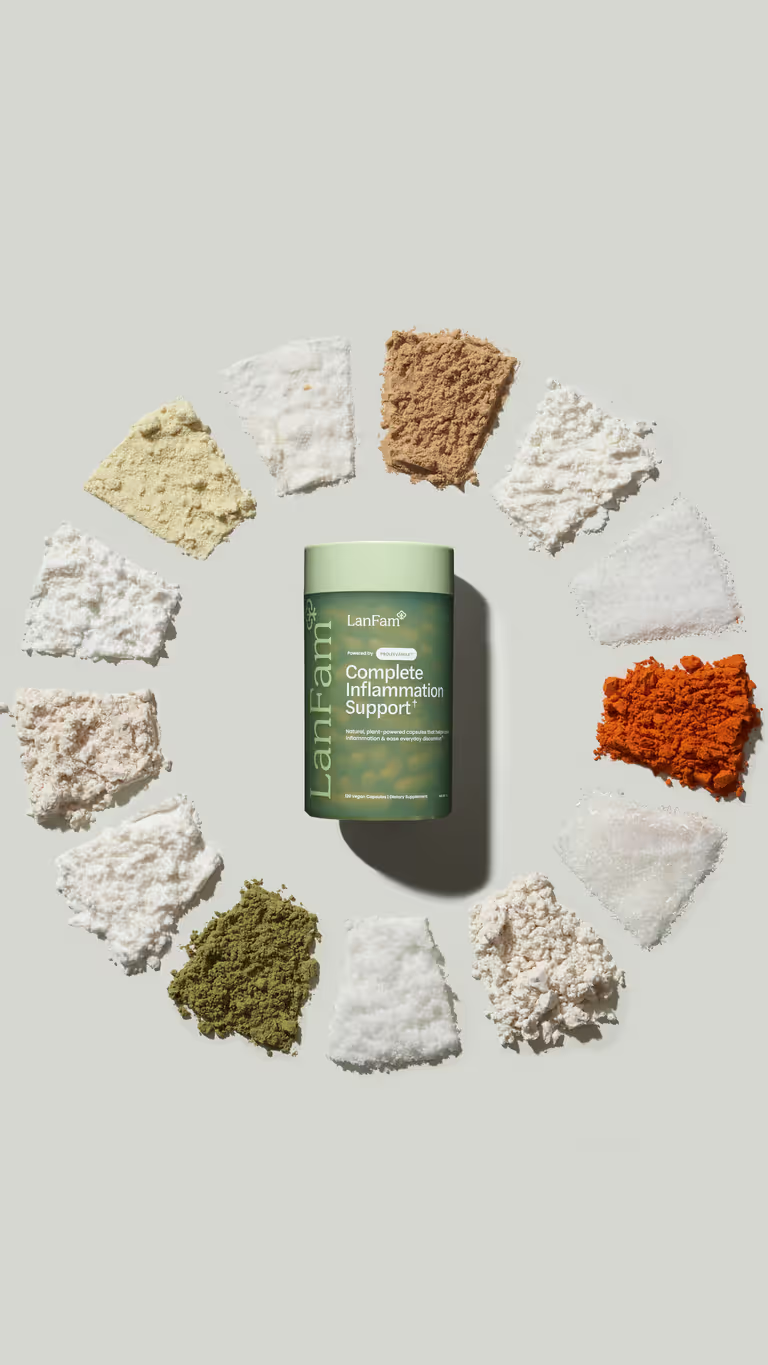
That's the whole reason behind the formula Fabio built for me — several standardized actives working across more than one pathway at once, including Panax ginseng for the adaptive-energy and stress-response side and matcha for antioxidant and inflammatory support, dosed where the research is. He made it at our kitchen table when the only thing offered to me was a drug I couldn't take for years on end. It supports a healthy inflammatory response and a steadier daily rhythm* — it doesn't flip an energy switch, and I won't pretend it does. The rule hasn't changed: if we wouldn't give it to our own, we won't make it.
If you take one thing from this letter, let it be the first thing: get your bloodwork. Rule out the treatable causes. And if you come out the other side still tired, know that the inflammation piece is real, it's not in your head, and it can be supported — slowly, honestly, with your sleep and your meals and your daylight doing most of the lifting. That's how I found my way back to myself. It's the path I'd want for you.
These statements have not been evaluated by the Food and Drug Administration. This product is not intended to diagnose, treat, cure, or prevent any disease.
This article is for general education and isn't medical advice. Persistent fatigue can have serious, treatable medical causes — please see your doctor and get bloodwork, especially if it's severe, sudden, or comes with other symptoms.

References
- 2.Dantzer R, O'Connor JC, Freund GG, Johnson RW, Kelley KW. From inflammation to sickness and depression: when the immune system subjugates the brain. Nature Reviews Neuroscience. 2008. https://doi.org/10.1038/nrn2297
- 3.Furman D, Campisi J, Verdin E, et al. Chronic inflammation in the etiology of disease across the life span. Nature Medicine. 2019. https://doi.org/10.1038/s41591-019-0675-0
- 4.Cohen S, Janicki-Deverts D, Doyle WJ, et al. Chronic stress, glucocorticoid receptor resistance, inflammation, and disease risk. Proceedings of the National Academy of Sciences. 2012. https://doi.org/10.1073/pnas.1118355109
- 5.Liu YZ, Wang YX, Jiang CL. Inflammation: the common pathway of stress-related diseases. Frontiers in Human Neuroscience. 2017. https://doi.org/10.3389/fnhum.2017.00316
- 6.Ratan ZA, Youn SH, Kwak YS, et al. Adaptogenic effects of Panax ginseng on modulation of immune functions. Journal of Ginseng Research. 2021. https://doi.org/10.1016/j.jgr.2020.09.004
- 7.Yennurajalingam S, Tannir NM, Williams JL, et al. A double-blind, randomized, placebo-controlled trial of Panax ginseng for cancer-related fatigue in patients with advanced cancer. Journal of the National Comprehensive Cancer Network. 2017. https://doi.org/10.6004/jnccn.2017.0149
- 8.Cho SK, Song YJ, Han JY, et al. Effectiveness of Korean Red Ginseng on fatigue in patients with rheumatic diseases: a randomized, double-blind, placebo-controlled study. The Korean Journal of Internal Medicine. 2024. https://doi.org/10.3904/kjim.2023.350
- 9.Unno K, Tanida N, Ishii N, et al. Anti-stress effect of theanine on students during pharmacy practice: positive correlation among salivary alpha-amylase activity, trait anxiety and subjective stress. Nutrients. 2018. https://doi.org/10.3390/nu10101468
- 10.Kochman J, Jakubczyk K, Antoniewicz J, Mruk H, Janda K. Health benefits and chemical composition of matcha green tea: a review. Molecules. 2020. https://doi.org/10.3390/molecules26010085
- 11.Cunningham A, et al. Effects of green tea extract supplementation on inflammatory cytokines among postmenopausal women with overweight or obesity: a secondary analysis of a randomized controlled trial. Nutrients. 2026. https://doi.org/10.3390/nu18010143
- 12.Maffei ME. 5-Hydroxytryptophan (5-HTP): natural occurrence, analysis, biosynthesis, biotechnology, physiology and toxicology. International Journal of Molecular Sciences. 2020. https://doi.org/10.3390/ijms22010181
Frequently asked questions
There's a seat at our table
Letters from our family to yours — the science, the recipes, the things that actually helped real families. Leave your email and we'll send the next one.