What Causes Inflammation in the Body? The Root Causes Explained
What causes inflammation in the body? Diet, stress, sleep, visceral fat, smoking, infection, and aging all play a role. Here is the science.
What causes inflammation in the body comes down to a short list of root drivers: diet, chronic stress, poor sleep, excess visceral fat, smoking, lingering infections, and aging itself. Inflammation is your immune system doing its job. The problem starts when it never switches off and settles into a low, constant hum the body cannot resolve. For women managing chronic inflammation, understanding these root causes is the first step toward addressing them at the source instead of chasing symptoms.
First, What Is Inflammation?
Inflammation is not the enemy. It is your immune system's response to injury, infection, or irritation. When you cut your finger or fight off a cold, your body sends immune cells and signaling chemicals to the site to clear the threat and start repair. That is acute inflammation, and it is supposed to happen. It arrives fast, does its job, and resolves in a few days [1].
The trouble is a different kind: chronic inflammation. This is when the immune response gets turned up and stays up. The body keeps releasing immune cells and inflammatory messengers long after any real threat is gone. Harvard Health describes chronic inflammation as a slow, smoldering process that can continue for months or years and quietly contribute to many of the conditions that show up in midlife [2].
| | Acute inflammation | Chronic inflammation |
|---|---|---|
| Onset | Fast (minutes to hours) | Slow, often unnoticed |
| Duration | Days | Months to years |
| Signs | Redness, heat, comfort loss, reduced function | Often silent; fatigue, stiffness, low energy |
| Purpose | Heal an injury or clear infection | None; the response no longer serves repair |
| Goal | Let it run its course | Address the root cause |
Chronic, low-grade inflammation is the version this article focuses on, because that is the kind most women 40 to 65 are working to manage. A clinical overview in the StatPearls reference library (NCBI Bookshelf) [3] notes that this prolonged inflammatory state can lead to tissue changes over time, which is why identifying the cause matters more than masking the feeling.
The 7 Root Causes of Inflammation in the Body
Chronic inflammation rarely has a single source. It builds from several inputs that overlap and reinforce one another. Here are the seven that research points to most consistently.
1. Diet
What you eat is one of the most direct levers on your inflammatory baseline. A dietary pattern heavy in refined sugar, refined grains, processed meats, and industrial fats keeps the immune system on alert, while a pattern rich in vegetables, fiber, fish, and olive oil tends to calm it.
A review of low-grade systemic inflammation in the context of modern "Western" eating patterns documents how diets high in refined carbohydrates, certain fats, and ultra-processed foods, paired with low fiber and few plant compounds, promote a sustained low-grade inflammatory state [4]. The gut microbiome sits at the center of this. The foods you eat shape which bacteria thrive, and that balance influences how much inflammatory signaling reaches the rest of the body.
The good news: diet is also the lever you can adjust starting at your next meal. For a deeper look at the specific culprits, see does sugar cause inflammation? and the worst foods for inflammation.
2. Chronic Stress
Short bursts of stress are normal. The body releases cortisol, handles the moment, and returns to baseline. Chronic stress is different. When the pressure never lets up, the system that should switch inflammation off starts to falter.
A landmark study from Carnegie Mellon researchers proposed that prolonged stress leads to glucocorticoid receptor resistance, meaning the body's cells stop responding properly to cortisol's anti-inflammatory signal. The result is a failure to down-regulate inflammation, so the response runs unchecked [5]. In plain terms: chronic stress can break the brake pedal on inflammation.
This is why stress is not "just in your head." It has a measurable biological footprint. For the full mechanism, read does stress cause inflammation?.
3. Poor Sleep
Sleep is when the body resets. Cut it short night after night, and the immune system shifts toward a more inflammatory state.
A systematic review and meta-analysis of 72 studies covering more than 50,000 people found that sleep disturbance and long sleep duration were associated with higher levels of C-reactive protein (CRP) and interleukin-6 (IL-6), two of the most studied markers of inflammation [6]. The pattern matters more than one rough night. A single sleepless night does not appear to spike these markers, but repeated short sleep over multiple nights does.
For women navigating perimenopause and menopause, sleep often becomes harder to come by at the same stage of life when inflammation tends to rise, which makes protecting it a high-value habit.
4. Excess Visceral Fat
Not all body fat behaves the same way. Visceral fat, the deep fat packed around the abdominal organs, is metabolically active. It does not sit quietly. It produces and releases inflammatory signaling molecules.
A review of adipose tissue and inflammation describes how excess visceral fat draws in immune cells called macrophages, which then secrete pro-inflammatory messengers including TNF-alpha and IL-6 directly into circulation [7]. The more visceral fat accumulates, the more of these signals it generates, which helps explain why central weight is so closely tied to systemic inflammation.
This is also where the causes start to loop. Poor sleep and chronic stress both nudge the body toward storing visceral fat, and that fat then becomes its own inflammation source.
5. Smoking
Smoking is a direct chemical assault on the body's inflammatory balance. The compounds in cigarette smoke stimulate the production of pro-inflammatory signals while suppressing the anti-inflammatory ones, tipping the immune system toward a sustained inflammatory state. This is one of the clearest, most modifiable contributors to chronic inflammation, and the effects begin to reverse after quitting.
6. Chronic and Hidden Infections
Sometimes inflammation has a persistent source the body cannot fully clear. Lingering low-grade infections, including some gum and dental infections, can keep the immune system engaged long term. Because the trigger never resolves, the inflammatory response stays switched on. This is one reason clinicians treat dental health and unexplained chronic inflammation as connected, not separate, concerns.
7. Aging and "Inflammaging"
Even with a clean lifestyle, the body's inflammatory baseline tends to drift upward with age. Researchers coined a term for this: inflammaging, a chronic, low-grade, systemic rise in inflammatory signaling that increases over the years even without obvious infection or disease [8].
The drivers behind inflammaging include cellular senescence (aging cells that secrete inflammatory signals), shifts in the gut microbiome, accumulated visceral fat, and gradual changes in immune regulation. A multidisciplinary NIH workshop summary frames inflammaging as a meaningful factor in many age-related conditions, which is part of why managing the other six causes becomes more important, not less, with age [9].
How These Causes Stack and Feed Each Other
The biggest misconception about inflammation is that it has one fix. In reality, these root causes form a web. Each one tends to worsen the others:
- Poor sleep raises stress hormones and increases cravings for refined, inflammatory foods.
- Chronic stress drives those cravings further and promotes visceral fat storage.
- A poor diet adds visceral fat and disrupts the gut microbiome.
- Visceral fat produces its own inflammatory signals, which can disrupt sleep and mood.
- Aging raises the baseline under all of it.
This is why single-nutrient fixes and one-off "anti-inflammatory" hacks tend to disappoint. Inflammation is multi-pathway by nature. The most effective approach addresses several inputs at once: clean up the diet, protect sleep, move the body, manage stress, and reduce visceral fat over time.
What Understanding the Causes Will Not Do
Honesty matters here, because the wellness internet tends to oversimplify.
- Knowing the causes does not make inflammation a "disease" you can cure. Chronic low-grade inflammation is a process, not a single diagnosis, and it responds to consistent habits, not quick fixes.
- No single change resolves it. Cutting sugar helps. So does sleeping well. Neither alone erases chronic inflammation, because the causes overlap.
- Some causes are harder to control than others. You can change your diet tonight. You cannot stop aging. The goal is to manage what you can influence and stack those wins.
- Results unfold over weeks and months. The inflammatory shifts documented in research build gradually, and so do the improvements when you change course.
The useful framing: inflammation is the sum of many inputs. You will not control every one, but you can influence most of them, and they compound in your favor when you do.
Where ProleevaMax Fits Into the Bigger Picture
Lifestyle is the foundation. No supplement replaces sleep, sensible eating, movement, or stress management. That said, because inflammation runs through several pathways at once, many women want focused support that reflects that reality.
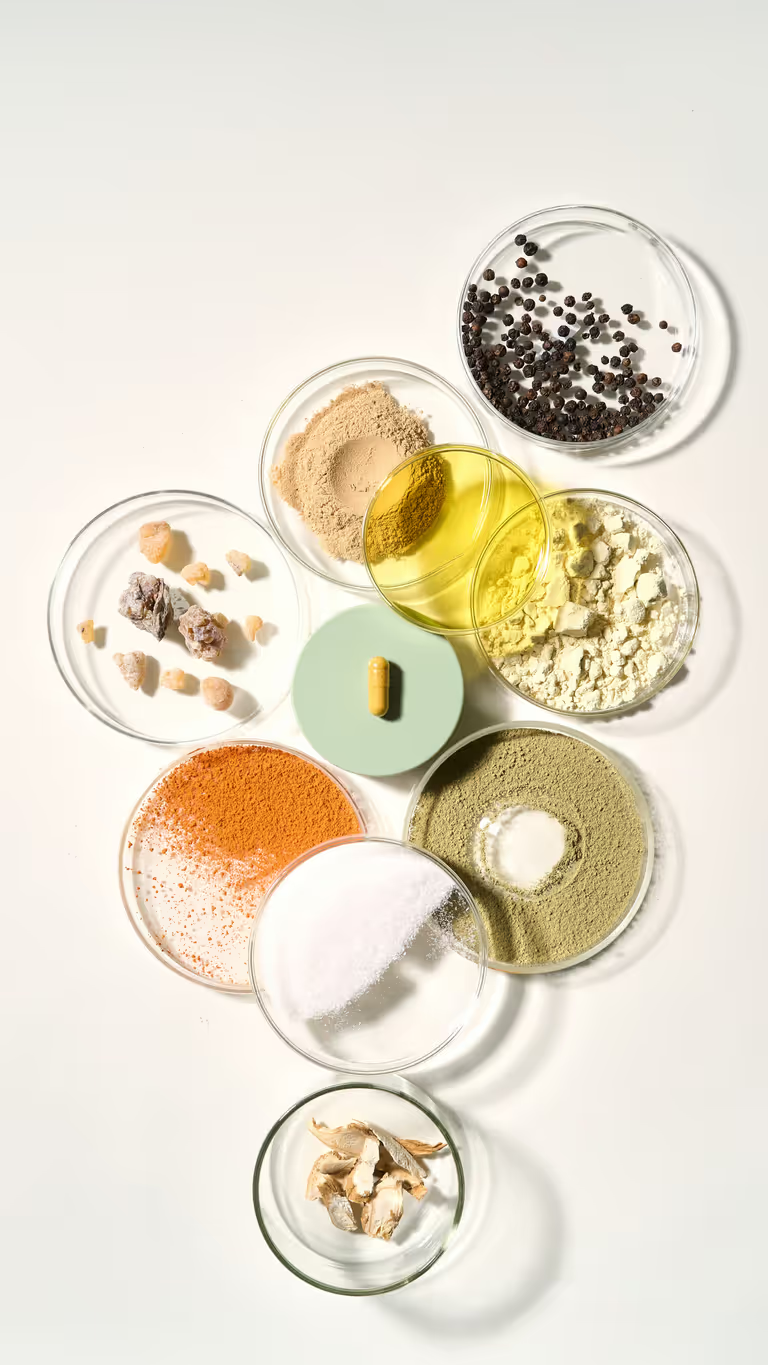
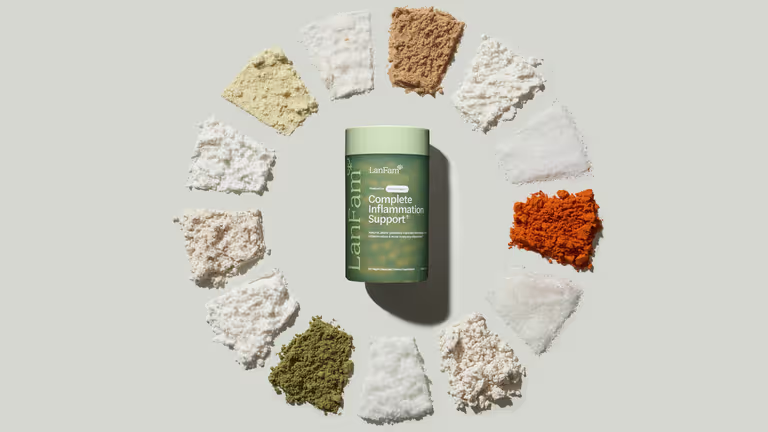
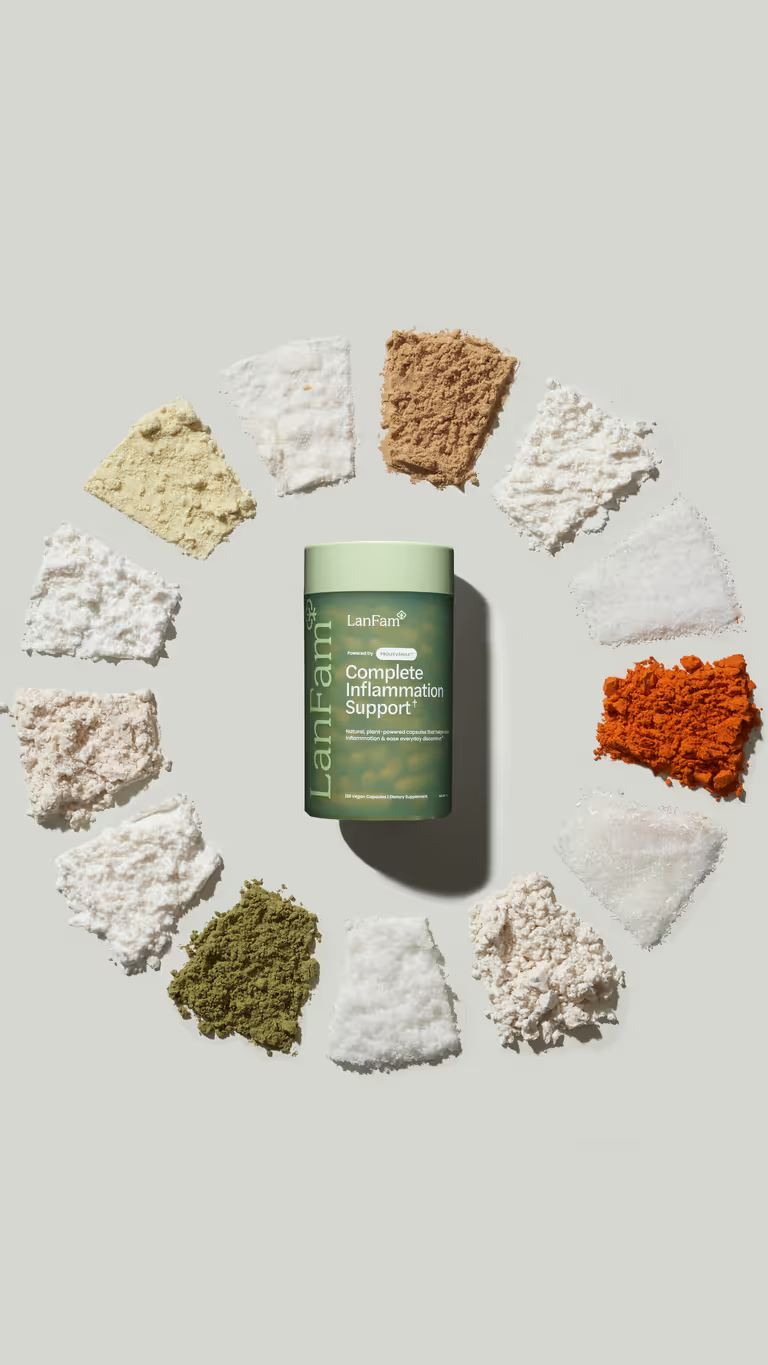
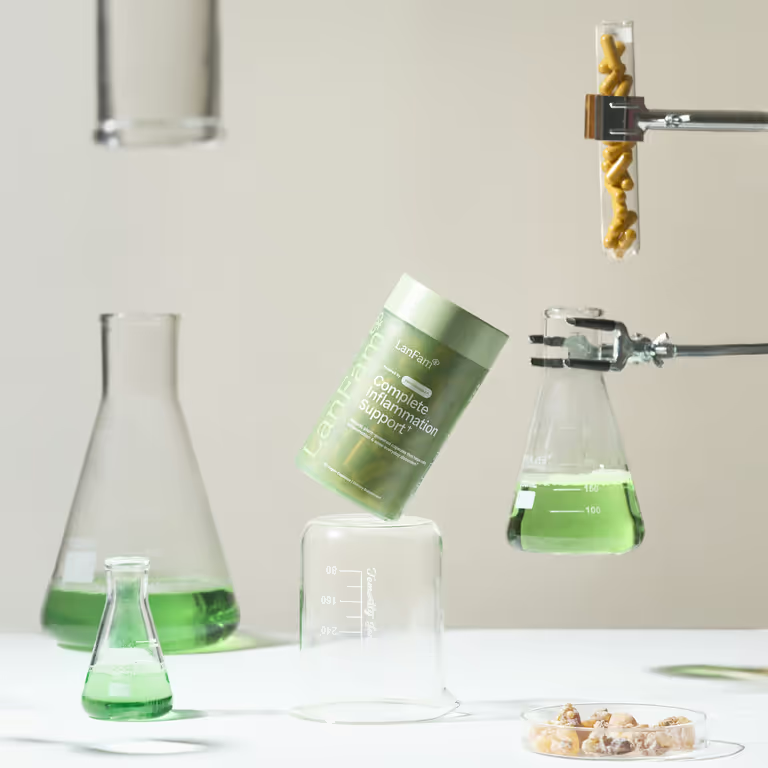
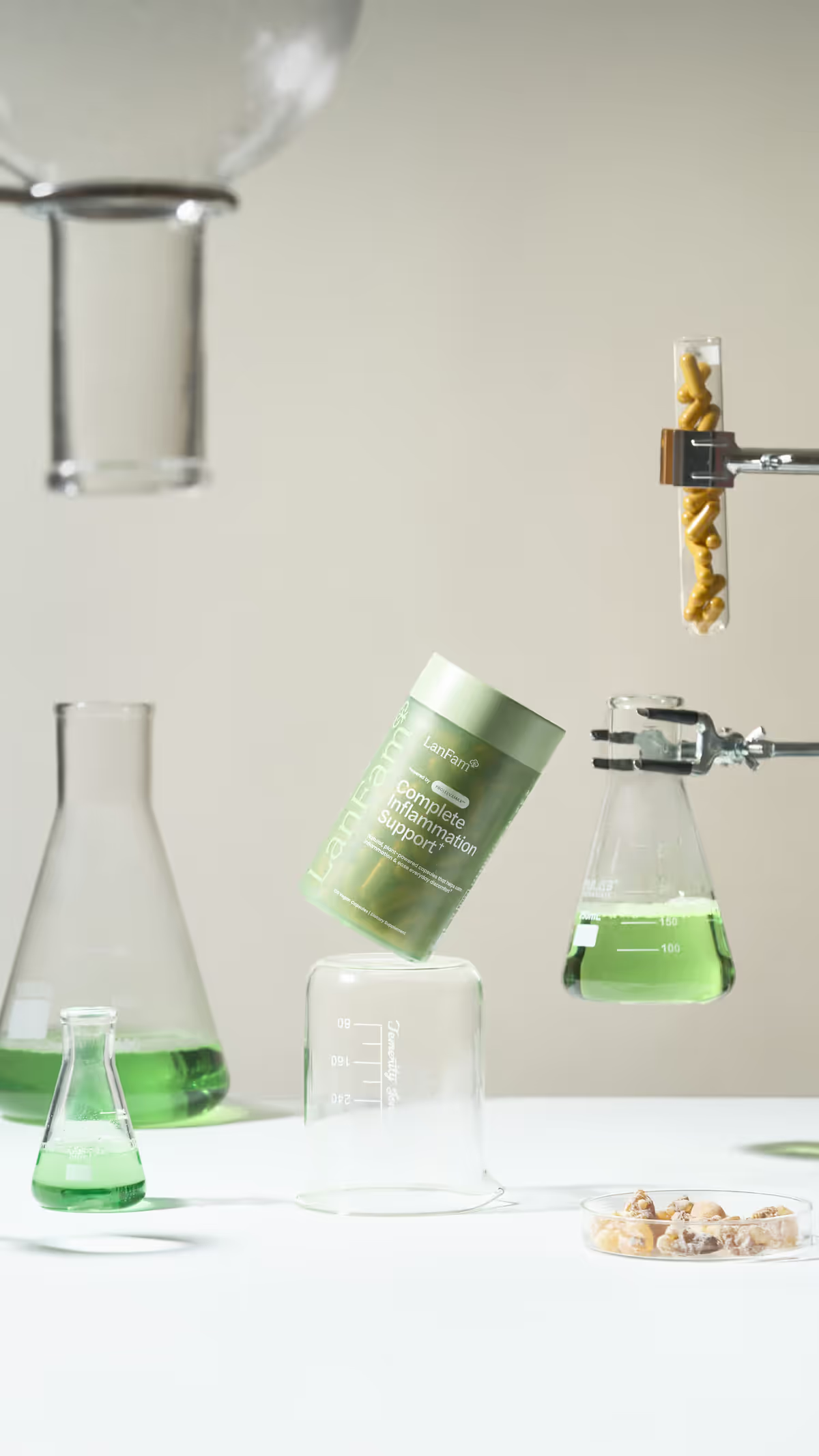
Complete Inflammation Support (Powered by ProleevaMax®) is built for exactly this multi-pathway picture. Inflammation is not a single switch, and the formula does not pretend it is. It combines 13 standardized ingredients chosen to support a healthy inflammatory response and nervous-system resilience together.
A few examples of that design:
- Boswellia (Indian Frankincense), standardized to 65% boswellic acids. Boswellic acids are the studied compounds behind Boswellia's role in supporting a healthy inflammatory response and joint comfort. A systematic review and meta-analysis found standardized Boswellia extracts well tolerated and supportive of comfort and mobility in joint-focused research [10].
- Whole-root Turmeric. ProleevaMax uses whole-root turmeric extract for its broader plant profile, not a high-dose standardized curcumin isolate. It is one botanical contributor among several.
- L-Glutamine and L-Serine. This amino acid pairing is included to support nervous-system resilience, the "calm" side of how the body manages stress load, which connects directly to the stress-inflammation link above.
- Matcha (EGCG and L-theanine), GABA, 5-HTP, Asian Ginseng, Resveratrol, L-Arginine, Black Pepper (piperine), Vitamin B6, and Choline round out the multi-pathway blend.
One note on transparency: ProleevaMax does not contain omega-3, vitamin D, magnesium, quercetin, probiotics, or CoQ10. Those are worth understanding on their own, and we cover several across the blog. ProleevaMax takes a different route: a synergistic botanical-plus-amino-acid blend designed to support several pathways instead of relying on one isolated nutrient.
Addressing the root causes is the work. A targeted formula like ProleevaMax is one more tool you can layer on top, inside a complete lifestyle.
What Is Silent Inflammation?
Silent inflammation is chronic, low-grade inflammation that runs in the background with no obvious symptoms. There is no redness, no heat, no clear signal that anything is wrong. The immune system stays mildly activated month after month, releasing inflammatory messengers at a low level the body never fully resolves [2].
This is what makes it different from acute inflammation. Acute inflammation announces itself. You cut your finger, the area gets warm and tender, and the response resolves in days. Silent inflammation does the opposite. It produces no acute signs, so most people have no idea it is there. The only reliable window into it comes from blood markers such as C-reactive protein (CRP) and interleukin-6 (IL-6), which a healthcare provider can measure and interpret.
Why does it matter if you cannot feel it? Because the same low-grade signaling that stays hidden is the kind researchers connect to the slow tissue changes that accumulate over years. The absence of symptoms is exactly why it goes unaddressed for so long. People wait for a feeling that never arrives.
The practical takeaway is the same as for every root cause on this list. You influence silent inflammation through the inputs you can control: diet, sleep, movement, stress, and visceral fat. Consistent habits move the markers over weeks and months, even when there was never a symptom to chase.
These statements have not been evaluated by the Food and Drug Administration. This product is not intended to diagnose, treat, cure, or prevent any disease.
Take the Next Step
Understanding what causes inflammation in the body is the first step. The next is acting on the causes you can influence, one consistent habit at a time, with focused support alongside them.
Learn how Complete Inflammation Support (Powered by ProleevaMax®) is built for the multi-pathway nature of inflammation:
- See the full formula on the ProleevaMax page
- Explore every standardized botanical and amino acid on our ingredients page
- Review the research behind the blend on our science page
- Understand the mechanism on our how it works page
ProleevaMax is built around a 90-Day Protocol, because supporting a healthy inflammatory response is a gradual process, not an overnight switch. Many people notice initial responses around Week 2, clearer changes in comfort and mobility by Week 4, meaningful improvement in daily function by Week 8, and complete the full protocol at Day 90. Every order is backed by our 90-day money-back guarantee, so you have the full protocol window to evaluate how you feel.
Keep digging into the specific causes:

References
- 2.Cleveland Clinic. What Is Inflammation?. https://my.clevelandclinic.org/health/symptoms/21660-inflammation
- 3.Harvard Health Publishing. Understanding Acute and Chronic Inflammation. Harvard Health. https://www.health.harvard.edu/staying-healthy/understanding-acute-and-chronic-inflammation
- 4.StatPearls. Reference overview on chronic inflammation. NCBI Bookshelf. https://www.ncbi.nlm.nih.gov/books/NBK493173/
- 5.Lifestyle and nutritional imbalances associated with Western diseases. PubMed. 2013. https://pubmed.ncbi.nlm.nih.gov/23657158/
- 6.Cohen et al. Chronic stress, glucocorticoid receptor resistance, and inflammation. PNAS. 2012. https://pmc.ncbi.nlm.nih.gov/articles/PMC3341031/
- 7.Irwin et al. Systematic review and meta-analysis on sleep disturbance, sleep duration, and inflammatory markers (CRP, IL-6). Biological Psychiatry. 2015. https://pmc.ncbi.nlm.nih.gov/articles/PMC4666828/
- 8.Review of adipose tissue macrophages and obesity-associated insulin resistance. PMC. 2023. https://pmc.ncbi.nlm.nih.gov/articles/PMC10011338/
- 9.Franceschi et al. Inflammaging review. Nature Reviews Endocrinology. 2018. https://www.nature.com/articles/s41574-018-0059-4
- 10.Multidisciplinary NIH workshop summary on aging and chronic inflammation. PMC. 2023. https://pmc.ncbi.nlm.nih.gov/articles/PMC10248980/
- 11.Systematic review and meta-analysis of standardized Boswellia extract for joint comfort and mobility. PMC. 2020. https://pmc.ncbi.nlm.nih.gov/articles/PMC7368679/
Frequently asked questions
There's a seat at our table
Letters from our family to yours — the science, the recipes, the things that actually helped real families. Leave your email and we'll send the next one.