Perimenopause Fatigue Is Not Normal Tiredness — Here Is What the Inflammation Research Shows
Perimenopause fatigue is a metabolic and inflammatory event, not a willpower problem. How estrogen decline raises IL-6 and strains the HPA axis and mitochondria — and what the research suggests about Panax ginseng, resveratrol, L-serine, and GABA.
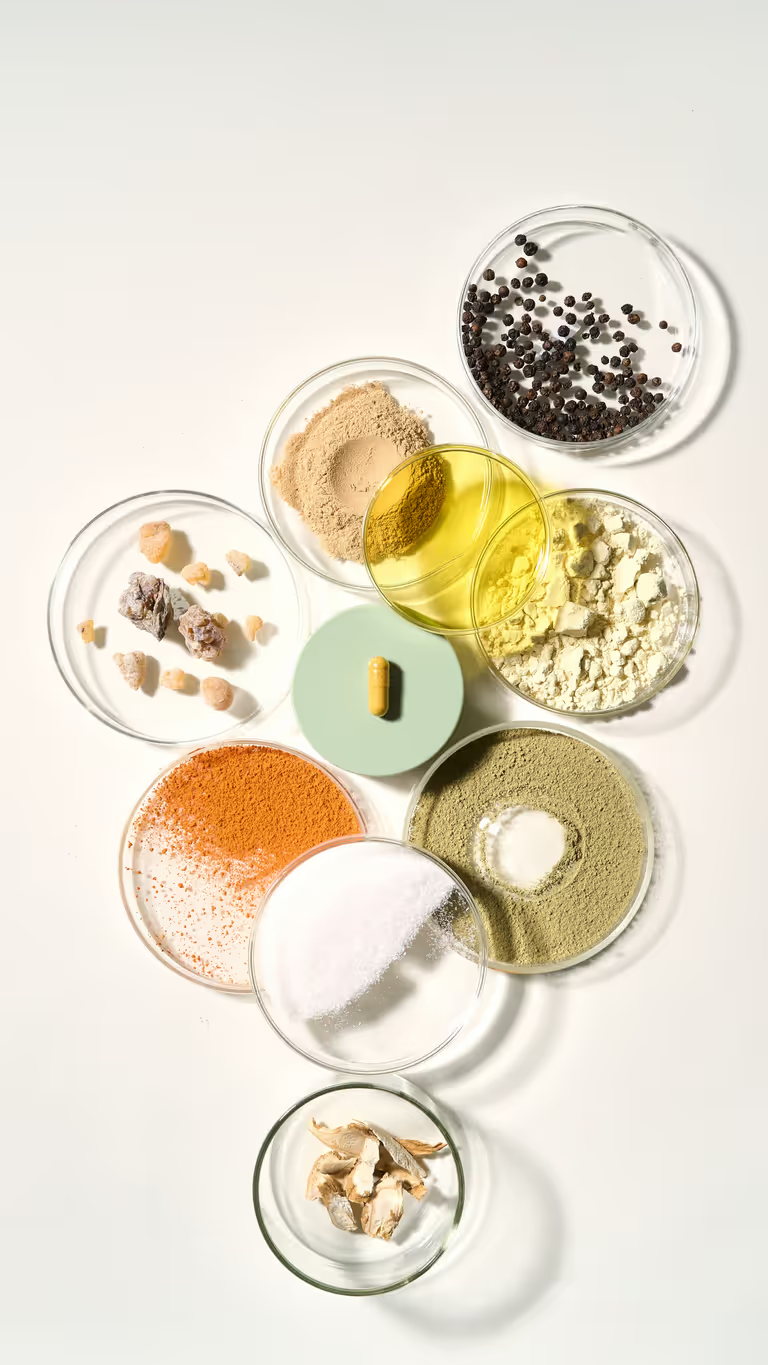
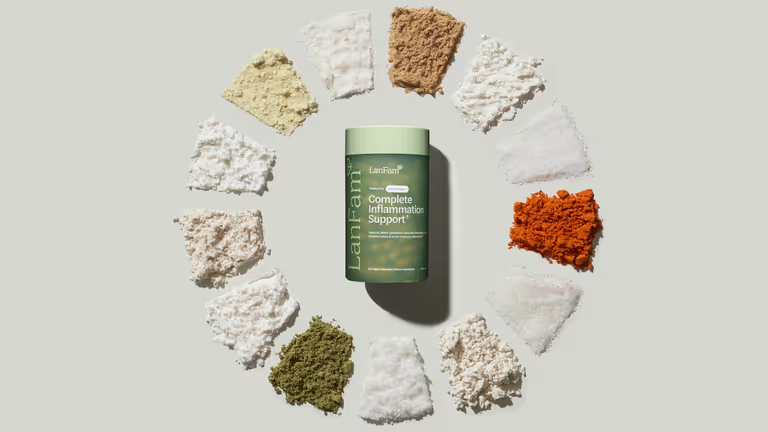
Ingredients in this letter

I want to start with the sentence I needed someone to say to me: the tiredness you're describing is not laziness, and it is not in your head. There's a specific kind of fatigue that arrives in your forties and fifties that is unlike anything that came before it. You sleep and wake up unrested. You have your coffee and it doesn't touch the bottom of it. It's a fatigue that feels like it's coming from inside the cells, not from a short night. I lived in that fog for a long stretch, and when I finally understood the mechanism behind it, two things happened — I stopped blaming myself, and I started doing something useful instead.
Why perimenopause fatigue is different — the actual mechanism
For most of my life, "tired" meant "I didn't sleep enough." Fix the sleep, fix the tired. Perimenopausal fatigue broke that rule, and the reason is that it's driven by a different machine.
Estrogen down, IL-6 up
Estrogen is, among many other things, an inflammation regulator. When it declines, the body's inflammatory tone rises — and one of the key signals that climbs is interleukin-6 (IL-6), a pro-inflammatory cytokine. A landmark Endocrine Reviews paper on estrogen and inflammation maps out just how tangled this relationship is: estrogen modulates inflammatory pathways in ways that depend on dose, tissue, and timing.1 The practical upshot for midlife women is that falling estrogen tends to remove a brake on inflammation. And persistently elevated inflammatory cytokines are strongly associated with fatigue — your immune system running a low fever you can't see, all day, every day.
The HPA-axis loop
Here's where it becomes a vicious circle. Inflammation activates the HPA axis — the chain that ends in cortisol, your main stress-and-recovery hormone. In short bursts that's adaptive. But a constant low-grade inflammatory signal keeps nudging that axis, and over time the rhythm flattens: cortisol that should be high in the morning (to get you up) and low at night (to let you rest) can lose its shape. That's the "tired but wired" experience — exhausted at 3 p.m., then unhelpfully alert at midnight. The 2020 Journal of Neuroinflammation review of perimenopause describes this period as a systemic inflammatory phase that disrupts estrogen-regulated systems, the brain's stress circuitry among them.2
The mitochondrial piece
The other engine is at the cellular level. Mitochondria are where your cells turn fuel into usable energy. Chronic inflammation and oxidative stress wear on mitochondrial function, and estrogen normally helps protect it. When that protection thins, you can end up making energy less efficiently — which is exactly what "tired from inside the cell" feels like. This is the part standard fatigue advice skips entirely. It tells you to sleep more and drink water. Useful, but it never gets to the adrenal-and-mitochondrial root.
When I learned this sequence — estrogen down, IL-6 up, HPA axis strained, mitochondria taxed — the fog finally had an explanation that matched the experience. And an explanation you can act on is worth a great deal.
What the research suggests — and the honest limits
These four nutrients map onto the two engines above: the stress/adrenal axis and the mitochondria. I'll be straight about the evidence each time.
Panax ginseng — the adaptogen with the most fatigue data
If any single botanical has earned a place in a fatigue conversation, it's Panax ginseng. A 2016 meta-analysis in the Journal of Korean Medical Science pooled four randomized controlled trials and found a statistically significant effect of ginseng supplements on fatigue reduction (standardized mean difference 0.34; 95% CI 0.16 to 0.52).3 I want to be careful and honest here, because the same authors flagged that the number of trials was small and called for more research — and in the same paper, ginseng did not significantly improve physical performance. So: real signal for fatigue, modest effect size, limited trial count. That's a fair summary, and it's still one of the better-supported options on the shelf.
Mechanistically, ginseng's active compounds (ginsenosides) modulate inflammatory signaling pathways including NF-kB, per a 2017 Journal of Ginseng Research review4 — which is why it fits the inflammation-driven-fatigue story rather than sitting outside it like caffeine does.
The honest limit: modest effect size, small evidence base, and "adaptogen" is an easy word to oversell. I treat it as support for the stress axis, not a cure for fatigue.
Resveratrol — the mitochondrial angle
Resveratrol is the one that speaks directly to the cellular-energy side. In a 30-day randomized, double-blind crossover study in Cell Metabolism, resveratrol supplementation in obese men activated AMPK, increased SIRT1 and PGC-1-alpha (the proteins that drive mitochondrial biogenesis — the making of new mitochondria), improved muscle mitochondrial respiration, and lowered inflammation markers.5 The authors described the effect as mimicking some aspects of calorie restriction. That's a real, measured, human-tissue finding on exactly the machinery perimenopausal fatigue strains.
The honest limit: this was a small study in obese men, not perimenopausal women, and resveratrol's absorption is famously poor. The mechanism is compelling and human-verified; the direct evidence in midlife women is not there yet. I'd frame resveratrol as mitochondrial support with a strong mechanistic rationale, not a proven fatigue treatment.
L-serine — the recovery and neurological support
L-serine is an amino acid your nervous system uses, and it shows up in the recovery side of this story. In a randomized, double-blind, placebo-controlled trial in the Journal of Nutrition, L-serine combined with EPA relieved chronic low-back and knee pain in adults6 — pain and fatigue travel together in midlife, and the recovery systems that handle both overlap. It's not an "energy" nutrient in the stimulant sense; it's a building-block nutrient for systems that, when supported, let you recover better.
The honest limit: the fatigue-specific evidence is indirect. I include it for the recovery-and-nervous-system support, not as a stand-alone fatigue fix.
GABA — for the sleep that actually restores
You can't out-supplement bad sleep, and perimenopause wrecks sleep. GABA is the brain's main calming neurotransmitter, and a small BioFactors study found oral GABA increased relaxed alpha brain-wave activity and was associated with reduced stress markers within about an hour.7 If part of your fatigue is non-restorative sleep driven by a racing, wired nervous system, supporting the calming signal is a sensible upstream move — fix some of the sleep, and you take load off the whole fatigue loop.
The honest limit: small study, and oral GABA's reach into the brain is debated. Its role here is supporting the sleep-and-recovery side, indirectly.
What works, what doesn't, and what the listicles miss
What the mechanism supports: supporting the stress/adrenal axis (ginseng), supporting mitochondrial function (resveratrol), and protecting the recovery-and-sleep side (L-serine, GABA) — all while addressing the inflammatory background that estrogen decline kicks up. The reason to think in systems rather than single pills is that perimenopausal fatigue isn't one broken thing; it's the adrenal axis and the mitochondria both running into an inflammatory headwind.
What the evidence doesn't support: stimulant-style "energy" pills as a fix. Caffeine and its cousins borrow energy against tomorrow by leaning harder on an already-strained stress axis. They make the 3 p.m. crash worse over time, not better. Nothing here is about flogging a tired system; it's about supporting the machinery that makes energy in the first place.
What the listicles miss: they default to iron and B12 — and yes, you should absolutely get those checked, because true iron-deficiency or B12-deficiency fatigue is real and fixable, and it would be malpractice for me not to say so. But once those are ruled out, the standard advice runs dry. It never reaches the adrenal-and-mitochondrial root that the inflammation research points to. That root is the whole story of this page.
And the non-negotiable: please get bloodwork. Perimenopausal fatigue overlaps with thyroid problems, anemia, sleep apnea, and depression — all of which are treatable and none of which a supplement should mask. Rule those out first. Supplements are for the normal-but-brutal transition, not a substitute for a diagnosis.
A note on what Fabio built
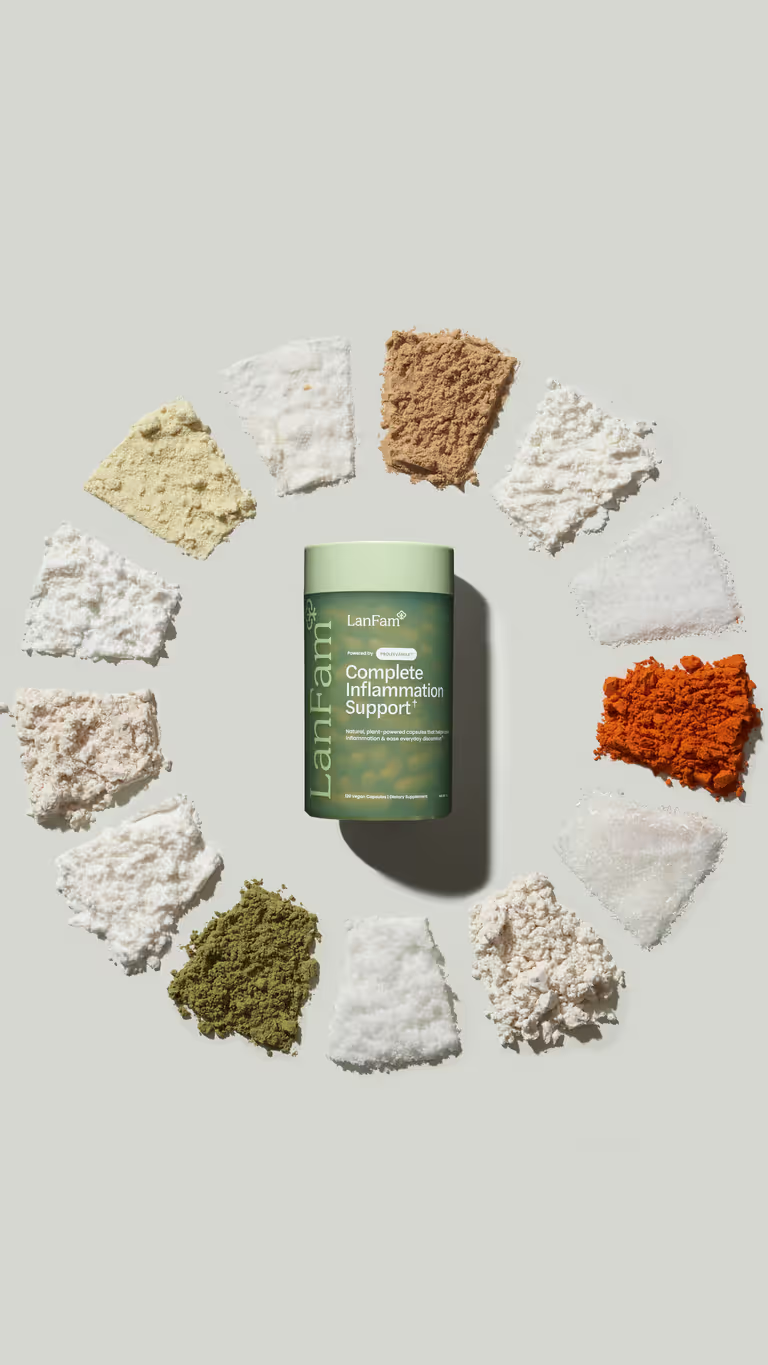
I'll be honest about why I know these ingredients by heart: they're in the formula Fabio built for me. When my cancer medication left me wrung out and in pain, the answer on offer was more medication to manage the symptoms. He wanted to support the root instead. ProleevaMax includes Panax ginseng, resveratrol, and L-serine among its thirteen standardized ingredients, sitting alongside the anti-inflammatory actives — because the fatigue and the inflammation aren't two problems. They're one problem, and the formula was designed to meet it on more than one front. I take it every day. That's not a slogan; it's just true.
If the mechanism on this page lands for you, a multi-pathway formula is one honest way to act on it. Read the label, trace each dose to the research, and run it past your doctor — especially the ginseng and resveratrol, which can interact with blood-thinners. I wouldn't tell you to do anything I haven't done myself.
Related reading

References
- 2.Straub RH. The complex role of estrogens in inflammation. Endocr Rev. 2007. https://doi.org/10.1210/er.2007-0001
- 3.McCarthy M, Raval AP. The peri-menopause in a woman's life: a systemic inflammatory phase that enables later neurodegenerative disease. J Neuroinflammation. 2020. https://doi.org/10.1186/s12974-020-01998-9
- 4.Bach HV, Kim J, Myung SK, Cho YA. Efficacy of ginseng supplements on fatigue and physical performance: a meta-analysis. J Korean Med Sci. 2016. https://doi.org/10.3346/jkms.2016.31.12.1879
- 5.Kim JH, Yi YS, Kim MY, Cho JY. Role of ginsenosides, the main active components of Panax ginseng, in inflammatory responses and diseases. J Ginseng Res. 2017. https://doi.org/10.1016/j.jgr.2016.08.004
- 6.Timmers S, Konings E, Bilet L, et al. Calorie restriction-like effects of 30 days of resveratrol supplementation on energy metabolism and metabolic profile in obese humans. Cell Metab. 2011. https://doi.org/10.1016/j.cmet.2011.10.002
- 7.Sasahara I, Yamamoto A, Takeshita M, et al. l-Serine and EPA relieve chronic low-back and knee pain in adults: a randomized, double-blind, placebo-controlled trial. J Nutr. 2020. https://doi.org/10.1093/jn/nxaa156
- 8.Abdou AM, Higashiguchi S, Horie K, Kim M, Hatta H, Yokogoshi H. Relaxation and immunity enhancement effects of gamma-aminobutyric acid (GABA) administration in humans. BioFactors. 2006. https://doi.org/10.1002/biof.5520260305
Frequently asked questions

There's a seat at our table
Letters from our family to yours — the science, the recipes, the things that actually helped real families. Leave your email and we'll send the next one.