Anti-Inflammatory Fruits: The Best Choices and the Science
The best anti-inflammatory fruits, the polyphenol science behind them, and simple ways to eat more of them every day.
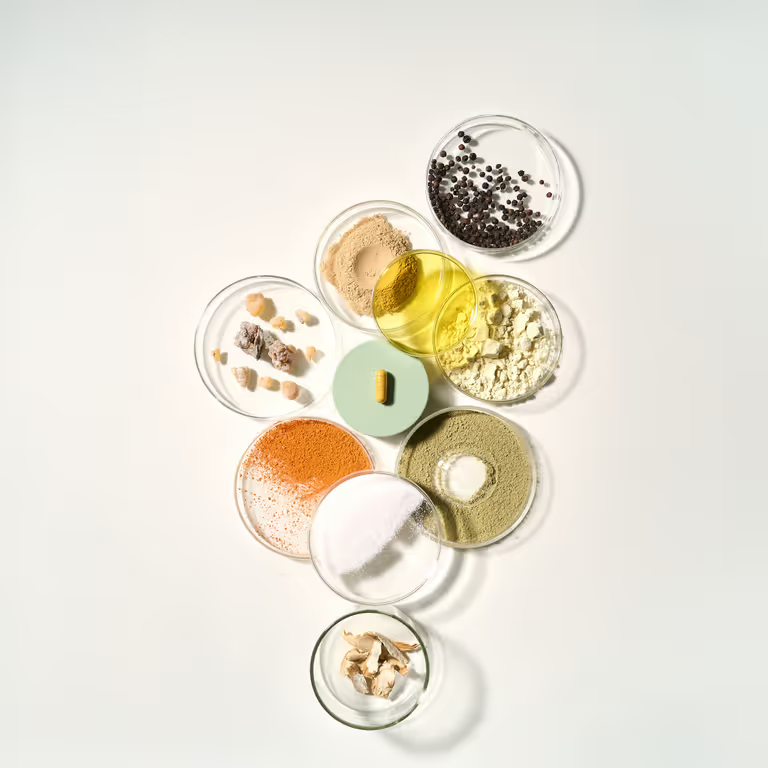
Ingredients in this letter

The short version
- The color in fruit is a clue: blue, purple, red, and orange pigments often signal polyphenols, the compounds tied to inflammatory balance.
- Berries, tart cherries, citrus, pomegranate, and grapes have the most human research behind them.
- Polyphenols may work by calming the NF-κB signaling pathway and reducing oxidative stress.
- No single fruit is a fix. Variety and consistency matter more than any "superfood."
- Food builds the foundation. A multi-pathway formula like ProleevaMax is designed to work alongside that foundation, not replace it.
The best anti-inflammatory fruits are deeply colored, polyphenol-rich choices: berries, tart cherries, citrus, pomegranate, and grapes. These fruits supply plant compounds that research documents may support a healthy inflammatory response by influencing signaling pathways your body uses to regulate inflammation. Eating a variety of them daily is one of the simplest ways to build an anti-inflammatory pattern into your meals.
Why Color Matters in Anti-Inflammatory Fruits
Look at the fruits that show up again and again in inflammation research. Blueberries. Blackberries. Tart cherries. Pomegranate. Dark grapes. They share something obvious: deep, saturated color.
That color is not decoration. The blue, purple, and red pigments come from a family of plant compounds called polyphenols, and one subgroup in particular, anthocyanins, gives berries and cherries their signature hue. These same compounds are the focus of most studies on fruit and inflammation.
Inflammation itself is not the enemy. It is your body's repair crew. Short-term, it helps you heal a sprained ankle or fight off a cold. The problem is chronic, low-grade inflammation, the kind that lingers quietly for years and chips away at comfort and mobility. That is where diet enters the picture.
A large body of observational research links higher fruit and vegetable intake with lower inflammatory markers. A systematic review and meta-analysis published in The American Journal of Clinical Nutrition found that fruit or vegetable intake was associated with decreased circulating C-reactive protein (CRP) and tumor necrosis factor-alpha, two markers your body uses to gauge inflammation [1]. The pattern is consistent: people who eat more colorful produce tend to carry a calmer inflammatory profile.
How Polyphenols Work, Explained Plainly
Here is the mechanism without the jargon.
Inside your cells sits a kind of master switch for inflammation called NF-κB. When NF-κB switches on, your cells start producing inflammatory messengers. Some of these you may have heard of: interleukin-6 (IL-6), tumor necrosis factor-alpha (TNF-α), and the enzyme COX-2. Chronic activation keeps that production line running when it should be quiet.
Polyphenols appear to act on this switch. A review of the molecular targets of dietary polyphenols describes how these compounds can inhibit NF-κB activation and the enzymes (such as cyclooxygenase and lipoxygenase) involved in the inflammatory cascade [2]. In plain terms, polyphenols may help keep the inflammation switch from being stuck in the "on" position.
There is a second layer: oxidative stress. Reactive molecules in the body can keep inflammatory pathways activated. Polyphenols are also antioxidants, so they may interrupt that feedback loop. The two effects, calming NF-κB and reducing oxidative stress, work together.
One honest caveat: many polyphenols are not absorbed efficiently. Reviews of berry anthocyanins note that only a small fraction shows up intact in the blood after eating, with absorption shaped by molecular structure [3]. Your gut bacteria transform much of the rest into smaller compounds that may carry their own activity. This is one reason researchers care about consistency over any single large dose.
The Best Anti-Inflammatory Fruits
Berries
Berries are the most studied fruit in this category. Blueberries, blackberries, raspberries, and strawberries are loaded with anthocyanins.
Research documents that anthocyanins can down-regulate inflammatory signaling in lab and human studies, including effects on NF-κB and inflammatory cytokine genes [4]. The takeaway for daily life: a handful of mixed berries is one of the easiest anti-inflammatory habits to build. Fresh or frozen both work, and frozen is often picked at peak ripeness.
Tart Cherries
Tart cherries (often sold as Montmorency) have some of the most encouraging human data. In a randomized controlled trial, adults aged 65 to 80 who drank tart cherry juice daily for 12 weeks saw a meaningful reduction in CRP compared with the control group [5]. Tart cherries are also a natural source of compounds tied to sleep quality, which matters because poor sleep and inflammation feed each other.
Citrus
Oranges, lemons, grapefruit, and their relatives deliver vitamin C plus flavonoids like hesperidin. A systematic review and meta-analysis of randomized trials reported that hesperidin supplementation was associated with lower CRP in trials lasting more than four weeks, alongside reduced VCAM-1, a marker of vascular inflammation [6]. The whole fruit also brings fiber, which supports the gut bacteria that help transform polyphenols.
Pomegranate
Pomegranate is rich in a distinct class of polyphenols. A meta-analysis of 16 randomized controlled trials found that pomegranate supplementation significantly reduced hs-CRP, IL-6, and TNF-α compared with placebo [7]. The arils (the jewel-like seeds) are the part to eat. Whole-fruit pomegranate carries fiber that bottled juice often lacks.
Grapes and Other Deeply Colored Fruit
Dark grapes contain resveratrol, a polyphenol studied for its ability to regulate inflammatory pathways. Plums, apples (especially the skin), and cherries round out a colorful rotation. The principle holds across all of them: deeper color, more polyphenols.
Quick Reference Table
| Fruit | Key compounds | What research documents |
|---|---|---|
| Berries | Anthocyanins | Down-regulation of inflammatory signaling in human studies |
| Tart cherries | Anthocyanins | Reduced CRP in a 12-week trial in older adults |
| Citrus | Hesperidin, vitamin C | Lower CRP in longer trials; reduced VCAM-1 in meta-analysis |
| Pomegranate | Punicalagins, ellagitannins | Reduced hs-CRP, IL-6, TNF-α across 16 trials |
| Dark grapes | Resveratrol | Regulation of inflammatory pathways |
How to Eat More Anti-Inflammatory Fruit
You do not need a complicated plan. You need a habit.
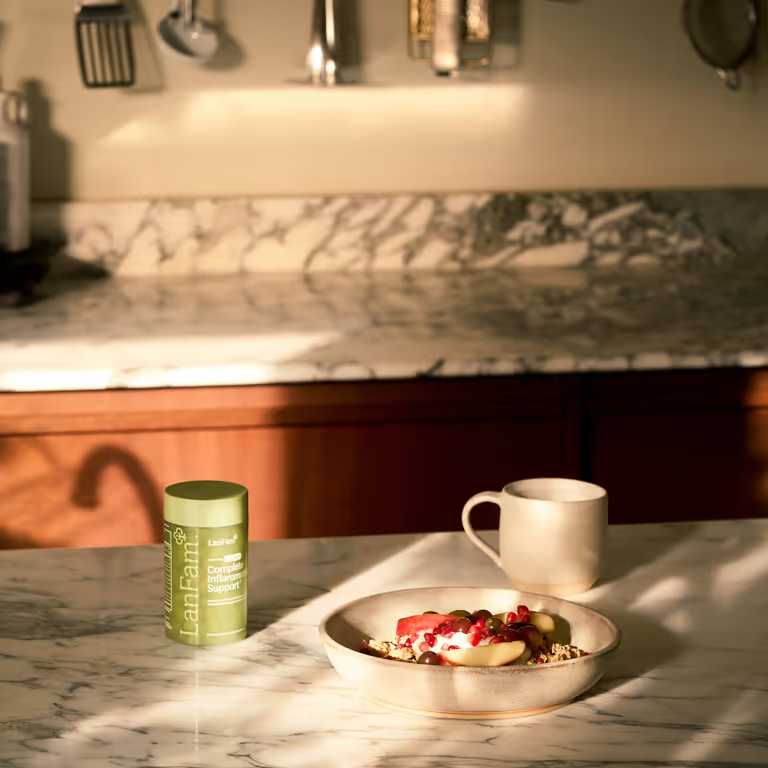
- Anchor it to a meal you already eat. Berries on morning oats or yogurt. Citrus segments with lunch.
- Keep frozen berries on hand. They blend into a smoothie in seconds and never go to waste.
- Eat the whole fruit when you can. Whole fruit brings fiber that juice strips away, and fiber feeds the gut bacteria that process polyphenols.
- Rotate colors across the week. Blue Monday, red Tuesday, purple Wednesday. Variety covers more polyphenol families than any single fruit.
- Pair fruit with protein or healthy fat. It steadies blood sugar and makes the snack more satisfying.
For ready-made ideas, our anti-inflammatory smoothie guide turns these fruits into something you can drink in five minutes, and our anti-inflammatory recipes collection builds them into full meals.
What Anti-Inflammatory Fruit Won't Do
Honesty matters here, because the internet oversells "superfoods."
No fruit treats, cures, or prevents any disease. Anti-inflammatory fruit supports a healthy inflammatory response as part of an overall pattern. It is not a medication and should not replace one.
A few more realities worth naming:
- One serving won't undo a chronic-inflammatory diet. A daily handful of blueberries cannot offset a week of ultra-processed food. Pattern beats single ingredient.
- Juice is not the same as whole fruit. Stripping the fiber concentrates the sugar and removes part of the benefit.
- Fruit alone may not cover every pathway. A truly anti-inflammatory diet also leans on vegetables, fish, olive oil, herbs, and spices.
That last point is worth sitting with. Inflammation runs through multiple pathways at once. Diet covers some. This is the gap a thoughtfully designed formula is built to address.
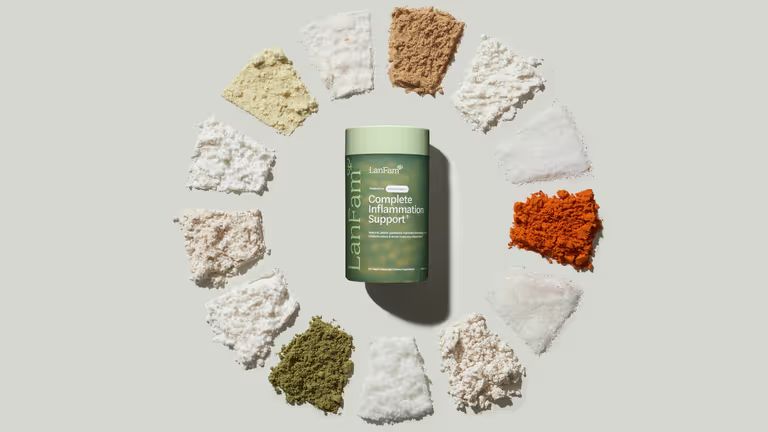
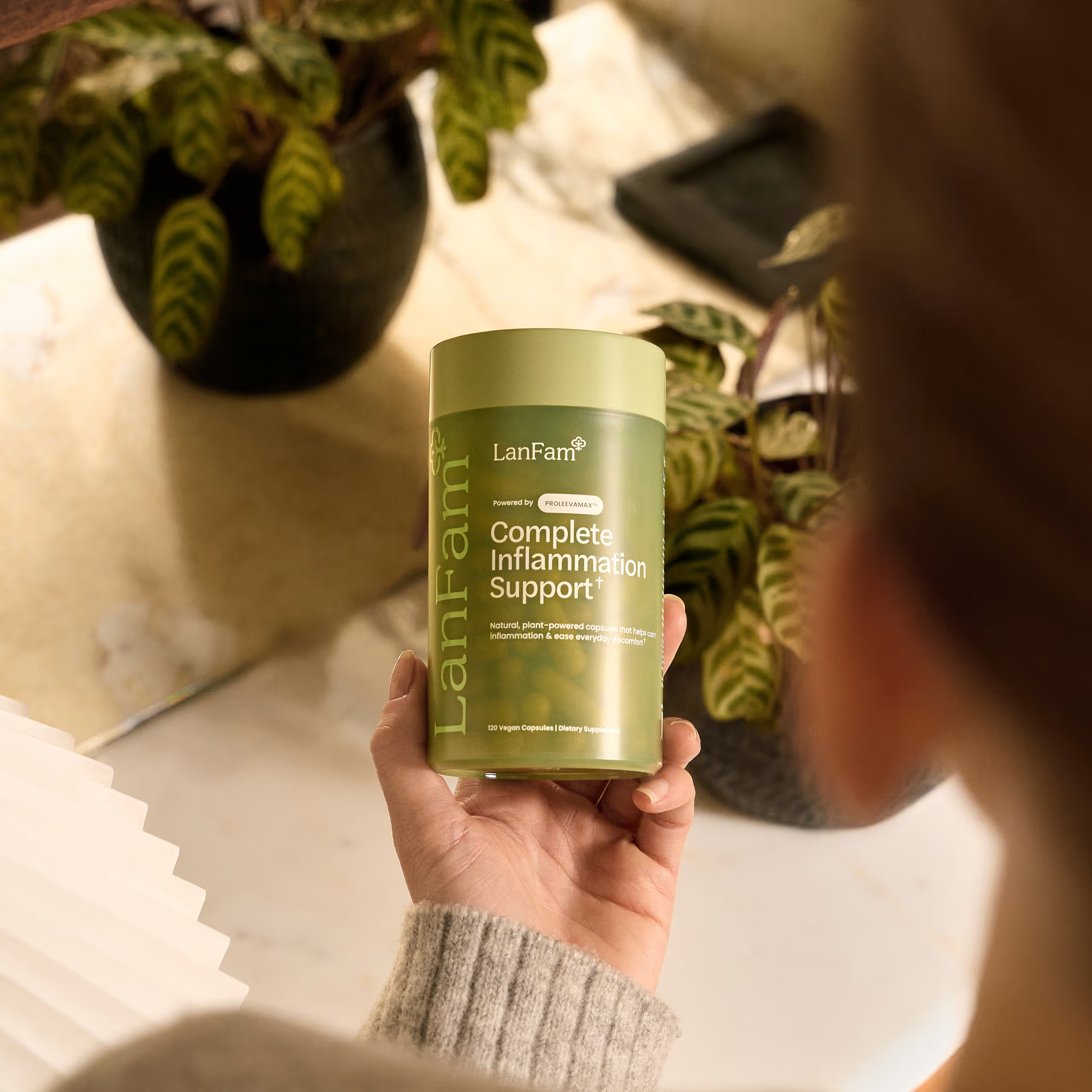
Many supplements that get discussed for inflammation, omega-3 fatty acids, vitamin D, magnesium, quercetin, probiotics, and CoQ10, each target a slice of the picture. To be transparent: ProleevaMax does not contain those ingredients. Its design takes a different route. Complete Inflammation Support (Powered by ProleevaMax®) is built around 13 standardized ingredients chosen to work across more than one pathway at the same time, pairing botanicals for inflammatory balance with amino acids for nervous-system resilience.
That includes Boswellia (Indian Frankincense) standardized to 65% boswellic acids, whole-root turmeric extract, and a distinctive pairing of L-Glutamine and L-Serine, alongside Matcha, Resveratrol, Asian Ginseng, and more. The idea is not to replace the fruit on your plate. It is to support the same goal from angles food alone may not reach.
Build Your Anti-Inflammatory Foundation
Colorful, polyphenol-rich fruit is one of the simplest places to start. Pair it with the rest of an anti-inflammatory pattern, and you give your body real support.
When you are ready to add a multi-pathway formula to that foundation, explore ProleevaMax, see the full ingredients list, dig into the science, and learn exactly how it works. Complete Inflammation Support is built around a structured 90-Day Protocol, with checkpoints at Week 2, Week 4, Week 8, and Day 90, so you can track how you feel over a real timeline. It is backed by a 90-day money-back guarantee, giving you the full protocol to decide.
Stock your kitchen first. Our anti-inflammatory grocery list makes the next shopping trip simple.
These statements have not been evaluated by the Food and Drug Administration. This product is not intended to diagnose, treat, cure, or prevent any disease.

References
- 1.Hosseini B, Berthon BS, Saedisomeolia A, Starkey MR, Collison A, Wark PAB, Wood LG. Effects of fruit and vegetable consumption on inflammatory biomarkers and immune cell populations: a systematic literature review and meta-analysis. The American Journal of Clinical Nutrition. 2018. https://doi.org/10.1093/ajcn/nqy082
- 2.Yoon JH, Baek SJ. Molecular targets of dietary polyphenols with anti-inflammatory properties. Yonsei Medical Journal. 2005. https://doi.org/10.3349/ymj.2005.46.5.585
- 3.Zafra-Stone S, Yasmin T, Bagchi M, Chatterjee A, Vinson JA, Bagchi D. Berry anthocyanins as novel antioxidants in human health and disease prevention. Molecular Nutrition & Food Research. 2007. https://doi.org/10.1002/mnfr.200700002
- 4.Joseph SV, Edirisinghe I, Burton-Freeman BM. Berries: anti-inflammatory effects in humans. Journal of Agricultural and Food Chemistry. 2014. https://doi.org/10.1021/jf4044056
- 5.Chai SC, Davis K, Zhang Z, Zha L, Kirschner KF. Effects of tart cherry juice on biomarkers of inflammation and oxidative stress in older adults. Nutrients. 2019. https://doi.org/10.3390/nu11020228
- 6.Lorzadeh E, Ramezani-Jolfaie N, Mohammadi M, Khoshbakht Y, Salehi-Abargouei A. The effect of hesperidin supplementation on inflammatory markers in human adults: a systematic review and meta-analysis of randomized controlled clinical trials. Chemico-Biological Interactions. 2019. https://doi.org/10.1016/j.cbi.2019.04.016
- 7.Wang P, Zhang Q, Hou H, Liu Z, Wang L, Rasekhmagham R, Kord-Varkaneh H, Santos HO, Yao G. The effects of pomegranate supplementation on biomarkers of inflammation and endothelial dysfunction: a meta-analysis and systematic review. Complementary Therapies in Medicine. 2020. https://doi.org/10.1016/j.ctim.2020.102358
Frequently asked questions
Berries, tart cherries, citrus, pomegranate, and dark grapes lead the list. They are rich in polyphenols, the plant compounds most studied for supporting a healthy inflammatory response.
Their polyphenols may calm the NF-κB signaling pathway, the cellular switch that drives inflammatory messengers, and reduce oxidative stress. Research documents these effects in both lab and human studies.
No. Whole fruit keeps the fiber that juice removes. Fiber slows sugar absorption and feeds the gut bacteria that help process polyphenols, so whole fruit is the better choice.
There is no magic number, but aim for a serving or two daily as part of a varied diet. Consistency over weeks matters more than any single large portion.
Yes. Frozen berries are often picked and frozen at peak ripeness, which preserves their polyphenols. They are also convenient and reduce waste.
Fruit is a foundation, not a complete answer. A genuine anti-inflammatory pattern also includes vegetables, fish, olive oil, and spices. Some people add a multi-pathway supplement to support angles food alone may not reach.
ProleevaMax is built around 13 standardized ingredients, including Resveratrol and Matcha, that complement a fruit-rich diet. It is designed to work alongside good food, not replace it.