Foods That Cause Inflammation: What to Cut First (and Why)
The foods that cause inflammation, ranked by how much the research actually blames them — and the small swaps that matter more than any perfect diet.
Ingredients in this letter

Every January, somebody at our table announces they're "cutting out inflammatory foods," and by February the list has gotten so long and so frightening that they've given up entirely and ordered a pizza out of spite. I've watched it happen for years. The problem isn't willpower. The problem is that most of these lists treat every food like an equal offender — as if a splash of milk in your coffee belongs in the same sentence as a daily soda and a fast-food habit. They don't.
So I want to write you the honest version. Not a fear list. A priorities list. Which foods does the research actually pin most of the blame on, which ones barely matter, and what do you cut first if you're only going to change one thing? That's the letter I'd write a friend who's overwhelmed — because the goal was never a perfect diet. It's a few swaps that genuinely move the needle, kept up long enough to count.
The Big Idea: It's the Pattern, Not the Boogeyman
Here's the thing nobody tells you when they hand you a list of forbidden foods: your body doesn't respond to a single meal the way it responds to a year of meals.
Scientists actually have a tool for this. It's called the Dietary Inflammatory Index, and it scores an entire eating pattern by how strongly it's linked to inflammatory markers in the blood — things like C-reactive protein and IL-6. The studies using it land on the same conclusion again and again: diets that score high (lots of refined carbs, sugar, processed meat, fried food) track with more inflammation, and diets that score low track with less [1]. A large meta-analysis tied a more pro-inflammatory dietary score to higher cardiovascular and mortality risk [2].
Why does this matter for your January resolution? Because it means you don't have to eat perfectly. You have to shift the balance. Pull the heaviest offenders down, push the protective foods up, and the whole score moves — even if there's still cream in your coffee. That reframe is the difference between a change you keep and a list you quit.
The Foods to Cut First (Ranked by How Much They Actually Matter)
1. Sugary drinks and added sugar — cut this one first
If you change one thing, change this. Sugar-sweetened beverages — soda, sweet tea, the big sweetened coffees, energy drinks — deliver a fast, large dose of sugar with nothing to slow it down. The blood-sugar spike that follows drives the kind of metabolic stress that keeps inflammation lit, and the research linking high added-sugar intake to elevated inflammatory markers is among the most consistent in nutrition science [4].
Added sugar hiding in solid foods counts too — the pastries, the candy, the surprising amount in flavored yogurts and "healthy" granola. But liquid sugar is the place to start, because it's the easiest large dose to remove and the one your body handles worst.
The swap: sparkling water, unsweetened tea, or — my actual morning ritual — matcha, which trades the sugar for catechins that work in the other direction.
2. Ultra-processed foods — the modern diet's real problem
This is the big one in terms of how much of the typical plate it occupies. Ultra-processed foods — packaged snacks, instant meals, most fast food, processed meats like hot dogs and deli meat — are engineered combinations of refined starch, sugar, industrial fats, and additives. The research connecting a diet heavy in them to higher inflammation and chronic disease is substantial, and a big part of the mechanism is what they crowd out: fiber, polyphenols, the whole-food things that calm inflammation [5].
Processed and charred meats deserve a specific mention because of how they're made and cooked — more on that below.
The swap: you don't need a chef's kitchen. A piece of fruit instead of the packaged snack, a simple bean-and-vegetable bowl instead of the instant meal. Boring beats branded.
3. Refined carbohydrates — the quiet middle of the list
White bread, white rice, most crackers, pastries — refined grains have had the fiber and most of the nutrients stripped out, which means they behave a lot like sugar once they hit your bloodstream: fast spike, fast crash, inflammatory stress in between. They're not as urgent to cut as sugary drinks, but they're the quiet background of a lot of plates [1].
The swap: keep the carbs, change the kind. Whole grains, legumes, oats, intact whole foods that come with their fiber attached. This is subtraction by substitution, which is the only kind that lasts.
4. Industrial seed oils and fried foods — and how you cook
Here's a nuance most lists miss entirely: it's not just the oil, it's the heat. When food is deep-fried, charred, or browned at high temperature — fried chicken, char-grilled meat, anything blackened — it forms compounds called advanced glycation end-products, or AGEs. AGEs promote oxidative stress and inflammatory signaling in the body, and the research ties a high dietary AGE load to elevated inflammation [3].
The practical upshot is freeing, actually: you can keep eating the same ingredients and lower their inflammatory load just by cooking them gentler. Steam, poach, braise, roast at lower temperatures. Save the char for special occasions instead of every night.
The swap: olive oil over industrial fried foods; gentler cooking methods over the blackened-and-crispy default.
5. Excess alcohol — worth naming honestly
I'm not going to lecture you with a glass of wine in my own hand. But it's honest to say that heavier or regular alcohol intake raises inflammatory markers and works against everything else on this list. The pattern that matters is regular and excess — an occasional glass with dinner sits very differently than a nightly habit. Worth being honest with yourself about which one you're doing.
The Foods People Cut for No Reason
Now the part that'll save you some grief, because I've watched friends torment themselves over the wrong things.
For most people without a diagnosed sensitivity or condition, these are not the inflammatory emergencies the internet claims:
- Dairy. Unless you're sensitive to it, moderate dairy isn't a major inflammatory driver for most people — some fermented dairy may even be neutral-to-helpful. If milk genuinely bothers you, that's your body's answer. If it doesn't, don't manufacture a problem.
- Gluten. Real and important to avoid if you have celiac disease or a genuine sensitivity. For everyone else, the bread itself is less the issue than whether it's refined (see #3) — a whole-grain sourdough is a different food than a white dinner roll.
- Nightshades (tomatoes, peppers, eggplant). Popular to blame, thin on evidence for the general population. Tomatoes in particular bring protective compounds. Most people have no reason to fear them.
The reason this matters: energy spent fearing dairy is energy not spent cutting the soda. Put your effort where the research actually points.
Why Cutting Works Better With Adding
Subtraction alone tends to leave you hungry, deprived, and back at the pizza by February. The research is clear that the protective side — the polyphenols, the fiber, the omega-3s — is doing real anti-inflammatory work, not just filling the gap [6]. So the two moves belong together: pull the worst offenders down and push the protective foods up.
That's exactly what I cover in the companion to this letter — the complete anti-inflammatory foods list, the "what to eat" half of the same picture. And if you want it laid out day by day instead of as a reference, our 7-day anti-inflammatory meal plan does the planning for you. Read this one for what to cut; read those for what to put in its place.
Where a Supplement Fits (and Where It Doesn't)
I'll be plainspoken, because we don't do shortcuts here: no supplement undoes a pro-inflammatory diet. You can't out-capsule a daily soda-and-fast-food pattern, and anyone who sells you that is selling you a fairy tale.
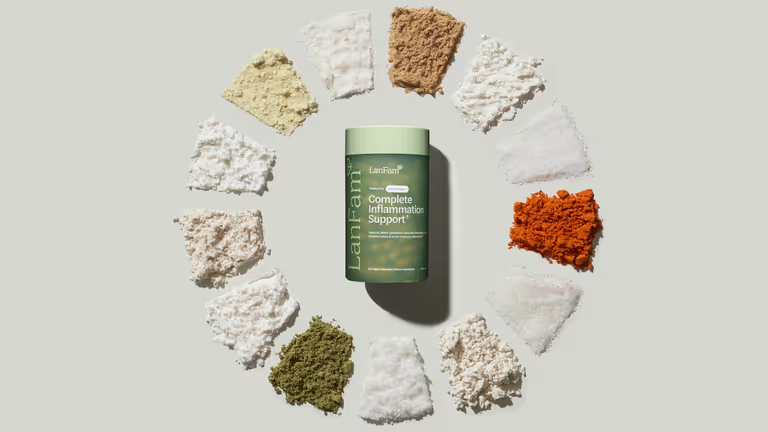
What a supplement can do is support the work you're already doing with your fork. Some of the very compounds that make whole foods protective — like curcumin from turmeric and the catechins in green tea — are the same actives Fabio built into the formula he made for me at our kitchen table, standardized and dosed where the research is, to support a healthy inflammatory response alongside an anti-inflammatory way of eating.* It's the seatbelt, not the brakes. The food is the brakes.
So here's what I'd actually tell that overwhelmed friend in January: don't cut everything. Cut the soda. Then the drive-through. Then ease off the white bread. Cook gentler. Leave the tomatoes alone. Add the good stuff back as you go. Keep it up past February. That's not a diet — it's a direction, and direction is the only thing that's ever worked at our table.
These statements have not been evaluated by the Food and Drug Administration. This product is not intended to diagnose, treat, cure, or prevent any disease.

References
- 2.Shivappa N, Hebert JR, Rietzschel ER, et al. Associations between dietary inflammatory index and inflammatory markers in the Asklepios Study. British Journal of Nutrition. 2015. https://doi.org/10.1017/s000711451400395x
- 3.Shivappa N, Godos J, Hebert JR, et al. Dietary inflammatory index and cardiovascular risk and mortality — a meta-analysis. Nutrients. 2018. https://doi.org/10.3390/nu10020200
- 4.Gill V, Kumar V, Singh K, et al. Advanced glycation end products (AGEs) may be a striking link between modern diet and health. Biomolecules. 2019. https://doi.org/10.3390/biom9120888
- 5.Gonzalez Olmo BM, Butler MJ, Barrientos RM. Evolution of the human diet and its impact on gut microbiota, immune responses, and brain health. Nutrients. 2021. https://doi.org/10.3390/nu13010196
- 6.Yahfoufi N, Alsadi N, Jambi M, Matar C. The immunomodulatory and anti-inflammatory role of polyphenols. Nutrients. 2018. https://doi.org/10.3390/nu10111618
- 7.Hussain T, Tan B, Yin Y, et al. Oxidative stress and inflammation: what polyphenols can do for us?. Oxidative Medicine and Cellular Longevity. 2016. https://doi.org/10.1155/2016/7432797
Frequently asked questions

There's a seat at our table
Letters from our family to yours — the science, the recipes, the things that actually helped real families. Leave your email and we'll send the next one.