Does Sugar Cause Inflammation? The Honest Answer
Does sugar cause inflammation? Added sugar can drive a pro-inflammatory response through AGEs, insulin, and visceral fat. Here is the honest science.
Ingredients in this letter

Does sugar cause inflammation? The honest answer is yes, but the wording matters. Added sugar in excess can drive a pro-inflammatory response in the body, mainly through three channels: it forms reactive compounds called AGEs, it pushes insulin and visceral fat higher, and it raises inflammatory markers like C-reactive protein. The natural sugar in whole fruit behaves differently. For women managing chronic inflammation, the amount and source of added sugar matter far more than any single dessert.
What "Sugar" Actually Means Here
The word "sugar" gets used loosely. That is where the confusion starts. So let us be precise.
There is the natural sugar inside whole foods, like the fructose in an apple or the lactose in plain yogurt. It arrives wrapped in fiber, water, and nutrients that slow digestion and blunt the blood sugar spike.
Then there is added sugar, the sweeteners poured into sodas, baked goods, sauces, cereals, flavored coffees, and packaged snacks. This is the kind tied most closely to inflammation in the research. The American Heart Association draws the same line, focusing its guidance on added sugars, not the sugars found naturally in fruit and dairy [1].
So when someone asks "does sugar cause inflammation," the useful answer is about added sugar in excess, not the strawberry in your bowl.
The Science: How Added Sugar Drives Inflammation
Sugar does not act like a poison that switches on inflammation the moment it touches your tongue. The effect builds through specific mechanisms over time. Three stand out.
1. AGEs: the heat-formed compounds
When sugars react with proteins or fats, they form advanced glycation end-products, known as AGEs. This happens inside your body, and it also happens when food is cooked at high, dry heat, which is why browned and fried foods carry more of them.
A review in Advances in Nutrition documents how dietary AGEs accumulate in tissue and contribute to oxidative stress and inflammation, processes that play a role in chronic disease [2]. A systematic review of randomized controlled trials found that a high-AGE diet increased circulating tumor necrosis factor-alpha, a pro-inflammatory signaling molecule, across study populations [3].
In plain terms: a diet heavy in sugar and high-heat processed foods gives your body more of these reactive compounds to deal with, and managing them taps into inflammatory pathways.
2. Insulin, fructose, and visceral fat
Every time you eat added sugar, your blood glucose rises and your body releases insulin to manage it. An occasional spike is normal. A steady, high-sugar pattern keeps insulin elevated, and over time that can push the body toward insulin resistance.
Fructose deserves special attention. Unlike glucose, large amounts of fructose are processed mostly in the liver. A review in Critical Reviews in Clinical Laboratory Sciences describes how dietary fructose drives fat production in the liver and is associated with increased visceral fat and reduced insulin sensitivity [4]. Fructose is also identified as a major dietary mediator of fatty liver disease [5].
Why does this matter for inflammation? Visceral fat, the deep belly fat around your organs, is not inert storage. It is metabolically active and releases pro-inflammatory cytokines such as IL-6 and TNF-alpha. More visceral fat means more of these signals circulating. This is one of the clearest ways added sugar and inflammation connect.
3. A measurable rise in inflammatory markers
The mechanisms above show up in the blood. C-reactive protein (CRP) is a standard marker doctors use to gauge inflammation, and sugar moves it.
In a randomized controlled trial, healthy young men who drank sugar-sweetened beverages at low to moderate amounts for three weeks showed impaired glucose and lipid metabolism and a rise in inflammation [6]. A systematic review and meta-analysis of intervention studies concluded that diets high in sugar can raise biomarkers of subclinical inflammation [7]. An analysis of U.S. adults found that higher intake of sugar-sweetened beverages tracked with abdominal obesity and elevated inflammation markers [8].
A broader review summarized the pattern directly, describing excess sugar as an "accomplice of inflammation" that contributes to low-grade systemic inflammation [9].
How the Pathways Fit Together
| Pathway | What happens | Inflammatory link |
|---|---|---|
| AGEs | Sugars bind to proteins and fats, in the body and in high-heat cooking | Oxidative stress and TNF-alpha activity |
| Insulin and fructose | Chronic spikes; fructose drives liver fat | Visceral fat accumulation, metabolic strain |
| Visceral fat | Deep belly fat acts as an active organ | Releases IL-6 and TNF-alpha into circulation |
| Blood markers | The above show up measurably | Higher CRP and inflammatory cytokines |
The takeaway is that no single mechanism tells the whole story. Added sugar nudges several systems at once, and the combined effect is what research documents as a pro-inflammatory shift.
How Much Added Sugar Is Too Much?
This is the practical question. The guidance is clearer than most people expect.
The American Heart Association recommends that women cap added sugar at about 6 teaspoons, roughly 25 grams or 100 calories, per day [10]. For men the limit is about 9 teaspoons, or 36 grams.
| Reference point | Added sugar |
|---|---|
| AHA limit for women | 6 tsp (25 g) per day |
| AHA limit for men | 9 tsp (36 g) per day |
| One 12-oz can of regular soda | About 10 tsp (39 g) |
Read that last row again. A single can of regular soda exceeds a full day's recommended added sugar for a woman. The Harvard Nutrition Source notes that sugary drinks are the single largest source of added sugar in the typical American diet, which makes beverages the first place to look [11].
What to Cut First
You do not need to fear every gram of sugar. You need to target the biggest sources, in order.
- Sugar-sweetened beverages. Soda, sweet tea, energy drinks, sweetened coffee drinks, and many "fruit" drinks. This is the highest-leverage category by a wide margin.
- Packaged baked goods and candy. Cookies, pastries, and candy concentrate added sugar with little else.
- Hidden sugar in savory foods. Pasta sauce, salad dressing, ketchup, barbecue sauce, and bread often carry added sugar you would not taste as "sweet."
- Flavored yogurts and sweetened cereals. Marketed as healthy, often loaded. Choose plain versions and add fruit yourself.
- High-heat processed and fried foods. These carry more AGEs. Favor steaming, simmering, and lower-temperature cooking.
A simple habit: read the "Added Sugars" line on the Nutrition Facts label, which is now listed separately. The grams add up faster than you expect across a day.
For a fuller framework on which foods to lean into and which to limit, see our guide to the worst foods for inflammation.
Why This Matters More for Women 40 to 65
Midlife changes the math. Shifting hormones during and after menopause influence how the body stores fat, often favoring more visceral fat, the metabolically active kind tied to inflammation. Insulin sensitivity also tends to decline with age.
The result is that the same sugary habit can carry a larger metabolic and inflammatory cost in midlife than it did at 25. This is not a reason for guilt. It is a reason to be intentional. For many women in this stage, trimming added sugar, especially from drinks, is one of the most effective and accessible diet changes available, and it pairs naturally with a broader anti-inflammatory eating pattern.
What Cutting Sugar Will Not Do
Honesty matters, because the internet tends to oversell single-nutrient fixes.
- Cutting sugar will not erase chronic inflammation by itself. Inflammation is multi-factor. Sleep, stress, movement, body composition, and overall diet all contribute. Sugar is one input.
- Eliminating fruit is not the goal. Whole fruit comes with fiber and nutrients and behaves differently from added sugar. The target is added sugar in excess.
- It is not a treatment for any condition. Reducing added sugar is a sensible dietary adjustment, not a cure for anything.
- Results are gradual, not overnight. The metabolic and inflammatory changes documented in research unfold over weeks and months of consistent habits, not days.
- Sugar is not uniquely evil. It is one of several dietary levers. Pulling it in the right direction helps most when the whole pattern improves.
The most useful framing: added sugar is one lever among several. Reducing it helps, and it works best inside a complete approach.
Where ProleevaMax Fits Into the Bigger Picture
Diet is the foundation. No supplement replaces a sensible added-sugar intake or an anti-inflammatory eating pattern. That said, many women want targeted support alongside their food choices.
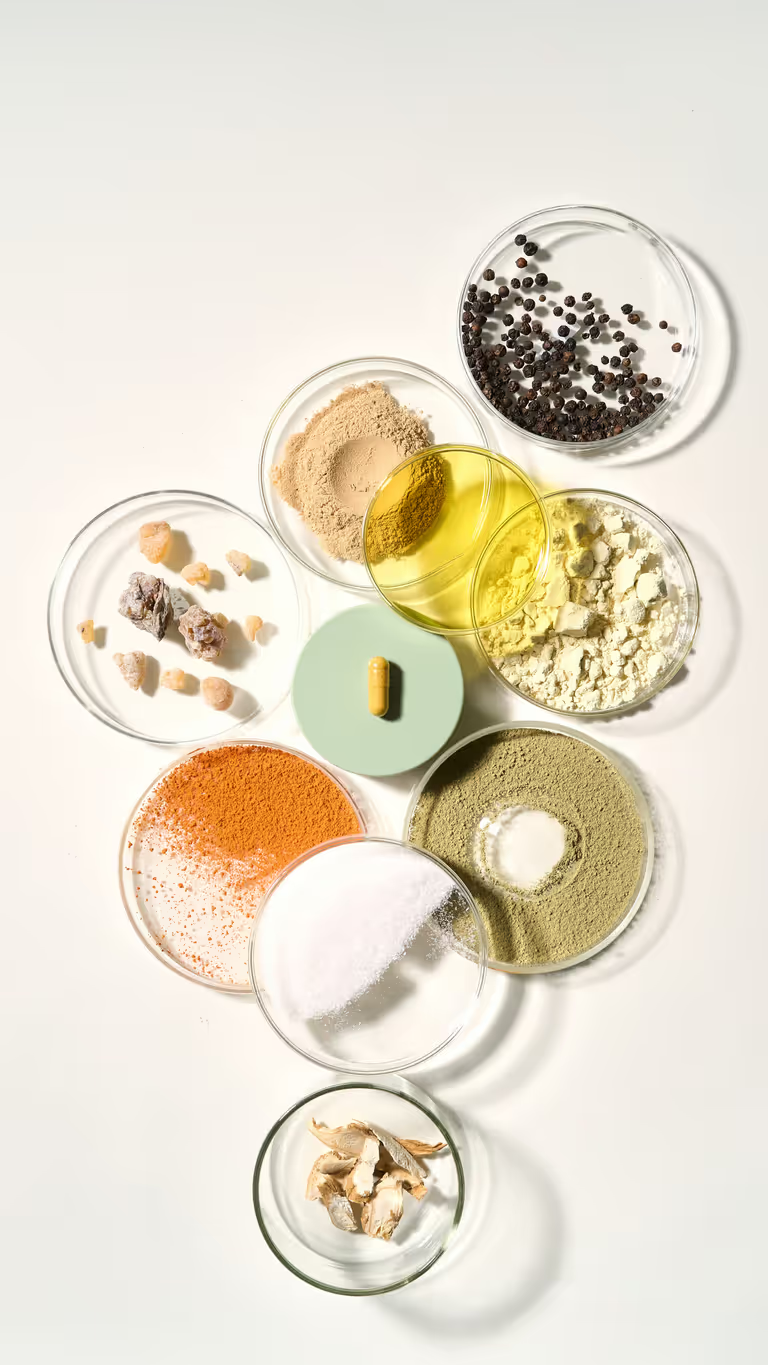
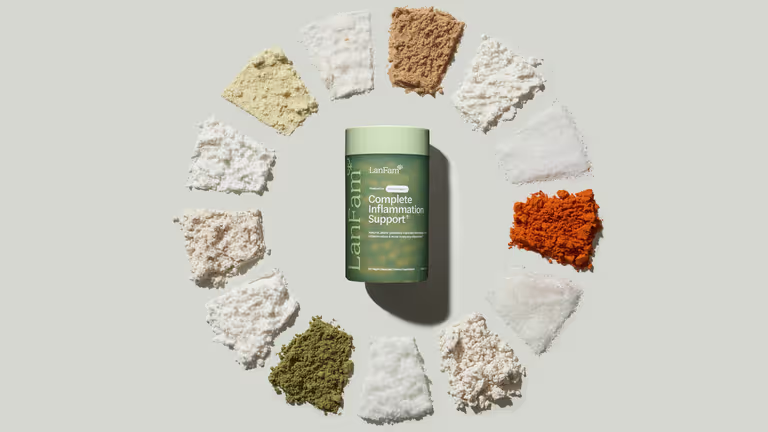
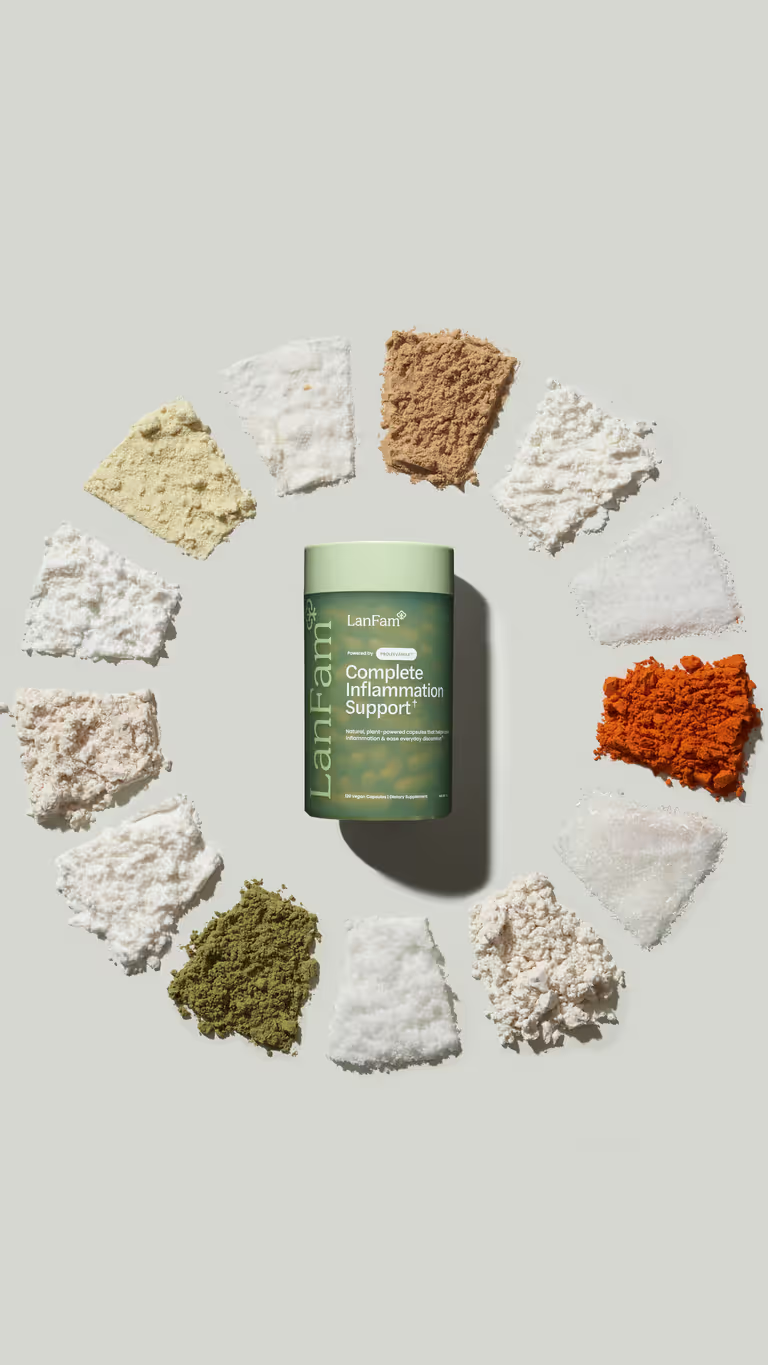
Complete Inflammation Support (Powered by ProleevaMax®) is designed for this multi-pathway reality. As the science above shows, sugar does not influence inflammation through one switch. It works through AGEs, insulin and visceral fat, and circulating markers at the same time. ProleevaMax reflects that complexity. It is a proprietary blend of 13 standardized ingredients chosen to support a healthy inflammatory response and nervous-system resilience together.
A few examples of that design:
- Boswellia (Indian Frankincense), standardized to 65% boswellic acids. Boswellic acids are the studied compounds behind Boswellia's role in supporting a healthy inflammatory response and joint comfort and mobility.
- Whole-root Turmeric. ProleevaMax uses whole-root turmeric extract for its broader plant profile. It is not a high-dose standardized curcumin isolate, and we will not pretend otherwise. It is one botanical contributor among several.
- L-Glutamine and L-Serine. This amino acid pairing is included to support nervous-system resilience, the "calm" side of how your body manages stress load.
- Matcha (EGCG and L-theanine), GABA, 5-HTP, Asian Ginseng, Resveratrol, L-Arginine, Black Pepper (piperine), Vitamin B6, and Choline round out the multi-pathway blend.
One note on honesty: ProleevaMax does not contain omega-3, vitamin D, magnesium, quercetin, probiotics, or CoQ10. Those are worth understanding on their own, and we cover several on the blog. ProleevaMax takes a different approach: a synergistic botanical-plus-amino-acid blend instead of a single isolated nutrient.
Reducing added sugar is a foundational habit. A targeted formula like ProleevaMax is one more tool you can layer on top, inside a complete lifestyle.
These statements have not been evaluated by the Food and Drug Administration. This product is not intended to diagnose, treat, cure, or prevent any disease.
Take the Next Step
Trimming added sugar, starting with sweetened drinks, is one of the most accessible changes you can make for a healthier inflammatory response. Pairing that habit with focused support can help you feel the difference.
Learn how Complete Inflammation Support (Powered by ProleevaMax®) is built for the multi-pathway nature of inflammation:
- See the full formula on the ProleevaMax page
- Explore every standardized botanical and amino acid on our ingredients page
- Review the research behind the blend on our science page
- Understand the mechanism on our how it works page
ProleevaMax is built around a 90-Day Protocol, because supporting a healthy inflammatory response is a gradual process, not an overnight switch. Many people notice initial responses around Week 2, clearer changes in comfort and mobility by Week 4, meaningful improvement in daily function by Week 8, and complete the full protocol at Day 90. Every order is backed by our 90-day money-back guarantee, so you have the full protocol window to evaluate how you feel.
Keep building your anti-inflammatory knowledge:

References
- 2.American Heart Association. Added Sugars. 2024. https://www.heart.org/en/healthy-living/healthy-eating/eat-smart/sugar/added-sugars
- 3.Uribarri J, del Castillo MD, de la Maza MP, et al. Dietary Advanced Glycation End Products and Their Role in Health and Disease. Advances in Nutrition. 2015. https://doi.org/10.3945/an.115.008433
- 4.Clarke RE, Dordevic AL, Tan SM, Ryan L, Coughlan MT. Dietary Advanced Glycation End Products and Risk Factors for Chronic Disease: A Systematic Review of Randomised Controlled Trials. Nutrients. 2016. https://doi.org/10.3390/nu8030125
- 5.Softic S, Stanhope KL, Boucher J, et al. Fructose and Hepatic Insulin Resistance. Critical Reviews in Clinical Laboratory Sciences. 2020. https://doi.org/10.1080/10408363.2019.1711360
- 6.Jensen T, Abdelmalek MF, Sullivan S, et al. Fructose and Sugar: A Major Mediator of Nonalcoholic Fatty Liver Disease. Journal of Hepatology. 2018. https://doi.org/10.1016/j.jhep.2018.01.019
- 7.Aeberli I, Gerber PA, Hochuli M, et al. Low to Moderate Sugar-Sweetened Beverage Consumption Impairs Glucose and Lipid Metabolism and Promotes Inflammation in Healthy Young Men: A Randomized Controlled Trial. American Journal of Clinical Nutrition. 2011. https://doi.org/10.3945/ajcn.111.013540
- 8.Della Corte KW, Perrar I, Penczynski KJ, Schwingshackl L, Herder C, Buyken AE. Effect of Dietary Sugar Intake on Biomarkers of Subclinical Inflammation: A Systematic Review and Meta-Analysis of Intervention Studies. Nutrients. 2018. https://doi.org/10.3390/nu10050606
- 9.Lin WT, Kao YH, Li MS, et al. Sugar-Sweetened Beverages Intake, Abdominal Obesity, and Inflammation among US Adults without and with Prediabetes—An NHANES Study. International Journal of Environmental Research and Public Health. 2022. https://doi.org/10.3390/ijerph20010681
- 10.Ma X, Nan F, Liang H, et al. Excessive Intake of Sugar: An Accomplice of Inflammation. Frontiers in Immunology. 2022. https://doi.org/10.3389/fimmu.2022.988481
- 11.American Heart Association. How Much Sugar Is Too Much?. 2024. https://www.heart.org/en/healthy-living/healthy-eating/eat-smart/sugar/how-much-sugar-is-too-much
- 12.Harvard T.H. Chan School of Public Health. Added Sugar in the Diet. The Nutrition Source. 2022. https://nutritionsource.hsph.harvard.edu/carbohydrates/added-sugar-in-the-diet/
Frequently asked questions

There's a seat at our table
Letters from our family to yours — the science, the recipes, the things that actually helped real families. Leave your email and we'll send the next one.