Does Salt Cause Inflammation? What Science Shows
Does salt cause inflammation? Research links high sodium to immune signaling that drives inflammation. Here is the science and practical guidance.
Ingredients in this letter
Does salt cause inflammation? The current research suggests that consistently high salt intake can promote inflammation by altering how your immune cells behave, not by acting like a toxin on its own. Sodium is essential to life. The problem is excess, and most people eat far more than their body needs. For women managing chronic inflammation, the amount and source of dietary sodium matter more than the saltshaker on the table.
What Sodium Actually Does in Your Body
Sodium is a mineral your body cannot function without. It helps regulate fluid balance, nerve signaling, and muscle contraction. Without enough of it, your cells could not communicate or hold water correctly.
So sodium is not the villain. The conversation is about dose. Your body needs a small, steady amount. When intake climbs far above that for months and years, the picture changes, and that is where inflammation enters the story.
Here is the key distinction. A single salty meal does not "cause inflammation" in a meaningful way for a healthy person. The research that matters looks at sustained, high-sodium eating patterns and what they do to the immune system over time.
The Science: How High Salt Influences Inflammation
For a long time, salt was studied mostly through the lens of blood pressure. That changed in 2013, when two independent research groups published findings in Nature showing that high sodium concentrations could directly reshape immune cell behavior.
The Th17 cell connection
The headline finding: a high-salt environment pushed CD4+ T cells to become pathogenic Th17 cells, a type of immune cell that produces pro-inflammatory signals. In animal models, a high-salt diet worsened an autoimmune-style inflammatory condition through this exact pathway [1].
The mechanism runs through a salt-sensing enzyme called SGK1 (serum/glucocorticoid-regulated kinase 1). When sodium rises, SGK1 activity increases, which tips the balance toward Th17 cells and away from the regulatory T cells (Tregs) that normally keep inflammation in check [2].
In plain terms: too much salt can nudge your immune system toward "attack mode" and away from "calm mode."
Sodium and macrophages
T cells are not the only immune cells affected. Sodium also accumulates in tissues and shapes how macrophages, the immune system's cleanup and signaling cells, respond. A review in Nature Reviews Immunology documents how sodium in the local tissue environment can alter immune responses and tissue balance, sometimes amplifying pro-inflammatory activity [3].
What about humans, not just mice?
This is the honest part. Much of the strongest mechanistic data comes from cell and animal studies. Human evidence is growing but more nuanced.
One encouraging human study looked at patients whose inflammation was tied to salt intake. Moderating dietary salt through a personalized nutrition plan was enough to reduce CD4+ T cell-mediated inflammation, which suggests the effect is not a one-way street [4]. That is meaningful, because it points to reversibility. Lowering salt may help dial the response back down.
Where Your Salt Actually Comes From
Most people picture the saltshaker. The data tells a different story.
More than 70% of the sodium people consume comes from packaged, processed, and restaurant foods, not from salt added during home cooking or at the table [5]. That reframes the entire problem. You cannot solve high sodium by ignoring the shaker. You solve it by reading labels.
The biggest contributors are often foods that do not taste especially salty:
| Food category | Why it is sneaky |
|---|---|
| Bread and rolls | Eaten in volume across the day, so sodium adds up |
| Cold cuts and cured meats | High sodium per serving |
| Pizza | Cheese, sauce, and crust all carry sodium |
| Soups | A single canned serving can be heavy |
| Sandwiches | Bread plus meat plus condiments stack up |
| Cheese | Sodium is part of the production process |
| Savory snacks | Easy to overeat |
The FDA [6] notes that because so much sodium is built into the food supply, label reading is the most practical lever for most households.
How Much Sodium Is Too Much?
The American Heart Association recommends no more than 2,300 mg of sodium per day, with an ideal target of 1,500 mg for most adults. The average American eats well above that, often over 3,400 mg daily [7].
| Reference point | Sodium (mg/day) |
|---|---|
| Ideal target (AHA) | 1,500 |
| Upper limit (AHA / Dietary Guidelines) | 2,300 |
| Typical U.S. intake | 3,400+ |
For context, 2,300 mg is roughly one teaspoon of table salt across the entire day, including everything hidden in your food. The AHA notes that cutting back by even 1,000 mg a day can support healthy blood pressure for many people.
Why This Matters More for Women 40 to 65
Salt sensitivity is not the same for everyone. Research shows women tend to be more salt-sensitive than men at every age, and that sensitivity increases after menopause [8].
Several factors converge in midlife: shifting hormones, age-related changes in kidney function, and changes in blood vessel flexibility. The result is that the same plate of food can have a larger effect on blood pressure and on the inflammatory and oxidative stress pathways tied to it.
This is not a reason to fear salt. It is a reason to be intentional. For many women in this stage of life, moderating sodium is one of the higher-leverage diet changes available, and it pairs naturally with a broader anti-inflammatory eating pattern.
Practical Sodium Guidance That Works
You do not need to chase zero salt. You need a realistic system.
- Read the label, not the food. Compare sodium per serving and check the serving size. A "light" soup can still be high.
- Cook more at home. When you cook, you control the sodium. This is the single biggest lever.
- Rinse canned goods. Draining and rinsing canned beans can cut a meaningful amount of sodium.
- Build flavor without salt. Lean on herbs, citrus, garlic, vinegar, and spices. Black pepper, turmeric, and other warming spices add depth.
- Watch the usual suspects. Bread, deli meat, pizza, soup, and sauces are where most sodium hides.
- Increase potassium-rich foods. Leafy greens, beans, and fruit help balance sodium's effects on the body.
- Go gradual. Your palate adjusts over a few weeks. Salt cravings fade as you reset.
If you want a deeper food-by-food framework, our anti-inflammatory grocery list walks through what to put in your cart.
What Reducing Salt Will Not Do
Honesty matters here, because the internet tends to oversell single-nutrient fixes.
- Cutting salt will not erase chronic inflammation by itself. Inflammation is multi-factor: sleep, stress, movement, body composition, and overall diet all play roles. Sodium is one input, not the whole equation.
- Lowering salt is not a treatment for any disease. It is a sensible dietary adjustment, not a cure.
- Going extremely low is not automatically better. Sodium is essential, and intake that drops too far carries its own considerations. The goal is appropriate, not minimal.
- Results are gradual, not overnight. The immune and blood pressure changes documented in research unfold over weeks and months of consistent habits.
The most useful framing: salt is one lever among several. Pulling it in the right direction helps, but it works best as part of a complete pattern.
Where ProleevaMax Fits Into the Bigger Picture
Diet is the foundation. No supplement replaces a sensible sodium intake or an anti-inflammatory eating pattern. That said, many women want targeted support alongside their food choices.
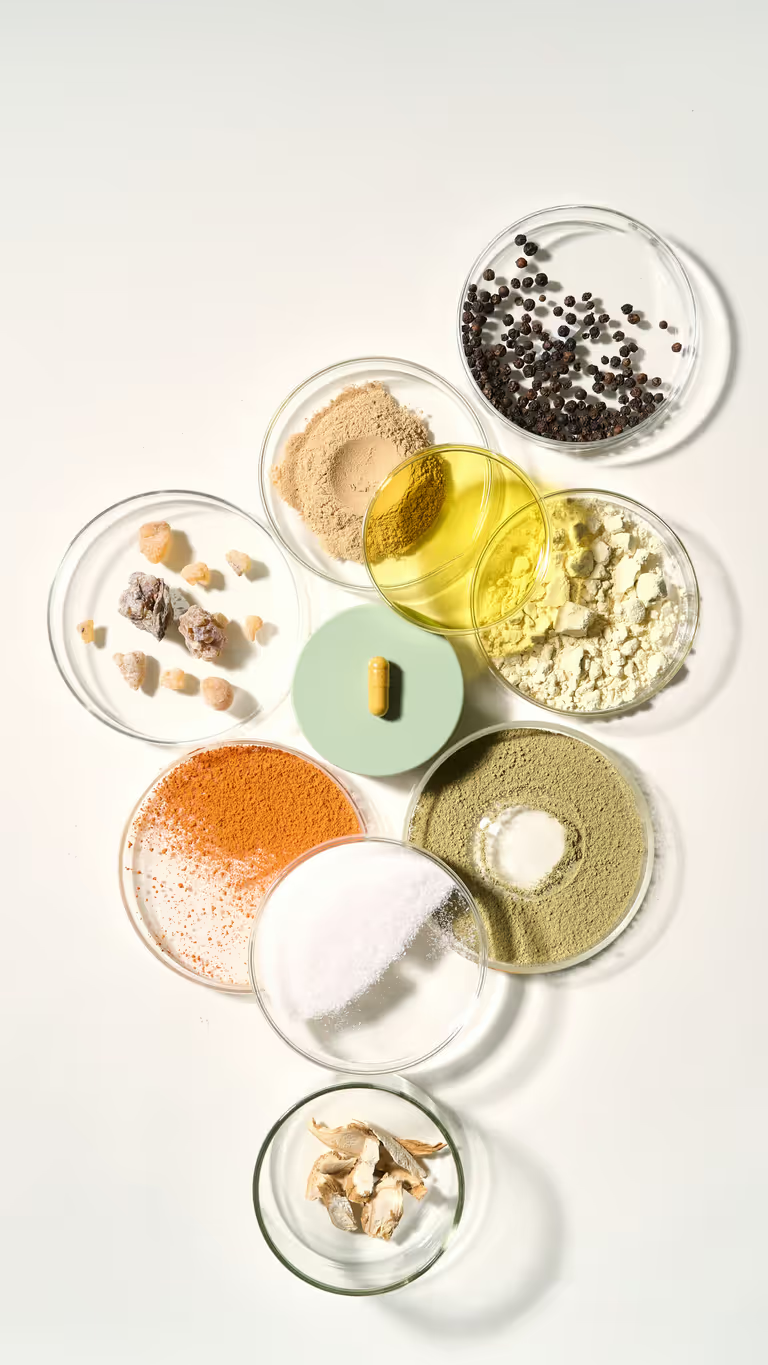
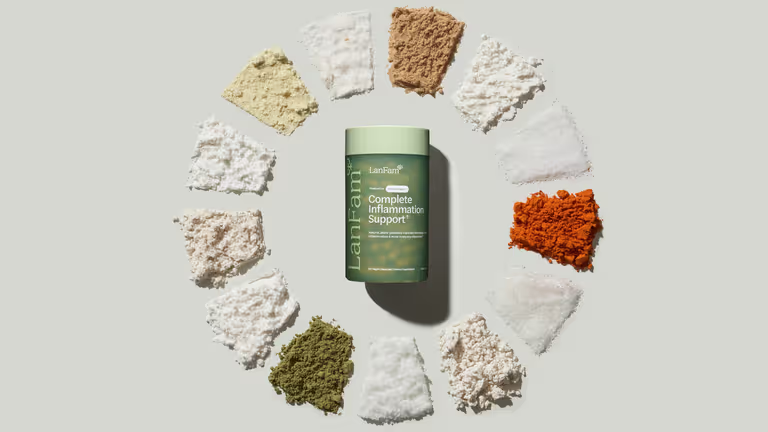
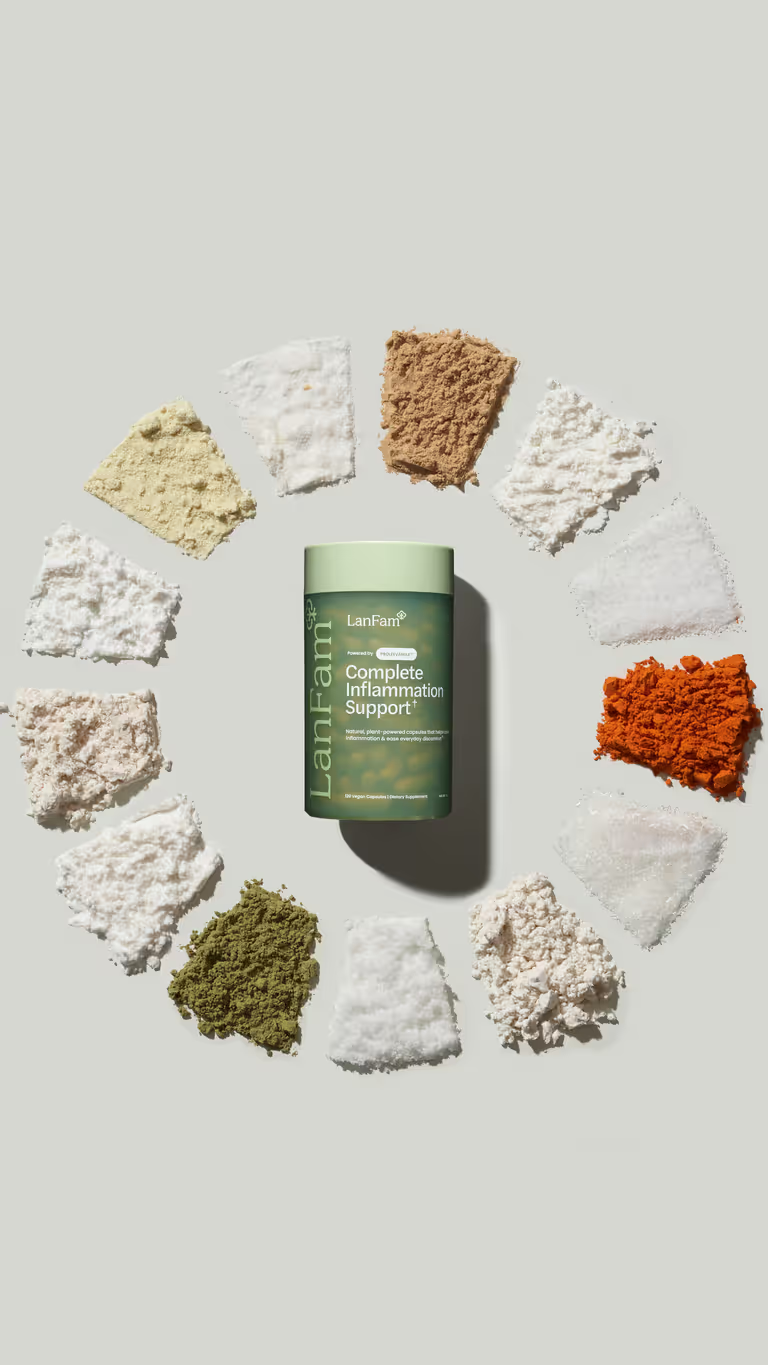
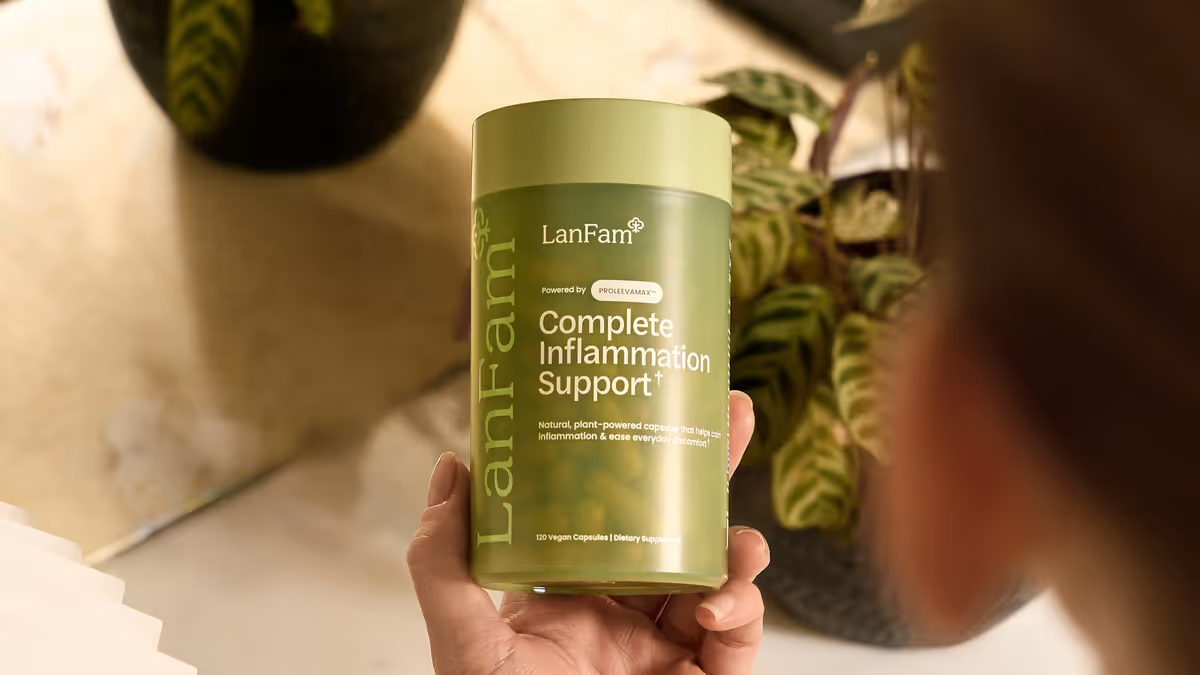
Complete Inflammation Support (Powered by ProleevaMax®) is designed for exactly this multi-pathway reality. Inflammation is not a single switch, and the formula reflects that. It is a proprietary blend of 13 standardized ingredients chosen to support a healthy inflammatory response and nervous-system resilience together.
A few examples of that design:
- Boswellia (Indian Frankincense), standardized to 65% boswellic acids. Boswellic acids are the studied compounds behind Boswellia's role in supporting a healthy inflammatory response and joint comfort. A systematic review found standardized Boswellia extracts well tolerated and supportive of comfort and mobility in joint-focused research [9].
- Whole-root Turmeric. ProleevaMax uses whole-root turmeric extract for its broader plant profile. It is not a high-dose standardized curcumin isolate, and we will not pretend otherwise. It is one botanical contributor among several.
- L-Glutamine and L-Serine. This amino acid pairing is included to support nervous-system resilience, the "calm" side of how your body manages stress load.
- Matcha (EGCG and L-theanine), GABA, 5-HTP, Asian Ginseng, Resveratrol, L-Arginine, Black Pepper (piperine), Vitamin B6, and Choline round out the multi-pathway blend.
One note on honesty: ProleevaMax does not contain CoQ10, omega-3, vitamin D, magnesium, quercetin, probiotics, or ashwagandha. Those are worth understanding on their own, and we cover several in our blog. ProleevaMax takes a different approach: a synergistic botanical-plus-amino-acid blend instead of a single isolated nutrient.
Lowering sodium is a foundational habit. A targeted formula like ProleevaMax is one more tool you can layer on top, inside a complete lifestyle.
These statements have not been evaluated by the Food and Drug Administration. This product is not intended to diagnose, treat, cure, or prevent any disease.
Take the Next Step
Cutting back on hidden sodium is one of the most accessible changes you can make for a healthier inflammatory response. Pairing that habit with focused support can help you feel the difference.
Learn how Complete Inflammation Support (Powered by ProleevaMax®) is built for the multi-pathway nature of inflammation:
- See the full formula on the ProleevaMax page
- Explore every standardized botanical and amino acid on our ingredients page
- Review the research behind the blend on our science page
- Understand the mechanism on our how it works page
ProleevaMax is built around a 90-Day Protocol, because supporting a healthy inflammatory response is a gradual process, not an overnight switch. Many people notice initial responses around Week 2, clearer changes in comfort and mobility by Week 4, meaningful improvement in daily function by Week 8, and complete the full protocol at Day 90. Every order is backed by our 90-day money-back guarantee, so you have the full protocol window to evaluate how you feel.
Keep building your anti-inflammatory knowledge:

References
- 2.Kleinewietfeld M, Manzel A, Titze J, Kvakan H, Yosef N, Linker RA, Muller DN, Hafler DA. Sodium chloride drives autoimmune disease by the induction of pathogenic TH17 cells. Nature. 2013. https://doi.org/10.1038/nature11868
- 3.Balan Y, Muthu Packirisamy R, Mohanraj PS. High dietary salt intake activates inflammatory cascades via Th17 immune cells: impact on health and diseases. Archives of Medical Science. 2020. https://doi.org/10.5114/aoms.2020.96344
- 4.Müller DN, Wilck N, Haase S, Kleinewietfeld M, Linker RA. Sodium in the microenvironment regulates immune responses and tissue homeostasis. Nature Reviews Immunology. 2019. https://doi.org/10.1038/s41577-018-0113-4
- 5.Tzoumpa A, Lozano-Ruiz B, Huang Y, et al. Dietary salt intake worsens the Th17-dependent inflammatory profile of patients with cirrhosis. JCI Insight. 2025. https://doi.org/10.1172/jci.insight.191354
- 6.Centers for Disease Control and Prevention. Vital Signs: Food Categories Contributing the Most to Sodium Consumption — United States, 2007-2008. 2007. https://www.cdc.gov/mmwr/preview/mmwrhtml/mm6105a3.htm
- 7.U.S. Food and Drug Administration. Sodium in Your Diet. 2025. https://www.fda.gov/food/nutrition-education-resources-materials/sodium-your-diet
- 8.American Heart Association. How Much Sodium Should I Eat Per Day?. 2025. https://www.heart.org/en/healthy-living/healthy-eating/eat-smart/sodium/how-much-sodium-should-i-eat-per-day
- 9.Barris CT, Faulkner JL, Belin de Chantemèle EJ. Salt sensitivity of blood pressure in women. Hypertension. 2022. https://doi.org/10.1161/HYPERTENSIONAHA.122.17952
- 10.Yu G, Xiang W, Zhang T, Zeng L, Yang K, Li J. Effectiveness of Boswellia and Boswellia extract for osteoarthritis patients: a systematic review and meta-analysis. BMC Complementary Medicine and Therapies. 2020. https://doi.org/10.1186/s12906-020-02985-6
Frequently asked questions
There's a seat at our table
Letters from our family to yours — the science, the recipes, the things that actually helped real families. Leave your email and we'll send the next one.