The Worst Foods for Inflammation (and What to Eat Instead)
The worst foods for inflammation are ultra-processed foods, sugary drinks, trans fats, and refined carbs. Here is the science plus simple swaps.

The worst foods for inflammation are ultra-processed foods, sugar-sweetened drinks, trans fats from fried and packaged foods, and refined carbohydrates like white bread and white rice. Research links eating patterns built around these foods to higher levels of inflammatory markers such as C-reactive protein (CRP) and interleukin-6 (IL-6). The encouraging part: each one has a simple, satisfying swap. You do not need a perfect diet to support a healthy inflammatory response. You need fewer of the worst offenders and more of the foods that work with your body.
First, What "Inflammatory Food" Actually Means
Inflammation is your body's repair and defense system. Short-term inflammation is good. It is how you heal a cut or fight off a cold. The concern is chronic, low-grade inflammation, the simmering kind that stays switched on for months and years.
Certain foods nudge that simmer higher. They do this through your immune signaling, your blood sugar, and the bacteria in your gut. Researchers measure the effect with blood markers like CRP, IL-6, and TNF-alpha, and with diet-scoring tools such as the Dietary Inflammatory Index.
One honest framing up front: no single food "causes" chronic inflammation by itself. A slice of birthday cake is not the problem. A daily pattern built around the foods below is. Think in patterns, not in single meals.
For the full picture of what drives the response in the first place, see our guide on what causes inflammation in the body.
The Worst Foods for Inflammation, Ranked
1. Ultra-Processed Foods
Ultra-processed foods are the packaged, industrially formulated products that dominate most grocery aisles: chips, packaged baked goods, instant meals, sweetened cereals, and most snack bars. They tend to be high in refined starch, added sugar, industrial fats, and additives, and low in fiber and whole-food nutrients.
A scoping review of the research found that CRP, the most-studied inflammatory marker, is consistently higher in people who eat more ultra-processed food [1]. What stands out is that the inflammatory effect appears to go beyond just the sugar and fat content. Something about the processing itself seems to matter [2].
Why it drives inflammation: low fiber starves the beneficial gut bacteria that help keep inflammation balanced, while refined ingredients spike blood sugar and feed pro-inflammatory signaling.
2. Sugar-Sweetened Beverages
Soda, sweet tea, energy drinks, and sweetened coffee drinks are among the most direct dietary contributors to inflammation, in part because they deliver a large dose of sugar with no fiber to slow it down.
Research connects sugar-sweetened beverage intake with higher levels of circulating inflammatory factors, including CRP and IL-6. In a study of U.S. adults with prediabetes, those who drank the most sugar-sweetened beverages had a 1.57-fold higher likelihood of elevated CRP compared with non-consumers [3].
If you want the deeper mechanism, our article on whether sugar causes inflammation breaks down exactly how added sugar interacts with your immune system.
3. Trans Fats
Trans fats are the most clear-cut inflammatory fat. They appear in partially hydrogenated oils, some stick margarines, many fried foods, and older packaged baked goods. Many countries have restricted them, but they still surface in fried restaurant food and certain imported products.
The evidence here is striking. In a study of women from the Nurses' Health Study, those in the highest quintile of trans fat intake had CRP levels 73% higher and IL-6 levels 17% higher than those in the lowest quintile [4].
Why it drives inflammation: trans fats are built into your cell membranes and appear to activate inflammatory signaling pathways tied to the lining of your blood vessels.
4. Refined Carbohydrates
White bread, white rice, pastries, and most packaged snacks are stripped of their fiber and bran. That makes them digest fast, spiking blood sugar and insulin, which research associates with higher inflammatory markers. Harvard Health groups refined carbohydrates alongside fried foods, soda, and red meat as the core pro-inflammatory foods to limit [5].
The fix is not "no carbs." It is choosing carbohydrates that still carry their fiber.
5. Processed and Excess Red Meat
Processed meats, such as bacon, hot dogs, cold cuts, and sausage, sit firmly on the pro-inflammatory list. They combine saturated fat, sodium, and preservatives. Large red meat portions also contribute, especially when they crowd out vegetables and fish.
This is about frequency and portion, not a lifetime ban. A weekly serving of quality red meat inside a vegetable-rich plate looks different from daily processed deli meat.
The Pattern Matters More Than Any Single Food
Here is the most important study to understand. Researchers followed more than 200,000 adults across three large cohorts for decades and scored their diets with a food-based empirical dietary inflammatory pattern. People with the most inflammatory eating patterns had a 38% higher risk of cardiovascular disease compared with those eating the least inflammatory pattern, and they showed a less favorable profile of inflammatory biomarkers in their blood [6].
The takeaway is freeing. You are not graded on one meal. You are graded on the pattern you repeat. That means the swaps below compound over time.
What to Eat Instead: The Swap Table
You do not have to give up the experience of food. You trade the inflammatory version for a satisfying one that works with your body instead of against it.
| Instead of this | Choose this | Why it helps |
|---|---|---|
| Soda or sweet tea | Sparkling water with citrus or muddled berries | Removes the sugar load that pushes CRP up |
| White bread | 100% whole-grain or sourdough | Keeps the fiber that slows blood sugar |
| White rice | Brown rice, quinoa, or farro | Adds fiber and feeds beneficial gut bacteria |
| Fried chips | Roasted nuts or roasted chickpeas | Swaps trans-fat risk for healthy fats and fiber |
| Stick margarine | Extra-virgin olive oil | Replaces trans fat with anti-inflammatory monounsaturated fat |
| Processed deli meat | Roasted chicken, turkey, or canned salmon | Cuts preservatives and sodium, adds omega-3s |
| Packaged pastries | Greek yogurt with berries | Trades refined sugar for protein and antioxidants |
| Sugary cereal | Oats with cinnamon and walnuts | Steady fiber instead of a morning sugar spike |
For a full, ready-to-shop version of this approach, our anti-inflammatory grocery list maps out exactly what to put in your cart.
A Simple Framework Instead of a Rulebook
If a swap table feels like a lot to remember, use three habits instead.
- Eat the rainbow. Colorful vegetables and fruit, especially berries and leafy greens, deliver the polyphenols and fiber that support a healthy inflammatory response.
- Keep the fiber. Whenever you choose a carbohydrate, pick the version that still has its fiber. Fiber is the single most reliable signal of an anti-inflammatory food.
- Cook more at home. When you cook, you control the oil, the sugar, and the salt. This one habit removes most ultra-processed exposure on its own.
What Cutting These Foods Will Not Do
Honesty matters, because the internet tends to oversell diet changes.
- Removing inflammatory foods will not erase chronic inflammation by itself. Sleep, stress, movement, body composition, and genetics all shape your inflammatory response. Food is one major input, not the whole equation.
- No food, and no diet, treats or cures a disease. An anti-inflammatory eating pattern is a sensible health habit, not a medical treatment.
- One perfect week will not undo years of patterns, and one bad meal will not undo a good month. The research tracks habits over time, so consistency beats intensity.
- Results are gradual. The biomarker shifts documented in studies unfold across weeks and months of repeated choices.
The most useful framing: your diet is a dial you turn slowly, not a switch you flip.
Where ProleevaMax Fits Into the Bigger Picture
Diet is the foundation. No supplement replaces an anti-inflammatory eating pattern, and any product that claims otherwise should make you skeptical. That said, many women want focused support alongside their food choices.
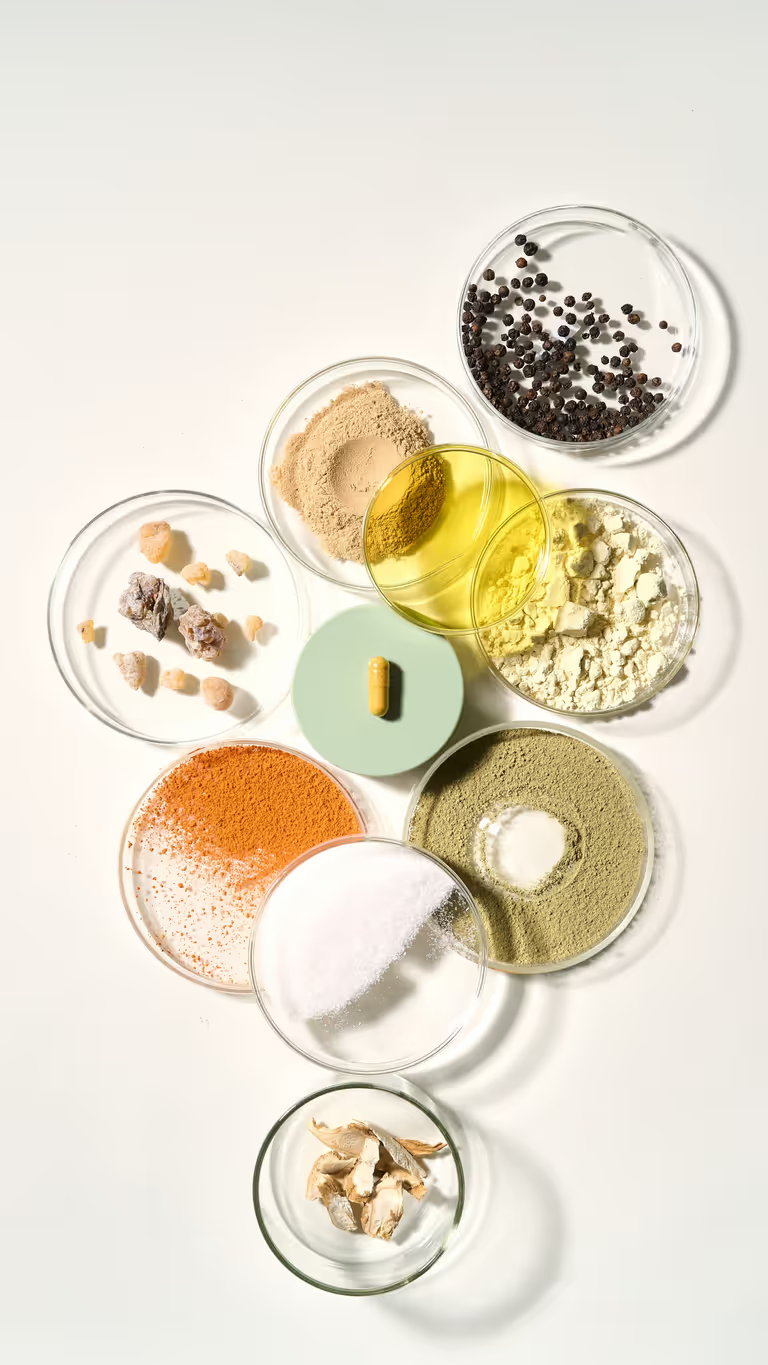
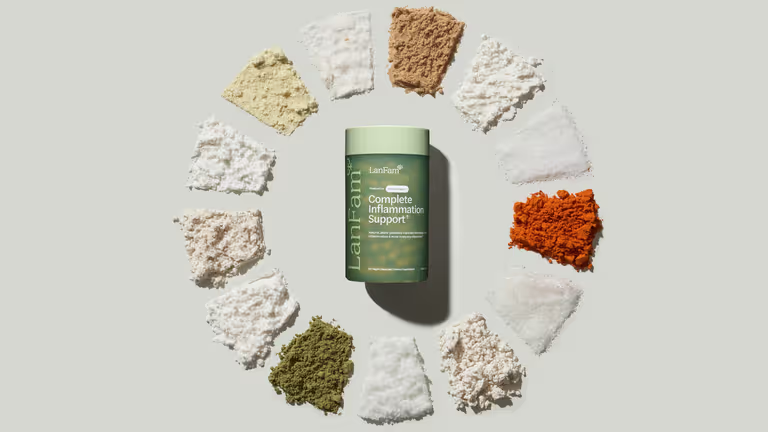
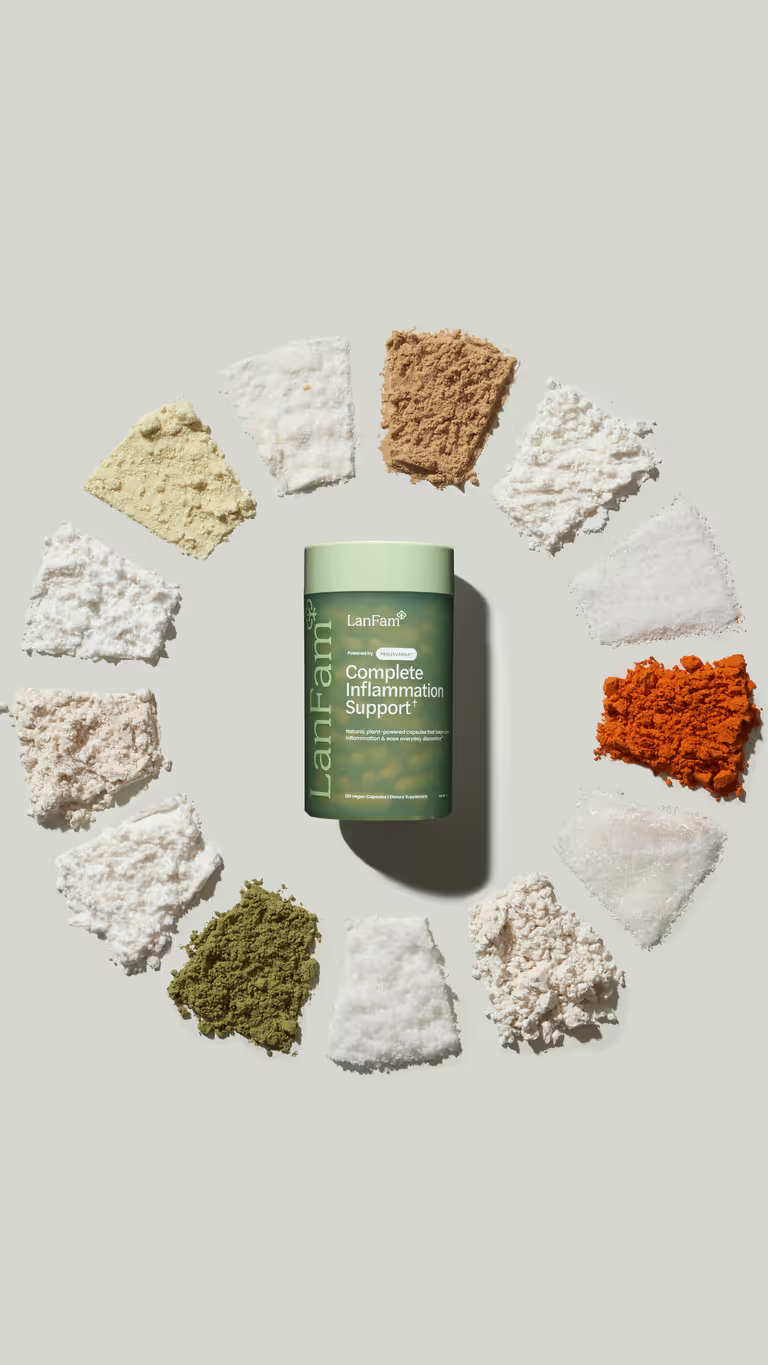
Complete Inflammation Support (Powered by ProleevaMax®) is built for the multi-pathway reality of inflammation. The body does not run inflammation through a single switch, and the formula reflects that. It is a proprietary blend of 13 standardized ingredients chosen to support a healthy inflammatory response and nervous-system resilience together.
A few examples of that design:
- Boswellia (Indian Frankincense), standardized to 65% boswellic acids. Boswellic acids are the studied compounds behind Boswellia's role in supporting a healthy inflammatory response and joint comfort. A systematic review and meta-analysis of standardized Boswellia extracts documented support for comfort, stiffness, and joint function in osteoarthritis research, with a recommended use period of at least four weeks [7].
- Whole-root Turmeric. ProleevaMax uses whole-root turmeric extract for its broader plant profile. It is not a high-dose standardized curcumin isolate, and we will not pretend otherwise. It is one botanical contributor among several.
- L-Glutamine and L-Serine. This amino acid pairing is included to support nervous-system resilience, the calmer side of how your body handles stress load.
- Matcha (EGCG and L-theanine), GABA, 5-HTP, Asian Ginseng, Resveratrol, L-Arginine, Black Pepper (piperine), Vitamin B6, and Choline round out the multi-pathway blend.
One note on honesty: ProleevaMax does not contain omega-3, vitamin D, magnesium, quercetin, probiotics, or CoQ10. Those are worth understanding on their own, and several appear in foods on the swap table above. ProleevaMax takes a different approach: a synergistic botanical-plus-amino-acid blend instead of a single isolated nutrient.
Cleaning up the worst foods is the foundational move. A targeted formula like ProleevaMax is one more tool you can layer on top, inside a complete lifestyle.
These statements have not been evaluated by the Food and Drug Administration. This product is not intended to diagnose, treat, cure, or prevent any disease.
Take the Next Step
Trading the worst foods for satisfying swaps is one of the most accessible changes you can make for a healthier inflammatory response. Pairing that habit with focused support can help you feel the difference.
Learn how Complete Inflammation Support (Powered by ProleevaMax®) is built for the multi-pathway nature of inflammation:
- See the full formula on the ProleevaMax page
- Explore every standardized botanical and amino acid on our ingredients page
- Review the research behind the blend on our science page
- Understand the mechanism on our how it works page
ProleevaMax is built around a 90-Day Protocol, because supporting a healthy inflammatory response is a gradual process, not an overnight switch. Many people notice initial responses around Week 2, clearer changes in comfort and mobility by Week 4, meaningful improvement in daily function by Week 8, and complete the full protocol at Day 90. Every order is backed by our 90-day money-back guarantee, so you have the full protocol window to evaluate how you feel.
Keep building your anti-inflammatory knowledge:

References
- 2.Ultra-Processed Food Consumption and Systemic Inflammatory Biomarkers: A Scoping Review. 2025. https://pmc.ncbi.nlm.nih.gov/articles/PMC12472508/
- 3.Low-Grade Inflammation and Ultra-Processed Foods Consumption: A Review. 2023. https://pmc.ncbi.nlm.nih.gov/articles/PMC10058108/
- 4.Sugar-Sweetened Beverages Intake, Abdominal Obesity, and Inflammation among US Adults. NHANES study,. 2023. https://pmc.ncbi.nlm.nih.gov/articles/PMC9819548/
- 5.Consumption of Trans Fatty Acids Is Related to Plasma Biomarkers of Inflammation and Endothelial Dysfunction. The Journal of Nutrition. 2005. https://pubmed.ncbi.nlm.nih.gov/15735094/
- 6.Foods that fight inflammation. Harvard Health. https://www.health.harvard.edu/healthy-aging-and-longevity/foods-that-fight-inflammation
- 7.Dietary Inflammatory Potential and Risk of Cardiovascular Disease Among Men and Women in the U.S. Journal of the American College of Cardiology. 2020. https://pmc.ncbi.nlm.nih.gov/articles/PMC7745775/
- 8.Effectiveness of Boswellia and Boswellia extract: a systematic review and meta-analysis. 2020. https://pmc.ncbi.nlm.nih.gov/articles/PMC7368679/
Frequently asked questions
There's a seat at our table
Letters from our family to yours — the science, the recipes, the things that actually helped real families. Leave your email and we'll send the next one.