Do Eggs Cause Inflammation? The Honest Answer
Do eggs cause inflammation? Clinical trials say no for most people, but individual response varies. Here is what the evidence shows for women 40-65.

For most people, eggs do not cause inflammation. A systematic review and meta-analysis of randomized controlled trials found that egg consumption did not change inflammatory markers such as C-reactive protein (CRP), interleukin-6 (IL-6), or TNF-alpha. The honest caveat is individual variation: some people with an egg allergy or sensitivity react, and a small number of trials hint at different effects in healthy versus metabolically stressed groups.
Why People Ask Whether Eggs Are Inflammatory
The question "do eggs cause inflammation" comes up because eggs are a contradiction on paper. The yolk contains dietary cholesterol and saturated fat, two things that have spent decades on the "be careful" list. The same yolk also contains lutein, zeaxanthin, choline, high-quality protein, and antioxidants. So one food carries components that pull in opposite directions.
For women 40-65 managing chronic inflammation, the stakes feel higher. Eggs are a breakfast staple and a cheap protein source. Cutting them out is a real sacrifice, so it is fair to ask whether that sacrifice does anything. The short answer is that the clinical evidence does not support a blanket "eggs are inflammatory" claim. The longer answer is more interesting, and it explains why some people still react.
What the Clinical Trials Actually Found
The strongest evidence here comes from randomized controlled trials, where researchers feed people eggs (or not) and measure inflammatory markers in the blood. That design beats observational studies because it controls for the lifestyle habits that usually travel with diet.
A 2019 systematic review and meta-analysis of randomized controlled trials, published in the Journal of the Science of Food and Agriculture, pooled the available trials and reached a clear conclusion: egg consumption did not significantly affect high-sensitivity CRP, IL-6, or TNF-alpha [1]. These are three of the most-used markers of systemic inflammation. The authors noted this was the first meta-analysis of clinical trials on eggs and circulating inflammatory biomarkers, and the signal was neutral.
A separate 2022 randomized crossover trial in adults with metabolic syndrome added two whole eggs per day to a plant-based diet and tracked plasma biomarkers [2]. The eggs raised HDL cholesterol, choline, and zeaxanthin without the inflammatory penalty some people expect. Another trial found that egg consumption improved vascular and gut-microbiota function without raising inflammatory, metabolic, or oxidative-stress markers, including no rise in TMAO [3].
Reading the evidence honestly
| Inflammatory marker | Effect of eggs in pooled trials |
|--------------------|----------------------------------|
| hs-CRP | No significant change |
| IL-6 | No significant change |
| TNF-alpha | No significant change |
Two honest qualifiers belong here. First, the meta-analysis pooled a modest number of trials, with different doses and durations, so it is a strong signal, not a final word. Second, "no average effect" is not the same as "no effect in anyone." Averages hide individuals. That distinction is the whole story for the people who do react, which we cover below.
The Mechanism: Why Eggs Net Out Neutral
To understand the neutral result, it helps to see what is inside the egg.
The components that could raise inflammation
- Dietary cholesterol. The yolk is cholesterol-rich, and high-dose cholesterol has been linked to pro-inflammatory effects in some research. The catch, as reviewers note, is that most of those studies used cholesterol doses far above what you get from eating eggs.
- Arachidonic acid. Eggs contain this omega-6 fatty acid, a building block your body can convert into pro-inflammatory signaling molecules. The amount from normal egg intake is small relative to total dietary fat.
- Choline and the TMAO pathway. Egg yolk is a top source of choline. Gut bacteria can convert choline into trimethylamine, which the liver turns into TMAO, a compound associated with inflammatory and cardiovascular risk in observational research [4]. The important nuance: feeding-trial data show eggs raising plasma choline without a matching rise in TMAO in healthy people, so the pathway is more about individual gut-microbiome makeup than about eggs themselves.
The components that work the other way
- Lutein and zeaxanthin. These carotenoids concentrate in the yolk and carry antioxidant and anti-inflammatory properties [2]. Because they ride along with the egg's fat, your body absorbs them well, which is why egg-eaters show higher plasma levels of both.
- High-quality protein. Eggs supply complete protein that supports muscle maintenance, a meaningful factor for women over 40 working to hold lean mass.
- Choline (the other side). Beyond the TMAO question, choline is an essential nutrient for cell membranes and the nervous system, and most adults fall short of the recommended intake.
Put the two lists side by side and the neutral trial result makes sense. The pro- and anti-inflammatory pieces of an egg tend to cancel out in a healthy body. The egg is not pushing your inflammatory system hard in either direction.
When Eggs Genuinely Do Cause Inflammation
Here is where individual variation earns its place. For a specific subset of people, eggs absolutely can drive a real inflammatory response.
True egg allergy
An egg allergy is an immune reaction to egg proteins, mediated by IgE antibodies. When someone with this allergy eats egg, their immune system treats egg protein as a threat and launches an inflammatory cascade. This is a documented immunologic response, not a preference. Adult-onset egg allergy is rare, with estimated prevalence under 0.1% in adults, though a portion of childhood egg allergies persist into adulthood [5]. If you have a diagnosed egg allergy, eggs are inflammatory for you, full stop, and avoidance is the answer.
Non-allergic sensitivity and gut individuality
Some people without a classic allergy still report feeling worse after eggs. The plausible mechanisms include personal differences in gut-microbiome composition (which shapes how much TMAO you make from choline) and broader food sensitivities that vary person to person. This area is less settled than allergy science, so the honest framing is: the general evidence is neutral, but your body is allowed to be an exception.
How to find out if you are an exception
The cleanest tool is a simple, structured elimination test, not guesswork:
- Remove eggs completely for two to three weeks.
- Track comfort, mobility, digestion, and energy in a notebook.
- Reintroduce eggs and watch for a consistent, repeatable change.
One reintroduction does not prove much. A pattern that returns each time you add eggs back is far more telling. If you suspect a true allergy, see a clinician for testing instead of self-diagnosing.
What This Means for an Anti-Inflammatory Diet
Eggs sit in a useful place: neutral-to-helpful for most people, problematic only for a defined minority. That makes them a reasonable part of an anti-inflammatory eating pattern, with two practical notes.
- The plate matters more than the egg. Eggs fried in a seed-oil-heavy pan next to processed meat land differently than eggs with spinach, olive oil, and vegetables. The 2022 trial that paired eggs with spinach is a good template.
- Whole diet beats single foods. No one food makes or breaks your inflammatory state. If you want the bigger picture, our guides to anti-inflammatory recipes, whether gluten causes inflammation, and whether salt causes inflammation put eggs in the context of the broader pattern.
What Eggs Won't Do
Honesty over hype, so here are the limits.
- Eggs are not an anti-inflammatory treatment. The lutein and zeaxanthin are a bonus, not a therapy. Eating more eggs will not lower elevated inflammation the way a targeted intervention might.
- Eggs will not fix a pro-inflammatory diet. A few good components cannot offset a pattern heavy in ultra-processed food, excess refined carbohydrate, and seed-oil-fried meals.
- Neutral on average does not mean safe for everyone. If you have an egg allergy or a clear, repeatable sensitivity, the average trial result does not apply to you.
- Eggs do not address nervous-system tone, sleep, or stress hormones, which all feed into how inflamed you feel day to day.
That last point is the bridge to how we think about supporting a healthy inflammatory response beyond the dinner plate.
Where ProleevaMax Fits (and Where It Doesn't)
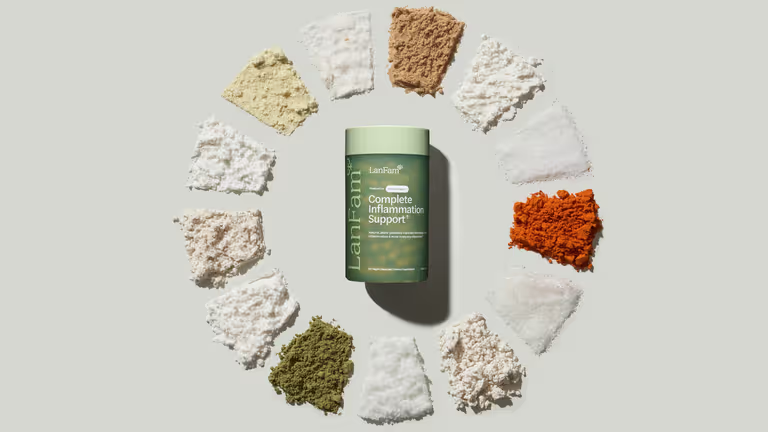
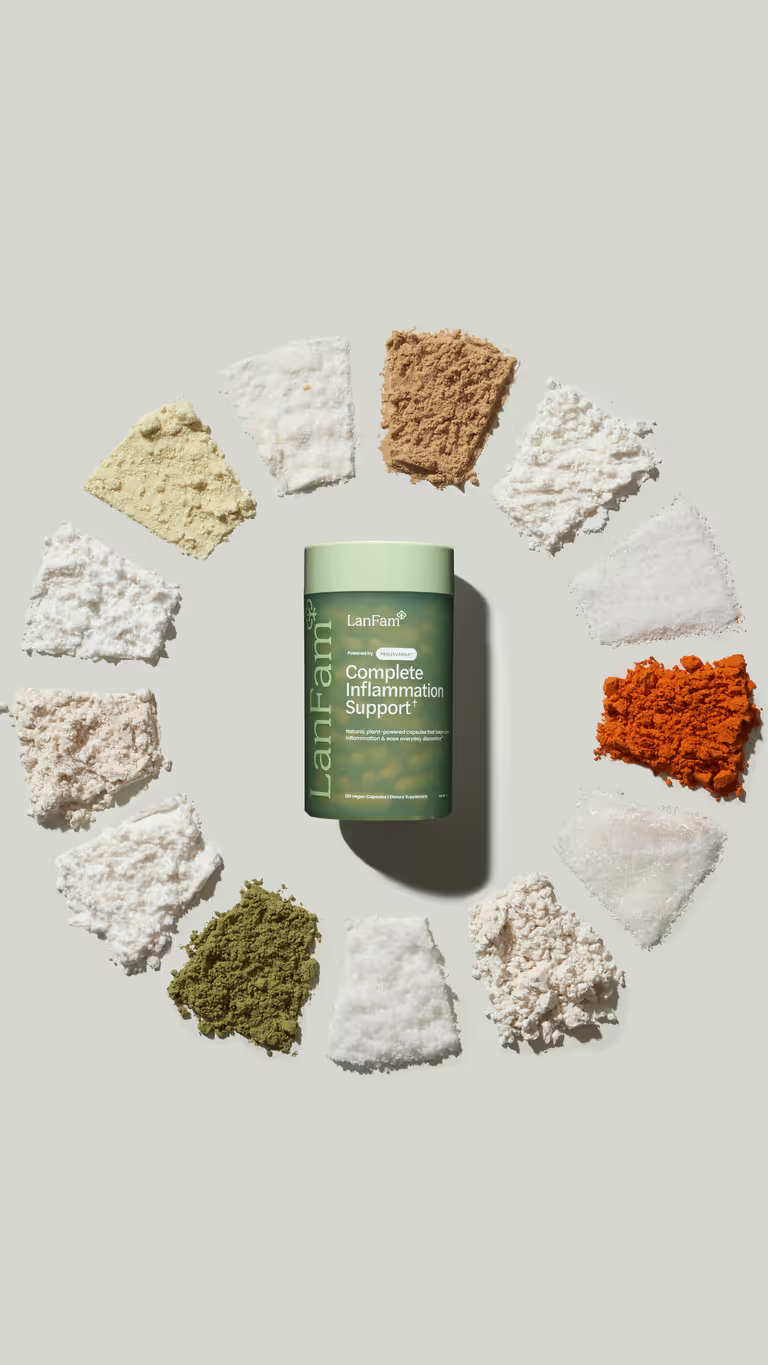
Let's be direct: eggs are a food, and Complete Inflammation Support (Powered by ProleevaMax®) is a supplement. They answer different questions. Eggs are about whether one food in your diet is helping or hurting. ProleevaMax is about supporting a healthy inflammatory response through targeted, standardized ingredients.
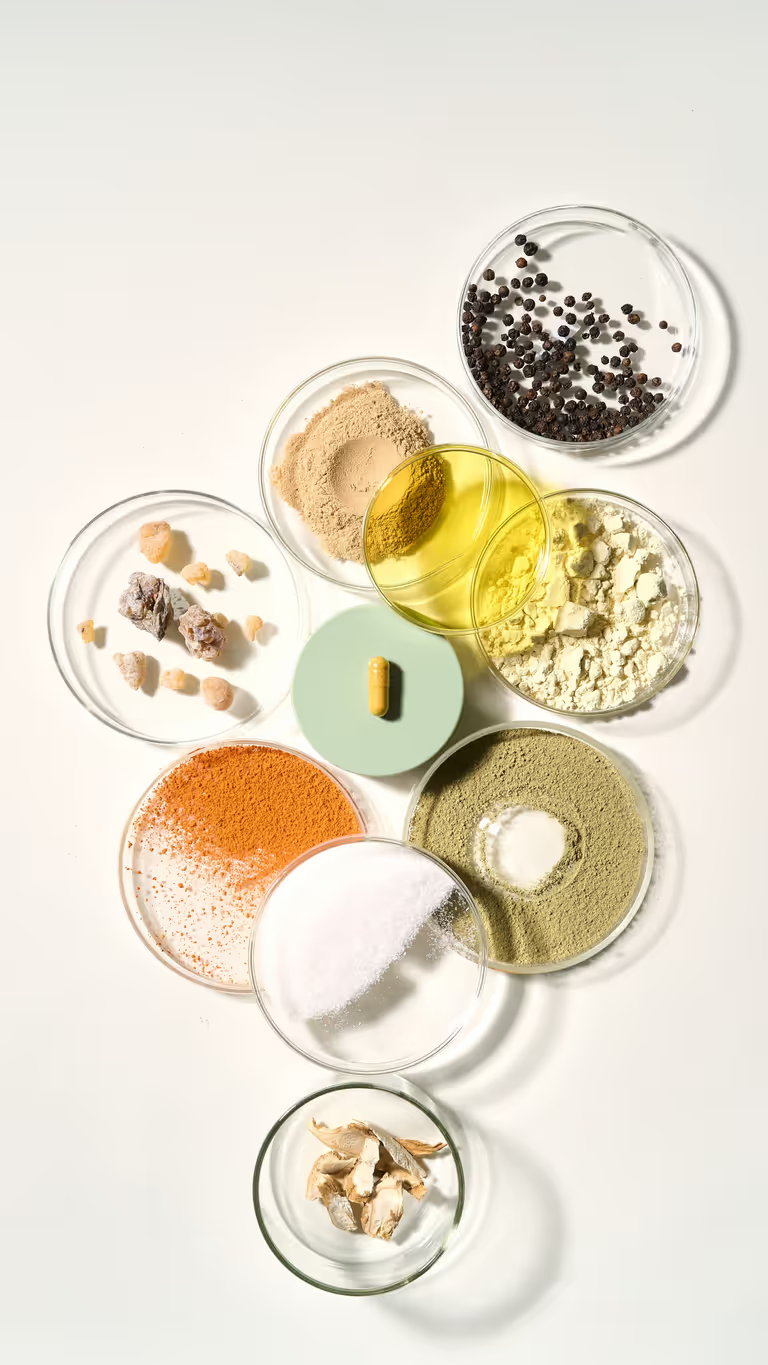
ProleevaMax does not contain egg, and it is not a substitute for a balanced diet. What it does is pull several inflammatory-response levers at once with 13 standardized ingredients, instead of relying on any single food or nutrient.
The multi-pathway design
- Boswellia (Indian Frankincense), standardized to 65% boswellic acids. Boswellic acids influence the 5-lipoxygenase enzyme in one inflammatory pathway. The 65% standardization is the spec that keeps the active dose consistent batch to batch.
- Matcha (EGCG and L-theanine). EGCG, green tea's primary catechin, helps modulate NF-kB signaling, a master switch tied to inflammatory gene expression, while L-theanine adds calm focus.
- L-Glutamine and L-Serine. This amino-acid pairing addresses nervous-system resilience, the layer that diet-only conversations skip.
- Resveratrol, Asian Ginseng, GABA, 5-HTP, L-Arginine, Black Pepper (piperine), Vitamin B6, and Choline round out the blend, with piperine supporting absorption of the botanicals around it.
A note on turmeric: our formula uses whole-root turmeric extract, not isolated standardized curcumin, so we describe it as the full root profile and avoid implying a concentrated curcumin-extract dose. ProleevaMax is a proprietary blend, which is why we describe ingredient roles and standardization specs instead of per-capsule milligrams. The point is the combination, not any one ingredient.
So enjoy your eggs if they sit well with you. Then, if you want structured daily support, that is a separate and complementary choice.
Eggs Are a Food Question. We Built a Different Kind of Support.
If eggs sit well with you, the evidence says keep enjoying them. Supporting a healthy inflammatory response over the long run is a bigger project than any single food, and that is the thinking behind Complete Inflammation Support (Powered by ProleevaMax®), our 13-ingredient formula built to work across inflammatory-signaling pathways and nervous-system resilience at the same time.
See the full ingredient list, read the science behind the formula, and learn how it works day to day.
Most people give it the 90-Day Protocol: Week 2 for the first response, Week 4 for noticeable changes in comfort and mobility, Week 8 for significant improvement in daily function, and Day 90 for the full pause test. It is backed by our 90-day money-back guarantee, so the timeline to evaluate it and the window to return it line up.
Keep reading: does gluten cause inflammation, does salt cause inflammation, and anti-inflammatory recipes.
These statements have not been evaluated by the Food and Drug Administration. This product is not intended to diagnose, treat, cure, or prevent any disease.

References
- 2.Sajadi Hezaveh Z, Khalighi Sikaroudi M, Vafa M, Clayton ZS, Soltani S. Effect of egg consumption on inflammatory markers: a systematic review and meta-analysis of randomized controlled clinical trials. Journal of the Science of Food and Agriculture. 2019. https://doi.org/10.1002/jsfa.9903
- 3.Thomas MS, Puglisi M, Malysheva O, Caudill MA, Sholola M, Cooperstone JL, Fernandez ML. Eggs Improve Plasma Biomarkers in Patients with Metabolic Syndrome Following a Plant-Based Diet—A Randomized Crossover Study. Nutrients. 2022. https://doi.org/10.3390/nu14102138
- 4.Liu X, Shao Y, Sun J, Tu J, Wang Z, Tao J, Chen J. Egg consumption improves vascular and gut microbiota function without increasing inflammatory, metabolic, and oxidative stress markers. Food Science & Nutrition. 2021. https://doi.org/10.1002/fsn3.2671
- 5.Yang S, Li X, Yang F, Zhao R, Pan X, Liang J, Tian L, Li X, Liu L, Xing Y, Wu M. Gut Microbiota-Dependent Marker TMAO in Promoting Cardiovascular Disease: Inflammation Mechanism, Clinical Prognostic, and Potential as a Therapeutic Target. Frontiers in Pharmacology. 2019. https://doi.org/10.3389/fphar.2019.01360
- 6.Nolting A, Hasler S, Probst-Mueller E, Schmid-Grendelmeier P, Lanz J, Guillet C. Hen's egg white allergy in adults leading to strong impairment of quality of life. Scientific Reports. 2024. https://doi.org/10.1038/s41598-024-80710-w
Frequently asked questions
There's a seat at our table
Letters from our family to yours — the science, the recipes, the things that actually helped real families. Leave your email and we'll send the next one.