Why Perimenopause Causes Mood Swings — And What the Neurotransmitter Research Suggests
Perimenopausal mood swings are a neurochemical event, not a personality change. How estrogen decline drives inflammation and strains serotonin and GABA — and what the research suggests about 5-HTP, GABA, Panax ginseng, and vitamin B6.
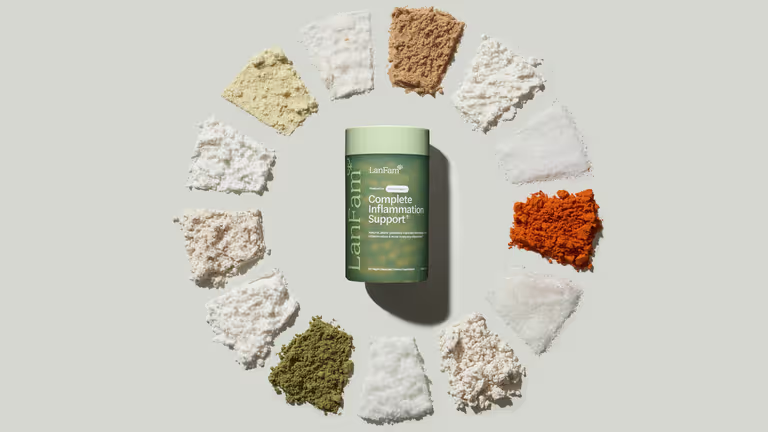
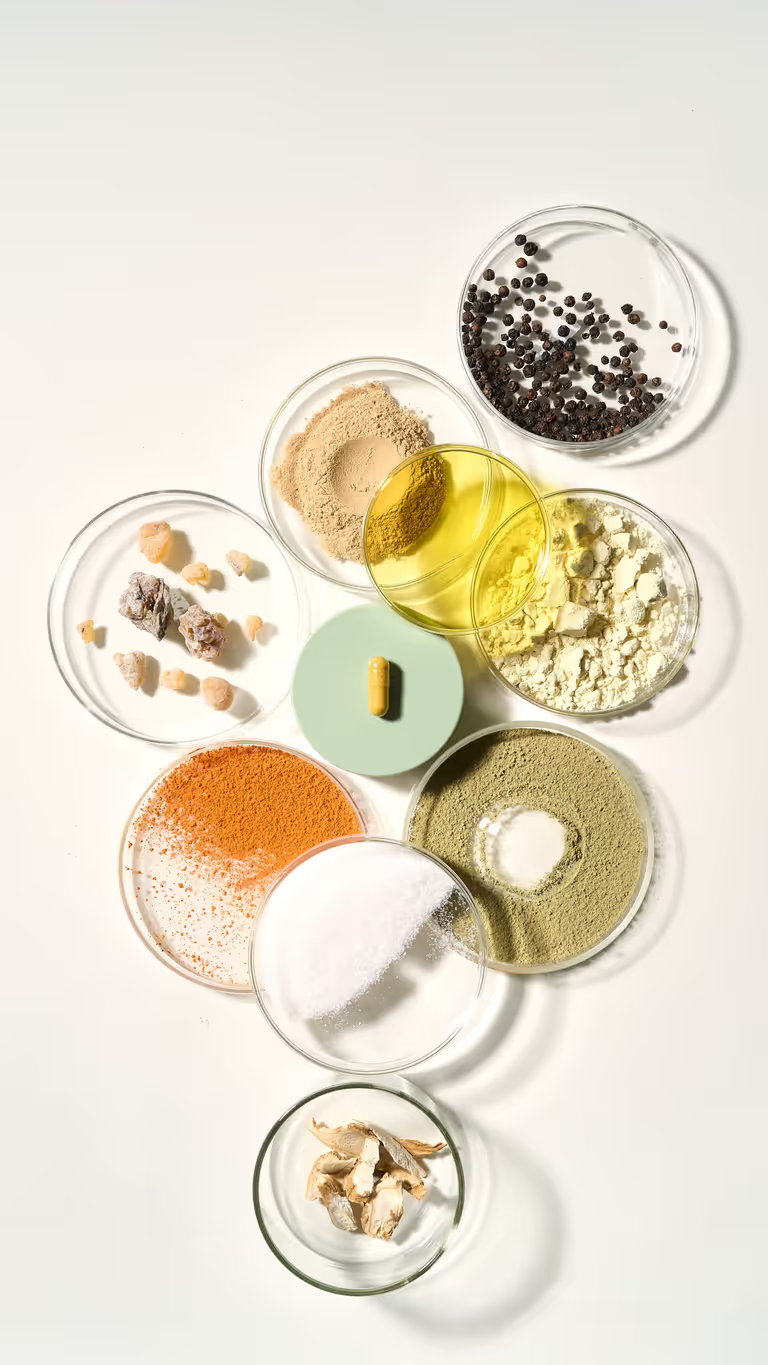
Ingredients in this letter

Someone asked me last month why she felt like she'd become a different person. She was 47, snapping at people she loved, crying in the car for no reason she could name, lying awake at 3 a.m. with her heart going. Her words were the ones I hear most: "This isn't me. I don't recognize myself." I've sat where she's sitting. So I want to tell you what I've learned — not as a doctor, because I'm not one, but as someone who went looking for the why and found that the why is real, physical, and has very little to do with your character.
Why estrogen falling changes your mood — the actual mechanism
Here's the thing nobody told me. Estrogen isn't only a reproductive hormone. In the brain it behaves like a regulator — it helps keep inflammation in check and it supports the machinery that makes and uses serotonin. The science on this is genuinely complex; one major review in Endocrine Reviews spends seventy pages on how estrogen can be anti-inflammatory in some contexts and pro-inflammatory in others, depending on dose, timing, and tissue.2 The honest summary is: estrogen is deeply woven into your inflammatory and neurochemical balance, so when it starts swinging and declining, that balance wobbles.
Step one: estrogen decline, inflammation up
When estrogen drops, the body's inflammatory tone tends to rise. A 2025 analysis from the Study of Women's Health Across the Nation — SWAN, one of the largest long-running studies of the menopause transition — found that inflammatory markers, specifically high-sensitivity C-reactive protein and interleukin-6, follow distinct upward patterns of change across the menopause transition in midlife women.3 This isn't the redness-and-swelling kind of inflammation you'd notice. It's quiet, systemic, the kind you only see on a blood panel. But the brain notices it.
Step two: inflammation reaches the brain
This is the part that reframed everything for me. A 2020 review in the Journal of Neuroinflammation describes perimenopause as a pro-inflammatory phase that disrupts estrogen-regulated neurological systems — the authors describe how ovarian changes release inflammatory signals that can affect the blood-brain barrier and the brain's own inflammatory regulation.1 When the brain's inflammatory tone rises, the systems that keep mood steady have to work against a headwind.
Step three: serotonin gets harder to maintain
Serotonin is the neurotransmitter most associated with steady mood. It's built from an amino acid (tryptophan), converted first into a compound called 5-HTP, and then into serotonin itself. Estrogen normally supports this pathway. As estrogen falls, the support falls with it — and the inflammatory state in the background can pull tryptophan down a different metabolic road, leaving less of it available to become serotonin. So you get a system that's both less supported and more taxed. That's not a metaphor for feeling unstable. That is the instability.
When I finally understood this sequence — estrogen down, inflammation up, serotonin harder to hold — the 3 a.m. heart-pounding stopped feeling like a flaw in me. It started feeling like weather. Weather you can prepare for.
What the neurotransmitter research suggests — and the honest limits
I want to walk through the four nutrients that map onto this pathway, because the mechanism is what makes them worth a look. I'll be straight with you about the evidence quality each time. Some of it is strong; some of it is suggestive; none of it is a cure.
5-HTP — the serotonin precursor
5-HTP is one metabolic step away from serotonin. Because it crosses into the brain and feeds directly into serotonin synthesis, it's the most mechanistically direct option for the serotonin side of the story. A comprehensive 2020 review in the International Journal of Molecular Sciences lays out its physiology and its role as a serotonin precursor in both neurological and metabolic conditions.4 There's also intriguing work showing 5-HTP and serotonin signaling intersect with inflammation directly — in an animal model, 5-HTP supplementation reduced inflammatory arthritis markers, a reminder that the serotonin system and the immune system talk to each other.5
The honest limit: the clinical trial evidence in menopausal women specifically is thin, and 5-HTP interacts seriously with antidepressants (SSRIs, SNRIs, MAOIs). This is not something to combine with a prescription on your own. If you take anything for mood, this is a conversation-with-your-doctor item, full stop.
GABA — the calming signal
If serotonin is steadiness, GABA is the brake. It's the brain's main inhibitory neurotransmitter — the one that quiets the noise. A small human study published in BioFactors found that oral GABA increased alpha brain waves (the relaxed-but-alert state) and was associated with markers of reduced stress within about an hour of taking it.6 That's a small study, and how much oral GABA reaches the brain is genuinely debated among researchers. But the direction of the finding — calming, fast — lines up with what the irritability-and-anxiety side of perimenopause is actually about.
The honest limit: one small study is one small study. GABA's value here is plausibility plus a clean safety record, not a stack of trials.
Panax ginseng — the stress-axis support
The 3 a.m. wake-up isn't only a serotonin story; it's also a stress-hormone story. Panax ginseng is an adaptogen traditionally used for exactly this kind of "wired and tired" state, and the modern interest is in its active compounds, ginsenosides. A 2017 review in the Journal of Ginseng Research describes how ginsenosides modulate inflammatory signaling pathways, including NF-kB — the master switch that the whole inflammation story turns on.7 So ginseng touches the inflammation side and the stress-resilience side at once.
The honest limit: ginseng's mood evidence in perimenopausal women is preliminary. I'd frame it as stress-axis support, not an antidepressant.
Vitamin B6 — the quiet cofactor
This one is unglamorous and easy to overlook, which is exactly why I want to name it. Your body cannot build serotonin from 5-HTP without vitamin B6 (specifically its active form). It's the cofactor in the final step. If you're low — and a meaningful number of midlife women run low on B-vitamins — you can have all the precursor in the world and still not make enough serotonin. B6 doesn't lift mood on its own; it makes the rest of the machinery run.
The honest limit: more is not better. Very high long-term doses of B6 can cause nerve problems. The point is sufficiency, not megadosing.
What works, what doesn't, and what the internet keeps getting wrong
What the mechanism supports: supporting serotonin synthesis (5-HTP plus its B6 cofactor), supporting the calming GABA signal, and supporting the stress axis (ginseng) — while addressing the inflammatory background that estrogen decline kicks up. The multi-pathway framing matters because perimenopausal mood isn't one broken thing. It's several systems leaning at once.
What the evidence doesn't support: the idea that any single supplement "balances your hormones." Nothing on this page raises estrogen. These nutrients work downstream of the hormone change, on the neurotransmitter and inflammatory systems the hormone change disrupts. That's a real place to intervene, but be suspicious of anything promising to fix the hormones themselves.
What the internet keeps defaulting to: magnesium and St. John's Wort. Magnesium is fine and worth having in your diet, but it's not the serotonin-and-inflammation story. And St. John's Wort interacts with an alarming number of medications, including hormonal birth control. Neither addresses the inflammation-to-serotonin bridge that I think is the actual heart of perimenopausal mood change.
And the most important non-supplement truth: if your mood symptoms are severe — if you're having thoughts of not being here, if you can't function — that is a medical situation, not a supplement situation. Please call your doctor. Supplements are for support around the edges of a normal-but-hard transition, not a substitute for care.
A note on what Fabio built
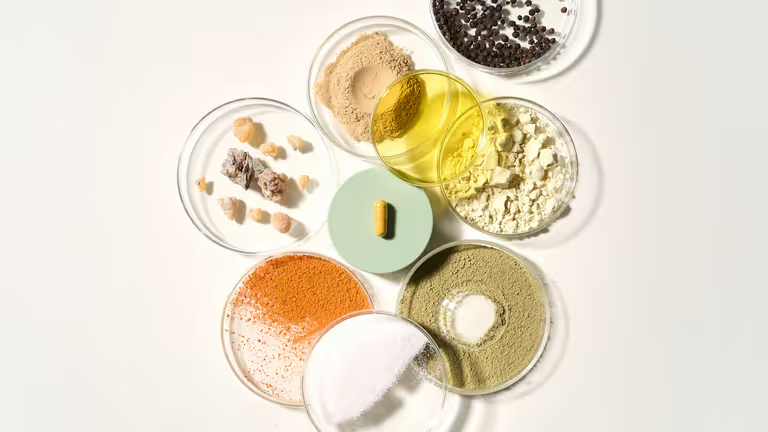
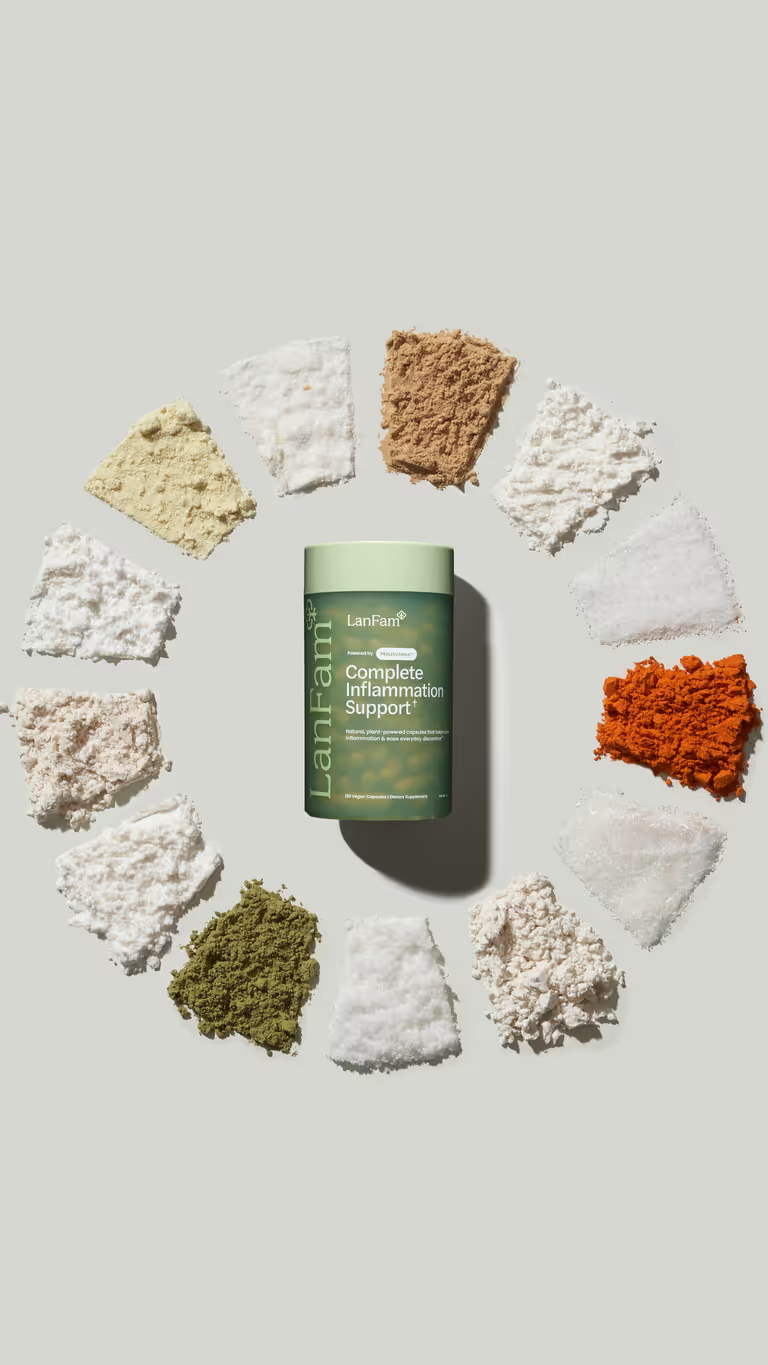
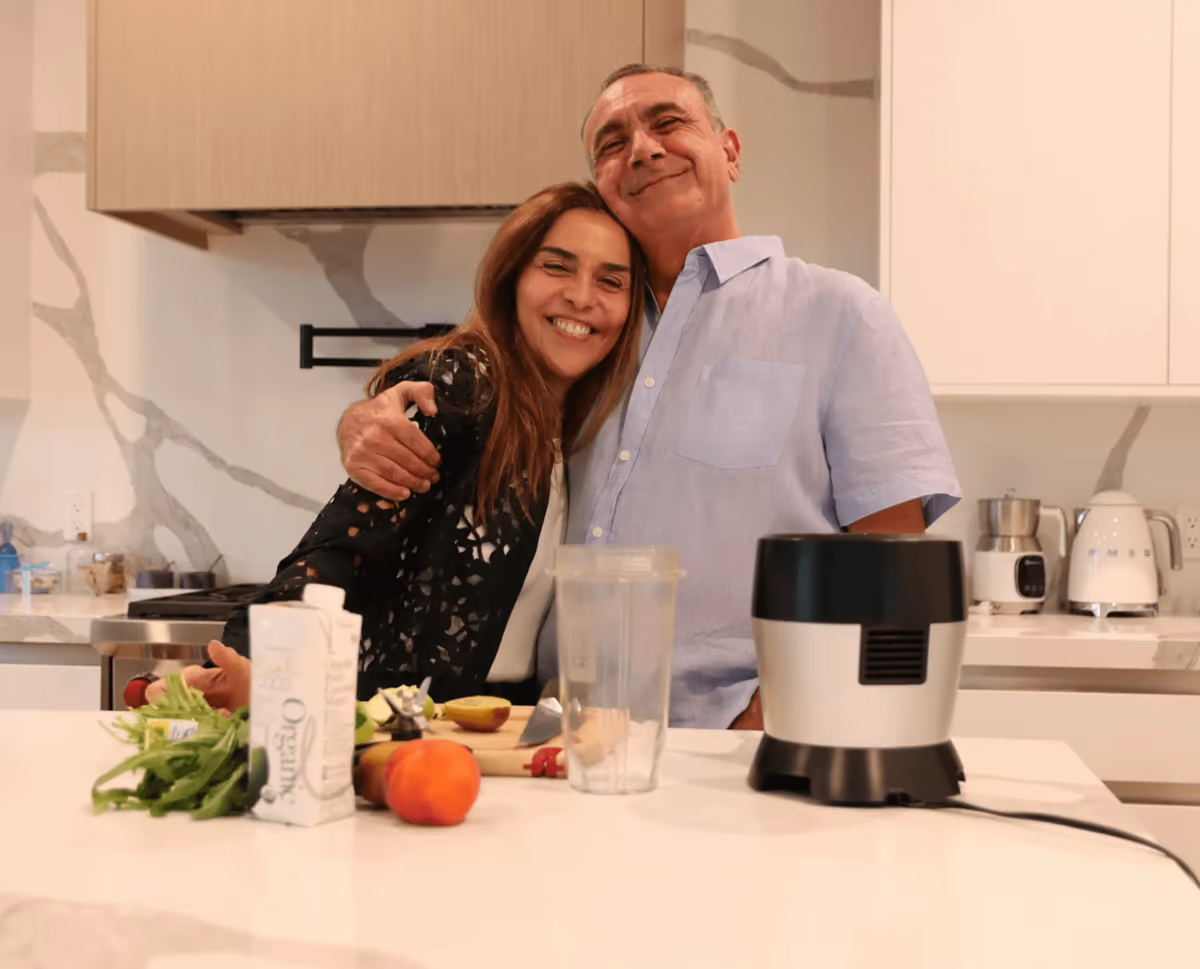
I don't usually lead with the product, because that's not why I write these. But it would be strange to walk you through this pathway and not tell you that it's the same pathway Fabio built our formula around. When my own medication left me in chronic pain and the only thing offered was daily NSAIDs for the rest of my life, he went looking for something that addressed the root — inflammation — rather than just muting the signal. ProleevaMax carries 5-HTP, GABA, Panax ginseng, and vitamin B6 among its thirteen standardized ingredients, alongside the anti-inflammatory actives, precisely because the mood side and the inflammation side aren't separate problems. They're the same problem wearing two faces. I take it. He made it for me first.
That's the only sales pitch you'll get from me: if the mechanism on this page makes sense to you, a multi-pathway formula is one honest way to act on it. Read the label, trace the doses, ask your doctor. That's all I'd ask of anything I put in my own body.
Related reading

References
- 2.McCarthy M, Raval AP. The peri-menopause in a woman's life: a systemic inflammatory phase that enables later neurodegenerative disease. J Neuroinflammation. 2020. https://doi.org/10.1186/s12974-020-01998-9
- 3.Straub RH. The complex role of estrogens in inflammation. Endocr Rev. 2007. https://doi.org/10.1210/er.2007-0001
- 4.El Khoudary SR, Chen X, Qi M, et al. The relation between systemic inflammation and the menopause transition: the Study of Women's Health Across the Nation. J Clin Endocrinol Metab. 2025. https://doi.org/10.1210/clinem/dgaf175
- 5.Maffei ME. 5-Hydroxytryptophan (5-HTP): natural occurrence, analysis, biosynthesis, biotechnology, physiology and toxicology. Int J Mol Sci. 2020. https://doi.org/10.3390/ijms22010181
- 6.Yang TH, Hsu PY, Meng M, Su CC. Supplement of 5-hydroxytryptophan before induction suppresses inflammation and collagen-induced arthritis. Arthritis Res Ther. 2015. https://doi.org/10.1186/s13075-015-0884-y
- 7.Abdou AM, Higashiguchi S, Horie K, Kim M, Hatta H, Yokogoshi H. Relaxation and immunity enhancement effects of gamma-aminobutyric acid (GABA) administration in humans. BioFactors. 2006. https://doi.org/10.1002/biof.5520260305
- 8.Kim JH, Yi YS, Kim MY, Cho JY. Role of ginsenosides, the main active components of Panax ginseng, in inflammatory responses and diseases. J Ginseng Res. 2017. https://doi.org/10.1016/j.jgr.2016.08.004
Frequently asked questions
There's a seat at our table
Letters from our family to yours — the science, the recipes, the things that actually helped real families. Leave your email and we'll send the next one.