Does Stress Cause Inflammation? The Cortisol Link
Does stress cause inflammation? Yes. Learn how the cortisol and HPA axis connection drives chronic inflammation, and the practical levers that help.
Ingredients in this letter
Yes, chronic stress can cause inflammation. When stress becomes constant, the cortisol system that normally keeps inflammation in check stops working the way it should, and the body shifts toward a low-grade inflammatory state. The link runs through the HPA axis, the hormone pathway that connects your brain to your adrenal glands. Short bursts of stress are harmless. The trouble starts when the stress, and the cortisol it drives, never switches off.
How Stress Talks to Your Immune System
To understand why stress causes inflammation, you have to follow one pathway: the HPA axis. It stands for hypothalamic-pituitary-adrenal, the three players that pass the signal along.
Here is the chain, in plain terms. Your brain perceives a threat. The hypothalamus releases a hormone (CRH) that signals the pituitary gland. The pituitary releases another hormone (ACTH) that travels to the adrenal glands on top of your kidneys. The adrenals respond by producing cortisol, the body's primary stress hormone. A recent review describes this cascade as the major neuroendocrine pathway connecting a stressful event to the immune system [1].
Cortisol has a job most people get backwards. It is not only a "stress" hormone. It is one of the body's most powerful anti-inflammatory signals. When inflammation rises, cortisol tells immune cells to ease off. This is why synthetic cortisol relatives, like prednisone, are prescribed to calm severe inflammation.
So if cortisol calms inflammation, how can stress, which raises cortisol, cause it? That is the heart of the cortisol connection, and the answer is what makes chronic stress different from a bad afternoon.
The Cortisol Connection: Why Chronic Stress Flips the Script
Short stress versus long stress
A single stressful event, a near-miss in traffic or a hard conversation, produces a cortisol spike that does its job and fades. The HPA axis has a built-in feedback loop, much like a thermostat: rising cortisol signals the brain to stop producing more. The system resets. No harm done.
Chronic stress breaks the thermostat. When the pressure never lets up, the feedback loop falters and the system loses its ability to regulate itself. A 2025 review notes that under long-term stress, HPA axis feedback becomes impaired and cortisol regulation grows dysfunctional, fostering a pro-inflammatory state [1].
Glucocorticoid receptor resistance
Here is the mechanism that ties it together. For cortisol to calm inflammation, immune cells have to "hear" it. They listen through structures called glucocorticoid receptors. Under chronic stress, those receptors grow less responsive. The cortisol is present, sometimes in higher amounts, but the immune cells stop answering the call.
Researchers call this glucocorticoid receptor resistance. A landmark study led by Sheldon Cohen tested it directly. Healthy volunteers reported their recent stressful life experiences, then were exposed to a common cold virus and monitored. People under prolonged stress showed reduced sensitivity to cortisol's anti-inflammatory signal, and that reduced sensitivity predicted a stronger inflammatory response and a greater likelihood of developing cold symptoms [2].
Think of it like a smoke alarm with a dying battery. The alarm (cortisol) keeps sounding the "calm down" message, but the firefighters (immune cells) have stopped showing up. Without that brake, inflammation runs longer and hotter than it should.
More inflammatory cytokines in circulation
The downstream result shows up in the blood. Cytokines are the chemical messengers immune cells use to coordinate inflammation. People under chronic stress tend to carry higher levels of pro-inflammatory cytokines, including interleukin-6 (IL-6), tumor necrosis factor-alpha (TNF-alpha), and C-reactive protein (CRP) [1].
The loop runs both ways
The relationship is not one-directional. Those same inflammatory cytokines can turn around and activate the HPA axis themselves, and research documents that IL-1, IL-6, and TNF-alpha each stimulate the stress axis, with their effects compounding when combined [1]. Stress drives inflammation, and inflammation feeds back to drive more stress signaling. Breaking the loop at any point helps.
What This Looks and Feels Like
Low-grade, stress-driven inflammation rarely announces itself. It is the slow background hum that many women in their 40s, 50s, and 60s describe as "I just don't feel like myself." Common patterns people report alongside chronic stress include:
- Stiffness and reduced mobility, often worse in the morning
- Lingering fatigue that sleep does not fully fix
- More frequent minor illnesses
- A general sense of running on a short fuse, physically and emotionally
None of these prove inflammation on their own, and none replace a blood test or a conversation with your doctor. But they are the quality-of-life signals that send people looking for the root cause, and unmanaged chronic stress is often part of the picture.
The Practical Levers: Calming the Stress-Inflammation Loop
The encouraging part of the research is that the loop responds to ordinary, accessible habits. You do not have to eliminate stress, which is impossible. You have to change how your body processes it.
1. Protect your sleep
Sleep is where the HPA axis is meant to reset. Cut it short and inflammation climbs. A large meta-analysis of 72 studies covering more than 50,000 people found that sleep disturbance and long sleep duration were associated with higher levels of CRP and IL-6 [3]. An updated 2026 meta-analysis of experimental studies found that several nights of partial sleep restriction significantly raised IL-6 and CRP compared with normal sleep [4].
What to do: Aim for seven to nine hours. Keep a consistent wake time. Treat the hour before bed as a wind-down, not a catch-up-on-email window.
2. Move your body
Exercise has a clever relationship with inflammation. A single workout produces a short, sharp rise in IL-6, which then triggers anti-inflammatory cytokines like IL-10 and IL-1RA. Repeat that pattern over time and the resting level of inflammation tends to fall. A review of the anti-inflammatory effects of exercise describes exactly this training adaptation, where repeated acute IL-6 bursts produce a lower baseline inflammatory state [5].
What to do: Most adults benefit from regular moderate movement, walking, swimming, cycling, paired with some strength work. Consistency beats intensity. The best routine is the one you keep.
3. Practice mind-body recovery
Practices that down-regulate the stress response, meditation, breathwork, yoga, appear to reach the inflammatory markers too. A comprehensive meta-analysis of randomized controlled trials reported that mindfulness-based interventions reduced markers of chronic inflammation, including CRP and IL-6 [6]. The evidence is promising but not uniform across every trial, so treat it as a reliable supporting habit, not a guaranteed switch.
What to do: Start with ten minutes a day of slow, paced breathing or a guided meditation. The goal is to give your nervous system a daily, deliberate "off" signal.
4. Eat to support a calm inflammatory response
A diet built around vegetables, fruit, legumes, whole grains, fish, nuts, and olive oil supports a healthier inflammatory profile, while ultra-processed food and excess added sugar push the other way. (For the marker-level detail, see our guide on how to lower CRP naturally.)
| Lever | What the research links it to | Realistic first step |
|---|---|---|
| Sleep | Lower CRP and IL-6 with adequate, consistent sleep | Fixed wake time, 7-9 hours |
| Movement | Lower resting inflammation with regular training | 30-minute daily walk |
| Mind-body | Reduced CRP and IL-6 with mindfulness practice | 10 minutes of paced breathing |
| Diet | Healthier inflammatory profile on a whole-food pattern | More plants, less ultra-processed food |
Where Targeted Botanical Support Fits
Lifestyle is the foundation. Some people also look for botanical support to help their body maintain a healthy inflammatory response while they build those habits. This is where it helps to understand what specific ingredients do, and what they don't.
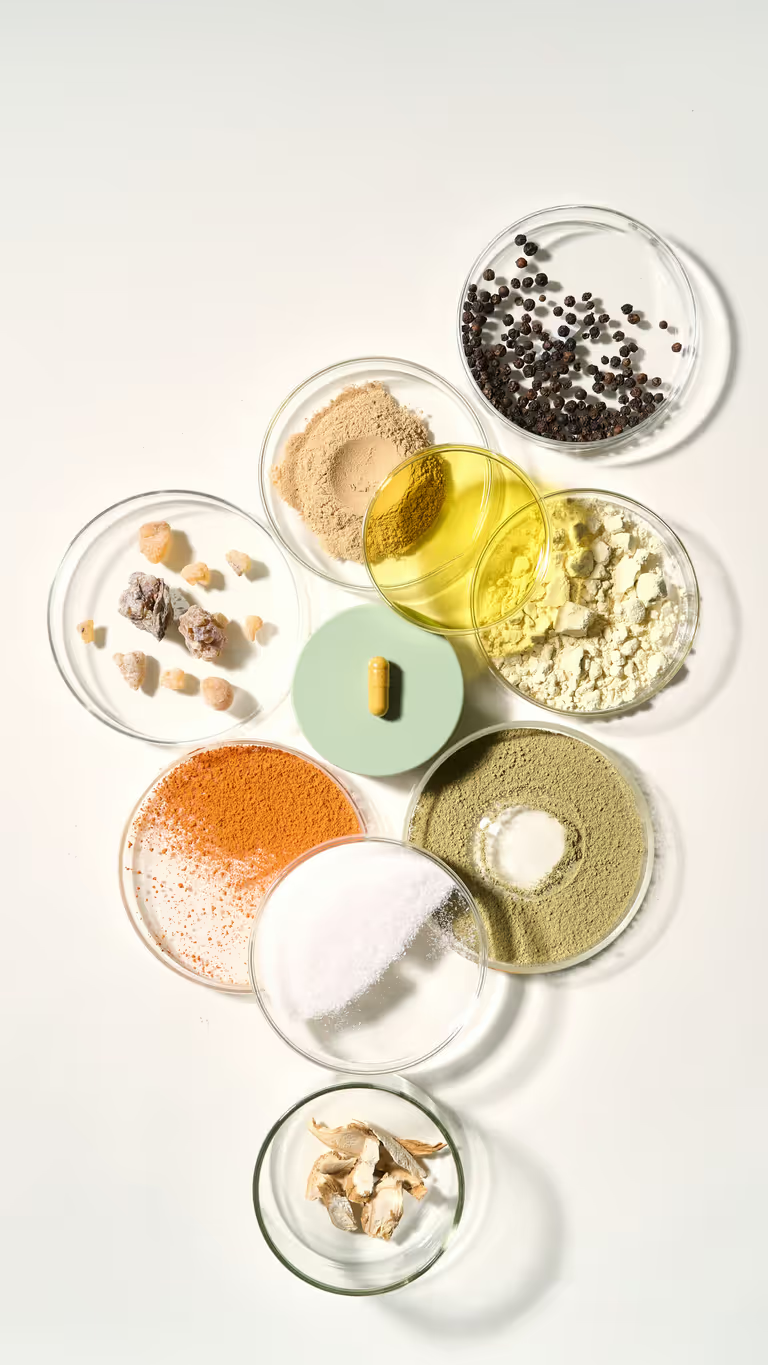
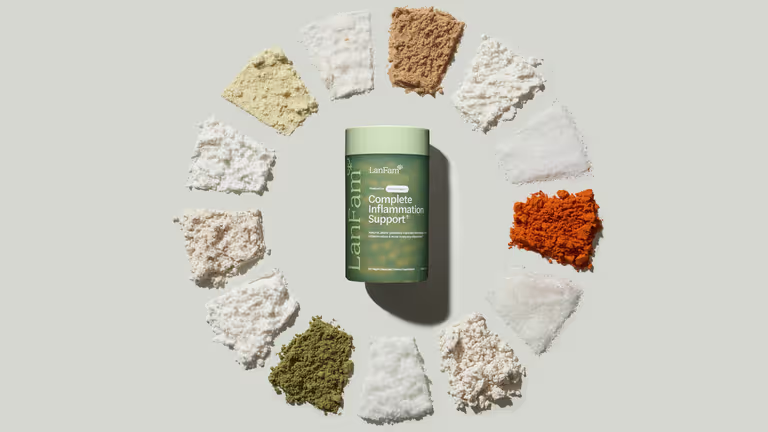
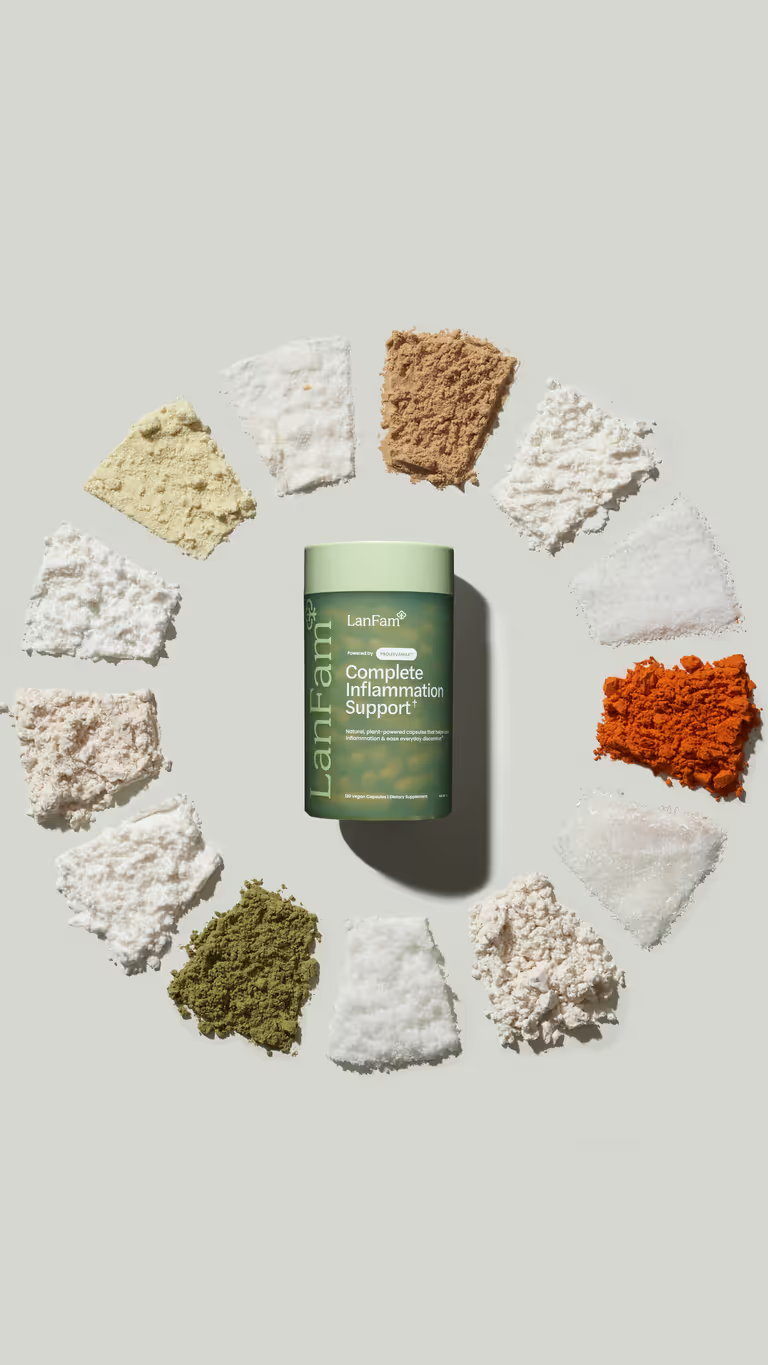
Complete Inflammation Support (Powered by ProleevaMax®) is built around a multi-pathway idea that maps onto the stress-inflammation loop. On the inflammatory side, it includes Boswellia (Indian Frankincense), standardized to 65% boswellic acids. Boswellic acids are studied for their action on 5-lipoxygenase, an enzyme in the body's inflammatory signaling cascade [7]. The formula also uses whole-root Turmeric extract as part of its botanical base.
On the stress-resilience side, ProleevaMax pairs ingredients that target the nervous system. It includes Matcha, a source of EGCG and L-theanine, the amino acid studied for its calming effect. Some randomized trials report that L-theanine reduced the salivary cortisol response to an acute stressor [8], though longer-term results are mixed and lean more toward reduced perceived stress. The formula rounds this out with GABA, 5-HTP, and Asian Ginseng, alongside an unusual pairing of L-Glutamine and L-Serine and supporting compounds.
The design logic is straightforward. Chronic stress hits two systems at once, the inflammatory pathway and the nervous system. A formula that addresses both pathways may support the whole loop, not one half of it.
What Stress Management Won't Do
Honest expectations matter here.
- Managing stress is not a cure for any disease. Inflammation is a normal, necessary process. The goal is a balanced inflammatory response, not zero inflammation, and lifestyle change does not treat or cure a medical condition.
- No single habit, and no supplement, is a magic switch. The research shows direction and association, not instant fixes. Effects build over weeks and months.
- ProleevaMax does not contain everything in the inflammation conversation. It does not include omega-3 fish oil, vitamin D, magnesium, quercetin, CoQ10, or probiotics, all of which get discussed in the broader inflammation space. We are transparent about that. ProleevaMax is designed as a multi-pathway botanical and amino-acid formula, not a kitchen-sink stack. Notably, ginger, a common anti-inflammatory spice, is not in the formula either; enjoy it as a food.
- It is not a substitute for medical care. If you have persistent symptoms or a diagnosed condition, work with your clinician. Supplements and habits support a healthy lifestyle; they do not replace treatment.
These statements have not been evaluated by the Food and Drug Administration. This product is not intended to diagnose, treat, cure, or prevent any disease.
Support Your Body Through the Stress-Inflammation Loop
Chronic stress and inflammation reinforce each other. The good news is that the loop is responsive: better sleep, regular movement, daily recovery practices, and a whole-food diet all have research linking them to a calmer inflammatory response. Targeted botanical support can fit alongside those habits.
Complete Inflammation Support (Powered by ProleevaMax®) is built around a multi-pathway design that addresses both the inflammatory side and nervous-system resilience. See the full ingredients list, the science behind the formula, and exactly how it works.
Real change builds over time, which is why ProleevaMax is structured around a 90-Day Protocol: an initial response begins around Week 2, more noticeable changes in comfort and mobility by Week 4, meaningful improvement in daily function by Week 8, and a full protocol completion at Day 90. It is backed by a 90-day money-back guarantee, so you have the full protocol window to judge it for yourself.
Keep reading: What causes inflammation in the body · How to lower CRP naturally · Ashwagandha vs Ginseng for stress

References
- 2.Gutierrez Nunez S, Peixoto Rabelo S, Subotic N, Caruso JW, Knezevic NN. Chronic stress and autoimmunity: the role of HPA axis and cortisol dysregulation. International Journal of Molecular Sciences. 2025. https://doi.org/10.3390/ijms26209994
- 3.Cohen S, Janicki-Deverts D, Doyle WJ, Miller GE, Frank E, Rabin BS, Turner RB. Chronic stress, glucocorticoid receptor resistance, inflammation, and disease risk. Proceedings of the National Academy of Sciences. 2012. https://doi.org/10.1073/pnas.1118355109
- 4.Irwin MR, Olmstead R, Carroll JE. Sleep disturbance, sleep duration, and inflammation: a systematic review and meta-analysis of cohort studies and experimental sleep deprivation. Biological Psychiatry. 2016. https://doi.org/10.1016/j.biopsych.2015.05.014
- 5.Ballesio A, Fiori V, Lombardo C. Effects of experimental sleep deprivation on peripheral inflammation: an updated meta-analysis of human studies. Journal of Sleep Research. 2026. https://doi.org/10.1111/jsr.70099
- 6.Gleeson M, Bishop NC, Stensel DJ, Lindley MR, Mastana SS, Nimmo MA. The anti-inflammatory effects of exercise: mechanisms and implications for the prevention and treatment of disease. Nature Reviews Immunology. 2011. https://doi.org/10.1038/nri3041
- 7.Dunn TJ, Dimolareva M. The effect of mindfulness-based interventions on immunity-related biomarkers: a comprehensive meta-analysis of randomised controlled trials. Clinical Psychology Review. 2022. https://doi.org/10.1016/j.cpr.2022.102124
- 8.ScienceDirect Topics. Boswellia serrata — an overview. https://www.sciencedirect.com/topics/biochemistry-genetics-and-molecular-biology/boswellia-serrata
- 9.White DJ, de Klerk S, Woods W, Gondalia S, Noonan C, Scholey AB. Anti-stress, behavioural and magnetoencephalography effects of an l-theanine-based nutrient drink: a randomised, double-blind, placebo-controlled, crossover trial. Nutrients. 2016. https://doi.org/10.3390/nu8010053
Frequently asked questions
There's a seat at our table
Letters from our family to yours — the science, the recipes, the things that actually helped real families. Leave your email and we'll send the next one.