Does Red Meat Cause Inflammation? The Research
Does red meat cause inflammation? The answer depends on type, amount, and cooking method. Here is what the research actually shows, plainly explained.
Ingredients in this letter

Does red meat cause inflammation? The research suggests the answer is "it depends" — on the type of meat, how much you eat, and how you cook it. Processed red meat shows a clearer link to inflammatory markers than fresh, unprocessed cuts. For women managing chronic inflammation, the practical takeaway is not "never eat red meat." It is about amount, quality, and preparation, all inside a complete eating pattern.
First, What "Red Meat" Even Means
When researchers say "red meat," they usually mean beef, pork, lamb, and veal. But that broad category hides an important split.
Unprocessed red meat is a fresh cut: a steak, a pork chop, a roast. Processed red meat has been preserved or flavored through salting, curing, smoking, or adding chemical preservatives. Think bacon, hot dogs, sausage, deli ham, and pepperoni.
This distinction is the single most important thing to understand. Most of the headlines that scare people about red meat are driven by the processed kind. When you separate the two, the picture changes, and so does the practical advice.
The Science: Does Red Meat Raise Inflammatory Markers?
The honest answer is that the evidence is mixed, and it depends heavily on how you slice the data.
The most comprehensive look to date is a 2024 systematic review and meta-analysis that combined 22 randomized controlled trials (1,152 adults) with 10 observational studies (438,925 adults). Researchers measured blood markers including C-reactive protein (CRP), interleukin-6 (IL-6), and tumor necrosis factor-alpha (TNF-alpha) — the standard signals your body produces during inflammation (systematic review and meta-analysis, 2024) [1].
Here is what they found, and why the nuance matters.
The CRP signal — and where it shows up
Across 18 of the trials, greater total red meat intake was associated with a modest rise in C-reactive protein, a widely used marker of inflammation. That sounds like a clear answer. But the subgroup analysis is where it gets interesting.
The rise in CRP showed up with unspecified or mixed red meat — and not with unprocessed red meat on its own. It also showed up more in people who already had cardiometabolic conditions, and at higher intake amounts. In other words, the signal clustered around processed or mixed meat, larger portions, and people who were already inflamed.
When the signal disappears
An earlier 2022 systematic review and meta-analysis adds the counterweight. When researchers compared red meat against white meat or grain-based diets, total red meat consumption did not significantly change CRP or hs-CRP (systematic review and meta-analysis, 2022) [2].
So we have one large analysis suggesting a modest CRP bump that concentrates in processed and high-intake scenarios, and another suggesting fresh red meat by itself is closer to neutral. That is not a contradiction. It is a clue: the inflammation story is less about "red meat" as a category and more about what kind, how much, and in what dietary context.
Why Processed Red Meat Is the Bigger Concern
Processed meat earns its reputation for reasons that go beyond the meat itself.
A prospective cohort study using UK Biobank data mapped the blood "signature" of red and processed meat consumption. The metabolomic pattern was dominated by lipid metabolites and was associated with higher risk of ischemic heart disease (Journal of the American Heart Association, 2023) [3]. It is one strand of evidence that heavy meat intake leaves a measurable mark in the blood, alongside the inflammatory-marker findings above.
Processed meat also carries added sodium, nitrates and nitrites, and preservatives — and it is typically eaten as part of a broader pattern heavy in refined carbohydrates. Each of those is its own input. So when a study links processed meat to inflammation, it is often capturing a whole lifestyle pattern, not one isolated villain.
| | Unprocessed red meat | Processed red meat |
|---|---|---|
| Examples | Steak, pork chop, roast | Bacon, hot dogs, deli meat, sausage |
| Added preservatives | Generally none | Nitrates, nitrites, often added |
| Sodium load | Lower | Higher |
| Inflammatory marker signal | Weaker / mixed | Stronger and more consistent |
| Typical dietary context | Varies | Often refined-carb-heavy patterns |
The Cooking Method Nobody Talks About
Here is a part of the conversation that often gets skipped: how you cook the meat may matter as much as the meat.
When protein-rich, fatty foods hit dry high heat — grilling, broiling, frying, charring — they form compounds called advanced glycation end products (AGEs). Dry-heat cooking can raise AGE content by 10- to 100-fold above the raw state (Journal of the American Dietetic Association, 2010) [4].
Why does that matter? Dietary AGEs are documented to contribute to oxidative stress and inflammatory signaling. They bind to receptors that can trigger an inflammatory cascade and generate oxidative stress in the body (Journal of the American Dietetic Association, 2010) [4].
The encouraging part: AGE formation is largely about technique, and technique is something you control.
- Lower-AGE methods: boiling, poaching, stewing, steaming, slow braising.
- Higher-AGE methods: grilling, broiling, pan-frying, charring.
- A simple buffer: acidic marinades (lemon, vinegar) before cooking can reduce AGE formation, and gentler heat helps too.
You do not have to give up a grilled meal. Knowing the trade-off lets you make it occasionally instead of by default.
A Word on Heme Iron and the Gut
Red meat is rich in heme iron, the form that gives it its color. Heme iron is well absorbed, which is a nutritional plus. But research also describes a downside at high intakes.
In animal and mechanistic studies, large amounts of dietary heme can shift the balance of gut bacteria and increase oxidative activity in the colon, which is one of the proposed pathways linking heavy red meat intake to intestinal inflammation (review on gut microbiota and red meat, 2023) [5].
Two honest caveats. Much of this mechanism work comes from animal models, so it points to a plausible pathway, not a settled human conclusion. And heme iron is also useful — for many women, iron status is a real consideration. As with most of this topic, the issue is excess and context, not the presence of the nutrient itself.
The Real Answer: Pattern Beats Single Food
Step back, and the most useful finding is this: your overall eating pattern moves inflammation more than any single food.
Greater adherence to a Mediterranean-style diet is associated with roughly 20% lower CRP and 17% lower IL-6 compared with low adherence (review on the Mediterranean diet and inflammation, 2015) [6]. A Mediterranean intervention has also been shown to lower the Dietary Inflammatory Index in a Western population over six months (MedLey Study, 2023) [7].
By contrast, a "Western" pattern — higher in red meat, sweets, fries, and refined grains together — is positively associated with CRP, IL-6, and other inflammatory and vascular markers (review on the Mediterranean diet and inflammation, 2015) [6].
Read that carefully. The Western pattern is red meat plus sweets plus fries plus refined grains. A modest portion of unprocessed beef inside a vegetable-rich, whole-food plate is a different situation from a daily bacon-and-white-bread routine. The company your red meat keeps may matter more than the red meat.
What This Means for You: Practical Guidance
You do not need to swear off red meat to manage inflammation. You need a sensible system.
- Favor unprocessed over processed. Choose fresh cuts over bacon, deli meat, sausage, and hot dogs. This is the highest-value change.
- Mind the portion. The inflammatory signal in the research clustered at higher intakes. Smaller, less frequent servings change the math.
- Choose gentler cooking. Braise, stew, or roast at moderate heat more often than you grill or char. Use an acidic marinade when you do grill.
- Build the plate around plants. Pair any red meat with vegetables, legumes, whole grains, and olive oil so the meal leans Mediterranean, not Western.
- Swap in other proteins. Fish, poultry, beans, and lentils give you variety and lower the frequency of red meat without forcing an all-or-nothing rule.
- Watch the company it keeps. A steak next to a salad is one thing; a burger with fries, a bun, and a soda is the pattern the research warns about.
For a fuller food-by-food framework, our worst foods for inflammation post breaks down where the real pressure points are.
What Cutting Red Meat Will Not Do
Honesty matters, because the internet loves a single-food fix.
- Cutting red meat will not erase chronic inflammation by itself. Inflammation is multi-factor: sleep, stress, movement, body composition, and your whole diet all contribute. Red meat is one input, not the equation.
- Eliminating red meat is not a treatment for any disease. It is a reasonable dietary adjustment, not a cure.
- Zero red meat is not automatically better. Red meat supplies usable iron, B12, and complete protein. The goal is appropriate, not absent.
- Changes are gradual. Inflammatory markers respond to consistent patterns over weeks and months, not a single swapped meal.
The clearest framing: red meat is one lever among several. Pulling it in the right direction — less processed, smaller portions, gentler cooking, inside a plant-forward plate — helps most as part of a complete pattern.
Where ProleevaMax Fits Into the Bigger Picture
Diet is the foundation. No supplement replaces a sensible eating pattern, and a targeted formula is not a license to keep a heavy processed-meat habit. That said, many women want focused support alongside their food choices.
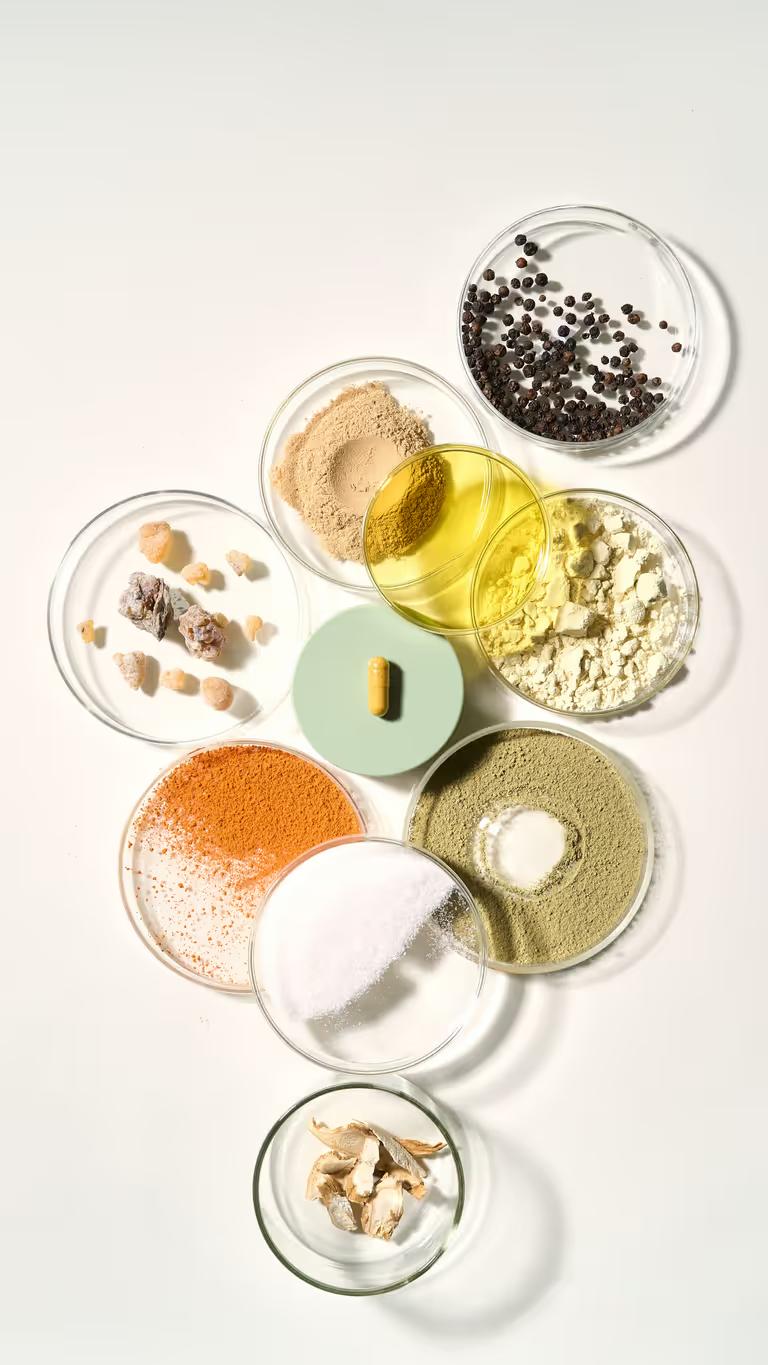
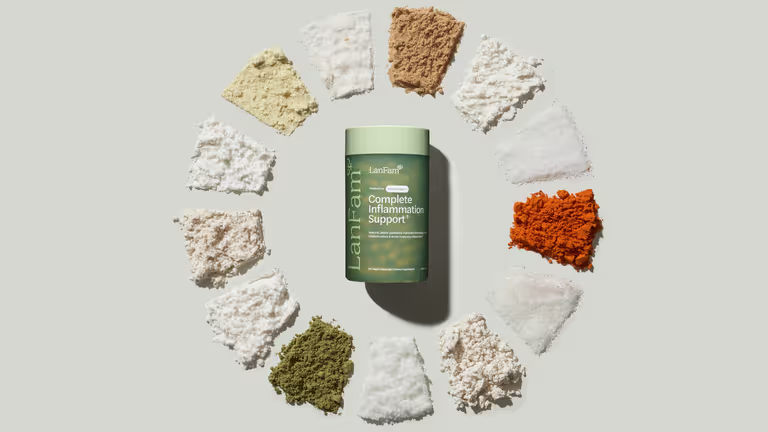
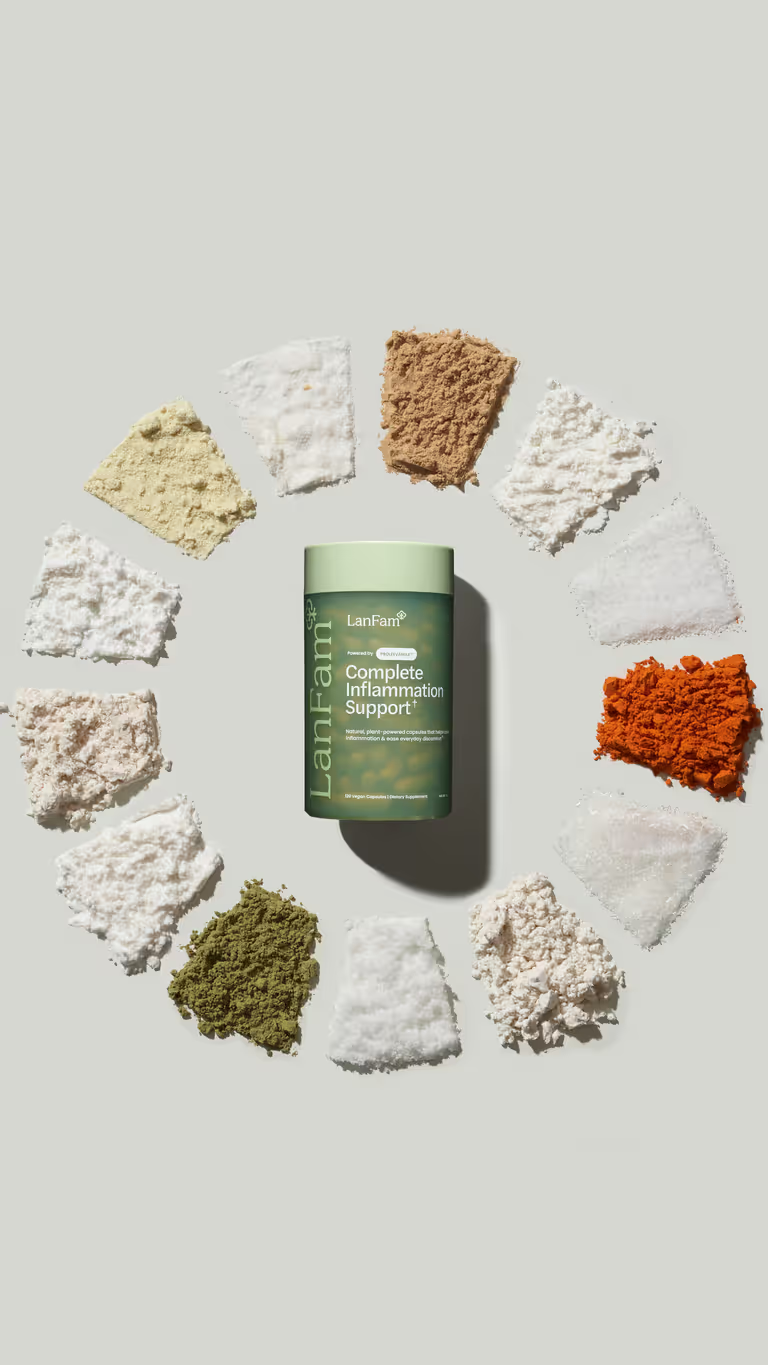
Complete Inflammation Support (Powered by ProleevaMax®) is designed for the multi-pathway reality of inflammation. Inflammation is not a single switch, and the formula reflects that. It is a proprietary blend of 13 standardized ingredients chosen to support a healthy inflammatory response and nervous-system resilience together.
A few examples of that design:
- Boswellia (Indian Frankincense), standardized to 65% boswellic acids. Boswellic acids are the studied compounds behind Boswellia's role in supporting a healthy inflammatory response and joint comfort. A systematic review found standardized Boswellia extracts well tolerated and supportive of comfort and mobility in joint-focused research (systematic review and meta-analysis, 2020) [8].
- Matcha (EGCG and L-theanine). EGCG, the major green tea polyphenol, is documented to influence inflammatory and oxidative-stress pathways, including NF-kB signaling (review on EGCG molecular pathways, 2023) [9].
- Whole-root Turmeric. ProleevaMax uses whole-root turmeric extract for its broader plant profile. It is not a high-dose standardized curcumin isolate, and we will not pretend otherwise. It is one botanical contributor among several.
- L-Glutamine and L-Serine, GABA, 5-HTP, Asian Ginseng, Resveratrol, L-Arginine, Black Pepper (piperine), Vitamin B6, and Choline round out the multi-pathway blend, pairing botanicals with amino acids that support nervous-system resilience.
One note on honesty: ProleevaMax does not contain omega-3, CoQ10, vitamin D, magnesium, quercetin, or probiotics. Those are worth understanding on their own, and we cover several on the blog. ProleevaMax takes a different approach — a synergistic botanical-plus-amino-acid blend instead of a single isolated nutrient.
Adjusting how much and what kind of red meat you eat is a foundational habit. A targeted formula like ProleevaMax is one more tool you can layer on top, inside a complete lifestyle.
These statements have not been evaluated by the Food and Drug Administration. This product is not intended to diagnose, treat, cure, or prevent any disease.
Take the Next Step
Choosing unprocessed cuts, smaller portions, and gentler cooking is an accessible change for a healthier inflammatory response. Pairing that habit with focused support can help you feel the difference.
Learn how Complete Inflammation Support (Powered by ProleevaMax®) is built for the multi-pathway nature of inflammation:
- See the full formula on the ProleevaMax page
- Explore every standardized botanical and amino acid on our ingredients page
- Review the research behind the blend on our science page
- Understand the mechanism on our how it works page
ProleevaMax is built around a 90-Day Protocol, because supporting a healthy inflammatory response is a gradual process, not an overnight switch. Many people notice initial responses around Week 2, clearer changes in comfort and mobility by Week 4, meaningful improvement in daily function by Week 8, and complete the full protocol at Day 90. Every order is backed by our 90-day money-back guarantee, so you have the full protocol window to evaluate how you feel.
Keep building your anti-inflammatory knowledge:

References
- 2.Wang Y, Uffelman CN, Hill ER, et al. Red meat intake and its influences on inflammation and immune function biomarkers in human adults: a systematic review and meta-analysis of randomized controlled trials and observational studies. Critical Reviews in Food Science and Nutrition. 2026. https://doi.org/10.1080/10408398.2025.2584482
- 3.Sun L, Yuan JL, Chen QC, et al. Red meat consumption and risk for dyslipidaemia and inflammation: a systematic review and meta-analysis. Frontiers in Cardiovascular Medicine. 2022. https://doi.org/10.3389/fcvm.2022.996467
- 4.Dong X, Zhuang Z, Zhao Y, et al. Unprocessed red meat and processed meat consumption, plasma metabolome, and risk of ischemic heart disease: a prospective cohort study of UK Biobank. Journal of the American Heart Association. 2023. https://doi.org/10.1161/JAHA.122.027934
- 5.Uribarri J, Woodruff S, Goodman S, et al. Advanced glycation end products in foods and a practical guide to their reduction in the diet. Journal of the American Dietetic Association. 2010. https://doi.org/10.1016/j.jada.2010.03.018
- 6.Diakité MT, Diakité B, Koné A, et al. Relationships between gut microbiota, red meat consumption and colorectal cancer. Journal of Carcinogenesis & Mutagenesis. 2022. https://pmc.ncbi.nlm.nih.gov/articles/PMC10194058/
- 7.Casas R, Sacanella E, Estruch R. The immune protective effect of the Mediterranean diet against chronic low-grade inflammatory diseases. Endocrine, Metabolic & Immune Disorders Drug Targets. 2016. https://doi.org/10.2174/1871530314666140922153350
- 8.Clark JS, Dyer KA, Davis CR, et al. Adherence to a Mediterranean diet for 6 months improves the Dietary Inflammatory Index in a Western population: results from the MedLey Study. Nutrients. 2023. https://doi.org/10.3390/nu15020366
- 9.Yu G, Xiang W, Zhang T, et al. Effectiveness of Boswellia and Boswellia extract for osteoarthritis patients: a systematic review and meta-analysis. BMC Complementary Medicine and Therapies. 2020. https://doi.org/10.1186/s12906-020-02985-6
- 10.Mokra D, Joskova M, Mokry J. Therapeutic effects of green tea polyphenol (-)-epigallocatechin-3-gallate (EGCG) in relation to molecular pathways controlling inflammation, oxidative stress, and apoptosis. International Journal of Molecular Sciences. 2023. https://doi.org/10.3390/ijms24010340
Frequently asked questions

There's a seat at our table
Letters from our family to yours — the science, the recipes, the things that actually helped real families. Leave your email and we'll send the next one.