Does Processed Food Cause Inflammation? The Research
Does processed food cause inflammation? See what research documents about ultra-processed foods, additives, and AGEs, plus simple swaps that help.
Ingredients in this letter

Yes, the research points one direction: processed food, and ultra-processed food in particular, is linked to higher inflammation in the body. When you ask "does processed food cause inflammation," the honest answer is that ultra-processed foods consistently track with elevated inflammatory markers like high-sensitivity C-reactive protein in human studies. Three forces drive the link: a flood of refined ingredients and additives, cooking methods that create inflammatory compounds, and the loss of fiber and protective plant nutrients.
What "Processed" Actually Means
"Processed" is a wide word, and that vagueness causes confusion. Chopping a carrot is processing. So is freezing spinach. Neither one drives inflammation. The useful distinction comes from the NOVA classification, a framework researchers use to sort foods by how far they sit from their natural state.
| NOVA group | What it includes | Inflammation concern |
|---|---|---|
| 1. Unprocessed / minimally processed | Fresh fruit, vegetables, eggs, plain yogurt, dried beans | Low |
| 2. Processed culinary ingredients | Olive oil, butter, salt, honey | Low (used in cooking) |
| 3. Processed foods | Canned beans, fresh bread, cheese | Moderate |
| 4. Ultra-processed foods | Soda, packaged snacks, instant noodles, processed meats, many breakfast cereals | Highest |
Ultra-processed foods (UPFs) are the group that matters here. They are industrial formulations built from refined substances and additives such as emulsifiers, sweeteners, preservatives, and colorings, with little or no whole food left. This is the category research keeps connecting to inflammation, and the NOVA framework is the standard way scientists define it [1].
So when people ask whether "processed food" causes inflammation, the sharper question is about ultra-processed food. That is where the evidence concentrates.
What the Research Documents
Higher ultra-processed intake, higher inflammatory markers
The clearest signal comes from blood. A 2025 scoping review mapping the human evidence [2] examined how ultra-processed food consumption relates to systemic inflammatory biomarkers across 24 studies. C-reactive protein was the most-studied marker, assessed in 21 of them, with additional work on interleukin-6 (IL-6), tumor necrosis factor-alpha (TNF-alpha), and leptin.
In a nationally representative U.S. sample [3], people who ate more ultra-processed food had measurably higher high-sensitivity C-reactive protein. hs-CRP is a routine blood test for low-grade, body-wide inflammation, so this is a direct, measurable association, not a guess.
It is not only about calories
A common assumption is that processed food drives inflammation simply by adding weight. The research complicates that story. In a tightly controlled NIH inpatient randomized trial [4], adults ate either an ultra-processed or an unprocessed diet for two weeks, then switched. The two diets were matched for presented calories, sugar, fat, sodium, and fiber. On the ultra-processed diet, people ate about 500 more calories a day and gained weight. The food itself changed behavior and physiology, independent of how the meals were balanced on paper.
That points to something in the structure and ingredients of UPFs, not just the calorie count.
How Processed Food Drives Inflammation: Three Mechanisms
1. Additives and emulsifiers disrupt the gut barrier
Many ultra-processed foods rely on emulsifiers to blend ingredients that would otherwise separate. Useful in a factory, less so in your gut. Research documents that these additives can disrupt the gut microbiome and weaken the intestinal barrier [5], lowering levels of beneficial bacteria and shifting the balance toward pro-inflammatory microbes.
The most direct human evidence comes from a randomized controlled study on the common emulsifier carboxymethylcellulose. Participants who ate it showed altered gut bacteria and increased intestinal discomfort [1]. When the gut barrier loosens, components that should stay in the digestive tract can reach the bloodstream, where the immune system treats them as threats and the body settles into low-grade inflammation.
2. High-heat processing creates AGEs
Advanced glycation end products (AGEs) form when sugars bond to proteins or fats under heat. They are abundant in the modern Western diet, and dietary AGEs add to the body's total AGE burden. Research documents that this burden predisposes the body to oxidative stress and inflammation [6].
A systematic review of randomized controlled trials [7] found that a high-AGE diet increased circulating TNF-alpha and other markers, while lowering dietary AGEs reduced markers of inflammation and oxidative stress. AGEs activate inflammatory signaling and cross-link proteins, altering how tissues function.
Cooking method drives how many AGEs you take in:
| Cooking method | Relative AGE formation |
|---|---|
| Steaming, boiling, poaching, simmering | Lowest |
| Roasting | Moderate |
| Grilling, broiling, frying | Highest |
In one comparison, broiled beef contained roughly three times more AGEs than boiled beef [8], despite identical ingredients. Marinating in acidic ingredients like lemon or vinegar before cooking can cut AGE formation. This is one reason ultra-processed foods, which are heavily heat-treated during manufacturing, carry a high AGE load before they ever reach your plate.
3. The loss of fiber and polyphenols
What ultra-processing removes matters as much as what it adds. Stripping whole foods down to refined starches, oils, and sugars removes fiber and polyphenols, the plant compounds that help keep the inflammatory response in balance.
Fiber feeds gut bacteria that produce short-chain fatty acids, which support a calm, intact gut lining. Polyphenols from fruits, vegetables, tea, and coffee help modulate low-grade inflammation [9]. When meals shift from whole foods to ultra-processed ones, these protective inputs disappear, and the inflammatory balance tips the wrong way.
What to Swap: Small Changes That Help
You do not need a perfect diet. A meta-analysis of 33 randomized controlled trials found that a Mediterranean-style eating pattern, built on whole and minimally processed foods, produced significant reductions in hs-CRP and IL-6 [10]. The direction is consistent: move toward whole foods, and inflammatory markers tend to fall.
Practical swaps:
- Soda or sweetened drinks to sparkling water with fruit, or unsweetened tea (polyphenols included).
- Packaged snack chips to nuts, olives, or cut vegetables with hummus.
- Processed deli meats to roasted or poached chicken, beans, or lentils.
- Sugary breakfast cereal to oats with berries (fiber plus polyphenols).
- Fried foods to steamed, baked, or boiled versions to lower AGE intake.
- Refined white bread to fresh whole-grain bread, a step down the processing ladder.
The goal is direction, not restriction. Each swap adds fiber and polyphenols and removes additives and AGEs.
What This Won't Do (Honest Limitations)
A few honest caveats, because the science is real but it has edges.
- Association is not always causation. Most human data on UPFs and inflammation is observational. The NIH trial strengthens the case, but no single diet study proves processed food alone "causes" any disease.
- Not every processed food is equal. Canned beans and plain frozen vegetables are processed and perfectly fine. The concern is the ultra-processed end of the spectrum.
- Individual responses vary. Genetics, sleep, stress, activity, and existing health all shape how your body handles inflammation. Diet is one lever among several.
- No food is a switch. Cutting ultra-processed food lowers an inflammatory input. It does not erase inflammation, and it is not a treatment for any medical condition. If you have a diagnosed inflammatory condition, work with your clinician.
Where Targeted Botanical Support Fits
Cleaning up your diet lowers the inflammatory load coming in. Some people also want focused support for a healthy inflammatory response, especially during the years when chronic inflammation becomes a daily companion.
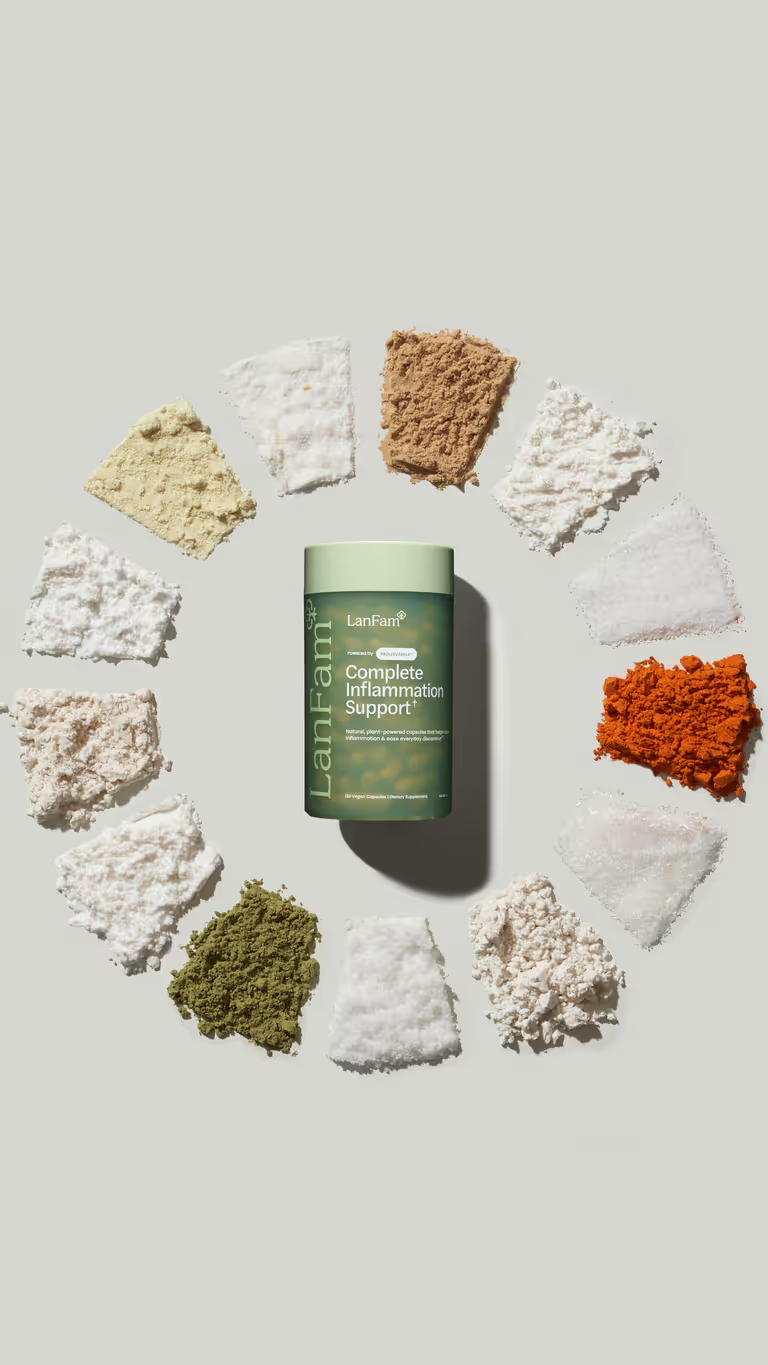
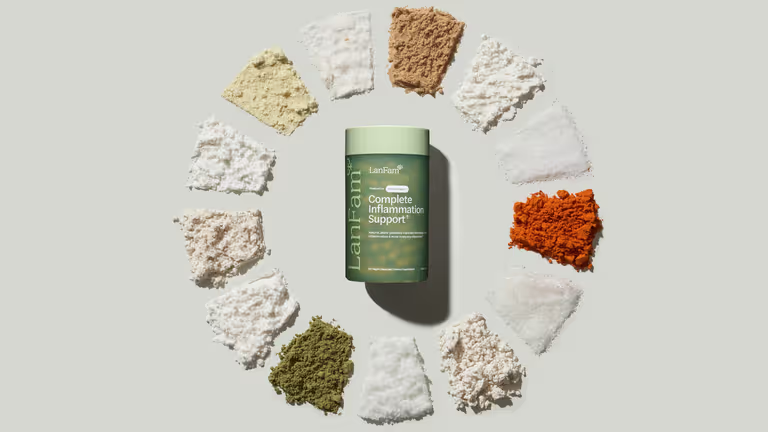
This is the design idea behind Complete Inflammation Support (Powered by ProleevaMax®). Instead of a single ingredient, ProleevaMax uses 13 standardized botanicals and amino acids built to work across multiple pathways. Its Boswellia (Indian Frankincense) is standardized to 65% boswellic acids, the active constituents that research has connected to a healthy inflammatory response [11]. The formula also pairs whole-root Turmeric with botanicals like Matcha (delivering EGCG and L-theanine) and Resveratrol, alongside the uncommon L-Glutamine and L-Serine pairing for nervous-system resilience.
A note on transparency: ProleevaMax does not contain bromelain, omega-3s, vitamin D, magnesium, quercetin, probiotics, or CoQ10. Those are reasonable category options worth knowing about. ProleevaMax takes a different approach, built around multi-pathway botanical and amino acid synergy instead of any one nutrient.
These statements have not been evaluated by the Food and Drug Administration. This product is not intended to diagnose, treat, cure, or prevent any disease.
A Simple Next Step
Processed food is one lever you control three times a day. Start with two swaps this week and let them stick. If you want focused support alongside those changes, Complete Inflammation Support (Powered by ProleevaMax®) is built for exactly that.
We designed ProleevaMax around a 90-Day Protocol, because a healthy inflammatory response responds to consistency, not quick fixes. Many people notice an initial response around Week 2, clearer changes in comfort and mobility by Week 4, meaningful improvement in daily function by Week 8, and complete the full protocol at Day 90. That is also why every order is backed by our 90-day money-back guarantee, giving you the full protocol window to judge it for yourself.
Learn more about the 13 ingredients, the science behind the formula, and exactly how it works.

References
- 2.Whelan K, Bancil AS, Lindsay JO, Chassaing B. Ultra-processed foods and food additives in gut health and disease. Nature Reviews Gastroenterology & Hepatology. 2024. https://doi.org/10.1038/s41575-024-00893-5
- 3.Ciaffi J, Mancarella L, Ripamonti C, Brusi V, Pignatti F, Lisi L, Ursini F. Ultra-processed food consumption and systemic inflammatory biomarkers: a scoping review. Nutrients. 2025. https://doi.org/10.3390/nu17183012
- 4.Sajan K, Anthireddy N, Matarazzo A, Furtado C, Hennekels CH, Ferris A. Ultra-processed foods and increased high sensitivity C-reactive protein. American Journal of Medicine. 2025. https://doi.org/10.1016/j.amjmed.2025.08.016
- 5.National Institutes of Health. NIH study finds heavily processed foods cause overeating and weight gain. 2019. https://www.nih.gov/news-events/news-releases/nih-study-finds-heavily-processed-foods-cause-overeating-weight-gain
- 6.Rondinella D, Raoul PC, Valeriani E, et al. The detrimental impact of ultra-processed foods on the human gut microbiome and gut barrier. Nutrients. 2025. https://doi.org/10.3390/nu17050859
- 7.Uribarri J, del Castillo MD, de la Maza MP, et al. Dietary advanced glycation end products and their role in health and disease. Advances in Nutrition. 2015. https://doi.org/10.3945/an.115.008433
- 8.Clarke RE, Dordevic AL, Tan SM, Ryan L, Coughlan MT. Dietary advanced glycation end products and risk factors for chronic disease: a systematic review of randomised controlled trials. Nutrients. 2016. https://doi.org/10.3390/nu8030125
- 9.Uribarri J, Woodruff S, Goodman S, et al. Advanced glycation end products in foods and a practical guide to their reduction in the diet. Journal of the American Dietetic Association. 2010. https://doi.org/10.1016/j.jada.2010.03.018
- 10.Bonaccio M, Pounis G, Cerletti C, Donati MB, Iacoviello L, de Gaetano G. Mediterranean diet, dietary polyphenols and low grade inflammation: results from the MOLI-SANI study. British Journal of Clinical Pharmacology. 2017. https://doi.org/10.1111/bcp.12924
- 11.Keshani M, Rafiee S, Heidari H, Rouhani MH, Sharma M, Bagherniya M. Mediterranean diet reduces inflammation in adults: a systematic review and meta-analysis of randomized controlled trials. Nutrition Reviews. 2025. https://doi.org/10.1093/nutrit/nuaf213
- 12.Majeed M, Majeed S, Narayanan NK, Nagabhushanam K. A pilot, randomized, double-blind, placebo-controlled trial to assess the safety and efficacy of a novel Boswellia serrata extract in the management of osteoarthritis of the knee. Phytotherapy Research. 2019. https://doi.org/10.1002/ptr.6338
Frequently asked questions
There's a seat at our table
Letters from our family to yours — the science, the recipes, the things that actually helped real families. Leave your email and we'll send the next one.